
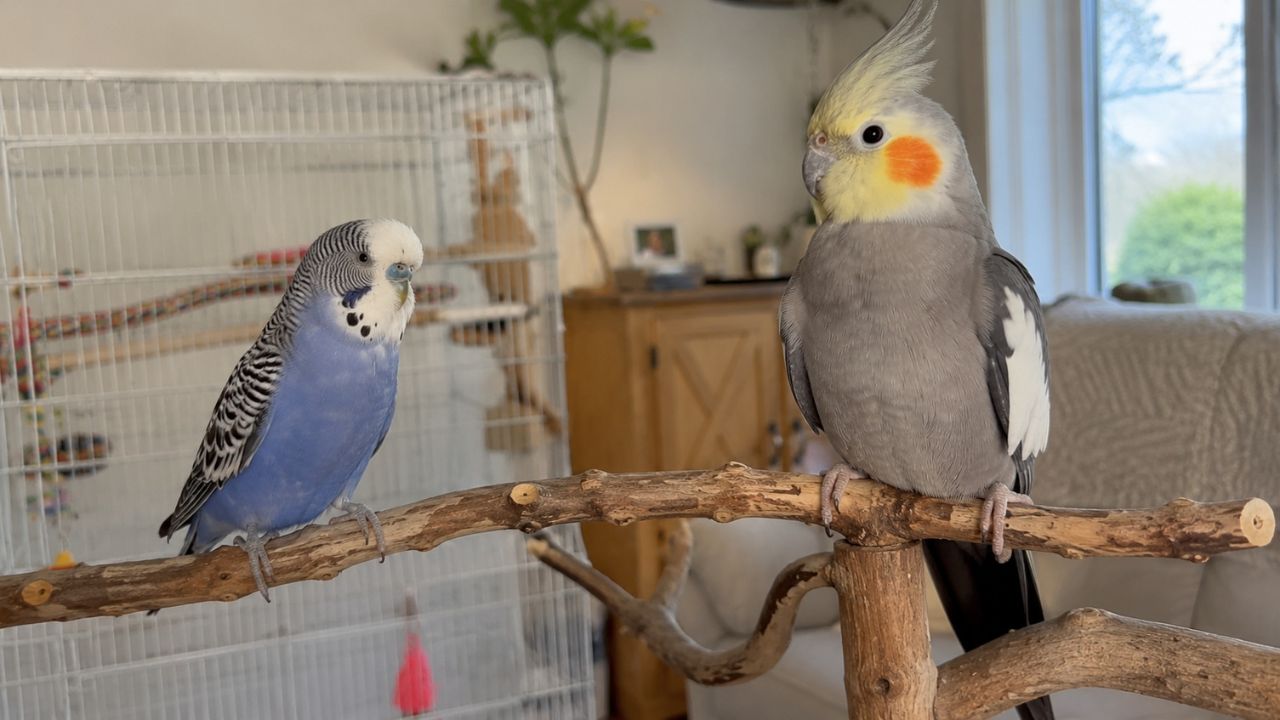

Neil has kept, bred, and sold both budgies and cockatiels at Paradise Pets Swindon since 1988 — over 35 years of first-hand experience with both species. In that time, he has helped countless UK families decide between these two popular pet birds. This is his honest, practical comparison — based on what really happens in UK homes, not what is written on the box.
A family came into the shop one Saturday afternoon — mum, dad, and two children aged about 8 and 11. They had decided they wanted a pet bird, but they were stuck between two options. “Neil,” the dad said, “we have been arguing about this for weeks. The kids want a cockatiel because they think it will whistle and sit on their shoulders. My wife wants a budgie because they are smaller and quieter. I just want something that will actually work in our house. Can you give us a proper honest answer about which is right for us?”
It is one of the best questions a UK family can ask, because the honest answer changes their experience for years. The truth is this — budgies and cockatiels are far more different than most people realise, and the right choice depends entirely on your home, your routine, your family, and what you actually want from a bird. Get it right, and you have a perfect pet for a decade or more. Get it wrong, and you have years of frustration ahead.
In 35 years of selling both species, I have learned that most owners do not actually need to “choose the better bird” — they need to choose the bird that suits their specific life. A budgie is brilliant for some families and wrong for others. A cockatiel is brilliant for some families and wrong for others. The skill is honestly assessing which is which.
This article is the conversation I have at the counter with every family weighing this decision, written down. It will walk you through every meaningful difference between the two species, who each suits best, and how to know which is right for your specific UK home. By the end of it, you will have a genuinely informed answer — not just for what is popular, but for what is right for you.
The Honest Truth — They Are More Different Than People Think
Let me start with the bigger picture, because it matters. Budgies and cockatiels are often lumped together as “small pet parrots” — but in reality, they are very different birds with different needs, different personalities, and different requirements from their owners.
A budgie is a small, busy, sociable bird that needs interaction but does not demand it. It is happy in a pair, can entertain itself with toys, and fits into smaller homes easily. It is quiet enough for most family environments and inexpensive to keep. It is the right bird for most casual UK pet owners.
A cockatiel is a larger, more emotionally sensitive bird that forms deeper bonds with its owners but demands more from them. It needs more space, more interaction, more emotional engagement, and a more committed owner. It is louder, longer-lived, more expressive, and more rewarding for the right person — but more challenging for the wrong one.
Choosing between them is not about which is better — it is about which is right for your specific situation. Let me walk you through the differences honestly.
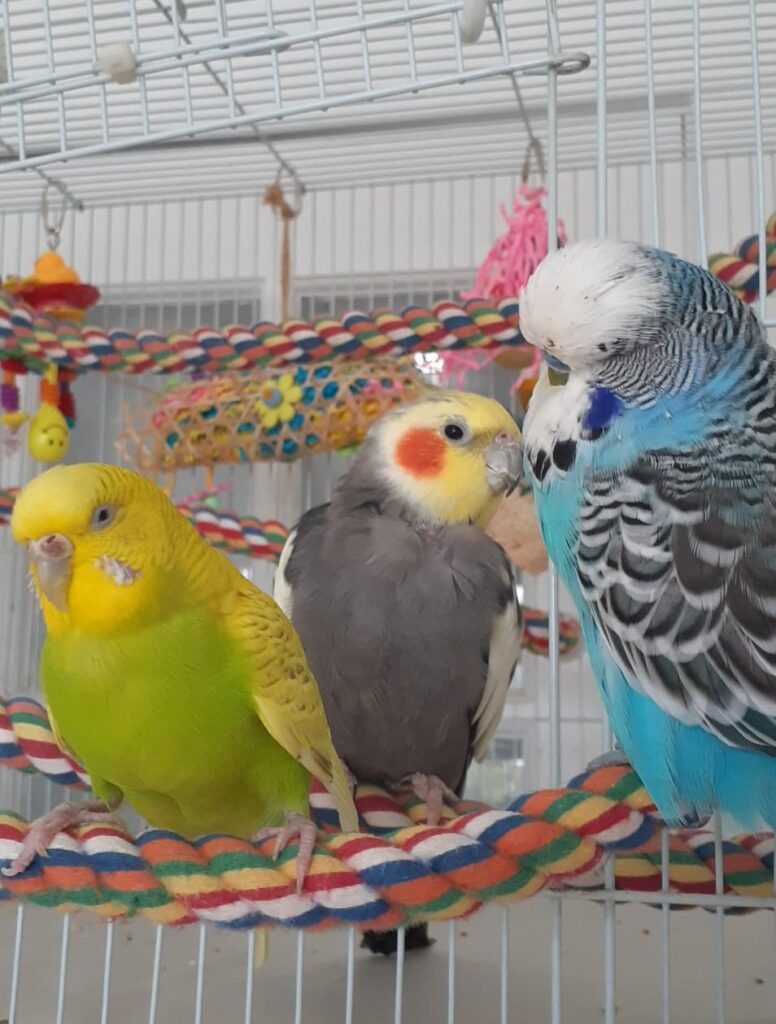
The At-A-Glance Comparison
Before we go into detail, here is the honest summary in one table. Each of these points gets a fuller explanation below — but this gives you the overall picture quickly.
| Factor | Budgie | Cockatiel |
|---|---|---|
| Size | Small (18cm, 30-40g) | Medium (30-33cm, 80-100g) |
| Lifespan | 8-12 years typical | 15-20 years typical |
| Cage size needed | 60cm wide minimum | 80cm wide minimum (more is better) |
| Noise level | Quiet chatter, soft chirps | Loud morning/evening calls, can scream |
| Apartment-friendly | Usually yes | Often no — neighbours hear |
| Bonding depth | Friendly, sociable | Deep emotional bonds |
| Talking ability | Excellent (males especially) | Whistles brilliantly, some words |
| Interaction needs | Moderate, OK in pairs | High — needs daily quality time |
| Mess level | Moderate | Higher (more feather dust) |
| Initial cost | £20-40 per bird | £80-150 per bird |
| Ongoing cost | £15-25/month | £25-40/month |
| Best for | Most UK families, smaller homes | Committed bird owners, larger homes |
This snapshot tells you most of what you need to know. Now let me explain the meaningful differences in detail.
1. Size And Space Requirements
The size difference is more significant than most people realise. A budgie is genuinely small — roughly the size of a sparrow. A cockatiel is closer to a small parrot — three times the body weight of a budgie, and noticeably bigger in every way.
This translates directly into housing requirements:
- Budgie minimum cage: 60cm wide x 40cm deep x 50cm tall for one bird
- Cockatiel minimum cage: 80cm wide x 60cm deep x 75cm tall for one bird
- Cockatiels need horizontal flight space — they fly more strongly than budgies
- Bar spacing matters — cockatiels need 1.5-2cm; budgies need finer 1.0-1.2cm
- Cockatiel cages are noticeably more expensive — bigger means pricier

For UK homes with limited space — flats, small terraces, single-room living areas — a budgie almost always works better. A proper cockatiel cage takes up real floor space. If you genuinely cannot fit an 80cm-wide cage, a cockatiel is the wrong choice, no matter how much you love them.
2. Noise Levels — The Big Practical Difference
This is the factor that catches families out most often. Both birds vocalise — but the volume and frequency are dramatically different, and this affects everyday life in UK homes more than any other single factor.
Budgies make:
- Constant soft chattering and warbling — pleasant background sound
- Occasional cheerful chirps — not loud
- Excited bursts when something interesting happens
- Quiet enough for most flats and terraced houses
- Usually unnoticed by neighbours
Cockatiels make:
- Loud morning and evening contact calls — genuinely loud
- Beautiful whistles and tunes when relaxed
- Persistent contact calling when left alone
- Can scream when stressed, lonely, or hormonal
- Often heard by neighbours in flats and terraces
A cockatiel’s morning call can wake the household. A persistent contact call can be heard through walls. For households where peace and quiet matter — shift workers, sensitive neighbours, families with sleeping babies, anyone living in flats — a cockatiel can become a serious problem.
For more detailed thoughts on this for smaller UK homes, our guide on budgies in UK apartment living covers why budgies are usually the better small-space choice.
3. Personality And Temperament
This is where the species differ most fundamentally. Budgies and cockatiels are emotionally different creatures.
Budgies are:
- Cheerful and curious — engaged with their environment
- Sociable but independent — happy with their own activities
- Quick to settle — adapt to new homes fairly easily
- Less prone to deep stress — resilient little birds
- Often happiest in pairs — bonded with another budgie
- Forgiving of imperfect care — bounce back from mistakes
Cockatiels are:
- Sensitive and emotionally complex — feel things deeply
- Strongly bond-oriented — form intense attachments to people
- Slower to settle in new environments — need patient transitions
- Prone to stress reactions — feather plucking, screaming, hissing
- Can be kept singly with enough human contact
- Need consistent, knowledgeable care — less forgiving of mistakes

A budgie that is left alone for a long working day is usually fine. A cockatiel left alone for the same time often develops stress behaviours. The depth of emotional bond a cockatiel forms makes it harder for them when their person is unavailable.
The honest practical implication — if no one is home most of the day, a pair of budgies works far better than a single cockatiel.
4. Bonding And Handling
Both species can be hand-tame and affectionate, but the experience is meaningfully different.
A tame budgie:
- Sits on your hand or shoulder happily
- Comes when called by name
- Enjoys being talked to and whistled at
- May give “kisses” and gentle nibbles
- Plays with toys around you
- Generally less physically affectionate than cockatiels
A tame cockatiel:
- Forms a genuinely deep bond with its primary person
- Wants physical closeness — sits on shoulder for hours
- Asks for head scratches by lowering its head
- Cuddles up against you
- Calls for you when you leave the room
- Mourns when separated from its bonded person

For families who want a bird that is more like a small parrot — interactive, cuddly, deeply bonded — a cockatiel delivers in a way a budgie usually cannot. For families who want a cheerful, sociable, less emotionally intense pet, a budgie is often a better fit.
5. Talking And Whistling
This is one of the most asked questions at the counter, so let me be honest about it.
Budgies are excellent talkers — surprisingly so for such small birds. Male budgies in particular can learn dozens or even hundreds of words, complete phrases, and entire songs. Some budgies have impressive vocabularies that rival larger parrots. The voice is usually fast and slightly squeaky, but the talking ability is genuinely impressive.
Cockatiels are excellent whistlers, but more limited talkers. They can learn some words — usually a handful, sometimes more — but their real strength is whistling tunes. A well-trained cockatiel can whistle entire songs (theme tunes, classical pieces, household whistled patterns) with remarkable accuracy. Males are usually better whistlers and talkers than females.
If talking matters most to you, a male budgie is often the better choice. If whistling and musical ability matter more, a cockatiel is genuinely impressive.
Important honest note — not every budgie talks and not every cockatiel whistles tunes. Individual variation is huge. Buying a young male of either species gives you the best chance, but no guarantee.
6. Lifespan And Long-Term Commitment
This is one of the most important factors and the one most owners do not think hard enough about.
A well-cared-for budgie lives 8-12 years. A well-cared-for cockatiel lives 15-20 years. That is a significant difference — a cockatiel is a much longer commitment.
This affects:
- Children’s pet planning — a cockatiel bought for an 8-year-old may outlive their interest by years
- Older owners — should consider whether they can commit to 15-20 years
- Life-stage changes — moves, partners, babies, retirement all need to factor in
- Long-term husbandry expense — cockatiels cost more over their longer lives
For more on this, our honest guide on budgie lifespan and our guide on cockatiel lifespan cover the details for each species.
7. Mess And Cleaning
Both birds produce mess, but cockatiels produce noticeably more. This is one of the practical realities owners do not always think about until they live with the bird.
Budgies produce:
- Seed husks and discarded food around the cage
- Small amounts of feather dust
- Small droppings
- Easy daily clean-up
Cockatiels produce:
- Larger seed husks, scattered further from cage
- Significant amounts of feather dust — visible on furniture
- Larger droppings
- Larger toys means larger debris
- More cleaning required overall
The feather dust is a genuine issue with cockatiels. They produce a powdery white substance from their feathers that settles on every surface in the room. Anyone with respiratory sensitivities (asthma, allergies) may struggle with cockatiels. Budgies produce some dust too, but far less.
8. Cost — Initial And Ongoing
This matters more for families on tight budgets than people often acknowledge. Cockatiels cost more across the board.
Initial costs (for a single bird):
- Budgie: £20-40 per bird from quality source
- Cockatiel: £80-150 per bird (sometimes more for certain colours/varieties)
- Budgie cage and setup: £80-200 total
- Cockatiel cage and setup: £200-450 total
Ongoing costs:
- Budgie monthly: roughly £15-25 (food, toys, supplements)
- Cockatiel monthly: roughly £25-40 (more food, bigger toys)
- Vet costs are similar for both species
- Lifetime cost difference can be £2,000+ over the bird’s life
This is not a reason to avoid a cockatiel if you can afford it — but it is a reason to plan honestly. The cheap cockatiel offered by a poor source is almost always a false economy. Quality breeding, quality housing, and quality food matter more than the species.
9. Suitability For Different UK Households
This is where the practical comparison really matters. Let me be specific about who each bird actually suits.

For Families With Children
Budgies are usually the better choice for families with young children. They are smaller (safer for accidental rough handling), quieter (less disruptive to family life), shorter-lived (matching realistic child interest spans), cheaper (less catastrophic if interest fades), and more forgiving of imperfect care.
Cockatiels can work with families but only if the adults are the primary carers and children are taught proper gentle handling. A cockatiel handled roughly by children can develop lasting fear and aggression.
For Couples Or Single Adults
Either species can work brilliantly here, depending on what you want. A pair of budgies suits couples who want pets but have busy lives — the birds entertain each other when you are out. A single cockatiel suits anyone who works from home or has consistent daily presence and wants a deeply bonded pet.
A single cockatiel left alone all day at work is almost always a wrong choice. It will be lonely, stressed, and develop behavioural problems.
For Older Or Retired Owners
Both can be excellent, but with different considerations. A cockatiel offers the deeper bonding many retired owners value. A budgie offers easier care and lower commitment if mobility or other factors matter.
The key question for older owners — who will care for the bird if you cannot? A budgie may outlive its owner by years; a cockatiel by 15+ years. Plan honestly for this.
For Flat/Apartment Dwellers
A budgie is usually the only realistic choice for flats. Cockatiel noise carries through walls and shared building structures. UK building regulations and tenancy agreements often exclude noise that bothers neighbours, and cockatiels regularly cross that line.
For First-Time Bird Owners
A budgie is usually the better starting point. They are easier to keep, more forgiving of beginner mistakes, less stressed by imperfect care, and cheaper to learn with. Many cockatiel owners say their cockatiel would have benefited from them learning bird-keeping basics on a budgie first.
Who Should Choose A Budgie
Based on 35 years of experience, the people who do best with budgies are:
- You live in a flat, terrace, or smaller home
Quieter, smaller cage requirement, less neighbour disruption. - You have young children
Smaller bird is safer, less expensive if interest fades, easier to manage. - You work full-time outside the home
A pair of budgies entertain each other during your absence. - You want a friendly but not emotionally demanding pet
Cheerful companionship without intense daily bonding requirements. - You are a first-time bird owner
Easier learning curve, more forgiving of mistakes. - Budget is a meaningful factor
Lower setup cost, lower ongoing cost, less expensive vet emergencies. - You want a bird that talks impressively
Male budgies are surprisingly good talkers. - You have allergy or respiratory concerns
Less feather dust than cockatiels.
Who Should Choose A Cockatiel
The people who do best with cockatiels are:
- You want a deeply bonded, almost dog-like relationship with a bird
Cockatiels form profound attachments that budgies usually do not. - You are home most of the day
Retired, work-from-home, or in a household where someone is usually present. - You have space for a large cage
80cm+ wide cage in a calm part of the home. - Noise is not a major concern
Detached house, no concerns about neighbours, no sensitive sleepers. - You can commit to 15-20 years of care
A long-term partnership, not a short-term pet. - You want a brilliant whistler
Cockatiels learn tunes that genuinely amaze people. - Children are older or supervised carefully
Young children need adult-led handling supervision. - You have prior bird-keeping experience
Better outcomes when you already know bird basics.
What I Ask Families At The Counter
When a UK family comes in undecided between these two species, I work through a sequence of questions to help them decide. The honest answers usually point clearly to one or the other.
- How big is the room where the cage will live?
Small room favours budgie. Larger room allows cockatiel. - Do you live in a flat or share walls with neighbours?
Yes = budgie almost always. No = either works. - Is anyone home during the day most days?
Yes = either works. No = budgie pair. - Are there young children, and will they handle the bird?
Young kids handling = budgie better. Adults primary = either. - How long are you genuinely committing to?
8-12 years = budgie fine. 15-20 years = cockatiel possible. - What is your honest budget for setup and ongoing care?
Tighter budget = budgie. Comfortable budget = either. - Do you want a bird that interacts intensely or one that is happily independent?
Intense interaction = cockatiel. Friendly independence = budgie. - Have you kept birds before?
First time = budgie usually. Experienced = either. - Do you have allergies or respiratory sensitivities?
Yes = lean toward budgie (less feather dust).
By the end of these questions, the right choice is usually obvious. Most families I help end up with the bird they actually need rather than the bird they initially walked in wanting.
The Mistake Of Getting “Both”
This is worth a quick note because the question comes up. Some families think — why not get one of each? It seems like the best of both worlds.
The honest answer is — usually a bad idea. Budgies and cockatiels are different sizes, with different temperaments, different needs, and different cage requirements. They often do not get along housed together. The cockatiel may bully the budgie, the budgie may stress the cockatiel, and you end up with two unhappy birds in the same room.
If you genuinely want both species, keep them in separate cages and accept the doubled cost, doubled cleaning, and doubled commitment. It can work — but it is not a shortcut.
What Happens After You Choose
Whichever bird you choose, the next decisions matter as much as the species choice itself. Choosing a quality breeder, setting up the cage properly, learning the basics of taming, providing the right diet, and committing to consistent daily care all determine how successful the partnership becomes.
For budgie owners, our complete UK budgie care guide covers everything from setup through ongoing care. For cockatiel owners, our complete UK cockatiel care guide covers the same ground for that species.
And whichever you choose, your local pet shop with genuine bird experience is one of the most valuable resources you have. Reading articles online is helpful, but talking through your specific situation with someone who has watched the species for decades is genuinely different.
Frequently Asked Questions
Are budgies or cockatiels easier to keep?
Budgies are easier overall. They need less space, are quieter, less emotionally demanding, more forgiving of imperfect care, cheaper to keep, and more suitable for first-time bird owners. Cockatiels are more rewarding for committed owners but require more from you in terms of space, time, money, and emotional engagement.
Can a budgie and a cockatiel live together?
Usually not happily. The size difference, temperament differences, and different needs mean housing them together typically creates stress for one or both birds — usually the smaller budgie. If you want both species, keep them in separate cages in the same room. They can be friendly through the bars but should not share housing.
Which bird talks better — budgie or cockatiel?
Male budgies are generally better talkers — some learn hundreds of words and full phrases. Cockatiels can talk but are more limited, typically learning a handful of words. However, cockatiels are excellent whistlers and can learn entire tunes — something budgies rarely do as well. For talking, choose a budgie. For whistling, choose a cockatiel.
Are cockatiels too loud for flats?
Usually yes. Cockatiels make loud morning and evening contact calls that carry through walls in flats and terraced houses. Persistent calling when left alone can disturb neighbours significantly. Budgies are much quieter and usually fine in flats. If you live in shared housing, lean toward a budgie unless you have understanding neighbours.
Which lives longer — budgie or cockatiel?
Cockatiels live considerably longer — typically 15-20 years with good care, versus 8-12 years for a well-cared-for budgie. This is a major consideration if you are buying for a child, or if you are at a life stage where 20 years of commitment is uncertain. The cockatiel is a longer-term partnership.
Is a cockatiel better for children than a budgie?
Usually no. For young children, budgies are better — smaller, quieter, less expensive if interest fades, more resilient to imperfect handling, and shorter-lived (which matches realistic child interest). Cockatiels can work for children only if adults are the primary carers and children are taught proper gentle handling.
Can I keep a single cockatiel happily?
Yes, if you provide enough daily human interaction. A single cockatiel kept by someone who is home most of the day, talks to it, handles it daily, and bonds with it can be very happy. A single cockatiel left alone all day while owners work full-time tends to be lonely and develop stress behaviours. For households where everyone is out all day, a pair of budgies works better.
Where can I see budgies and cockatiels in Swindon?
Come and visit us at Paradise Pets, Manor Garden Centre, Cheney Manor, Swindon SN2 2QJ. We stock both species year-round, from quality UK breeders. You can see the birds in person, ask all your questions, and we will help you decide which is right for your home. Or give us a ring on 01793 512400. The advice is free and we have been doing this for 35 years.
One Last Thing From Me
“Budgie or cockatiel — which is right for me?” is the question. The honest answer, after 35 years of selling both species, is — it depends on your home, your life, your routine, and what you genuinely want from a bird. Both are wonderful birds for the right person. The skill is being honest about which person you are.
The family I mentioned at the start of this article? We worked through every question above honestly. Two-bedroom semi-detached, both parents work full-time, two younger children, family on a moderate budget, neighbours close on both sides. By the end of the conversation, the answer was clear to all of them — a pair of budgies, not a cockatiel. The kids were initially disappointed that they would not have the shoulder-sitting bird from the videos, but they came around quickly when we talked through the practical realities.
They left that afternoon with two beautiful young budgies, a proper cage, and a feeding plan. They came back about a year later, beaming. The budgies had become the family’s pride and joy. The kids had named them, watched them daily, learned to handle them gently. They talked. They played. They were ideal for the family they had joined. “Neil,” the mum said, “thank you for being honest with us. We had been so set on a cockatiel that we nearly bought the wrong bird. These budgies are perfect for our life.”
That is the outcome you want. A bird that fits your life and brings genuine joy for years. Not a bird that looked appealing in someone else’s video but creates struggles in your actual home. The right choice between budgie and cockatiel is one of the most consequential decisions you will make about pet keeping — and it is worth thinking about properly.
If you are still undecided after reading this, come and see us. Bring your questions, bring your honest situation, and we will help you work out which bird is right for your specific home. That is what we are here for, and helping families make this decision properly is one of the most rewarding parts of the job.
Still Undecided? Come And See Both — And Me
Bring your questions about your home, your routine, and what you want from a bird. I will show you both species, help you think through the practical realities, and give you my honest opinion. Free advice, no obligation. That is how we have done things for 35 years.