
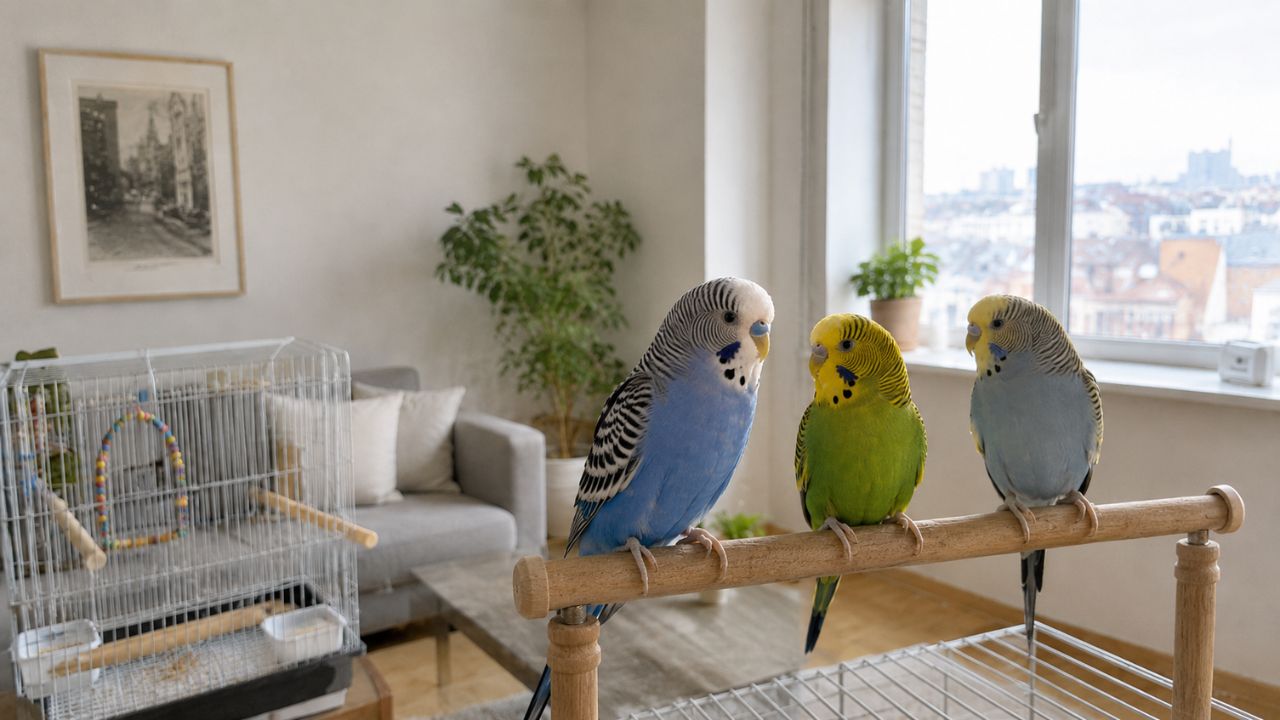

Neil has kept, bred, and sold budgies at Paradise Pets Swindon since 1988 — over 35 years of first-hand experience with these birds. In that time, some of his most frequent conversations have been with people in flats, small houses, and newer builds who are not sure whether a budgie will work in their space. This is his honest answer.
The question comes up at least once a week, sometimes more.
Someone comes in, has a look at the birds, and then says something like: “I’m in a flat — is that going to be a problem?” Or they mention a neighbour with a thin wall, or a landlord they are not entirely sure about, or a living room that is smaller than they would like. And they wait for me to either reassure them or talk them out of it.
The honest answer is that budgies are one of the very few pet birds that can genuinely thrive in an apartment — if you go about it properly. Not as a compromise, not as a lesser version of the real thing. Properly.
But “properly” means something specific. And that is what this article is about.
Why Most Birds Do Not Work in a Flat — And Why Budgies Are Different
The noise problem is the first thing that rules out most birds for apartment living.
Parrots — even small ones — scream. Not occasionally. Regularly, loudly, at specific times of day, in a way that travels through walls. Cockatiels are better, but a cockatiel contact calling at full volume is still a significant noise event. Sun conures are genuinely unsuitable for any building with shared walls. Ring-necked parakeets, lovebirds, caiques — all of them have vocal moments that would cause problems in a flat.
Budgies are different. Their natural vocalisation is a chatter — a warble, a soft mechanical burble that rises and falls throughout the day. It is pleasant rather than penetrating. In a normal flat with normal walls, a pair of budgies is not going to cause a noise complaint. In thirty-five years of selling birds, I cannot recall a single case where budgie noise was the source of a genuine neighbourly dispute.
They also have no outdoor requirements. A budgie’s entire world can exist within four walls. No garden, no outdoor run, no walks. For someone in a flat, that removes a problem that would otherwise be significant.
The Cage Size Problem — What Most People Get Wrong First
This is the point where I have to be direct, because it is where most apartment budgie setups fail before they have really started.
The cages sold in large chain pet shops as “budgie cages” — the brightly coloured ones that look tidy and compact on a shelf — are almost universally too small. Not marginally. Significantly. A budgie in a cage it cannot properly fly across will develop behavioural problems: feather plucking, repetitive pacing, excessive screaming. These are not personality traits. They are symptoms of an animal that is not getting what it needs.
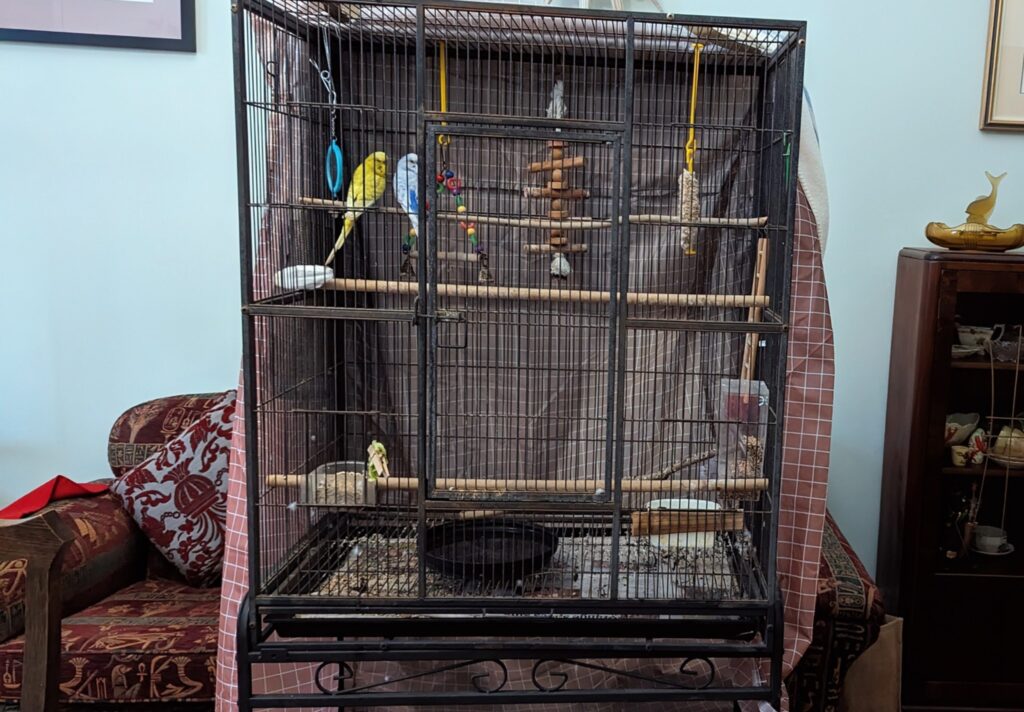
The minimum I recommend for a pair of budgies is 60cm wide, 40cm deep, and 60cm tall. Bar spacing no more than 12mm — wider than that and a budgie can get its head stuck. The cage needs to be wider than it is tall, because budgies fly horizontally, not vertically.
In a flat, this is entirely achievable. It does not require a large room. But it does require the right cage — and buying the right cage from the start is far better than buying a small one now and replacing it in three months.
One Budgie or Two — The Answer Depends on Your Household
My default recommendation is two. But it is worth understanding why, because the reason matters more than the conclusion.
A budgie kept alone will bond closely with its owner — which sounds appealing. In practice, it means that every hour you are out, at work, or simply in another room, the bird is without company. A lone budgie in an apartment where the owner is out for eight or nine hours a day is a lonely bird, and a lonely bird becomes a vocal one. The noise problem that people worry about with budgies in flats is almost always a lone-bird problem.
Two budgies keep each other company. They chatter together, sleep side by side, and settle far more calmly during your absences. In my experience, a pair of budgies in an apartment creates less noise disruption than a single bird — because neither of them is calling out for attention.
The nuance is this: if you are home for most of the day and want a bird that talks and forms a close personal bond, a single male budgie with consistent daily handling is the better route. That is a different situation from being out all day. Both can work. The household routine is what determines which approach is right.
Which Type of Budgie Actually Suits a Flat
There are two distinct types worth knowing about, and they suit different owners.
Standard Budgies — The Lively, Talkative Choice
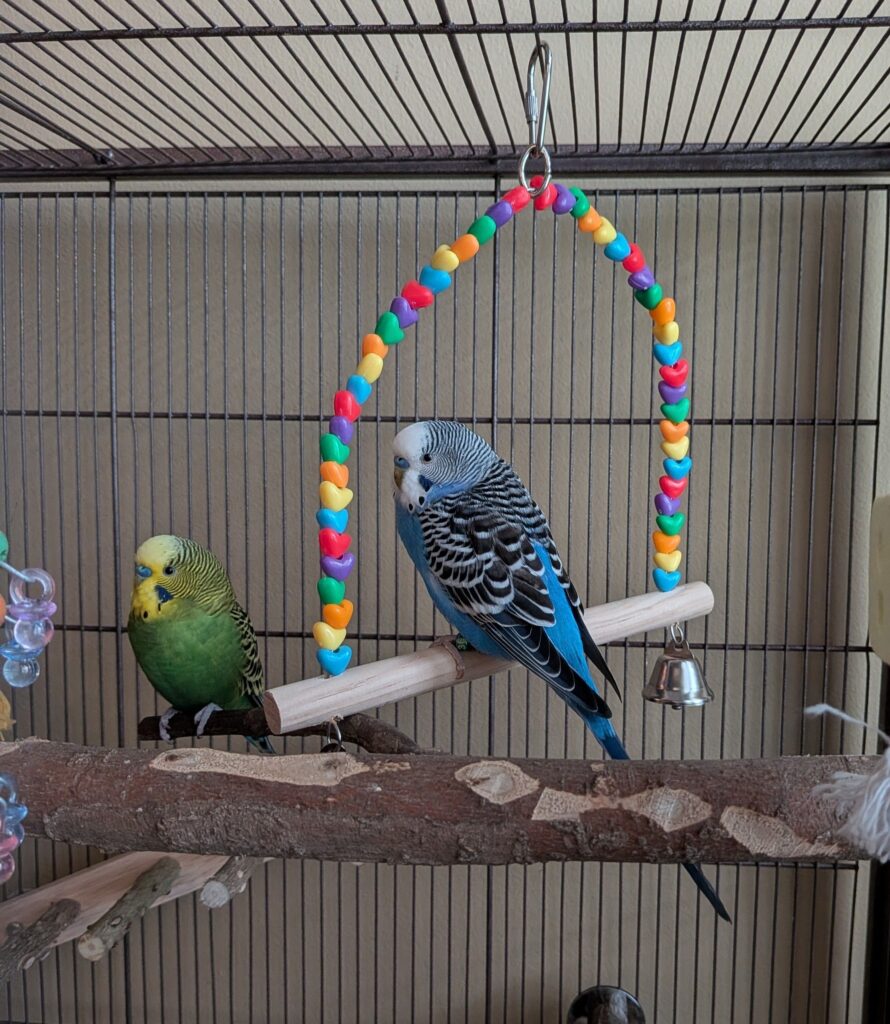
Standard budgies are what most people picture — bright, active, vocal birds in a wide range of colours. A well-handled male standard budgie has the highest potential for developing speech of any variety, and for owners who are home regularly and want an interactive, entertaining companion, they are excellent.
They are also the more energetic of the two types, which means they need more mental stimulation — more toys, more variety, more engagement from you. In a flat where you are present and attentive, that is not a problem. In a flat where the bird is left unstimulated for long periods, it becomes one.
English Budgies — The Calm, Settled Choice
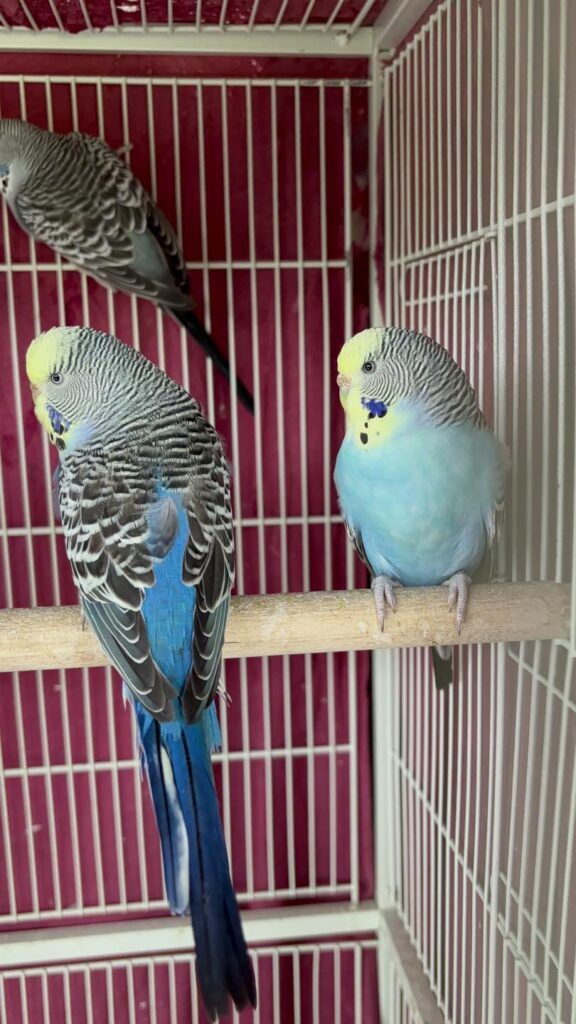
English budgies are larger, slower, and more placid than standard varieties. They have the distinctive fluffy head feathering that many people find particularly appealing, and their temperament is measurably gentler. They are less likely to develop extensive speech, but they are easier to handle, less frenetic in a small space, and their noise output is lower on average.
For someone in a flat who wants a calmer, more settled presence — especially if they have not kept birds recently, or if the flat has walls that are on the thinner side — an English budgie is often the better choice. They are also slightly more forgiving of the learning curve for new owners, because their slower movements make early handling less daunting.
We keep English budgies in stock alongside standard birds at Paradise Pets. If you come in, ask specifically — availability changes but we usually have both.
The Noise Question — Being Completely Honest
I said budgies are manageable in apartments. I want to be specific about what that means in practice, because vague reassurance is not very useful.
Two settled, well-kept budgies will chatter on and off throughout the day. It is not continuous. They eat, they nap, they go quiet, they start again. The sound is a warble — genuinely pleasant once you are used to it. Most owners stop actively noticing it within a week or two.
There are louder moments. When the television is on at a certain pitch, budgies often join in. When something excites them — birds outside the window, a new toy, your return home — the volume goes up briefly. When a lone budgie is left without company, it can call persistently and at higher volume.
In a normal flat with standard walls, none of this is a problem. I will be honest about the exception: if your flat has particularly thin shared walls, or if you have a neighbour who has previously been sensitive to noise, it is worth thinking carefully about where in the flat the cage will live. A room that backs onto a corridor is better than one sharing a wall directly with a next-door bedroom. A living room position, with the television and general household noise as natural cover, is usually the most comfortable arrangement for everyone.
Out-of-Cage Time — This Is Not Optional
A cage, however well chosen, is not enough on its own. Budgies need time outside the cage every day to fly freely. This is not a nice extra. It is a basic requirement.
In a flat, this means a room that has been made safe: windows and doors closed, ceiling fans off, no open water containers, no other pets present. You do not need to do anything elaborate. You close the windows, sit down, and let them fly. Thirty minutes to an hour daily is the minimum I recommend. Many owners do more, and the birds are better for it.
The practical question in a flat is usually which room. Most living rooms work well. The birds will return to the cage on their own when they are hungry or tired, which makes the whole process simpler than people expect. What does not work is deciding the out-of-cage time is too inconvenient on a regular basis. A budgie that never flies properly will deteriorate — physically and behaviourally — regardless of how good the cage is.
Placement in the Flat — Where the Cage Actually Goes
This matters more than people usually think, and it is a conversation I often have at the point of purchase.
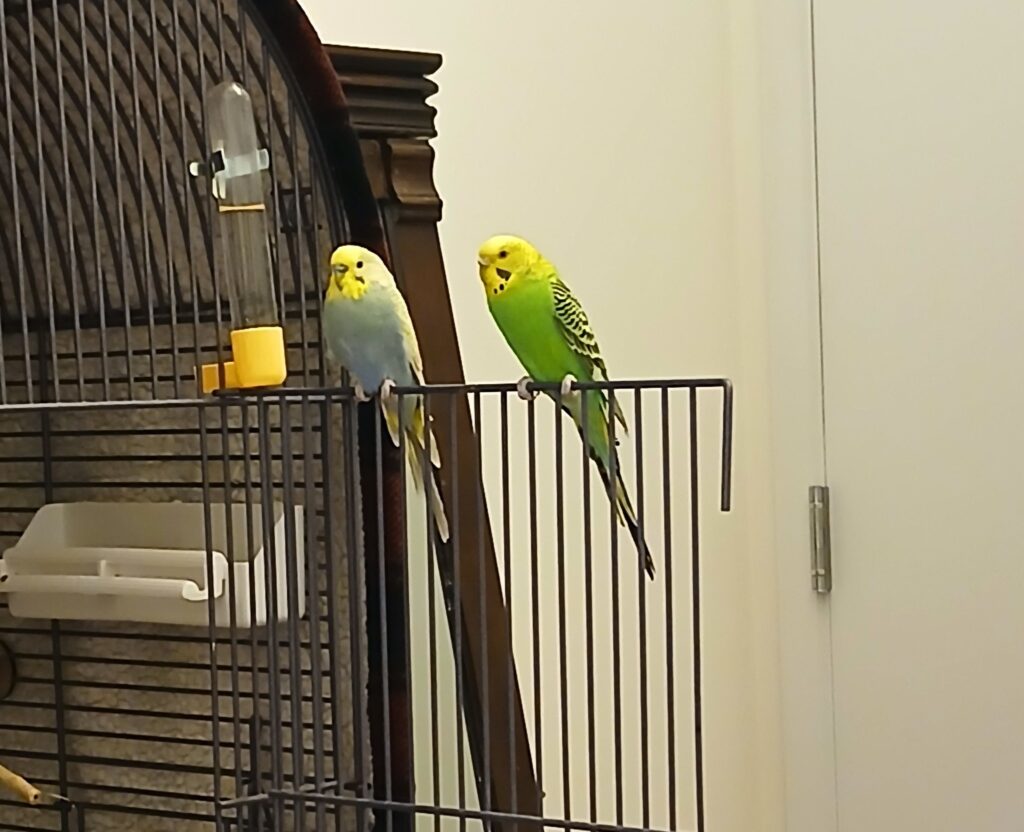
The living room is almost always the right answer. Budgies are flock animals — they are calmer, more content, and more interactive when they are part of the household’s daily activity. A bird in a back bedroom that nobody uses is a bored, lonely bird regardless of cage size.
The cage needs to be against a wall, not in the middle of a room — birds feel more secure with at least one solid side behind them. It should be away from draughts, never beside a window that is regularly opened, and never in a kitchen where cooking fumes and temperature fluctuations are a daily reality. Teflon-coated cookware, in particular, releases fumes when overheated that can be fatal to birds very quickly. If your kitchen and living room are open plan, position the birds well away from the cooking area and never use non-stick cookware without ventilation.
Direct sunlight on the cage for extended periods is also a problem — a few hours of morning light is fine, but full afternoon sun in a south-facing room in summer can overheat a bird very quickly.
Diet — Seed Is Not Enough, and This Comes Up Constantly
A budgie living on seed alone is a budgie that is technically being fed but is not being fed well. Seed is not a balanced diet. A bird maintained on seed only will likely develop fatty liver disease over time — one of the most common causes of premature death in pet budgies, and entirely preventable.
What a budgie needs is seed as a base — measured rather than constantly topped up, so the bird works through it rather than picking out favourites — alongside fresh food every day. Dark leafy greens: spinach, kale, parsley, coriander. Small amounts of carrot, apple, cucumber. Herbs are particularly well received and nutritionally valuable.
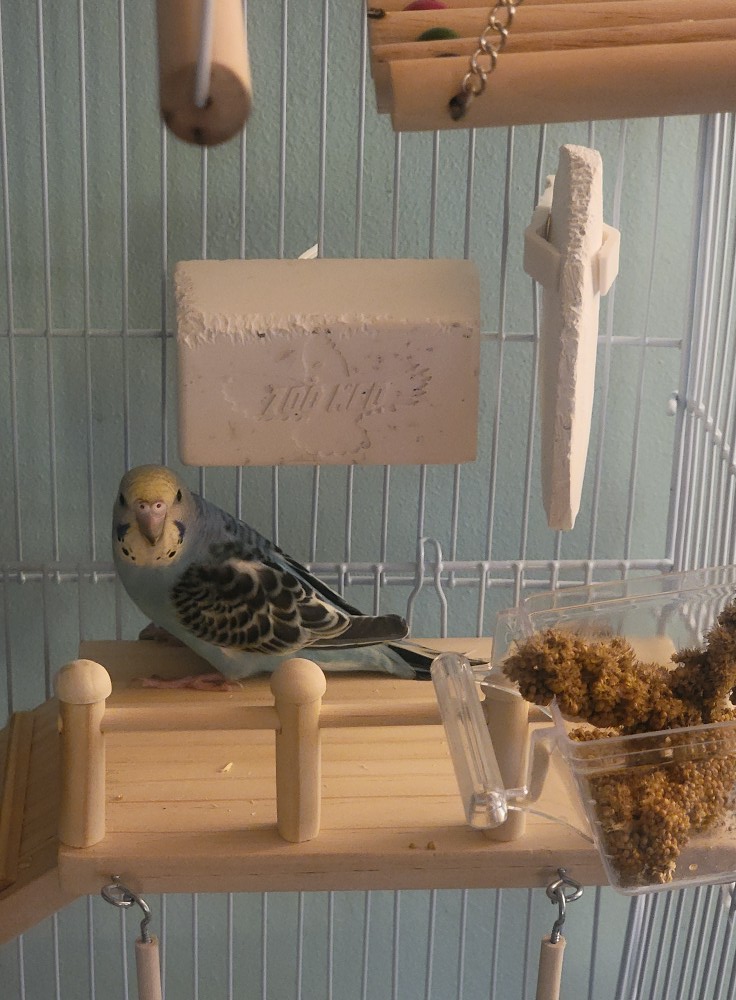
Millet spray is a treat, not a staple. Cuttlefish bone helps with calcium and beak condition. Fresh water changed daily — not every two days, daily.
In a flat this is no more difficult than anywhere else. A consistent routine matters more than an elaborate one.
A Quick Reference: Is a Budgie Right for Your Flat?
I get variations of this question every week. Here is how I would answer each one honestly.
You are home most of the day and your flat has normal walls. This is the ideal situation. Budgies will settle well, the noise will not be a problem for you or your neighbours, and the birds will be genuinely content. Go ahead with confidence.
Your walls are thin and a neighbour has been sensitive to noise in the past. This is manageable rather than a dealbreaker. An English budgie rather than a standard one will give you a calmer, quieter bird. Position the cage away from the shared wall. Two birds that are content and well-kept will be quieter than one bird that is bored or lonely.
You are out all day and want a companion bird. Two birds rather than one is not optional in this situation — it is the difference between two happy birds and one unhappy one. A lone budgie left alone for eight or nine hours a day will become stressed and vocal. A pair will manage the absences calmly.
You want a bird that talks. A single male budgie, handled consistently from a young age, gives you the best chance of this. It takes patience and daily time with the bird — but it is genuinely achievable, and when it happens it is remarkable. If speech is the priority, a single bird with real daily interaction is the route.
You have no outdoor space at all. This is not a problem for budgies. They have no outdoor requirements. Everything they need can be provided indoors, which is one of the main reasons they suit flat living better than almost any other bird.
Your kitchen and living area are open plan and you use non-stick cookware regularly. This needs serious thought before you go ahead. Teflon and similar coatings release fumes when overheated that are fatal to birds very quickly — faster than most people realise. If the open-plan layout means the birds would regularly be near the cooking area, either reconsider the placement or switch to stainless steel cookware. Come in and talk to us about this specifically — it matters.
You are renting and you are not sure what your tenancy says about pets. Check before you buy. Most tenancy agreements allow caged birds, but not all, and some require landlord permission. It takes five minutes to clarify and it is far better to know in advance.
What to Look For When You Come to Buy
A healthy budgie at purchase has bright, dry eyes — no discharge, no crustiness. Feathers smooth and close to the body when at rest, not puffed up. Clean nostrils. Alert and responsive — moving around the cage, interested in what is happening nearby.
A budgie sitting fluffed at the bottom of the cage is already unwell. Do not buy one hoping it will improve at home. It will not, and the first weeks of ownership will be spent managing illness rather than settling the bird in.
At Paradise Pets we source all our birds from UK breeders we know personally. We do not import — every budgie we sell has been bred in this country, handled from a young age, and comes to us from a source we have a direct relationship with. That matters because the stress of long-distance transport suppresses a bird’s immune system in ways that are not always visible at purchase but show up in the weeks after. A bird from a good local breeder, properly socialised, settles faster and stays healthier.
When you visit, ask us about the individual birds we have available. We can tell you which ones have been handled, which are more confident, and which might suit your specific flat situation. That kind of matching is something we take time over.
One Last Thing
I have sold budgies to people in studio flats who went on to have years of genuinely happy bird ownership. I have also had conversations where the honest answer was that the specific situation — the open-plan kitchen, the paper-thin walls, the ten-hour working days with no one home — was not quite right for a bird right now.
Both kinds of conversation are worth having. The first kind ends with someone leaving with the right bird for their home. The second kind ends with someone coming back six months later, having sorted out the thing that needed sorting, ready to do it properly.
Either way, come in and talk to us first. We stock budgies year-round — standard and English varieties, males and females, a range of colours — all UK-bred and handled from young. There is no pressure. The right bird in the right flat is worth taking the time to find.
Visit Us at Paradise Pets Swindon
We stock standard and English budgies year-round in a range of colours. All UK-bred, all handled from young. Come in and spend some time with the birds — or call ahead to ask what we currently have in stock.