

From the counter at Paradise Pets
Neil has kept, bred, and sold cage and aviary birds at Paradise Pets Swindon since 1988 — over 35 years of first-hand experience with budgerigars, cockatiels, canaries, and dozens of other species. This article is based on what he sees and hears from customers every single week.
Someone comes in most weeks — sometimes alone, sometimes with a child in tow — and asks me the same question. They have already half-made up their mind. They want a bird. They have been thinking about it for a while. And the question, when it comes, is almost always phrased the same way:
“Budgies are easy to keep, aren’t they?”
And I always pause before I answer.
Not because the question is difficult. But because the honest answer is not a simple yes or no — and I have learned, over 35 years behind this counter, that the people who get the most out of a budgie are the ones who understood what they were taking on before they bought one. Not the ones who were told what they wanted to hear.
So here is my actual answer. The one I give every week. The one that surprises people.
“A budgie is one of the most rewarding birds you can keep. It is also one of the most misunderstood. Those two things are connected.”
What Most People Think a Budgie Is
The image most people have of a budgie goes something like this: a small, cheerful bird that sits in a cage, chirps occasionally, costs very little to keep, and requires almost no attention. A living ornament, essentially. Something for the children to enjoy without too much effort from the adults.
I understand where this comes from. Budgies are small. They are inexpensive to buy compared to most pets. They do not need walking. They do not moult on the sofa. And for decades they were sold — in enormous numbers — with very little information about what they actually need to thrive.
The result is that an enormous number of budgies in the UK live in cages that are too small, alone when they should have company, with no mental stimulation, and with owners who genuinely did not know any better. Those budgies are not happy birds. And unhappy budgies develop problems — feather plucking, screaming, repetitive behaviours — that then make the owners feel guilty and overwhelmed.
None of that has to happen. But it starts with being honest about what a budgie actually is.
What a Budgie Actually Is
Budgerigars are wild birds from Australia. In the wild, they live in enormous flocks — sometimes thousands of birds — constantly moving, communicating, foraging, and interacting with each other. They are highly social, highly intelligent, and highly active. That is what they are, underneath the friendly little face in the cage.
Which means that a budgie kept alone, in a small cage, with nothing to do and no one to interact with for most of the day — is an animal living in almost total contradiction to its nature.
This does not mean budgies are difficult to keep well. It means they need the right things. And once you give them those things, they are genuinely extraordinary companions.
They Need Space to Fly
A budgie’s primary mode of movement is flight. A cage where they can barely spread their wings is not appropriate — it is the equivalent of keeping a dog in a box. The cage needs to be wide enough for the bird to actually fly between perches — not just hop. Length matters far more than height for a budgie. A cage that is at least 60cm wide is a minimum for a single bird. Bigger is always better.
They Need Mental Stimulation
Budgies are curious and intelligent. A bare cage with two perches and a mirror is not enough. They need things to investigate — foraging toys, rotating objects, things they can chew and shred. A bored budgie is a stressed budgie, and stress in birds manifests in ways that are hard to reverse once they have set in.
They Need Company
This is the one that surprises people most. A single budgie, kept without another bird, will bond intensely with its owner — which sounds appealing. But it also means that when the owner is out of the house for eight hours, that bird is alone in a way that causes real distress. Two budgies kept together are calmer, more settled, and — counterintuitively — often friendlier with people as well, because they are not desperately seeking human company out of loneliness.
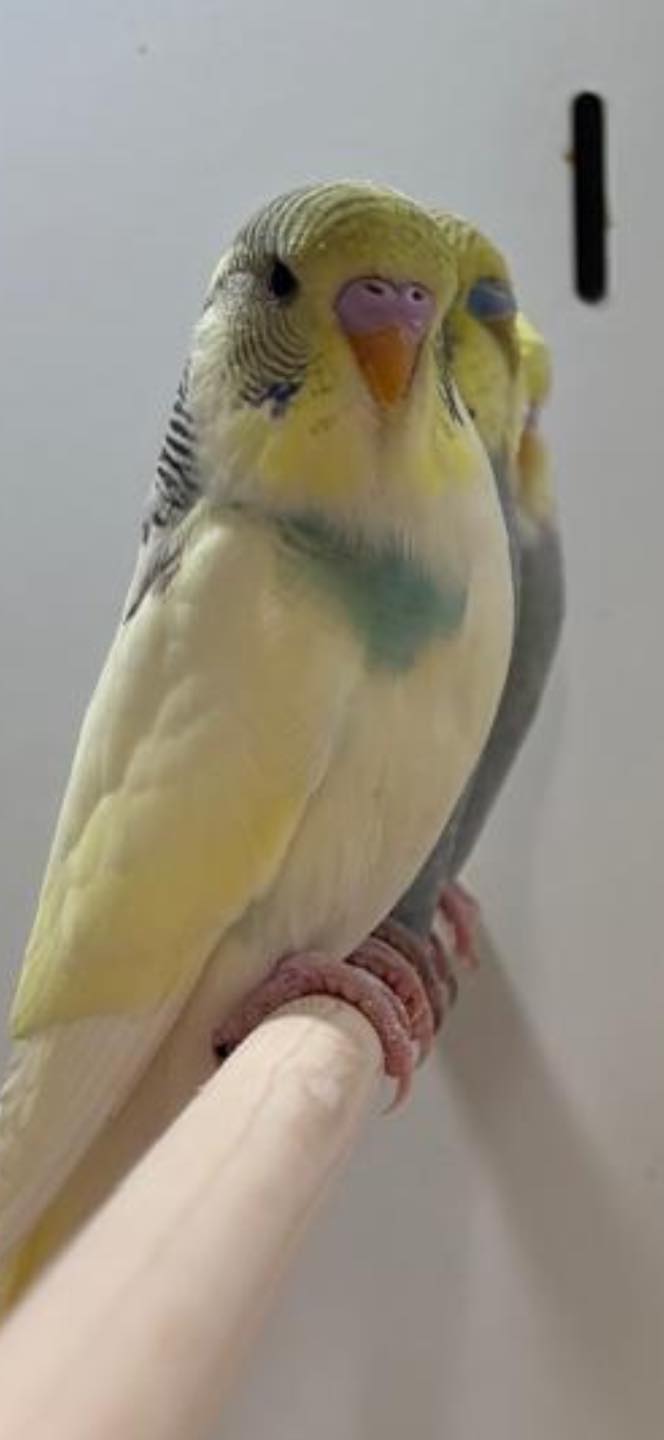
If you are at home most of the day and can genuinely give a single budgie hours of attention and out-of-cage time daily — a single bird can work. But for most households, two budgies is the more honest recommendation.
They Need a Proper Diet
Seed-only diets are one of the most common causes of health problems in budgies. Seeds are high in fat and low in the nutrients budgies need long-term. A good budgie diet includes a quality seed mix as the base, supplemented with fresh vegetables daily — leafy greens, carrot, broccoli — and ideally some sprouted seeds. Pellets formulated for budgies can also be introduced, though many birds take time to accept them.
- A mirror counts as company — it does not. A mirror is a reflection, not a flock. It can actually cause obsessive behaviour in some birds.
- Budgies do not need out-of-cage time — they do, ideally every day, in a safe room where they can stretch and fly properly.
- You only need to change the water every few days — water should be changed daily. Budgies dip food in their water constantly, and bacteria build up quickly.
- Budgies do not need vet care — they do. An avian vet check when you first get your bird is a good idea, and any signs of illness need prompt attention. Birds hide illness instinctively.
- A budgie that is not talking is unhappy — not necessarily. Some budgies talk extensively, others never do. It depends on the individual bird, not how well it is kept.
- You can leave a budgie alone for a long weekend — you should not. They need fresh food, water, and ideally company every day.
The Part Nobody Mentions — What Budgies Are Actually Like When They Are Happy
I have spent a lot of this article talking about what budgies need. I want to spend equal time on what they give — because a well-kept budgie is genuinely one of the most rewarding pets I know of, and I have been around animals my entire life.
A happy budgie talks. Not all of them, but many — and some develop remarkable vocabularies of dozens or even hundreds of words, used in context, in a voice that sounds uncannily like a small person muttering to themselves. I have had customers come back years after buying a bird from us, delighted, playing recordings of their budgie holding what sounds like an actual conversation.
A happy budgie plays. They investigate everything. They will dismantle a toy you spent ten minutes setting up in thirty seconds, looking enormously pleased with themselves. They have favourite perches, favourite people, and favourite foods. They recognise their owners and react differently to them than to strangers.
A happy budgie that has been handled gently from a young age will sit on your shoulder, preen your hair, and fall asleep against your neck. They make a soft, continuous chattering sound when they are fully content — birdkeepers call it “warbling” — and once you have heard it regularly, the absence of it tells you immediately that something is off.
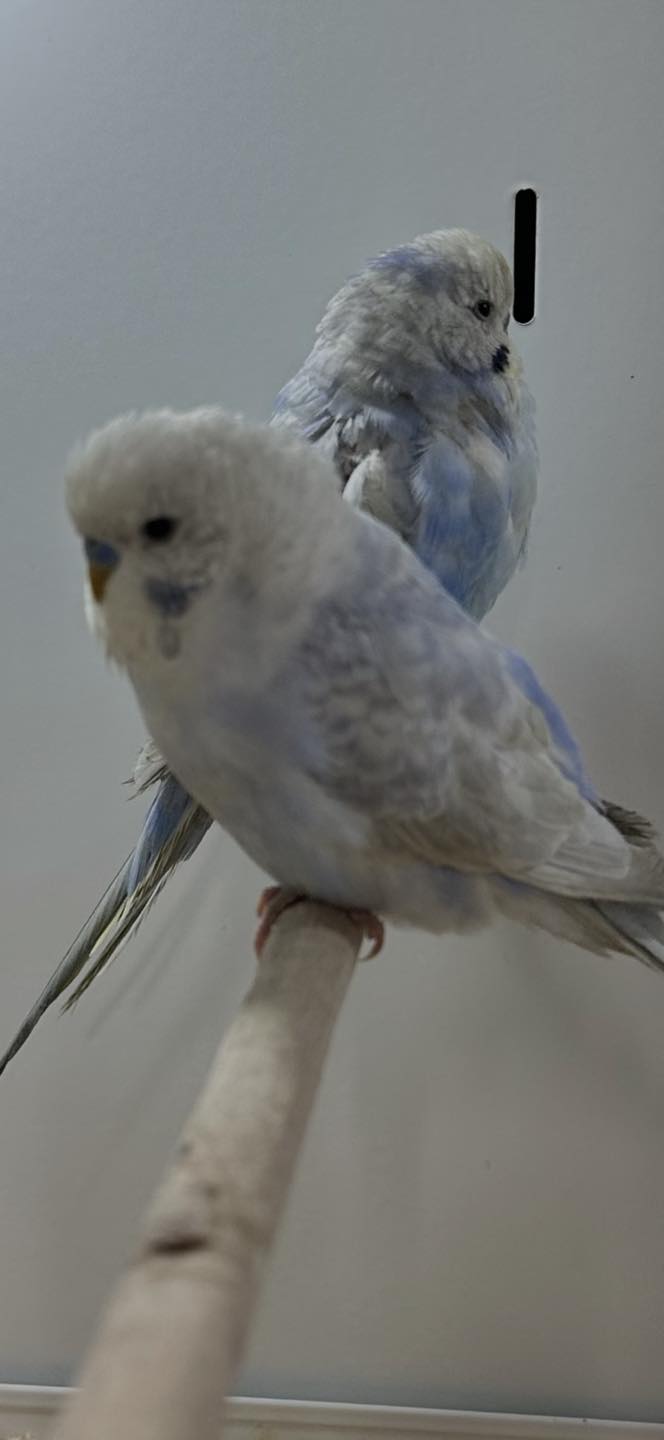
That is the budgie most people imagine when they walk through our door. And it is entirely achievable — it just requires the right start.
When a Budgie IS the Right Choice
Given everything above, here is my honest assessment of who budgies work best for.
- People who are home for a significant part of the day and can give the bird regular, genuine attention — not just a glance as they pass
- Households where someone is genuinely interested in the bird as an animal — curious about its behaviour, willing to learn its individual personality
- Families with children who are old enough to be calm and gentle around birds — roughly eight or nine and above, though this varies by child
- People who are happy to commit to daily care — fresh food, fresh water, cage cleaning — as a non-negotiable routine rather than something done when convenient
- Anyone willing to consider two birds rather than one — the pair will be healthier and happier, and the owner’s experience will be richer for it
- People who understand that a budgie is a 7–10 year commitment and are genuinely comfortable with that
If most of those apply to you, a budgie — or a pair of budgies — could be one of the best decisions you make. Come and see us and we will help you choose the right birds.
The Questions I Ask Before I Recommend a Budgie
When someone comes in seriously interested, I ask a few things before we go any further. Not to put them off — to make sure the match is right.
- How much time is actually spent at home each day?
Not in theory — in practice. If everyone leaves at eight and returns at six, a single budgie will spend ten hours alone. That matters, and it changes my recommendation. - Have you thought about two birds rather than one?
Most people have not considered this. I explain the reasons. Some people are set on one bird for specific reasons — usually wanting a talking pet that bonds closely to them — and that is a valid choice with the right commitment. But two birds is usually the better answer. - What size cage are you planning on?
The answer to this question tells me a great deal. If someone describes a very small cage, we talk about why that will not work, and I show them what appropriate looks like. - Are there other pets in the house?
Cats and budgies require careful management. Dogs vary. I need to know before making a recommendation, because the setup for a household with a cat is completely different. - What do you know about budgie diet?
If the answer is “seeds,” we have a conversation. Not a lecture — just a practical explanation of what good nutrition looks like and why it matters for a bird you want to live a long, healthy life.
These questions take five or ten minutes. They have, over the years, resulted in some people deciding a budgie is not quite right for them at this point — and coming back later, properly prepared, and having a wonderful experience. And they have resulted in many more people walking out with a bird — or a pair — and genuinely thriving with them.
The Budgies We Stock at Paradise Pets
We stock budgerigars year-round, sourced from trusted UK breeders and bred with health and temperament as the priority. We do not import birds. Every budgie we sell has been born and raised in this country by people we know and trust.
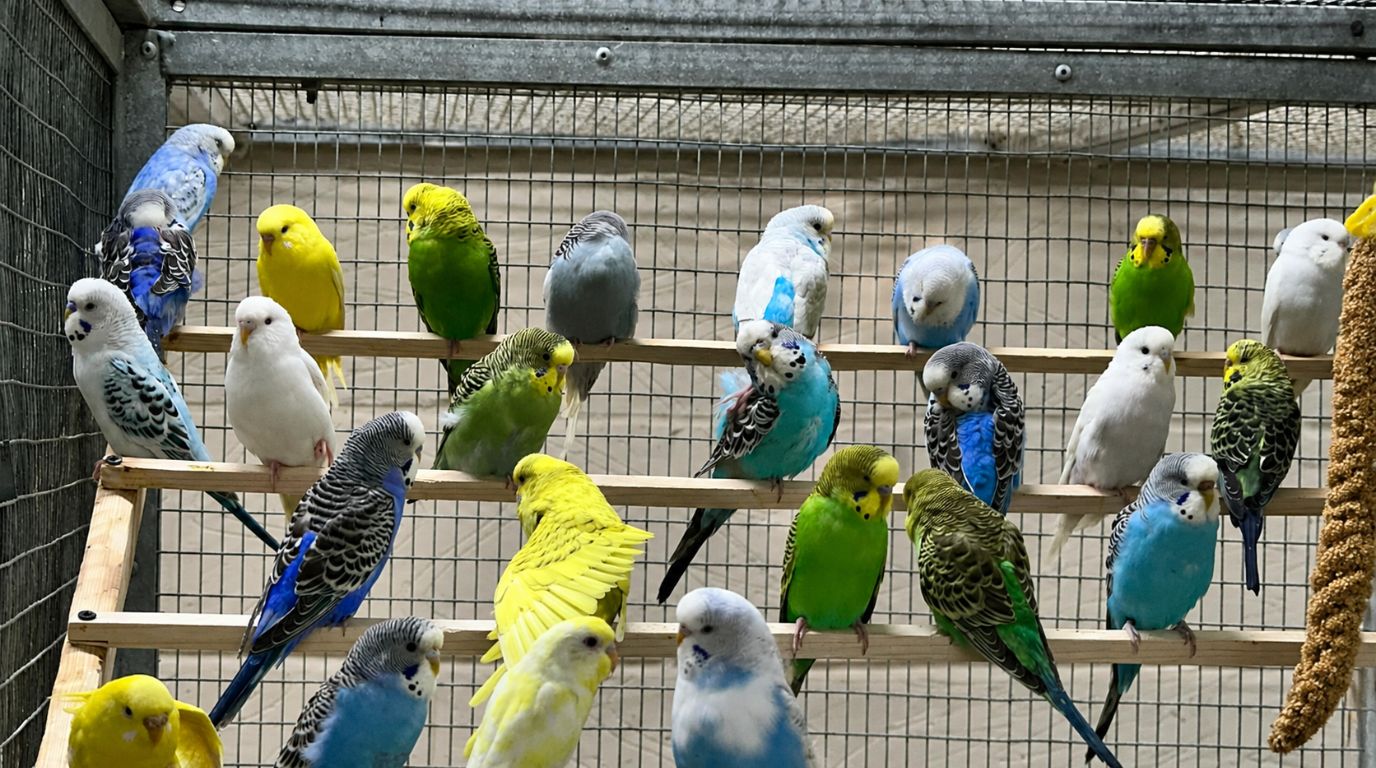
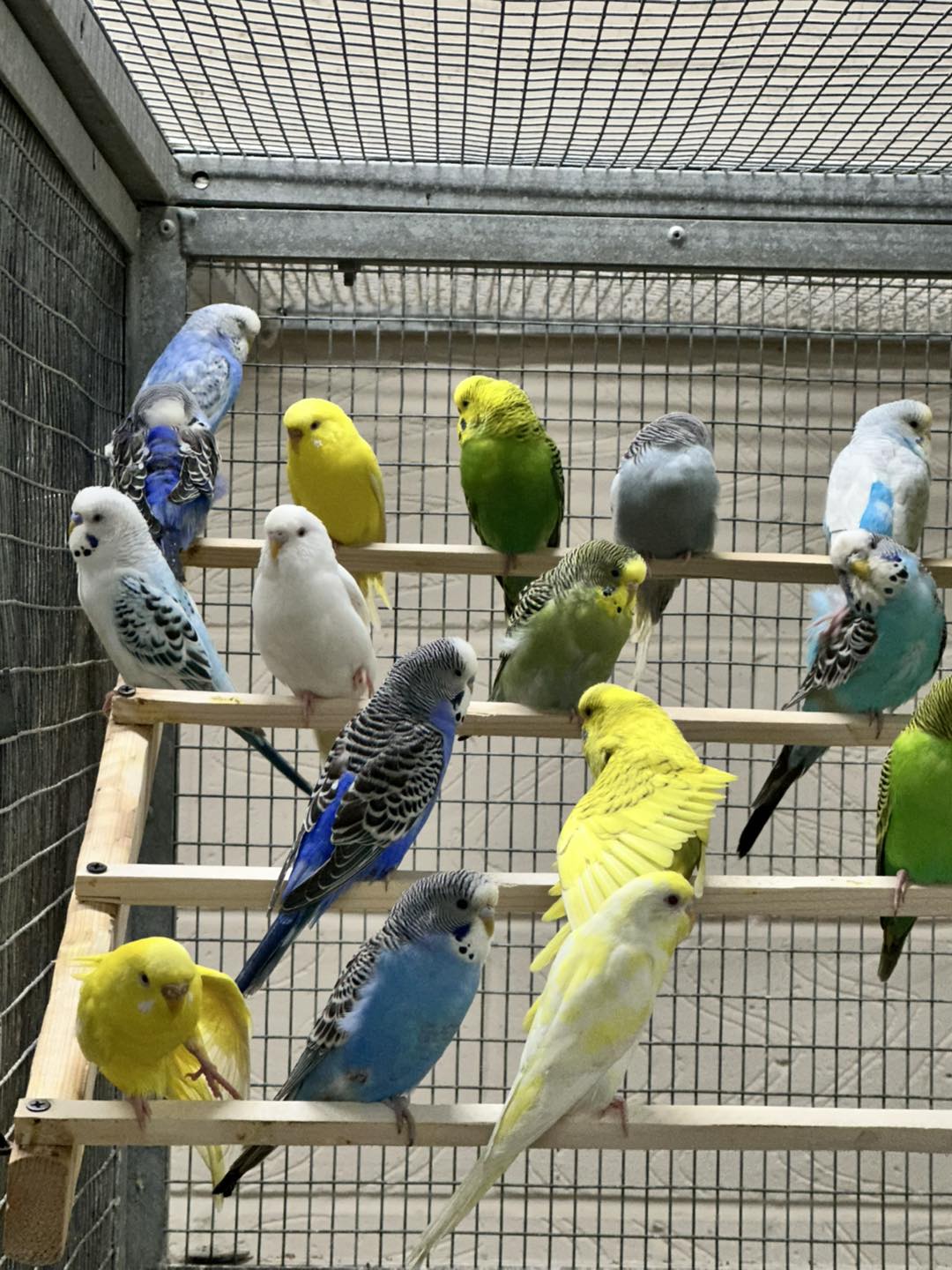
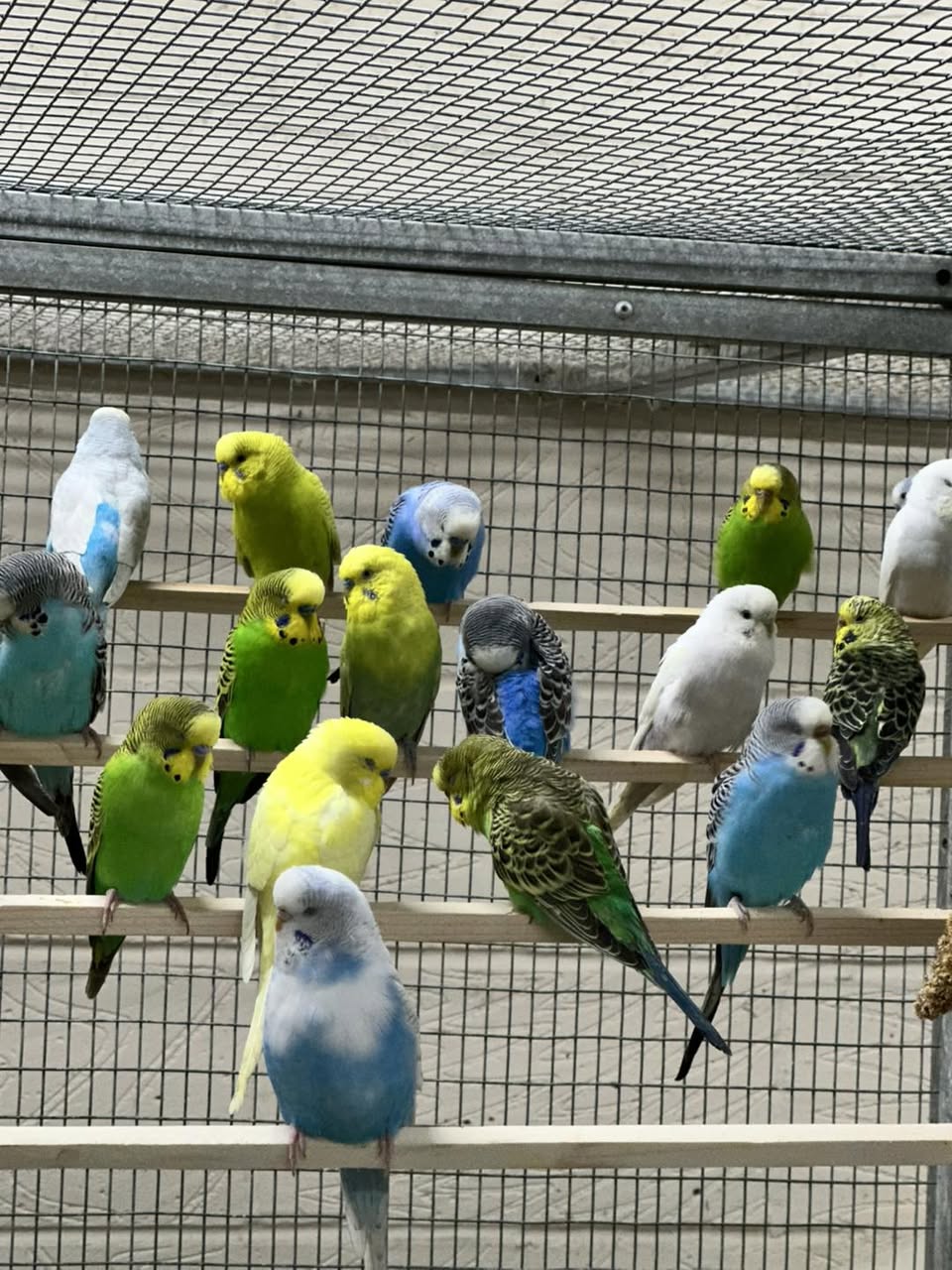
We typically stock a range of colour varieties — including the classic green and yellow, blues, whites, pieds, and others depending on availability. If you are looking for something specific, it is always worth calling ahead.
Beyond budgies, we stock a wide range of cage and aviary birds — including cockatiels, canaries, zebra finches, and others depending on the season. Our birds section has more detail on what is currently available.
| Variety | Temperament | Notes |
|---|---|---|
| Green / Yellow (Wild Type) | Confident, active | The classic budgie — hardy and sociable. Good for first-time owners. |
| Blue / White | Calm, inquisitive | Popular for their striking colour. Same care needs as green varieties. |
| Pied | Variable — often bold | Patchy colouring. Personality varies by individual bird. |
| Albino / Lutino | Gentle, often quieter | All-white or all-yellow. Can be slightly more delicate — worth discussing before buying. |
| English Budgie | Calm, slower-moving | Larger than standard budgies. Distinctive feathering around the head. Very gentle. |
Availability changes week to week. The best way to see what we have is to come in — or give us a call on 01793 512400 before making the trip.
One More Thing — And I Say This to Everyone
A budgie is not a beginner’s pet in the sense that it requires no thought or effort. It is a beginner-friendly pet in the sense that, with the right setup and the right approach, it is entirely manageable for someone who has never kept a bird before.
The difference matters. Because people who walk in expecting zero effort tend to end up with an unhappy bird and a guilty conscience. And people who walk in knowing what they are taking on — and are genuinely fine with it — tend to end up with one of the most entertaining, characterful, genuinely surprising animals they have ever owned.
We have been selling budgies at Paradise Pets since 1988. Some of the birds we have sold have lived for twelve years, talked in full sentences, and been genuinely beloved members of families. That is not rare. It is what happens when the right bird goes to the right home.
Come in and talk to us. We are at Manor Garden Centre in Cheney Manor — see our full range of birds, or browse our small animals while you are here. There is no pressure and no rush. We would rather spend twenty minutes helping you make the right decision than sell you a bird in five minutes that is not the right fit.
That is what 35 years of doing this teaches you.
Visit Us at Paradise Pets Swindon
We stock budgerigars, cockatiels, canaries, zebra finches, and a range of other cage and aviary birds — all from trusted UK breeders, all kept in proper conditions on site. Come in and see what we currently have, or call ahead if you are looking for something specific.
We also stock a full range of rabbits, guinea pigs, and hamsters and gerbils — all UK-bred and ready to go to good homes.
Manor Garden Centre, Cheney Manor Industrial Estate, Swindon, SN2 2QJ