
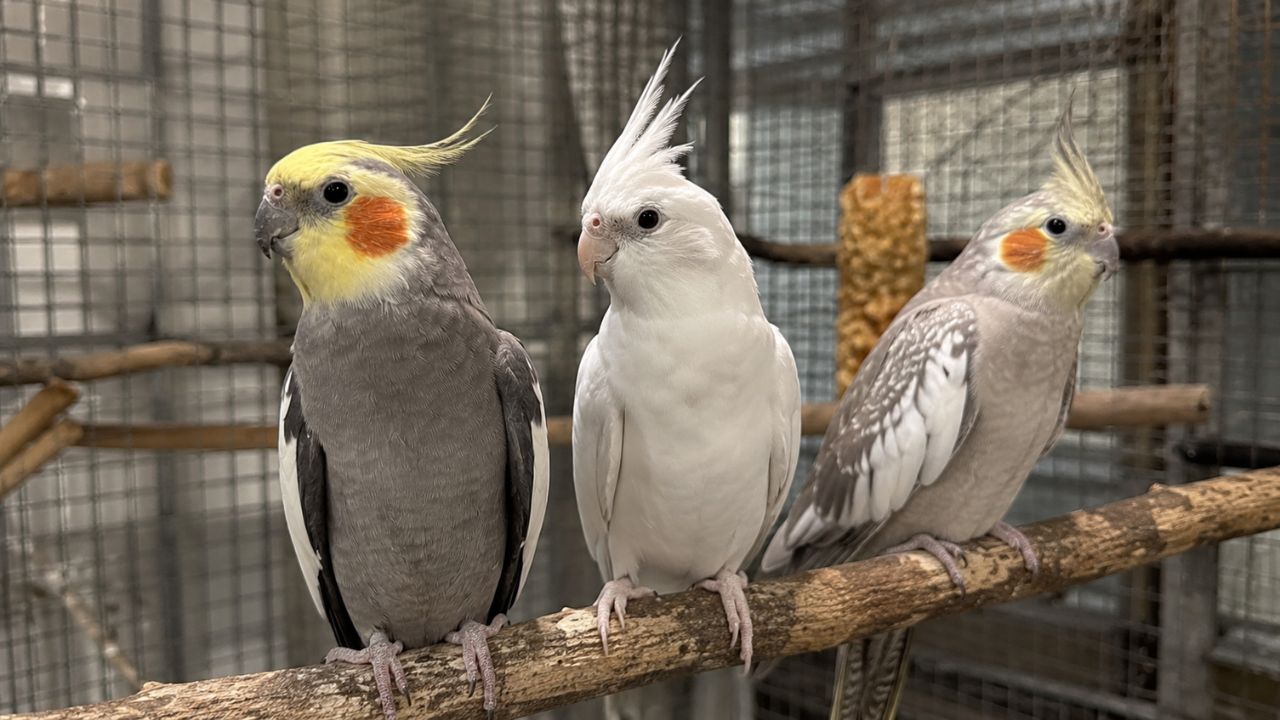

Neil has kept, bred, and sold cockatiels at Paradise Pets Swindon since 1988 — over 35 years of first-hand experience with these birds. In that time, he has helped hundreds of UK families decide whether a cockatiel is right for them — and just as importantly, helped some decide it is not. This article is his honest, balanced take.
Right, let me be straight with you from the start. I have spent 35 years selling cockatiels, breeding them, advising people on them, and occasionally watching them come back to the shop because someone made the wrong choice. So when someone walks in and asks me “should I get a cockatiel?” — I do not give them a sales pitch. I give them the honest answer.
The honest answer is — it depends.
It depends on your household. Your routine. Your tolerance for noise. How much time you can give the bird every day. Whether you have other pets. Whether you have young children. Whether you live in a flat or a house. Whether you understand that a cockatiel is going to be part of your life for 15 to 20 years, sometimes longer.
That is the conversation I have at the counter every week. And this article is my attempt to have that conversation with you before you make a decision you might regret — or before you talk yourself out of a bird that would actually be perfect for your home.
What A Cockatiel Actually Is
Before we get into pros and cons, let me make sure we are on the same page about what we are talking about.
Cockatiels are medium-sized parrots — significantly bigger than a budgie, significantly smaller than something like an African Grey or a Macaw. They are native to Australia, where they live in flocks in dry inland areas. They have been kept as cage birds for well over a hundred years and selectively bred into a range of colour mutations, but in their nature, they are still flock birds — social, vocal, and emotionally attached to their group.
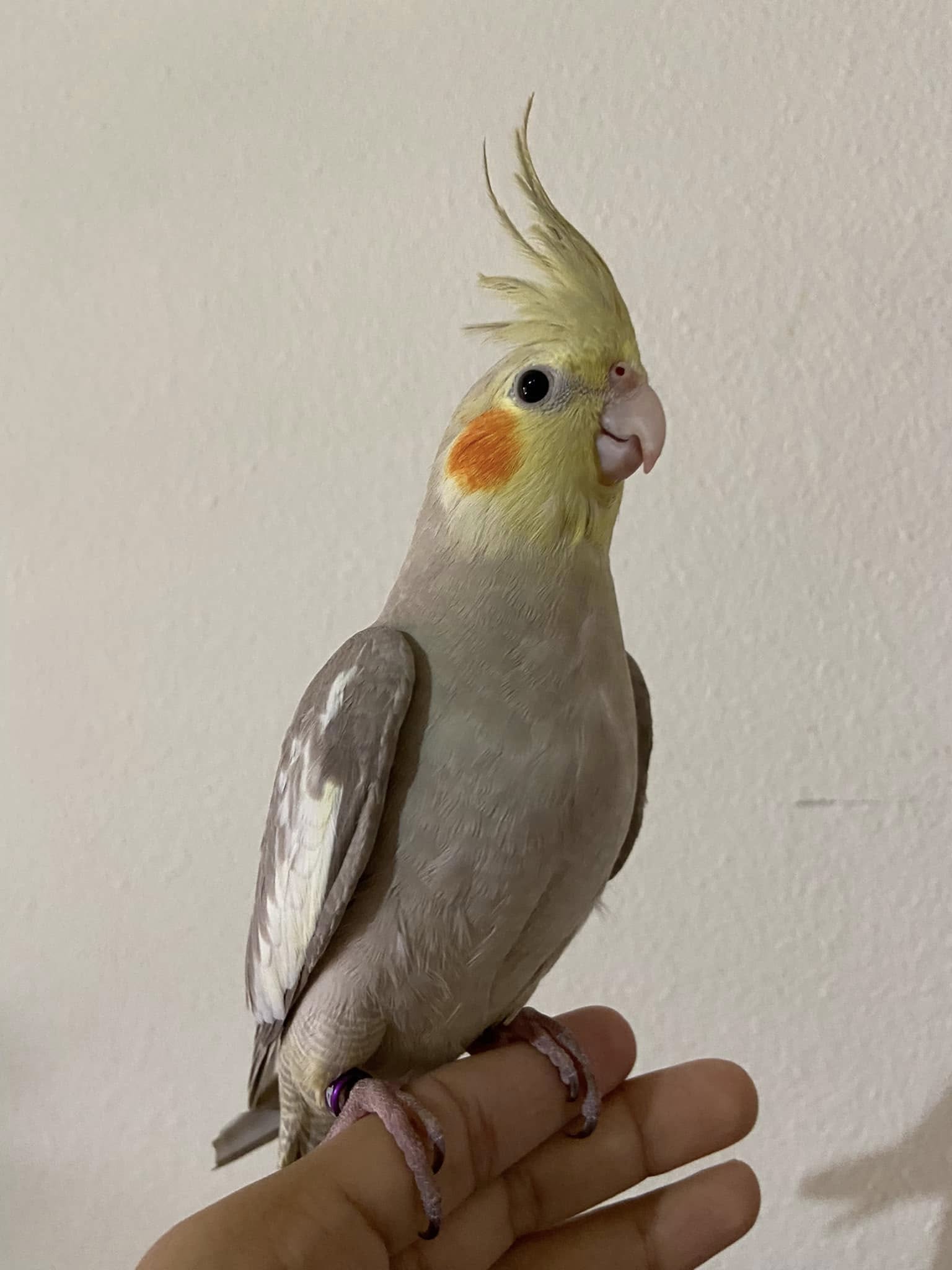
In a home, that “flock” becomes you. And that comes with both wonderful and difficult consequences.
The Pros — Why People Genuinely Love Cockatiels
Let me start with the good stuff, because there is a lot of it. When a cockatiel is well-matched to a home, the experience can be genuinely transformative.
1. They Bond Properly With Their People
This is the one I hear about most often when customers come back to tell me how things are going. A cockatiel that has been raised with people, handled gently, and given consistent attention forms a real, observable bond with its owner. It will recognise you across the room. It will call for you when you leave. It will sit on your shoulder while you watch television and gently preen your hair. It will whistle when you come home from work.
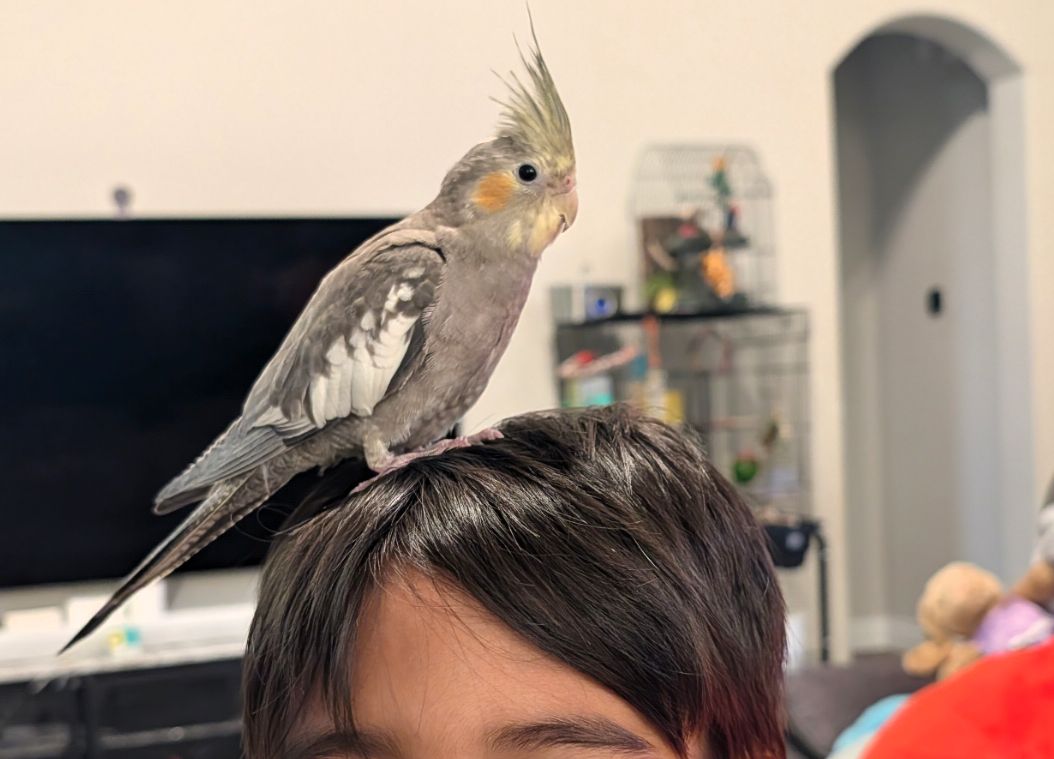
This is not anthropomorphism. It is documented animal behaviour. Cockatiels are pair-bonding birds in the wild, and when they are kept as single birds in a home, that pair-bonding instinct often transfers to a chosen human. That is a different kind of pet experience to a budgie, a canary, or a small mammal.
2. The Males Sing And Whistle Tunes
Male cockatiels are properly musical birds. They learn tunes, they whistle melodies, they invent their own songs, and they call back when you whistle to them. I have customers who have taught their cockatiels theme songs from television programmes, nursery rhymes, and even the opening notes of their doorbell.
Females are quieter and do not generally learn tunes in the same way, but they have their own vocalisations and personalities. If music and whistling is part of what you want from a pet bird, get a male.
3. They Can Be Genuinely Tame And Hand-Friendly
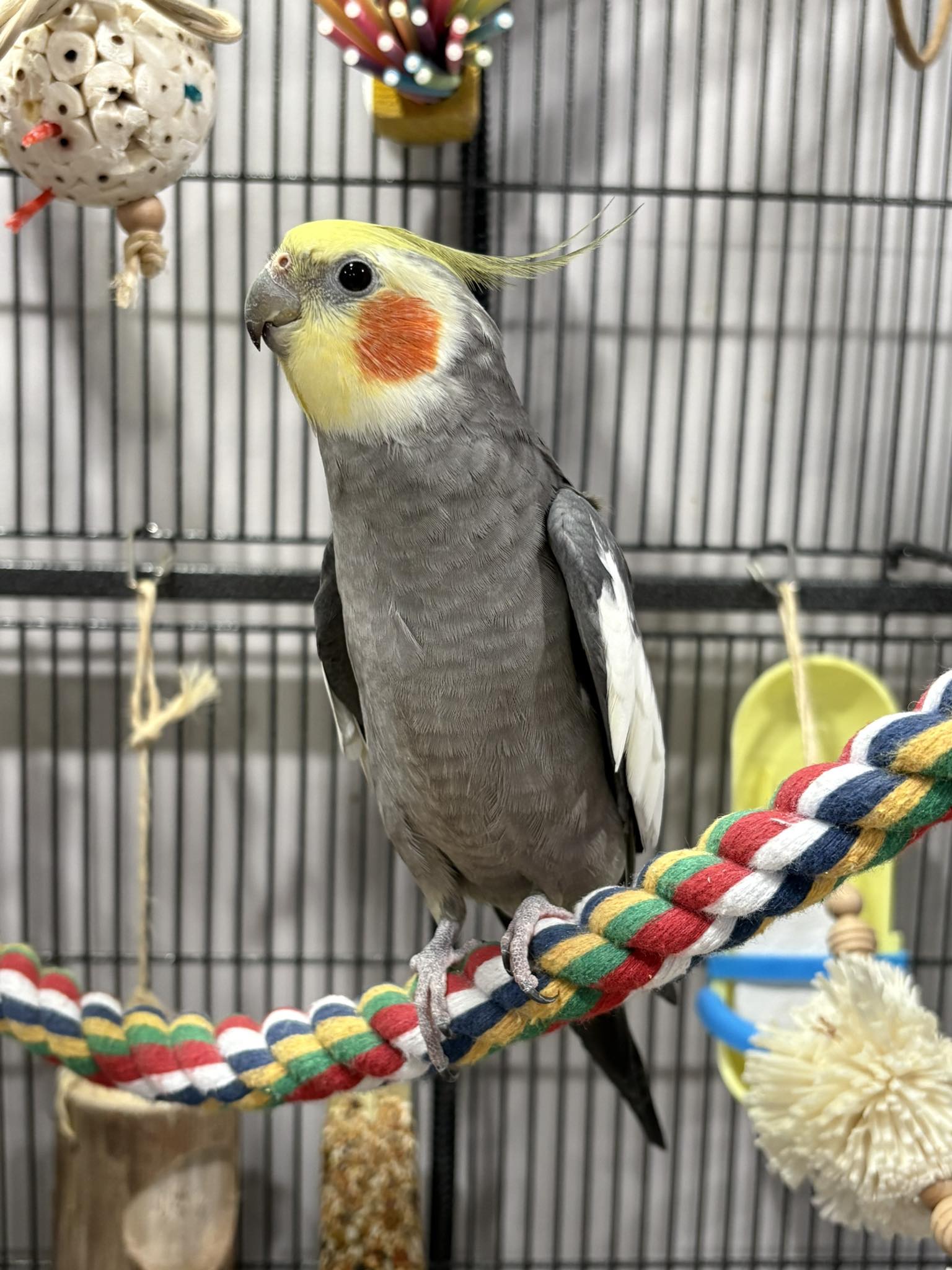
A well-handled cockatiel will step up onto your finger willingly, sit on your shoulder for hours, eat from your hand, and tolerate gentle stroking around the head and crest. Some will even allow full-body cuddles, though this varies a lot by individual personality.
This level of physical interaction is something budgies rarely match. If you want a bird that you can actually hold and engage with directly — not just observe from outside a cage — cockatiels are one of the best species available for that.
4. They Have Genuine Individual Personalities
Every cockatiel I have ever sold has had a distinct personality. Some are bold and outgoing. Some are shy and need patient socialisation. Some are cheeky and develop favourite games. Some are sensible and calm. After a few weeks living with one, you know what kind of bird you have on your hands.
That personality recognition is part of what makes them rewarding to live with. You are not just keeping a bird in a cage. You are sharing your home with a creature who has preferences, moods, and routines of its own.
5. They Live A Long Time — Yes, This Is A Pro
I list this as a pro and a con because it cuts both ways. A well-kept cockatiel lives 15 to 25 years. Some live longer. That is a significant relationship — most dogs do not live that long. If you are someone who values long-term companionship and you are committed to that, a cockatiel will be part of your life for decades. That is a beautiful thing.
Just make sure you have read the cons section too before you commit to that.
- Are home for several hours each day — retired, working from home, or with a household that has someone in most of the time
- Have at least two hours of attention to give daily — not stretched thin between work, children, and other commitments
- Want a bird you can hold and interact with directly — not just observe from outside a cage
- Live in a house rather than a flat with thin walls — cockatiels are not quiet birds
- Have no young children under six — small fingers and curious birds are a difficult combination
- Are prepared for a 15 to 25 year commitment — this is not a casual decision
The Cons — What People Do Not Always Want To Hear
Now the honest part. These are the things that make me sometimes recommend a budgie or a canary instead of a cockatiel — even when someone has come in convinced they want a cockatiel. Please read these carefully, because every one of them is something I have seen cause real problems.
1. They Are Noisier Than People Expect
A cockatiel has two main calls — the “morning call” at sunrise and the “evening call” at sunset — and both can be properly loud. We are not talking about a budgie’s chatter or a canary’s song. We are talking about a sharp, piercing whistle that can carry through walls.
For people in detached houses, this is rarely an issue. For people in flats, terraces, or semi-detached houses with thin walls — it can be a problem. I have had customers come back upset because their neighbours have complained.
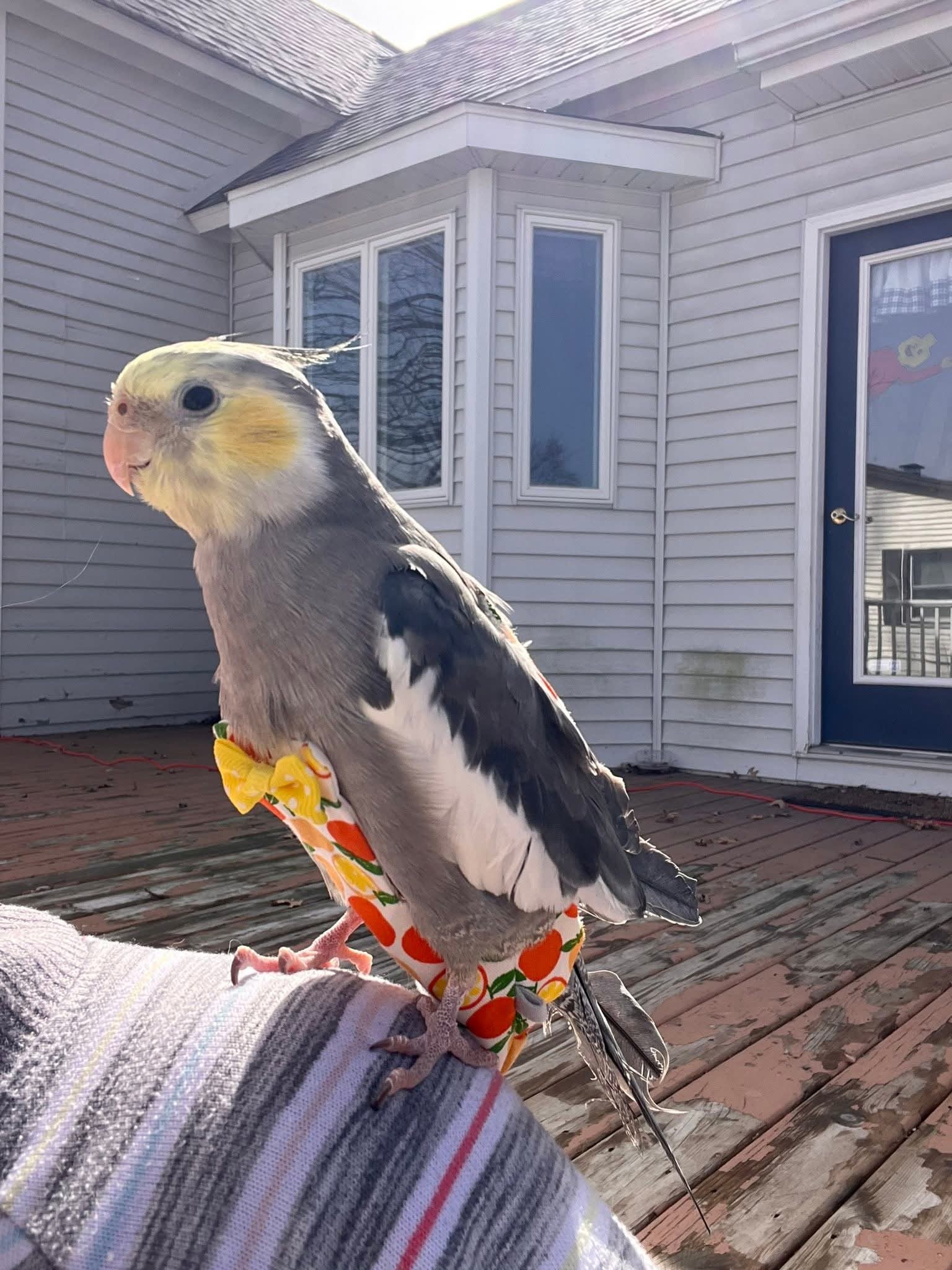
- Cockatiels call loudly at dawn — usually whenever the sun comes up, regardless of your sleep schedule
- They call loudly at dusk — settling-down calls that can last 20 minutes
- They call for you when you leave the room — “contact calls” can be persistent
- They can be properly excited and noisy when other family members come home
- You cannot train this out of them — it is hardwired flock behaviour
2. They Need A Lot Of Daily Time
This is the one that catches people out most often. A cockatiel is not a bird you can put in a cage and admire from a distance for a few minutes a day. It is a social, intelligent animal that genuinely needs interaction — every single day, minimum two hours out of cage, plus more cage-side engagement.
Without that, cockatiels develop behavioural problems. Feather plucking. Screaming. Self-mutilation in severe cases. A neglected cockatiel is a deeply sad animal, and the responsibility for that sits squarely with the owner.
For warning signs that a bird is unwell or distressed, our guide on hidden health signs in birds applies to cockatiels just as much as budgies.
3. They Make Real Mess
Cockatiels produce powder down — a fine, white, flour-like substance that comes off their feathers naturally. This powder gets everywhere. On furniture near the cage, on your clothes if the bird sits on you, in the air, on shelves. People with dust allergies or asthma may genuinely struggle with this.
On top of that, cockatiels are messy eaters. Seed husks, dropped food, scattered pellets, water splashes. A cockatiel cage needs daily cleaning to stay hygienic, and the area around it needs regular vacuuming.
4. They Can Be Hormonal And Difficult
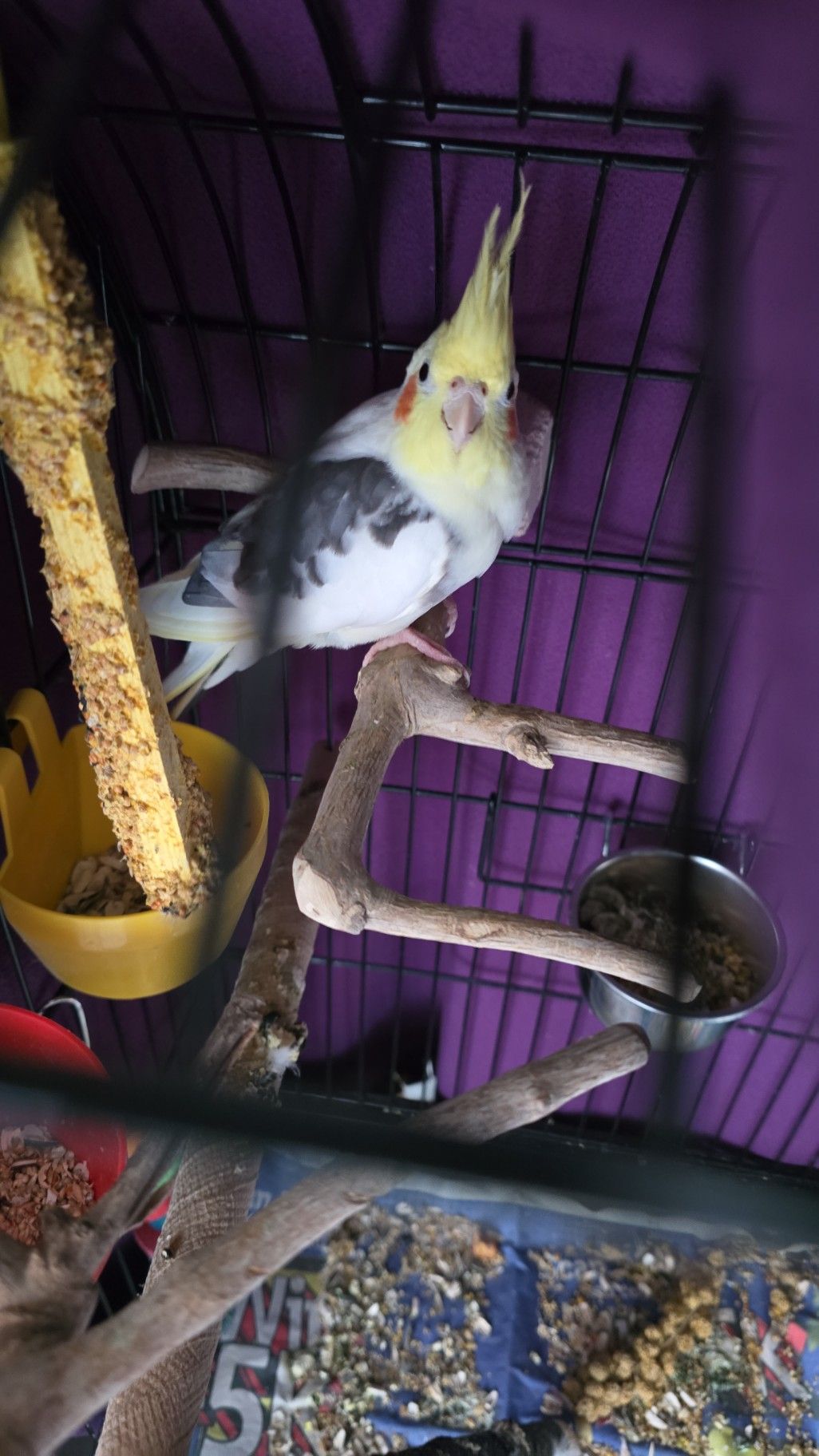
Like budgies, cockatiels go through hormonal phases — usually in spring and autumn, triggered by light hours and temperature changes. During these phases, even a well-behaved bird can become biting, territorial, and difficult to handle.
Females can also become egg-laying without a male present, which carries health risks including egg-binding. This is a serious veterinary emergency and one I have seen happen more often than people realise.
5. The Lifespan Is A Major Commitment
I am repeating this one because it really, really matters. A cockatiel can live 25 years. That means the cockatiel you buy at 30 will potentially still be alive when you are 55. Your circumstances will change — jobs, houses, relationships, children growing up and leaving home, your own health changing.
Have you thought about who will care for this bird if you cannot? Where will it go if you have to downsize? What happens during long holidays? This is not a small commitment.
6. They Are Genuinely Sensitive To Household Hazards
Cockatiels — like all parrots — are extraordinarily sensitive to airborne toxins. This includes:
- Non-stick (PTFE) cookware when overheated — can kill a cockatiel in minutes
- Scented candles, plug-ins, and diffusers — chronic exposure causes respiratory problems
- Cleaning sprays and aerosols — never use them in a room with a bird
- Cigarette and vape smoke — significantly reduces lifespan
- Self-cleaning oven cycles — release fumes that are toxic to birds
This means owning a cockatiel requires a genuine adjustment of household habits. Some people find this manageable. Others find it more restrictive than they expected.
The Honest Comparison — Cockatiel vs Budgie
The question I get asked almost as often as “should I get a cockatiel” is “what is the difference between a cockatiel and a budgie.” Here is the honest answer I give at the counter.
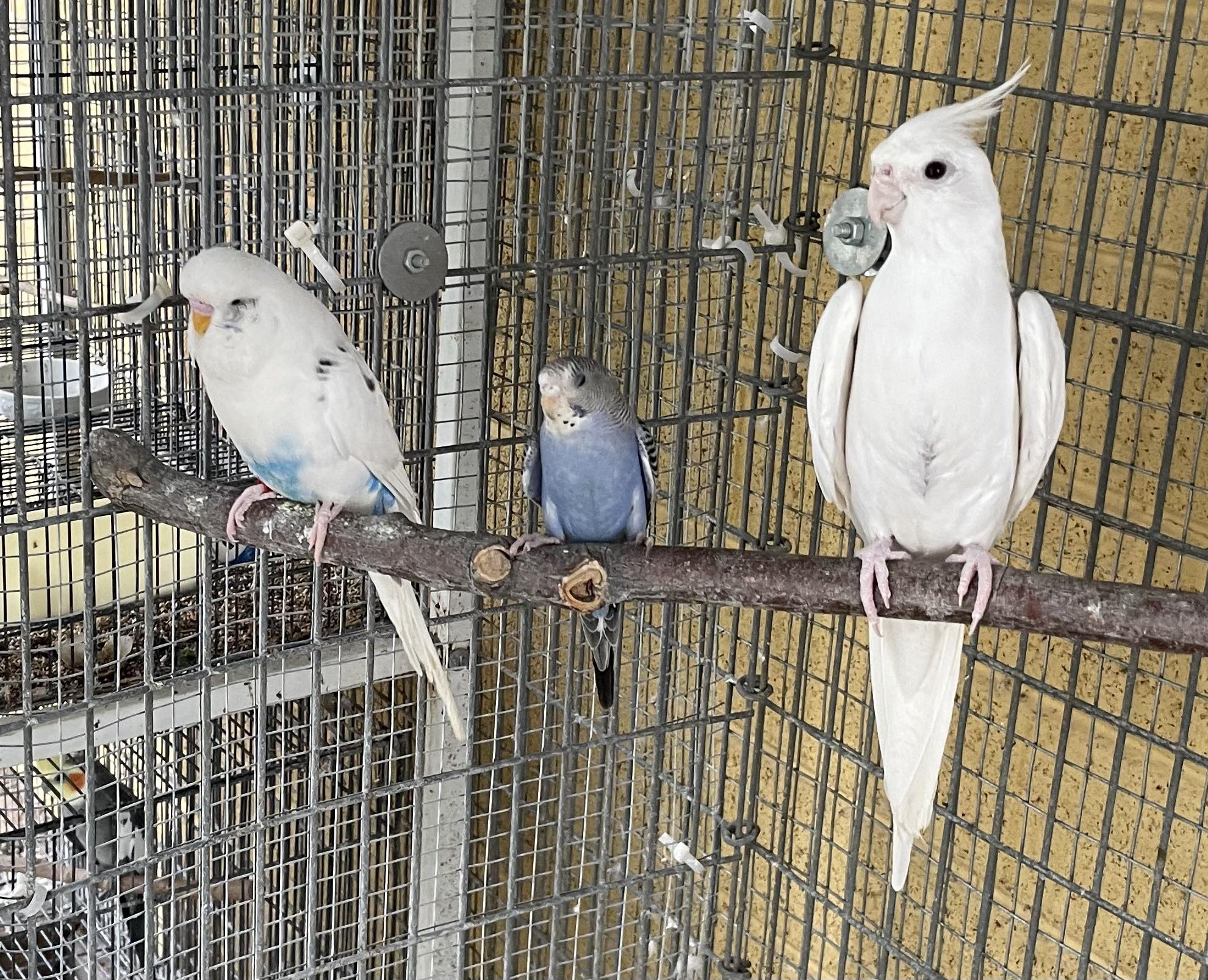
| Aspect | Cockatiel | Budgie |
|---|---|---|
| Size | Medium (about 30cm) | Small (about 18cm) |
| Lifespan | 15–25 years | 7–10 years |
| Noise level | Loud calls — flat-unfriendly | Chatter — generally neighbour-friendly |
| Handling | Naturally hand-friendly when raised right | Possible but more difficult |
| Time commitment | 2+ hours daily, minimum | Less demanding, more independent |
| Singing | Males whistle tunes | Males chatter and mimic |
| Best for | Adults with time, hands-on bird keepers | Families, beginners, smaller homes |
If after reading this you think a budgie sounds more your speed, our complete budgie care guide for UK owners covers everything you need to know.
Who I Tell To Buy A Cockatiel — And Who I Tell To Look Elsewhere
After 35 years, I have a pretty clear sense of who should and should not be taking a cockatiel home. Let me be honest with you about both.
Who I genuinely recommend cockatiels for
- Retired or semi-retired people who are home most of the day and want a companion bird
- People who work from home and can give the bird time throughout the day
- Families with older children (8+) who understand gentle handling and the bird’s needs
- Experienced bird keepers who have kept smaller birds and want to step up to something more involved
- Couples or individuals who have done their research and committed to the 15–25 year timeframe
- People who specifically want a hands-on bird, not just an observational pet
Who I usually steer towards a different choice
- Families with very young children — small fingers and curious birds are a recipe for accidents
- People living in flats or shared accommodation where noise could cause problems
- Anyone working long hours with nobody else home most of the day
- First-time bird keepers who want a low-maintenance pet — a budgie or canary is a better starting point
- Households with cats or dogs that cannot be reliably kept separate
- People who are unsure about the long-term commitment
What I Ask Before I Sell Someone A Cockatiel
This is the conversation I have with anyone who comes in seriously interested. Five minutes here saves a lot of heartache later.
- What is your home situation?
House or flat? Detached, semi, or terrace? Who else lives there? This tells me whether noise is going to be a problem. - How much time will you actually have each day?
Honest answers please. Not the time you wish you had — the time you actually have once work and family and everything else is accounted for. - Do you have other pets?
Cats, dogs, and birds need careful management. It is not impossible, but it needs thinking through properly. - Have you kept birds before?
If yes, what kind, and what was the experience like? If no, I usually suggest starting with a budgie unless someone has a particular reason for wanting a cockatiel specifically. - What do you cook with?
This sounds odd but it matters — if someone is using a lot of non-stick cookware, we need to talk about the risks before they buy. - Where will the cage go?
Kitchen — no. Bedroom — depends. Living room is usually best. Near a draughty door or window — no.
The Cockatiels We Stock At Paradise Pets
We source our cockatiels from trusted UK breeders only. Every bird we sell has been born and raised in this country, hand-tamed where possible, and properly socialised. We do not import birds.
We typically have a range of cockatiel colour mutations available depending on breeding — Normal Grey (the natural colouring), Pied, Lutino, Pearl, Cinnamon, and various combinations. Personality matters more than colour, in my honest view — I would always recommend choosing the bird that has the right temperament for your home over the one that looks prettiest.
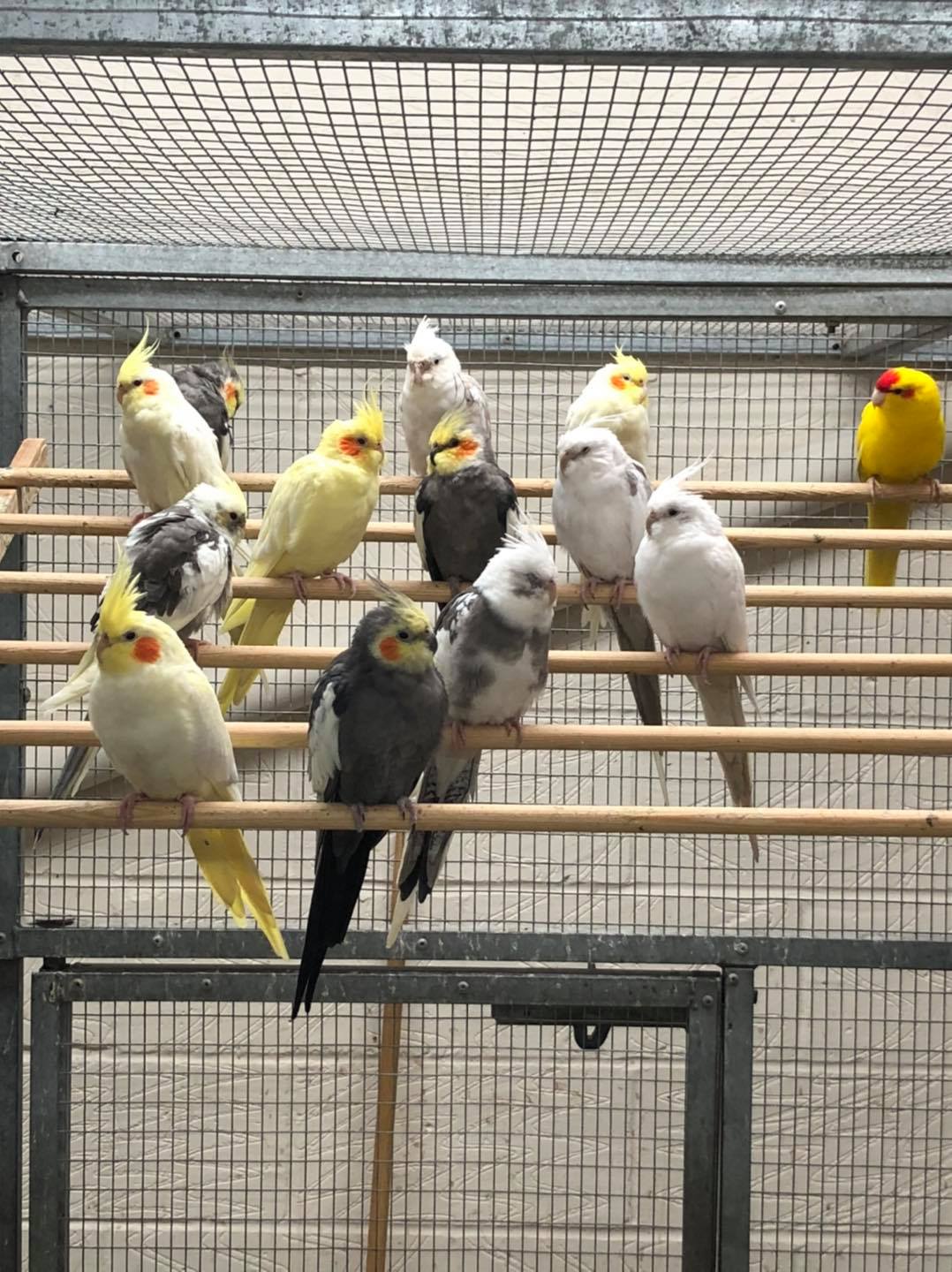
| Colour Variety | Appearance | Notes |
|---|---|---|
| Normal Grey | Grey body, yellow head (males), orange cheek patches | The natural colouring. Hardy, well-established, classic appearance. |
| Lutino | Pale yellow or white, orange cheek patches, red eyes | Popular for the striking colour. Otherwise same care needs. |
| Pied | Patches of grey and white or yellow | No two pieds look alike. Each is genuinely unique. |
| Pearl | Speckled or “pearled” pattern across the back and wings | Females retain the pearling. Males often lose it after first moult. |
| Cinnamon | Warm brown instead of grey | Softer, warmer colouring than the standard grey. |
Stock changes regularly. It is always worth ringing ahead on 01793 512400 if you are looking for a specific variety. You can also browse our cage and aviary birds page to see what else we stock alongside cockatiels.
For more on why cockatiels are not the right beginner bird most people assume they are, read our article on why cockatiels are not beginner birds — it complements this guide and goes deeper into the reasons.
One Last Thing
A cockatiel is not the right bird for everyone. That is the truth, and I would rather tell you that honestly than sell you one and watch you struggle.
But for the right person, in the right home, with the right setup — a cockatiel is one of the most rewarding birds you can keep. They are intelligent, affectionate, characterful, and genuinely engaging. They become real members of the family. And they give back what you put in, often for decades.
If you have read this whole article and you still think a cockatiel is right for you, come and see us. We will sit down properly, talk through what you have in mind, and either help you choose the right bird — or, occasionally, help you realise a budgie or canary might be the better fit.
That is the conversation I have at the counter every week. And whether you walk out with a bird or not, I would much rather you made the right decision than the easy one.
Frequently Asked Questions
How long do cockatiels live in the UK?
A well-kept cockatiel typically lives 15 to 25 years, with some reaching even longer in excellent care. This is a major long-term commitment that many new owners underestimate.
Are cockatiels good first birds for beginners?
Not really. Despite being commonly recommended as beginner birds, cockatiels have significant care requirements — daily out-of-cage time, noise levels, lifespan, and household hazard sensitivity. A budgie is usually a better first bird.
Do cockatiels need to be kept in pairs?
Not necessarily. Unlike budgies, cockatiels can do well as single birds if the owner provides enough daily interaction and engagement. However, a pair is also fine and reduces the bird’s reliance on you.
How noisy are cockatiels really?
Honestly, noisier than most people expect. Their morning and evening calls can be properly loud and carry through walls. They are not suitable for flat dwellers or anyone with thin walls between neighbours.
Can cockatiels learn to talk?
Males can learn a small vocabulary of words and are particularly good at whistling tunes. Females rarely talk or whistle melodies. If speech is a priority, a male is the better choice.
Where can I get honest cockatiel advice in Swindon?
Come and see us at Paradise Pets, Manor Garden Centre, Cheney Manor, Swindon SN2 2QJ. Or give us a ring on 01793 512400. The advice is free and I have been doing this for 35 years.
Thinking About A Cockatiel? Come And See Us First
Bring your questions, your worries, and your honest situation. We will help you decide whether a cockatiel is right for your home — and if not, suggest the bird that genuinely is. Free advice, no pressure, no obligation. That is how we have done things for 35 years.