
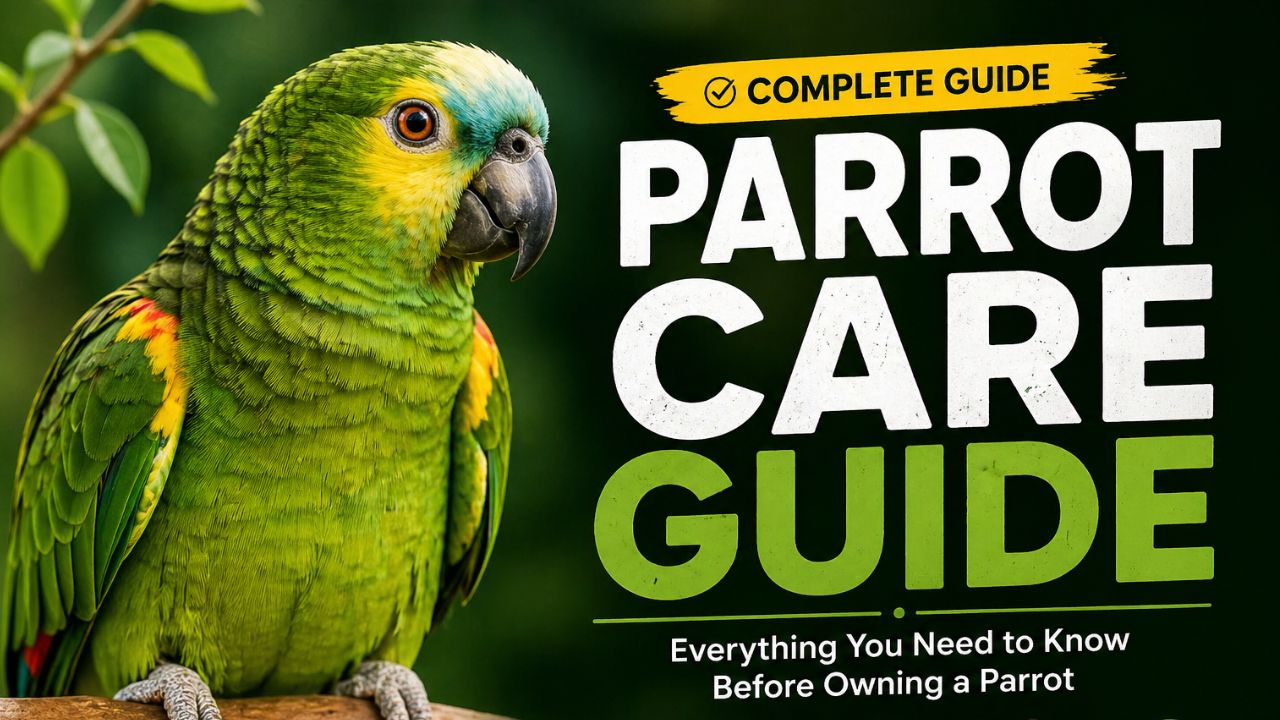

Parrots are among the most intelligent and beautiful pets you can bring into your home. From their vibrant feathers to their ability to mimic human speech, parrots make amazing companions. However, they are not low-maintenance pets. Owning a parrot requires commitment, proper care, and a deep understanding of their needs.
In this complete parrot care guide, we will cover everything from choosing the right species to feeding, training, and keeping your bird happy and healthy.
Why Parrots Make Great Pets
- Highly intelligent and interactive
- Can mimic speech and sounds
- Strong emotional bonding with owners
- Long lifespan (some species live 20–50+ years)
Types of Parrots for Beginners
| Parrot Type | Size | Difficulty Level | Lifespan |
|---|---|---|---|
| Budgie (Parakeet) | Small | Easy | 5–10 years |
| Cockatiel | Medium | Easy | 10–15 years |
| Lovebirds | Small | Moderate | 10–15 years |
| African Grey | Large | Advanced | 40–60 years |
Choosing the Right Parrot
Before buying a parrot, consider your lifestyle, space, and time availability. Smaller parrots like budgies are easier for beginners, while larger parrots require more attention and care.
Parrot Cage Setup (Very Important)
- Choose a spacious cage (bigger is always better)
- Use natural wood perches
- Add toys for mental stimulation
- Place cage in a well-lit but not direct sunlight area
Ideal Cage Setup Table
| Item | Purpose |
|---|---|
| Perches | Foot health & comfort |
| Toys | Mental stimulation |
| Food Bowls | Nutrition access |
| Water Dish | Hydration |
What Do Parrots Eat?
A healthy parrot diet should include a mix of seeds, pellets, fruits, and vegetables.
- Pellets (main diet)
- Fresh fruits (apple, banana, berries)
- Vegetables (carrot, spinach, broccoli)
- Occasional seeds
Foods to Avoid
- Chocolate
- Avocado
- Caffeine
- Alcohol
Parrot Behavior and Training
Parrots are social animals and require daily interaction. Without attention, they may become aggressive or depressed.

- Talk to your parrot daily
- Use positive reinforcement
- Train basic commands
- Allow out-of-cage time
Common Health Issues in Parrots
| Issue | Symptoms |
|---|---|
| Feather Plucking | Stress or boredom |
| Respiratory Problems | Difficulty breathing |
| Malnutrition | Weakness, dull feathers |
Always consult an avian vet if you notice unusual behavior.
How to Keep Your Parrot Happy
- Provide toys and rotate them regularly
- Ensure daily interaction
- Keep a consistent routine
- Allow flying or exercise time
Parrot Care Checklist
- Fresh food and water daily
- Clean cage regularly
- Provide mental stimulation
- Schedule vet checkups
Final Thoughts
Parrots are rewarding pets, but they require time, patience, and proper care. If you provide the right environment and attention, your parrot can become a loving and lifelong companion.
If you are looking for healthy parrots and expert guidance, visit our store or explore more pet care guides on our website.
