


Neil has kept, bred, and sold budgies at Paradise Pets Swindon since 1988 — over 35 years of first-hand experience with these birds. In that time, he has watched countless UK families buy the wrong cage with the best intentions. This is his honest, practical guide on what actually matters when choosing a budgie cage — based on what works, not what sells.
A couple came into the shop one Saturday afternoon carrying a small cardboard box. “Neil,” the man said, looking apologetic, “we bought a budgie last week from a different shop. They sold us this cage with him. We have just realised it might be too small. Can you have a look?”
I looked at the cage. It was one of the small starter cages that get sold all over the UK as “budgie cages” — about 30cm wide, maybe 40cm tall, a couple of plastic perches, a tiny seed cup, a mirror. The budgie inside could just about turn around. The bird looked nervous and was hunched on the perch.
I had to give them the honest answer. The cage was genuinely too small — not just a bit small, but properly inadequate for any budgie. The bird needed at least three times the space. We worked through their options, picked a proper cage, and set them up properly. A few weeks later they were back, beaming. “Neil, he is a completely different bird. He flies, he plays, he chirps all day. We had no idea the cage was that important.”
The honest truth is this — the cage is the single biggest welfare decision you make for your budgie, and most UK shops sell cages that are far too small for the birds they market them for. A small, inadequate cage causes long-term behavioural and physical problems. A proper cage transforms the bird’s quality of life.
In 35 years of selling budgies, I have seen this pattern again and again. UK owners buy the cheap “starter cage” because it looks fine and is sold as suitable. Their budgie suffers quietly. By the time they realise something is wrong, weeks or months have passed. The good news is that getting the cage right is not complicated, and the right cage does not have to be expensive — it just has to actually suit a budgie.
This article is the conversation I have at the counter with every owner choosing a cage, written down. By the end of it, you will know what really matters — size, bar spacing, shape, materials, accessories — and what to ignore from clever marketing.
First — Why The Cage Matters More Than People Realise
Before we get into specifics, let me explain why this decision matters so much. Because many first-time owners do not realise how much the cage affects everything else.
Your budgie spends most of its life inside the cage. Even with daily out-of-cage time (which it absolutely should have), the cage is where the bird eats, sleeps, plays, exercises, and exists for most hours of the day. A bird in a properly sized, well-set-up cage thrives. A bird in a small, badly designed cage develops physical and behavioural problems within months.
- Physical exercise — a budgie needs to be able to fly within the cage, not just hop
- Mental stimulation — enough space for toys, foraging, and variety
- Natural behaviour — climbing, hanging, multiple perch heights
- Stress management — cramped birds are stressed birds
- Welfare overall — small cages cause obesity, feather plucking, aggression
- Lifespan — well-housed budgies live significantly longer than badly-housed ones
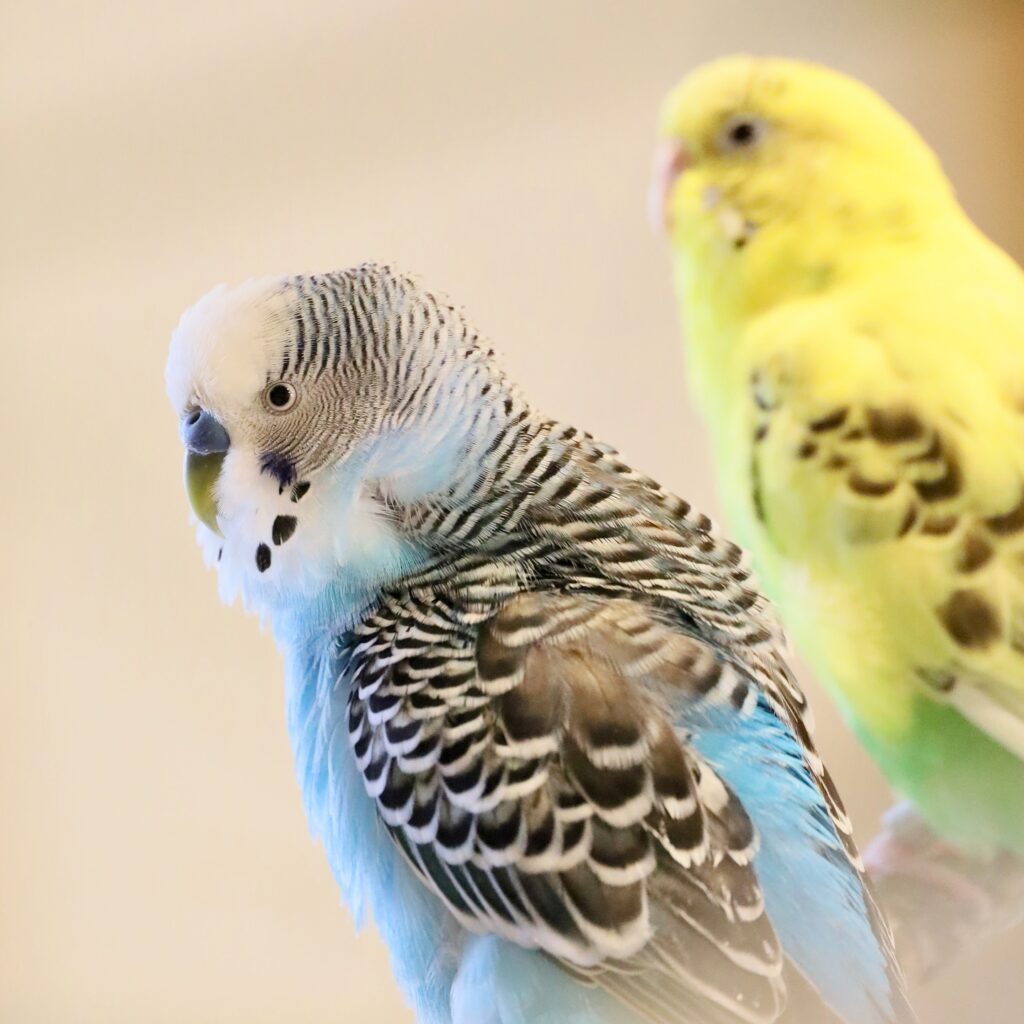
A small cage is not a “starter cage” you upgrade from later. It is just a small cage that causes problems from day one. Get the right cage from the start, even if it costs slightly more — you will save money and heartache compared to upgrading later when problems develop.
The 5 Things That Actually Matter In A Budgie Cage
After 35 years of selling cages and watching budgies live in them, I can tell you that five things genuinely matter. Most marketing focuses on irrelevant features like cage colour, shape, or accessories. Here is what actually matters — in order of importance.
1. Cage Size — Width Above Everything Else
This is the single most important factor, and it is the one most UK shops get wrong. A budgie needs space to fly — not just hop between perches, but actually open its wings and fly horizontally across the cage.
The minimum cage dimensions for a SINGLE budgie:
- Width: 80cm (32 inches) minimum — this is the critical dimension
- Depth: 40cm (16 inches) minimum — for turning room
- Height: 50cm (20 inches) minimum — for vertical movement
For two budgies, you need significantly more space — at least 100cm wide, ideally 120cm or more. The space should roughly double, not just go up slightly.
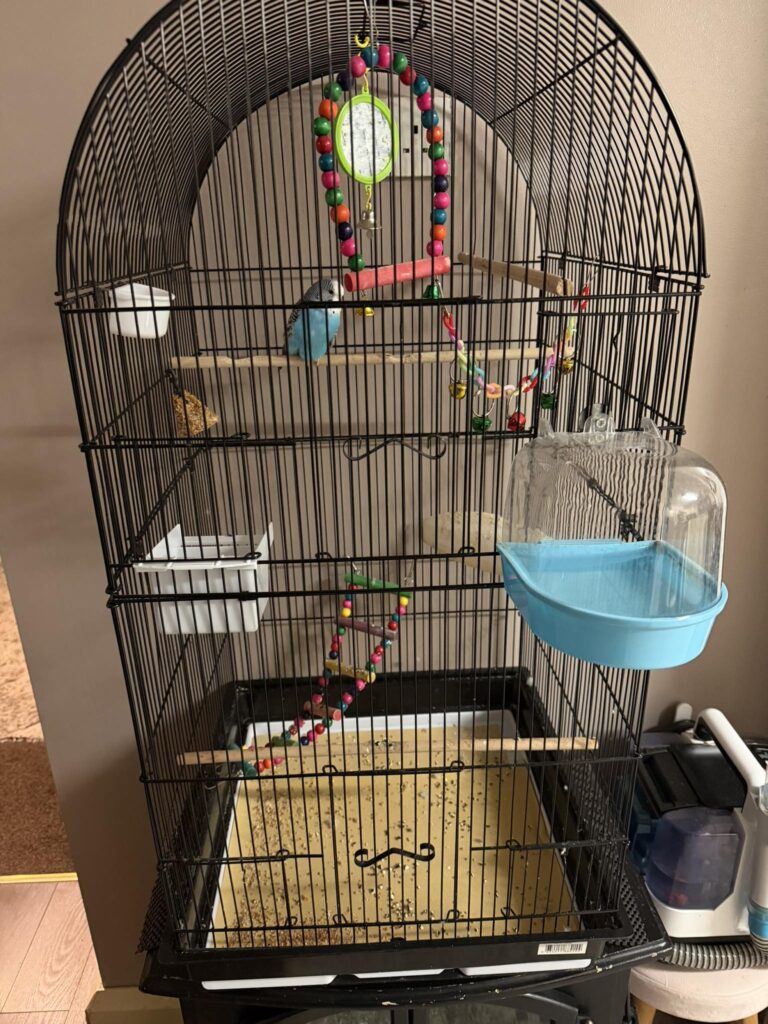
- “Starter budgie cages” around 30-40cm wide — sold everywhere, never adequate
- Round or hexagonal cages — almost always too small AND wrong shape
- Tall but narrow “tower” cages — height is wasted, width matters
- “Travel” or “carrier” cages used as permanent housing — emergency use only
- “Two budgie” cages under 80cm wide — marketing nonsense, not enough space
Width Beats Height — Always
This is important because so many UK cages are designed tall and narrow, which looks impressive but is the wrong shape for budgies. Budgies fly horizontally in the wild. Vertical space is fine, but width is what they actually use. A cage that is 60cm tall but only 40cm wide is worse than a cage that is 80cm wide and 50cm tall, even though the total volume might be similar.
Picture your budgie flying. It needs runway, not a tower. Width is runway.

2. Bar Spacing — A Genuine Safety Issue
This is the safety factor most UK owners do not realise matters. The space between the cage bars must be small enough that the budgie cannot get its head stuck or escape, but large enough that the bird can comfortably grip and climb.
The right bar spacing for budgies:
- 10mm to 12mm spacing — ideal range for budgies
- Maximum 12mm — anything wider risks the bird getting its head stuck
- Less than 10mm — usually too cramped for proper climbing
- Horizontal bars on at least some sides — for climbing exercise
- Vertical bars on the rest — easier to clean, structurally stronger
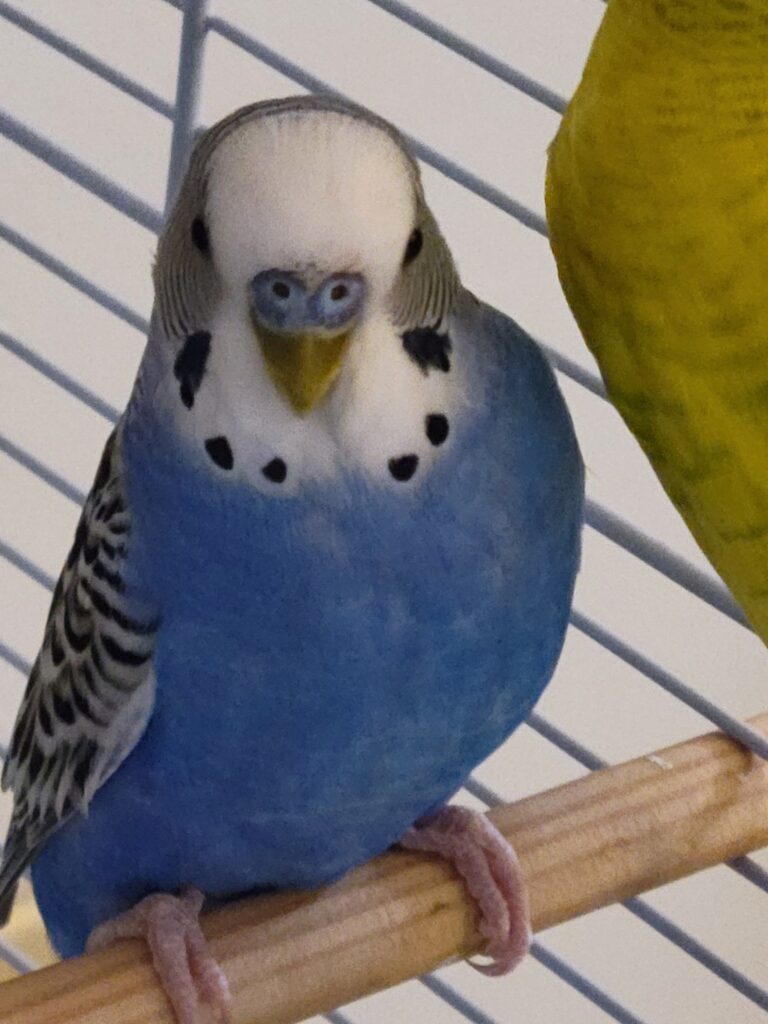
Many cages sold for “small birds” have bar spacing designed for canaries or finches (smaller spacing) or for parrots (wider spacing, dangerous for budgies). Always measure the bar spacing yourself before buying — even if the label says “budgie cage.”
The “Head Stuck” Problem
If bar spacing is too wide, a budgie can push its head through trying to look around — and then find its head stuck on the way back, because the head turns and the angle changes. This causes panic, injury, and sometimes death. I have seen genuine emergency cases at the counter caused by this, and they are always heartbreaking and entirely preventable.
Measure with a ruler. Twelve millimetres maximum. Non-negotiable.
3. Shape — Rectangular Wins, Round Cages Are Genuinely Bad
This is the controversial one in budgie keeping, and I am going to be properly honest with you. Round cages are bad for budgies. There is a genuine welfare reason for this, and the round cages sold as “ornamental” or “stylish” budgie cages are not a good choice regardless of how nice they look in your living room.
The problems with round cages:
- No corners for security — budgies feel safer with corners to retreat to
- No straight flight path — round shape prevents proper flying
- Usually too small overall — round designs are decorative not functional
- Causes circling behaviour — a known welfare problem in round cages
- Difficult to fit accessories — toys, perches harder to mount
- Stress and disorientation — documented welfare issue

Choose a rectangular cage. Always. It does not have to be ugly — there are plenty of attractive rectangular cages on the UK market. But the shape must be rectangular for the budgie’s welfare.
The Same Goes For Hexagonal, Round-Topped, And “Designer” Cages
Any cage where the budgie cannot fly in a straight line, or where the corners are unusable, has the same problem. Beautiful Victorian-style domed cages, hexagonal cages, octagonal cages — all are designed for human aesthetics rather than bird welfare. The budgie does not care what your cage looks like in the room. It cares about the space it has to fly in.
4. Materials And Build Quality
Beyond size and shape, the cage itself needs to be made of safe, durable materials. This is where build quality matters more than appearance.
- Powder-coated steel bars
The standard for UK pet cages. Safe, durable, easy to clean. Avoid bare metal which can rust, and avoid plastic-coated wire that birds can chew through. - No toxic paints or coatings
Particularly important if buying second-hand. Older cages may have lead-based paints that are dangerous if the bird chews the bars. - Sturdy construction
The cage should not wobble or feel flimsy. Birds rocking and shifting weight should not destabilise the structure. - Slide-out cleaning tray
Bottom should have a removable tray for daily droppings cleaning. Essential for hygiene. - Secure door closures
Standard latches are fine for most budgies. Clever birds may need clip-on additions for extra security. - Mesh or grill above the cleaning tray
Keeps the bird out of the droppings and dropped food. Essential for hygiene. - Multiple feeder ports
Allows refilling food and water without opening the main door — reduces escape risk and stress.
What To Avoid In Materials
- Galvanised wire — old galvanising can contain zinc, toxic to birds
- Bright brass or copper — can be toxic if chewed
- Painted wood cage parts — chemicals may be harmful
- Plastic-coated bars — chewable, leads to ingesting plastic
- Wooden cages — cannot be properly cleaned, harbour bacteria
- Cages with sharp edges or rough welds — injury risk
5. Practical Features That Make Daily Life Easier
The fifth thing that matters is whether the cage works practically — for you to maintain, and for the bird to use day after day. Some practical features make an enormous difference.
- Cage stand or wheels — saves your back, makes positioning easier
- Multiple doors — main door plus access for feeding
- Top opening section — some cages have play tops, useful for tame birds
- Removable tray that pulls all the way out — easier than partial trays
- Skirt or seed guard around the base — catches scattered seed and droppings
- Easy-to-clean smooth surfaces — textured finishes harbour dirt
- Standard accessory fittings — your future perches and toys will fit standard cages, not bespoke ones
What You Actually Need Inside The Cage
Choosing the cage is half the decision. Setting it up properly is the other half. Here is what should go inside a properly set-up budgie cage.
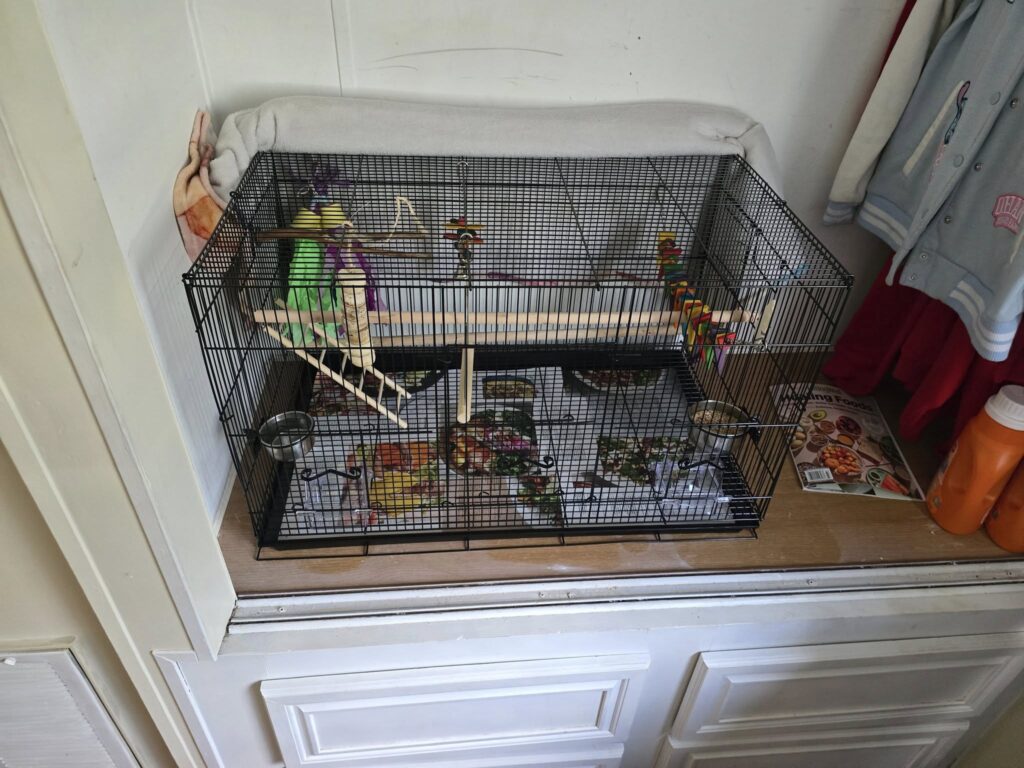
1. Multiple Perches Of Varying Diameter And Texture
This is one of the most overlooked aspects of cage setup. Most cages come with one or two uniform plastic perches — and those plastic perches cause foot problems over time. Budgies need variety in their perches for proper foot health.
- Natural wooden branch perches — varied diameter, irregular shape, ideal foot exercise
- Different diameters at different perches — prevents pressure sores
- One textured perch (rough cement or sandpaper) — helps with nail wear, used sparingly
- Avoid uniform dowel perches throughout — same diameter everywhere causes foot problems
- Multiple heights — gives the bird vertical exercise options
- Plenty of perch space — at least 3-4 perches in different positions
For more on healthy perches and preventing foot issues, our guide on budgies standing on one leg covers foot health in detail.
2. Food And Water Containers
- Heavy ceramic or stainless steel bowls — won’t tip, easy to clean
- Separate containers for water, seed, pellets, and fresh foods
- Position away from below perches — to avoid contamination by droppings
- Easy access from outside the cage — for filling without disturbing the bird
3. Cuttlefish Bone And Mineral Block
Both essentials clipped to the cage bars. Cuttlefish provides calcium and beak exercise. Mineral block provides trace elements and iodine.
4. Toys And Enrichment
For a single budgie, around 5-7 toys at any one time is the right number, with regular rotation. The cage needs to have room for toys without being overcrowded — another reason size matters.
For more on choosing the right toys, our guide on the best toys for UK budgies covers what actually engages budgies and what they ignore.
5. Bath Or Bathing Opportunity
Most budgies enjoy bathing. A shallow ceramic dish that can be added a few times a week works well. Some owners use a clip-on bath that mounts on the cage door.
What I See Wrong At The Counter Most Often
When owners come to me with cage problems, the same mistakes come up again and again. Here are the most common.
- Cage too small — by far the most common mistake, sold by countless UK shops
- Round or fancy shape — pretty but causes welfare problems
- Bar spacing too wide — bird could get head stuck
- Only plastic dowel perches — causes long-term foot problems
- Cage placed near kitchen — fume danger
- Cage on the floor — birds feel vulnerable at floor level
- Cage with mostly vertical bars — birds need horizontal bars to climb
- Too many toys crowding the cage — no room for the bird to fly
- Cage with no cover for night — affects sleep significantly
- Mirror as a “companion” — causes behavioural problems
Each of these is genuinely fixable. Most of them are made by well-meaning owners who simply did not know better. Getting the cage right from the start prevents all of them.
How Much Should A Good Budgie Cage Cost In The UK?
This is the question I get asked all the time, and I will be straight with you. A proper UK budgie cage that meets all the criteria above costs roughly between £70 and £200 depending on size and quality. The £20 “starter cages” sold in supermarkets and general pet shops are almost always inadequate.
What you get at different price points:
| Budget | What You Typically Get | Suitable For Budgies? |
|---|---|---|
| £20-£40 | Small starter cages, often round or narrow | No, almost always too small |
| £40-£70 | Slightly bigger but still often inadequate | Marginal, check dimensions carefully |
| £70-£120 | Properly sized rectangular cages with stands | Yes, this is the sweet spot for one or two budgies |
| £120-£200 | Larger flight cages, premium construction | Excellent for pairs or active single birds |
| £200+ | Aviary-style cages, custom builds | Wonderful but not necessary for most owners |
The honest practical advice — budget around £100 for a good single budgie cage with a stand. Two budgies need a larger cage, probably £130-£180. This sounds like a lot compared to the £20 starter cages, but you only buy it once, and your bird lives in it for 7-10 years. Per year, it works out to very little.
Where To Position The Cage Once You Have It
Once you have chosen the right cage, where you put it matters almost as much. The cage and its location work together. A perfect cage in the wrong room creates problems just like a small cage in the right room.
The short version:
- Living room is usually ideal — temperature stable, social presence
- NEVER in the kitchen — non-stick cookware fumes are fatal
- Against an interior wall — warmer than external walls
- Away from windows by at least 2 feet — temperature swings and direct sun
- At chest height on a stand — bird feels safe, you can interact easily
- Where the bird sees normal household activity — they are social birds
For the full picture on cage placement in different UK home types, our guide on UK budgie cage placement covers room choice, cage position, and what to avoid in detail.
What I Tell Owners At The Counter When Buying A First Cage
When a UK owner is buying their first budgie cage, I work through specific questions to help them choose the right one for their situation.
- How many budgies will live in the cage?
One needs 80cm wide minimum. Two need 100-120cm wide. More than two need an aviary cage. - How much daily out-of-cage time will the bird get?
More time outside = slightly smaller cage acceptable (but never below the minimum). Less time = bigger cage essential. - Where in your home will the cage live?
Affects what dimensions fit, what shape works practically. - Will the cage be on a stand?
Most should be. Cage at floor level rarely works well. - What is your realistic budget?
£100 is the sweet spot for a good single cage. Cheaper means smaller and usually inadequate. - Have you measured the bar spacing on cages you are considering?
12mm maximum. Measure with a ruler, not just by eye. - Have you checked the cage shape?
Rectangular only. Not round, hexagonal, or fancy-shaped. - Will you provide proper perches, or use the ones included?
Almost always need to replace the included perches with natural branch perches.
Ten minutes of these questions usually leads owners to the right cage for their situation. Most genuinely thank me for it later when their bird thrives in proper accommodation.
The Honest Truth About “Bigger Is Better”
I want to be straight with you about one principle that holds across nearly every budgie cage decision — bigger is always better, within reason and practical limits.
A cage that is bigger than the minimum standard is genuinely better for the bird. More flight space, more enrichment options, more comfort. The “minimums” I have given in this article are the smallest acceptable — they are not the target. Go bigger if you can fit it in your home and afford it.
The only reasons to choose a smaller cage:
- Genuinely no space in your home for a larger cage (then reconsider whether a budgie is right for now)
- Budget genuinely cannot stretch (still go to the minimum, never below)
- The bird gets significantly more out-of-cage time (free-flying budgies need slightly less cage space — though still meeting the minimums)
There is no scenario where a smaller-than-minimum cage is the right choice. Better to wait, save, and buy the right cage than to use an inadequate one “for now.”
Frequently Asked Questions
What is the minimum cage size for a single budgie in the UK?
The minimum recommended cage size is 80cm wide, 40cm deep, and 50cm tall (32 x 16 x 20 inches). Width is the most important dimension because budgies fly horizontally. Bigger is always better. Anything smaller than this minimum causes welfare problems including stress, obesity, and behavioural issues.
Can I keep a budgie in a small cage if I let it out a lot?
Not really, no. Even with significant out-of-cage time, the cage is still where your bird spends most hours of the day — eating, sleeping, and being safely housed. A cage below the minimum causes problems regardless of how much free-flying time you provide. Out-of-cage time is essential in addition to, not as a replacement for, proper cage size.
Why are round cages bad for budgies?
Round cages cause documented welfare problems. They lack corners that birds need for security, prevent proper straight-line flight, can cause disorientation and stress, and are almost always too small for proper budgie housing. Choose rectangular cages always, regardless of how attractive a round cage may look.
What bar spacing is right for budgies?
Between 10mm and 12mm is the ideal range. Anything wider than 12mm risks the budgie getting its head stuck between the bars — a serious safety issue I have seen at the counter. Measure with a ruler before buying any cage, even if it is labelled as a “budgie cage.” Many shop cages have the wrong spacing.
How much should a good budgie cage cost in the UK?
Budget around £70-£120 for a good single budgie cage that meets all the welfare criteria. The £20-£40 “starter cages” sold in many UK shops are almost always too small. A proper cage is bought once for the bird’s lifetime, so spread across 7-10 years it works out to very little per year — and it saves money compared to upgrading from an inadequate cage later.
Can I use a cage I already have for a different bird?
It depends on the cage. Check the bar spacing (must be 10-12mm for budgies), the size (must meet the minimums for budgies), the shape (rectangular only), and the materials (no toxic paints or galvanising). Many cages designed for canaries are too small. Many designed for larger parrots have bar spacing too wide. Check carefully.
Where can I get honest cage advice in Swindon?
Come and see us at Paradise Pets, Manor Garden Centre, Cheney Manor, Swindon SN2 2QJ. Or give us a ring on 01793 512400. We stock proper budgie cages and the advice is free. We have been doing this for 35 years.
One Last Thing From Me
“What cage should I get for my budgie?” is the question. The honest answer, after 35 years of selling these birds and the cages they live in, is — rectangular, minimum 80cm wide, 10-12mm bar spacing, powder-coated steel, with proper perches inside. Cost roughly £70-£120 for a good one. Skip the small starter cages no matter how cheap they look.
The couple I mentioned at the start of this article? Their original cage went into the shed (or was returned where possible). They invested in a proper 90cm wide rectangular cage with a stand, natural branch perches, varied toys, and proper food bowls. The total cost was about £110 — far more than the £25 they had originally spent. But within weeks, their bird was a completely different animal. Flying every day, chirping, playing, engaged with them. They told me later it was the single best decision they had made in becoming bird owners.
That is the outcome you want — a bird in a cage that genuinely suits it, thriving for years to come. The cage is not where you cut corners. Everything else in budgie keeping flows from getting this one decision right.
If you are about to buy your first budgie cage, come and see us. We stock cages that genuinely work for budgies, we know which ones to avoid, and we are happy to talk through what your specific situation needs. We are also honest about what you should NOT spend money on — the gimmicky accessories, the bright plastic toys, the fancy designs that look good but do not help your bird. Free advice based on what works, not what makes us the most profit.
Looking For The Right Cage For Your Budgie? Come And See Me
Come and have a proper look at what we stock. I will help you choose the right cage for your specific situation — and tell you honestly what to buy and what to skip. Free advice, no obligation. That is how we have done things for 35 years.