


Neil has kept, bred, and sold budgies at Paradise Pets Swindon since 1988 — over 35 years of first-hand experience with these birds. In that time, he has reassured countless worried owners who have noticed their budgie standing on one leg and feared something terrible was wrong. This is his honest, practical guide on what one-legged standing actually means in a budgie — and the rare times it matters.
A young man came into the shop one Sunday morning, looking properly worried. “Neil,” he said, “my budgie has been standing on one leg. I keep finding him with his foot tucked up. Is he hurt? Has he broken his leg? Why is he doing this? I don’t know what to do.”
I smiled gently, because it is one of the most common worried-owner questions I get, and the answer is almost always reassuring. The honest truth is this — a budgie standing on one leg is almost always a sign of a healthy, content, relaxed bird. It is one of the most positive signs you can see, not a worrying one.
In 35 years of watching budgies, I have seen this confusion countless times. New owners notice their bird with one foot tucked up into the body feathers and immediately assume something is wrong — that the leg is hurt, that the bird is in pain, that they need to call a vet. Almost without exception, the bird is doing something completely normal that owners simply have not seen before.
The skill is knowing when it is normal (almost always) and when it might genuinely indicate a problem (rarely). After 35 years, I can tell within a minute whether a one-legged budgie is healthy or not — and it comes down to a few clear signs that any UK owner can learn to read.
This article is the conversation I have at the counter, written down for every UK budgie owner who has watched their bird tuck up a foot and wondered whether to worry. By the end of it, you will know exactly why budgies do this, what it really means, and the very few situations where it actually matters.
The Honest Answer — One-Legged Standing Is Normal And Healthy
Let me start with the proper reassurance, then explain the details. Yes, budgies stand on one leg. It is completely normal. It is healthy. It is what they do when they are relaxed and comfortable.
A budgie standing on one foot with the other tucked up into its belly feathers is showing one of the clearest signs of a content, secure bird. It is essentially the budgie equivalent of you putting your feet up at the end of the day — a sign that all is well in the world and the bird feels safe enough to fully relax.
In the wild, budgies and many other birds stand on one leg as part of their normal resting behaviour. The tucked-up foot stays warm against the body, the bird saves energy, and it remains alert but comfortable. Your pet budgie is doing exactly what its biology tells it to do, in exactly the way a wild budgie would.
What you do not want to see is a budgie that never stands on one leg. A bird that always stands rigidly on both feet, never relaxing onto one, may be the one with the actual problem — usually stress, anxiety, or discomfort that prevents proper relaxation.
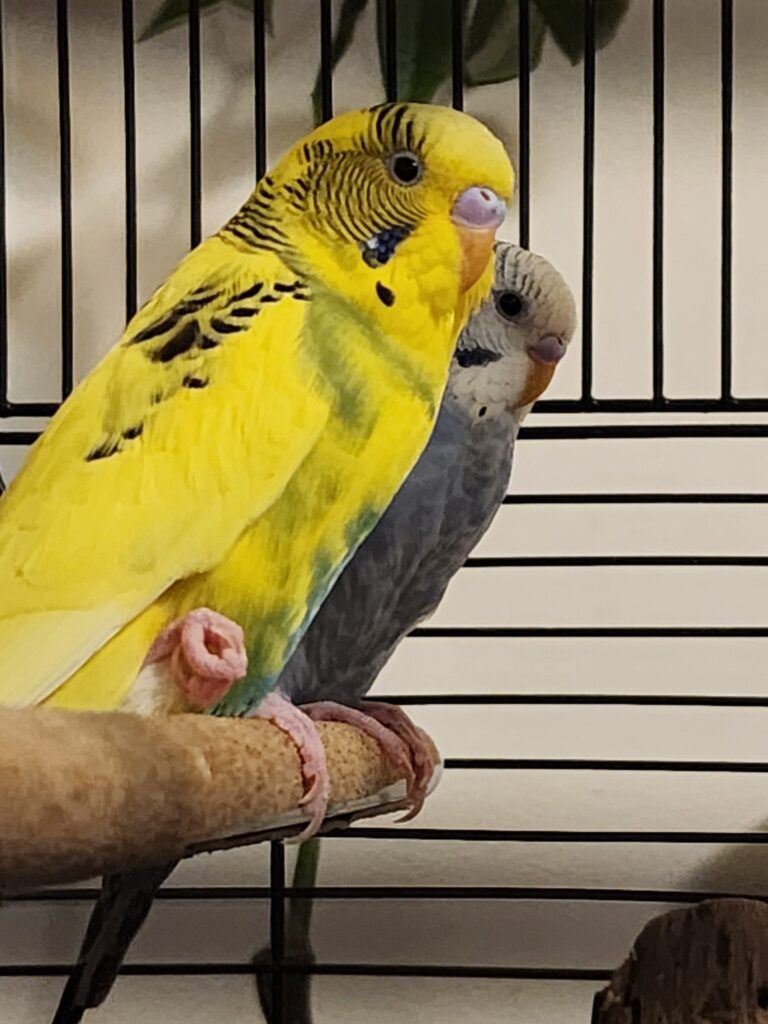
Why Budgies Stand On One Leg — The Real Reasons
After 35 years, I can tell you that there are a few specific reasons budgies do this — and almost all of them are positive signs. Let me walk you through them.
Reason 1: Relaxation And Comfort — The Most Common By Far
This is the cause behind almost every one-legged budgie I see. The bird is simply relaxed. It has found its preferred perch, the environment feels safe, nothing is alarming it, and it has settled into its comfortable resting position.
A budgie that does this is telling you something genuinely positive — that its life is good, that you are doing the right things, and that it feels secure in its home. Take quiet satisfaction in seeing it. It means your bird is content.
You will see this most often:
- During the middle of the day, after morning activity
- In the evening when the bird is winding down
- When the bird is resting on its favourite perch
- While the bird is dozing or napping
- When you talk gently to the bird and it stays comfortably perched
- In quiet moments when nothing is going on in the room
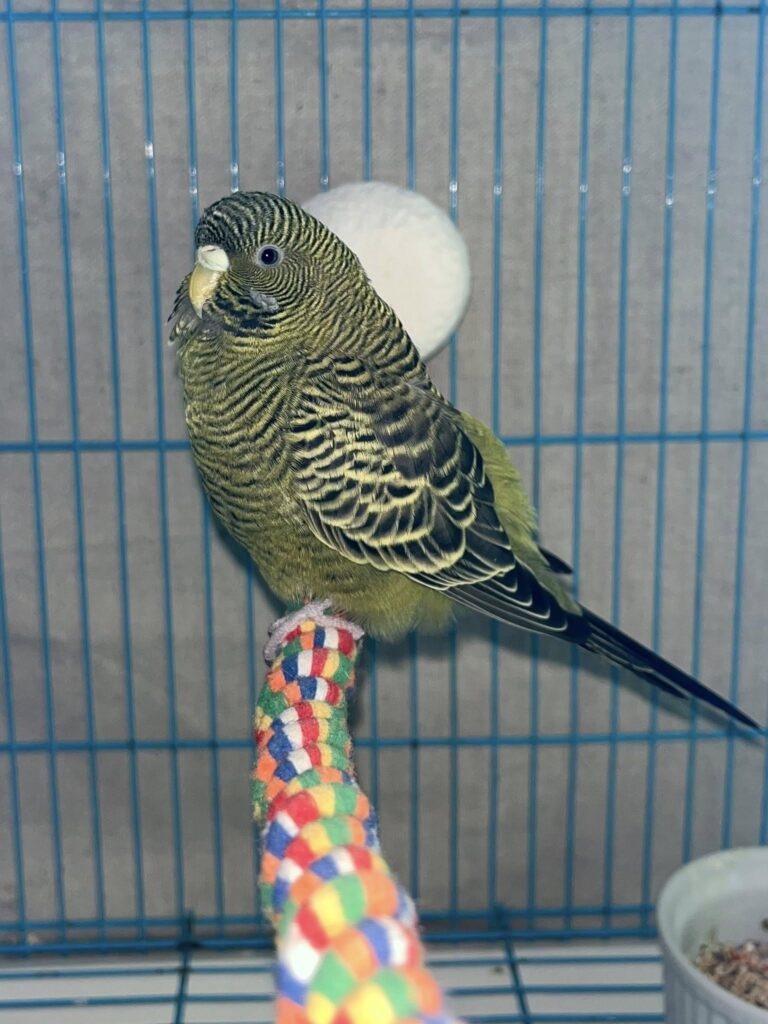
This is the budgie equivalent of contentment. A bird that does this regularly is a bird that is doing well.
Reason 2: Sleeping On One Leg
Budgies often sleep on one leg, with the other tucked up into the belly feathers and the head turned back into the wing feathers. This is the classic sleeping budgie pose, and it is completely normal.
If you peek into the cage during your bird’s nap times or first thing before uncovering the cage in the morning, you will often see this position. The bird is relaxed enough to sleep on one foot, which tells you it feels properly safe in its environment.
The sleeping position is so distinctive that some new owners think the bird is hurt or trying to hide an injury. It is the opposite — the bird is comfortable enough to commit to a vulnerable position, secure in its surroundings.
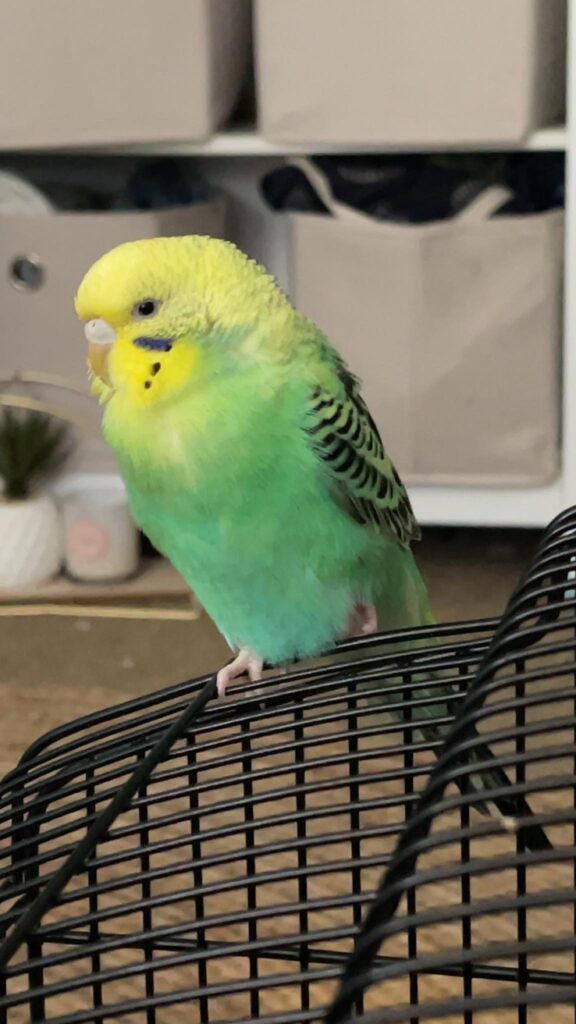
Reason 3: Temperature Regulation — Keeping Warm
This one is interesting and worth knowing about. Birds lose a significant amount of body heat through their feet, because the feet do not have feathers. Tucking one foot up into the belly feathers preserves body warmth — particularly useful during UK winter when room temperatures are cooler.
You may notice your budgie standing on one leg more often during colder months, or when the room temperature drops. The bird is regulating its body temperature efficiently. It rotates which foot is up, so neither one stays cold for long.
This is part of how budgies cope naturally with temperature changes, and it is a sign of a bird managing its environment well. The bird is not freezing — it is just preserving warmth efficiently.
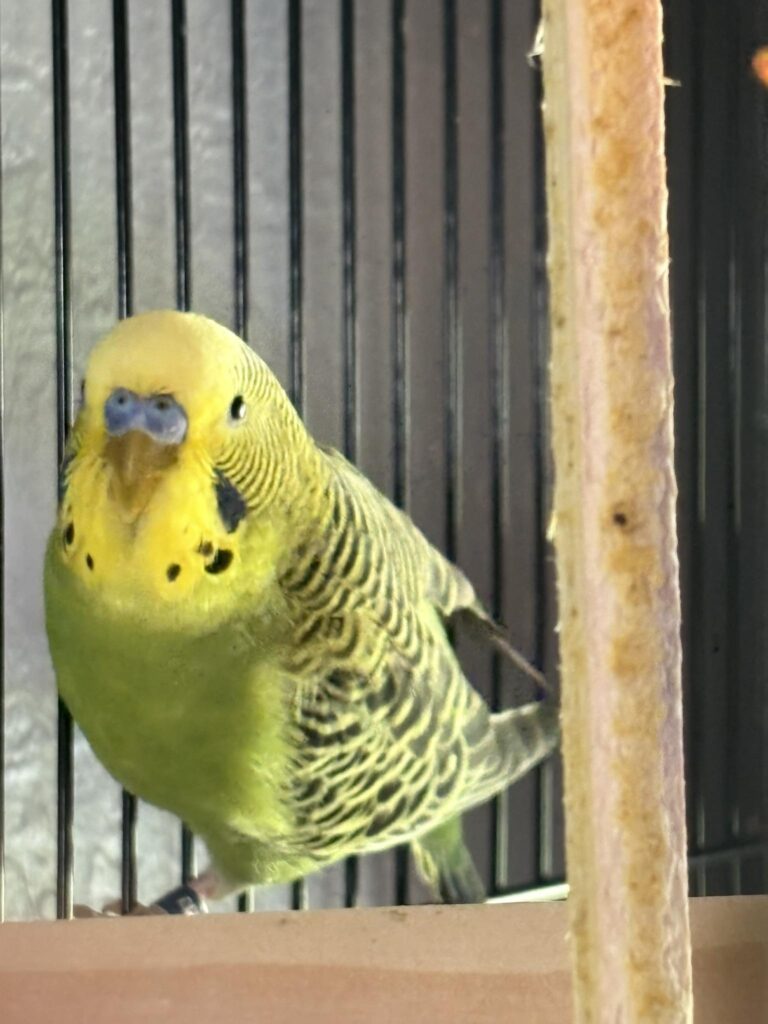
Reason 4: After Activity Or Eating
Sometimes a budgie stands on one leg after a burst of activity — playing with toys, eating, or vocalising. The bird is resting, recovering, and bringing its body back to a comfortable state. This is exactly what any animal does after exertion.
You will see this often in active, healthy budgies. It is not exhaustion or distress — it is just normal resting behaviour after using energy.
Reason 5: Brooding Or Nesting Hormones
This is a less common cause but worth knowing about. Female budgies entering breeding condition sometimes stand on one leg more often, particularly while showing other hormonal behaviours like shredding paper, defending territory, or seeking dark corners. The behaviour is part of broader nesting instincts.
If your female budgie is standing on one leg more often combined with other hormonal signs, it is usually just biology rather than a health concern. The behaviour will pass once the hormonal phase ends.
When One-Legged Standing Might Actually Be A Problem
In the interest of being properly honest, let me address the other side. While one-legged standing is almost always normal, there are rare situations where it can indicate a problem. Knowing the difference matters.
The key is the broader picture — the bird’s overall behaviour, the consistency of the behaviour, and whether other signs are present. A healthy bird with normal one-legged standing looks and acts completely normal. A bird with a leg problem usually shows additional signs that are clearly different.
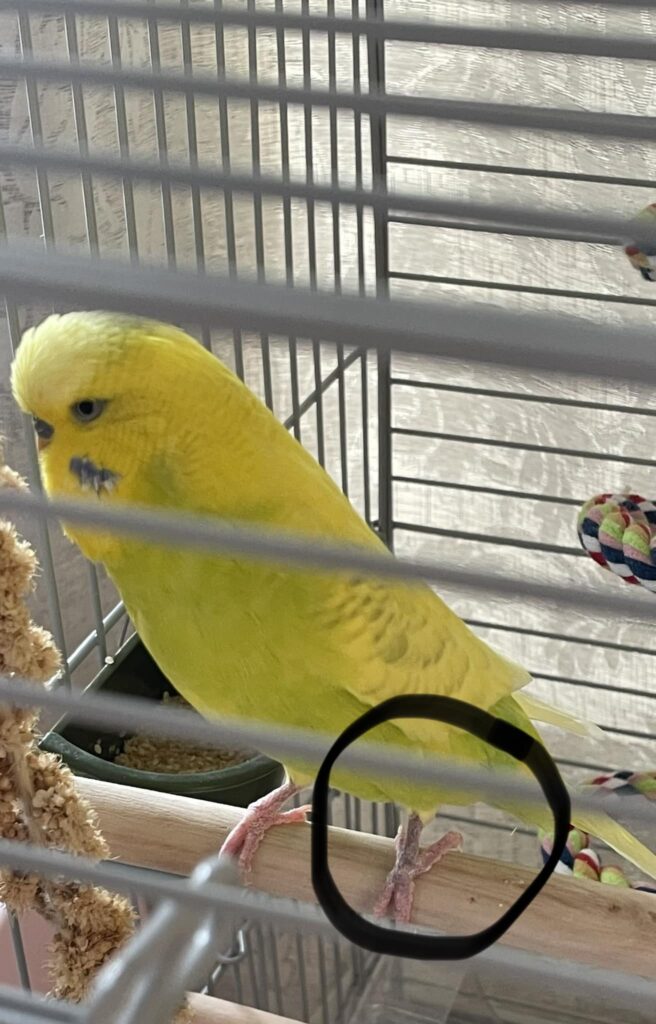
- Always stands on the same leg — never switches — for days or weeks
- Refuses to put weight on one specific foot
- Visible swelling, redness, or wounds on the unused foot or leg
- The bird is in obvious pain — fluffed up, withdrawn, hunched
- The bird has stopped climbing, playing, or using its perches normally
- Loss of grip in one foot when stepping up
- Lameness or limping when the bird does walk
- Reduced appetite or activity alongside the one-legged behaviour
- The foot or leg looks visibly different from the other one
The crucial point — a healthy budgie alternates which foot it stands on. Sometimes the left is tucked up, sometimes the right. It varies throughout the day. A budgie that always tucks up the same specific foot, and refuses to put weight on the other, may have an injury or condition affecting that leg.
If you see any of these signs, see an avian-savvy vet promptly. Leg and foot problems in budgies can become serious if untreated, but most are very treatable when caught early.
The Specific Conditions That Can Cause Lameness
For completeness, here are the actual conditions I see at the counter that can cause a budgie to favour one leg. These are the genuine concerns to be aware of.
1. Foot Injury Or Cut
The most common cause of an actually injured budgie favouring one foot is a simple injury — a cut, a scrape, or a sore. These often come from rough perches, sharp toy edges, or accidental scrapes against cage bars. The bird favours the painful foot by tucking it up.
Signs: visible damage to the foot, redness or swelling, sometimes a small amount of blood. The bird may also nibble at the affected foot.
What to do: examine the foot carefully if the bird allows. Minor scrapes often heal on their own with no intervention needed. Anything deeper than a surface scrape, anything still bleeding, or anything swelling should see a vet.
2. Bumblefoot
This is a bacterial infection of the foot, usually caused by perches that are too uniform in diameter, too rough, or too smooth. It causes painful sores on the bottom of the foot that the bird tries to relieve by tucking the foot up.
Signs: swelling on the bottom of the foot, redness, sometimes visible sores or scabs. The bird is reluctant to grip with the affected foot.
What to do: see a vet promptly. Bumblefoot is treatable but needs proper veterinary attention, plus changes to the perches in the cage to prevent recurrence.
3. Sprain Or Strain
Like any animal, a budgie can sprain or strain a leg or foot — usually from awkward landings, getting briefly caught on something, or rough handling. The injury causes pain that the bird relieves by avoiding weight on the affected leg.
Signs: bird favours the leg but shows no visible damage, gradually improves over a few days, behaves normally otherwise.
What to do: minor strains often heal with rest. If the bird shows no improvement after 2-3 days, or shows pain signs, see a vet.
4. Arthritis In Older Budgies
Older budgies, like older humans, can develop arthritis that affects how comfortable they are putting weight on certain joints. This causes them to favour the less painful leg.
Signs: an older bird (over 6-7 years) gradually favouring one leg, stiffness when first moving in the morning, reduced overall activity, possibly a slightly lumpy or thickened joint.
What to do: a vet can prescribe pain relief for arthritic budgies, and adjusting the cage setup (lower perches, easier reach to food and water) helps significantly.
5. Mites Or Skin Condition On The Legs
Some external parasites and skin conditions affect the legs and feet specifically. Scaly leg mite is one example — it causes crusty growths on the legs and feet that are uncomfortable and may cause the bird to favour the less affected foot.
Signs: visible crusty or scaly appearance on the legs and feet, sometimes both feet but often one worse than the other. The bird may scratch at the affected legs.
What to do: see an avian vet. Mites are treatable with proper anti-parasite medication, but need correct diagnosis and prescription. Do not use cheap shop sprays alone.
How To Examine Your Budgie’s Foot Safely
If you want to check whether your budgie’s foot is genuinely injured or just tucked up for comfort, here is the gentle approach that works.
- Watch first, do not handle
Observe the bird over a day or two. Does it eventually use both feet? Does it switch which foot is tucked? If yes, the foot is probably fine. - Encourage stepping up onto a perch
Use a familiar perch the bird willingly steps onto. A bird that grips normally with both feet is showing both work fine. - Look for visible signs without handling
Check for swelling, colour difference, or visible damage by carefully observing the bird’s feet when it is perched naturally. - If genuine concern remains, gentle handling
If your bird is tame and you can handle it without stress, very gently extend the affected foot to check for visible problems. Stop immediately if the bird is distressed. - When in doubt, vet rather than poke
A vet can examine the foot properly with less stress than untrained owner handling. Better to see a vet than to make a problem worse trying to investigate.
How To Tell Normal One-Legged Standing From A Problem
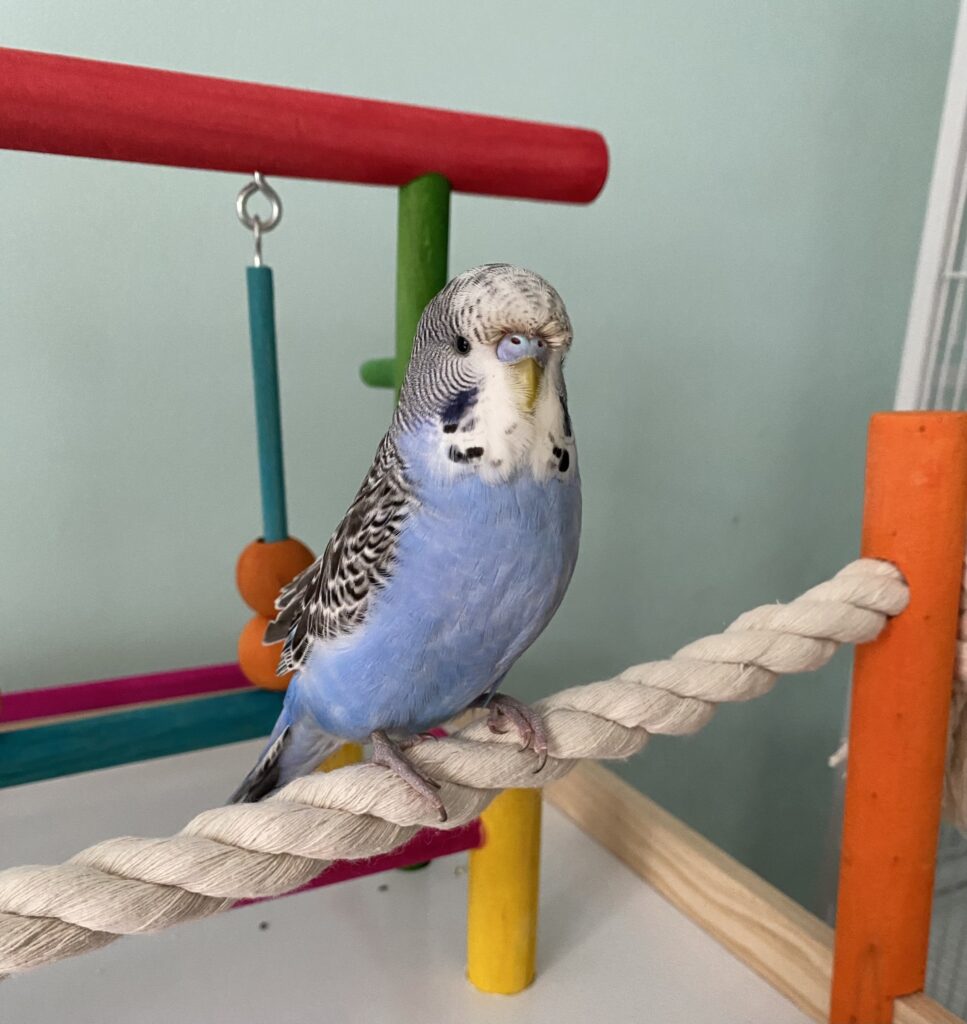
This is the practical skill that matters most. Here is a clear comparison.
| Sign | Likely Normal | Likely Problem |
|---|---|---|
| Which foot is tucked | Alternates between both | Always the same one |
| Weight bearing | Will use both feet to grip when needed | Refuses to put weight on one foot |
| Foot appearance | Both look identical | One looks swollen, red, or damaged |
| Activity | Climbs, plays, perches normally | Reduced activity, avoids climbing |
| General behaviour | Bright, alert, normal | Withdrawn, fluffed, off food |
| Duration | Comes and goes throughout day | Constant for days on end |
| When sleeping | Tucks up either foot | Always tucks the same foot |
The honest rule of thumb — a healthy budgie’s one-legged standing is occasional, comes and goes, switches feet, and happens in a bird that is otherwise completely normal. If any of these patterns differ, it is worth investigating further.
What I Check When An Owner Asks About One-Legged Standing
When a UK owner asks me about a one-legged budgie at the counter, I work through specific questions to quickly tell normal from concerning. Here is what I ask.
- Does the bird use both feet sometimes?
Yes = almost certainly normal. No = needs investigating. - Does it alternate which foot is tucked up?
Yes = normal relaxation. No, always same foot = concerning. - Is the bird otherwise healthy and active?
Eating well, playing, vocalising = healthy bird. Withdrawn, quiet = different story. - Does the bird grip normally when stepping up?
Both feet gripping with normal strength = no foot problem. Weak or no grip = needs vet. - Are there visible signs on the feet?
Swelling, redness, crusty growths, wounds? Any of these need vet attention. - How old is the bird?
Older birds (6-7+ years) may have early arthritis. - What are the perches like?
Uniform smooth dowel perches can cause foot problems. Need variety.
Five minutes of these questions almost always confirms that the bird is fine and the owner can stop worrying. The occasional case that flags a problem is usually clear within those questions.
How To Prevent Foot Problems In Budgies
Most foot problems in budgies are preventable with proper husbandry. Here is what every UK owner should do.
- Use varied natural perches — different diameters, different textures (natural branches, sandpaper perches in moderation)
- Avoid uniform dowel perches — same diameter throughout the cage causes pressure points
- Keep perches and toys clean — prevents bacterial infections like bumblefoot
- Check for sharp edges on toys and cage parts — common cause of foot injuries
- Maintain proper room temperature — 18-22°C reduces need for foot-warming behaviour
- Provide a balanced diet — strong bones and joints come from proper nutrition
- Watch your bird daily — catching foot problems early makes treatment easier
- Trim nails as needed — overgrown nails affect grip and comfort
- Quarantine new birds — prevents introduction of mites
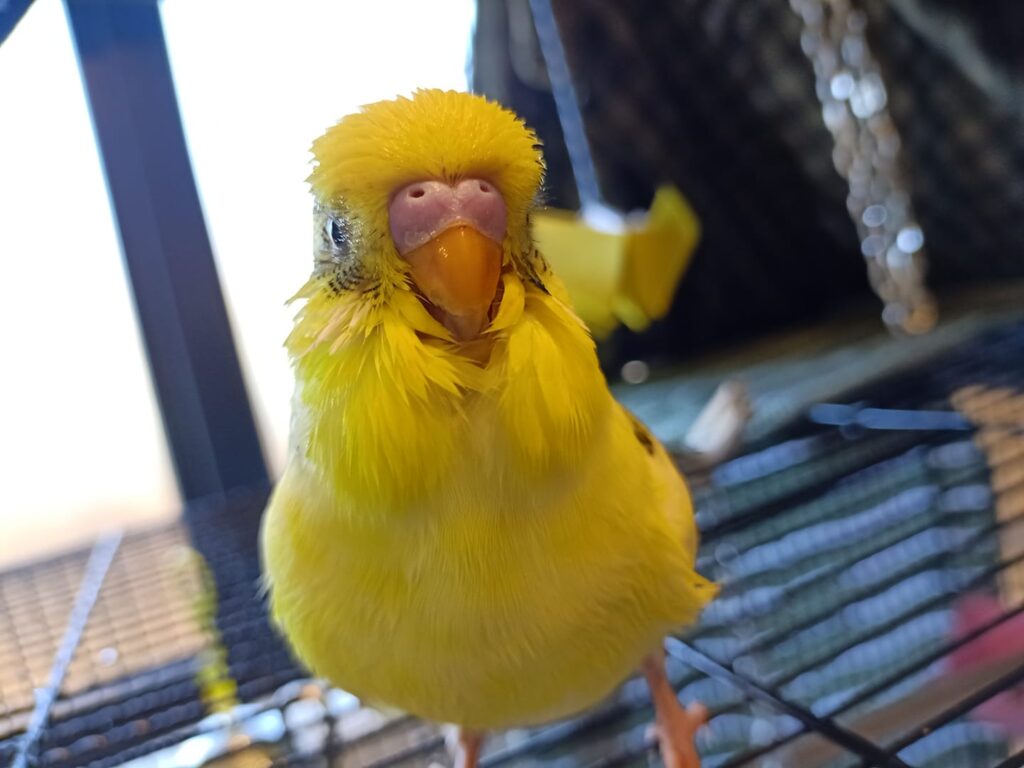
For more on cage setup that supports healthy feet, our guide on UK budgie cage setup covers placement and equipment, and our guide on the best toys for UK budgies covers the natural materials and varied perches that prevent foot issues.
Frequently Asked Questions
Is it normal for budgies to stand on one leg?
Yes, completely normal. A budgie standing on one leg with the other tucked up is showing signs of comfort, security, and relaxation. It is one of the most positive signs you can see in a pet budgie. The bird is comfortable enough to relax fully. A healthy budgie does this throughout the day, alternating which foot it tucks up.
Why does my budgie sleep on one leg?
Sleeping on one leg with the head turned back into the wing feathers is the classic budgie sleeping position. The tucked-up foot stays warm against the body, the bird conserves energy, and the position indicates a bird that feels safe enough to sleep in a vulnerable way. It is completely normal and healthy.
When should I worry about my budgie standing on one leg?
Worry only if the bird consistently uses the same leg without switching, refuses to put weight on a specific foot, shows visible damage or swelling, is reluctant to grip with one foot when stepping up, or shows other signs of illness alongside the behaviour. Occasional one-legged standing in a healthy active bird is normal — persistent favouring of one leg is not.
Could my budgie’s leg be broken if it stands on one leg?
Possible but unusual. A budgie with a broken leg cannot bear weight at all on that side, will not perch properly, will be in obvious distress, and may show visible deformity. Most one-legged budgies are simply relaxing — a genuinely broken leg looks dramatically different and is usually clear immediately. If in doubt, see an avian vet.
Why does my budgie tuck up its foot when it’s cold?
This is normal temperature regulation. Birds lose body heat through their feet because they have no feathers there. Tucking a foot up into the warm belly feathers preserves body warmth, particularly during cooler UK winter months. The bird rotates which foot is tucked, so neither stays cold for long. This is healthy behaviour, not a sign of illness.
How can I tell if my budgie has bumblefoot?
Bumblefoot causes visible swelling on the bottom of the foot, often with redness, sometimes with sores or scabs. The bird may favour the affected foot, be reluctant to perch on rough surfaces, and show reduced overall activity. If you suspect bumblefoot, see a vet promptly. It is treatable but needs proper veterinary diagnosis and treatment.
Where can I get honest budgie advice in Swindon?
Come and see us at Paradise Pets, Manor Garden Centre, Cheney Manor, Swindon SN2 2QJ. Or give us a ring on 01793 512400. The advice is free and we have been doing this for 35 years.
One Last Thing From Me
“Why is my budgie standing on one leg?” is the question. The honest answer, after 35 years of selling these birds, is — almost always because it is comfortable, relaxed, and content. It is genuinely one of the loveliest signs you can see in a healthy pet budgie.
The young man I mentioned at the start of this article? When we worked through his bird’s behaviour, the answer was clear quickly. The bird was tucking up either foot, switching throughout the day, eating and playing normally, perching well when stepping up. Everything pointed to a perfectly healthy, content bird. He went home reassured, and the next time he came in he was laughing at himself. “Neil, you were right. He does it all the time. I just had no idea it was a good sign.”
That is the outcome I want for every UK budgie owner — confidence in reading what your bird is actually telling you. Most of the worrying signs that new owners panic about turn out to be normal healthy behaviours they have never noticed before. Learning to read your bird transforms the experience of keeping it.
If you are reading this with a one-legged budgie at home, take a moment to watch your bird properly. Is it alternating feet? Is it otherwise active and well? Does it grip normally when it steps up? If yes, you have a healthy content bird and you can stop worrying. If something else is off, take it seriously and see a vet. And if you are local and unsure, come and see us. We will take a proper look and tell you honestly what we think — and most of the time, the news is good.
Worried About Your Budgie? Come And See Me
Bring your bird, bring a video, or just bring your questions. I will take a proper look and tell you honestly what I think. Most of the time, the news is reassuring. Free advice, no obligation. That is how we have done things for 35 years.