
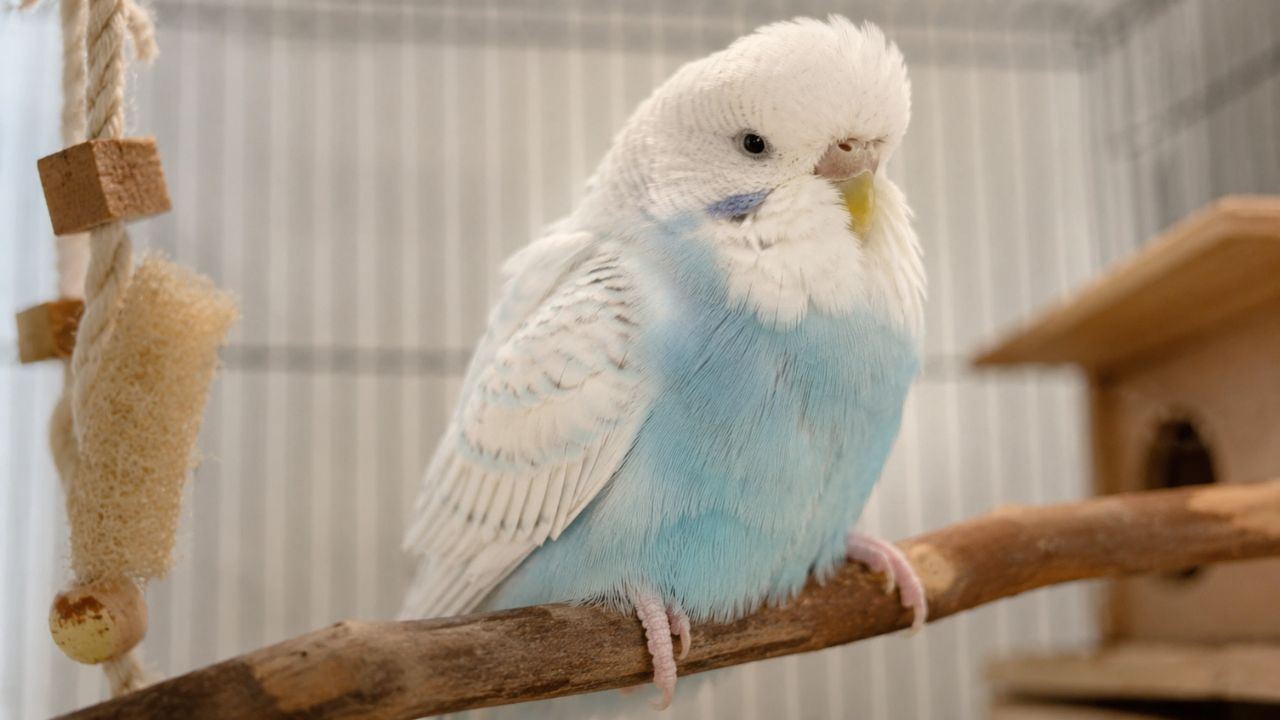

Neil has run Paradise Pets Swindon since 1988 — over 35 years of keeping, breeding, and advising on budgies. A puffed-up budgie is one of the most common concerns owners bring to the shop. This is his honest guide on what it actually means — and when you need to act immediately.
A man came into the shop on a Saturday morning looking genuinely worried. He had been watching his budgie for the past hour. The bird was sitting on its perch, feathers puffed out, eyes slightly closed, not moving much. It had barely touched its food.
“He looks like a little ball,” he said. “Is that normal? Does it mean he’s cold? My wife thinks he’s dying.”
Three possibilities — one very normal, one fixable, one serious. And from where I was standing, I could not tell him which one it was without asking a few more questions first.
That is the honest truth about a puffed-up budgie. The same visual — feathers raised, body rounded, posture changed — can mean a bird that is perfectly well and simply napping, a bird that is cold and needs warming, or a bird that is seriously ill and needs a vet today. The puffing itself does not tell you which. Everything around it does.
After 35 years of working with budgies at Paradise Pets, I know what questions to ask. This article walks you through them — so that when you see your budgie puffed up, you have a framework for working out what is actually happening rather than just a growing sense of dread.
Why Budgies Puff Up Their Feathers — The Basic Mechanism
Before we go into causes, it helps to understand what puffing actually is and why birds do it.
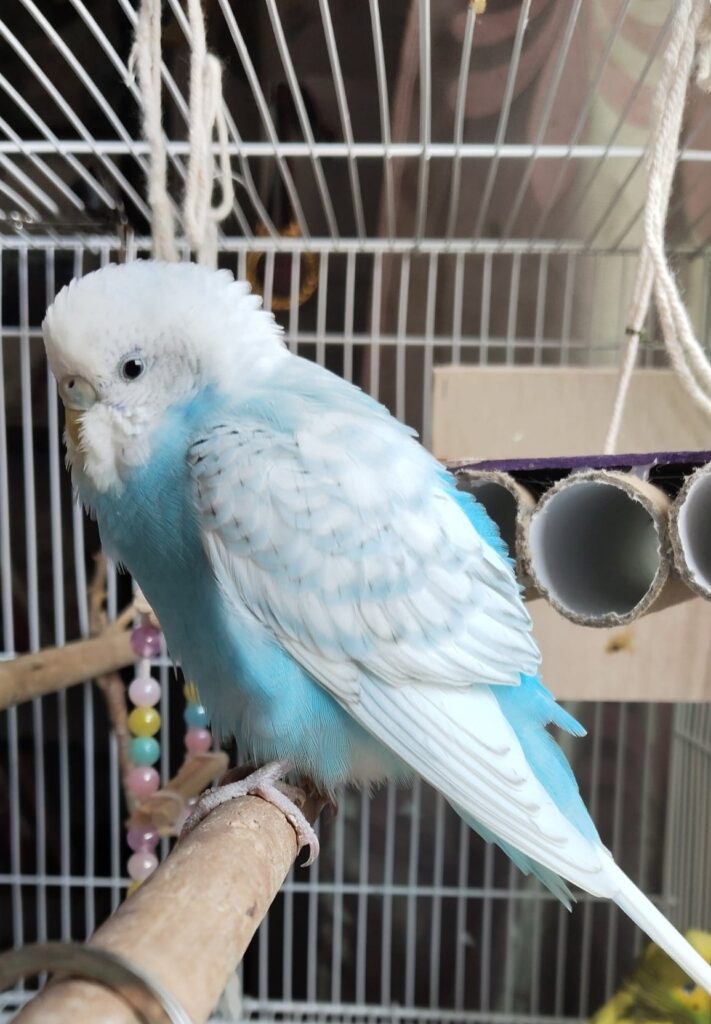
When a budgie raises its feathers, it is trapping a layer of warm air close to its body. It is the avian equivalent of putting on a coat. The raised feathers create insulation — the bird’s own body heat warms the air between the feathers and keeps the warmth in.
This mechanism serves several purposes. It keeps the bird warm when it is cold. It conserves energy when the body is under stress — whether from illness, fear, or exhaustion. And it happens automatically during normal sleep, which is why a napping budgie often looks puffed up even when it is perfectly healthy.
The question is never whether the bird is puffed up. The question is always: why is it puffed up right now, and what else is going on alongside it?
Normal Puffing — When There Is Nothing To Worry About
I want to start here because a significant proportion of the worried owners who come in with puffed-up budgies have birds that are doing something completely normal. Knowing what normal puffing looks like saves a lot of unnecessary anxiety.
- Sleeping or napping — a budgie that is drowsy or asleep will almost always puff its feathers. This is normal thermoregulation during rest. A budgie that is puffed up in the afternoon but alert and active at other times of day is almost certainly just having a nap.
- Early morning before the cage is uncovered — birds sleep puffed up and may take a few minutes to fully settle their feathers after waking. A bird that is puffed immediately after the cover comes off is usually fine.
- After a bath or misting — a wet bird puffs up to trap warmth while drying. Completely normal, passes within twenty to thirty minutes as the feathers dry out.
- During preening — budgies sometimes puff specific areas of feathers to gain better access while preening. This is brief and localised, not a whole-body sustained puff.
- Moulting period — during a moult, budgies are slightly more uncomfortable and may puff up more than usual. They are often quieter and less active too. This is normal and passes as the new feathers come through.
The key distinguishing factor with all of these is: the bird is otherwise normal. Alert when awake. Eating and drinking. Active when not resting. Producing normal droppings. Responsive when you approach.
If the bird is puffed up and all of those things are fine — it is almost certainly not a problem. Watch it. If anything changes, reassess.
If the bird is puffed up and any of those things have changed — that is when to take it seriously.
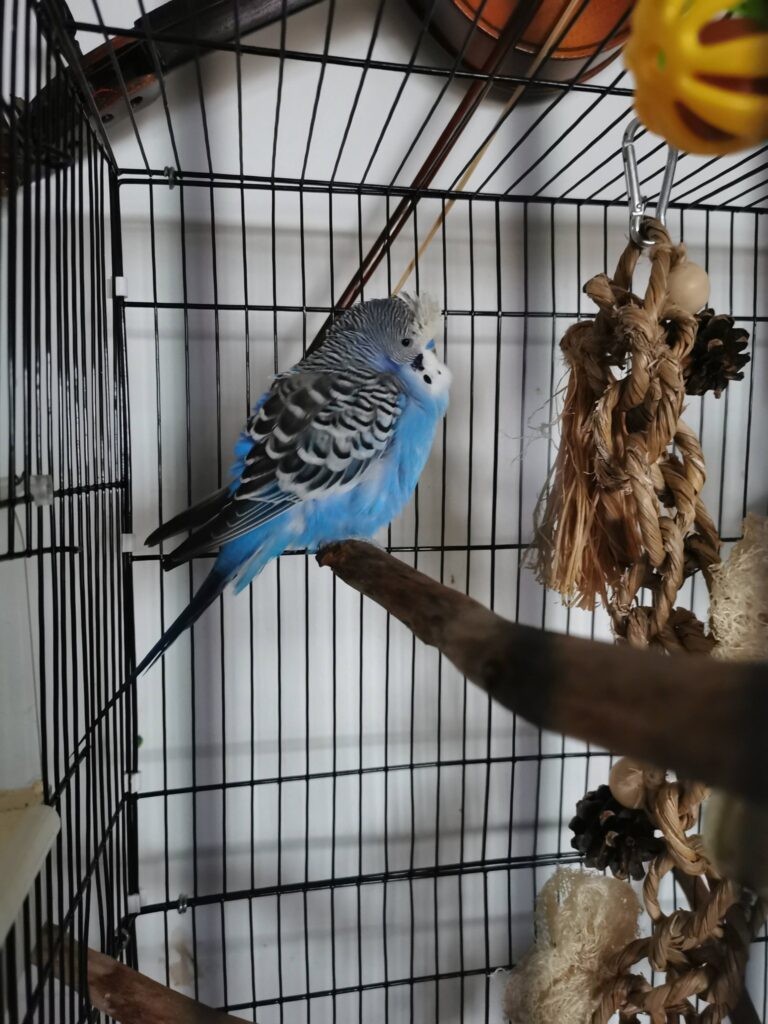
The 7 Causes of Concerning Puffing — And What To Do About Each
Cause 1: Cold and Hypothermia — Always Check This First
Cold is the first thing I check with any puffed-up budgie, because it is the most immediately actionable cause and one of the most common ones I see — particularly in UK winters.
Budgies need an ambient temperature of 18 to 22°C. They start to struggle below 15°C, and sustained cold below 10°C is genuinely dangerous. In a UK home, the risk comes from draughts more than from obvious cold — a cage positioned near a door, a window that is left open, under an air conditioning unit, or in a hallway that gets cold air every time the front door opens.
A cold budgie will puff up to conserve heat. The puffing is sustained rather than brief. The bird will often sit low on the perch, tucked in, sometimes with its head turned back and its beak buried in its back feathers. Feet may feel cool to the touch.
- Cage is near a window, external door, or air vent — draughts are the most common culprit
- Room temperature is below 18°C — check with a thermometer if you are not sure
- Puffing is worst in the morning when the house has been cold overnight
- Bird feels cool to the touch, particularly the feet
- Bird warms up and behaviour returns to normal once the room temperature rises
- UK autumn or winter — cold-related puffing is significantly more common in these months
What to do
Move the cage away from any draught source immediately. Warm the room gradually — do not point a fan heater directly at the cage. Covering three sides of the cage with a blanket while the room heats up helps trap warmth. Once warm, a cold-only budgie should recover within an hour and return to normal behaviour. If the bird does not improve after an hour of being properly warm, cold alone is not the full explanation.
Cause 2: Illness — The Most Urgent Possibility
A puffed-up budgie that is also quiet, not eating, and unresponsive is a sick budgie until proven otherwise. This is the combination of signs I take most seriously when an owner comes in.
The reason puffing is such a significant illness indicator is the masking behaviour I mentioned. Budgies hide illness — it is a survival instinct, because a visibly weak bird in the wild is a targeted bird. They keep eating, keep moving, keep acting normally even when something is seriously wrong. By the time the masking breaks down and the bird is visibly puffed, sitting still, and unresponsive, the underlying problem is often already well advanced.
- Puffed up continuously throughout the day, not just when napping
- Eyes half-closed or closing during daylight hours — a well budgie does not sleep during the day
- Tail bobbing with each breath — the bird is working hard to breathe
- Has not eaten or drunk anything for several hours
- Droppings have changed — watery, discoloured, unusually small, or absent
- The bird has moved to the bottom of the cage or is struggling to stay on the perch
- Feels lighter than usual when held — weight loss is often the earliest sign of illness
- Has been puffed up for more than a few hours with no improvement
What to do
Same-day avian vet — no exceptions when several of those signs are present together. While you arrange the appointment, keep the bird warm. A sick budgie that is warm uses less energy fighting its own temperature loss and has more reserves to fight the illness. Aim for around 30°C near the bird — a heat lamp on one side of the cage, so the bird can move away if it gets too warm. Do not wait overnight to see if it improves.

Cause 3: Respiratory Infection — Specific Signs To Look For
Respiratory infections are common in UK budgies and deserve their own section because they produce a specific pattern of puffing — combined with visible breathing effort — that owners can learn to recognise.
A budgie with a respiratory infection puffs up because it is using significant energy just to breathe. The effort of every breath is exhausting the bird. Infections spread quickly through the respiratory tract and can deteriorate to pneumonia within days in a small bird.
- Tail bobbing rhythmically with every single breath — the clearest sign of respiratory effort
- Clicking, wheezing, or rattling sounds when breathing
- Open-mouth breathing — the bird cannot get enough air through its nostrils
- Wet, crusty, or discoloured discharge around the nostrils
- Puffed up combined with a generally miserable, lethargic, sunken appearance
- Any recent exposure to cold, draughts, damp conditions, or other sick birds
What to do
Avian vet, same day. Respiratory infections in budgies need antibiotics and often additional supportive care — they do not resolve on their own and they deteriorate fast without treatment. Keep the environment warm and completely draught-free while you arrange the appointment. Remove any potential airborne irritants from the room — scented candles, sprays, cigarette smoke.
Cause 4: Fear or Stress — Often the Overlooked Cause
A frightened budgie will puff up. It is a defensive posture — the bird makes itself appear slightly larger and simultaneously conserves energy in case it needs to flee. A stressed budgie living in an environment that does not suit it — too loud, too unpredictable, with an incompatible cagemate, or not getting enough sleep — will often be chronically puffed up in a way that owners do not immediately connect to stress.
- Has anything changed recently? A new pet in the home, a moved cage, a new person, a change in routine, a new object near the cage. Budgies notice environmental changes that seem trivial to us.
- Is there a cat, dog, or other predator-type animal that can approach the cage? Even without physical contact, the presence of a predator nearby keeps a budgie in a state of sustained stress.
- Is the cage getting ten to twelve hours of darkness per night? A budgie that is not getting enough sleep is a chronically stressed budgie. Irregular cover schedules, late nights with lights on, or disturbance during sleep all accumulate.
- Does the bird have a cagemate it does not get on with? Persistent low-level conflict with another bird is exhausting and stressful. Teeth chattering, chasing, or constant displacement from perches are signs.
What to do
Identify and remove the stressor if possible. Move the cage away from anything that is frightening the bird. Ensure consistent sleep hours with a proper blackout cover. If a cagemate relationship is the problem, assess whether separation is needed. A budgie whose stress trigger is removed usually returns to normal posture within a day or two — sometimes faster.
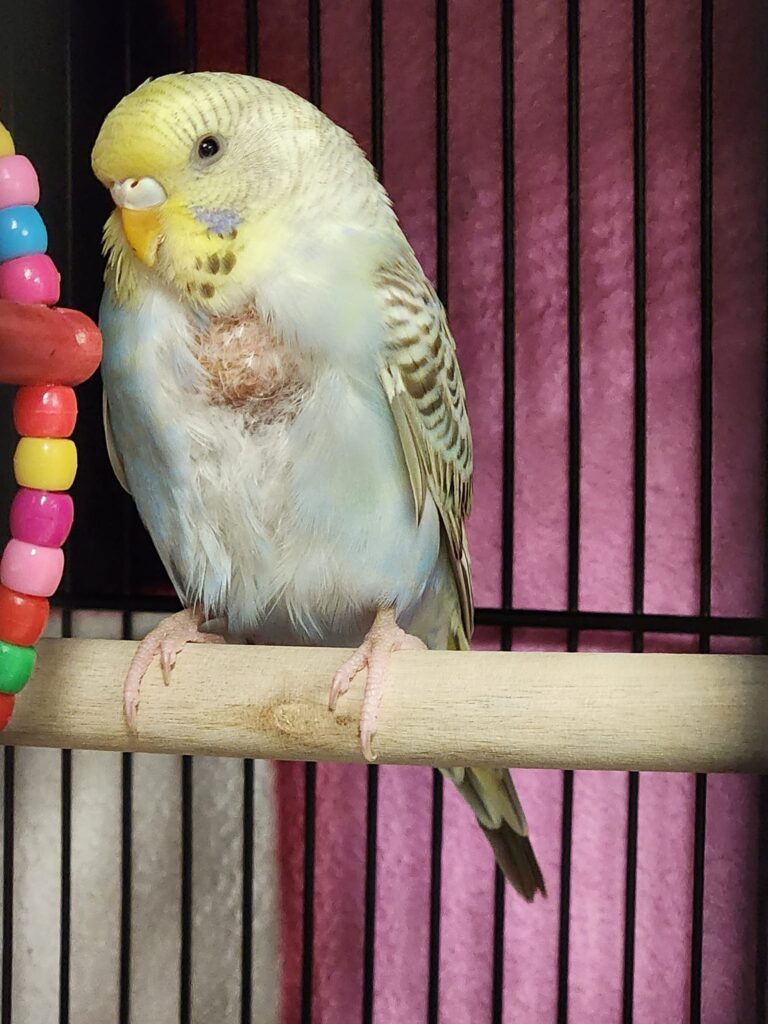
Cause 5: Injury — Easy To Miss, Important Not To
A budgie that has been injured will often puff up as a pain and shock response. The puffing in this case is the bird conserving energy while dealing with something that hurts. Injuries are easy to miss because feathers hide a lot — there may be no visible blood or obvious damage on the surface.
- Did the bird have a night fright recently — crashing around the cage in darkness?
- Has it had out-of-cage time and may have flown into a window, wall, or mirror?
- Is there another animal in the home that could have reached the cage?
- Is one wing held differently from the other — drooping or slightly open?
- Is the bird bearing weight on both feet equally, or favouring one?
- Does it flinch or react when you touch a particular area?
What to do
Any suspected injury is a vet visit. Even if you cannot see visible damage, fractures and internal injuries require examination and sometimes imaging to identify. Cat scratches or bites are a particular emergency — even a scratch that looks minor introduces bacteria that can be fatal to birds within hours without antibiotic treatment. Do not delay on this one.
Cause 6: Egg Binding — Female Budgies Only, Genuine Emergency
This is one of the most common serious conditions in female budgies and one that owners frequently miss because they do not know to look for it. A female budgie that is egg-bound — unable to pass an egg — will sit puffed up, often at the bottom of the cage or sitting wide-legged on the perch, with a characteristic straining posture. She is in genuine pain.
- Female bird puffed up with a wide-legged stance on the perch or floor
- Visible straining or repeated tail-pumping motions
- Abdomen looks rounded or swollen — may be visible even through the feathers
- Bird is quiet, lethargic, and not eating
- Droppings are absent or very small
- Bird feels heavier than usual around the lower abdomen when held gently
What to do
Avian vet immediately — egg binding is fatal if not treated and it is time-critical. While you arrange the appointment, warmth and gentle humidity can help relax the muscles. Do not wait overnight. This is a genuine emergency regardless of how recently you noticed the symptoms.
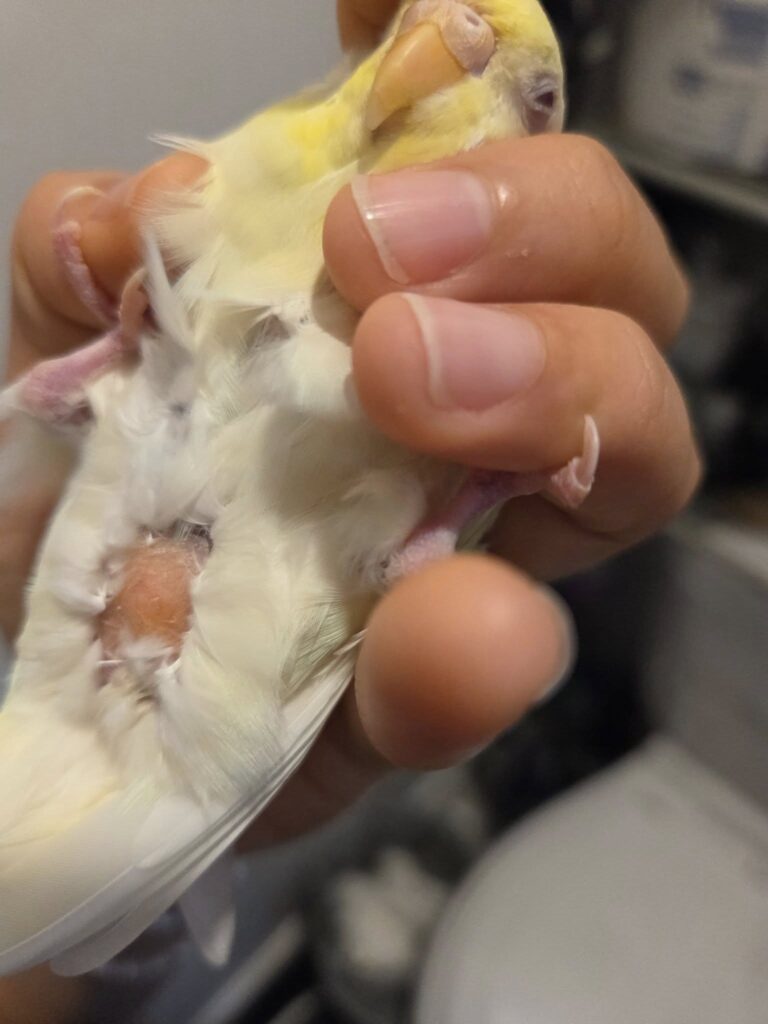
Cause 7: Old Age and End of Life
A budgie that is seven or eight years old and has been gradually slowing down over weeks may simply be reaching the natural end of its life. Older birds puff up more, sleep more, eat less, and become progressively less responsive. The decline is usually gradual rather than sudden.
This is the most difficult cause to talk about honestly — but it belongs in any complete guide on this subject.
- How old is the bird? Budgies typically live seven to ten years. A bird over six that has been declining gradually is different from a young bird that has suddenly changed.
- Has the decline been gradual? Natural end-of-life decline is slow — weeks of gently reducing activity, not a sudden collapse overnight.
- Has a vet ruled out treatable conditions? What looks like old age is sometimes a chronic infection, arthritis, or nutritional deficiency — all of which can be managed and improved.
- Is the bird comfortable? Still eating a little, drinking, responsive when you come close? Or is it in obvious distress?
What to do
Even when natural decline seems the most likely explanation, a vet visit is worthwhile. Some conditions that mimic old age are treatable. If the vet confirms end-of-life decline, your role shifts to comfort — warmth, food and water at accessible levels, minimal stress, and gentle presence. There may come a point where euthanasia is the kindest option. That is a hard conversation, but your vet will guide you through it.
How To Tell The Difference — Neil’s Checklist
- Is the bird alert and active when not resting?
Yes — probably normal napping or mild cold. Monitor closely.
No — possible illness. Work through the remaining questions urgently. - Is the bird eating and drinking normally?
Yes — reassuring. Keep observing.
No — serious concern. If combined with any other sign, vet same day. - What are the droppings like?
Normal — reassuring.
Watery, discoloured, very small, or absent — vet same day. - Is the room warm enough and free of draughts?
Below 18°C or draught present — warm the environment first, then observe.
Already warm — cold is not the main explanation. - Is there any tail bobbing or breathing effort?
Yes — respiratory issue. Vet today without question. - Is the bird female with a swollen lower abdomen?
Yes — possible egg binding. Avian vet immediately. - How long has the puffing been going on?
Less than an hour, no other symptoms — monitor.
Several hours with no improvement — phone a vet regardless of other signs.
What Not To Do With A Puffed-Up Budgie
| What people do | Why it is wrong | What to do instead |
|---|---|---|
| Wait overnight to see if it improves | Sick budgies deteriorate in hours — by morning it can be too late | Phone an avian vet the same day if other symptoms are present |
| Handle the bird repeatedly to check on it | Stress causes a sick bird’s condition to deteriorate further | Minimal handling — observe quietly from nearby |
| Put the cage directly next to a radiator | Direct heat dehydrates and can overheat — the shock worsens the situation | Warm the room gradually to around 28 to 30°C for a sick bird |
| Give over-the-counter treatments | Most are ineffective; some are harmful to sick birds | Only give what an avian vet has prescribed for this bird |
| Assume moulting explains everything | Moulting birds are quieter but still eat, drink, and respond normally | If the bird is not eating or is unresponsive, do not attribute it to moult |
| Separate it from its cagemate immediately | Isolation adds stress on top of illness — the company of a familiar bird is comforting | Only separate if the cagemate is bullying the sick bird |

Frequently Asked Questions
My budgie is puffed up but still eating — should I worry?
A budgie that is puffed up but eating normally, producing normal droppings, and alert when not resting is less likely to be seriously ill than one showing multiple symptoms. That said, sustained puffing throughout the day is not normal resting behaviour — it is worth monitoring closely. If the puffing does not resolve over the course of the day, or if anything else changes, speak to an avian vet.
My budgie is puffed up and sleeping a lot — is this serious?
This combination deserves attention. A budgie that is sleeping more than usual during the day and is puffed up is showing two signs that often accompany illness. Check whether it is eating and drinking normally and what the droppings look like. If those are also off, phone an avian vet the same day. If everything else seems normal, it may be moulting or slightly cold — warm the environment and monitor.
Is it normal for budgies to be puffed up in the morning?
Yes, briefly. Birds sleep puffed up and may take a few minutes to settle their feathers fully after waking. A bird that is puffed immediately after the cover comes off but becomes alert and active within ten to fifteen minutes is fine. A bird that is still puffed up, quiet, and unresponsive an hour after being uncovered is not.
My budgie is puffed up and at the bottom of the cage — what does this mean?
This combination is a serious warning sign. A puffed-up bird on the cage floor has moved to the lowest point because it no longer has the strength or energy to maintain its perch. This is a late-stage visible symptom — the underlying problem is usually already well advanced. Phone an avian vet immediately and keep the bird warm while you do.
Can a budgie be puffed up just because it is happy and relaxed?
Budgies do sometimes puff up briefly during very relaxed, contented moments — sitting in the sun, being gently stroked, deeply settled in a warm environment. This is brief, happens in an otherwise alert and active bird, and passes quickly. It is very different from the sustained, continuous puffing of a cold or ill bird. Context and duration are everything.
Where can I get urgent budgie advice in Swindon?
Come and see us at Paradise Pets, Manor Garden Centre, Cheney Manor, Swindon SN2 2QJ. Or ring us on 01793 512400. For genuine emergencies — breathing problems, egg binding, or a bird on the cage floor — go straight to an avian vet. We will help you work out which situation you are in.
One Last Thing From Me
The man who came in on Saturday morning — the one whose wife thought the budgie was dying? His bird was cold. The cage was next to a window that had been left open overnight. We moved it, warmed the room, and the budgie was back on its perch singing within the hour.
Not every puffed-up budgie is a crisis. But some of them are — and the ones that are cannot wait.
The difference between a recovery and a loss, with budgies, comes down almost entirely to how quickly the owner acts when the signs appear. These are small animals with fast metabolisms and limited reserves. The window between the first visible symptoms and a point of no return is shorter than most people expect.
Use the checklist in this article. If anything points toward illness — reduced eating, changed droppings, tail bobbing, a bird that has been puffed for hours — do not wait. Phone an avian vet the same day. If you are in Swindon and you are not sure how urgent it is, ring us first and we will help you judge it.
Worried About Your Budgie? Come And See Us — Or Ring An Avian Vet
For breathing emergencies, egg binding, or a bird on the cage floor — go straight to an avian vet. For everything else, come in or ring us and we will help you work out what is happening. Free advice, no obligation. Over 35 years of hands-on budgie experience.