
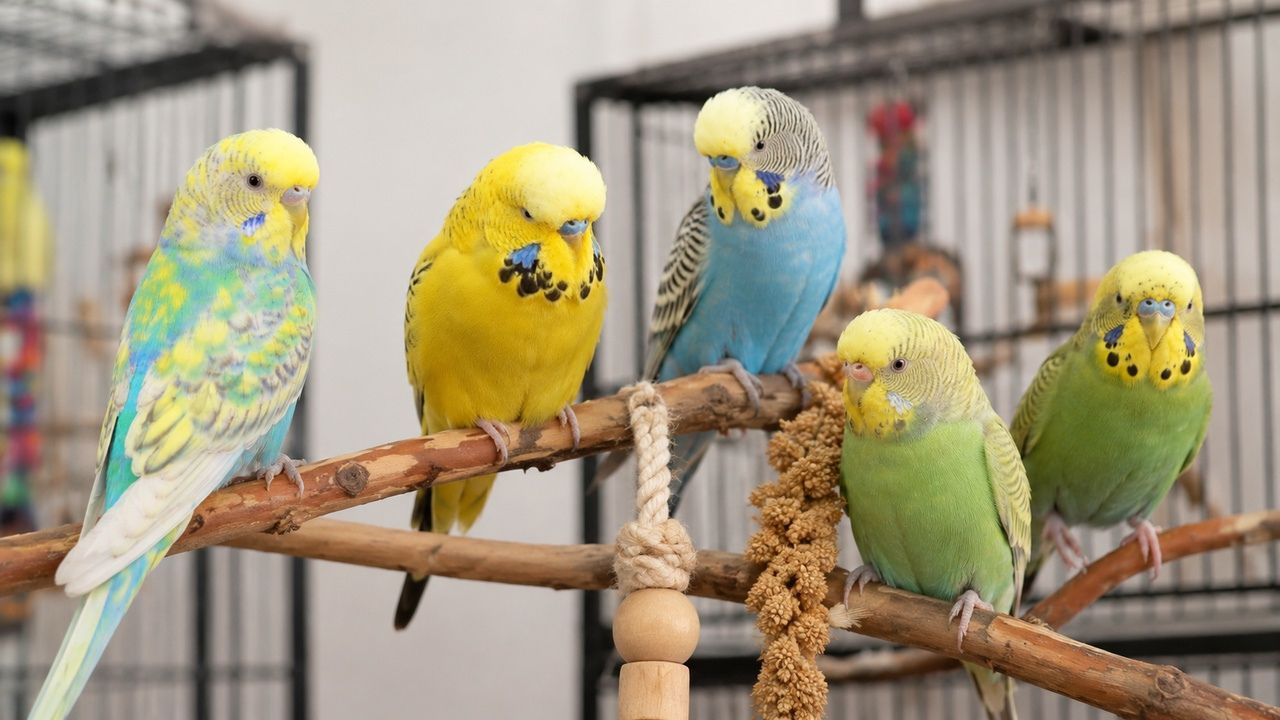

Neil has run Paradise Pets Swindon since 1988 — over 35 years of keeping, breeding, and selling budgies of every variety to first-time owners across the UK. This is his honest guide on which budgie breeds and varieties actually suit beginners — and why the choice matters more than most people realise.
I have this conversation several times a week.
Someone comes in — often a parent with a child in tow, sometimes a retired person on their own, occasionally a young couple setting up their first home — and they stand in front of the birds for a while, and then they say: “Which one should I get?”
Most of the time they mean colour. Blue or green. Yellow or white. They have not thought much beyond that, because nobody has told them there is more to think about.
Here is what I tell them: the colour of a budgie affects nothing. The variety — the type of budgie you choose — affects quite a lot. And for a first-time owner, getting that choice right from the start makes the difference between an experience that is rewarding and one that is frustrating.
There are several distinct varieties of budgie available in the UK, and they are not all equally suited to someone who has never kept a bird before. Some are calmer. Some are more likely to talk. Some have health considerations that a beginner is not well-placed to manage. Some are harder to find from good sources.
After 35 years of helping first-time owners choose their first bird, here is my honest verdict on all of them.
What “Breed” Actually Means With Budgies
Before we go through the varieties, a quick clarification — because the word breed is used loosely when it comes to budgies, and it helps to know what we are actually talking about.
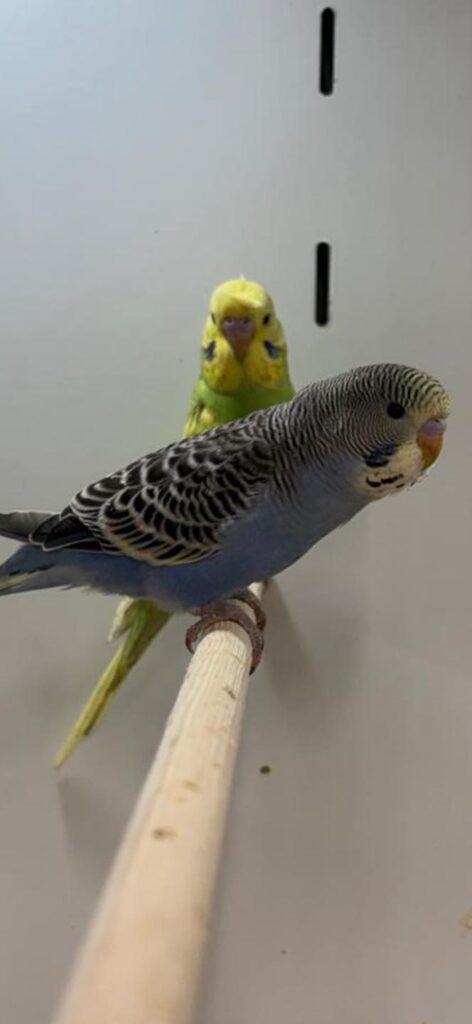
All pet budgies are the same species: Melopsittacus undulatus. What varies between them are mutations — changes in feather structure, colour genetics, and in some cases, selective breeding for size and shape. These mutations produce birds that look and, in some cases, behave noticeably differently from one another.
The main distinctions a first-time owner needs to understand are:
- Standard budgie — the original, closest to the wild type. Active, vocal, hardy.
- English budgie — selectively bred for size and feathering. Larger, calmer, shorter-lived.
- Colour mutations — lutino, albino, pied, spangle, and others. Same temperament as standard, different appearance.
- Feather mutations — crested varieties. Aesthetic difference; some welfare considerations.
Each of these has implications for a first-time owner. Let me go through them honestly.
The Standard Budgie — My First Recommendation For Most Beginners
The standard budgie — sometimes called the Australian or wild-type budgie, though the birds we sell are many generations removed from the wild — is the variety I recommend to most first-time owners. Here is why.
They are hardy. Of all the budgie varieties available in the UK, standard budgies have the fewest inherited health problems. They have been kept as pets for over 150 years and the gene pool is large and robust. A healthy standard budgie from a good source is unlikely to present a new owner with serious veterinary challenges in its first few years.
They are long-lived. A well-kept standard budgie typically lives seven to ten years, sometimes more. That is a meaningful relationship — long enough to become a genuinely important part of the household.
They are the most likely to talk. Male standard budgies have the best record for developing speech of any budgie variety. Not all of them will — talking is never guaranteed — but the odds are better with a standard male than with any other type.
They are active and entertaining. A standard budgie in a well-set-up environment is constantly doing something interesting — climbing, exploring, calling, singing, interacting. For someone who wants a bird with genuine personality, the standard budgie delivers.
The trade-off — and there is one — is that standard budgies are active and sometimes quick-moving in a way that can feel daunting during early taming. They startle more easily than English budgies, they are faster, and the early handling sessions require more patience. This is not a reason to avoid them. It is just worth knowing.
The English Budgie — The Calm Choice, With Caveats
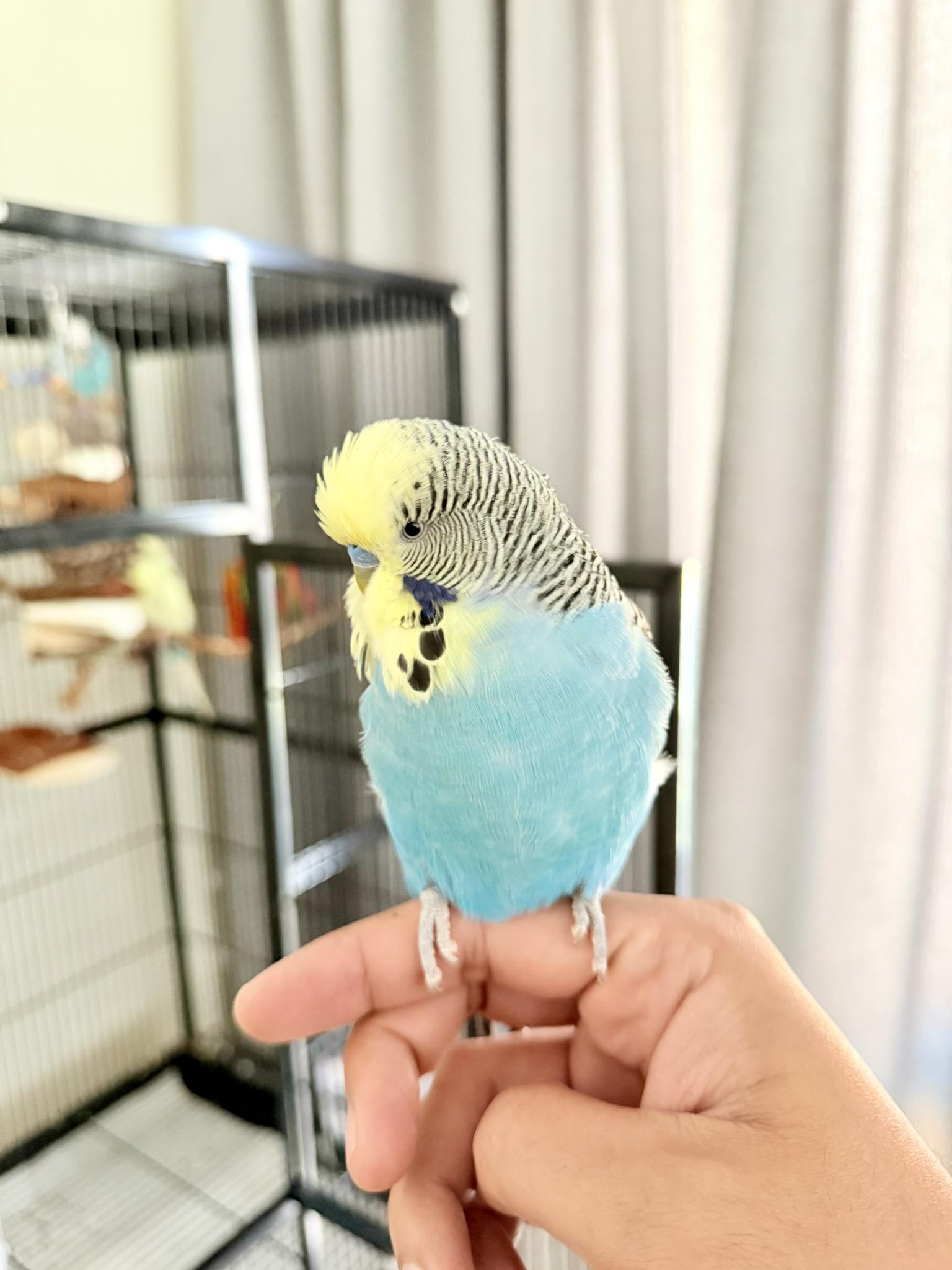
The English budgie — also called the show budgie or exhibition budgie — is a different experience from the standard bird. Selectively bred over decades for size, feathering, and a particular visual appearance, the English budgie is noticeably larger than its standard cousin, with distinctive fluffy head feathering and a rounder, more upright posture.
The temperament difference is real. English budgies are calmer, slower-moving, and generally less easily startled than standard birds. For someone who finds the quickness of standard budgies daunting, an English budgie can be significantly easier to handle in the early stages of taming. They are more placid, more patient with inexperienced handling, and their slower movements make the whole process feel less overwhelming.
For this reason, I sometimes recommend English budgies to older first-time owners, or to anyone who has expressed particular anxiety about handling a fast-moving bird.
- Shorter lifespan — English budgies typically live five to seven years, sometimes less. The selective breeding that produces their distinctive appearance comes with a compressed lifespan compared to standard birds.
- More prone to respiratory issues — the heavy head feathering that is characteristic of the variety can sometimes affect airflow around the nostrils. English budgies need careful attention to air quality and temperature.
- Less likely to develop speech — English budgies can and do talk, but the talking ability is generally less developed than in standard males. If speech is a priority, a standard male is the better choice.
- Harder to find from quality sources — good English budgies come from specialist breeders, not general pet shops. The quality varies significantly. Come and talk to us before buying one from an unknown source.
- Higher purchase price — a well-bred English budgie costs more than a standard bird. Expect to pay significantly more from a quality breeder.
My honest summary: English budgies are lovely birds and a genuinely good choice for certain first-time owners. But they are not simply a bigger, fluffier version of the standard budgie with no trade-offs. Know what you are taking on before you choose one.
Colour Mutations — Lutino, Albino, Pied, Spangle and Others
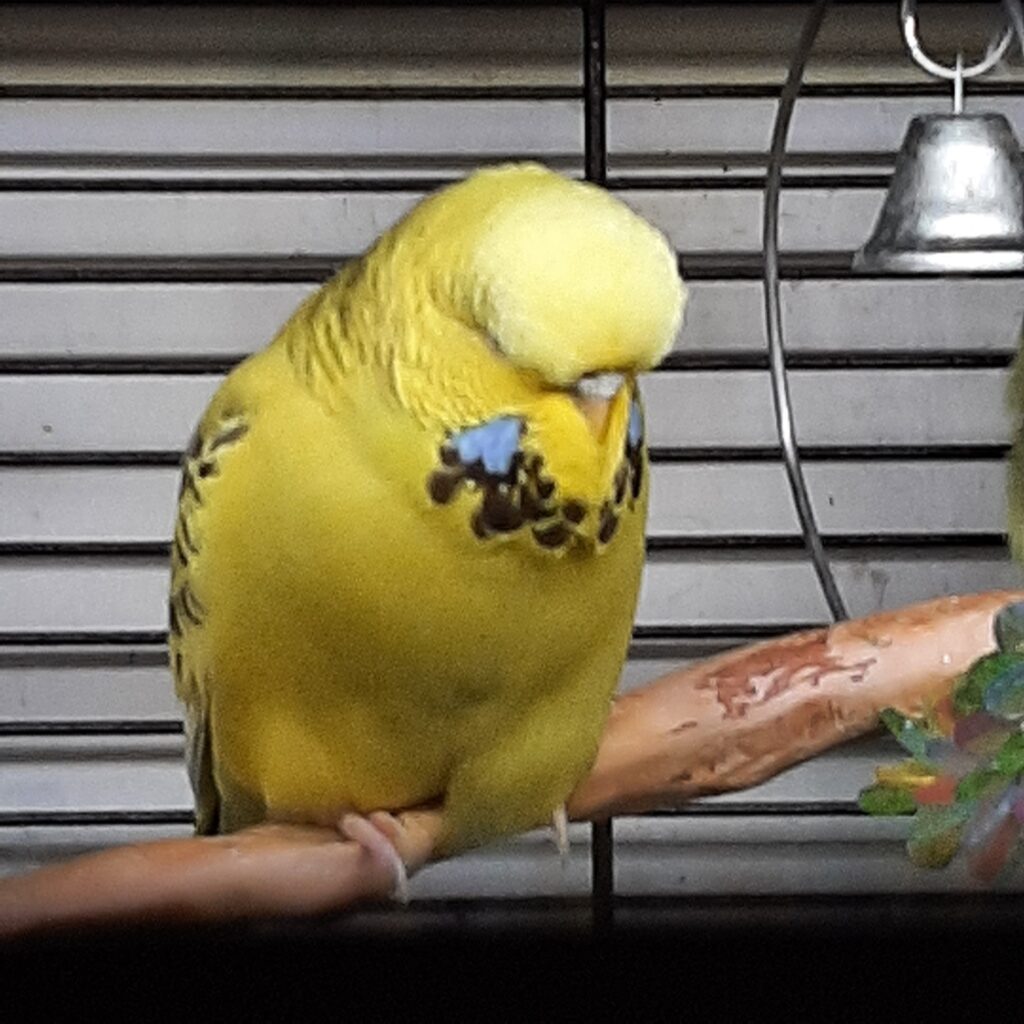
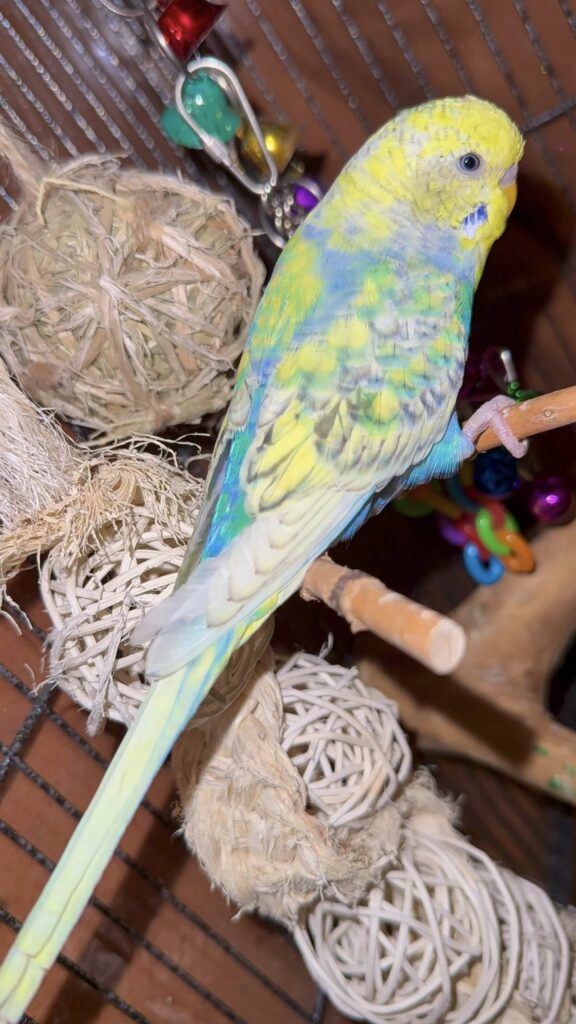
These are not separate breeds — they are colour and pattern variations within the standard budgie, produced by specific genetic mutations. A lutino budgie is a standard budgie with a particular colour gene. A spangle is a standard budgie with a different feather patterning gene. The underlying bird is the same.
For most beginners, the colour mutation question is largely aesthetic — which one do you find most beautiful. The answer to that is entirely personal and I will not push you in any direction.
There are, however, a couple of mutations worth specifically mentioning for a first-time owner.
Lutino Budgies
Lutino budgies are a rich yellow with red eyes. They are striking and popular. The one thing worth knowing for a beginner is that lutinos — and albinos, which are white with red eyes — sometimes have slightly reduced eyesight compared to standard-coloured birds. This is not universal, and many lutinos have completely normal vision, but it is worth being aware of. A bird with reduced eyesight may startle more easily in certain lighting conditions and may take slightly longer to become comfortable with handling.
Pied Budgies
Pied budgies have irregular patches of colour and clear areas on their plumage. No health or temperament considerations specific to the mutation — they are standard birds in patterned coats. Popular with beginners because of their distinctive appearance.
Spangle Budgies
Spangle budgies have a distinctive scalloped pattern on their feathers, with the colours reversed compared to normal budgies. Again, no specific health or temperament differences — purely aesthetic.
- Lutino and albino — be aware of potential eyesight variation. Not a reason to avoid them, just worth knowing.
- All other colour mutations — temperament and health are the same as standard budgies. Choose what you find beautiful.
- Double mutations — birds carrying two recessive mutations can sometimes have more health complications. For a beginner, a single clean mutation or a standard bird is a simpler starting point.
- What matters more than colour — age, sex, source, and how the bird has been handled. These factors affect your experience far more than any colour mutation.
Crested Budgies — My Honest Advice
Crested budgies have a tuft of feathers on the top of the head — either a full circular crest, a half-circular crest, or a tufted crest depending on the genetic combination. They are unusual-looking and some people find them appealing for that reason.
I will be direct here: I do not recommend crested budgies for first-time owners.
The crested mutation is linked to a lethal gene. When two crested birds are bred together, a proportion of the offspring do not survive. Responsible breeders pair a crested bird with a non-crested bird to avoid this, but the gene pool is smaller and the breeding is more specialist than standard birds.
More relevantly for a first-time owner: crested budgies can have difficulty preening the feathers around their crest, which can lead to feather problems over time. They sometimes have reduced vision if the crest feathers fall forward over the eyes. And finding a healthy, well-bred crested budgie from a quality source is harder than finding a standard or English bird.
None of this makes crested budgies bad pets for experienced keepers. But for a first-time owner, they add complexity that simply does not need to be there at the start. Get your experience with a standard or English bird first. Come back to crested budgies later if they interest you.
Male or Female — The Question That Matters As Much As Variety
Once you have decided on the variety, sex is the next most important decision — and it is one that many first-time owners have not thought carefully about.
For most first-time owners who want interaction and companionship, I recommend a male.
- Males are more likely to talk — not guaranteed, but significantly more probable than females
- Males are generally calmer and more sociable — more tolerant of handling, more outwardly interested in people
- Males do not have female-specific health issues — no egg binding, no reproductive tumours, no hormonal complications from laying unfertilised eggs
- Males sing more — a male budgie in full song is one of the most pleasant sounds in the bird world. Females vocalise but are generally less musical.
Females are not difficult pets — they just have different characteristics and, for a beginner, a slightly more complex health picture. If you are specifically interested in a female for whatever reason, read our full guide on male versus female budgies before you decide.
Where You Get The Bird Matters As Much As Which Bird You Choose
I want to make this point clearly because it is one of the most consistently under-appreciated factors in how a budgie’s first year goes.
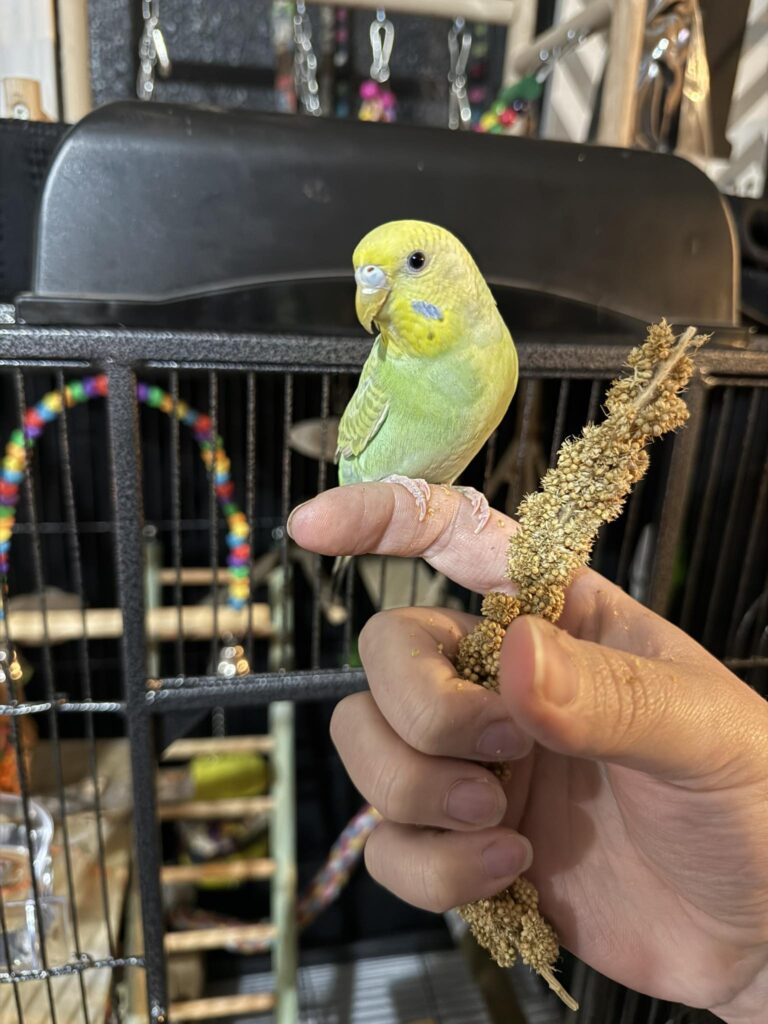
The same variety of bird — same age, same sex — will present completely differently depending on where it came from and how it was kept in its first weeks of life. A young male standard budgie that was hatched by a careful breeder, handled gently from fledging, kept in a calm environment, and sold at the right age is a completely different proposition from a bird that came from a high-turnover facility, was handled minimally or stressed during transport, and arrived at a shop having already had several unsettling experiences.
- Where did this bird come from? A named UK breeder the shop has an ongoing relationship with is the answer you want. Vague or evasive answers are not.
- How old is the bird? Six to twelve weeks is ideal for a first-time owner — old enough to be fully weaned, young enough to socialise well. Older birds can be tamed but it takes longer.
- Has it been handled? A bird that has had gentle human contact from a young age will settle into a new home significantly more quickly than one that has not.
- What has it been eating? A bird already eating a varied diet including fresh food will adapt to good husbandry more easily than one that has only ever had seed.
At Paradise Pets, all our budgies come from UK breeders we have known for years. We know how the birds were kept, what they have been eating, and roughly how old they are. We do not buy from importers or unknown sources. That matters — not as a sales pitch, but as a genuine factor in the bird you take home.
My Honest Summary — Which Budgie For Which Owner
| Owner type | Best choice | Why |
|---|---|---|
| Most first-time owners | Young male standard budgie | Hardy, long-lived, most likely to talk, best personality for bonding |
| Older or less confident handlers | Young male English budgie | Calmer, slower-moving, easier early handling — know the shorter lifespan |
| Someone who wants two birds | Two young male standard budgies | Compatible, settled company, lower noise than a lonely single bird |
| Someone who wants maximum talking potential | Single young male standard budgie | Single birds bond more strongly with owners and develop richer speech |
| Someone interested in colour | Any colour mutation of standard male | Colour does not affect temperament — choose what you find beautiful |
| First-time owner — avoid | Crested budgies | Additional health and welfare complexity — gain experience first |
Frequently Asked Questions
What is the friendliest type of budgie?
In terms of variety, English budgies are generally the calmest and most tolerant of handling from the start. In terms of sex, males are typically more outwardly sociable and more interested in interacting with people. But individual personality varies enormously — a well-socialised standard budgie from a good source will often be friendlier than a poorly-handled English budgie from an unknown one. Source and handling history matter more than variety in the end.
Which budgie is easiest to tame?
Young birds — six to twelve weeks old — are easiest to tame regardless of variety. Age matters more than variety here. A young standard budgie that has already had gentle human contact from the breeder will tame faster than an older English budgie with no handling experience. Start young, from a good source, and the variety is secondary.
Do English budgies talk more than standard budgies?
No — the opposite is generally true. Standard male budgies have the better reputation for developing speech. English budgies can and do talk, but the talking ability tends to be less extensive. If speech is a priority, choose a standard male.
Are green budgies friendlier than blue ones?
No. Colour has no effect on temperament whatsoever. Green is closer to the wild-type colouring but this does not make green birds more natural, wilder, or friendlier than any other colour. Choose whichever colour you find most beautiful.
How much does a budgie cost in the UK?
A standard budgie from a quality UK breeder typically costs between £15 and £30. English budgies cost more — typically £40 to £80 or more for a well-bred bird. The purchase price is a small part of the total cost of keeping a budgie well — cage, food, and potential vet costs are more significant over the bird’s lifetime.
Where can I get the best budgie for a first-time owner in Swindon?
Come and see us at Paradise Pets, Manor Garden Centre, Cheney Manor, Swindon SN2 2QJ. Or ring us on 01793 512400. We stock standard and English budgies year-round, all from UK breeders we know personally. We will spend the time with you to help you choose the right bird for your situation — no pressure, no rush.
One Last Thing From Me
The question “which budgie should I get” has a better answer than most people expect going in. It is not just about colour. It is about variety, sex, age, and source — and getting all four of those right from the start makes an enormous difference to what the next seven to ten years actually look like.
I have sold first budgies to people who are now on their third or fourth bird, who know exactly what they want, who come back because the experience has been consistently rewarding. Almost all of them started with a young male standard budgie from a UK breeder. Almost all of them say it was the right call.
Come in and have a look at what we have. Spend some time with the birds before you decide anything. Ask as many questions as you like — that is what we are here for.
Choosing Your First Budgie? Come And Talk To Us First
We stock standard and English budgies year-round — males and females, a range of colours and mutations, all UK-bred and handled from young. Come in and spend some time with the birds. Free advice, no obligation, no pressure. Over 35 years of helping first-time owners get it right.