
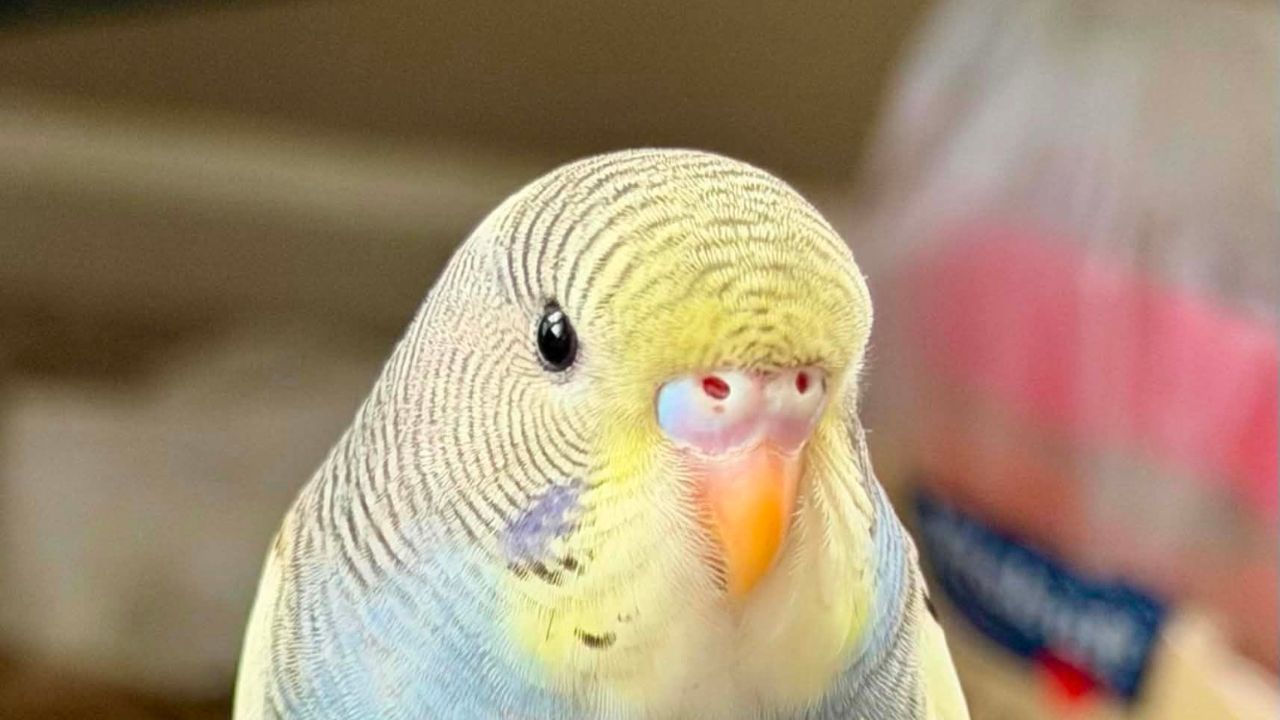

Neil has kept, bred, and sold cage birds at Paradise Pets Swindon since 1988 — over 35 years of UK summers with birds. The RSPB’s May 2026 guidance confirms what Neil has been saying at the counter for years: the UK’s warm months are now genuinely challenging for birds, both wild and kept. This article is his honest, practical guide to the five things every pet bird owner must do before temperatures peak this weekend.
The RSPB published something in May 2026 that I have been saying in slightly different terms for thirty-five years.
They described the UK’s warmest months as a survival challenge for birds — not just wild birds at garden feeders, but birds generally, because the conditions that make summer difficult for garden species are the same conditions that create risk for pet birds kept in homes that are not managed properly for heat. The report was primarily about wild bird populations, about trichomonosis spreading at feeders, about greenfinch numbers collapsing. But the underlying observation — that UK summers have become genuinely dangerous for birds in ways they were not a generation ago — applies directly to every budgie, cockatiel, canary, and finch in a cage in this country.
As the RSPB notes, the ongoing problem for birds is not simply how to keep cool in a heatwave, but how to survive a changing climate that increasingly affects food, water, and temperature conditions during the warm months. For pet bird owners, that translates to a specific set of actions that need to happen before the hottest days arrive — not during them.
I am going to go through those actions now. Five things. If you do all five before this weekend, your bird will be significantly better placed to manage the heat safely.
Why UK Summers Have Become Genuinely Different for Pet Birds
The UK’s recent summers have produced conditions that go beyond what most pet bird owners have their setups prepared for. The May 2026 heatwave recorded 35.1°C at Kew Gardens — the hottest UK May day since records began in 1884 by two full degrees. As of this week, amber warnings remain active across England and Wales, with temperatures forecast at 31 to 33°C.
The specific risk for pet birds is not the headline temperature. It is the relationship between that temperature, the glass in the windows nearest to where most cage birds live, and the biology of small birds that have a vanishingly small margin between their normal operating temperature and the temperature at which organ stress begins.
A budgie’s resting body temperature is already 40 to 42 degrees Celsius. A cage positioned near a south or west-facing window in direct afternoon sun on a 31-degree day is not in a 31-degree environment. Glass amplifies solar radiation. The local temperature around a cage in direct afternoon sun can be fifteen degrees higher than the ambient room temperature. A bird in that position on a summer afternoon is in an environment that may be lethal within a relatively short period of sustained exposure.
The RSPB has changed what it recommends for garden bird feeding, pausing the recommended feeding of seeds and peanuts between 1 May and 31 October because summer and autumn conditions make disease spread significantly more likely. The principle — that UK summer conditions now require a fundamentally different approach rather than business as usual — is one that applies equally to the management of pet bird environments.
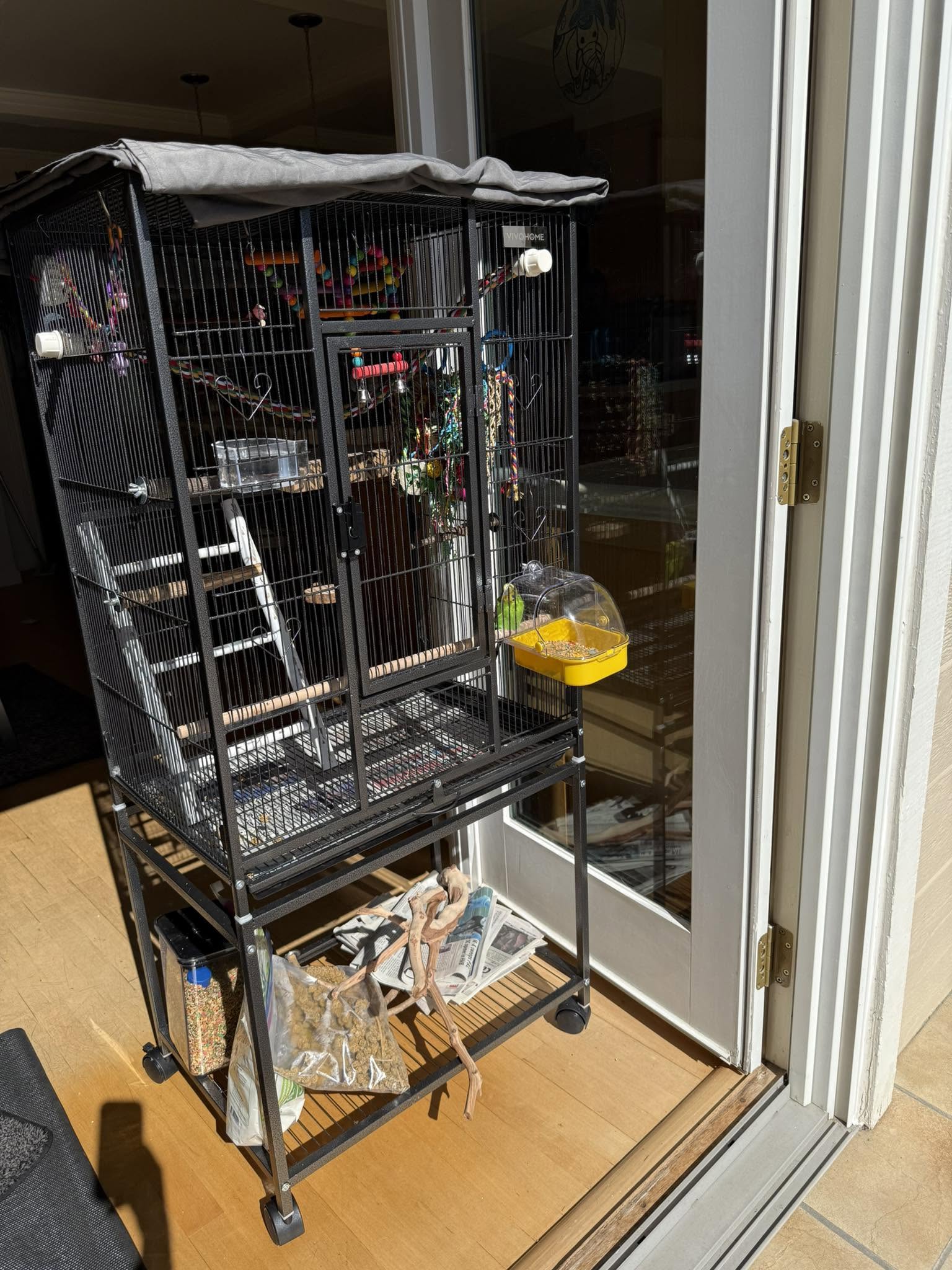
One: Move the Cage Before the Temperature Peaks — Not During
This is the single most important action and the one that has the most consistent effect on outcomes. Every summer, the avoidable emergencies I know about involve birds in cage positions that were fine in April and March, left in those positions as the temperature rose in May and June because nothing had obviously gone wrong yet.
Nothing has obviously gone wrong yet is not a reason to leave a cage where it is. It is a reason to reassess the position before something goes wrong.
The right cage position for summer is an interior room without external walls, or a north-facing room that receives no direct sunlight at any point during the day. The priority is eliminating the glass-amplified solar radiation that creates the most acute heat risk. A room that is naturally cool — thick walls, no direct sun, no south or west-facing window that catches afternoon heat — is a better summer position for a cage than any bright, pleasant, sun-filled living room.
The bird does not need natural light during a heat alert week. It needs shade and a thermally stable environment. The window position that provides stimulating views and pleasant morning light in February is the position that needs to change before this weekend.
If you cannot move the cage to a different room, use thick curtains or an external blind to eliminate direct sunlight from reaching the cage between midday and 5pm. This is a second-best solution — interior room change is better — but it is significantly better than doing nothing.
Two: Change the Water Routine Completely for Summer
Water management during hot weather is not the same as water management during the rest of the year, and the gap between the two is one of the most consistent things I see owners miss.
Water warms quickly in a warm room. A full water bottle changed once in the morning and left until evening provides no cooling function by mid-afternoon — the water is the same temperature as the ambient air, and drinking it provides no thermal relief to the bird. During heat alert conditions, water needs to change at least three times per day: morning, early afternoon, and late afternoon.
A shallow bath dish offered during peak heat hours is one of the most effective interventions available to an owner. Most birds will use it, the evaporation from wet feathers provides significant cooling, and the behaviour of bathing is itself calming and normalising for a bird that is managing thermal discomfort. Remove the dish after about an hour to prevent the water warming and becoming a contamination risk.
A light misting from a fine spray bottle — cool water, not cold, fine mist rather than soaking — applied once every two to three hours during the hottest part of the day assists evaporative cooling in birds that do not actively bathe. The mist should be fine enough that the feathers are dampened rather than saturated, and the water should not be cold enough to cause a temperature shock.
Ensure water is accessible at the lowest level in the cage as well as the usual height positions. A bird that has moved down the perch in response to heat needs water accessible at that level.
Three: Manage Ventilation Without Creating Draughts
The instinct in hot weather is to open windows as wide as possible and let air through. For a household without a bird, this is entirely sensible. For a household with a bird in a cage, the execution matters — because the airflow that cools the room can also create the kind of directional, sustained airflow that causes respiratory stress in small birds.
The approach that works is this. Open the windows on the shaded, cool side of the house in the very early morning — before the outside temperature has risen past the inside temperature, ideally before 8am. Close the windows and draw the curtains on the sunny side before the temperature rises. The house then retains cooler air as the outside temperature climbs through the afternoon.
A fan creating gentle circulation in the room assists the bird’s panting mechanism — panting works by evaporating moisture from the respiratory tract, and moving air increases that evaporation. The fan should be positioned to move air around the room rather than directed at the cage. High-velocity airflow aimed at a bird causes respiratory stress and, if the bird is wet from misting or bathing, can chill it dangerously quickly.
Cross ventilation — windows open on opposite sides of the house simultaneously to create a through-draught — is effective at cooling the building but produces strong directional airflow. If the cage is in the path of that through-draught, move it first.
Four: Know the Early Warning Signs — Not Just the Crisis Signs
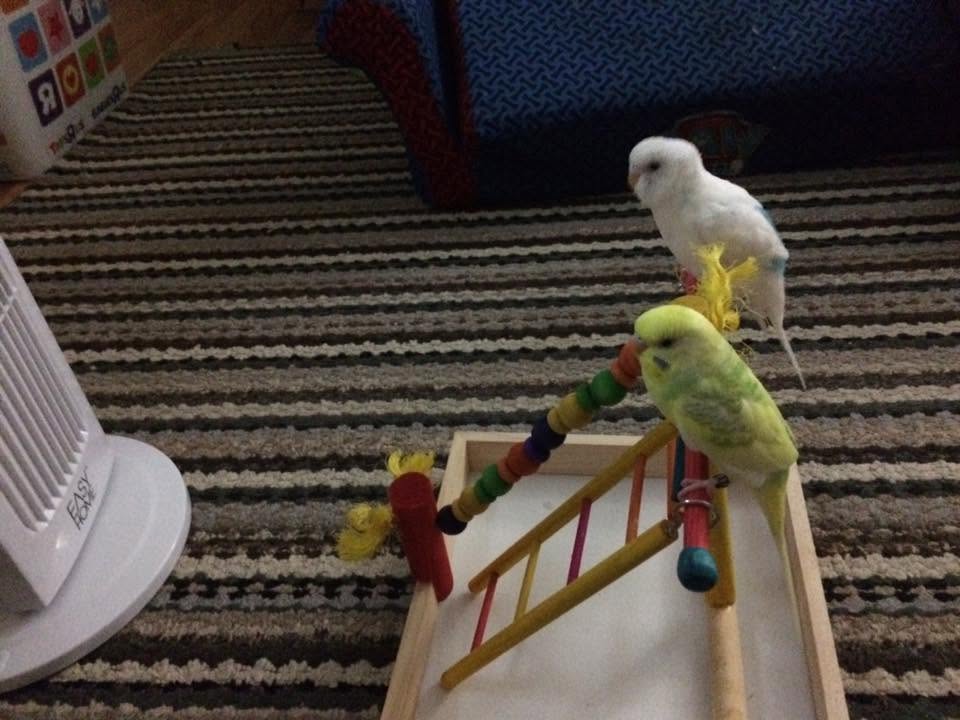
Most owners know what a bird in serious heat stress looks like — open beak panting, wings held away from the body, bird on the cage floor. By the time those signs are present, the bird has already been in difficulty for some time and has less physiological reserve to draw on for recovery.
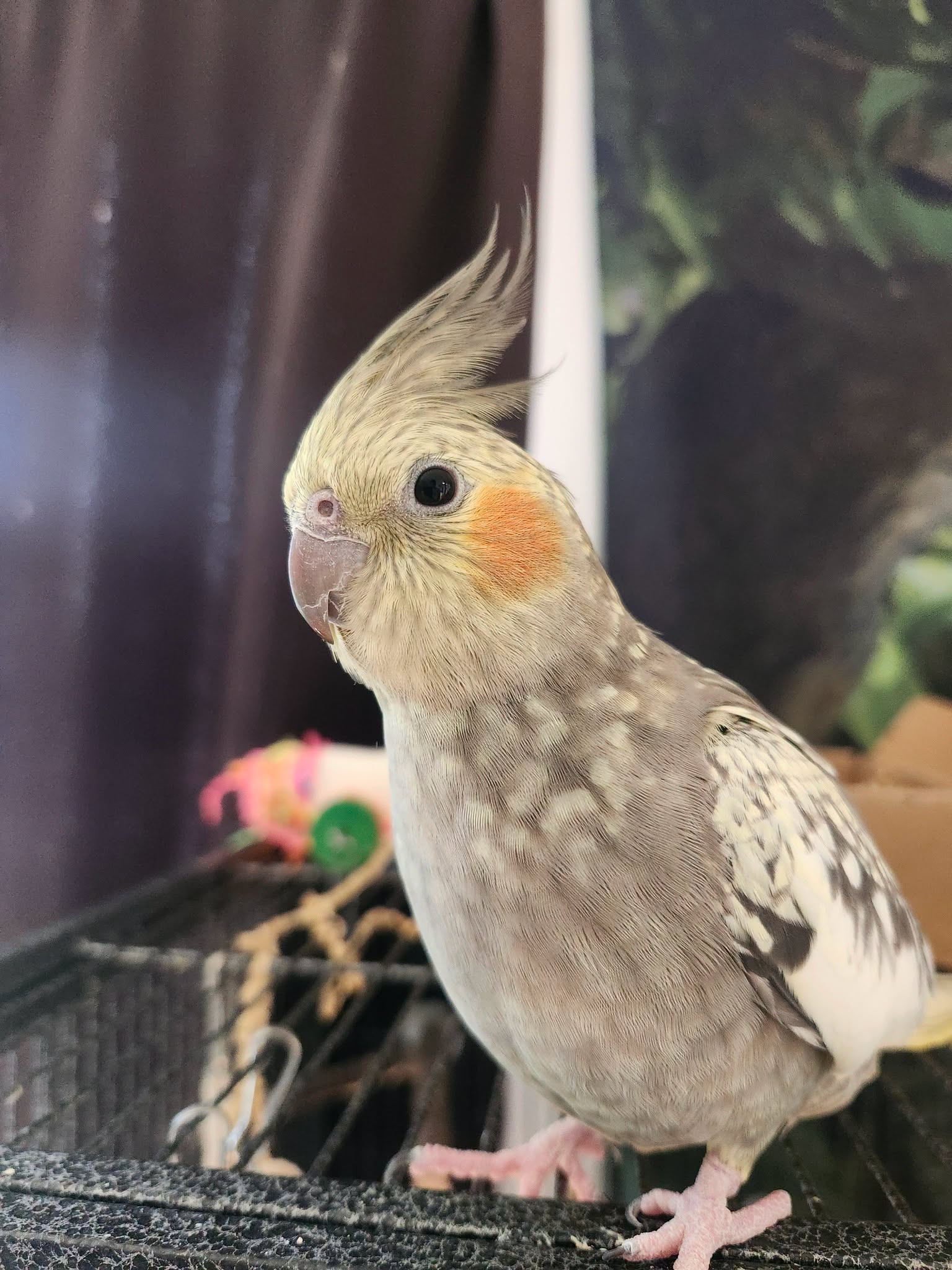
The early warning signs are what matter for prevention, and they are subtler. A bird that is slightly less active than usual. A bird sitting a little lower on the perch than its normal position. Feathers very slightly puffed. Slightly less vocal than usual. None of these is dramatic. Taken together, on a hot afternoon, with the cage in a position that may be warmer than it looks, they are the signs that action is needed now rather than in an hour.
The practical tool is knowing your individual bird’s normal. A bird you have observed closely for six months has a recognisable baseline — how active it usually is at different times of day, how it usually sits, how it usually responds to your approach. A departure from that baseline on a hot afternoon is information worth acting on.
Check the bird every thirty to forty-five minutes during peak heat hours — typically 11am to 4pm on days with amber warnings. This is not excessive. It is the minimum observation frequency that allows you to catch early signs before they become an emergency.
Five: Have the Avian Vet Number Stored Before You Need It
This is the one that turns every other preparation into a recoverable situation if something goes wrong despite it.
Finding an avian vet during a heat emergency, with a distressed bird in your hands, is exactly the wrong time to be searching. Avian vets — vets with genuine experience of cage birds specifically, not general practice vets who occasionally see a bird — are not evenly distributed. In some areas they are not immediately obvious to find. A search during an emergency takes time that may be the difference between a bird that recovers and one that does not.
Do the search now. The RCVS accreditation tool at rcvs.org.uk allows you to filter by exotic animal experience. Call the practice ahead of time if you want to confirm their avian experience. Store the number in your phone, along with the address and a note of their emergency hours. If they have an out-of-hours service or a referral practice for emergencies, store that separately.
In the Swindon area, come and ask us. We know the practices that see birds regularly and we will point you toward them directly. We are at Manor Garden Centre, Cheney Manor, Swindon SN2 2QJ and our number is 01793 512400.
The five minutes this takes right now could be the most important five minutes you invest in your bird’s welfare this summer.
What the RSPB Summer Guidance Means for Garden Bird Feeders
Since the RSPB’s summer guidance is the starting point for this article, it is worth being clear about what it says and what it does not say — because the press coverage has not always been accurate.
The RSPB recommends pausing the feeding of seeds and peanuts between 1 May and 31 October, while continuing to offer small amounts of mealworms, fat balls, or suet — and prioritising bird-friendly plants that provide natural food sources. The guidance is about how to feed during the summer period, not about stopping altogether.
The RSPB’s CEO confirmed that the message is not to stop feeding, but to feed in a way that protects birds’ long-term health — making small changes that ensure garden feeding continues to be a positive force for nature.
For pet bird owners who also feed garden birds, the key practical implication is this: hands that have handled garden feeders, wild bird food, or bird bath water should be washed thoroughly before handling pet birds or their food and water. The disease risk for indoor pet birds from garden feeder contact is indirect rather than direct, but the indirect route — contamination transferred on hands — is a real one. The precaution is simple and takes seconds.
The Five Actions — A Summary
Move the cage. Away from south and west-facing windows, to an interior or north-facing room that stays naturally cool. Do this before the weekend, not on the hottest day.
Change the water management. Fresh water at least three times daily during heat alert conditions. A bath dish during peak heat hours. Light misting every two to three hours. Water at the lowest accessible point in the cage.
Manage ventilation carefully. Trap cool morning air before the temperature rises. Use gentle room airflow rather than direct fan-on-cage. Cross-ventilation requires the cage to be out of the draught path.
Know the early warning signs. Less active than usual, sitting lower than usual, feathers slightly puffed on a hot afternoon — these are signals to act on now. Check the bird every thirty to forty-five minutes during peak heat hours on amber warning days.
Store the avian vet number. Now, before the weekend. RCVS tool at rcvs.org.uk to find avian-experienced practice. In Swindon, ring us and we will help you find the right practice.
Frequently Asked Questions
My bird has been near the same window for three years without any problem — does the position really need to change?
Yes. The UK’s recent summers — and particularly the record-breaking May and June conditions in 2026 — are producing temperatures and sustained heat that earlier summers did not. A position that was fine in previous years at 26 to 28°C may not be fine at 33°C with amber warnings in force. The risk is not based on what happened before. It is based on what is happening now. Reassess the position for current conditions.
How do I know if the room my bird is in is too hot?
A simple digital thermometer at cage height is the most reliable tool. Above 28°C ambient at cage height requires active management. Above 32°C at cage height is an emergency territory for small birds. If the room has direct sunlight reaching the cage, add at least ten to fifteen degrees to the ambient temperature to estimate what the bird is actually experiencing.
Is it safe to put a bird near an air conditioning unit?
With care. The cold air blast from most domestic air conditioning units creates both a temperature shock risk and a draught risk if the cage is in the airflow path. A room that has been cooled by air conditioning and then has the unit turned off — so the ambient temperature is cool but stable — is a better environment than one with an active unit blowing directly into the space where the cage is. If the unit is the only cooling option, position the cage well away from the direct airflow and set the unit to moderate rather than cold.
Do the RSPB’s summer feeding changes affect what I feed my pet bird?
No — the RSPB’s guidance covers supplementary garden bird feeding, not the feeding of companion birds. Your budgie, cockatiel, or canary’s diet does not change. The relevant connection is for owners who also feed garden birds — wash hands thoroughly after handling feeders or wild bird food before interacting with pet birds or their food and water.
Where do I get urgent advice if my bird shows heat stress signs this weekend?
Call an avian vet first if the bird is showing symptoms. Ring us on 01793 512400 if you need help identifying an avian vet or guidance on immediate cooling while you arrange the vet visit. We are at Manor Garden Centre, Cheney Manor, Swindon SN2 2QJ. Do not wait to see if the bird improves. Make the call while you cool the bird, not after.
One Last Thing
The RSPB describes UK summers as a survival challenge for birds. In thirty-five years of keeping birds through UK summers, I have watched that description become more accurate with each passing decade.
What gives me confidence, having said that, is that the actions required are not complicated. They do not require specialist equipment. They do not require expensive adjustments to the home. They require understanding what the risks are, acting on that understanding before the temperature peaks, and knowing what to look for once the hot days arrive.
The bird in the cage cannot assess its own thermal environment. It cannot move to the coolest room. It cannot change its own water. Those things fall entirely to the person who keeps it, and the window between a bird that manages the summer well and one that does not is often the difference between an owner who acted before the weekend and one who acted after the crisis.
Act before this weekend. Move the cage, change the water routine, store the vet number. That is all this requires.
We are at Manor Garden Centre, Cheney Manor, Swindon SN2 2QJ, every day. Get in touch here or call 01793 512400.
Bird Showing Heat Stress Signs? Ring Us Now
We have been keeping cage birds through UK summers for 35 years. If your bird is showing any sign of heat stress — ring us on 01793 512400 and we will guide you through the immediate steps and help you find the nearest avian vet. Do not wait.