
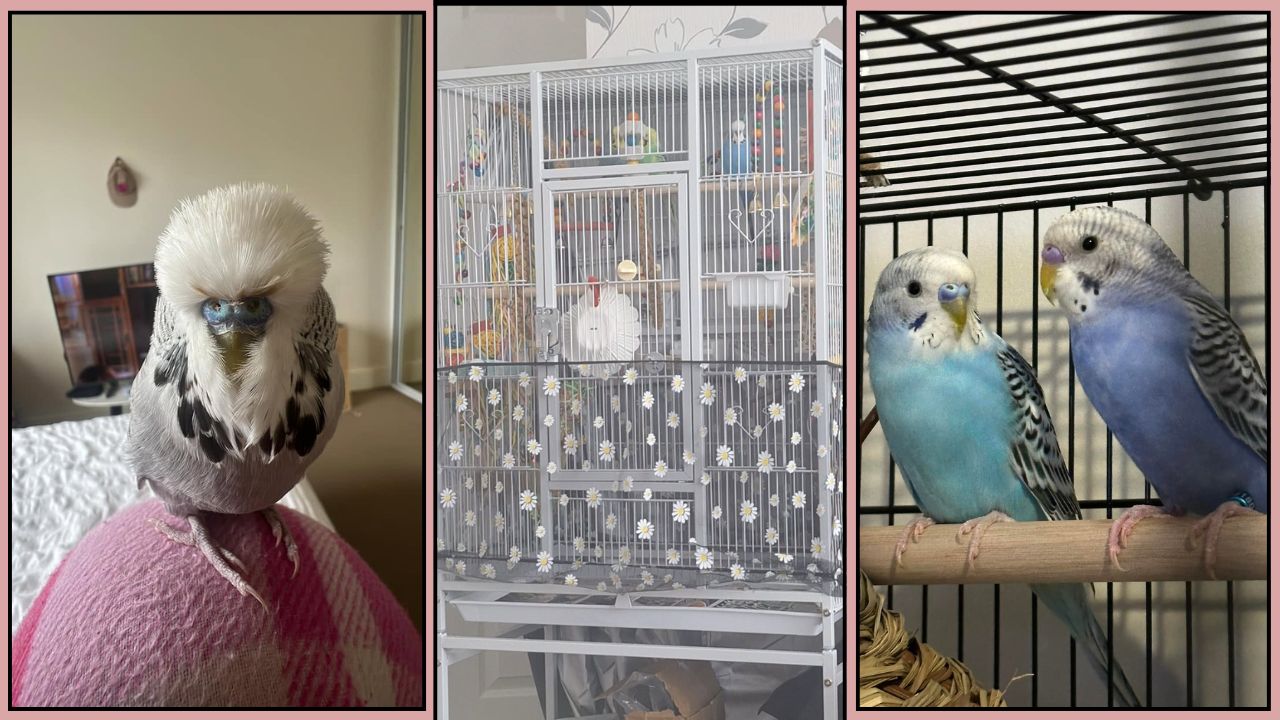

Neil has kept, bred, and sold cage and aviary birds at Paradise Pets Swindon since 1988 — over 35 years of first-hand experience with budgerigars, cockatiels, canaries, finches, and dozens of other species. When the RSPB confirms that climate change is already reshaping UK bird life, he listens — and then he translates what that means for the birds inside UK homes, where most owners are not yet looking.
The RSPB’s confirmation that climate change is already affecting UK birds landed in my inbox last week and I have been thinking about it since. Not about the wild birds — the research on those is important and the conservation implications are serious — but about what it means for the birds indoors. The ones in cages in living rooms and kitchens and spare bedrooms across this country. The ones most of the commentary will not mention.
Because here is what I know from 35 years at this counter: the climate shifts that the RSPB is measuring in wild bird populations are the same shifts that are quietly changing the thermal environment inside UK homes. Hotter summers. More frequent and more intense heat events. Higher baseline temperatures through longer seasons. These are not just conservation statistics. They are the conditions inside which pet birds are now living, in environments designed around a UK climate that no longer quite exists.
The indoor risk I am talking about is not dramatic or sudden. It is the slow accumulation of thermal and environmental pressure that the UK’s changing climate is placing on caged birds in homes that were not designed for sustained high heat, managed by owners who do not yet have the habits that this new climate requires.
I want to be honest about what that means and direct about what to do. That is what this article is.
What The RSPB’s Climate Findings Actually Mean
The RSPB’s research documents changes across UK bird populations that are already attributable to climate change — shifts in breeding timing, changes in migration patterns, range expansions and contractions driven by temperature. The headline message is that the UK’s bird life is responding to a climate that is measurably different from the one it evolved in.
For wild birds, this means adaptation pressure. For species that can adapt quickly enough, the changes may be manageable. For others, the pace of change is outrunning their ability to respond. That is the conservation crisis the RSPB is rightly focused on.
For pet bird owners, the relevant takeaway is different. It is not about population-level adaptation. It is about the specific environmental conditions that UK homes now regularly experience — and whether the way most owners manage their birds’ environment has kept pace with those conditions.
The honest answer, in my observation, is that it has not. The habits most UK pet bird owners have around heat management, ventilation, humidity, and environmental monitoring were formed during a period when UK summers were different. They are not yet calibrated to the summers we are now having, or to the summers — longer, hotter, more variable — that the RSPB’s data suggests are coming.
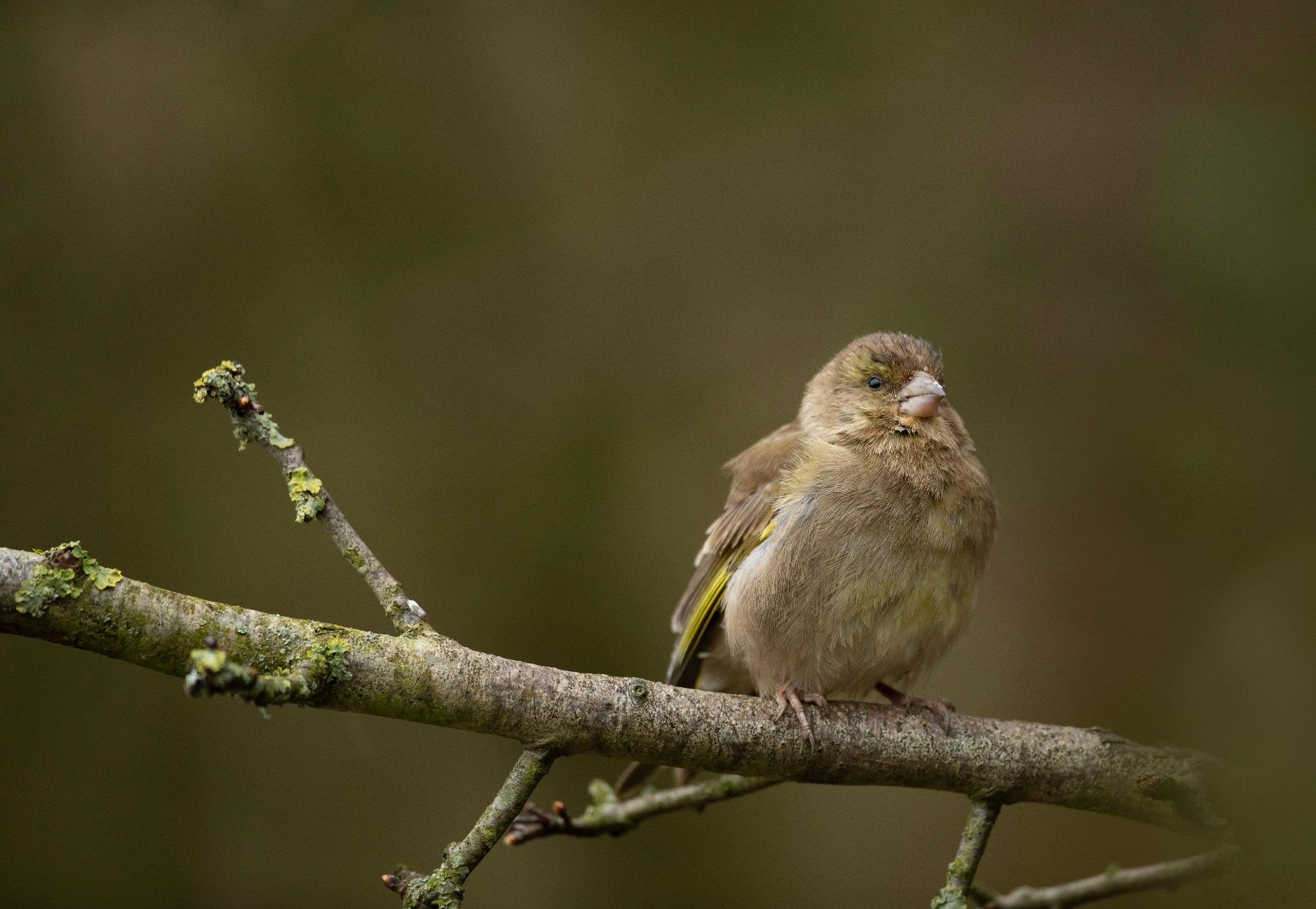
The Indoor Risk Nobody Is Talking About
When climate change and birds come up in the same conversation, it is almost always about wild birds. Garden species. Migratory patterns. Breeding success. The birds in cages in UK homes are invisible in that conversation.
But those birds are experiencing the same changed climate through a filter that makes it more dangerous, not less. Wild birds can respond behaviourally to rising temperatures. They have been doing so, as the RSPB documents. They can shift breeding timing, move to higher ground, find cooler microhabitats, change foraging patterns.
Your budgie can do none of those things. It is in a cage. In a room. In a UK home that is warmer in summer than it was when the habits of most bird owners were formed. And it has no way to respond to that warmth except the limited physiological tools that fail when ambient temperature rises beyond a certain point.
The indoor risk is this: UK homes are now regularly reaching temperatures during summer that place caged birds under genuine thermal stress, and the management practices of most owners — cage positioning, ventilation, water management, environmental monitoring — have not evolved to meet those conditions.
This is not a risk that looks alarming in the way that a flooded aviary or a sick bird looks alarming. It is chronic. It is seasonal. It builds slowly across a summer, suppressing immune function, reducing resilience, making birds more vulnerable to secondary illness. And it is almost entirely invisible to owners who do not know what to look for.
How UK Homes Have Changed — And Why It Matters For Birds
Part of the indoor risk story is about changing climate. Part of it is about how UK homes themselves have changed in ways that affect the thermal environment for caged birds.
UK homes have become better insulated over the past two decades. This is positive for energy efficiency and warmth in winter. It is a liability in summer. A well-insulated home retains heat more effectively than a poorly insulated one — which means that on hot days, the internal temperature of a modern UK home rises faster and stays higher for longer than older housing stock would have done.
Many UK homes have also gained conservatories, south-facing extensions, or larger glazed areas than previous generations of housing typically had. More glass means more solar heat gain. Rooms that were previously cool in summer may no longer be.
Central heating has also changed UK home temperatures in winter and spring in ways that matter for birds. A home heated to 20 to 22 degrees throughout winter creates artificial thermal conditions that can disrupt birds’ natural seasonal rhythms — affecting moult timing, hormonal cycles, and the immune patterns that are connected to seasonal change.
Put these changes together — better insulation retaining summer heat, more glazing increasing solar gain, and central heating disrupting seasonal cues — and the indoor environment for a caged bird in a modern UK home is meaningfully different from what it was twenty years ago. The climate outside has changed. The homes inside have changed. The management habits of most owners have not caught up with either.
The Three Areas Where Most Owners Are Behind
I want to be specific about where the management gap actually is, because “do better” is not useful advice. Here is where I see owners consistently behind the conditions their birds are now living in.
1. Thermal Management — Still Treating Summer As Occasional Rather Than Seasonal
The most widespread management gap is thermal. Most owners who know about heat risk for birds think of it as an emergency response — something triggered by a heatwave alert, by a hot day that is clearly exceptional. They move the cage during obvious heat events and return it to its usual position when the alert passes.
What the RSPB data — and my own observation over recent summers — tells me is that the threshold for heat management in UK homes needs to shift. Summer heat in the UK is no longer a series of occasional exceptional days. It is a seasonal condition lasting months, with heat events of varying intensity throughout. The management response needs to be seasonal, not reactive.
In practical terms this means: the cage position that is safe in April may not be safe in July. The ventilation that was adequate last summer may not be adequate in a summer that is a degree or two warmer overall. The habit of managing heat only when there is a named weather alert is behind the conditions that already exist.
2. Humidity Awareness — Almost Nobody Is Monitoring This
This is the indoor risk that is most completely invisible to most owners, and it is the one I want to spend time on.
The RSPB’s climate data includes significant changes to UK precipitation patterns — more extreme rainfall, longer dry periods, greater seasonal variability. The indoor consequence of this is increased humidity variability inside UK homes. Hot, humid spells that were previously uncommon are now regular. The combination of heat and high humidity is more dangerous to caged birds than heat alone — it reduces the effectiveness of the bird’s primary cooling mechanism, which is respiratory, by making the air it is breathing in too warm and too saturated to exchange heat efficiently.
The other humidity problem is the opposite — central heating in winter and spring creates very low humidity in UK homes, which dries the bird’s respiratory tract, reduces the effectiveness of the mucous membranes that are a first line of defence against respiratory pathogens, and creates conditions that make respiratory infection more likely.
Almost no pet bird owner in the UK monitors humidity. Almost none know what the humidity in their bird’s environment is at any given time. A simple hygrometer — available for a few pounds — would give them this information. Very few have one.
The humid range that is appropriate for most pet birds is roughly 40 to 60 percent relative humidity. Below that, respiratory dryness becomes a welfare concern. Above that, the conditions favour fungal and bacterial growth. Both ends of that range are increasingly common in UK homes, driven by the climate and housing changes I have described — and neither is being monitored by most owners.
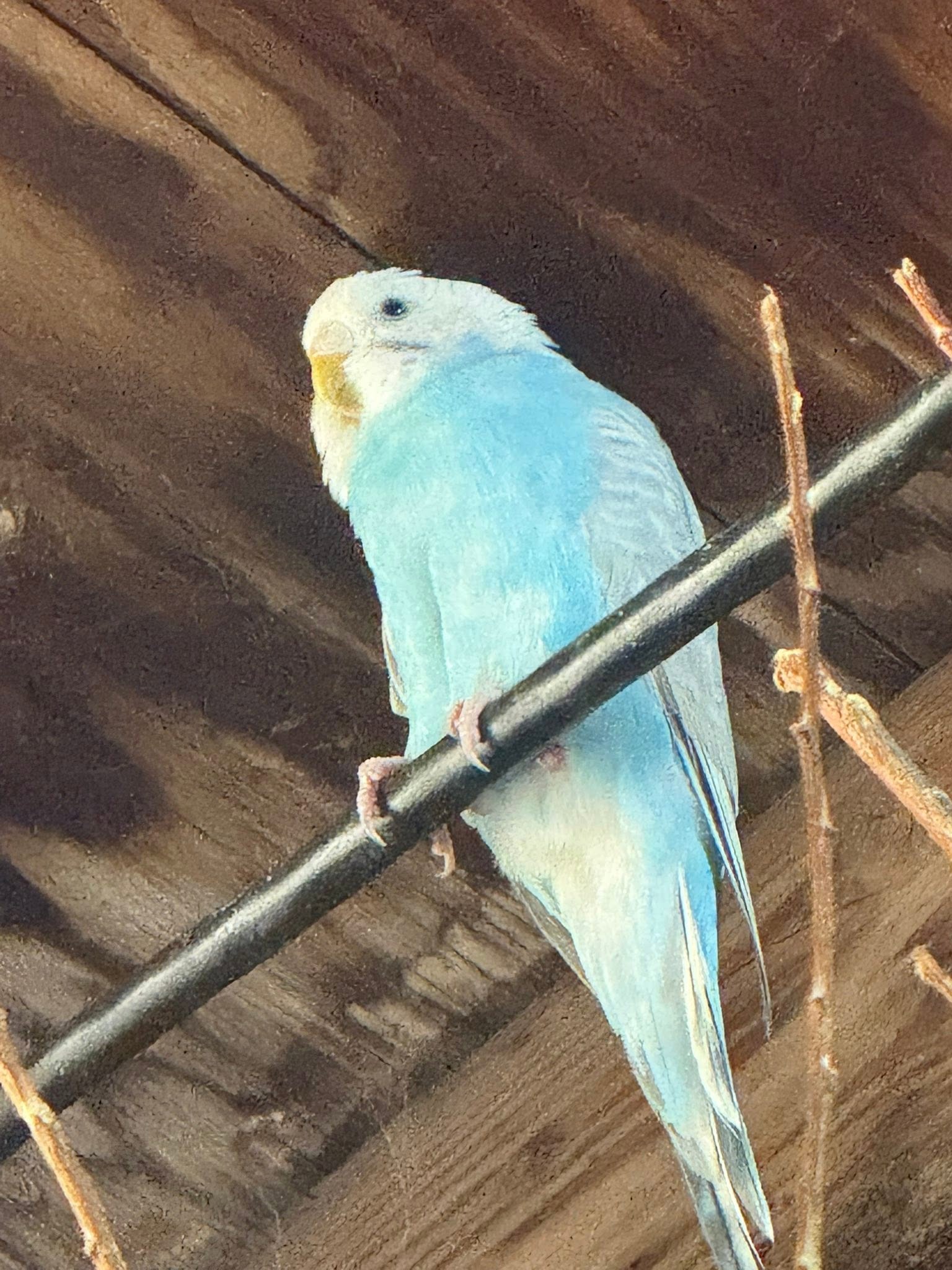
3. Seasonal Rhythm Disruption — The Consequence Nobody Connects To Climate
Birds are seasonal animals. Their physiology — moult cycles, hormonal patterns, immune function, breeding behaviour — is cued by day length and temperature variation across the year. These cues evolved over millennia of stable seasonal patterns.
The UK climate is now delivering less stable seasonal patterns. Warm periods earlier in spring. Extended warm spells into autumn. Variable winter temperatures. And inside homes, central heating that reduces the temperature contrast between seasons that birds’ physiology depends on for cuing.
The consequence is disruption to the seasonal rhythms that are connected to immune function and health resilience. A bird that moults at the wrong time, that experiences hormonal cycling out of its natural seasonal pattern, that lacks the winter cold period that its physiology expects — that bird’s immune system is working under conditions it did not evolve for. It is more susceptible to illness than it should be.
This is a subtle, slow-acting risk. It does not produce dramatic acute illness. It produces a bird that is slightly less resilient than it should be, across an entire season or year — more susceptible to the infections that come along, slower to recover when it does get ill, less robust overall.
The management response is not straightforward, but it starts with awareness. Knowing that seasonal rhythm matters for birds. Using natural light rather than artificial light to the extent possible. Allowing the bird’s environment to have some seasonal temperature variation rather than holding it constant year-round. These are not major interventions — they are adjustments that acknowledge what the bird’s physiology requires.
What Updated Management Actually Looks Like
- Treat cage positioning as a seasonal decision, not a permanent one. The cage position that works in winter may not work in summer. At the start of each summer, review the cage position relative to sun-facing windows and adjust proactively. Do not wait for a heat event to discover the position is wrong.
- Buy a hygrometer and use it. A basic digital hygrometer costs very little and tells you the relative humidity in the room where your bird lives. Check it regularly. If it is consistently below 40 percent in winter or above 65 percent in summer, those conditions need addressing. This is not complicated — it is just information that almost no one currently has.
- Change water more frequently throughout summer — not just on hot days. In a warmer baseline summer, water that would have been fine for half a day in a cooler season deteriorates faster. Twice daily as a minimum throughout summer, three times on hot days.
- Let natural light guide the bird’s day where possible. Use curtains and blinds to manage heat, but allow the bird to experience the natural variation in day length that cues its seasonal physiology. Avoid keeping birds under artificial lighting on artificial schedules that eliminate seasonal variation entirely.
- Allow some seasonal temperature variation. A bird kept at 21 degrees year-round is a bird whose physiology is receiving no seasonal cues. Some reduction in temperature during winter — not cold, but cooler — supports the natural patterns that immune function and moulting cycles depend on.
- Know the signs of humidity-related respiratory stress. Nasal discharge, sneezing, voice changes, and breathing sounds that are subtly different from normal can all be early indicators of respiratory stress driven by humidity conditions. Learn what your bird’s normal breathing sounds like and notice when it changes.
- Review this management framework at the start of each summer, not just during alerts. The risk is seasonal and building. The management response needs to be proactive and updated annually, not reactive and triggered only by emergency conditions.
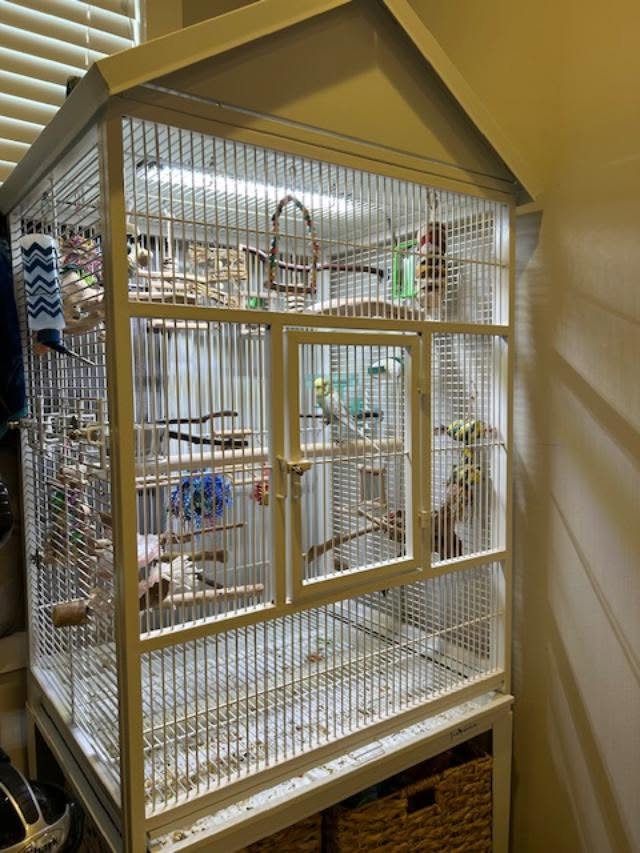
Warning Signs That Indoor Conditions Are Already Affecting Your Bird
- More frequent sneezing than usual — occasional sneezing is normal; frequent or persistent sneezing, particularly in dry centrally heated conditions, points to respiratory irritation from low humidity
- Dry, flaky, or crusty nostrils — a sign of chronically low humidity drying the nasal mucous membranes
- Moulting at unexpected times or prolonged moult — disrupted moulting pattern can indicate seasonal rhythm disruption from abnormal temperature or light conditions
- Unusual quietness during hot weather without obvious illness — a bird that is less vocal than its normal baseline during summer is often under chronic low-level thermal stress
- Wings slightly held away from body in warm rooms — the bird is trying to dissipate heat. Not a crisis, but a sign the ambient temperature is higher than optimal
- Increased aggression or restlessness during warm periods — hormonal disruption from seasonal rhythm irregularities can manifest as behavioural changes
- Recurring respiratory infections that clear and return — a pattern of repeated respiratory illness can point to a humidity or thermal environment that is chronically unsuitable, lowering immune resilience
- Feather condition declining across a season — feather quality is a reliable indicator of overall health and nutritional status; declining condition across a warm season can reflect chronic environmental stress
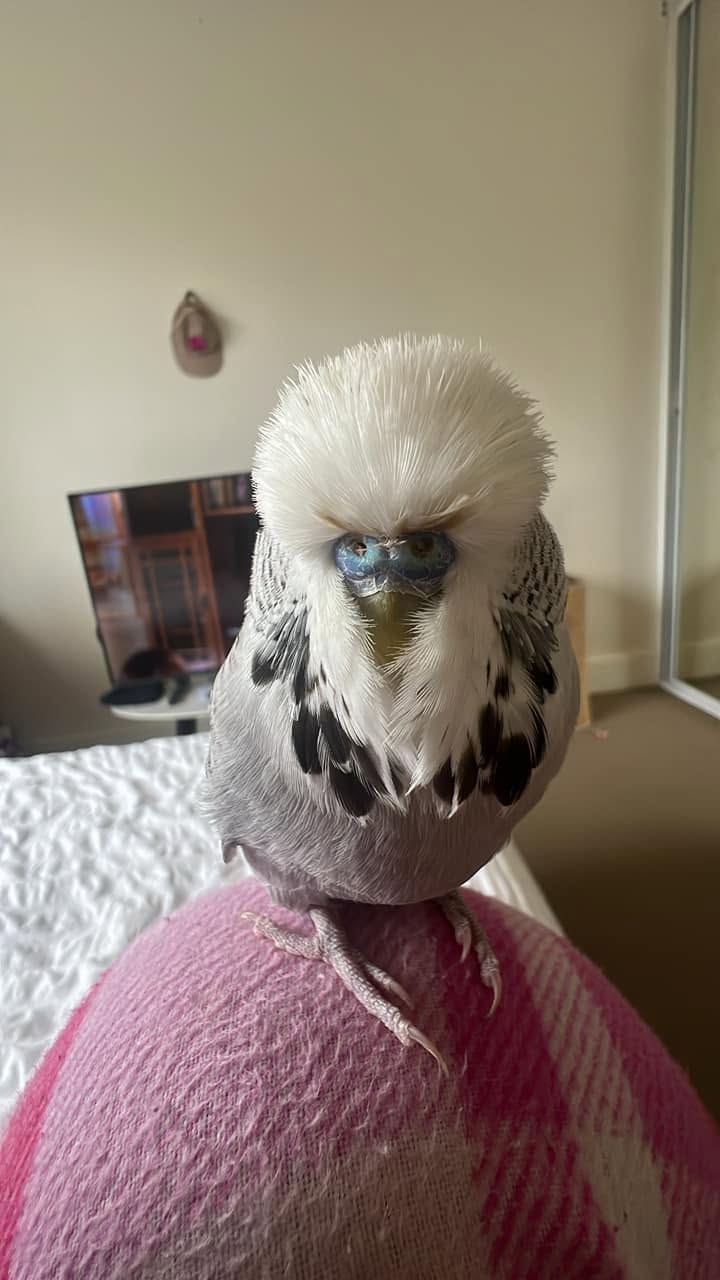
Quick Reference — The Indoor Risk And The Response
| Indoor Risk | Driver | Management Response |
|---|---|---|
| Summer heat in cage position | Hotter UK summers, solar gain through glass | Seasonal cage repositioning, curtains, fan airflow |
| High humidity in summer | Hot humid weather spells, poor ventilation | Monitor with hygrometer, improve ventilation |
| Low humidity in winter | Central heating reducing relative humidity | Monitor with hygrometer, shallow water near cage |
| Seasonal rhythm disruption | Stable indoor temperatures, artificial lighting | Natural light, allow seasonal temperature variation |
| Heat event spikes | More frequent extreme heat days | Pre-positioned response plan, vet number ready |
| Reduced immune resilience | Chronic environmental mismatch | Correct humidity, nutrition, seasonal cues |
Frequently Asked Questions
Does climate change really affect my indoor budgie if it never goes outside?
Yes — in two ways. First, the temperature and humidity inside UK homes is directly affected by outdoor climate conditions. Hotter summers mean hotter indoor environments, regardless of whether the bird ever leaves the house. Second, the increasing frequency and intensity of UK heat events means that the peak thermal stress your bird experiences indoors is higher and more frequent than it was a decade ago. The bird does not need to go outside for the changed climate to affect it.
What humidity level should I aim for in my bird room?
Roughly 40 to 60 percent relative humidity is appropriate for most pet bird species including budgies and cockatiels. Below 40 percent, respiratory dryness becomes a concern — particularly in winter with central heating. Above 65 percent, the conditions favour the bacterial and fungal growth that drives respiratory infections. A basic digital hygrometer costing a few pounds gives you this information. It is one of the most cost-effective welfare investments a bird owner can make.
How do I know if my bird’s seasonal rhythms are being disrupted?
The most visible signs are moulting at unexpected times or moulting that is more prolonged than usual. Hormonal behaviour — aggression, nesting behaviour — at times of year that seem wrong is another indicator. More subtly, a bird that seems less resilient than expected, that catches things more easily than it should, may have an immune pattern that is being disrupted by the absence of appropriate seasonal cues. If any of these apply, review the temperature and lighting conditions the bird is living in year-round.
Should I use a humidifier or dehumidifier for my bird room?
Only if the humidity monitoring tells you it is necessary, and only with appropriate care about placement and maintenance. A humidifier that is not properly cleaned can become a source of airborne bacteria and mould — which is worse for the bird than the low humidity it was addressing. A dehumidifier in summer is more straightforward and less risky. The starting point in both cases is measuring — buy the hygrometer first, then decide what, if anything, is needed.
Is there anything I can do about seasonal rhythm disruption if my home is centrally heated?
Yes — you cannot eliminate the effect of central heating but you can mitigate it. Allow natural light to reach the bird’s environment as the primary light source, so day length variation across the year is experienced. Reduce the temperature in the bird’s room slightly in winter rather than maintaining constant warmth year-round. Avoid keeping the bird under artificial lighting in the evening for extended periods, which lengthens the perceived day length and further confuses seasonal cues. None of these is a complete solution, but together they preserve more of the seasonal variation the bird’s physiology depends on.
Where can I get honest bird advice in Swindon?
Come and see us at Paradise Pets, Manor Garden Centre, Cheney Manor, Swindon SN2 2QJ. Or give us a ring on 01793 512400. The advice is free and we have been giving it for 35 years.
One Last Thing From Me
The RSPB’s climate research is about the birds we can all see — in gardens, in the countryside, in the public spaces where wild bird populations are visible and measurable. That research is important and I do not want to diminish it.
But there is a parallel story happening indoors, in the homes of the people reading this, in the cages of the birds they keep. It is a story about a changed climate reaching into UK homes through heat and humidity and disrupted seasonality, and about management habits that have not yet caught up with conditions that are already here.
This is not a story of crisis. It is a story of a gap — between the conditions birds are now experiencing and the knowledge owners have about how to manage those conditions. Gaps can be closed.
A hygrometer. A seasonally reviewed cage position. An awareness of seasonal rhythm and what disrupts it. A water changing habit calibrated to summer, not just to obvious heat days. These are small things. They are the kinds of things that 35 years at this counter teaches you matter — not in dramatic moments, but cumulatively, across seasons, in the quiet difference between a bird that stays healthy and one that gradually is not.
The RSPB is watching the climate affect the birds outside. I am watching it affect the birds inside. And what I see, clearly, is that the owners who adapt their habits to the changed conditions will keep healthier birds than the ones who do not.
Come and talk to us if you want to go through your setup. That is what we are here for.
Want To Go Through Your Bird’s Environment Honestly? Come In And See Me
Bring your questions about cage position, humidity, seasonal management — anything about the environment your bird is living in. I will give you a straight, honest assessment and practical advice based on 35 years of experience. Free, no obligation.