

Neil has kept, bred, and sold cage and aviary birds at Paradise Pets Swindon since 1988 — over 35 years of first-hand experience with budgerigars, cockatiels, canaries, finches, and dozens of other species. When the RSPB raises concerns about wild birds struggling with summer heat, he pays attention — because what is happening to birds outside tells him something important about what may be happening to birds inside. This is his honest response.
The RSPB’s warning about wild birds struggling to stay cool this summer did not surprise me. It confirmed something I have been watching play out at the counter for weeks — owners coming in worried about birds that have gone quiet, birds that are sitting differently, birds that just do not seem right.
Wild birds at least have options. They can move into shade. They can find water. They can fly to lower, cooler ground. They can choose. Your budgie near that window cannot choose anything.
I want to use this moment — when the RSPB has put bird heat stress into the public conversation — to say something direct to every UK pet bird owner reading this. The same biological vulnerability that is making wild birds struggle in this heat applies to your caged bird, often more acutely, because your bird cannot do any of the things a wild bird does to manage temperature.
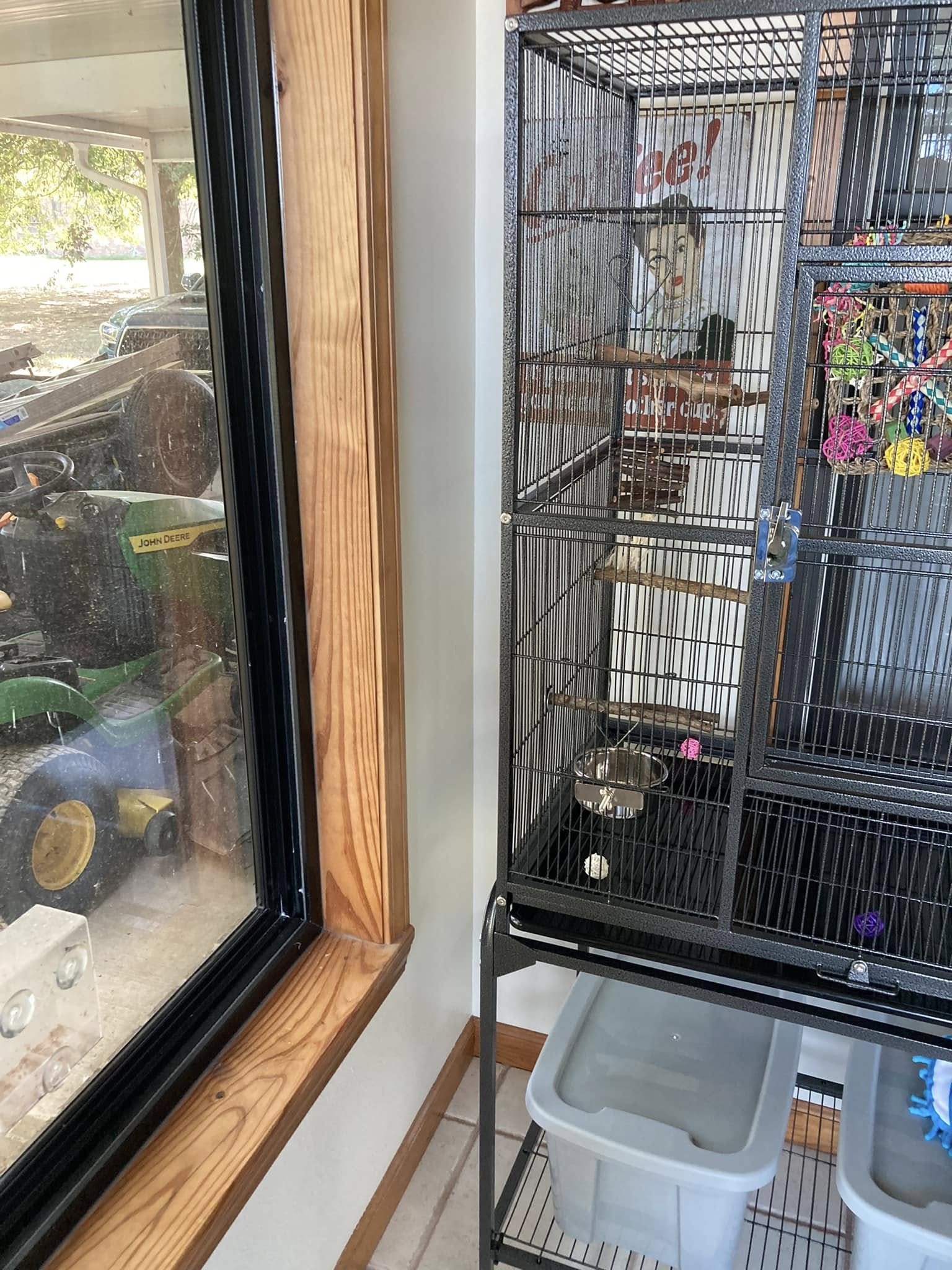
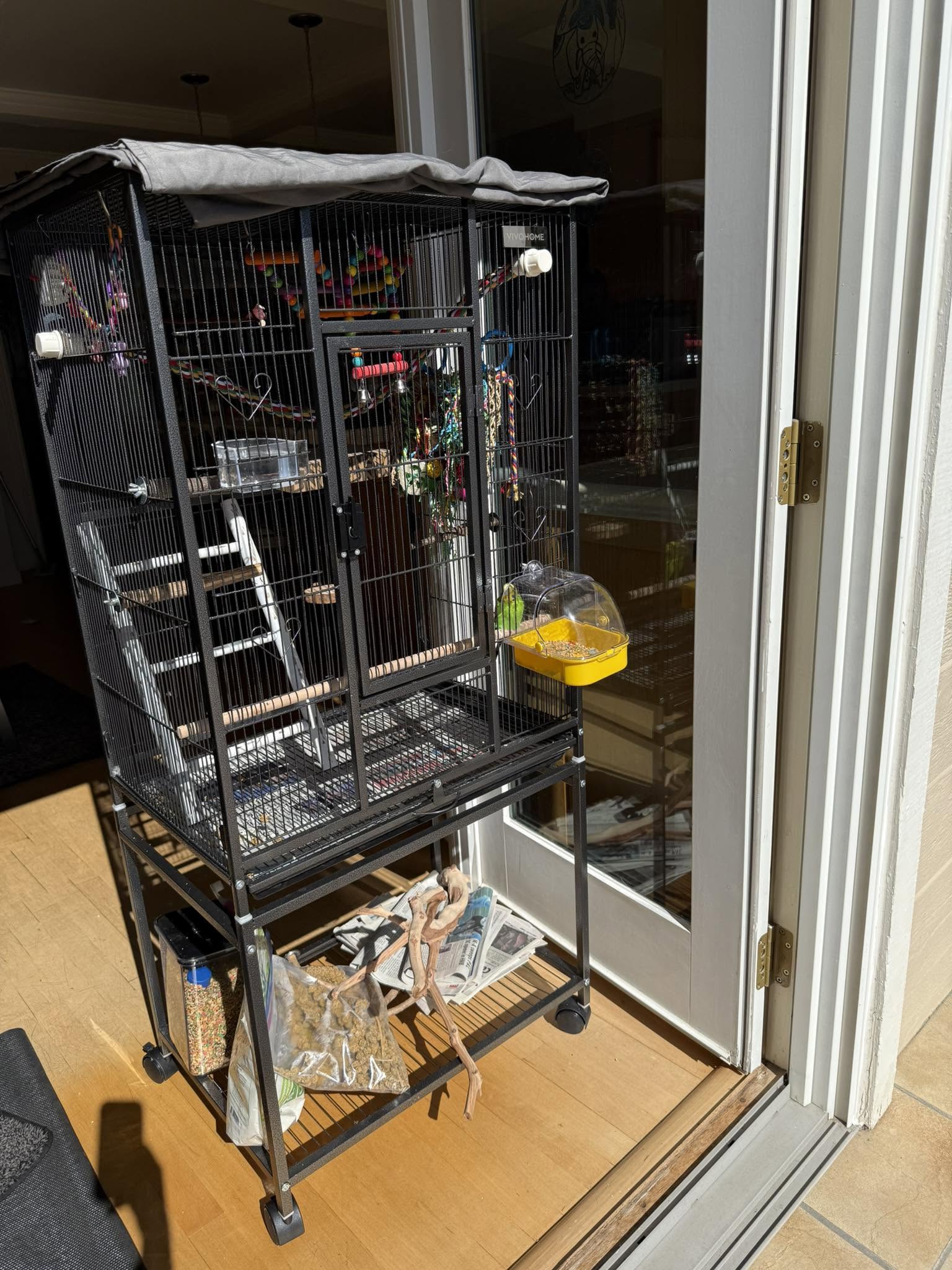
If you have a budgie near a window right now, today, with sun on it or likely to be on it this afternoon — I want you to move it before you finish reading this article. Not after. Before. I will explain why while you are doing it.
What The RSPB Warning Actually Tells Us About Pet Birds
The RSPB’s concern is with wild birds — garden birds, migratory species, birds in the wider countryside. Their message is about the environmental heat stress affecting populations that have evolved to handle UK summers, in conditions that this summer is exceeding.
That is the detail that matters for pet bird owners: these are birds that evolved here, in this climate, with access to every cooling strategy available to a wild bird, and this summer is still pushing them to their limits.
Your budgie did not evolve in the UK. It evolved in the Australian interior, where heat management is part of the bird’s biology — but where the bird has unlimited freedom of movement, access to shade, access to water, and the ability to make every decision about its own thermal comfort. None of those things are available to a caged bird in a UK home.
What the RSPB warning tells us, translated for pet bird owners, is this: if birds with full freedom and evolutionary adaptation to heat are struggling, a small caged bird with none of those advantages and no ability to help itself is in a more precarious position than most owners are accounting for.
I am not dramatising this. I am connecting two things that most people are not connecting — the public conversation about wild bird heat stress, and the private reality of caged birds in UK homes on the same hot days.
The Window Problem — Why Right Now Matters
I have written before about what glass does to heat behind a window. I want to revisit the key point briefly here because it is directly relevant to the RSPB context, and because it is the single most actionable thing most owners can address today.
When sunlight passes through glass, the heat it generates is trapped in the zone immediately behind the pane. The temperature in that zone — where a cage typically sits — can be 10 to 15 degrees higher than the ambient room temperature. On a day when it is 28 degrees outside and the RSPB is warning about birds struggling with the heat, the temperature behind a south or west-facing window in direct sun can be 38 to 43 degrees.
That is not uncomfortable for your budgie. That is lethal territory if it is sustained.
The reason I keep coming back to this is that it is invisible to the owner. You sit in your room on a warm day and it feels manageable. You have no way of knowing, from your own experience of the room, that the temperature at your bird’s cage is 15 degrees higher than where you are sitting. Nothing in your sensory experience of the room tells you the bird is in danger. That is the specific and serious problem.
Move the cage away from windows that receive direct sun. If you have not done this already and the sun is hitting that window today, do it now.
What Wild Birds Do To Stay Cool — And What Your Budgie Cannot Do
The RSPB’s public guidance on helping wild birds in summer heat is instructive, because it reveals exactly what wild birds need to manage temperature — and highlights how completely a caged bird is cut off from those options.
Wild birds in heat seek shade. They find the coolest available microenvironment — dense vegetation, north-facing walls, the ground under a bush. They position themselves actively to minimise sun exposure and maximise shade. Your caged budgie is in a fixed position. If that position is warm, it stays warm.
Wild birds find water — to drink, to bathe in, to stand in. The RSPB recommends keeping bird baths topped up in summer specifically because wild birds use water actively as a cooling mechanism. Your budgie has access to the water in its bottle or dish. If that water has warmed to room temperature — or to the elevated temperature behind a sunny window — it provides no cooling benefit at all.
Wild birds pant — they breathe rapidly with an open beak to exchange heat through the respiratory tract. Your budgie does this too. But panting is only effective when the air being inhaled is cooler than the bird’s core temperature. In a glass-amplified heat zone, the inhaled air may itself be too hot for panting to work effectively.
Wild birds can fly. Movement through cooler air is itself a cooling mechanism. Your budgie’s only movement options are within the cage.
This is the picture that the RSPB warning, taken seriously, should prompt every pet bird owner to see. Wild birds are struggling with tools your budgie does not have. Your budgie has almost no tools. The owner is the only tool the budgie has.
The Signs Your Budgie Is Already Struggling — Right Now
- Wings held slightly out from the body — not fully spread, but not tucked neatly in either. The bird is trying to increase surface area for heat dissipation. This is an early warning sign
- Breathing with an open beak at rest — a bird that has not been flying or exercising and is breathing through its beak is using respiratory cooling because normal thermoregulation is failing
- Sitting lower than usual or on the cage floor — warm air rises. A bird seeking the lowest point of the cage is looking for marginally cooler air. This is a significant sign
- Unusual quietness — a budgie that has gone quiet during a normally chatty part of the day is conserving energy because it is under thermal stress. This is one of the earliest signs and one of the most commonly missed
- Rapid visible breathing — you can see the chest or tail moving with each breath at a rate faster than normal resting breathing
- Glassy or unfocused eyes — a bird with glazed, half-closed eyes that is not asleep is in physiological distress. This is serious
- Loss of balance or falling from perch — advanced heat stroke. This is an emergency requiring immediate action and a vet call
Go and look at your bird right now. Not in a moment — now. Wings tucked in, eyes bright, chattering normally? Good. Anything from the list above? Act immediately.
What The RSPB Recommends For Wild Birds — And The Pet Bird Equivalent
The RSPB’s summer heat guidance for helping wild birds is worth translating directly into pet bird terms, because the underlying biology is the same.
The RSPB recommends keeping bird baths fresh and topped up — because wild birds need access to cool, clean water for drinking and bathing. For your budgie, this means changing the water at least three times today — morning, midday, and afternoon. Not just topping up. Changing, with the container cleaned each time. Water that has been sitting in a warm cage since this morning is not cool. It is not providing the cooling function water should provide.
The RSPB recommends providing shade in gardens — because wild birds need to be able to get out of direct sun. For your budgie, this means the cage position. If the cage is in direct sun or in the heat zone behind a sunny window, there is no shade. There is no option. Move the cage.
The RSPB recommends providing supplementary food during heat stress — because birds under thermal stress have reduced foraging capacity. For your budgie, ensure fresh seed is available and has not been sitting in a warm cage long enough to deteriorate. Check the food, refresh it if needed.
The RSPB recommends not disturbing nesting birds during heat events. For your caged bird, the equivalent is minimising handling and disturbance during the hottest part of the day. Handling causes stress, and stress raises core temperature. Leave the bird undisturbed during peak heat hours.
The symmetry between what wild birds need and what caged birds need is direct. The difference is that wild birds can find most of those things themselves. Your budgie relies entirely on you to provide them.
The Five Things To Do Before This Afternoon
- Check and move the cage if it is near a south or west-facing window. If there is sun on that window now or forecast this afternoon, the cage needs to be somewhere else. Move it to the coolest room available — north-facing, interior, or a room with curtains already closed against the sun. This is the single most important action on any hot day.
- Close curtains or blinds on all sun-facing windows in the room where the cage is. Even if you have moved the cage away from the window, solar heat gain through uncovered glass raises the temperature of the whole room. Close the curtains in sun-facing rooms during the hottest hours — typically midday to 4pm.
- Change the water now and set a reminder to change it again at midday and again at 3pm. Warm water does not cool a heat-stressed bird. Fresh, cool water throughout the day is not optional — it is part of the bird’s thermal management. Do not top up. Change and clean the container each time.
- Put a very shallow dish of cool water in or near the cage for bathing. Many birds will bathe when they are warm. A centimetre of cool water — no more, for safety — gives the bird the option to self-cool. Some will use it, some will not. Make the option available.
- Set up a fan to circulate air in the room — not pointed directly at the cage. A fan moving air around the room lowers the ambient temperature without creating the draught risk that comes from blowing directly at the bird. Position it to move air generally. The goal is a cooler room, not a wind tunnel aimed at the cage.
A Word On Conservatories — Say It Again Because People Still Put Birds There
Every summer I have the conservatory conversation at least once. Someone has put their bird in the conservatory because it is bright and pleasant and the bird seems to enjoy it.
A conservatory is a glass structure designed to maximise solar heat gain. On a day when the RSPB is warning about birds struggling with the heat, a conservatory can reach 45 to 55 degrees. That is not warm. That is an environment in which a small caged bird can die within hours.
There is no version of a conservatory placement that is safe for a caged bird during a UK summer heat event. Not with the window open. Not with a fan. Not if it only gets morning sun. Move the bird out of the conservatory if it is there. Today.
What To Do If Your Bird Is Already Showing Signs
If you checked on your bird during or after reading this and you are seeing any of the warning signs — move the bird to the coolest room immediately. That is the first action, and it happens before anything else.
Once in a cool location — offer cool, not cold, water. Mist very lightly with cool water if the bird will tolerate it. Do not apply ice or very cold water directly to the bird. Thermal shock from extreme cold can cause cardiac stress in a heat-distressed bird.
If the bird is showing serious signs — open beak breathing, glassy eyes, loss of balance, unresponsiveness — call an avian vet now. While you are moving the bird, not after. Heat stroke in a small bird moves fast and professional intervention makes a significant difference to the outcome.
Do not put the bird back in a warm location once it appears to improve. Keep it in the cooler room for the rest of the day. The risk of relapse is real.
Quick Reference — RSPB Guidance Translated For Pet Bird Owners
| RSPB Wild Bird Recommendation | Pet Bird Equivalent | Action Today |
|---|---|---|
| Keep bird baths topped with fresh water | Change water 3x daily, clean container each time | ✅ Do this now and set reminders |
| Provide shaded areas in gardens | Move cage from direct sun and sunny windows | ✅ Check cage position now |
| Avoid disturbing birds in heat | Minimise handling during peak heat hours | ✅ Leave bird undisturbed midday to 4pm |
| Put out supplementary food | Ensure fresh seed available, remove deteriorated food | ✅ Check and refresh food today |
| Provide bathing opportunities | Shallow bathing dish available during hot hours | ✅ Add shallow dish today |
| Know where to get help if birds are in distress | Have avian vet number saved before you need it | ✅ Find and save the number today |
Frequently Asked Questions
If the RSPB is talking about wild birds, why does it matter for my pet budgie?
Because the biological vulnerability is the same. The difference is that wild birds have access to shade, water, and movement — all the tools they need to manage temperature. Your caged budgie has none of those tools unless you provide them. If birds with full freedom are struggling this summer, a caged bird with no freedom to help itself is in a more precarious position, not a less precarious one.
My budgie is in the shade of the room — does the window position still matter?
Yes. The issue with a sunny window is not just the direct sunlight on the cage — it is the heat zone created by solar radiation through the glass, which raises the temperature in the area around and behind the window significantly above the ambient room temperature. A cage that is not in direct sun but is still near a south or west-facing window in direct sun is still in an elevated heat zone. Distance from the window matters, not just whether the cage is in direct sunlight.
My budgie seems fine — do I still need to act?
Yes. Birds hide thermal stress until they cannot. The visible signs of heat distress in a budgie appear after the bird has been under physiological stress for some time. A bird that seems fine may be managing on the edge of its thermal tolerance. The preventive actions — moving the cage, changing the water, closing the curtains — cost almost nothing and protect a bird that appears fine as much as one showing early signs. Act before the signs appear, not in response to them.
How do I know if my window is south or west-facing?
The practical test is simple: does direct sunlight fall on or through that window in the afternoon? If yes, it is south or west-facing and is the higher-risk orientation. You can also check on your phone’s compass, or use a map application to look at your home’s orientation. Any window with direct afternoon or early evening sun is a heat risk for a cage positioned nearby.
Can I put a reflective film on the window to reduce the heat?
Reflective window films can reduce solar heat gain and are a reasonable long-term measure for rooms where cage positioning near windows is unavoidable. However, they are not an immediate solution for today, and even with film, positioning a cage close to a window during a significant heat event should be done with caution. The immediate solution remains the same — move the cage away from the window and close curtains during the hottest hours.
Where can I get honest bird advice in Swindon?
Come and see us at Paradise Pets, Manor Garden Centre, Cheney Manor, Swindon SN2 2QJ. Or give us a ring on 01793 512400. The advice is free and we have been giving it for 35 years.
One Last Thing From Me
The RSPB’s warning is about wild birds, and the attention it draws is welcome. But the wild bird and the caged bird share the same biology, and the caged bird has none of the options the wild bird has for acting on that biology.
Every summer, the public conversation about birds and heat focuses outward — on garden birds, on wildlife, on the countryside. I want to use this moment to turn that conversation inward — toward the bird in the living room, the bird in the conservatory, the bird by the window that the sun is now moving toward.
Go and check on your bird. Move the cage if it needs moving. Change the water. Close the curtains. Know the vet number.
These are small things. They are the things the wild bird is doing for itself right now, in your garden, if it is lucky enough to find the shade and the water it needs. Your budgie is doing none of those things, because it cannot.
You are the only resource it has. Use it before this afternoon gets hotter.
Worried About Your Bird In This Heat? Come In Or Ring Us
Tell us where the cage is, what you are seeing, and we will give you an honest answer — including telling you clearly if something needs veterinary attention. Free advice, no obligation. That is how we have done things for 35 years.