


Neil has kept, bred, and sold cage birds at Paradise Pets Swindon since 1988 — over 35 years of first-hand experience with budgies, cockatiels, canaries, and aviary birds. In that time he has watched thousands of birds live shorter lives than they should have. This is his honest account of why — and what actually changes the outcome.
A budgie can live twelve years. Some live longer. The oldest budgie I know of with reliable documentation lived to twenty-nine, though that is exceptional. In ordinary, well-managed home settings, ten to twelve years is achievable and not uncommon.
The average pet budgie in the UK lives somewhere between five and seven years.
That gap — between what is possible and what typically happens — is not an accident of genetics. It is not bad luck. In the vast majority of cases it is the result of specific, identifiable, entirely preventable factors that accumulate over the bird’s life and shorten it in ways that are almost never dramatic or sudden, but slow, quiet, and consistent.
I have watched this happen thousands of times over thirty-five years. I have had the conversations with owners who brought their bird in too late, or who came in after the bird had died wondering what went wrong. I have also watched birds in genuinely well-managed homes live into their second decade.
The difference between those outcomes is not money. It is not complicated. It is knowledge and consistency. This article is an attempt to give you the knowledge part.
The Lifespan Gap — What the Numbers Actually Say
Before going into causes, it is worth establishing the scale of the problem clearly.
A budgerigar’s potential lifespan in a well-managed home is ten to twelve years. The commonly cited average for UK pet budgies is five to seven. That means the average pet budgie is dying at roughly half its potential age.
A cockatiel can live fifteen to twenty years in good conditions. Many UK owners report losing their cockatiels at eight to twelve — again, significantly short of potential.
A canary’s potential lifespan is eight to ten years. Many do not reach five.
These are not figures from extreme cases. They are what emerges from the pattern of conversations I have in this shop and from the broader body of avian veterinary experience in the UK. The gap between potential and actual lifespan in cage birds is one of the most consistent and least-discussed welfare issues in pet keeping.
It matters because these are animals with real capacity for long, full, healthy lives. A budgie that lives twelve years rather than six has had twice as much life. The bird’s experience of that difference is real, even if it cannot be measured in a way that is visible to us.
The Diet Problem — Seed Is Slowly Killing Most Pet Birds
This is the biggest single factor. I have been saying it for thirty-five years and it remains the thing that makes the most difference, and the thing that is most consistently done wrong.
The diet most UK pet birds are fed — a bowl of mixed seed, topped up when it runs low, occasionally supplemented with a piece of millet spray — is not adequate for a long, healthy life. It is adequate for survival. It is not adequate for health.
The specific problem with seed-only diets is fat. Sunflower seeds, the most popular component of most budgie seed mixes, are high in fat and low in the nutrients a bird actually needs for organ health. A budgie eating primarily sunflower seeds is doing the avian equivalent of eating crisps for every meal. It is consuming calories. It is not getting what its liver, kidneys, and cardiovascular system need to function well over a decade or more.
The result, in most cases, is fatty liver disease. It develops slowly, produces no dramatic symptoms until it is advanced, and by the time it is obvious it is usually too late to reverse meaningfully. A budgie with fatty liver disease will die earlier than it should. And in the UK, fatty liver disease is one of the most common findings in budgie post-mortems.
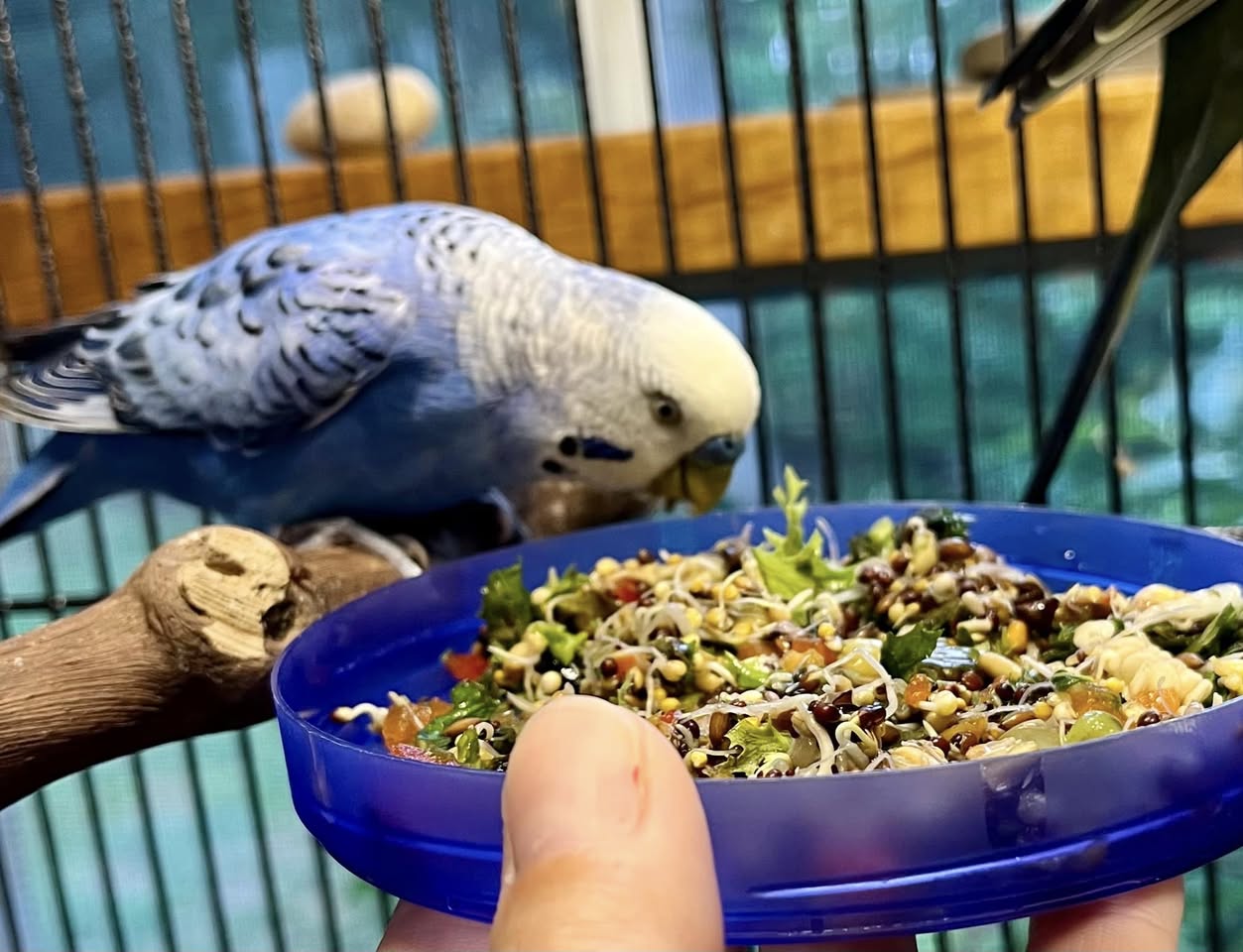
The solution is not complicated. It is a diet that includes good quality seed or pellets in measured rather than unlimited quantities, alongside daily fresh food — dark leafy greens, herbs, small amounts of vegetable — and a cuttlefish bone for calcium and beak maintenance. Fresh water changed daily, not every few days.
That diet, maintained consistently over a bird’s life, produces a measurably different health outcome from a seed-only diet. The difference is visible in feather condition, in energy levels, in the results of veterinary health checks, and ultimately in lifespan.
The Cage Size Problem — Chronic Physical Restriction
The second most significant factor, and the one that interacts with diet in ways that compound both problems.
Most cages sold as budgie or cockatiel cages in UK chain pet shops are too small. Not marginally — significantly. A budgie that cannot take a proper flight within its cage is a budgie whose cardiovascular system and musculoskeletal health are being chronically compromised. Flight is not optional enrichment for a bird. It is the primary physical activity that keeps a bird’s heart, lungs, and muscles in the condition they need to be in for a long life.
A bird in a small cage with limited flight opportunity will show it over time. Reduced muscle tone. Reduced cardiovascular fitness. In some cases, increased susceptibility to respiratory illness because the respiratory system is not being regularly exercised. And the obesity that compounds the diet problem — a bird that cannot fly much and is eating too much seed is a bird gaining weight it cannot shift, putting further strain on organs already stressed by poor diet.
The minimum cage I recommend for a single budgie is 60cm wide, 40cm deep, and 60cm tall — and that is a minimum, not a target. For a cockatiel, larger again. For pairs, larger still.
Combined with daily out-of-cage flight time — thirty minutes to an hour in a safe room — proper cage sizing gives a bird the physical activity it needs to maintain the cardiovascular and respiratory health that underpins a long life.
The Vet Problem — Most UK Bird Owners Never See an Avian Vet
This is the one that produces the most significant late-stage interventions — birds brought in when something is already seriously wrong that might have been caught and managed years earlier.
The pattern I see is consistent. An owner buys a bird. The bird seems fine for years. Then it stops eating, or loses weight suddenly, or begins breathing differently. The owner brings it to a vet. The vet — often a general practice vet without specific avian experience — finds a problem that has been developing for a long time and is now advanced. The outcome is poor.
What almost never happens, by contrast, is a proactive health check. A bird owner taking an apparently healthy bird to an experienced avian vet once every twelve to eighteen months for a routine assessment — weight check, examination, discussion of diet and environment — and catching problems early when they are manageable.
This pattern exists in cat and dog ownership. It barely exists in bird ownership. Most bird owners never take a healthy bird to a vet. They take a sick bird to a vet, usually when it is already seriously ill, because birds hide illness until they cannot any more.
A bird that hides illness well — which all prey species do, as a survival mechanism — and is never examined by a vet until it is visibly unwell is a bird whose problems will almost always be caught too late.
An annual health check with an avian vet is not an extravagance for a bird you expect to live ten to fifteen years. It is the most reliable way of catching the slow-developing problems — fatty liver, organ changes, early respiratory disease — that are otherwise invisible until they are critical.
The Companion Problem — Lone Birds Living Shorter Lives
This is less discussed than diet and cage size but it is a genuine factor, and it operates through a mechanism that is worth understanding.
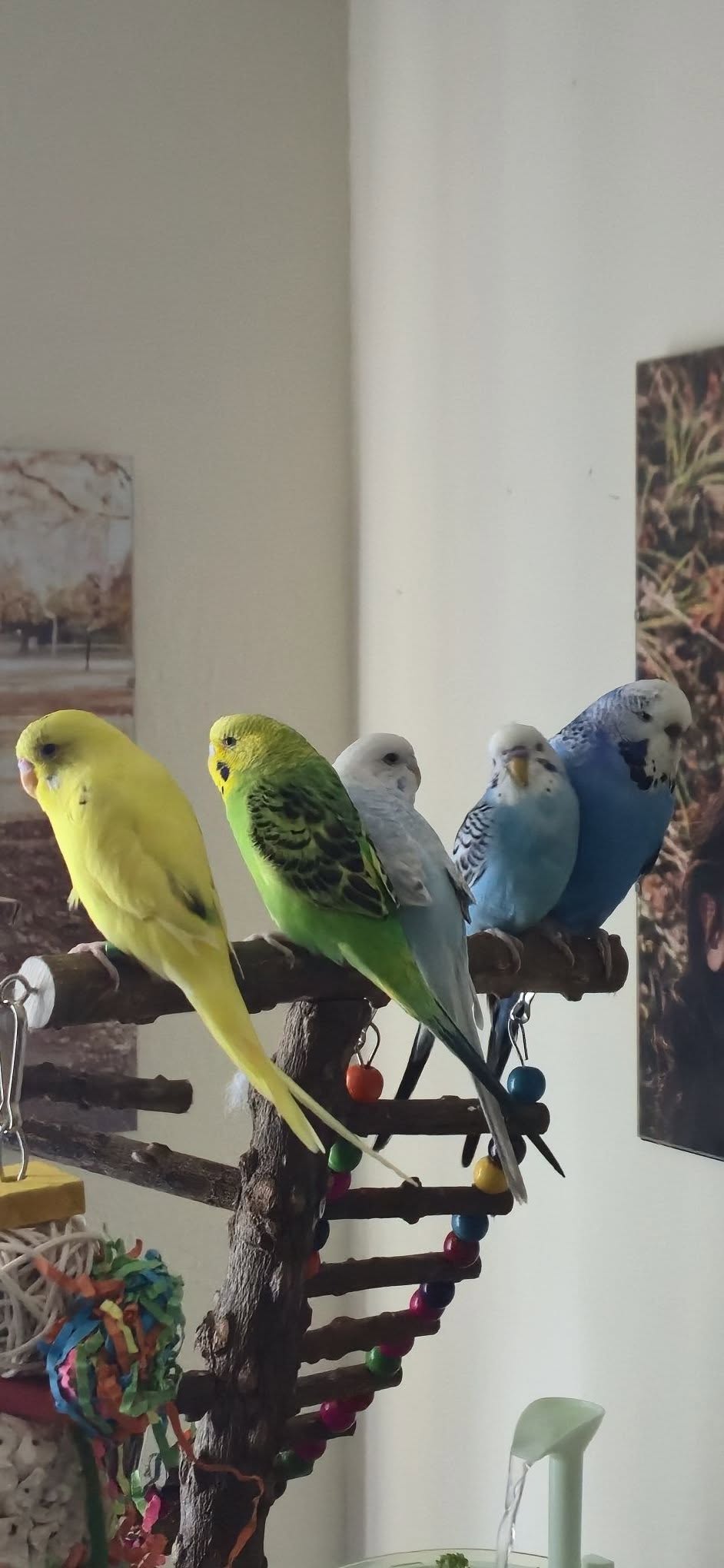
Budgies, cockatiels, and most other commonly kept cage birds are social species. In the wild, they live in flocks. Their nervous systems are calibrated to function with the social regulation that a flock provides — the synchronised activity patterns, the companionship, the mutual grooming, the shared vigilance that means no individual bird has to carry the full cognitive load of threat monitoring alone.
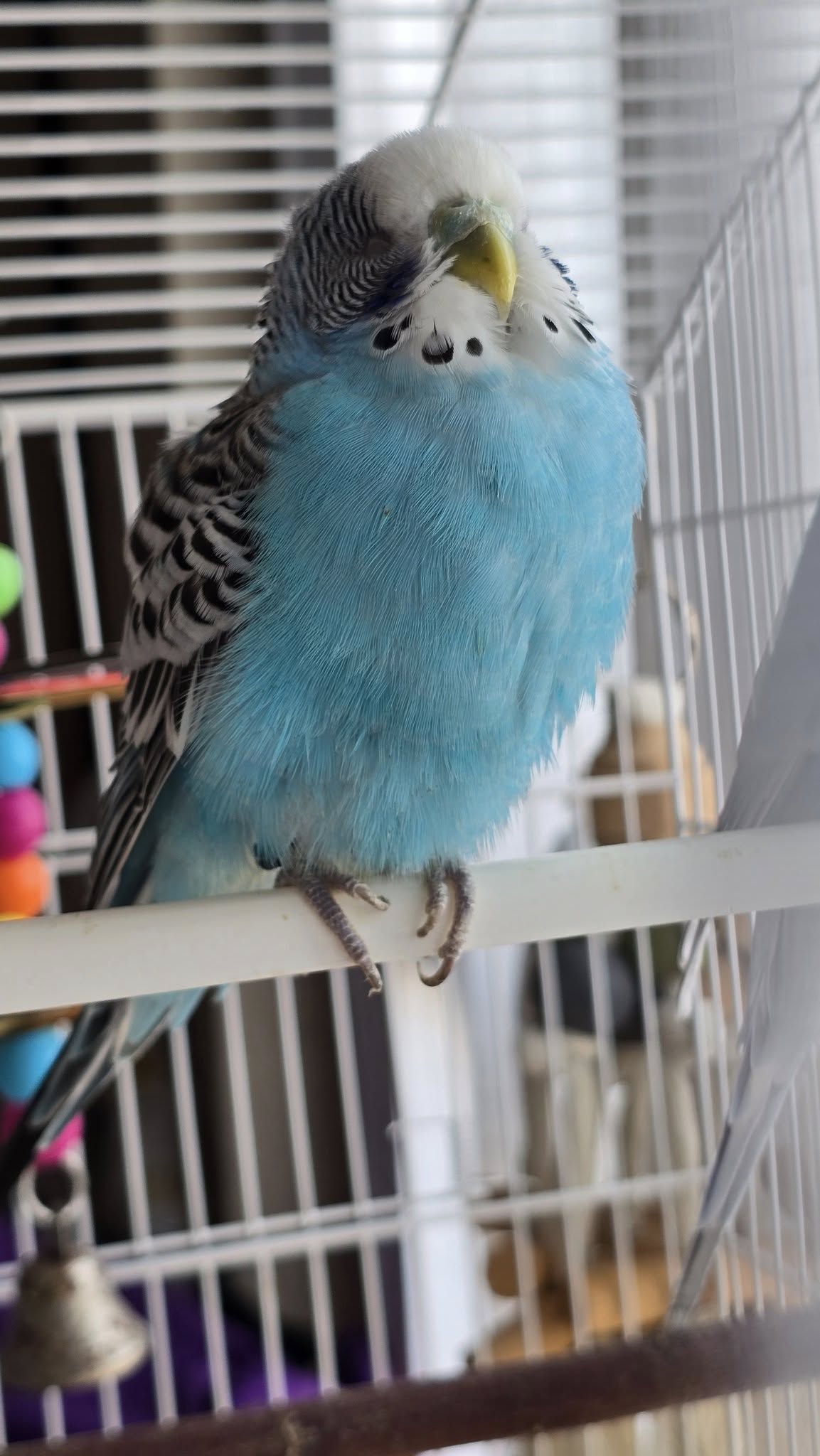
A lone bird carries that full load constantly. It is always the only one watching. It is always the one that has to respond to every change in the environment without the buffering effect of flock behaviour. The chronic stress load of a lone bird — even in a loving home with attentive owners — is measurably higher than that of a paired or grouped bird.
Chronic stress, as I mentioned earlier, suppresses immune function, affects organ health, and shortens life. A lone bird in an otherwise excellent environment will, on average, be under more physiological stress than a well-paired bird in a slightly less attentive environment. The longevity data on paired versus lone pet birds, though not extensive, consistently points in the same direction.
For budgies especially, I recommend pairs or small groups rather than single birds. The exception is an owner who is home all day and provides genuine, consistent human social contact at a level that meaningfully substitutes for avian companionship — but this is rarer in practice than it sounds in theory.
The Indoor Air Quality Problem — The One Nobody Talks About
Birds have the most efficient respiratory systems of any vertebrate. This is an evolutionary adaptation for high-altitude flight — their air sac system extracts oxygen with exceptional efficiency. The same system makes them exquisitely sensitive to airborne toxins that barely affect humans.
The indoor air quality in most UK homes contains elements that, with chronic low-level exposure, affect bird health over time. The specific concerns I raise with every bird owner are these.
Non-stick cookware. Polytetrafluoroethylene — the coating on most non-stick pans — releases fumes when overheated that are acutely lethal to birds at high concentrations and chronically harmful at lower ones. A kitchen where non-stick cookware is used regularly, with a bird in or near the kitchen, is an environment with an ongoing low-level respiratory insult. Over years, this contributes to respiratory disease.
Aerosols and sprays. Air fresheners, cleaning sprays, hairspray, deodorant used near the cage. These are respiratory irritants for birds in ways that their efficient lungs amplify. A bird in a room where aerosols are used regularly is inhaling those particles at concentrations that matter for its long-term respiratory health.
Candles and incense. Combustion products from scented candles and incense, used chronically in a room where a bird lives, accumulate in the bird’s respiratory system over time.
None of these cause visible symptoms in the short term. They contribute to the background burden on the respiratory system that reduces resilience and shortens life over years. The intervention is simple — keep the bird away from the kitchen during cooking, switch to non-aerosol cleaning products near the cage, and avoid candles and incense in the bird’s room.
The Early Warning Problem — Not Knowing What to Look For
Everything above is about prevention — the conditions and practices that determine whether a bird reaches its potential lifespan. This final section is about detection — catching the problems that do develop before they become irreversible.
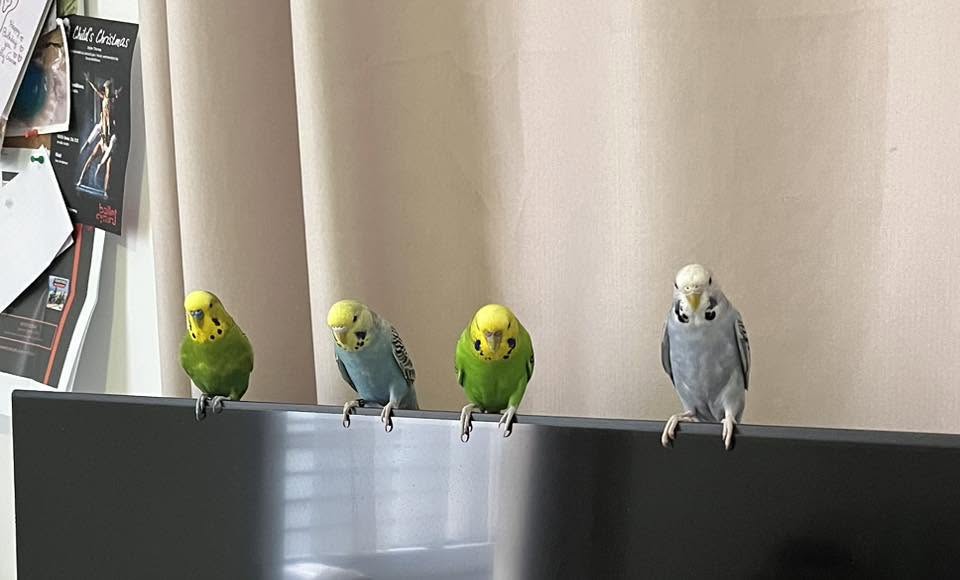
Birds hide illness. This is not a character flaw. It is a survival mechanism — a bird that shows weakness in a wild flock becomes a target. The same instinct operates in a domestic bird. By the time a bird looks visibly unwell — feathers puffed, sitting low, clearly not right — it has typically been managing an illness for days, sometimes weeks.
The owners who catch things early are the ones who know what normal looks like for their specific bird. Who weigh their bird monthly on kitchen scales and notice a ten percent weight loss before it is visible. Who know how much their bird typically eats and notice when that changes. Who can distinguish between the bird’s normal morning vocalisation pattern and one that is quieter or different in character.
That knowledge is built through observation. It costs nothing and takes no specialist equipment. But it requires the decision to pay attention systematically rather than casually — to look at the bird with intent each day rather than simply being aware of it.
Weight is the single most reliable early indicator. A bird losing weight that is not visibly thin yet — because feathers mask it — is a bird with something developing. Monthly weight checks on a small kitchen scale take thirty seconds. They are, in my experience, the most practical thing an owner can do to catch problems early enough to intervene.
A Practical Summary — What Actually Changes the Outcome
I want to put the main points together clearly, because the cumulative effect of getting several of these right is significantly greater than any single change.
Diet. Move away from seed-only feeding. Introduce fresh food daily. Measure rather than top up. This single change has the most impact on long-term organ health of anything on this list.
Cage size and flight. Ensure the cage is genuinely adequate — not the minimum available at a chain pet shop, but properly sized. Provide daily out-of-cage flight time in a safe room. Physical fitness is organ health over a long life.
Avian vet. Find one before you need one in an emergency. Book a routine health check once every twelve to eighteen months. The cost is modest compared with the benefit of catching slow-developing problems early.
Companionship. Unless you are genuinely home all day and actively interacting with the bird, consider a companion. The physiological impact of chronic social isolation on a flock species is real and cumulative.
Indoor air quality. Remove non-stick cookware from rooms where the bird spends time, or move the bird during cooking. Stop aerosol use near the cage. Avoid candles and incense in the bird’s room.
Observation. Weigh monthly. Know what normal looks and sounds like for your bird. Notice changes. Act on them early.
None of these are difficult. None of them are expensive in absolute terms. Together, they represent the difference between a bird that lives five years and one that lives twelve.
Frequently Asked Questions
How long should a budgie realistically live?
In a well-managed home — appropriate diet, proper cage size, avian vet access, companionship, good indoor air quality — ten to twelve years is realistic and achievable. Some budgies live longer. The five to seven year average reflects common husbandry shortfalls rather than the species’ genuine potential.
My budgie is four years old and has only ever had seed — is it too late to change the diet?
It is not too late, and the change is worth making. A gradual transition to a better diet — introducing fresh food alongside reduced seed, not a sudden switch — will benefit the liver and organs regardless of prior diet history. The improvement may not reverse existing damage but it will slow further progression. Do it gradually over two to three weeks rather than overnight.
How do I find an avian vet in the UK?
The RCVS maintains an accreditation search at rcvs.org.uk where you can filter by exotic animal experience. The Association of Avian Vets also maintains a referral directory. If you are in the Swindon area, come and ask us — we will point you toward the practices we recommend. Find one before you need one in an emergency.
My bird seems perfectly healthy — do I really need annual vet checks?
Yes, precisely because birds hide illness so effectively. A bird that seems healthy may be managing a developing problem that a vet examination would detect — weight change, organ palpation findings, changes visible on a basic health screen. Annual checks in an apparently healthy bird are how you find things early. Waiting until the bird looks unwell means waiting until the problem is advanced.
Is a single budgie always at a disadvantage compared to a paired one?
Not always — a single budgie with an owner who is genuinely home most of the day and actively interacts with it for significant periods can do very well. But the bar for that level of human social substitution is higher than most working households can reliably meet. If you are out for eight or more hours a day, a single bird is spending most of its waking hours alone, which is a genuine welfare concern for a flock species.
One Last Thing
I am aware that this article is, in places, uncomfortable reading. It is not comfortable to be told that common practices — seed-only feeding, small cages, no vet visits — are shortening the lives of birds that people genuinely care about.
But I have always thought that the most respectful thing I can do for the people who buy animals from us is to tell them the truth. Not the version that makes the sale easiest, not the version that requires the least of the owner, but the version that gives the animal the best chance of a full life.
A budgie that lives twelve years has had a full life. It has been something — a presence in your house, a voice in the morning, a character that you came to know in real detail. A budgie that lives five years has had half that. Most of the time, that difference was not inevitable.
That is worth knowing. And it is worth doing something about.
Come and talk to us if you want to go through any of this in more detail. We are at Manor Garden Centre, Cheney Manor, Swindon SN2 2QJ, every day. Get in touch here or call 01793 512400.
Visit Us at Paradise Pets Swindon
We stock budgies, cockatiels, canaries, and aviary birds year-round. If you want honest advice on diet, housing, or finding an avian vet, come in and talk to us — we will always give you the straight answer.