
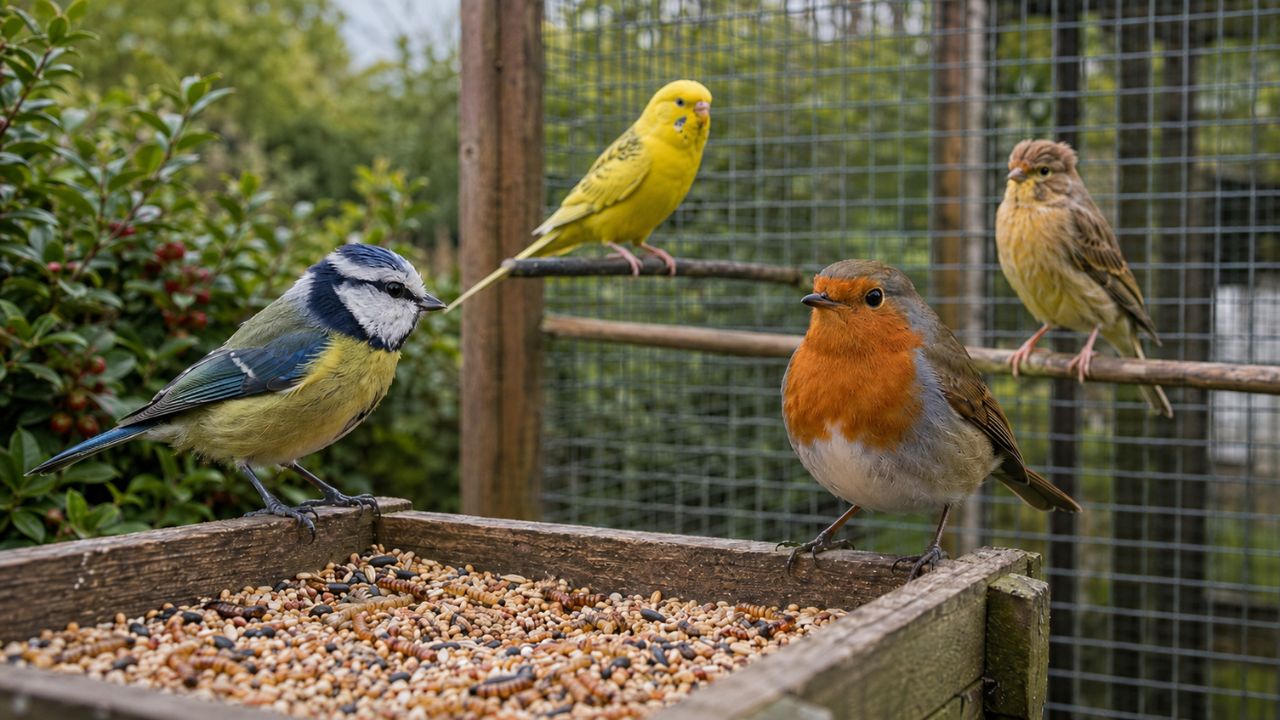

Neil has been keeping, breeding, and selling cage and aviary birds at Paradise Pets Swindon since 1988 — over 35 years of daily first-hand experience with birds and the people who love them. In that time he has watched which species capture people most completely, which ones become genuine companions rather than just pets, and why certain birds hold a place in British households that nothing else quite replicates. This is his honest, personal account of the birds that matter most in Britain and why people never quite stop watching them.
There is a moment that happens in this shop regularly. Someone comes in — usually with a child, sometimes alone — and they stand in front of the birds. They were not planning to stay long. They had a question to ask, a bag of seed to buy, something straightforward. And then they stop. And they watch.
They watch a budgie working a piece of millet with total concentration. They watch a cockatiel preening methodically, pausing to scratch its crest, resuming. They watch a canary open its beak and produce something that should not be possible from an animal that size. They watch a pair of zebra finches arguing over a perch both of them could easily share.
They forget what they came in for.
I have seen this happen thousands of times in 35 years. It does not matter whether the person is a lifelong bird keeper or someone who has never owned a bird in their life. Something happens when you watch a bird — really watch it — that is different from watching almost anything else. I have thought about why that is for a long time. I think I have a reasonable answer.
Birds are doing something different from us at all times. They process the world differently, they move differently, they communicate differently. Watching a bird closely is a window into a parallel way of existing — and that is endlessly interesting to the part of the human brain that has always looked up and noticed them.
These are the birds that have captured Britain most completely. Not a definitive ranking — birds do not work like that and neither do the people who love them. But an honest account, from 35 years at the counter, of which birds keep people watching and why.
The Budgerigar — Britain’s Most Popular Cage Bird, And Rightly So
Start anywhere else and you have not started at the beginning. The budgerigar has been the most popular cage bird in Britain for over a century. At various points in the twentieth century, more households in Britain owned a budgie than owned a cat. That is an extraordinary statistic for an animal that originated in the dry interior of Australia and has never been native to these islands.
The reason is straightforward once you have spent time with them. Budgies are genuinely sociable. They want to interact. They will learn your voice, respond to their name, attempt to mimic speech, and — if you invest the time — become a companion in a way that most people do not expect from something that weighs thirty-five grams.
- Talking and vocalisation — male budgies in particular can develop impressive vocabularies; I have known birds with hundreds of words and a tendency to produce them in surprisingly appropriate contexts; the talking is not mimicry without understanding — there is genuine association between words and the situations in which they were learned
- Personality — every budgie is distinct; I have kept and sold thousands of them and I have never met two that were identical; some are bold and sociable from day one, some are cautious and take months to trust, some are comedians and some are philosophers; learning which one you have is part of what makes keeping them interesting
- Longevity — a well-kept budgie lives ten to fourteen years; that is a genuine relationship, not a brief encounter; owners who have kept budgies for decades carry the memory of specific birds the way other people carry the memory of dogs
- Accessibility — they are not expensive to keep, they do not require a large amount of space, and they are manageable for first-time owners; none of that means they are easy — they are not, if you want to do it properly — but the barrier to entry is lower than for larger parrots
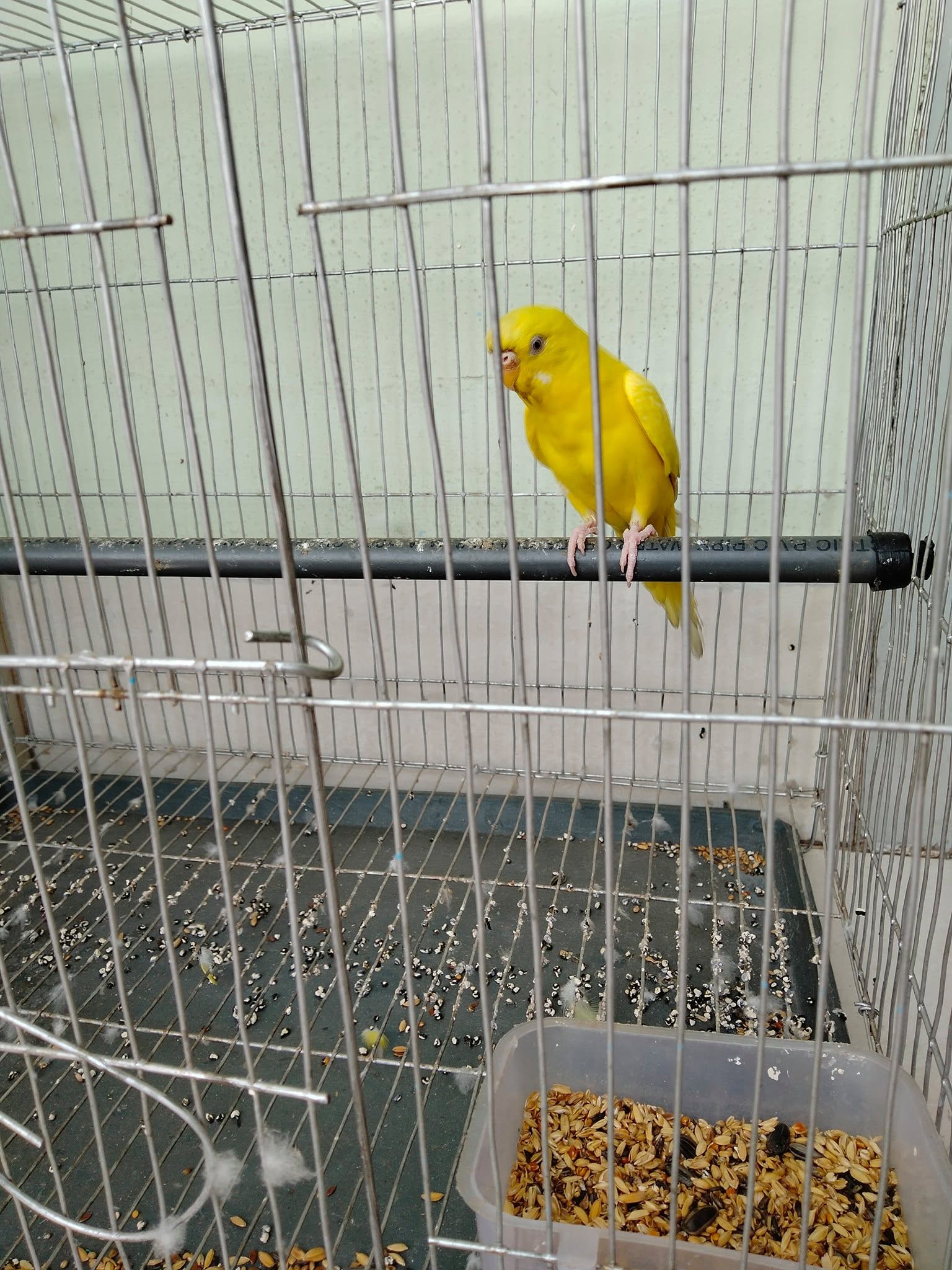
What keeps people watching budgies specifically is the interaction. A budgie is always doing something — investigating, preening, vocalising, playing, watching you back with an intelligence that is slightly unnerving until you get used to it. They are small enough to be in the house without dominating it and sociable enough to become part of the household’s daily rhythm. That combination is why they have been here for a hundred years and will still be here in another hundred.
The Cockatiel — The Bird That Surprises People Most
Cockatiels are the bird I sell most often to owners who came in for a budgie and left with something more than they expected.
They are larger than budgies — roughly twice the size — and from Australia as well, from similar arid grassland habitats. But the character is different in ways that matter. Cockatiels are more physically demonstrative. They will sit on your shoulder, lean into your hand, and make physical contact in a way that most budgies require significant trust-building to achieve. A well-socialised cockatiel treats its owner the way a young child treats a trusted adult — with complete confidence and an assumption that the adult is there to be leaned on.
- The crest — cockatiels have a prominent crest of feathers on the head that functions as an emotional barometer; raised and fanned means excited or alarmed, flattened means content and relaxed, held at a slight angle means curious; once you learn to read the crest you have a direct window into the bird’s emotional state at all times
- Whistling and song — cockatiels are exceptional whistlers; males particularly develop extended melodic sequences that they repeat and modify over time; the sound fills a room in a way that is not intrusive but is always present
- Physical affection — cockatiels actively seek physical contact with trusted humans; head scratching produces a state of visible bliss — the crest flattens, the eyes close, the bird leans into your finger; this mutual physical interaction is what distinguishes cockatiels from most other small birds
- Lifespan — fifteen to twenty years in a well-kept bird; longer than most people expect and long enough to become genuinely significant
The reason people watch cockatiels is partly the crest — it is impossible not to read — and partly the expressiveness. A cockatiel going about its day is a bird with visible inner states. You can see when it is interested, when it is contented, when it is uncertain, when it is excited. That expressiveness makes watching them feel like watching something that is genuinely communicating with you rather than simply existing near you.
The Canary — The Voice That Stops Everything
I have had people walk into the shop talking, stop mid-sentence, and not finish what they were saying for two full minutes because a canary had started singing. That is not an exaggeration. It happens.
The canary’s song is one of those things that is difficult to describe to someone who has not heard it and entirely unnecessary to describe to someone who has. It is rich, sustained, and complex — a male canary in full voice produces something that would be remarkable coming from any animal and is genuinely extraordinary coming from a bird you could hold in one hand.
- Only the males sing — female canaries vocalise but do not produce the full song; if you want the singing, you want a male; sexing canaries requires some experience or the advice of someone who keeps them
- Different breeds produce different songs — the Roller canary has a soft, rolling delivery bred deliberately to be quiet and continuous; the Border canary produces a louder, more open song; the Waterslager has a liquid quality to its vocalisation; the choice of breed shapes the sound you live with
- Canaries are not typically handleable in the way budgies or cockatiels are — they are aviary birds rather than companion birds; the relationship is observational rather than interactive; this suits owners who want the beauty and song of a bird without the commitment of a hands-on relationship
- The watching aspect with canaries is primarily the singing — the physical act of a canary singing — the throat moving, the beak opening, the posture of full-voiced song — is as watchable as the sound itself; it is a performance, visually as much as aurally
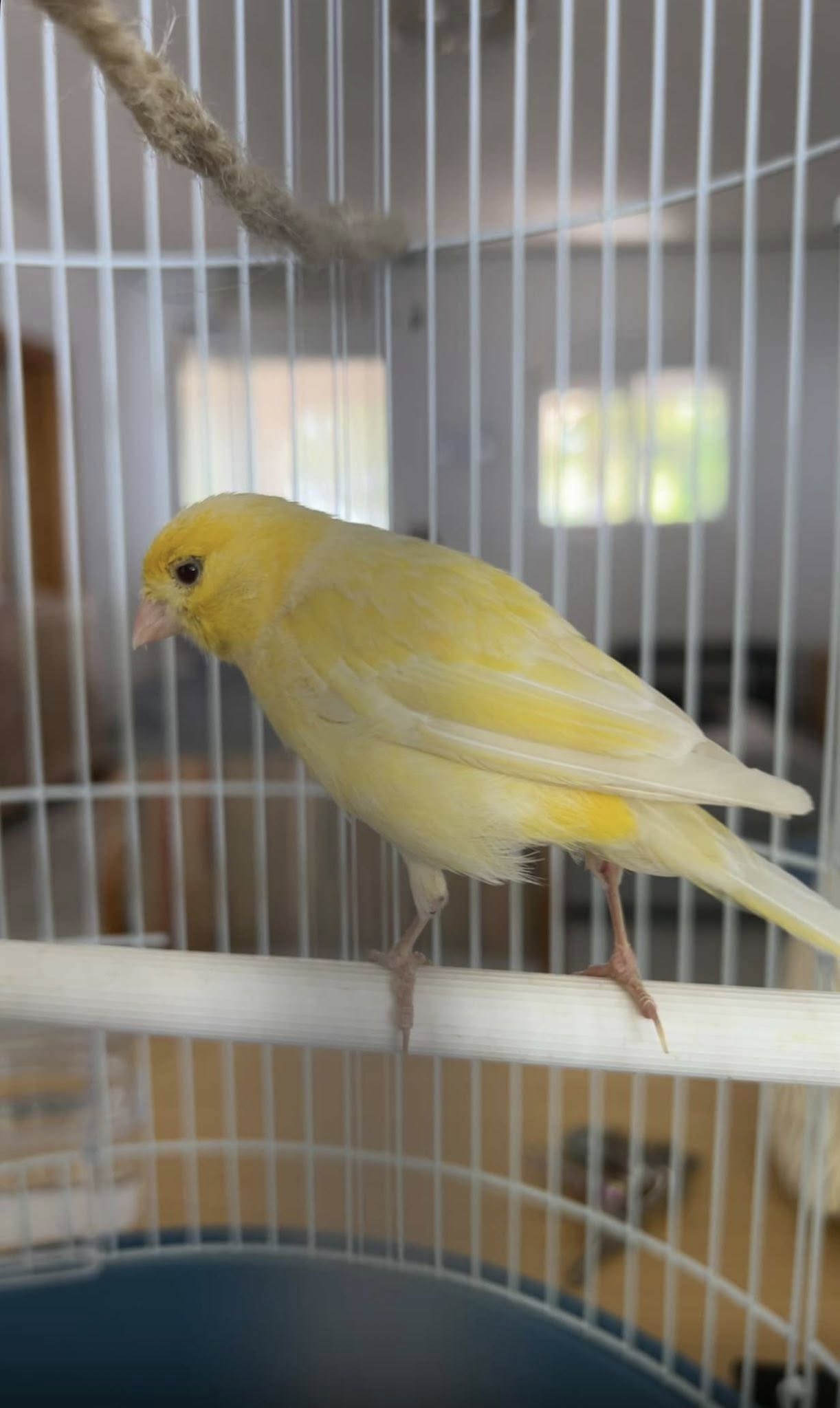
What keeps people watching canaries is the song — but also, once you have spent time with them, the colour. The range of canary colours that has been developed over centuries of breeding is genuinely extraordinary — yellows, oranges, reds, whites, variegated patterns — and a well-kept canary in good condition has a quality of feather that catches light differently from most other birds. They are visually beautiful in a specific, contained way that other species do not replicate.
The Zebra Finch — The Bird You Cannot Watch Without Smiling
I have never successfully explained to someone who has not kept zebra finches why they are so compelling to watch. The best I can do is tell you what they do and trust that the picture translates.
Zebra finches are small — smaller than budgies — and are from Australia like the budgie and cockatiel. They live in groups and they are, collectively, the most industrious and purposeful small animals I have ever kept. A cage of zebra finches is never still. There is always a negotiation happening, a perch being contested, a nesting material being carried somewhere it clearly does not need to go, a dispute being initiated and immediately forgotten, a courtship display being performed with complete dedication by a bird that was in a completely different part of the cage thirty seconds ago.
- They are colony birds — zebra finches are unhappy alone or in pairs; they need a group; a colony of six or more in a properly sized flight cage is where the behaviour becomes genuinely fascinating to watch
- The courtship display of the male — the male zebra finch performs an elaborate sequence of hops, bobbing, and song directed at the female; she ignores it comprehensively; he performs it again immediately; this can go on for extended periods and is among the most entertaining things birds do
- The song is not melodic but it is characteristic — a distinctive series of beeping, buzzing sounds that is immediately recognisable and becomes a background sound you notice when it is absent
- They breed readily — zebra finches will breed in captivity with minimal encouragement; watching the nest-building, the incubation, and the emergence of chicks is one of the most complete bird-keeping experiences available in a domestic setting
The reason people watch zebra finches is that the colony is always doing something genuinely interesting. It is not passive display — it is active social life, playing out in a space small enough to observe completely. For anyone who finds bird behaviour genuinely interesting rather than just aesthetically pleasing, a colony of zebra finches is endlessly engaging.
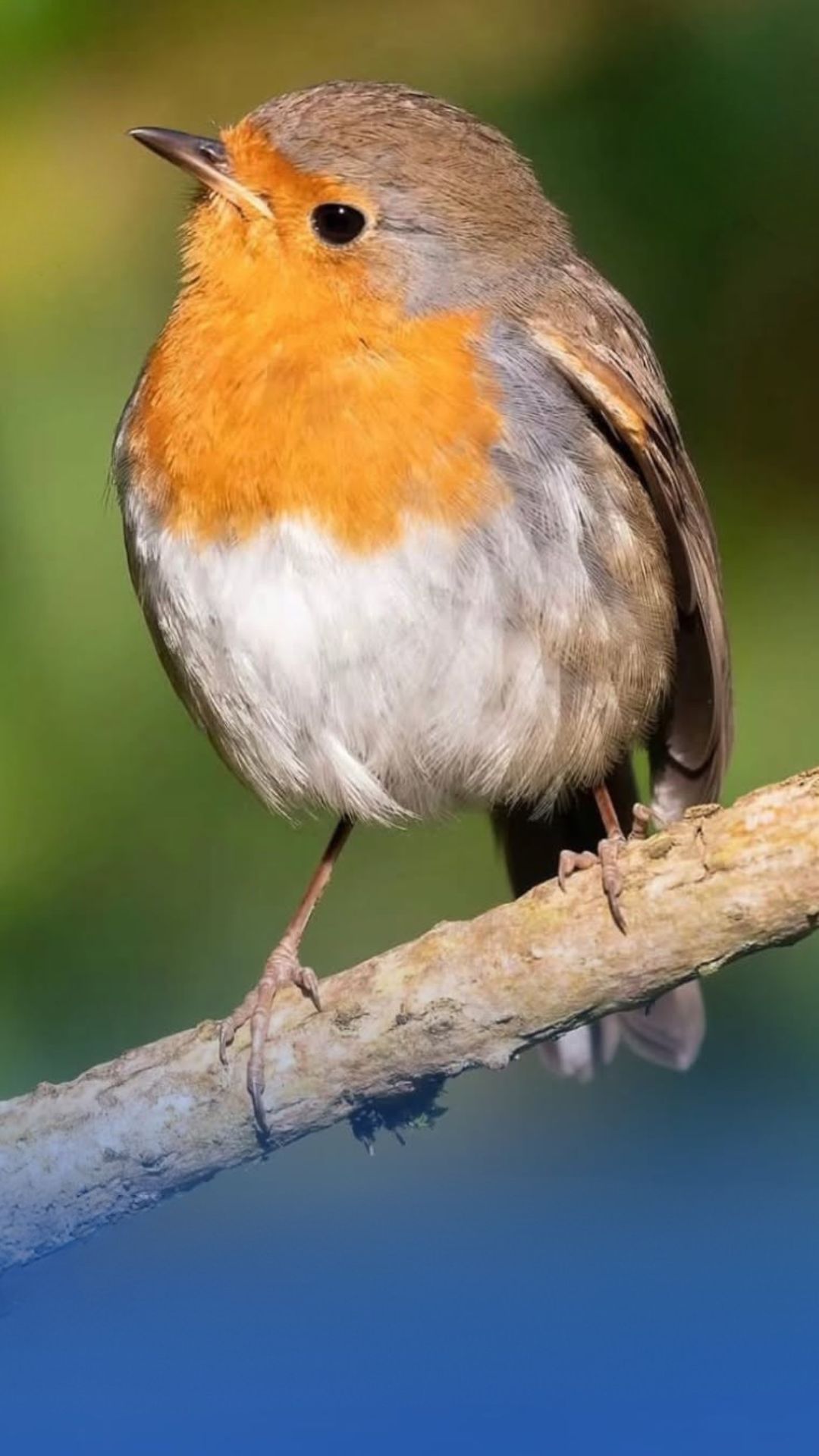
The Robin — Britain’s Unofficial National Bird And Why
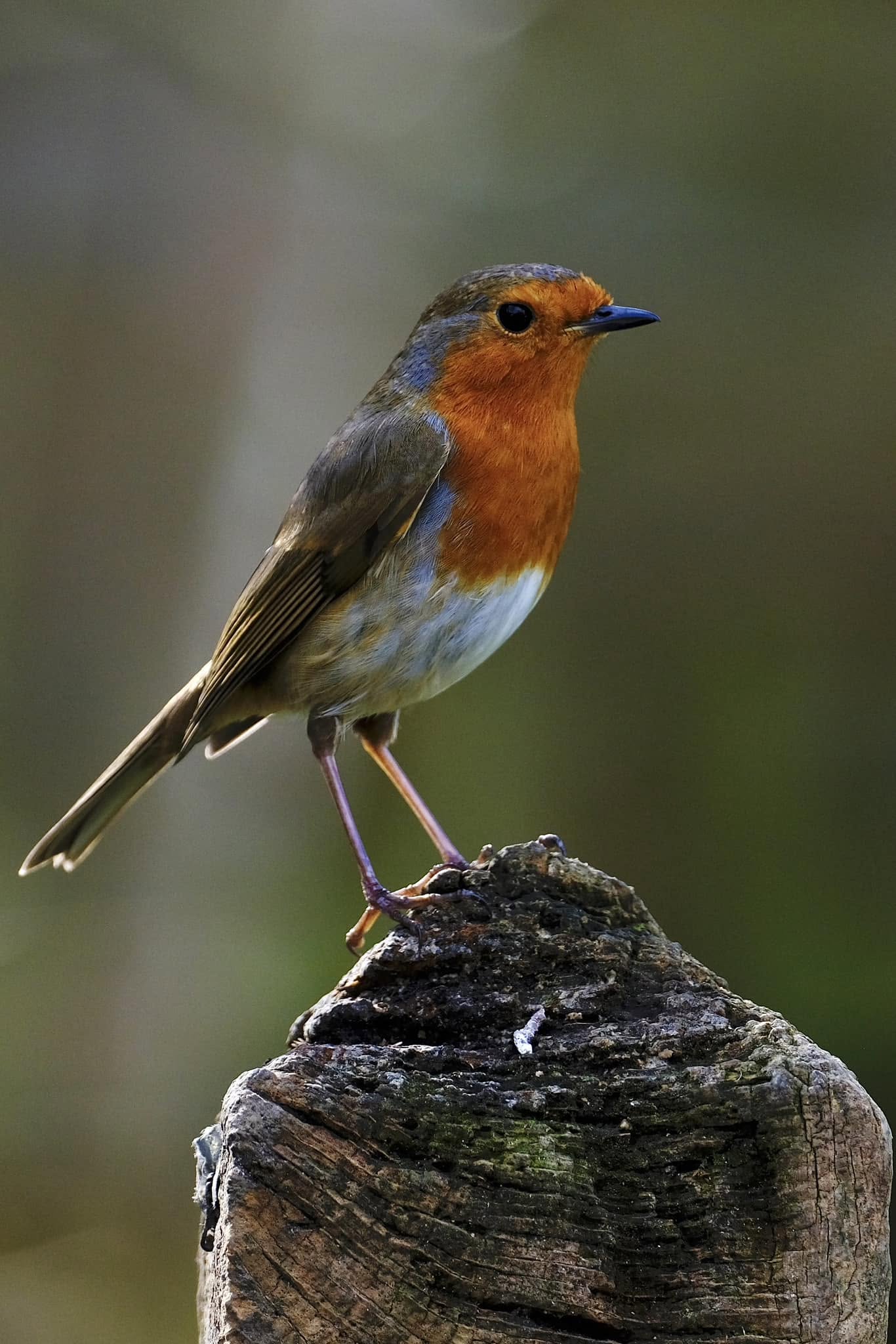
The robin is not a cage bird. I am not selling robins and I never would. But no honest account of the birds that matter most in Britain can leave it out — because the robin occupies a place in the British relationship with birds that no other species comes close to.
The robin is the bird most Britons would name first if asked to name a bird. It appears on Christmas cards, in gardens, on the side of seed bags, in children’s books. It has been the subject of more folklore, more poetry, and more quiet personal significance than any other British bird. And the reason is simple, and it is the same reason I have been describing throughout this piece.
The robin watches you back.
- Robins are uniquely unafraid of humans — this is partly a product of the British garden environment, where robins have co-evolved alongside human activity for centuries; they follow gardeners to catch disturbed worms, perch within touching distance, and make sustained eye contact in a way that most wild birds do not
- The eye contact is the thing — a robin that is watching you from three feet away and making no attempt to leave is doing something that feels personal; it is not, in any biological sense, but it feels that way, and feelings are what create the relationship between people and birds
- The song — robins sing in winter, when most other birds do not; the robin’s song in a January garden is one of the most distinctive and evocative sounds in British natural life; it is melancholic in quality and genuinely beautiful in execution
- The attachment people form to individual garden robins — regular garden visitors often form attachments to specific robins that visit their gardens over years; they name them, they notice when they do not appear, they mourn them; this is the same attachment mechanism that operates with cage birds, expressed through a pane of glass
The Goldfinch — The Bird That Has Come Back
The goldfinch is one of the great British conservation success stories of the last thirty years, and the reason people watch them — when they are lucky enough to get them in a garden — is purely visual.
A male goldfinch is, by any reasonable standard, the most visually striking small bird in Britain. The combination of red face, black and white head, and the wide golden-yellow wing bar that gives the species its name is vivid in a way that seems improbable for a wild bird of these islands. The collective noun for goldfinches is a charm, and it was earned.
- The goldfinch population has recovered dramatically — the species was heavily trapped for the cage bird trade in the nineteenth century and declined severely; legal protection and changing garden bird feeding habits have produced a significant population recovery; goldfinches are now a regular garden visitor in many parts of Britain where they were absent a generation ago
- Nyjer seed is the key — goldfinches feed primarily on thistle and teasel seeds in the wild; nyjer seed in a suitable feeder replicates this; gardens that put out nyjer seed will attract goldfinches where those that do not will not; this is the single change that brings goldfinches in
- They feed in flocks — a charm of goldfinches on a feeder is one of the genuine spectacles of British garden bird watching; the combination of the colour, the acrobatic feeding behaviour, and the tinkling contact calls of the flock is unlike anything else in British garden wildlife
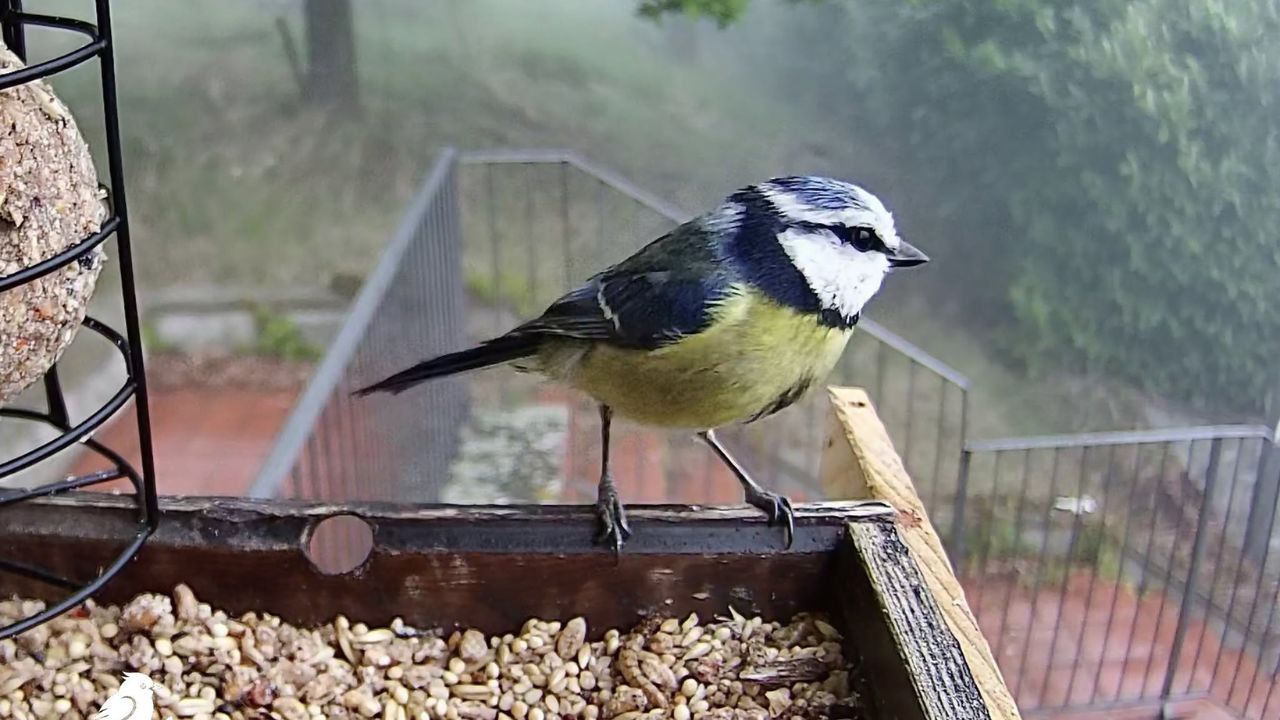
The Blue Tit — The Bird That Taught Britain To Watch
If there is a single bird responsible for Britain’s relationship with garden bird watching as a national habit, it is the blue tit.
The blue tit is the bird that introduced the concept of the peanut feeder to the British garden in the mid-twentieth century. It is the bird whose famous behaviour of opening milk bottle tops to access cream was so widely observed and reported that it became the standard textbook example of animal problem-solving and cultural transmission. It is the species that the RSPB and other organisations have consistently used as the accessible face of bird conservation — small, colourful, common enough to be seen everywhere, interesting enough to be worth watching.
- Acrobatic feeding — blue tits hang upside down, swing from feeders, and extract food from positions that other birds cannot manage; the physical dexterity is engaging to watch and gives them access to food sources that larger, less agile species cannot reach
- Nest box behaviour — blue tits are one of the most reliable nest box species in Britain; a nest box in the right position will attract a pair within a season in most gardens; the behaviour around the nest box — the visits, the material-carrying, the territorial disputes — provides weeks of watching in spring
- The song and contact calls — the high, thin tsee-tsee-tsee call of the blue tit is one of the most familiar sounds in British gardens and woodland; learning to recognise it connects people to what is happening in the trees and hedges around them in a way that changes how they experience outdoor spaces
What All Of These Birds Have In Common
I have been thinking about this for a long time, because it is the question that underlies everything else in this piece. Why these specific birds? What do a budgerigar in a cage, a robin in a garden, a charm of goldfinches on a feeder, and a pair of zebra finches conducting an incomprehensible territorial dispute all have in common that makes people stop and watch?
I think it comes down to three things.
- They are visible in their inner states — birds express themselves physically in ways that are legible to humans; the budgie’s posture, the cockatiel’s crest, the robin’s eye contact, the goldfinch’s colour — these are things we can read and respond to; we are watching something that is communicating, even if the communication was not evolved for our benefit
- They are doing something genuinely different from us — a bird is not a small person; it processes the world differently, it is alert to things we cannot perceive, it lives on a timescale of attention and urgency that is unlike our own; watching a bird closely is engaging precisely because it is foreign; we are watching something that is not us and learning from the watching
- They watch back — this is the thing that I come back to most often; the birds that Britain loves most are almost universally the ones that look at us; the robin’s eye contact, the budgie tracking your movement, the cockatiel watching your face — the mutual gaze between human and bird is the foundation of every relationship anyone has ever had with one; it is the moment where the watching stops being one-directional and becomes something else
In 35 years of selling birds and watching owners fall in love with them, I have come to believe that the relationship between humans and birds is one of the oldest and most persistent things about us. We have been watching birds for as long as we have been capable of sustained attention. The species change. The watching does not stop.
If you have never kept a bird, the question of why people do is probably still open. Come into the shop. Stand in front of the birds for ten minutes. I have never once had to explain it to someone after that.
Thinking About Keeping A Bird? Come In And Talk To Us First.
Tell me what you are drawn to — the talking, the song, the interaction, the watching — and I will tell you honestly which bird suits that, and what keeping it well actually involves. No pressure, no sales pitch. Just 35 years of honest advice about birds and the people who love them.
⭐ Customer Reviews
Amazing Bird Selection
Had a lovley visit today,staff were very friendly and very helpful,such a great petshop,their selection of birds is incredible,really impressed,thank so much to the staff at Paradise Pets

Friendly Helpful Staff
I have been coming to this place for years and they have a great stock of food for all types of pets. Have a great selection of small mammals and a lot of birds. Staff are friendly and helpful.

Great Quality Hutch
Bought a guinea pigs hutch and run combo, very happy with the service, the hutch was put in my car for me without even asking for help. The wood quality is very good, the instructions easy to follow and we are extremely happy with the fully built hutch. A good size for 2 guinea pigs

Response from Paradise Pets | Wiltshire
Thank you Melanie Latus Nice to provide services to you.
Best Bird Shop Around
It’s the best pet shop in and around Swindon. They always have an amazing selection of birds and all you need to keep them happy. I keep birds myself and the guys there are happy to answer questions and really know their stuff. I have seen budgies etc. in chain pet shops in the area looking really unhealthy and ill – I wouldn’t go anywhere else than Paradise Pets for animals.

Highly Recommended Bird Shop
I could not praise this shop enough. Really helped my Grandson buy his first bird and he’s loving it. Travelled from Somerset and was welcomed with open arms.

Great Shop with Competitive Prices
Great shop with amazing selection for small animals, hamsters, mice ect, highly recommend!
Also has a great selection for dogs & cats too & very competitive prices! 💖

