

Neil has kept, bred, and sold cockatiels at Paradise Pets Swindon since 1988 — over 35 years of first-hand experience with these birds. In that time, he has watched countless worried owners walk through the door with a cockatiel that is pulling its own feathers out. This article is his honest, practical guide on what is really going on and what to do about it.
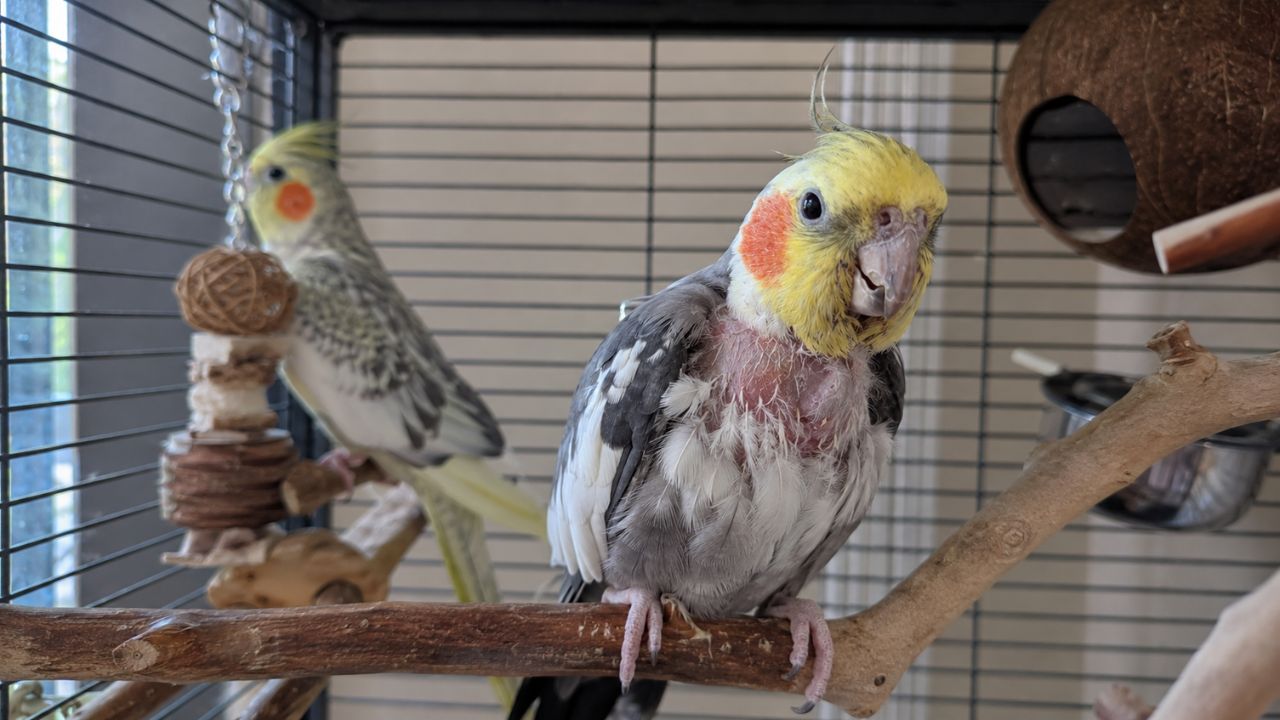
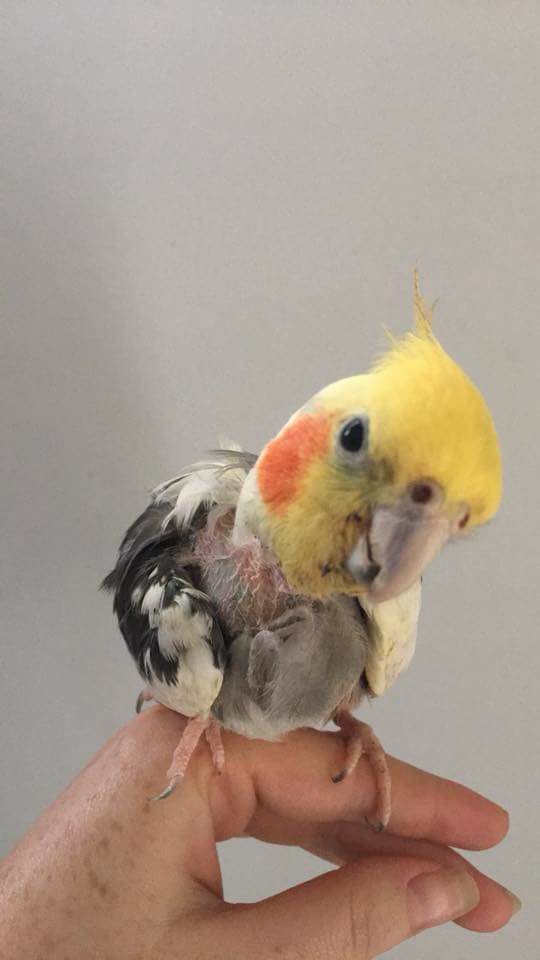
A lady came into the shop a few weeks ago, properly upset. She had her cockatiel with her in a small travel cage, and when she lifted the cover, I could see why. The bird had bald patches across its chest and shoulders, with raw skin visible underneath. “Neil,” she said, “I’ve watched her do it. She’s pulling them out herself. I don’t understand — she’s never done this before.”
I see this scene play out in my shop more often with cockatiels than almost any other bird. Feather plucking is one of the most distressing things a cockatiel owner can witness — and one of the most genuinely concerning. Because unlike budgies, where feather plucking is uncommon, in cockatiels it is something I see regularly. And it almost always means something is wrong.
In 35 years of selling cockatiels, the honest truth is this — a cockatiel that is pulling its own feathers out is telling you something. Sometimes it is about its body. Sometimes its mind. Sometimes its environment. Your job, and mine when people walk into the shop, is to work out what.
This article is the conversation I have at the counter properly, written down for every UK cockatiel owner who is staring at a bald patch wondering what they have done wrong. Most of the time, you have not done anything wrong. But the bird needs your help to put it right, and the sooner you start, the better the chances of recovery.
Why Cockatiels Are Particularly Prone To Plucking
Before we go into the causes, I want to explain why this is more of a problem with cockatiels than with most other UK cage birds. Because there are specific reasons cockatiels develop plucking habits, and understanding those reasons helps you prevent the problem in the first place.
Cockatiels are intelligent, social, and emotionally sensitive birds. In the wild, they live in large flocks, fly considerable distances every day, forage constantly, and interact with their flock-mates almost continuously. When you put a cockatiel in a cage in a UK living room, alone or in a pair, you are giving it a fraction of the stimulation, exercise, and social interaction it evolved for.
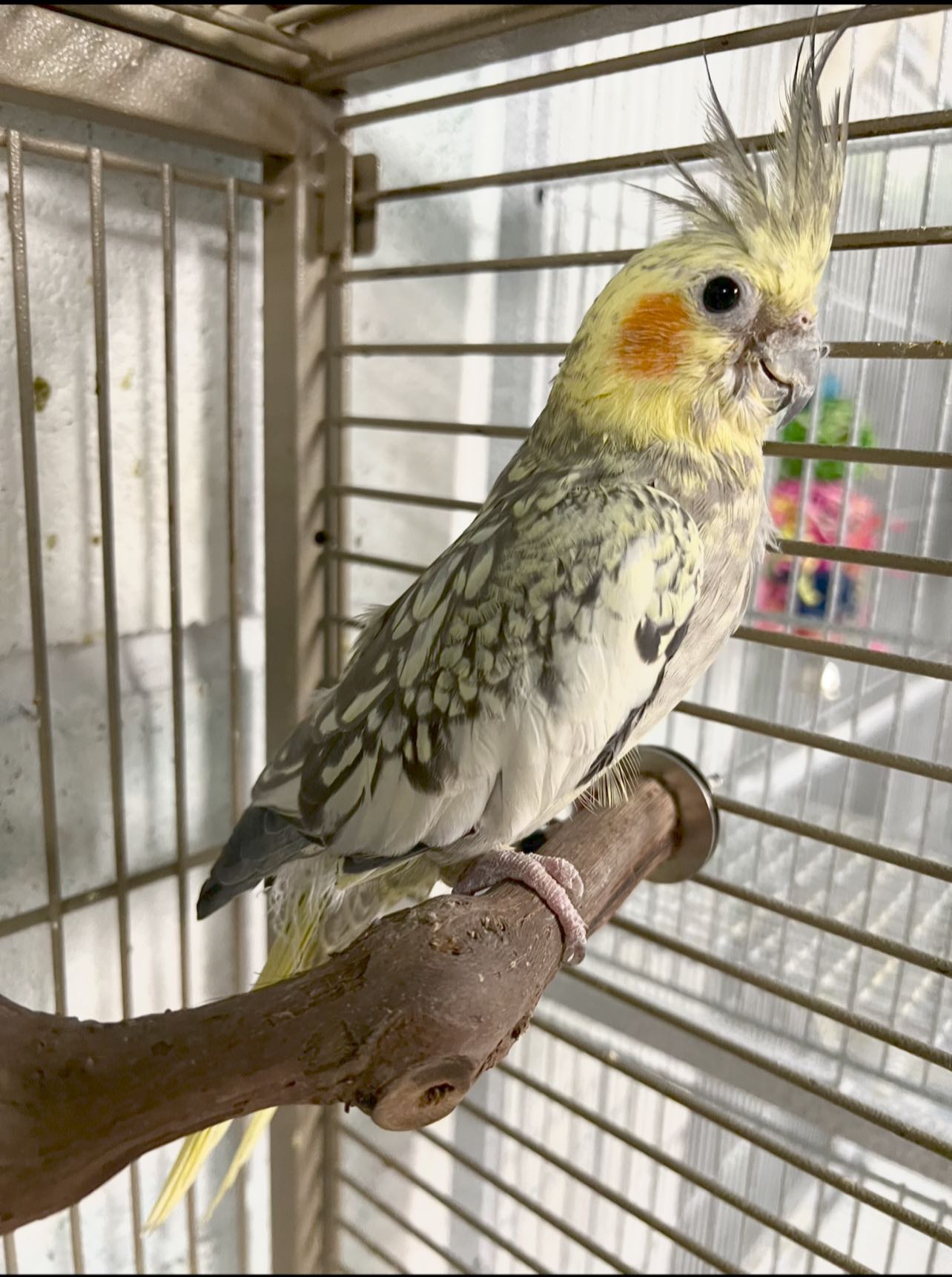
For some cockatiels, that is fine — they adapt, they bond with their owners, and they thrive in domestic life. But for others, the gap between what they need and what they get becomes a real problem. And one of the most common ways cockatiels express that problem is by directing their grooming behaviour inward — over-preening, over-grooming, and eventually plucking themselves bald.
This is not a sign that you are a bad owner. Plenty of well-kept cockatiels develop plucking habits despite their owners doing everything right. But understanding why it happens makes the fix much more achievable.
First Things First — Is It Actually Plucking?
Before we go any further, I need to make sure we are talking about the same thing. Because in my shop, plenty of owners come in worried about “plucking” when what they are actually seeing is something else entirely.
Every cockatiel goes through a moult — usually once or twice a year in UK conditions. During the moult, old feathers are shed and replaced. You will see feathers in the bottom of the cage. You may see small bald spots briefly. The bird may look scruffy for a few weeks. That is moulting, not plucking.
So how do you tell the difference? Here is what I look for when an owner brings a bird in.
- Plucking — bald patches in specific areas the bird can reach (chest, shoulders, legs, under wings). The head and back of the neck are always untouched (the bird cannot reach them).
- Plucking — broken feather shafts visible on the skin, sometimes with damage or scabs
- Plucking — you may catch the bird in the act, pulling feathers out with its beak
- Moulting — feather loss is even across the body, INCLUDING the head
- Moulting — old feathers fall out whole, new pin feathers visible underneath
- Moulting — bird seems otherwise normal, eating and active
The “head untouched” rule is the simplest test for any cage bird. If your cockatiel has bald patches everywhere including the head, that is a moult. If the head and crest are fine but the chest, shoulders, or legs are bald, that is plucking. Simple as that.
Right — now we know what we are dealing with. Let me walk you through the six real causes I see in the shop, roughly in the order I encounter them.
Cause 1: Boredom And Lack Of Stimulation
This is by far the most common reason I see for cockatiel plucking, and it is the one most worth taking seriously because it is preventable. A cockatiel that spends most of its day in a cage with nothing to do, no foraging opportunities, no toys to destroy, and limited interaction will eventually direct its energy somewhere — and that somewhere is often its own body.
Plucking from boredom usually starts gradually. The bird begins over-preening — a bit more grooming than usual. Then small bald patches appear, often on the chest first. Then more. By the time most owners realise something is wrong, the bird may have been at it for weeks.
Cockatiels are intelligent birds. They need things to do. They need to think, problem-solve, manipulate objects, and engage with the world around them. A cockatiel that gets none of these things is at very high risk of developing self-destructive behaviours like plucking.
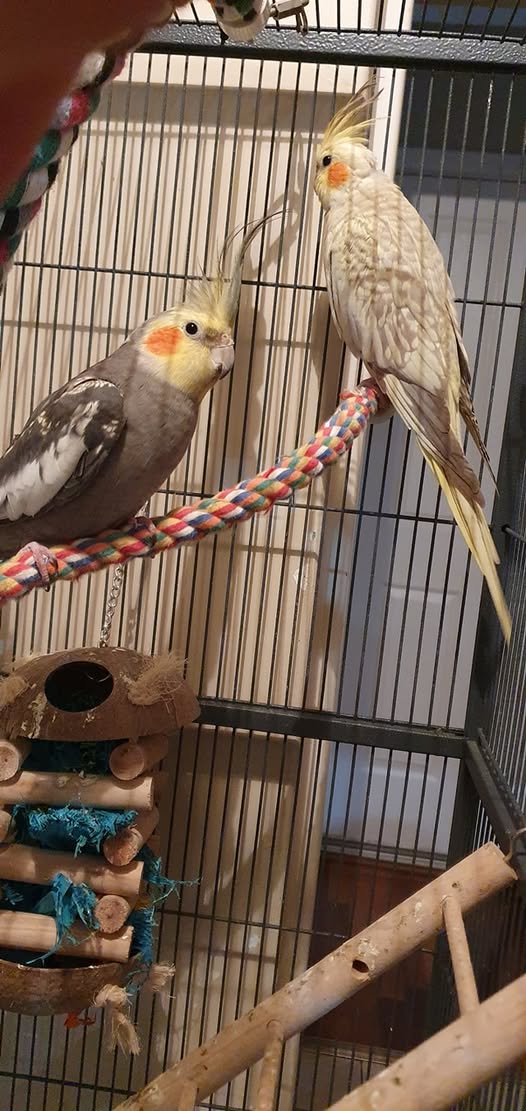
- How many toys are in the cage? Two or three is not enough for a cockatiel. They need a variety — foraging toys, shreddable toys, swings, ladders, mirrors.
- How often are the toys rotated? The same toys for months become invisible to a cockatiel. Rotate weekly.
- How much out-of-cage time does the bird get? Cockatiels need significant time outside the cage every day — minimum 2 hours, ideally more.
- How much daily interaction with you? A cockatiel that gets 5 minutes a day is not getting enough.
- Is the bird alone? Single cockatiels need much more human interaction than paired birds.
What to do
This is the cause where owners can make the biggest difference. Add more toys, rotate them weekly, introduce foraging activities (hide millet sprays in shreddable cardboard, scatter food in bedding so the bird has to find it), increase out-of-cage time, and genuinely engage with the bird daily.
If you cannot give the bird more time, the next-best option is a companion. Two cockatiels together provide each other with social stimulation that helps prevent boredom-related plucking. They are not a substitute for human interaction, but they help significantly.
Cause 2: Stress And Environmental Issues
This is the second most common cause I see, and it is the one most owners overlook. Cockatiels are sensitive observational birds, and they notice everything around them. A change that seems trivial to us — new furniture, a new pet, building work nearby, even a new curtain pattern visible from the cage — can be genuinely distressing for a cockatiel.
The classic sign of stress-related plucking is that you can usually identify a specific change that happened around the time the plucking started. Once an owner thinks back carefully, the cause often becomes obvious.
- New pet in the home? Particularly cats or dogs the bird can see, hear, or smell.
- Cage moved or rearranged? Even small changes can unsettle a cockatiel for weeks.
- New baby or child? Sudden loud noises and unpredictable movement.
- Different working hours? Routine changes affect cockatiels significantly.
- Construction or renovation? Loud noises and disruption.
- Other birds visible through the window? Wild birds at a feeder can be stressful.
- Bird left alone for long periods? Sudden change from constant company to isolation.
What to do
Detective work. Think back to when the plucking started, then think about what changed in the bird’s environment around that time. Once you have identified the stressor, the answer is usually to either remove it or help the bird adjust to it. Move the cage to a quieter area, cover part of the cage to provide a “safe” side, add a hide, give the bird time. Stress-based plucking usually improves within a few weeks once the cause is addressed.
Cause 3: Hormonal Plucking
This one catches owners off guard, and it is particularly common in female cockatiels though males do it too. Cockatiels go through hormonal cycles, usually triggered by increased light hours, warm temperatures, and what the bird perceives as breeding conditions. During these cycles, you can see a very specific kind of plucking.
Hormonal hens often pluck feathers from their chest, sometimes in fairly tidy patches, as if they are lining a nest that does not exist. Males may pluck for similar reasons during their hormonal phases. The plucking is concentrated, focused, and tied to specific times of year — typically spring and autumn in the UK.
This is not the same as boredom or stress plucking. It is a hormonal behaviour, and it requires a different fix. Importantly, if the bird is in a hormonal state that includes plucking, other problems can follow — chronic egg-laying in females being the most serious.
- Plucking concentrated on the chest, in a fairly defined patch
- Bird may act “broody” — sitting in corners, hiding, regurgitating food
- Mostly seen in spring and autumn as daylight hours change
- More common in females but does occur in males
- Egg-laying may follow in females, even without a male present
- Bird may be aggressive or territorial around the cage
What to do
The fix for hormonal plucking is to remove the triggers. Reduce light hours — a cockatiel should get no more than 10 to 12 hours of light per day during these triggering periods. Remove any nesting material or dark hiding spaces (boxes, dark corners, behind sofa cushions). Avoid stroking the back, which can trigger mating behaviour in females. Move the cage if it is somewhere that feels “nest-like.”
If a female is laying eggs, leave them in the cage until she loses interest — removing them often triggers more laying. Chronic egg-laying is a vet conversation, as it can deplete the bird’s calcium and cause serious health problems.
Cause 4: Medical Causes — Don’t Skip This One
I put this one fourth because it is less common than the first three, but I do not want anyone reading this to dismiss the possibility. A cockatiel that is plucking may have a genuine medical reason for doing so, and missing that diagnosis can have serious consequences.
The medical causes of cockatiel plucking I see most often are:
- Mites and lice — external parasites cause itching that drives the bird to pluck. Look for tiny moving specks on the skin or in the cage at night.
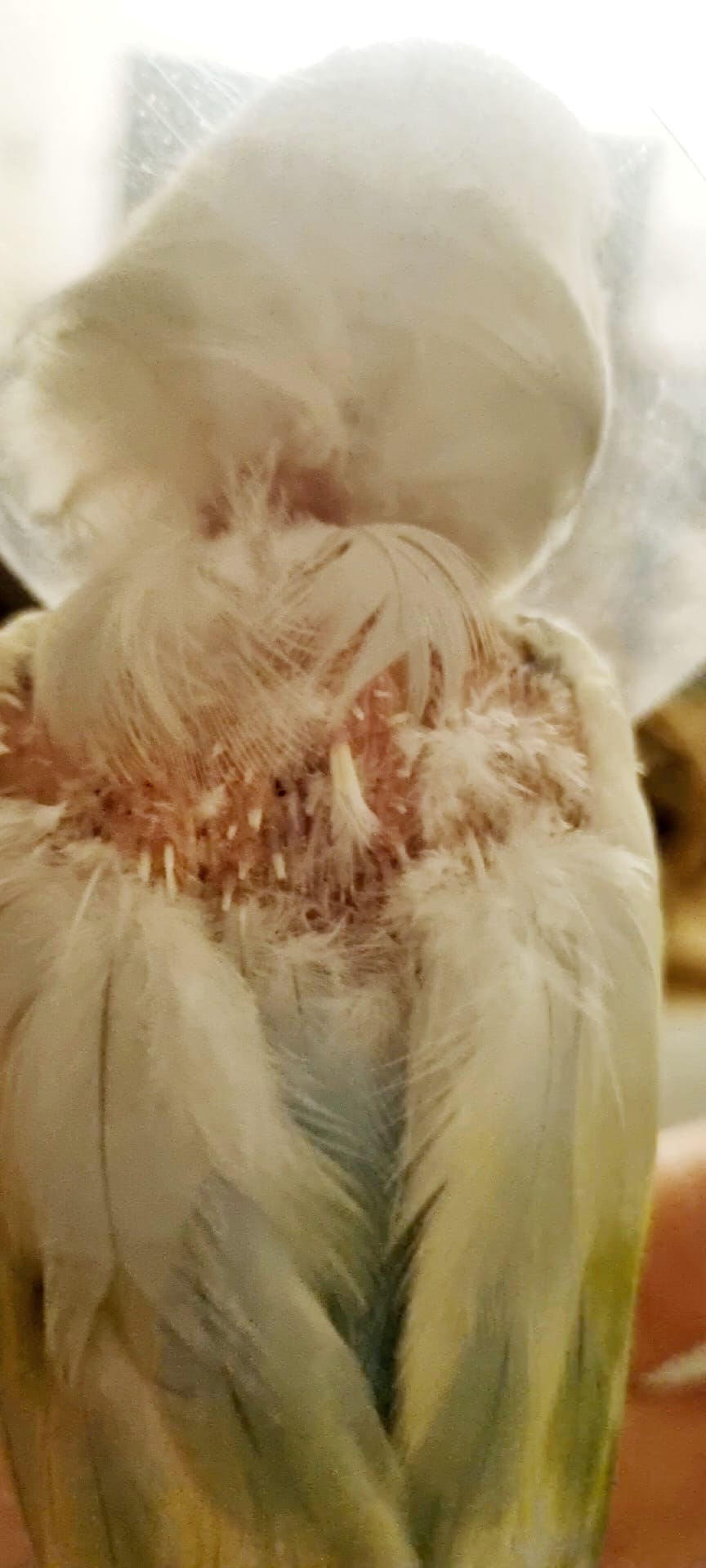
- Skin infections — bacterial or fungal, often secondary to other problems. Red, scabby, or weeping skin underneath plucked areas.
- Internal disease — liver disease particularly, often linked to poor diet, can cause feather problems and plucking.
- Allergies — cigarette smoke, scented candles, cleaning products, aerosols. Cockatiels are extraordinarily sensitive to airborne irritants.
- Pain — a cockatiel in pain from an internal problem may pluck at the area that hurts. Plucking concentrated in one specific spot is a red flag.
- Nutritional deficiency — vitamin A deficiency in particular affects skin and feather health, making the bird itchy and more likely to pluck.
When to see a vet
If you are seeing any of the following, please do not wait — get to an avian vet within a day or two.
- Plucking in a very specific, localised area (especially over the abdomen or one leg)
- Visible irritation, redness, scabs, or discharge on the skin
- The bird seems unwell in other ways — reduced eating, fluffed up, less active
- You can see anything moving on the bird or in the cage at night
- Plucking that came on suddenly and is progressing fast
- Bleeding or open wounds where feathers have been pulled
For more on the warning signs that any bird is unwell, our guide on hidden health signs in pet birds applies to cockatiels as much as budgies.
Cause 5: Diet Problems
This is one of the most overlooked causes of cockatiel plucking I see, and it is also one of the most fixable. A cockatiel on a poor diet — usually a seed-only mix — will eventually develop the kind of skin and feather problems that lead to plucking.
The single biggest issue is vitamin A deficiency. Cockatiels need vitamin A for proper skin and feather health. A bird that does not get enough develops dry, itchy skin and poor-quality feathers that come in damaged. The bird responds by trying to clean and groom — and the grooming escalates into plucking.
Beyond vitamin A, cockatiels need a varied diet that includes protein, calcium, omega fatty acids, and a range of minerals. Seed alone provides almost none of these properly. A bird on cheap seed for years gradually becomes deficient in multiple things, and feather problems are usually one of the first visible signs.
- A good quality cockatiel pellet — should form a significant part of the diet
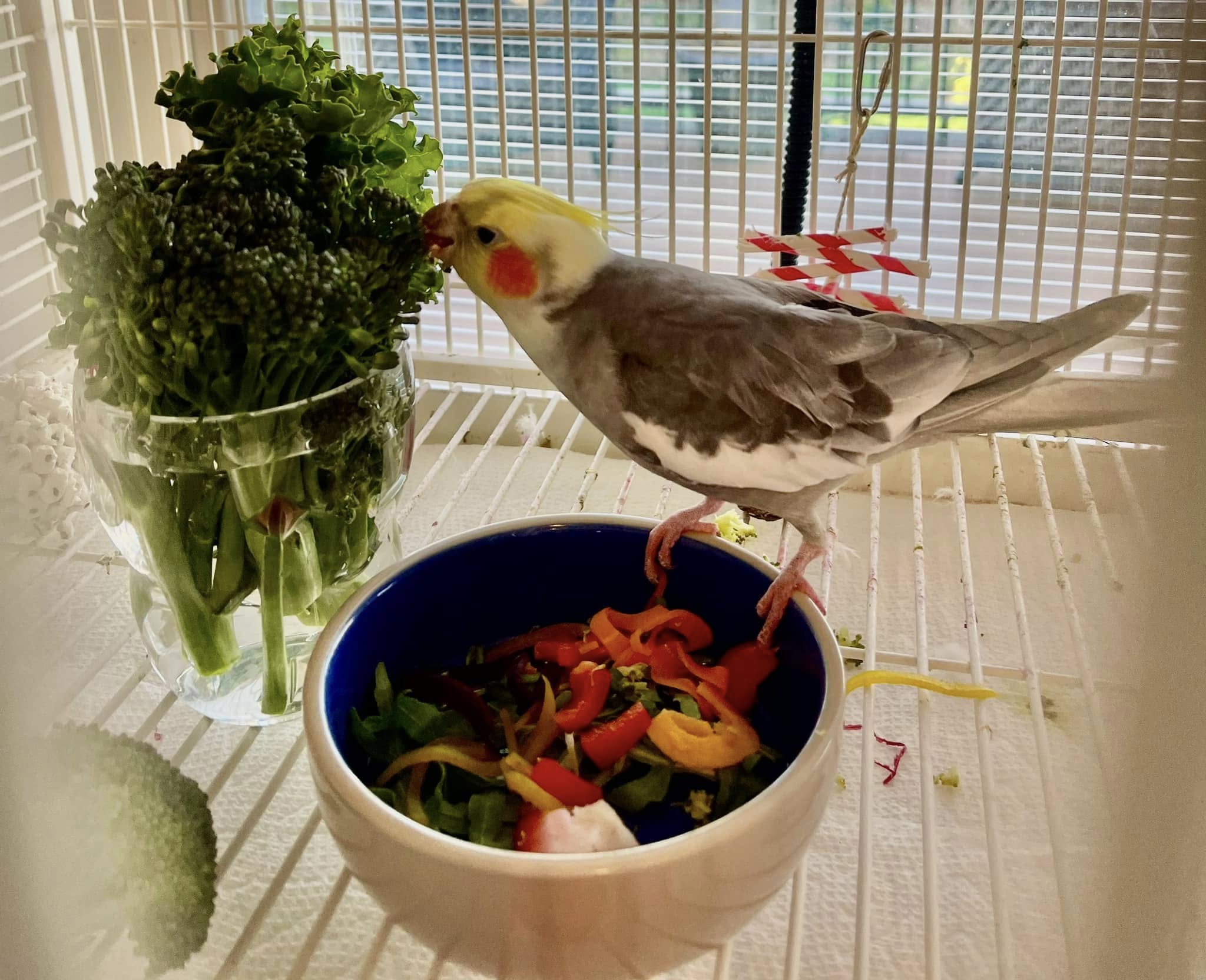
- Fresh vegetables daily — particularly orange and yellow ones (carrot, sweet potato, butternut squash) for vitamin A
- Leafy greens — kale, broccoli, dandelion, watercress
- Some seeds and grains — should be a smaller proportion of the diet, not the whole thing
- Cuttlefish bone — for calcium, available at all times
- Avoid avocado, chocolate, caffeine, salty foods — toxic to cockatiels
What to do
Improve the diet gradually. Sudden changes stress the bird, so introduce new foods slowly over a few weeks. If your cockatiel has been on seed-only for years, expect it to take several months of better feeding before feather quality improves. Diet improvements work, but they work slowly.
Cause 6: Habit And Long-Standing Behaviour
This is the one that is most difficult to fix, and it is the one I encounter most often with rescue cockatiels or birds that have been plucking for years. Once a cockatiel has been plucking for a long time, the behaviour becomes a habit — and habits in birds are remarkably hard to break.
A cockatiel that has been plucking for six months or more may continue plucking even after the original cause has been removed. The behaviour itself has become self-reinforcing. The bird is no longer plucking because of boredom, stress, or illness — it is plucking because plucking is what it does.
These are the cases where damage to the feather follicles can become permanent, and where some bald patches may never feather up again even after the behaviour stops.
What to do
Long-term plucking needs a combined approach — vet assessment to rule out medical causes, environmental enrichment to reduce boredom and stress, dietary improvements, and in some cases behavioural therapy from an avian behaviourist. Some birds improve significantly. Some birds always pluck. You may need to accept that you have a plucking bird and focus on keeping the rest of the bird’s life as good as possible.
Patience matters. So does realism. A bird that has been plucking for years is not going to recover overnight, and pushing too hard can make stress worse.
What I Ask Owners At The Counter
When someone walks in with a plucking cockatiel, I do not just diagnose and send them home. I have a proper conversation. Here is what that usually looks like.
- When did the plucking start?
Sudden onset usually points to stress or medical. Gradual onset over months usually points to boredom, diet, or habit. - Where on the body is the plucking?
Chest only — often hormonal. Chest and shoulders — usually behavioural. Specific localised spot — get to a vet. - How old is the bird and male or female?
Young birds tend to pluck from boredom. Females and older birds more likely to have hormonal issues. - What is the diet?
Honest answer please. Seed-only? Pellets? Fresh food? Diet history matters more than people think. - How much out-of-cage time and interaction?
Time alone in the cage is a major risk factor. - What has changed in the home recently?
New pet, new baby, moved house, new routine, building work? - Is the bird otherwise well?
Eating, chirping, active, normal weight? Or unwell-looking?
Five minutes of these questions usually narrows things down enough to give the owner a clear plan.
How Long Will The Feathers Take To Grow Back?
This is one of the most common follow-up questions I get, and the honest answer is — it depends.
If you identify and fix the cause, and the bird stops plucking, the feathers will start to grow back at the next moult. For a cockatiel, that usually means a few months. The new feathers come through as “pin feathers” first — little spikes that look uncomfortable — and then they unfurl into proper feathers.
If the bird keeps plucking, the feathers will not grow back. That is the simple truth. The follicles can get damaged by repeated plucking, and in chronic cases, some areas may never feather up again, even after the behaviour stops. This is why catching plucking early matters so much.
What Actually Works To Stop Plucking
After 35 years, I have a fairly clear sense of which interventions actually help and which are a waste of time and money. Let me be honest about both.
| Approach | Does it work? | Notes |
|---|---|---|
| More toys and enrichment | ✅ Often very effective | The single most useful intervention for boredom plucking. |
| Diet overhaul | ✅ Slow but reliable | Takes weeks to months to show in feather quality. |
| Reducing light hours | ✅ Effective for hormonal plucking | 10-12 hours of light maximum, dark cover at night. |
| Increasing out-of-cage time | ✅ Often very effective | Cockatiels need significant time outside the cage. |
| Getting a companion | ✅ Often helps | Provides social stimulation. Needs proper introduction. |
| Anti-plucking sprays | ❌ Usually no | Do not address the cause. Birds often habituate to them. |
| Plastic collars | ❌ Rarely | Stressful for the bird and often makes the underlying anxiety worse. |
| Ignoring it and hoping | ❌ Never works | Plucking does not resolve on its own. |
Preventing Plucking In The First Place
Honestly, if you set things up right from the start, the chance of your cockatiel developing a plucking problem is much lower. Here is the short version of what I tell new owners every week.
- Plenty of toys, rotated weekly — foraging, shreddable, swings, ladders. Boredom is the biggest single risk factor.
- Significant daily out-of-cage time — minimum 2 hours, ideally more
- Genuine daily interaction — not just walking past the cage
- Varied diet from day one — pellets, fresh vegetables, leafy greens, some seed
- Stable environment — consistent cage location, predictable routine
- Notice early signs — over-preening, slight bald patches. Fix it before it becomes habit.
- Consider a companion — paired cockatiels suffer less from boredom-related plucking
For more on whether cockatiels are the right pet for your situation in the first place, our honest pros and cons guide on cockatiels covers the realities of cockatiel ownership in UK homes.
Frequently Asked Questions
Why is my cockatiel pulling out its chest feathers?
Chest plucking is often hormonal, particularly in female cockatiels in spring and autumn. It can also be boredom-related, since the chest is the easiest area for the bird to reach. Look at the bird’s age, sex, and the timing to narrow it down.
Can a plucked cockatiel recover fully?
Yes, in most cases — if you identify and fix the cause early. Feathers grow back at the next moult, usually within a few months. Chronic long-term plucking can damage follicles permanently, so the earlier you act, the better the outcome.
Will my cockatiel’s feathers grow back if I leave it alone?
Only if the cause stops. Feather plucking does not resolve on its own — the bird will keep doing it unless something changes. You need to identify the cause and address it for the feathers to come back.
Are cockatiels more prone to plucking than budgies?
Yes, significantly. Cockatiels are larger, more intelligent, more socially complex birds, and they have higher needs for stimulation, interaction, and engagement. When those needs are not met, plucking is one of the most common ways they show it.
Is anti-plucking spray a good idea?
In my experience, no. Sprays do not address the underlying cause — they just try to make the feathers taste bad. Most cockatiels habituate to them within days, and the underlying problem (boredom, stress, illness) remains.
Where can I get honest cockatiel advice in Swindon?
Come and see us at Paradise Pets, Manor Garden Centre, Cheney Manor, Swindon SN2 2QJ. Or give us a ring on 01793 512400. The advice is free and I have been doing this for 35 years.
One Last Thing From Me
A plucking cockatiel is not a broken cockatiel. It is a bird whose owner has the chance to put something right — and the owners who do that, in my experience, end up with birds that recover and live happily for years afterwards.
The lady I mentioned at the start of this article? Her cockatiel had been at home alone all day for months while her work pattern had changed. The bird had moved from constant company to total isolation, and the plucking had started within a few weeks of the new routine. We worked through it together. She bought a companion bird, upgraded the cage, increased out-of-cage time at evenings and weekends, and added a range of foraging toys. Three months later she sent me a photo. The cockatiel’s feathers had not fully grown back yet, but the plucking had stopped, and the bird was happier than she had been in months.
That is the outcome you want. And the only way to get it is to act when you see the signs — work through the causes properly, fix what needs fixing, and give the bird time to recover.
If you are reading this with a worried bird at home, please do not panic, do not blame yourself, and do not wait too long. Come and see us, or get to a vet if anything looks medical. Most plucking is fixable, and the sooner you start, the better the outcome.
Worried About Your Cockatiel? Come And See Me
Bring your bird, bring a video, or just bring your questions. I will have a proper look and tell you honestly what I think. Free advice, no obligation. That is how we have done things for 35 years.