
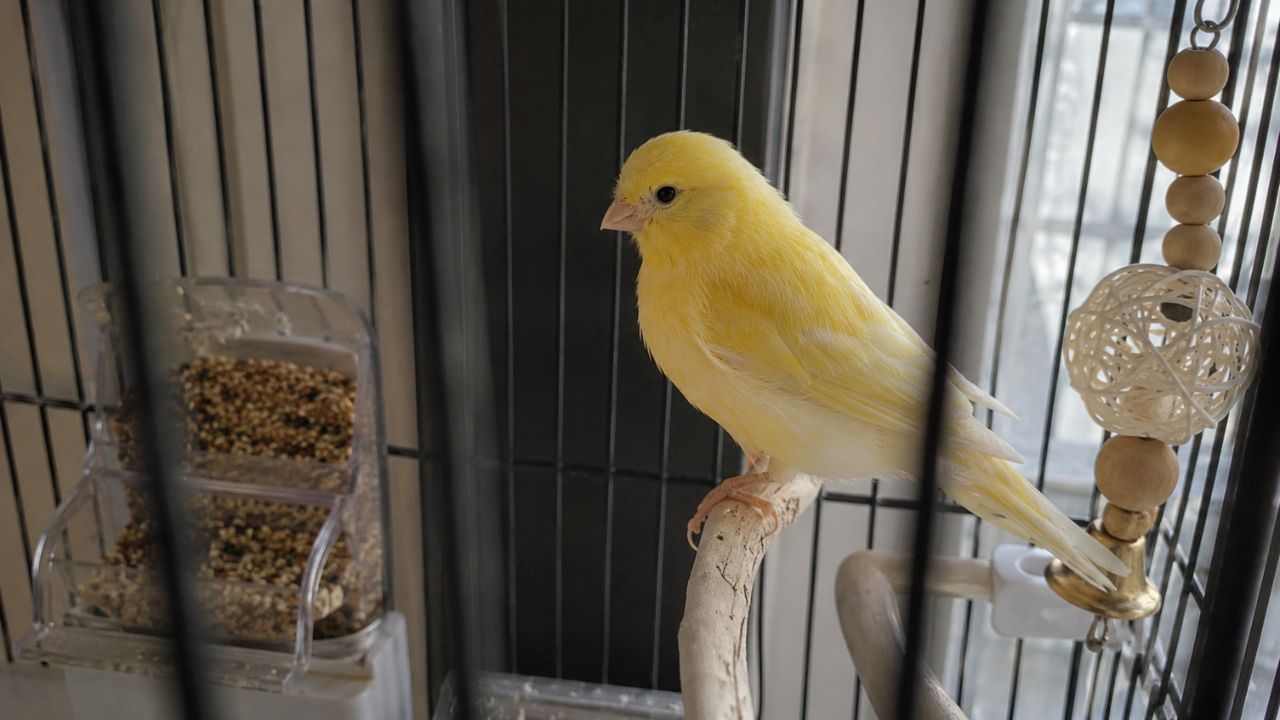

Neil has kept, bred, and sold canaries at Paradise Pets Swindon since 1988 — over 35 years of first-hand experience with these birds. In that time, he has answered more “why isn’t my canary singing anymore?” questions than he can count. This article is his honest, practical guide on what is really going on and what to do about it.
A gentleman came into the shop last Wednesday looking properly disappointed. He had bought a beautiful yellow canary from us about six months earlier — sang like a dream when he first took it home, he said, but had now been silent for nearly three weeks. “Neil,” he said, “I don’t understand. He was singing all the time, and now nothing. Have I done something wrong?”
He had not. And his canary was almost certainly not unwell. What he was experiencing was one of the most common — and most misunderstood — situations in canary keeping. A bird that sings beautifully, then suddenly goes quiet, and the owner has no idea why.
In 35 years of running Paradise Pets, I have had this conversation hundreds of times. And the honest truth is, when an owner tells me their canary has stopped singing, there is almost always a specific reason — and often a fixable one. Most of the time, it is not illness. Sometimes it is. Either way, the owner deserves a proper answer, not “oh, they do that sometimes.”
So let me walk you through what 35 years of selling canaries has taught me. Why they sing, why they stop, what is normal, what is not, and what you can do about it. This is the conversation I have at the counter every week, written down properly.
First Things First — Do You Actually Have A Male?
Before we go any further, I need to ask the most important question. Because if I am being completely honest, this is the single biggest cause of “my canary isn’t singing” conversations in my shop. And it has nothing to do with illness, stress, or anything wrong with the bird.
Only male canaries sing. Females do not. They make small chirping sounds, sometimes call notes, but they do not produce the full, melodic song that canaries are famous for. So if your canary is silent, the very first thing to establish is whether you actually have a male in the first place.
This sounds obvious, but it catches more new owners out than you might think. Canaries are very difficult to sex visually — males and females look identical in most varieties. Some pet shops sell birds as “definitely male” when they cannot actually be sure. Some sell young birds before their gender can be confidently identified. The result is that plenty of UK owners end up with a hen, paid a male price, and wait months for songs that are never going to come.
- Males sing — the full, sustained, melodic song. Females do not.
- Young males may not start singing until they are 4 to 6 months old
- If you have heard your bird sing properly at any point, you have a male
- If you have never heard singing in 6+ months, you may have a female
- DNA sexing is the only 100% reliable way to confirm — a vet can arrange this from a feather sample
For the gentleman I mentioned at the start — yes, his bird was a confirmed male, because it had been singing for months. So that ruled out the simplest explanation. We moved on to the others.
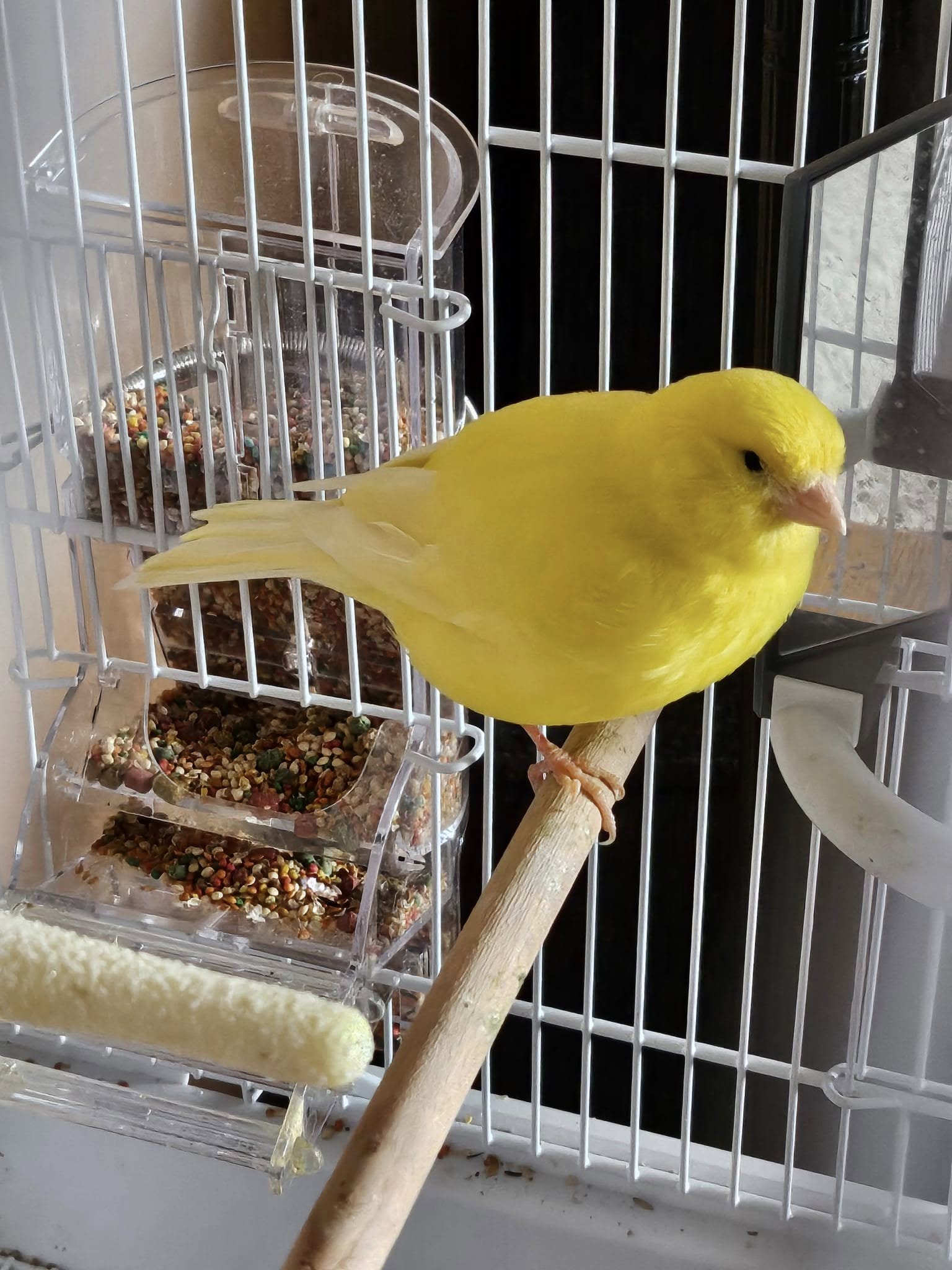
Why Canaries Sing In The First Place
To understand why they stop, you need to understand why they sing. And this is where most owners get it wrong. They think singing is just something canaries “do” — like a happy noise, or showing they are content. It is not.
Male canaries sing for two main reasons. The first is to attract a mate. The second is to defend their territory. Both of those drives are hormonally controlled — meaning they go up and down depending on the time of year, daylight hours, the bird’s hormonal cycle, and what is happening in the environment around them.
This is the key thing to understand. Canary song is not a constant. It is a breeding behaviour. So when the conditions are right for breeding — long days, warm weather, plenty of food, hormonal peak — the canary sings beautifully. When conditions shift — short days, cold weather, moult, stress, illness, age — the singing reduces or stops altogether.
Once you understand that, the question is not really “why has my canary stopped singing?” The real question is “what has changed in the bird’s biology or environment?”
The 6 Main Reasons Canaries Stop Singing
After 35 years, I can usually work out why a canary has gone quiet within a few minutes of asking the owner some questions. Here are the six most common causes I see in the shop, in roughly the order I encounter them.
Cause 1: The Annual Moult — Most Common Reason
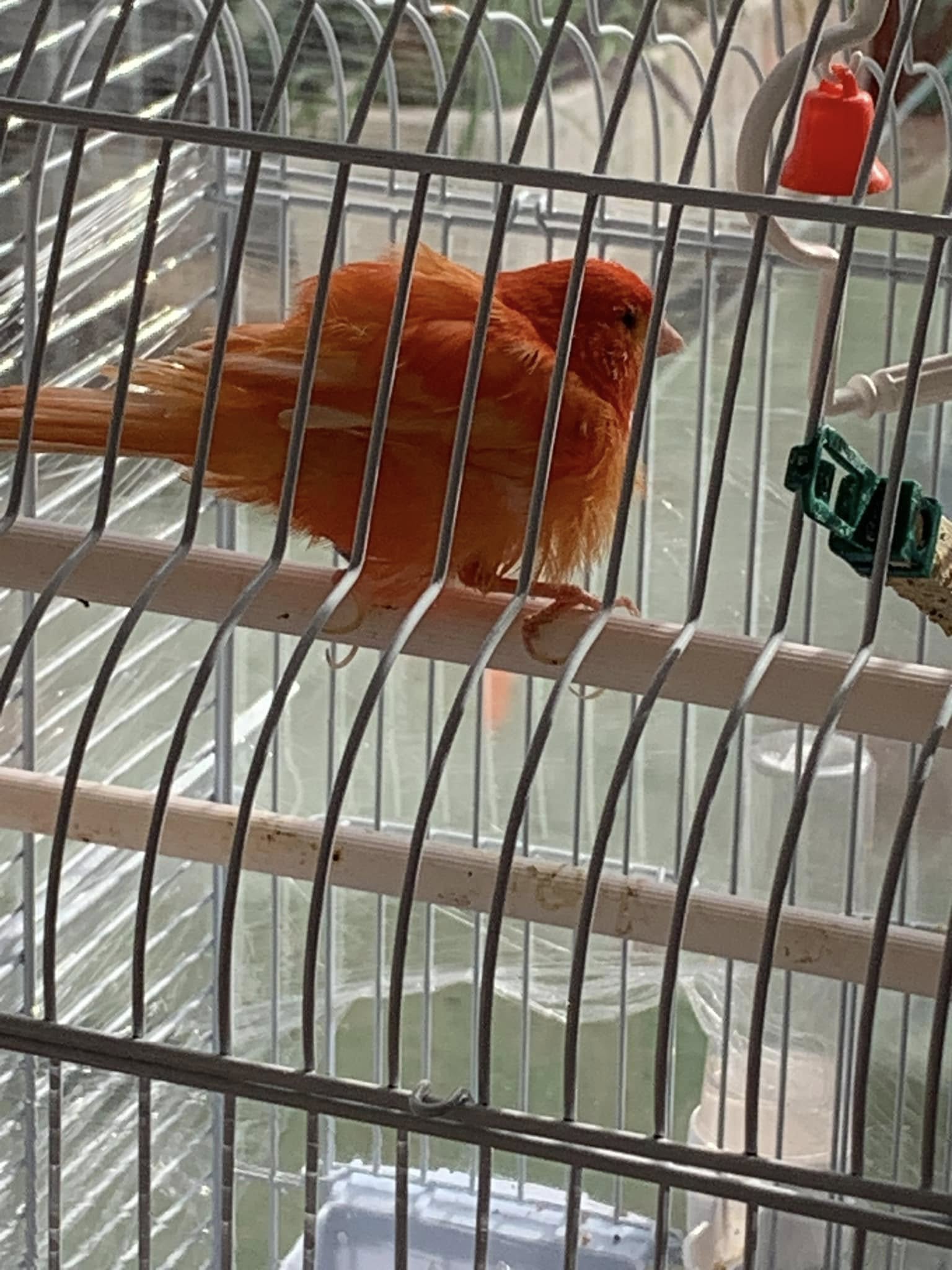
This is by far the most common reason canaries stop singing, and it catches most new owners completely by surprise. Every canary moults — usually once a year, typically in late summer or early autumn in the UK. During the moult, the bird sheds and replaces its feathers, and the energy demand on the body is enormous.
While moulting, almost all canaries stop singing entirely. They go quiet, they look a bit scruffy, sometimes they sleep more than usual, and they can seem generally subdued. This is completely normal. The bird is not unwell. It is just putting all its energy into growing new feathers, and singing — which requires significant energy — gets paused.
The moult typically lasts 6 to 8 weeks. Some birds finish faster, some take longer. Once the moult is complete and the new feathers are fully grown in, the singing usually returns. Sometimes it takes another few weeks after the moult ends for full song to come back, as the bird’s hormones need to recover.
- Feathers in the bottom of the cage — old feathers being shed
- Pin feathers visible — small spiky new feathers coming through
- Bird may look slightly scruffy or uneven
- Reduced activity and singing
- Increased appetite — moulting takes energy
- Late summer to early autumn timing in the UK
What to do
Honestly, nothing — just support the bird through it. Increase protein in the diet (a small amount of egg food helps), keep stress to a minimum, ensure the temperature is stable, and let the bird rest. Singing will return once the moult is finished. If your canary stopped singing in August or September, there is a very good chance moult is the answer.
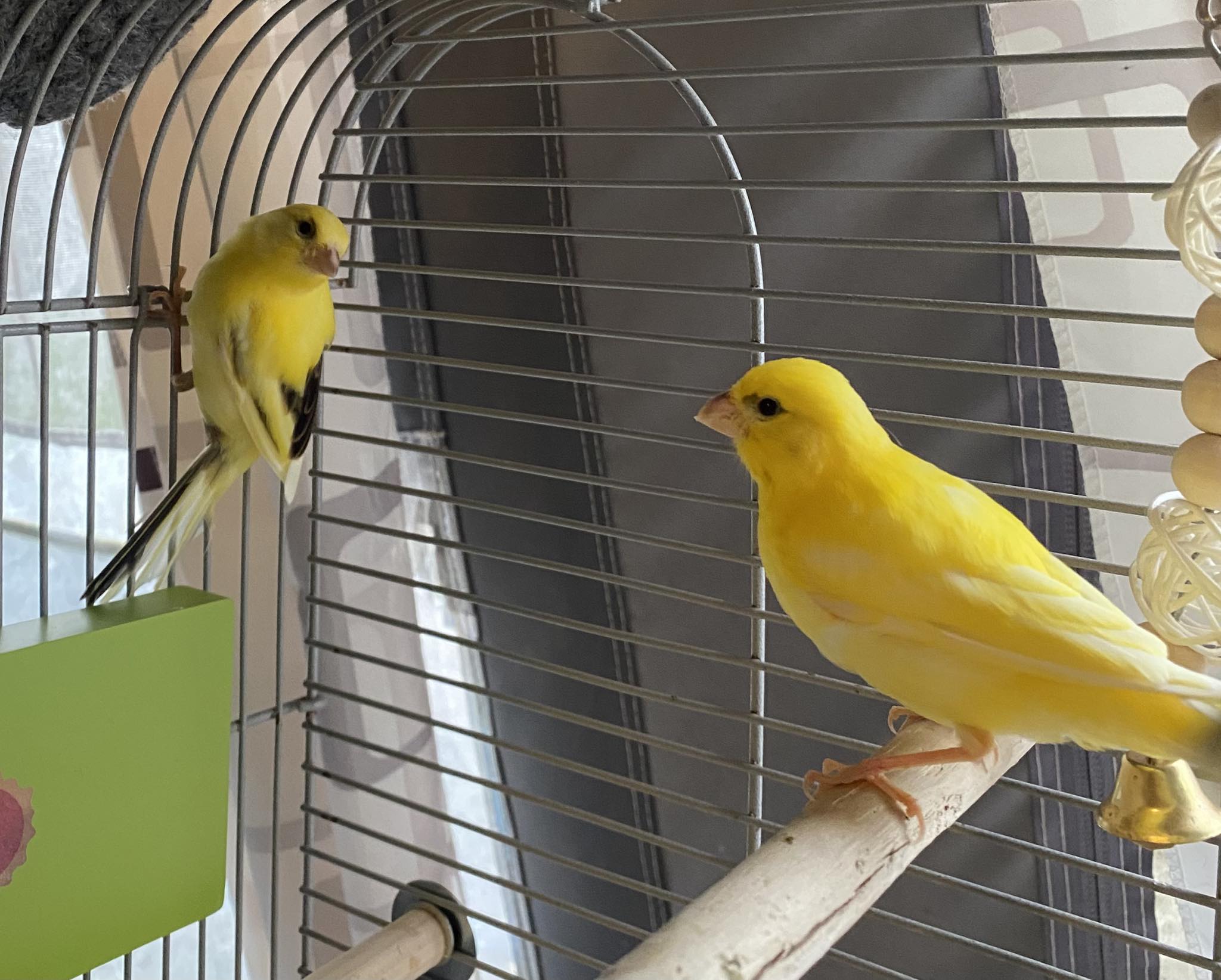
Cause 2: Light Hours Have Changed
This is the one most owners do not realise has anything to do with their canary. Canaries are extremely sensitive to daylight hours — and in the UK, daylight hours change dramatically through the year.
Male canaries sing most when daylight hours are long — typically 12 to 14 hours per day. This triggers the hormonal cycle that drives singing. When daylight shortens — autumn and winter in the UK — the hormonal drive reduces, and singing reduces or stops with it.
If your canary stopped singing as the days got shorter, that is probably your answer. Equally, if you keep the bird in a room that gets dark quickly or far from natural light, that can have the same effect even in summer.
What to do
You have two options. Either let the natural cycle run — your bird will start singing again as days lengthen in late winter and spring. Or use artificial lighting to extend daylight hours. A good full-spectrum bird light, set on a timer to give 12 to 14 hours of light per day, can keep a canary singing through the UK winter.
A word of caution though — pushing a bird hormonally year-round is not always healthy. Some quiet months are natural and probably better for the bird in the long run.
Cause 3: Recent Move Or Environmental Change
This is the one that explains most “my new canary has stopped singing” situations. When a canary is moved to a new home, exposed to new sounds, has its cage moved, or experiences any significant change in its environment, it often stops singing for days or weeks while it settles.
Sometimes the trigger is obvious — the bird went silent the day you brought it home, or the day you moved house. Sometimes it is more subtle. A new pet in the room, building work happening nearby, a different routine in the household, even a change in furniture position around the cage.
Canaries are observant birds, and they notice everything. A bird that feels its environment is unstable will not sing — singing makes them vulnerable, and a stressed canary does not advertise its location.
- Recent purchase or rehoming? New canaries often stay quiet for 2-4 weeks while settling in.
- Cage moved or rearranged? Even small changes can unsettle a bird for days.
- New pet in the home? Cats and dogs visible from the cage are major stressors.
- Building work or loud noise nearby? Sustained noise stress silences canaries quickly.
- Changes in household routine? Working from home, new family member, anything different.
- Cage placement changed? Near a draught, a window, a heat source, or a busy doorway.
What to do
Identify the change if you can, and either remove it or give the bird time to adjust. Most environmental stress resolves within 2 to 4 weeks once the bird settles. Provide a calm, consistent environment with a stable cage location, regular routine, and minimal disturbance.
For newly purchased canaries, do not expect singing immediately. Give the bird at least 4 weeks to settle in before worrying. Many UK owners panic in the first fortnight, but quiet is normal during this adjustment period.
Cause 4: Diet Problems Affecting Voice
This is one I see more often than I would like. A canary on the wrong diet — usually a cheap seed mix as the only food — gradually loses condition, and singing is one of the first things to go.
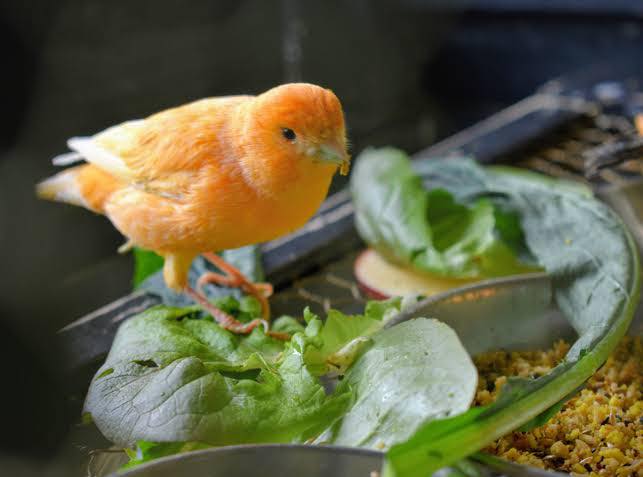
Canaries need more than just seed. They need a varied diet that includes good quality seed mix, fresh greens (kale, dandelion, broccoli leaves), occasional egg food for protein, a source of vitamin A (carrot, sweet potato), and a cuttlefish bone for calcium. A bird on seed-only diet for months or years will not have the energy or hormonal balance to sing properly.
Beyond that, some specific deficiencies hit singing particularly hard. Lack of vitamin A is the most common — it affects the bird’s voice directly. Lack of protein during moult prevents proper feather regrowth and delays the return of song. Lack of calcium and minerals can cause general weakness.
- Good quality canary seed mix — the foundation, but never the only food
- Fresh greens daily — kale, dandelion leaves, broccoli, watercress
- Egg food — especially during moult and breeding season
- Vitamin A sources — grated carrot, sweet potato, leafy greens
- Cuttlefish bone — for calcium, available in the cage at all times
- Soaked seed or sprouts — easier to digest, more nutritious
What to do
Improve the diet gradually. Sudden changes can stress a canary, so introduce new foods slowly over a couple of weeks. If your bird has been on seed-only for a while, expect it to take a month or two of better feeding before singing returns. Diet improvements work, but they work slowly.
Cause 5: Stress And Cage Issues
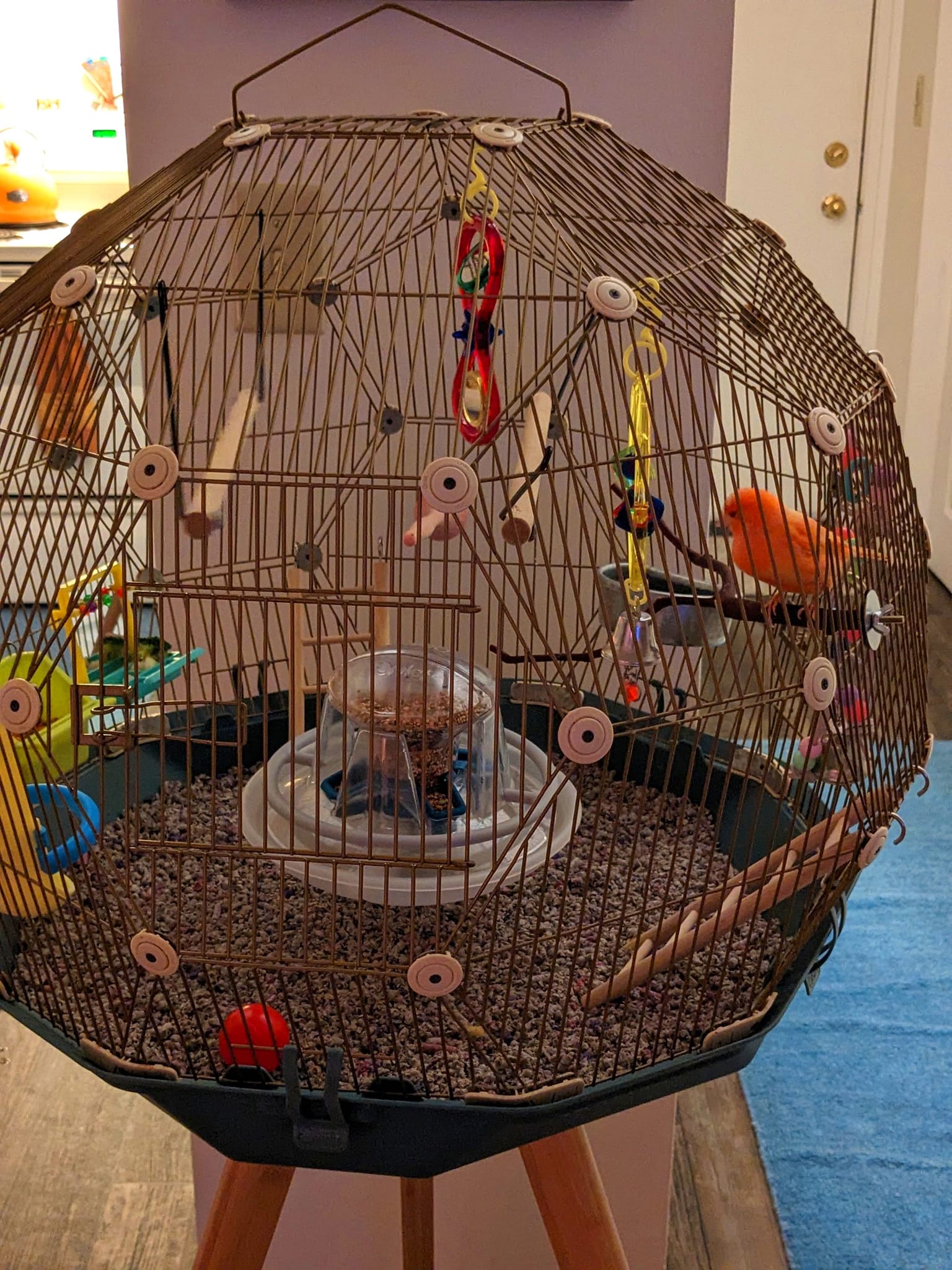
Canaries are sensitive birds, and chronic stress is one of the silent killers of song. Sometimes the stress is obvious — a noisy household, frequent disturbance, another aggressive bird in a shared cage. Sometimes it is more subtle and harder to spot.
The most common cage-related stressors I see in the shop:
- Cage too small — canaries need horizontal flight space, not tall narrow cages
- Too many birds together — males will compete and the dominant one suppresses others
- Cage in a busy area — high-traffic spots are stressful
- Direct sunlight or draughts — temperature stress affects everything
- Other male canaries within earshot — sometimes triggers, sometimes silences
- Lack of cover — canaries need places to feel hidden
What to do
Audit the cage setup. Move it somewhere quieter if needed. Make sure the cage is wide enough for horizontal flight — at least 60cm wide for a single canary, larger for pairs. If you have multiple males together, consider separating them. Provide some cover or partial shade, especially during the moult.
Cause 6: Illness
This is the cause I list last because it is less common than the first five — but it does need to be considered, especially if your canary has stopped singing alongside other changes.
A canary that has gone quiet AND is showing other signs of illness is a different situation entirely. Watch for these red flags:
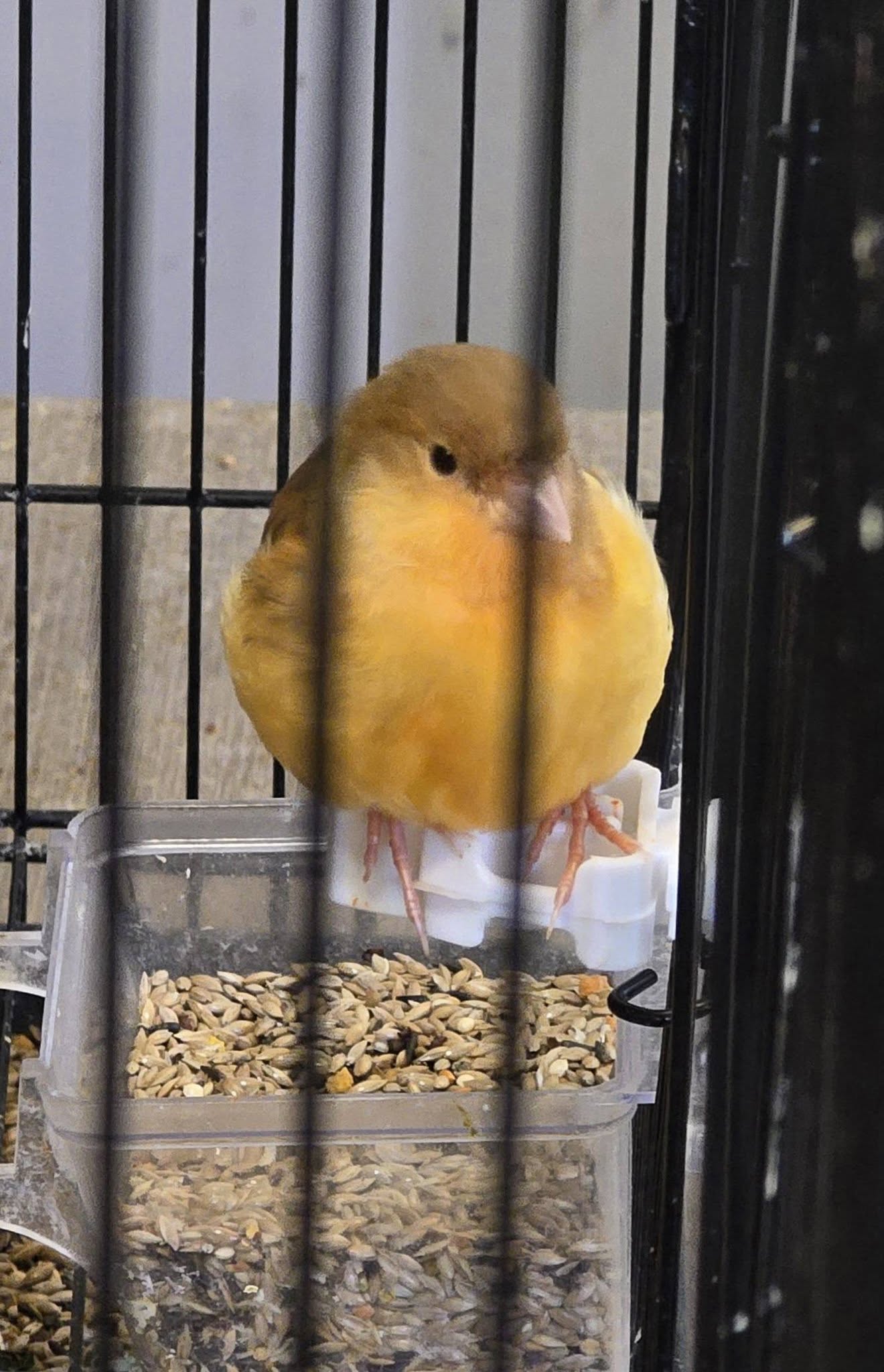
- Fluffed up appearance — feathers puffed out, looking round
- Reduced eating or drinking
- Sleeping during the day with eyes half-closed
- Visible discharge from nose or eyes
- Laboured or noisy breathing
- Sitting on the cage floor
- Weight loss visible through the breast bone
- Diarrhoea or unusual droppings
What to do
This is an avian vet visit, ideally within a day or two. A silent canary on its own is rarely an emergency, but a silent canary that is also unwell is a different story. Common canary illnesses include respiratory infections, parasitic infections (air sac mites can directly damage the voice), and general systemic problems. Catching them early makes a big difference.
For more on the early signs of an unwell pet bird, our guide on hidden health signs in budgies applies broadly to canaries too.
What I Check When An Owner Brings A Silent Canary In
When an owner walks in worried that their canary has stopped singing, I do not just guess. There is a process I work through. Here is what it looks like.
- Has the bird ever sung properly?
If yes, it is definitely male, and we are dealing with a change. If no, possibility of female or very young male still to come into song. - How long has it been silent?
A few days is rarely concerning. A few weeks is worth investigating. Months is significant. - What time of year did it stop?
Late summer / early autumn = likely moult. Winter onset = likely light hours. Spring or summer onset = look at environment or health. - Are there any other changes in the bird?
Eating well? Active? Bright-eyed? Or signs of illness? - Has anything changed in the home recently?
New pet, new routine, moved house, building work, new family member, cage moved? - What is the diet?
Seed only? Pellets? Fresh greens? Egg food? Diet history matters. - Where is the cage placed?
Light, temperature, draughts, traffic, other birds nearby — all relevant.
Five minutes of these questions usually narrows things down enough to give the owner a clear plan.
How To Encourage A Canary To Sing Again
Right — if you have established your bird is healthy, male, and not in moult, here is what actually works to bring the song back.
| Approach | Does it work? | Notes |
|---|---|---|
| Improving diet | ✅ Yes, reliably | Slow but effective. Allow 4-8 weeks for full effect. |
| Extending light hours | ✅ Yes, particularly in winter | Full-spectrum light on a timer, 12-14 hours daily. |
| Reducing stress | ✅ Yes | Quieter location, consistent routine, less disturbance. |
| Playing canary song recordings | ✅ Sometimes | Can encourage singing — but use sparingly, not constantly. |
| Getting a hen nearby (visible) | ✅ Often very effective | Triggers hormonal response. Risk of frustration if no pairing. |
| Cage cover at night | ✅ Helps reduce stress | Proper darkness for sleep is genuinely important. |
| Egg food during moult | ✅ Speeds moult recovery | Helps singing return faster after moult ends. |
| Singing supplements / drops | ⚠️ Limited evidence | Some help if there is a deficiency, otherwise placebo at best. |
What I Tell Worried Canary Owners At The Counter
Most of the time, a canary that has stopped singing is not unwell. It is responding to something — moult, light, stress, diet, environment. The fix is usually simple once you identify what is going on.
The gentleman I mentioned at the start of this article? His canary had stopped singing in early September. We worked through the questions, and the answer was obvious — moult. He had not realised canaries went silent during the moult. I told him to add some egg food, keep things calm, and wait. Six weeks later, he came in beaming. The bird was singing better than ever.
That is the conversation I have at the counter most weeks. And the lesson, after 35 years, is that silence is information. Once you learn to read it, you stop worrying about every quiet week and start understanding what your bird actually needs.
When To See A Vet
Most cases of “my canary has stopped singing” do not need a vet visit. But there are situations where I would tell you straight — get to an avian vet within a day or two. These include:
- Bird is silent AND fluffed up, looking unwell
- Reduced eating, drinking, or weight loss visible
- Laboured breathing, wheezing, clicking sounds
- Discharge from nose or eyes
- Sleeping on the cage floor
- Sudden silence with no obvious trigger and other behavioural changes
- Symptoms developing over hours rather than days
For everything else — the gradual decline, the seasonal silence, the new bird that has not sung yet — come and have a chat with us. Bring a photo or short video if you can. We have been doing this for 35 years and we will help you work out what is going on.
Preventing The Silent Canary Problem
Most singing issues are preventable with the right setup from day one. Here is what I tell every new canary owner.
- Confirm you are buying a male — ask for one that has been heard singing, not just “sold as male”
- Give them a proper diet from day one — varied seed mix, fresh greens, egg food, vitamins
- Provide adequate light — 12 hours daily minimum, more in winter if you want consistent song
- Keep the cage in a calm location — not the kitchen, not next to a TV, not in direct sun
- Allow them to moult properly — don’t panic when singing stops in late summer
- Watch for early signs of illness — a silent bird that is also fluffed up needs a vet
- Don’t keep multiple competing males in close earshot — sometimes works, sometimes silences both
Frequently Asked Questions
Why did my canary suddenly stop singing?
The most common cause is the annual moult, typically in late summer or autumn. Other common causes are reduced daylight hours, environmental stress, diet problems, or in some cases illness. Look at what has changed recently — biology, environment, or routine.
How long does the canary moult last?
Usually 6 to 8 weeks in UK conditions. Some birds finish faster, some take longer. Singing typically returns a few weeks after the moult is fully complete, once feathers have regrown and the bird’s hormonal cycle stabilises.
Do female canaries sing?
No, not the full melodic song that males produce. Females make small chirps and call notes but cannot produce the sustained song that canaries are famous for. If you have never heard your canary sing properly, it may be female.
At what age do male canaries start singing?
Typically 4 to 6 months old. Some start earlier, some later. A young male should be in full song by 6 to 7 months. If you have a young bird that has not started singing by 8+ months, consider the possibility that it may be female.
Can stress make a canary stop singing?
Yes, very easily. Canaries are sensitive to environmental changes — new pets, moved cage, building noise, household routine changes. Stress-related silence usually resolves within 2 to 4 weeks of removing the stressor or letting the bird adjust.
Will artificial light make my canary sing in winter?
Often yes. Setting a full-spectrum bird light on a timer to provide 12 to 14 hours of light per day can maintain singing through the UK winter. However, some quiet months may actually be better for the bird’s long-term health.
Where can I get honest canary advice in Swindon?
Come and see us at Paradise Pets, Manor Garden Centre, Cheney Manor, Swindon SN2 2QJ. Or give us a ring on 01793 512400. The advice is free and I have been doing this for 35 years.
One Last Thing From Me
A canary that has stopped singing is one of the most worrying things for a new owner. You bought the bird for the song, after all. When it goes quiet, it feels like something is wrong — or worse, like you are doing something wrong.
But in 35 years of selling canaries, most silent birds I see are not unwell, not in trouble, and not failing their owners. They are doing what canaries do — responding to their environment, their hormones, their season, their stress, their diet. Once you understand canaries properly, the silence makes sense, and the fix usually becomes obvious.
If you are sitting at home worried about a silent bird, work through the questions in this article. Most owners find their answer in the first five minutes of doing so. And if you cannot work it out, come and see us. We will sit down with you, ask the right questions, and help you put it right.
That is how we have done things at Paradise Pets for 35 years. And I would much rather help you work out a moulting canary than have you panic for weeks unnecessarily.
Worried About Your Silent Canary? Come And See Me
Bring a photo, a short video, or just your questions. I will have a proper look and tell you honestly what I think. Free advice, no obligation. That is how we have done things for 35 years.