
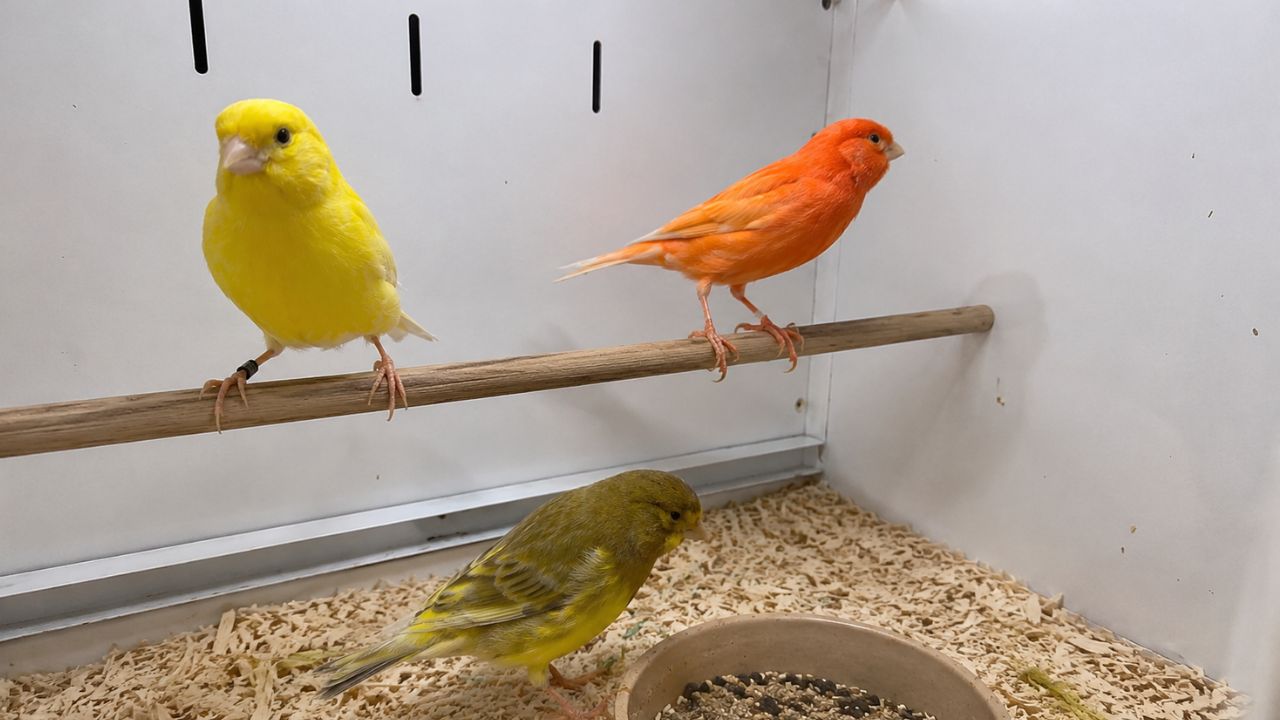

Neil has kept, bred, and sold canaries at Paradise Pets Swindon since 1988 — over 35 years of first-hand experience with these birds. In that time, he has watched the same misunderstandings repeat themselves, year after year. This article is his attempt to set the record straight before you buy, not after.
People come in for a canary and they already have a picture in their mind. A small yellow bird in a cage, singing beautifully, requiring very little beyond a seed top-up every few days and a water change on Tuesdays. Something that adds warmth and sound to a room without demanding much in return.
That picture is not entirely wrong. Canaries are genuinely one of the more manageable birds to keep well. They do not need the same level of daily interaction as budgies or cockatiels. They do not require out-of-cage time in the same way. They are not going to wake you up with contact calls at dawn.
But the picture is incomplete. And the gaps in it are exactly where most new canary owners run into trouble.
After 35 years of selling canaries at Paradise Pets, I have a fairly clear sense of what those gaps are. This article is my attempt to fill them — so that the canary you buy goes home to a setup that actually suits it, and stays healthy and singing for the years it deserves.
What Canaries Actually Are
Canaries are domesticated finches, descended from wild canaries native to the Canary Islands, Madeira, and the Azores. They have been kept as cage birds in Europe for over five hundred years — longer than almost any other pet bird — and in that time, selective breeding has produced an enormous variety of types, from the classic song canaries bred specifically for vocal quality, to colour canaries developed for plumage, to type canaries bred for specific body shapes and feather characteristics.
In the wild, canaries live in loose flocks in open woodland and scrubland. They are active, busy birds — foraging, flying, and interacting constantly. They are not solitary animals in the way that, say, a Syrian hamster is solitary. But they are also not as intensely social as budgies, who genuinely suffer without companionship. A canary kept alone, in an appropriate cage with sufficient space and stimulation, can live a perfectly contented life. That is one of the things that makes them well-suited to certain households.
The lifespan catches people off guard more than almost anything else. Eight to ten years is not unusual for a well-kept canary. Some live longer. That is a meaningful commitment — not in terms of daily demands, but in terms of duration. It is worth thinking about honestly before you buy.
The Singing — What People Assume vs What Is Actually True
Most people buy canaries because they want a singing bird. That is a perfectly good reason. But there are a few things about canary song that are worth understanding before you make your decision.
Only males sing the full song
Female canaries vocalise — they produce chirps, calls, and short phrases — but they do not sing in the way that males do. The full, rolling, complex song that people associate with canaries comes exclusively from males. This is not a minor difference. If you want a singing canary, you need a male canary. Full stop.
Sexing canaries is not always straightforward, particularly in young birds. At Paradise Pets, we are always honest about this. If a bird is definitively male, we will tell you. If there is uncertainty, we will tell you that too. Any shop that guarantees the sex of a very young canary without being able to demonstrate it is overstating their confidence.
Canaries moult — and stop singing during it
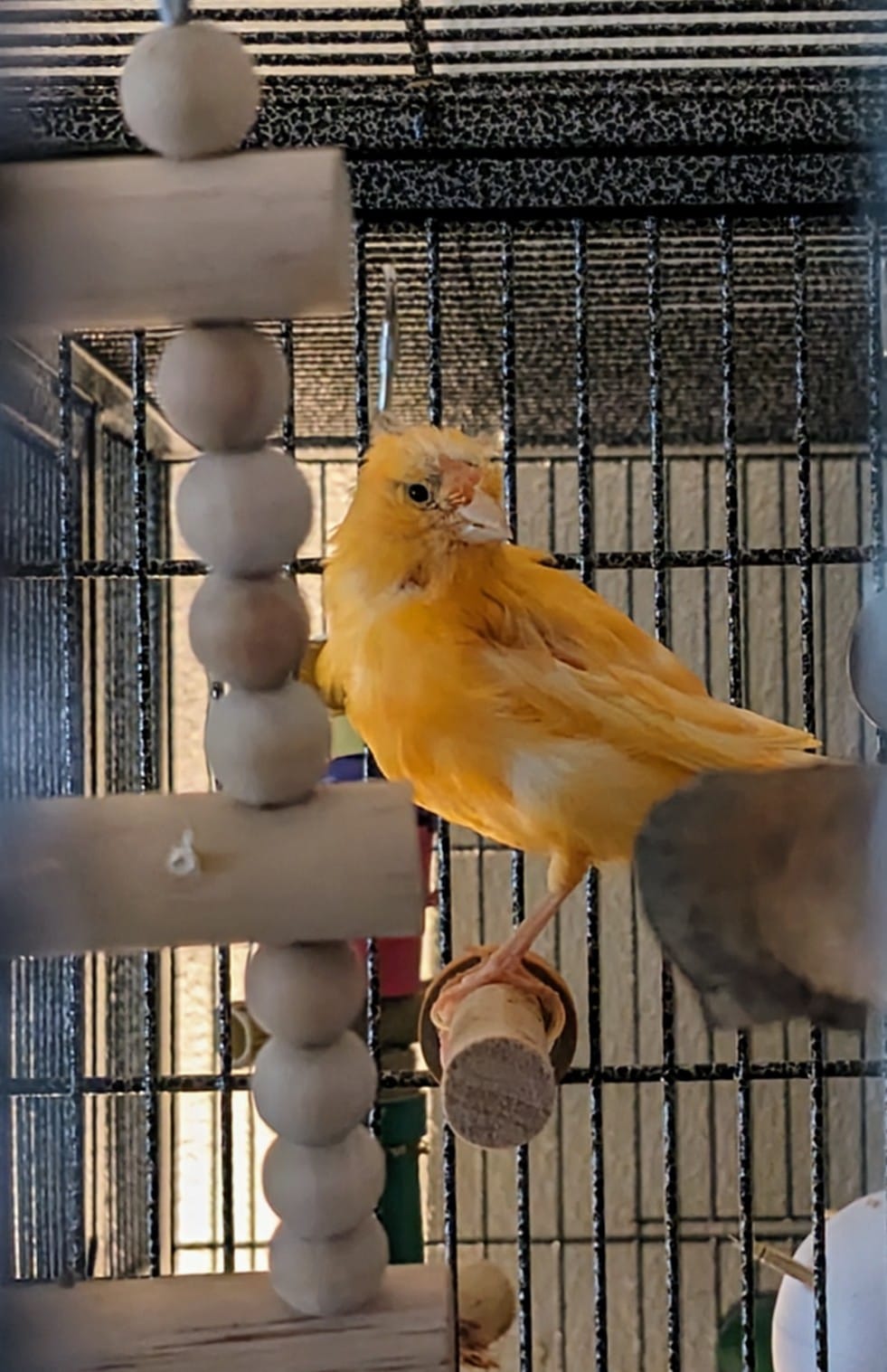
This is the one that surprises new owners most reliably. Every canary goes through an annual moult — typically in late summer and early autumn — during which it replaces its feathers. During the moult, males dramatically reduce or completely stop singing. This is normal, temporary, and nothing to worry about. But if nobody told you this was going to happen, a singing canary that suddenly goes quiet can be alarming.
The moult lasts roughly six to eight weeks. During this period the bird needs extra protein in its diet — softfood, egg food, and additional greens — to support feather regrowth. Once the moult is complete, the male will begin singing again, often more strongly than before.
Canaries sing more in certain conditions
A canary that sings well does so because its environment encourages it. Consistent lighting — around twelve to fourteen hours of light per day, which in UK winters means a lamp on a timer — keeps the bird in good singing condition. A stable temperature. Minimal stress. Fresh food. Appropriate cage size. These things affect the quality and frequency of the song directly. A canary in a small, poorly placed cage on an inadequate diet will sing less — and less well — than the same bird in better conditions.
- “Any canary will sing” — Only males sing the full song. Females do not, regardless of how well they are kept.
- “My canary has gone quiet — something is wrong” — Usually, it is moulting. This is seasonal and normal. A canary that goes quiet in late summer is almost certainly moulting, not unwell.
- “Canaries don’t need much space” — They need enough horizontal space to actually fly between perches. A small, cramped cage produces a stressed bird that sings badly and lives less well.
- “You can keep a canary with budgies or finches” — I strongly advise against mixing species. Canaries can be bullied by budgies and may carry diseases that cross between species. Keep them separately.
- “Canaries don’t need fresh food — seed is enough” — Seed is the base, not the whole diet. Canaries need fresh greens, egg food, and grit regularly. A seed-only diet leads to nutritional deficiencies over time.
- “A canary is the perfect starter bird — they need almost nothing” — They are manageable, but they are not no-maintenance. Daily care is still required, and getting the setup right at the start makes a significant difference to the bird’s health and song quality.
The Housing Situation — What Canaries Actually Need
Canaries fly horizontally. They do not climb in the way that parrots or budgies do. This means the shape of the cage matters enormously — and the standard tall, narrow cages that look attractive in a living room are often exactly the wrong shape for a canary.
What a canary needs is length. The minimum I recommend for a single canary is a cage at least 60 to 75 centimetres long — long enough for the bird to take several wingbeats between perches. Height matters less. A long, lower cage is better than a tall, narrow one. If you can go longer, do.
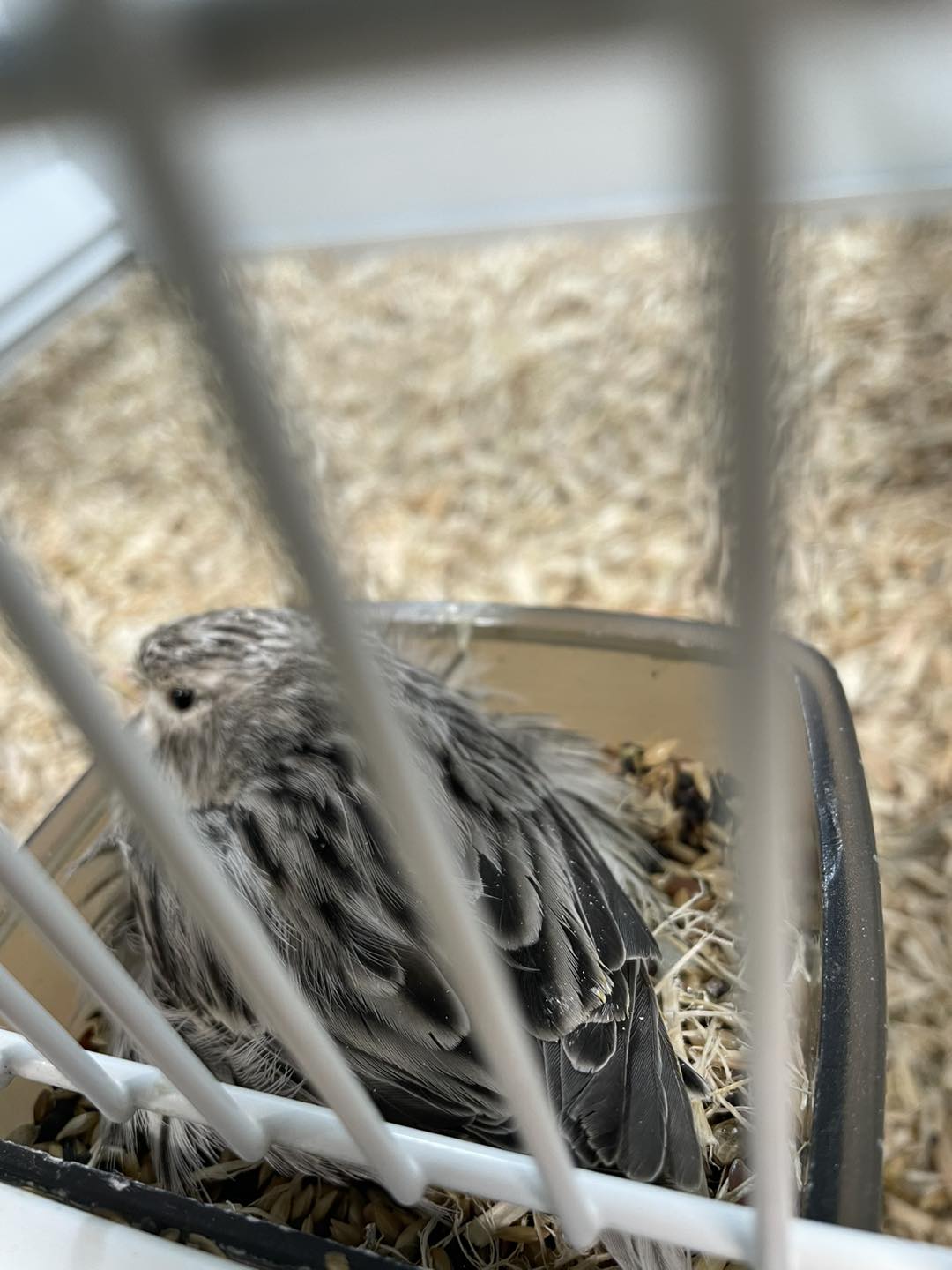
The bar spacing should be no more than 1.2 to 1.5 centimetres — narrow enough that the bird cannot get its head stuck, and narrow enough that it cannot push through. Round cages are not appropriate — they provide no corners for the bird to feel secure and are difficult to keep clean.
Perches
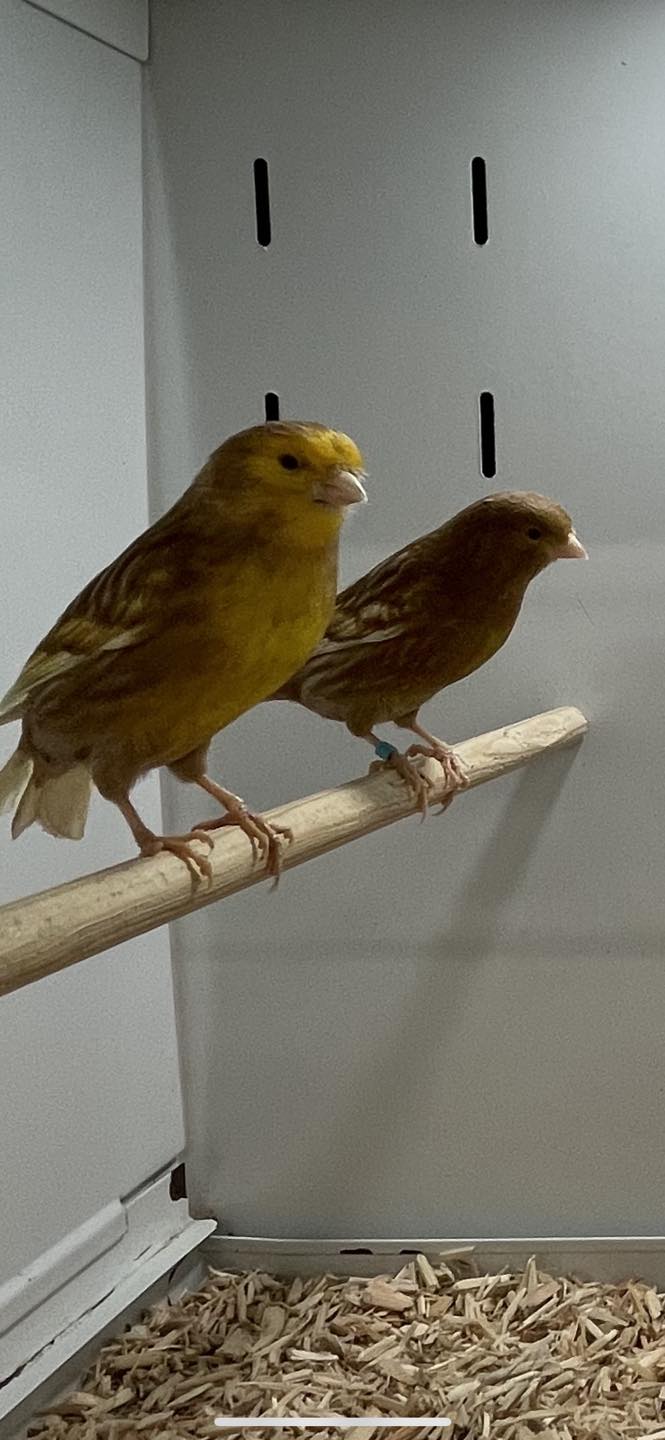
Canaries need perches of varying diameter to keep their feet healthy. Wooden perches of different thicknesses — natural branches are excellent — allow the foot muscles to work differently on each perch, preventing the pressure sores and foot problems that develop when a bird spends its whole life gripping the same diameter perch. Sandpaper perch covers, which are still sold in many shops, are not good for canary feet. Avoid them.
Cage placement
Canaries need consistent conditions. The cage should be in a draught-free position, away from direct sunlight for extended periods, away from the kitchen — cooking fumes, particularly from non-stick pans, can be fatal to birds — and at roughly eye level or slightly above. A cage on the floor makes the bird feel exposed and vulnerable. A cage where the bird can see the room without being in the middle of constant activity strikes the right balance.
Diet — More Important Than Most People Think
The core of a canary’s diet is a good quality canary seed mix — not budgie seed, which has different proportions. Canary seed mixes typically contain canary grass seed, rape seed, and various other small seeds in appropriate ratios. This forms roughly sixty to seventy percent of what the bird eats.
The rest matters more than most new owners realise.
Egg food and softfood
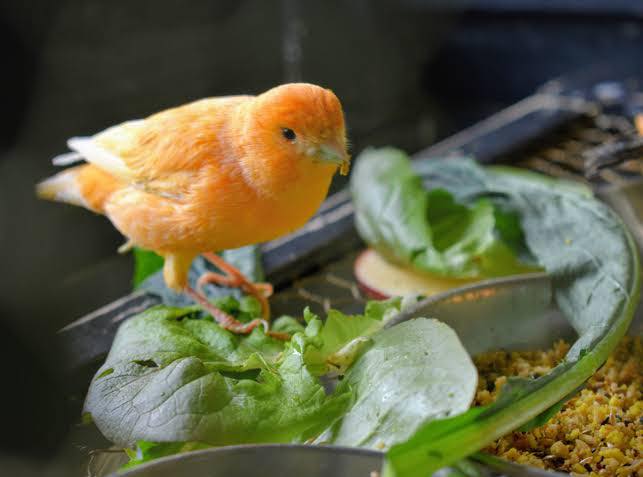
Egg food — a soft, crumbled mixture based on egg and grain — is one of the most important supplements for canaries, particularly during the moult and breeding season. It provides protein that seed alone cannot supply. A small amount offered three or four times a week is appropriate outside of the moult. During the moult, offer it daily.
Fresh greens
Canaries benefit significantly from fresh greens offered regularly. Chickweed — which grows as a garden weed and is safe and nutritious — is one of their favourites. Spinach in small amounts, dandelion leaves, kale, and broccoli are all suitable. Avoid avocado, which is toxic to birds, and anything that has been treated with pesticides. Wash everything before offering it.
Grit
Unlike many birds, canaries eat whole seeds — they do not hull them. This means they need grit in their diet to aid digestion. Mineralised grit, which also provides calcium, should be available in a small pot within the cage at all times. This is something that many new owners do not know about and that makes a measurable difference to the bird’s digestive health.
Water
Fresh water daily. No exceptions. Canaries dip food into their water constantly, which means bacteria build up quickly. A dirty water container is one of the most common causes of illness in canaries — and one of the most preventable.
The Health Issues Every Canary Owner Should Know
Canaries are generally robust birds when kept correctly. But there are a few conditions that are specific to the species and worth knowing about.
Air sac mites
This is the most common serious health issue I see in canaries — particularly in birds that have come from poor sources or been kept in inadequate conditions. Air sac mites affect the respiratory system. The classic sign is a clicking or wheezing sound when the bird breathes, or a bird that seems to be working hard to breathe while resting. It is treatable if caught early. A bird showing respiratory symptoms needs a vet promptly — do not wait to see if it improves on its own.
Feather cysts
Some canaries — particularly certain colour varieties — are prone to developing feather cysts, where a growing feather becomes trapped under the skin. These appear as hard, often discoloured lumps under the feathers. They are not usually life-threatening but they are uncomfortable for the bird and require veterinary attention. If you see an unexplained lump on your canary, have it checked.
Egg binding in females
Female canaries that are kept in conditions that trigger breeding behaviour — extra light, nesting material, warm temperatures — can develop eggs and occasionally become egg-bound. A female sitting on the floor of the cage, fluffed up and straining, may be egg-bound. This is an emergency. Get to a vet the same day.
- Clicking or wheezing sounds when breathing — possible air sac mites, act promptly
- Sitting on the cage floor — serious in any bird, act the same day
- Fluffed feathers combined with closed eyes during daytime hours
- Tail bobbing in time with breathing — respiratory distress, see a vet immediately
- Discharge from nostrils or eyes
- Sudden loss of song in a male outside of moulting season
- Droppings that are significantly discoloured or watery for more than a day
What Canaries Are Like When Everything Is Right
I want to spend time on this, because it is easy to read a care article and come away with a list of things to worry about rather than a picture of what you are actually getting.
A well-kept male canary in full song is one of the most genuinely beautiful things you can have in a home. The song of a good Roller canary — one of the traditional German breeds bred specifically for soft, rolling song — fills a room in a way that is unlike any other bird sound I know of. It is not loud. It is continuous, melodic, and genuinely soothing. I have had customers tell me that their canary’s song became the soundtrack to their working day, and that the house felt different on the days the bird was quiet.
Canaries also have personalities. Individual ones. Some are bold and will approach the front of the cage when you enter the room. Some are more reserved. Some develop recognisable routines — a particular perch for morning singing, a particular spot for afternoon preening. You get to know them over years, which is its own quiet reward.
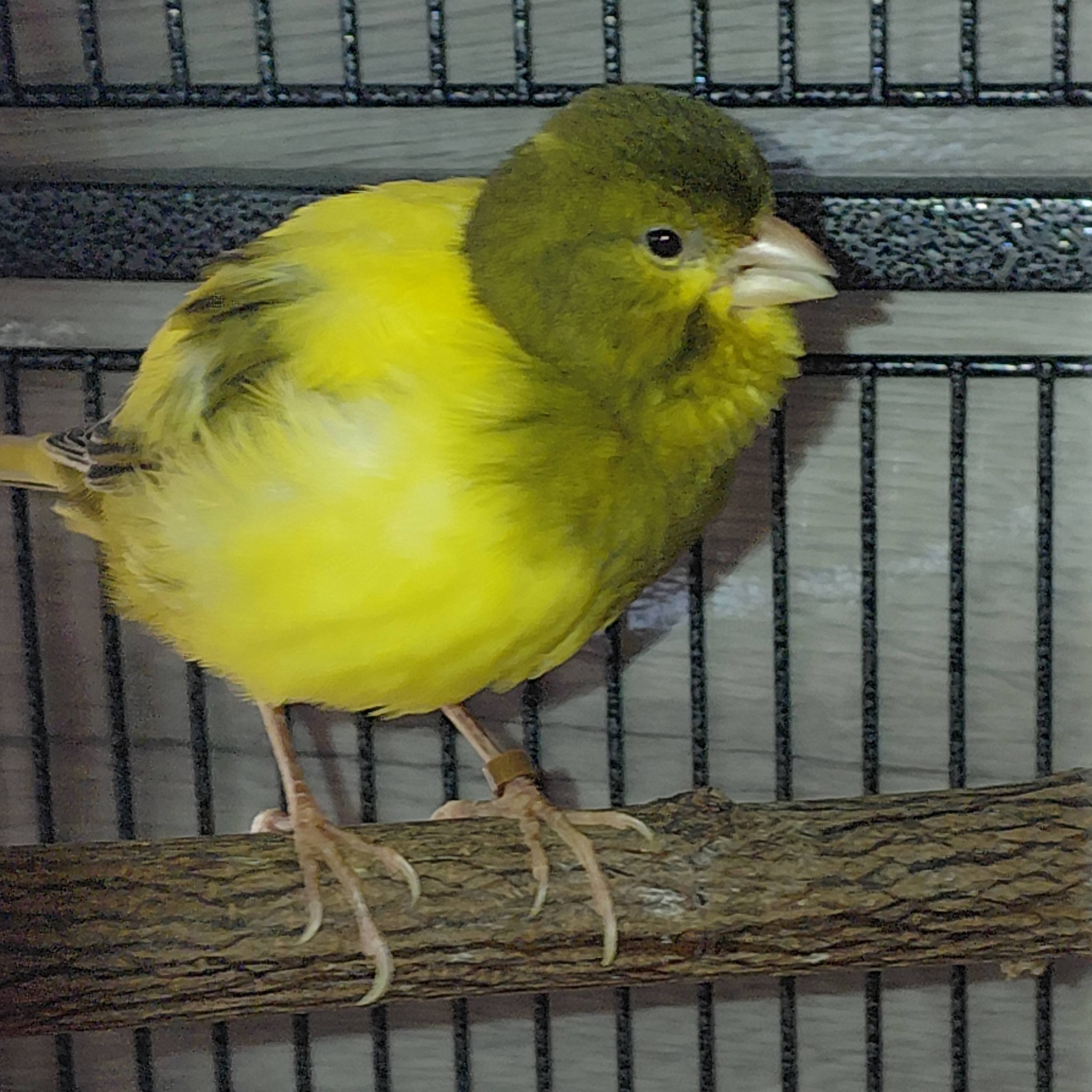
They are not handling birds in the same way that a budgie or cockatiel is — most canaries prefer not to be picked up, and taming them to the hand takes considerable time and patience. But they are present in a room in a way that is genuinely enriching. If you want a bird whose companionship is primarily about sound and observation rather than direct physical interaction, a canary may be exactly the right choice.
When a Canary IS the Right Choice
Here is my honest assessment after 35 years of selling these birds.
- People who live in flats or smaller homes where the noise of a budgie or cockatiel would be too much — canaries are significantly quieter and their song is more likely to be welcomed by neighbours
- Anyone who works from home and wants a gentle, consistent background presence rather than a demanding interactive companion
- Older owners or people with limited mobility — canaries do not require the physical engagement that budgies and cockatiels do, and their care is manageable for people who find handling birds difficult
- People who are genuinely interested in the song and are prepared to get a male specifically for that reason
- Households that have thought honestly about an eight to ten year commitment and are comfortable with that
- Anyone who wants a bird but does not have the time to provide the daily interaction that budgies or cockatiels need — a canary’s needs are real, but they are less time-intensive
What I Ask Before I Recommend a Canary
When someone comes in seriously interested, I ask a few things before we look at the birds. Five minutes of conversation here makes a real difference to how things go.
- Do you specifically want a singing bird?
If yes, I make sure they understand they need a male, and I explain how we sex the birds we stock and what level of certainty we can offer. If someone is not bothered about singing and just wants a bird, a female canary is equally healthy and often calmer — and it avoids any sex-related uncertainty. - What cage are you planning on?
The answer to this question tells me a great deal. If someone describes a tall, narrow cage, I show them why a longer cage works better and what we recommend. This conversation is easier to have before the purchase than after. - Do you have other birds at home?
I always ask this. Mixing canaries with budgies or other species is something I strongly advise against. If someone already has budgies, I explain why a separate setup is necessary and what that involves. - Where will the cage go in the house?
Kitchen — no. Near a frequently opening external door — no. Dark corner with no natural light — needs careful thought. Getting the placement right from day one matters more than most people expect. - Are you aware of the moult?
Almost nobody is, the first time. I explain it every time, because a new owner whose canary goes quiet in September and does not know about moulting will worry unnecessarily — or worse, assume something is wrong and do something unhelpful.
The Canaries We Stock at Paradise Pets
We source our canaries from trusted UK breeders only — people whose birds we know and whose standards we can vouch for. We do not import birds. Every canary we sell has been born and raised in this country, handled appropriately for the species, and checked carefully before going to a new home.
We typically stock a range of canary types depending on availability — song varieties, colour varieties, and border canaries among others. If you are looking for something specific, it is always worth calling ahead on 01793 512400 before making the trip.
| Type | Bred for | Best suited for |
|---|---|---|
| Roller Canary | Song quality — soft, rolling, continuous song sung with beak almost closed | Anyone who specifically wants a singing bird. The classic choice for song. |
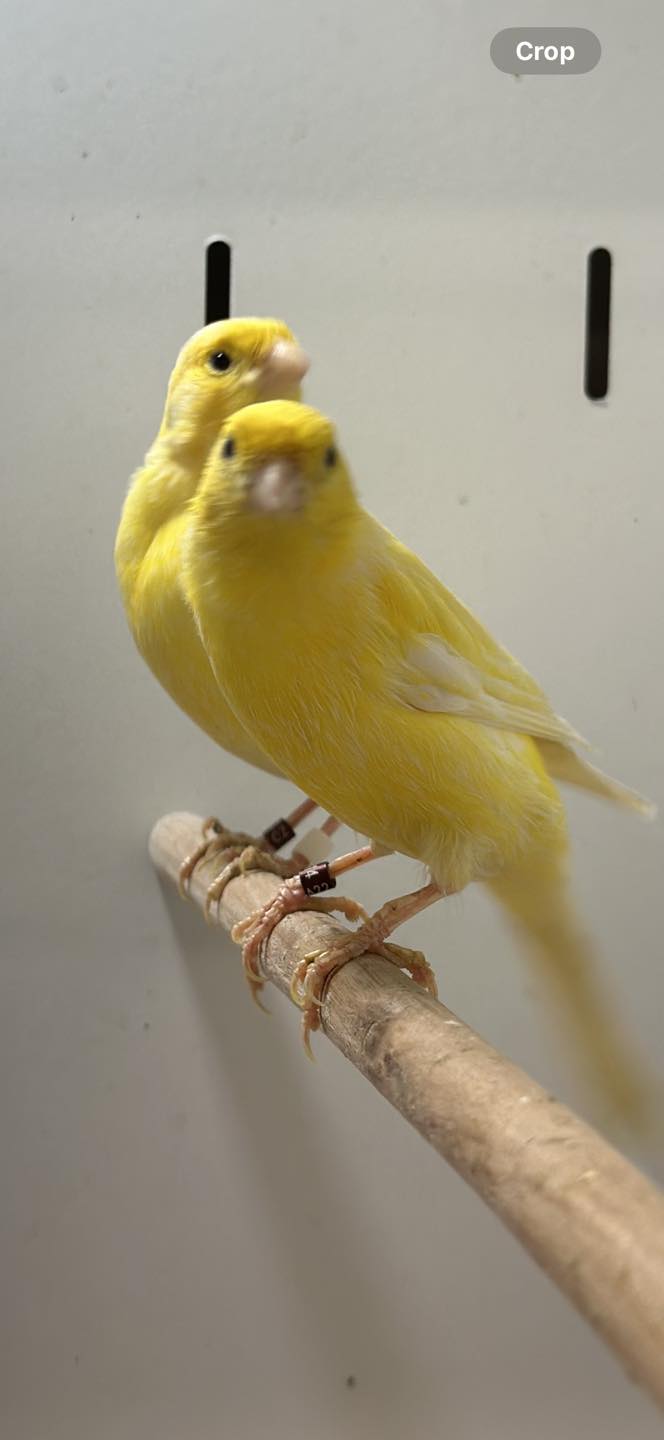
| Border Canary | Type and form — a classic, well-proportioned canary shape | All-round good choice. Hardy, well-established, good song in males. |
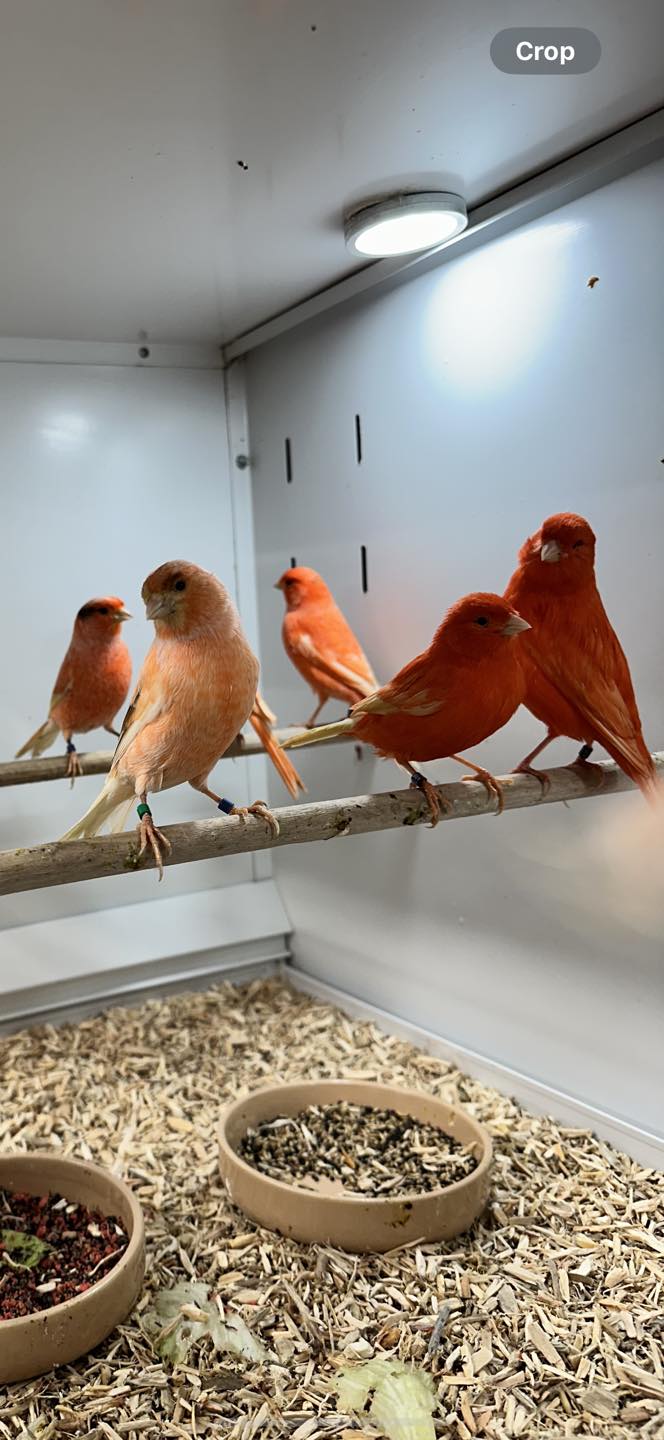
| Colour Canary | Plumage colour — wide range of colours from red and orange to white and variegated | People who want a specific colour. Same song quality as Border males. |
| Gloster Canary | Compact size and distinctive crested or plain-headed varieties | People who find the smaller size appealing. Gentle temperament. |
You can find more on our cage and aviary birds page, including what else we currently have in stock.
Canaries vs Budgies — The Question I Get Asked
People often come in undecided between a canary and a budgie. Here is the honest comparison I give at the counter.
A budgie requires more daily interaction — it will suffer without regular engagement, and it will let you know about it. It is noisier, more demanding, and more directly rewarding for people who want a bird that actively involves itself in their life. Read our budgie care guide if you are considering one.
A canary requires less direct interaction. Its presence is more ambient — song rather than engagement. It is better suited to people who want a bird in their life without the demands of an interactive companion. It is quieter, calmer, and in some ways more forgiving of a busy schedule.
Neither is better. They are better for different households. If you are genuinely unsure, come in and spend some time around both. The right choice usually becomes clear quickly.
One Last Thing
If you come into Paradise Pets interested in a canary and I think your setup or expectations are not quite right — the cage you are planning is too small, the placement is wrong, or you are expecting song from a female — I will tell you. Kindly, but clearly. Every time.
A canary in the right home, with the right setup, singing its way through a Tuesday morning in a well-lit room — that is a genuinely lovely thing. I have seen it in customers’ homes for 35 years. Getting there just requires being honest about what the bird needs before you bring it through the door.
Come and see us. We stock a full range of cage and aviary birds and we are always happy to spend as long as you need helping you make the right decision. No pressure, no rush — just honest advice from people who have been doing this for a very long time.
Visit Us at Paradise Pets Swindon
We stock canaries year-round — Rollers, Borders, Colour varieties, and Glosters depending on availability. All UK-bred, all from breeders we know and trust. Come in and hear them for yourself before you decide.
We also stock a full range of budgerigars, cockatiels, rabbits, guinea pigs, and hamsters and gerbils.