

Neil has been keeping, breeding, and selling hamsters at Paradise Pets Swindon since 1988 — over 35 years of daily first-hand experience with these animals and the people who keep them. Most of his health and welfare guides deal with what goes wrong. This one is different — a guide to what genuinely good hamster welfare actually looks like, day to day, so owners know what to watch for and can recognise when something is right, not just when something is wrong.
A father came into the shop with his son one Saturday, both of them looking slightly puzzled rather than worried. Their hamster had been with them for about three months. It was eating, it was active at night, it did not seem ill in any way they could identify. But the boy wanted to know — and the question was a good one — how do you actually know if a hamster is happy. Not just not sick. Happy.
I told them that this question deserved more attention than it usually gets, because most of what owners are taught about hamsters is illness recognition. Nobody really teaches contentment recognition. And contentment is not simply the absence of the signs of illness — it is a distinct, observable, positive state with its own clear indicators.
I walked them through what I look for, the same things I am about to walk through here. By the end of the conversation, the boy was visibly more confident — not because anything about the hamster had changed, but because he now had a vocabulary for what he was already seeing and could recognise it as genuinely good rather than simply not bad.
That distinction matters. An owner who only knows what illness looks like spends their relationship with the animal scanning for problems. An owner who also knows what genuine wellbeing looks like gets to actually see and appreciate when things are going right — which, for most well-kept hamsters, is most of the time.
Why Contentment Has Its Own Vocabulary — Not Just The Absence Of Illness
Before going through the specific signs, I want to explain why this distinction matters. It would be easy to write an article that simply says “the opposite of the illness signs” — but that misses something important.
A hamster that is not showing signs of illness might still be understimulated, mildly stressed by its environment, or simply existing rather than thriving. Genuine contentment is an active state with its own positive behaviours — exploration, confident movement, relaxed body language, engagement with the environment — not merely the absence of fluffing, lethargy, and reduced appetite.
- Contentment shows up as active, engaged behaviour, not passive non-illness — a hamster that is simply surviving without showing illness signs is in a different category from one that is genuinely thriving and showing the positive indicators described below
- The signs are observable daily, without any special handling or testing — this is a guide built around what you can see during normal observation of your hamster going about its life, not a list of things requiring intervention
- Knowing what genuine wellbeing looks like gives you an early warning system — when a normally confident, active, exploratory hamster suddenly becomes withdrawn or hesitant, you notice the deviation far more quickly if you already know what its baseline contentment looks like
- This applies across hamster species — Syrian, Roborovski, Campbell’s, Winter White and other dwarf species all show broadly the same categories of positive welfare indicators, adjusted for their individual size and temperament differences

Confident, Purposeful Movement
This is the single most reliable everyday indicator of a contented hamster, and it is something owners can assess every time they observe the animal during its active hours.
- Moving through the enclosure with confidence rather than hesitation — a contented hamster explores its space directly, investigating without the repeated freezing, retreating, or startled darting that characterises an anxious animal
- Quick transitions between activities — a happy hamster moves fluidly from eating to exploring to grooming to running, without long periods of frozen stillness or apparent indecision between activities
- Walking with the body held in a relaxed, low-to-moderate posture rather than pressed flat or hunched — body tension is visible in posture; a relaxed hamster moves with its body in a comfortable, unguarded position
- Normal whisker movement — hamster whiskers move actively as the animal investigates its surroundings; a contented, engaged hamster has whiskers in near-constant gentle motion as it processes its environment through touch and air movement
- Returning to normal activity quickly after a disturbance — a contented hamster that is briefly startled by a sound or movement will typically resume normal activity within a short period; an anxious or stressed hamster takes much longer to settle, or may not settle at all during a given session
Curiosity And Active Exploration
A hamster’s relationship with novelty in its environment is one of the clearest windows into its overall wellbeing.
- Investigating new objects, scents, or changes in the enclosure with interest rather than avoidance — a new piece of enrichment, a different food, a rearranged element of the cage; a contented hamster approaches and investigates these changes rather than avoiding them
- Active foraging behaviour — searching through bedding, exploring tunnels, working at hidden food; this natural behaviour, when displayed enthusiastically, indicates both physical wellbeing and the kind of mental engagement that characterises good welfare
- Stretching to investigate things just out of immediate reach — standing on hind legs to sniff at something above, reaching with front paws toward an interesting object; this kind of investigative stretching shows engagement with the environment beyond the immediate vicinity
- Returning repeatedly to favourite areas or activities with apparent enthusiasm — a particular corner, a favourite piece of enrichment, a preferred foraging spot; the consistency of preference combined with evident enthusiasm in returning to it is a positive sign
Good Grooming And Coat Condition
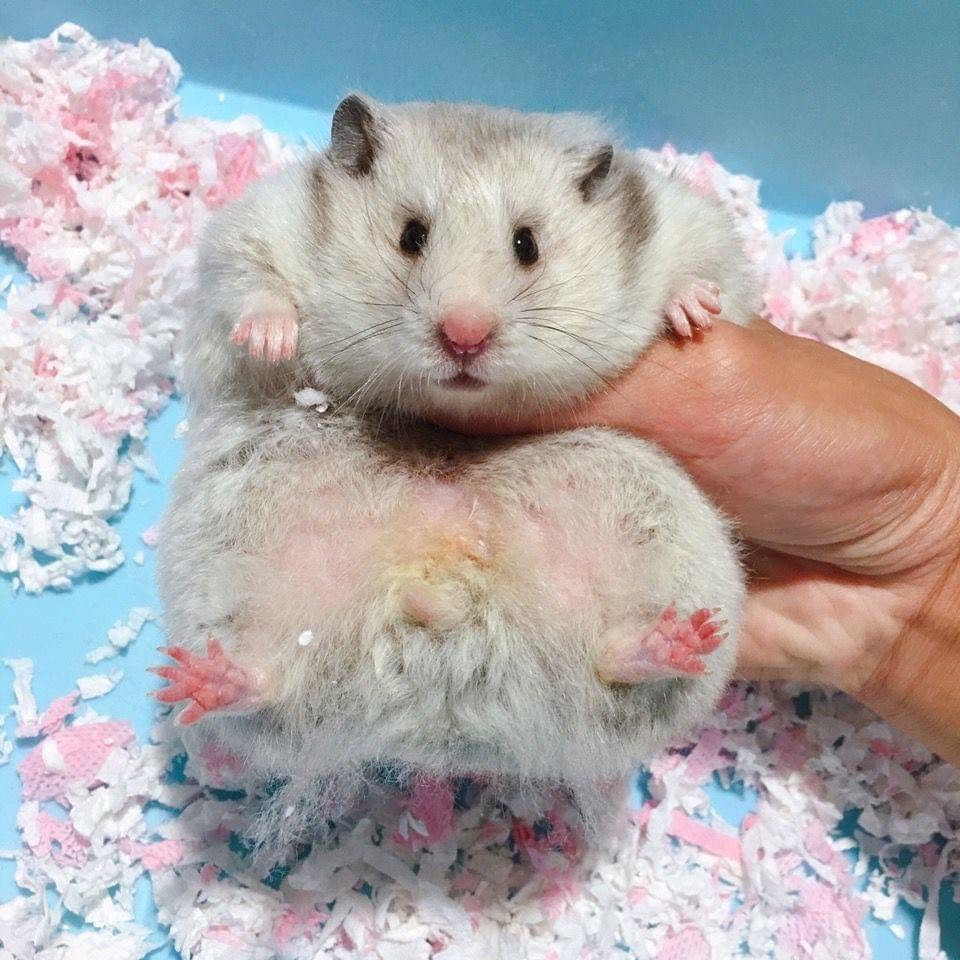
Self-care behaviour and its physical results are reliable indicators of overall wellbeing in hamsters, much as they are in many species.
- Regular self-grooming sessions — a hamster that is grooming itself thoroughly and regularly is allocating time and energy to maintenance behaviour, which is a sign that its more urgent needs are being adequately met
- A clean, smooth, glossy coat — the physical result of consistent grooming and good general health; a coat that looks dull, patchy, or unkempt suggests either inadequate self-grooming or an underlying health issue affecting coat quality
- No excessive scratching beyond normal occasional itching — a hamster scratches periodically as part of normal maintenance; persistent, focused, or vigorous scratching at specific areas suggests a problem rather than contentment
- Clean facial fur, particularly around the eyes and cheek pouches — a hamster with no discharge, no matting, and clean fur in these areas is both physically healthy and engaged in adequate self-care
Healthy Eating Behaviour And Appropriate Body Condition
How a hamster engages with food tells you a great deal about both its physical state and its overall psychological wellbeing.
- Enthusiastic engagement with food, including investigating and selecting from a varied diet — a hamster that explores its food options, shows clear preferences, and eats with evident interest rather than indifference is showing healthy normal behaviour
- Active food caching behaviour — filling cheek pouches and carrying food to a storage location is completely normal hamster behaviour and, when observed regularly, indicates the animal is engaging in its natural foraging and storage instincts in a healthy way
- Appropriate body condition — neither visibly thin with a prominent spine and hip bones, nor excessively rounded; a hamster at a healthy weight, assessed by gentle handling if you are confident doing so, reflects both adequate nutrition and normal metabolic function
- Normal, regular drinking behaviour — visiting the water source periodically through its active period; consistent hydration behaviour is a simple but genuine indicator that basic needs are being met without difficulty
Wheel Use And Physical Activity
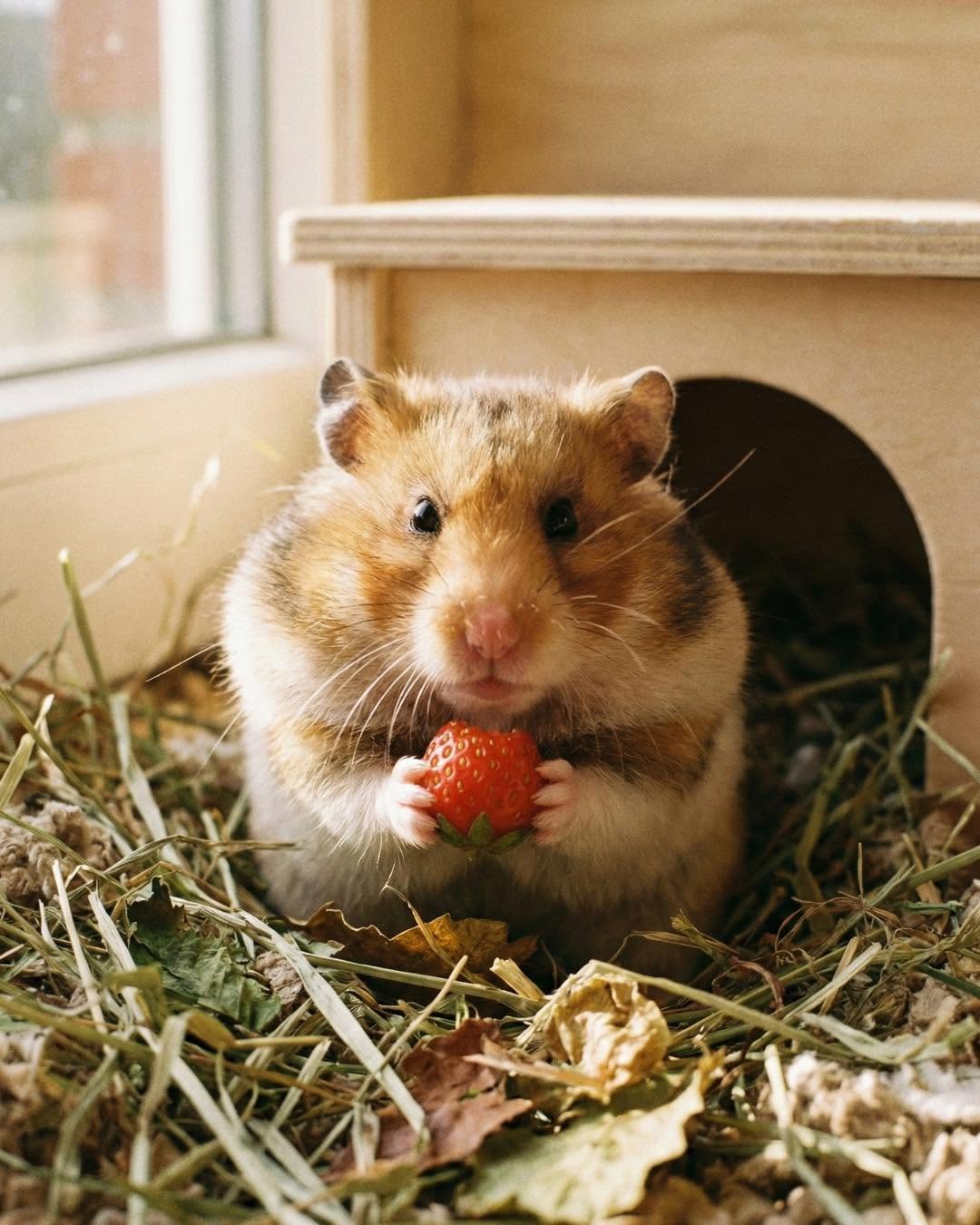
A hamster’s engagement with exercise opportunities — particularly the wheel, but also general locomotion through the enclosure — reflects both physical health and psychological engagement.
- Regular, voluntary wheel use during the active period — a hamster that runs on its wheel as one of several activities, not obsessively or to the complete exclusion of everything else, is engaging in healthy normal exercise behaviour
- Smooth, coordinated running — fluid movement on the wheel without stumbling, falling, or apparent discomfort indicates good physical condition and an appropriately sized wheel
- Variety in activity across the active period — a contented hamster’s active hours typically include a mix of running, exploring, foraging, grooming, and resting, rather than being dominated by a single repetitive behaviour
- Burrowing and tunnelling activity in adequately deep bedding — a hamster that actively rearranges, tunnels through, and maintains its bedding environment is engaging in one of its most fundamental natural behaviours, and doing so enthusiastically is a strong positive sign
Relaxed Body Language And Posture
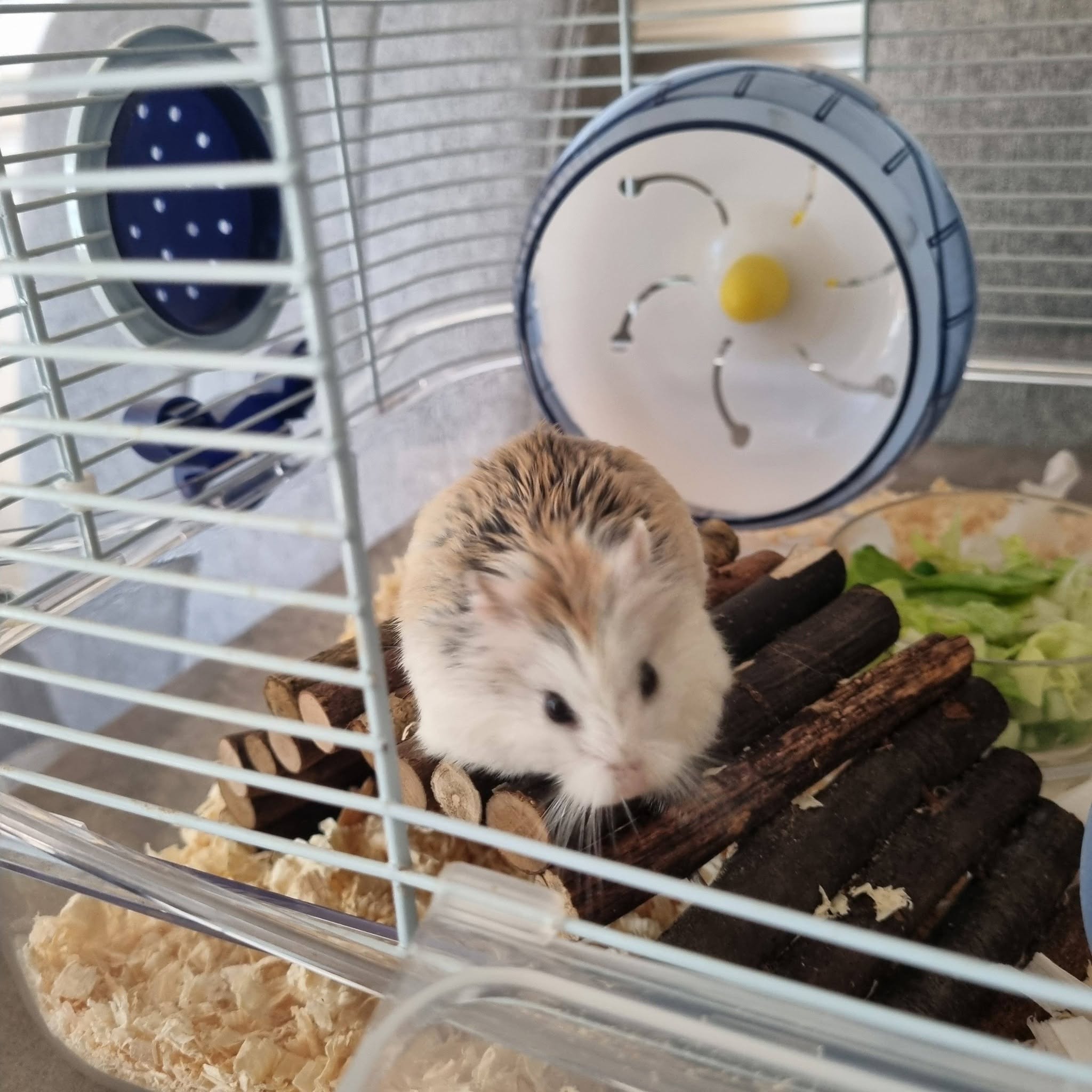
The way a hamster holds itself during rest and during interaction provides clear information about its internal state.
- Resting in a relaxed, open posture rather than tightly curled defensively — while hamsters do curl up to sleep normally, the difference between relaxed sleep posture and a tense, guarded posture during waking observation periods is generally noticeable to an owner who knows their animal
- Stretching upon waking — much like many animals, hamsters often stretch their bodies when emerging from rest; this is a normal and positive sign of a relaxed, unhurried transition from sleep to activity
- Whiskers and ears in a neutral, relaxed position during calm moments — pinned-back ears or rigidly forward whiskers during normal activity indicate tension; a relaxed hamster’s features sit in a more neutral, mobile state
- Approaching the front of the enclosure when the owner is nearby, rather than retreating — a hamster that has learned its owner is a non-threatening, familiar presence and responds with approach rather than avoidance is showing trust that develops from a generally positive relationship with its environment
Positive Responses To Handling — When The Bond Is Right
For hamsters that have been appropriately tamed and handled with patience and consistency, the quality of their response to handling is a genuine welfare indicator.
- Calm, relaxed body during handling rather than rigid tension or repeated escape attempts — a hamster that has built genuine trust with its owner shows this in its physical state when held, not just in the absence of biting
- Continued exploration while being held — a contented hamster being handled by a trusted person will often continue investigating, sniffing, or moving around within the safety of cupped hands rather than freezing rigidly
- Voluntary approach to the hand when it enters the enclosure — moving toward an offered hand rather than away from it, particularly when the hand has consistently been associated with positive experiences, indicates a well-developed trusting relationship
- No excessive vocalisation or stress signals during gentle, correctly timed handling — handled at the right time of day, with the right approach, a contented hamster generally tolerates or actively enjoys brief, gentle handling sessions
A Quick Daily Observation Reference
| What You Are Looking For | What It Tells You |
|---|---|
| Confident, fluid movement through the enclosure | Low baseline stress, comfortable with the environment |
| Active investigation of new objects or changes | Good psychological engagement and curiosity |
| Regular, thorough self-grooming | Time and energy available for maintenance behaviour — basic needs are met |
| Enthusiastic, varied eating and caching | Healthy appetite and normal natural behaviour |
| Varied activity — wheel, foraging, burrowing, resting | Environment is meeting multiple behavioural needs, not just one |
| Relaxed posture and stretching upon waking | Low tension, comfortable sleeping environment |
| Approaching the front of the cage when you are near | Trust and a positive association with your presence |
| Calm exploration during gentle handling | A genuinely well-bonded relationship, not just tolerance |
What To Do With This Information
Knowing these signs is most valuable when used as an ongoing baseline, not a one-off checklist.
- Spend a few minutes most days simply observing your hamster without intervening — this builds your knowledge of its individual normal pattern of behaviour, which is the foundation for noticing any deviation
- Notice gradual changes, not just sudden ones — a hamster that has slowly become less exploratory, less enthusiastic about food, or less inclined to approach you over a period of weeks is showing a meaningful change even though no single day looks dramatically different from the last
- Use these signs alongside, not instead of, illness awareness — this article complements rather than replaces knowledge of what illness looks like; a hamster owner benefits from knowing both vocabularies
- Celebrate what is going right — much of the conversation around pet keeping focuses on problems; recognising and appreciating when your hamster is genuinely thriving is part of what makes keeping any animal rewarding, and it is a skill worth developing deliberately
Frequently Asked Questions
My hamster sleeps most of the day. Does that mean it is not happy?
No — hamsters are nocturnal, and extensive daytime sleeping is completely normal. The signs of genuine contentment described in this article apply to the hamster’s active periods, primarily evening and night. What matters is how the hamster behaves when it is awake and active, not how much it sleeps during the day. A hamster that sleeps normally during the day and shows the active, confident, engaged behaviours described above during its waking hours is showing the right pattern.
How do I know the difference between a confident hamster and a bold but stressed one?
Look for the combination of signs together rather than any single behaviour in isolation. A genuinely confident, contented hamster shows fluid movement, relaxed posture, active grooming, varied activity, and positive responses to handling, all together. A hamster that is moving around a lot but with tense body posture, minimal grooming, repetitive behaviour, or signs of stress during handling is showing something different from genuine contentment, even if the activity level looks similar at first glance.
My hamster does not seem interested in being handled. Does that mean it is unhappy?
Not necessarily. Individual hamsters vary in their interest in handling, and some are genuinely more independent or less socially inclined than others while still being entirely content in their environment. The handling-specific signs in this article apply to hamsters that have an established handling relationship; a hamster that is generally confident, active, and engaged with its environment but simply prefers to be observed rather than held is not necessarily showing reduced welfare — it may just have a more independent temperament.
Can a hamster be happy living alone?
Yes — and this is an important distinction from many other small pets. Unlike budgies or guinea pigs, most hamster species are solitary in the wild and should be kept alone as adults; Syrian hamsters in particular will fight, sometimes fatally, if housed together past a young age. A genuinely contented solitary hamster, properly provided for in terms of space, enrichment, and appropriate human interaction, shows all the positive signs described in this article without needing a companion of its own species.
What should I do if I notice some of these positive signs are missing?
First, consider whether anything in the environment has changed — cage position, bedding type, diet, noise levels, or routine. Many reductions in these positive behaviours have identifiable environmental causes that can be addressed directly. If you cannot identify an obvious cause, or if the change is accompanied by any signs that might indicate illness, a vet check with a small animal experienced practice is the appropriate next step rather than waiting to see if things improve on their own.
Where can I get advice about my hamster’s wellbeing in Swindon?
Come in to Paradise Pets at Manor Garden Centre, Cheney Manor Industrial Estate, Swindon SN2 2QJ — or call us on 01793 512400. Describe what you are seeing — or what you are not seeing — and I will give you my honest assessment of whether things look right and what, if anything, might be worth adjusting. Free advice, no obligation. That is how we have done things here for 35 years.
One Last Thing From Me
The father and son I described at the start came back into the shop about two months later, and the boy told me, with the kind of confidence that comes from genuine understanding rather than just being told something, exactly what he had been seeing. The wheel use. The cheek pouches full of food being carried to a specific corner. The way the hamster came to the front of the cage when he sat down nearby in the evening.
He described it all without prompting, because he now had the vocabulary to notice it.
That, more than anything specific in this article, is what I hope it gives readers. Not just a checklist to run through occasionally, but a genuine fluency in recognising what good looks like in the animal they share their home with. That fluency makes the relationship richer in the good times, and it makes you faster and more confident at noticing when something has changed.
A genuinely content hamster shows it constantly, in dozens of small ways. Learning to see them is one of the more quietly rewarding parts of keeping any animal well.
Not Sure If Your Hamster Is Thriving? Come In And Talk.
Describe what you are seeing day to day and I will give you my honest read on whether things look right and what might be worth adjusting. Free advice, no obligation. That is how we have done things here for 35 years.