
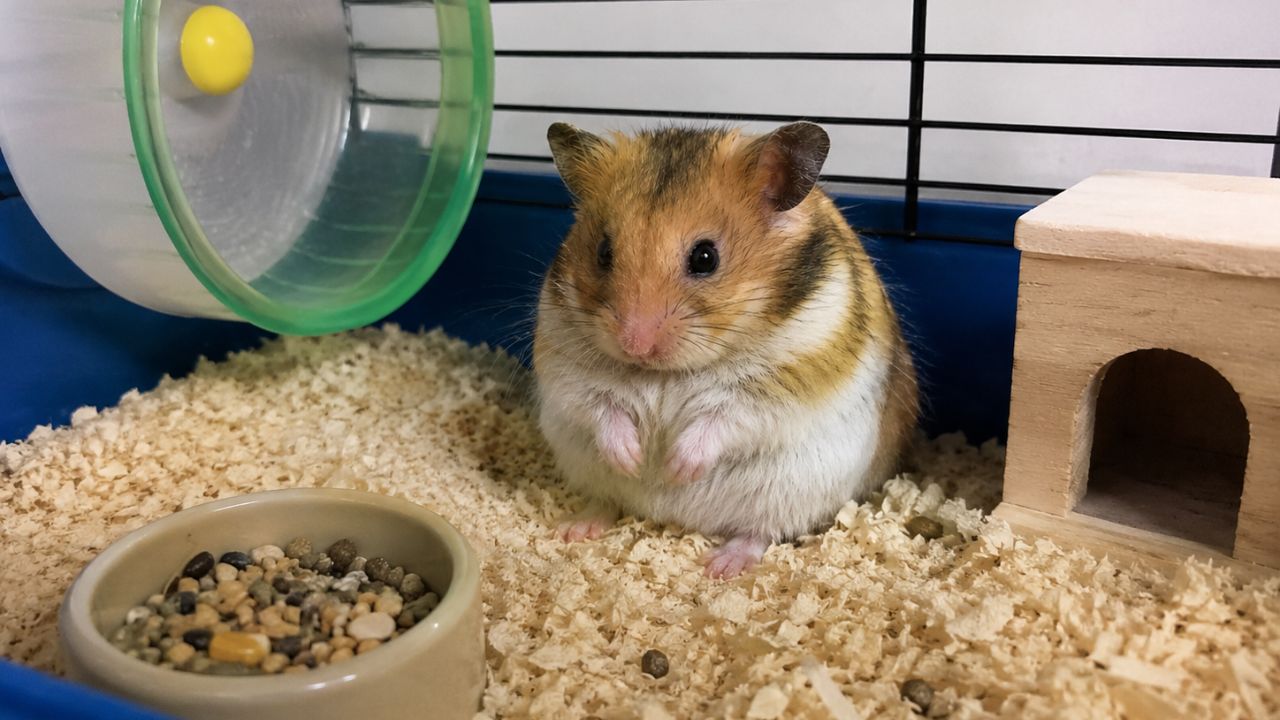

Neil has kept, bred, and sold hamsters at Paradise Pets Swindon since 1988 — over 35 years of first-hand experience with Syrian and dwarf hamsters. In that time, he has watched hundreds of worried UK owners walk into the shop carrying a hamster that has stopped eating. This article is his urgent, honest guide on what it means and what to do about it.
A lady came into the shop on Saturday morning, properly worried. She was carrying a small carrier with her son’s Syrian hamster inside. “Neil,” she said, “he hasn’t touched his food since yesterday morning. Normally he empties his bowl by lunchtime. I don’t know what’s wrong.”
I looked at the hamster. A young golden Syrian, sitting hunched at the back of the carrier, eyes half-closed, completely uninterested in the piece of carrot the lady had brought. Not dead — but in real trouble. The kind of trouble where hours, not days, are going to make the difference.
That scene plays out in my shop more often than I would like. A hamster that has stopped eating. A hamster that was fine the day before yesterday and is unrecognisable today. The owners arrive worried, often panicked, and almost always asking the same question — should I have come in sooner?
The honest answer, in most cases, is yes. So let me say this very clearly, right at the start of this article. A hamster that has stopped eating is in serious trouble, and you need to act now. Not tomorrow. Not “let me see how he is in the morning.” Today. Often within the next few hours.
In 35 years of selling hamsters, the single most consistent lesson I have learned is this — the owners whose hamsters recover are the ones who act fast. The ones who wait, hoping it will pass on its own, are usually the ones who lose their pets. So please, if you are reading this with a hamster at home that has stopped eating, take it seriously.
This article walks you through what it usually means, the most common causes I see in the shop, and what to do right now to give your hamster the best chance.
Why This Symptom Is So Serious
Let me explain something about hamsters that most UK owners do not realise — and it is the reason this symptom needs urgent attention.
Hamsters have an incredibly fast metabolism. They eat almost constantly throughout their active hours, stuffing food into their cheek pouches and taking it back to their nest, then eating again. That constant food intake is what keeps their digestive system moving, keeps their body temperature stable, and keeps their immune system working. When a hamster stops eating, every one of those systems starts to fail very quickly.
We are not talking about days here. We are talking about hours. A healthy adult hamster that has not eaten for 12 hours is already in trouble. By 24 hours, the situation is becoming critical. By 36 to 48 hours, untreated, many hamsters will not recover.
On top of that, hamsters are prey animals — like rabbits and guinea pigs, they evolved to hide weakness. They will keep moving, keep doing their normal routines, keep looking active even when they are unwell. So by the time you actually notice the food bowl is full and the hamster is huddled in a corner, the underlying problem has often been developing for a day or two.
That is why “let me see in the morning” is the wrong response. By morning, you may be too late.
- Do not wait. Phone an exotic or small animal vet today — not tomorrow
- Check the body temperature — is the hamster cold? Warm the environment gently and immediately
- Check the cheek pouches — are they full of old, hoarded food? Or completely empty?
- Offer a piece of soft fresh food — a tiny bit of cucumber, carrot, or apple. If refused, that confirms a problem
- Check for droppings — absence of poo for several hours is a major warning
- If you are local to Swindon, ring us on 01793 512400 — we will help you work out the urgency
What “Not Eating” Actually Looks Like
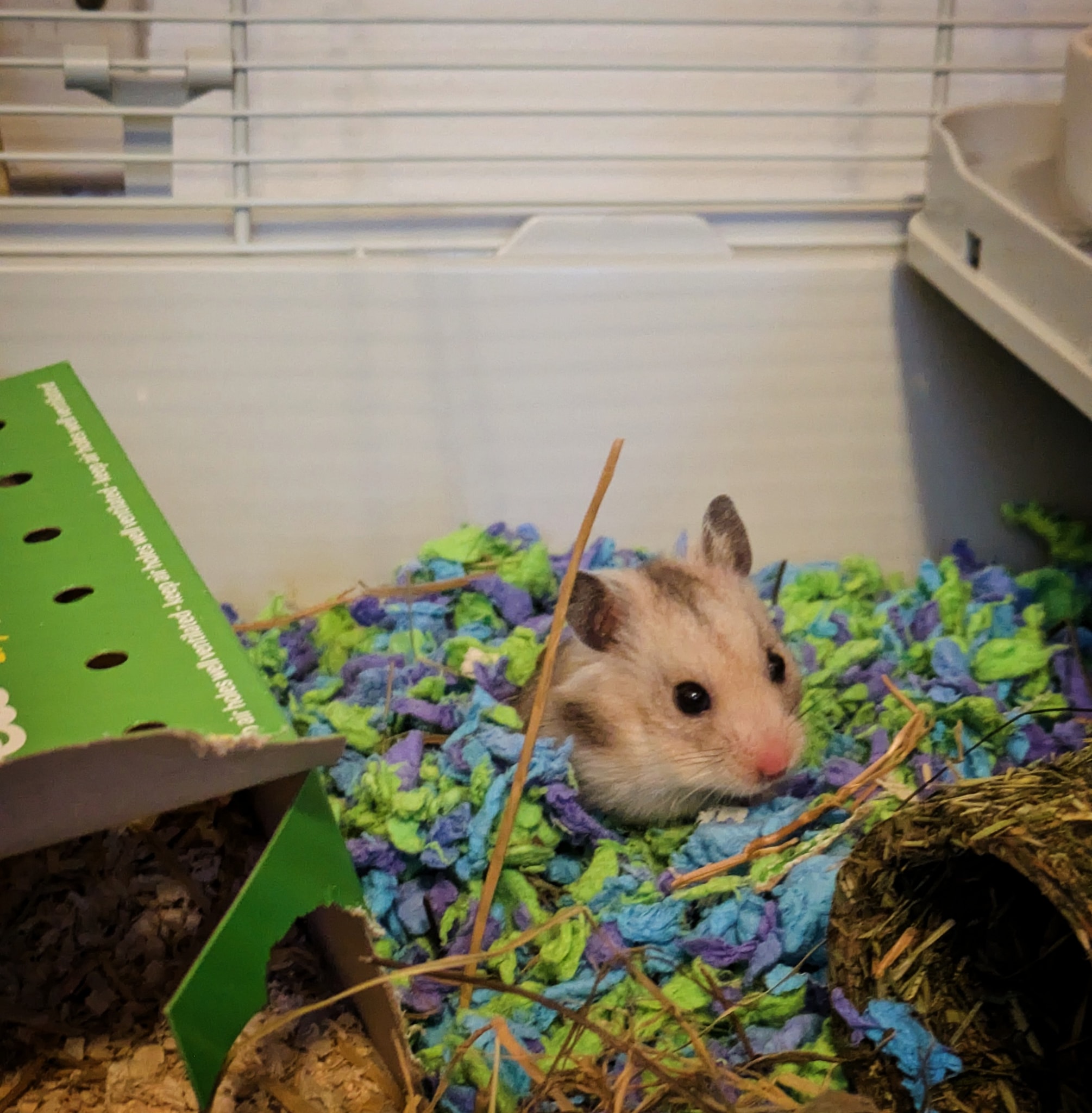
Before we get into the causes, let me make sure we are talking about the same thing. Because hamsters can be deceptive about their eating habits — they hoard, they hide food, and they often eat at night when you are not watching.
A hamster that is “not eating” in the way I mean in this article is showing several signs together:
- Food in the bowl has not gone down in 12 hours or more
- No fresh food remains stuffed into the cheek pouches
- No food hoarded in the nest area
- Refuses favourite treats — even a mealworm or sunflower seed will not tempt
- Reduced or absent droppings
- Hunched posture, sitting still, eyes half-closed
- Less activity at night when the hamster should be running on its wheel
- Possible weight loss visible when you handle the animal
That combination is the warning. If your hamster is simply being a bit fussy with one food but otherwise active, eating other things, and producing normal droppings — that is different. That is just a hamster having preferences. What I am talking about is a hamster genuinely not consuming food, which is a different situation entirely.
The 6 Main Causes I See In The Shop
After 35 years of working with hamsters, I can usually narrow down what is happening with a fair degree of accuracy. Here are the six most common causes I encounter, roughly in order of how often they appear.
Cause 1: Dental Problems And Overgrown Teeth
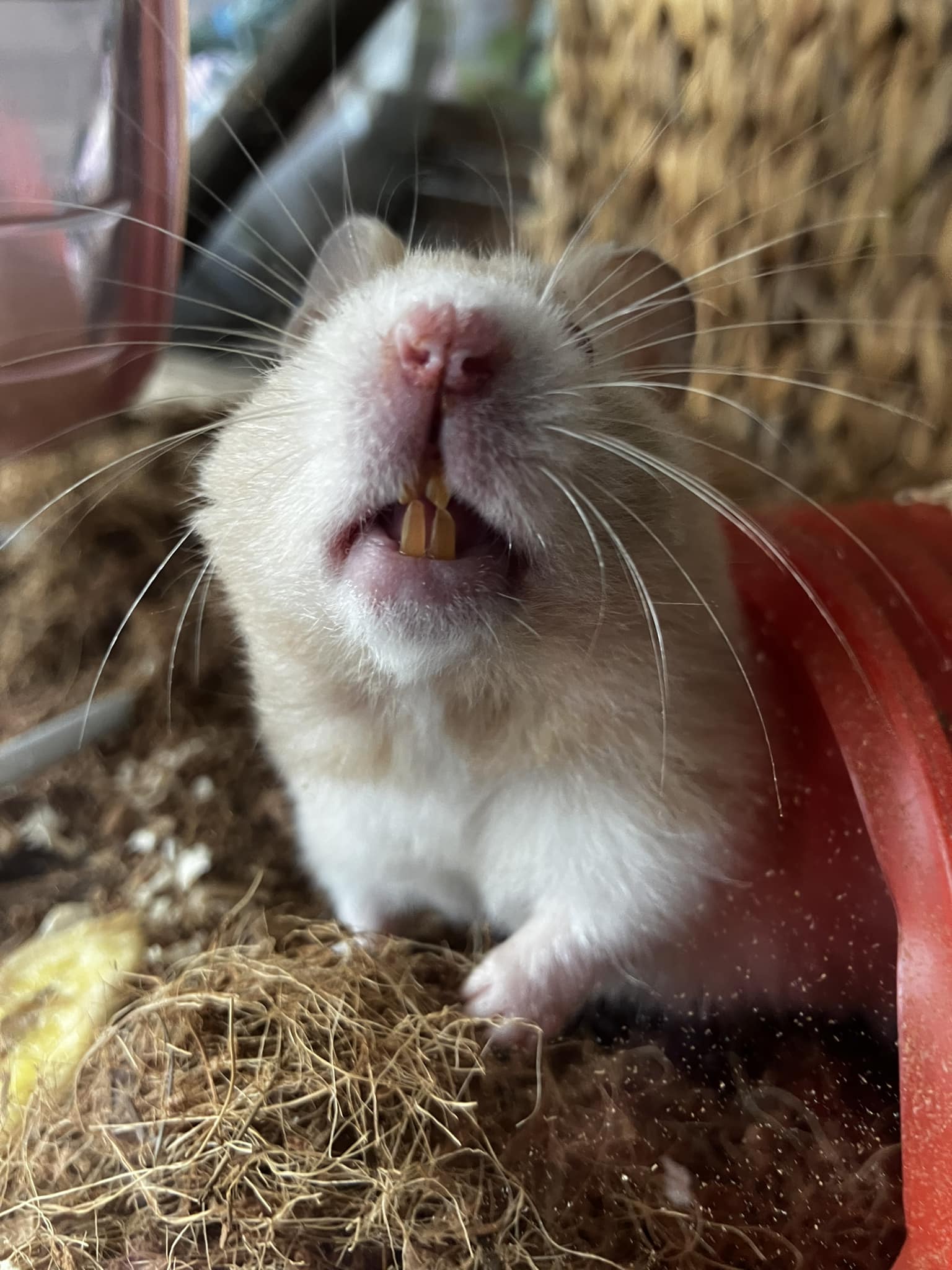
This is one of the most common causes I see, and one of the most preventable. Hamster teeth grow continuously throughout their lives — they are designed to be worn down by constant chewing on hard foods, wood, and seed shells. When something disrupts that — a soft diet, missing chewing materials, or a misaligned bite — the teeth overgrow.
Overgrown teeth physically prevent the hamster from eating properly. The front incisors can grow long enough to make picking up food impossible. Sometimes they grow at angles that cut into the lips or tongue, causing pain that makes eating unbearable.
A hamster with dental problems will gradually stop eating, drop food when trying to chew, develop wet fur around the mouth from drooling, and eventually become weak from hunger.
- Hamster picks up food but drops it
- Visible long incisors when the mouth is open
- Wet, stained fur around the chin and mouth
- Sometimes blood from the mouth area
- Weight loss over days or weeks
- Eventually becomes withdrawn and stops trying to eat
What to do
This is a vet visit, ideally an exotic vet or small animal specialist who has worked with hamsters before. Overgrown teeth need to be filed down — sometimes under sedation if the hamster is too small to handle safely. The procedure is usually quick and the hamster often eats normally within hours of treatment. But the underlying cause needs addressing — usually adding proper chewing materials and a varied diet.
Cause 2: Wet Tail (Proliferative Ileitis)
This is the one I dread seeing, and it is the cause I most want UK owners to recognise quickly. Wet tail is a bacterial infection affecting the digestive system of hamsters, particularly young Syrians under 12 weeks old. It is highly stressful for the animal, progresses very fast, and is often fatal without prompt veterinary treatment.
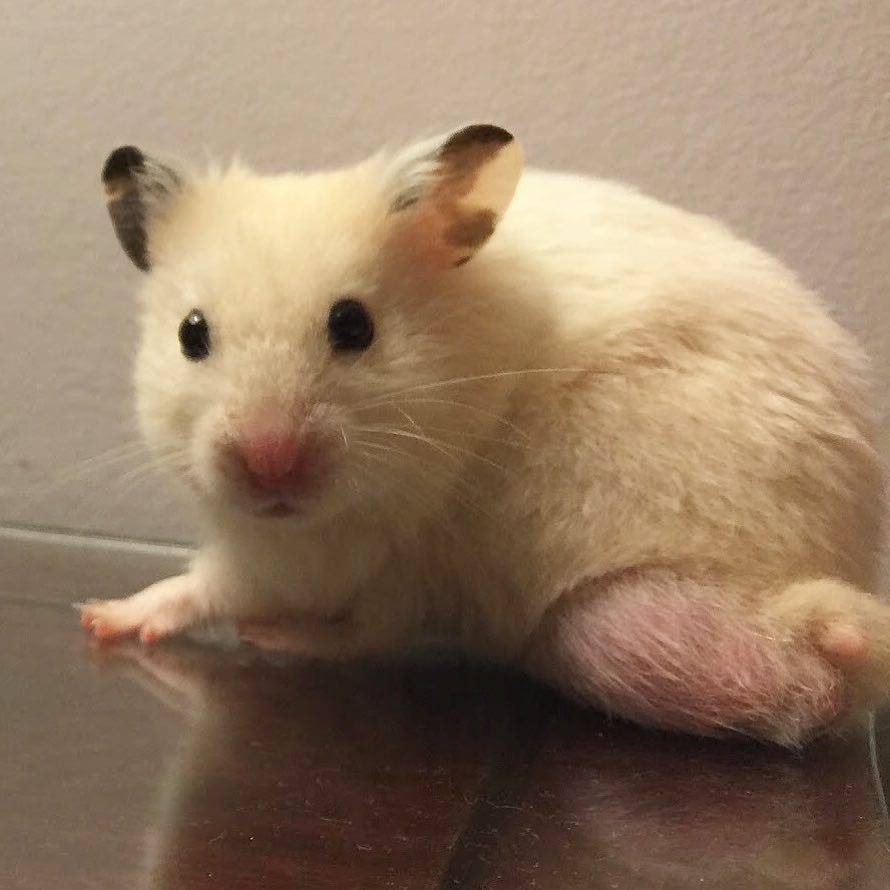
The classic sign is diarrhoea — a wet, dirty area around the tail and back legs. But hamsters with wet tail also stop eating, become lethargic, hunch up, and decline rapidly. Within 24 to 48 hours of the first symptoms, an untreated hamster with wet tail often dies.
- Wet, soiled fur around the tail and back end
- Diarrhoea — runny, watery droppings
- Strong, unpleasant smell from the rear area
- Loss of appetite — refusing all food including favourite treats
- Lethargy and hunched posture
- Sunken eyes — a sign of dehydration
- Most common in young Syrian hamsters, particularly recently rehomed ones
What to do
This is a true emergency. Go to an exotic vet today — not tomorrow morning. Wet tail needs antibiotics and fluids to give the hamster any chance of survival, and the treatment window is short. Stress makes it worse, so handle the animal as little as possible while you arrange the vet. Keep the cage warm, provide easy access to water, and get professional help fast.
Prevention is mostly about minimising stress in young hamsters — proper acclimatisation when you first bring one home, no excessive handling in the first week, a clean enclosure, and a stable diet.
Cause 3: Cold And Hypothermia (Including Torpor)
This is a particularly British problem, and one I deal with every winter. Hamsters need consistent warmth — ideally 18 to 24°C. UK homes often drop well below this at night, especially in winter when heating goes off. A cold hamster will gradually slow down, stop eating, and in severe cases enter a state called “torpor” — a deep sleep that can be mistaken for death.
A hamster in torpor is not dead. The body has slowed everything down — heart rate, breathing, body temperature — to conserve energy when the surrounding environment is too cold to function in normally. Without warming, the hamster will not recover and will eventually die from prolonged cold.
A hamster that has gone cold may stop eating before fully entering torpor. Owners often describe the animal as “quiet” or “sleeping more” before realising the food bowl has not been touched.
- What is the room temperature overnight? Below 15°C is risky. Below 10°C is dangerous.
- Is the cage near a draught? Even small draughts can drop the cage temperature significantly.
- Is the heating going off entirely at night? Many UK homes drop to 10°C overnight in winter — far too cold for a hamster.
- Is the cage in a conservatory, porch, or garage? All of these lose heat fast and are not appropriate for hamsters in winter.
What to do
Warm the animal slowly. Move the cage to a warm room, around 20 to 22°C is ideal. Do not place the hamster directly on a hot water bottle or radiator — that is too intense and can cause shock. If the animal is in deep torpor (very cold, unresponsive, body limp), wrap it gently in a warm cloth and hold it close to your body to warm gradually.
If the hamster perks up and starts moving within an hour or two, you have likely caught it in time. Offer water and a small amount of food, and monitor closely. If there is no improvement, see a vet — prolonged cold can cause other complications.
Cause 4: Stress And Environmental Changes
Hamsters are surprisingly sensitive animals. Despite their reputation as low-maintenance pets, they notice every change in their environment and they can respond to chronic stress by going off their food.
The stressors I see most often in the shop:
- Recent rehoming — newly purchased hamsters often go off food for a day or two as they adjust
- Cage moved or rearranged — hamsters are creatures of routine
- New pet in the house — particularly cats and dogs the hamster can see, hear, or smell
- Excessive handling — especially by young children
- Loud noises — building work, construction, or TV at high volume near the cage
- Cage cleaning — completely stripping and replacing all the bedding removes the hamster’s familiar scent
- Other hamsters too close — Syrian hamsters in particular get stressed by smelling other hamsters nearby
What to do
First, identify the stressor if you can. Think back to when the eating stopped, then consider what changed in the environment around that time. Often when you think about it carefully, the cause becomes obvious.
Once identified, the answer is usually to remove the stressor or help the hamster adjust. Move the cage somewhere quieter. Reduce handling for a few days. Avoid full cage cleans — instead spot-clean and leave most of the bedding intact, which keeps the familiar scent. Give the animal time.
If the hamster still refuses to eat after 24 hours of trying to reduce stress, get to a vet. Stress can trigger other problems including wet tail, especially in younger animals.
Cause 5: Old Age And End Of Life
This is the saddest cause on this list, and one that catches owners off guard because hamsters do not live as long as people often expect. A Syrian hamster typically lives 2 to 3 years. Dwarf hamsters often less — 1.5 to 2 years on average. By 2 years old, most hamsters are considered elderly.
An elderly hamster gradually slows down, eats less, sleeps more, and eventually stops eating altogether. This is often the natural end of the animal’s life, and it usually comes on gradually over weeks rather than suddenly.
The signs that distinguish old age from acute illness are usually about timing. Acute illness comes on fast — over hours or a day or two. Old age decline comes on gradually over weeks, with the animal slowly becoming less active, less interested in food, and more often asleep. By the late stages, the hamster may stop eating entirely.
What to do
Even in old age cases, a vet visit is worthwhile to rule out treatable conditions. Sometimes what looks like “old age” is actually a treatable infection or dental problem that has gradually developed. If the vet confirms the animal is reaching the natural end of its life, your job becomes about comfort — warmth, easy access to food and water, gentle company, and quiet. There may also come a point where the kindest thing is to discuss euthanasia with your vet. That is a difficult conversation, but it is sometimes the right one.
Cause 6: Pouch Problems And Impaction
This is a less common cause but worth knowing about because it can present specifically as a hamster that has stopped eating. Hamsters have cheek pouches that they use to carry food back to their nests. Sometimes those pouches develop problems — they can become impacted with food that will not come out, infected, or in some cases everted (turned inside out).
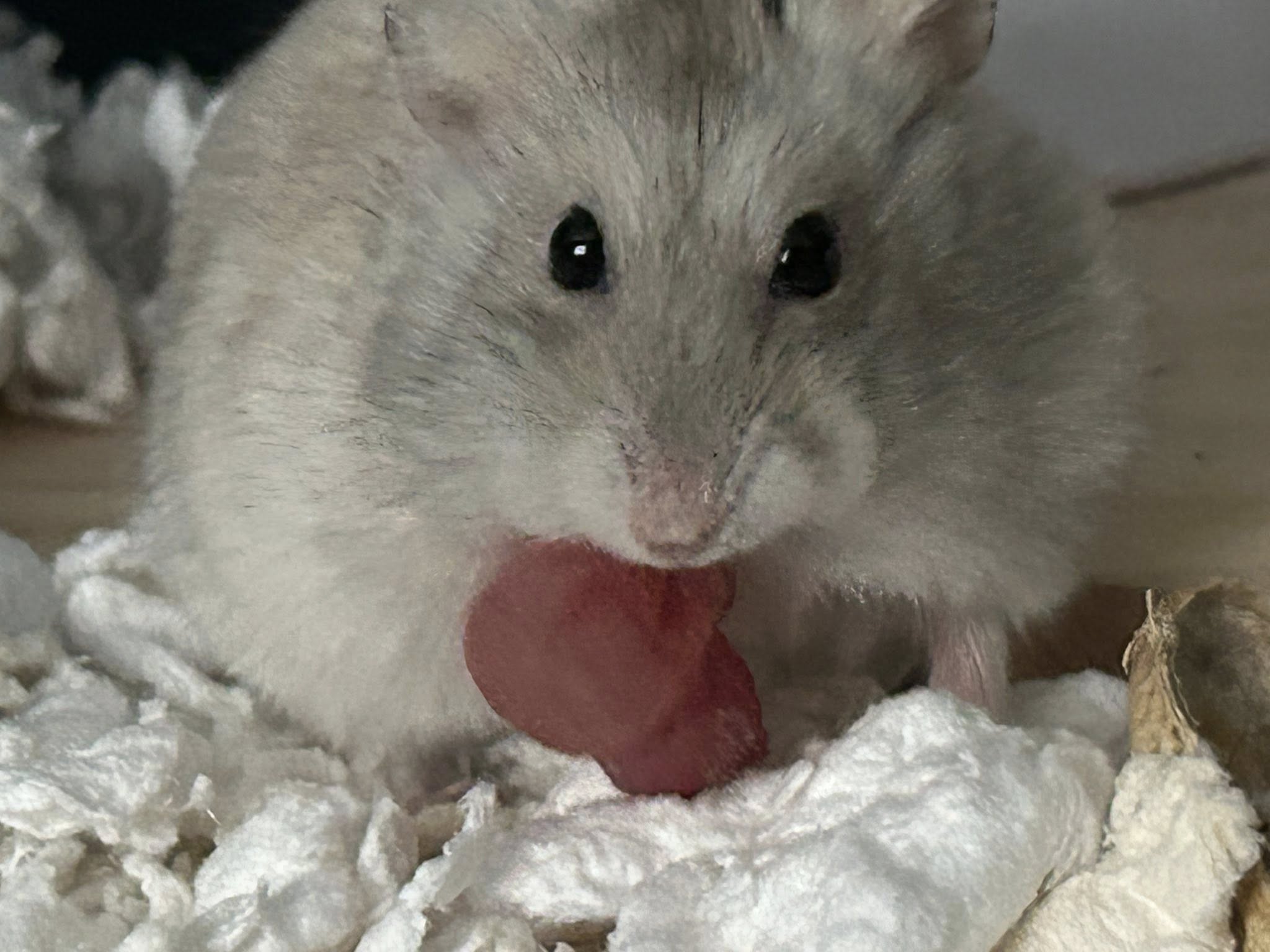
A hamster with a cheek pouch problem may struggle to pick up food, drool, paw at the side of the face, or have visibly swollen cheeks that do not go down even after the food should have been emptied. The animal often stops eating because the process is uncomfortable or because the pouch is full and they cannot empty it.
What to do
This is a vet visit. Pouch impactions sometimes need to be manually cleared under sedation. Infected pouches need antibiotic treatment. An everted pouch is a surgical emergency. None of these are situations to wait on — get professional help today.
What I Check When A Hamster That Has Stopped Eating Comes Into The Shop
When an owner walks in with a hamster that has stopped eating, I do not guess. I work through a process to narrow down what is going on. Here is what that looks like.
- How long has it not been eating?
This is the most important question. Less than 12 hours is concerning. Over 24 hours is critical. - How old is the hamster?
Young hamsters (under 12 weeks) raise the possibility of wet tail. Older hamsters (over 2 years) may be facing age-related decline. - Is there diarrhoea or wet fur around the rear?
This points strongly to wet tail and means a vet visit today. - What does the cheek area look like?
Swollen, drooling, or visibly inflamed could indicate dental or pouch problems. - What is the temperature like in the home overnight?
Cold rooms are a common cause, especially in UK winters. - Has anything changed recently?
New pet, new cage, new routine, recent purchase, loud noises? Hamsters respond to stress. - Is the animal active at all, or completely still?
A hamster that is still moving but not eating has more time than one that is completely still and unresponsive.
These questions usually narrow things down enough to point the owner in the right direction. Almost always, that direction includes a vet visit.
What Not To Do
Over the years, I have also watched plenty of well-meaning owners do the wrong thing in a panic. Let me save you from the most common mistakes.
| What people do | Why it is wrong | What to do instead |
|---|---|---|
| Wait until morning | Hamsters can deteriorate within hours — by morning the window may have closed | Phone an exotic vet the same day, even if it is evening |
| Force-feed with a syringe | A weak hamster can aspirate fluid and develop pneumonia | Offer soft food at floor level — let the animal eat if it can |
| Pick up and handle repeatedly | Stress makes most causes worse, particularly wet tail | Minimal handling, quiet environment, low light |
| Put on a hot water bottle directly | Direct heat can cause burns or shock | Warm the room gradually, hold the animal against your body |
| Give human medication | Most human medications are toxic to hamsters | Only give what an exotic vet has prescribed |
| Assume it is “just being fussy” | A hamster that has not eaten in 12+ hours is unwell | Take it seriously — get advice |
How To Prevent This Happening
Most of the cases I see could have been prevented with the right setup from the start. Here is what I tell every new hamster owner.
- Feed a proper varied diet — not just one type of pellet, but a mix that includes seeds, grains, and small amounts of fresh vegetables. Variety keeps interest and provides full nutrition.
- Provide proper chewing materials — wooden chew sticks, hard treats, and varied textures help wear teeth down naturally
- Keep the cage at a stable temperature — 18 to 24°C consistently. UK homes can drop below this in winter, so use a thermostat to monitor.
- Acclimatise new hamsters properly — give them a quiet week to settle in with minimal handling
- Avoid full cage cleans — spot clean instead, and leave some familiar bedding when you do a full clean
- Watch the daily routine — notice if the food bowl looks different than usual, if the wheel sounds quieter at night, if the droppings change
- Find an exotic vet before you need one — not when you are panicking
For more on the realities of hamster ownership in the UK, our complete hamster care guide covers the foundation of keeping these animals properly. And if your hamster is also not moving, our guide on hamsters that have stopped moving covers that related symptom in detail.
When To Skip The Shop And Go Straight To The Vet
I am always happy to have customers come in and talk things through. But there are situations where I will tell you straight — go to an exotic vet now, do not stop here. These include:
- Wet, dirty fur around the back end (suspected wet tail)
- Diarrhoea or watery droppings
- Hamster has not eaten for 24 hours or more
- Visible blood from the mouth or rear
- Swollen, infected-looking cheek pouches
- Hamster is unresponsive or in deep torpor
- Symptoms developing rapidly over hours
For everything else — the gradual decline, the unclear cause, the hamster that is quiet but not in obvious crisis — bring it in or send me a video, and we will help work out what is going on.
Frequently Asked Questions
How long can a hamster survive without eating?
Less than people think. A healthy adult hamster that has not eaten for 12 hours is already in trouble. By 24 hours, the situation is becoming critical. By 36 to 48 hours, untreated, many hamsters will not recover. Act fast.
Is it normal for a hamster to skip meals occasionally?
Hamsters do not really “skip meals” the way larger animals might. They eat almost constantly through their active hours and hoard food in pouches and nests. A hamster that genuinely is not eating — empty pouches, no hoarding, no droppings — is unwell and needs attention.
What is wet tail and why is it so dangerous?
Wet tail is a bacterial infection affecting the digestive system, most common in young Syrian hamsters. It causes severe diarrhoea, dehydration, and rapid decline. Without prompt veterinary treatment, it is often fatal within 24 to 48 hours. Any young hamster with diarrhoea is a same-day vet emergency.
Can stress really cause a hamster to stop eating?
Yes, and more easily than people realise. Hamsters are creatures of routine and they notice every change in their environment. Recent rehoming, cage changes, new pets, and excessive handling can all trigger a hamster to stop eating. Persistent stress can also lead to more serious conditions like wet tail.
What is hamster torpor and how do I help?
Torpor is a deep sleep state hamsters enter when they get too cold. The body slows down dramatically to conserve energy, and the animal can appear dead. The fix is to warm the environment gradually — never sudden high heat — and the hamster should recover within an hour or two. If it does not, see a vet.
Where can I get urgent hamster advice in Swindon?
Come and see us at Paradise Pets, Manor Garden Centre, Cheney Manor, Swindon SN2 2QJ. Or ring us on 01793 512400. For genuine emergencies, go straight to an exotic vet — we will help you decide which it is.
One Last Thing From Me
A hamster that has stopped eating is not a problem you can sleep on. I know how easy it is, when you are tired and worried, to think “let me see how he is in the morning.” Please do not do that with these animals. In my 35 years of experience, the difference between a hamster that recovered and one that did not has more often than not been hours.
The lady I mentioned at the start of this article? Her son’s hamster had early wet tail. We told her to go straight to an exotic vet — and she did. The vet gave antibiotics, fluids, and pain relief. By Tuesday morning, the hamster was eating again. By the weekend, he was back to normal. The lady came back the following week with a thank-you card from her son.
That is the outcome you want. And the only way to get it is to act when you see the signs — not the day after, not the week after, but today.
If you are reading this with a worried hamster at home, do not hesitate. Phone an exotic vet. Or come and see us if you are local and unsure. We have been doing this for 35 years, and we would much rather help you sort it out today than see you come back later with a story that did not end well.
Hamster In Trouble? Come And See Me Today — Or Phone A Vet
For genuine emergencies, go straight to an exotic vet. For everything else, bring the hamster, bring a video, or just bring your questions. I will take a proper look and tell you honestly what to do. Free advice, no obligation. That is how we have done things for 35 years.