

Updated 25 September 2026: clarified immediate veterinary contact, removed shop-first triage and replaced the shop assessment with information to give the vet. See RSPCA guinea-pig health guidance.
Neil has run Paradise Pets Swindon since 1988. Sarah leads our small animal section and has worked with guinea pigs for over 40 years. Between them, that is 75 years of combined hands-on experience. This article is their urgent honest guide on what to do when your guinea pig has stopped moving — written for UK owners who need answers fast.
A lady walked into the shop on Saturday morning carrying a small carrier, and the moment Sarah saw her face, she knew. The lady was nearly in tears. “Sarah,” she said, “she’s not moving. She’s been sat in the same spot since last night. I don’t know what to do.”
That scene plays out in our shop more often than we would like. A guinea pig that has stopped moving. A guinea pig that is huddled in the corner of the hutch. A guinea pig that was fine yesterday and is unrecognisable today. The owners come in worried, sometimes panicked, almost always feeling like they have failed their animal in some way.
If your guinea pig has become unusually inactive, is unable to move or is unresponsive, contact a vet immediately. Tell the practice what has changed and follow its advice. Do not wait to see whether it improves or visit the shop before calling.
After 75 years of combined experience between Sarah and me, we have learned this one thing for certain — the owners who act quickly are the ones whose guinea pigs recover. The ones who wait, hoping it will pass, are the ones who lose their pets. So please, if you are reading this with a stationary guinea pig at home, take it seriously.
This article walks you through what it usually means, the most common causes we see in the shop, and what to do right now to give your animal the best chance.
Why This Symptom Is So Serious
Let me explain something about guinea pigs that most owners do not know — and it is the reason this symptom is so urgent.
Guinea pigs are prey animals. In the wild, they live in groups and survive by being constantly alert, ready to flee from predators at a moment’s notice. A guinea pig that cannot run, that has to sit still, is a guinea pig that gets eaten. So over millions of years, they have evolved to hide weakness. They will keep eating, keep moving, keep looking normal even when they are seriously unwell — right up until they physically cannot do it anymore.
When you see a guinea pig that has stopped moving, that means the hiding has stopped. The animal has reached a point where it cannot pretend any longer. And that point, in our experience, usually comes after the animal has been unwell for a while — not at the start.
This is the most important thing we want you to understand. By the time your guinea pig is sitting still and unresponsive, the underlying problem has probably been developing for hours, sometimes days. You are not seeing the beginning of the issue. You are seeing the late stages.
- Contact your vet or its out-of-hours service immediately.
- Tell the practice about reduced eating or droppings, breathing difficulty, weakness, coldness or reduced responsiveness.
- Follow the vet’s handling, warming and transport advice. Do not delay the call to test appetite or try warming first.
- A shop visit or video assessment cannot replace veterinary triage.
See RSPCA health guidance and PDSA advice for collapsed pets.
What “Not Moving” Actually Looks Like
Before we go into causes, let me make sure we are talking about the same thing — because there are a few situations that look like a guinea pig not moving but are actually something else.
Healthy guinea pigs do rest. They sleep, they doze, they sit quietly to digest food. A guinea pig that is briefly still but pops up when you approach the hutch, looks alert, and shows interest in food is probably fine.
What we are talking about in this article is different. It is the guinea pig that:
- Has been sitting in the same spot for hours, not just minutes
- Does not respond when you approach the hutch
- Has its head down, eyes half-closed, or hunched posture
- Is not eating, not drinking, not interested in food
- Is breathing in a way that looks laboured or uneven
- Feels unusually cold to the touch
- Has gone quiet — no squeaking, no rumbling, no normal sounds
Do not wait for several signs to appear or persist for hours. Reduced eating or droppings, difficulty breathing, marked weakness or reduced responsiveness is enough to contact a vet immediately.
The 6 Main Causes We See In The Shop
The following are possible causes to discuss with a vet. Similar outward signs can have different causes; this list cannot establish a diagnosis or tell you how long it is safe to wait.
Cause 1: Gastrointestinal Stasis (Gut Stasis) — The Most Common Killer
This is the one Sarah sees most often, and it is the one new owners least expect. Guinea pigs have a digestive system that is constantly moving — they graze almost continuously, and their gut needs that constant intake to keep working. When something disrupts that — stress, dental problems, dehydration, the wrong diet — the gut can slow down and eventually stop entirely.
That is gut stasis. And it is a genuine emergency.
A guinea pig in gut stasis will stop eating, stop pooing (or producing only tiny, dry droppings), become withdrawn, and gradually stop moving. The animal is in pain — sometimes severe pain — but it does not show it the way a dog or cat would. It just gets quieter and stiller.
- Has not eaten in several hours (guinea pigs should eat constantly)
- Droppings are absent, very small, or unusual in shape
- Sitting hunched, often with eyes half-closed
- Belly may feel hard or distended
- Animal seems uninterested in everything — food, you, other guinea pigs
- May grind teeth (a sign of pain in guinea pigs)
What to do
Contact your vet immediately. Do not start syringe-feeding water or recovery food unless the vet has instructed you for this animal; a weak guinea pig can aspirate, and the cause of the signs needs assessment.
Cause 2: Cold And Hypothermia
This is a particularly British problem. UK winters are unforgiving on outdoor guinea pigs, and even indoor guinea pigs in poorly heated rooms can become dangerously cold. Sarah has seen this every winter for 40 years.
The RSPCA recommends moving guinea pigs indoors below 15°C and describes 17–20°C as ideal indoor room temperatures. These are housing recommendations, not temperature cut-offs for diagnosing illness. Contact a vet immediately if the guinea pig is cold, weak, unusually inactive or unresponsive, whatever the room thermometer reads.
A cold guinea pig will sit huddled, fluffed up if it has the energy, often in a corner of the hutch where it feels protected. It will be unresponsive, slow, and the body — particularly the feet and ears — will feel cold to the touch.
- Location: say whether the accommodation is indoors or outdoors.
- Conditions: report the temperature if already known, plus damp, draughts or recent changes.
- The animal’s condition: describe weakness, unusual inactivity or reduced responsiveness.
Do not delay the call to collect measurements. The environment alone does not establish why a guinea pig is unwell.
What to do
Contact your vet immediately if the guinea pig is cold, weak or unusually unresponsive. Move it away from cold and damp, avoid direct heat and follow the vet’s warming and transport advice. Do not wait until it seems stable before calling.
Cause 3: Loss Of A Bonded Companion
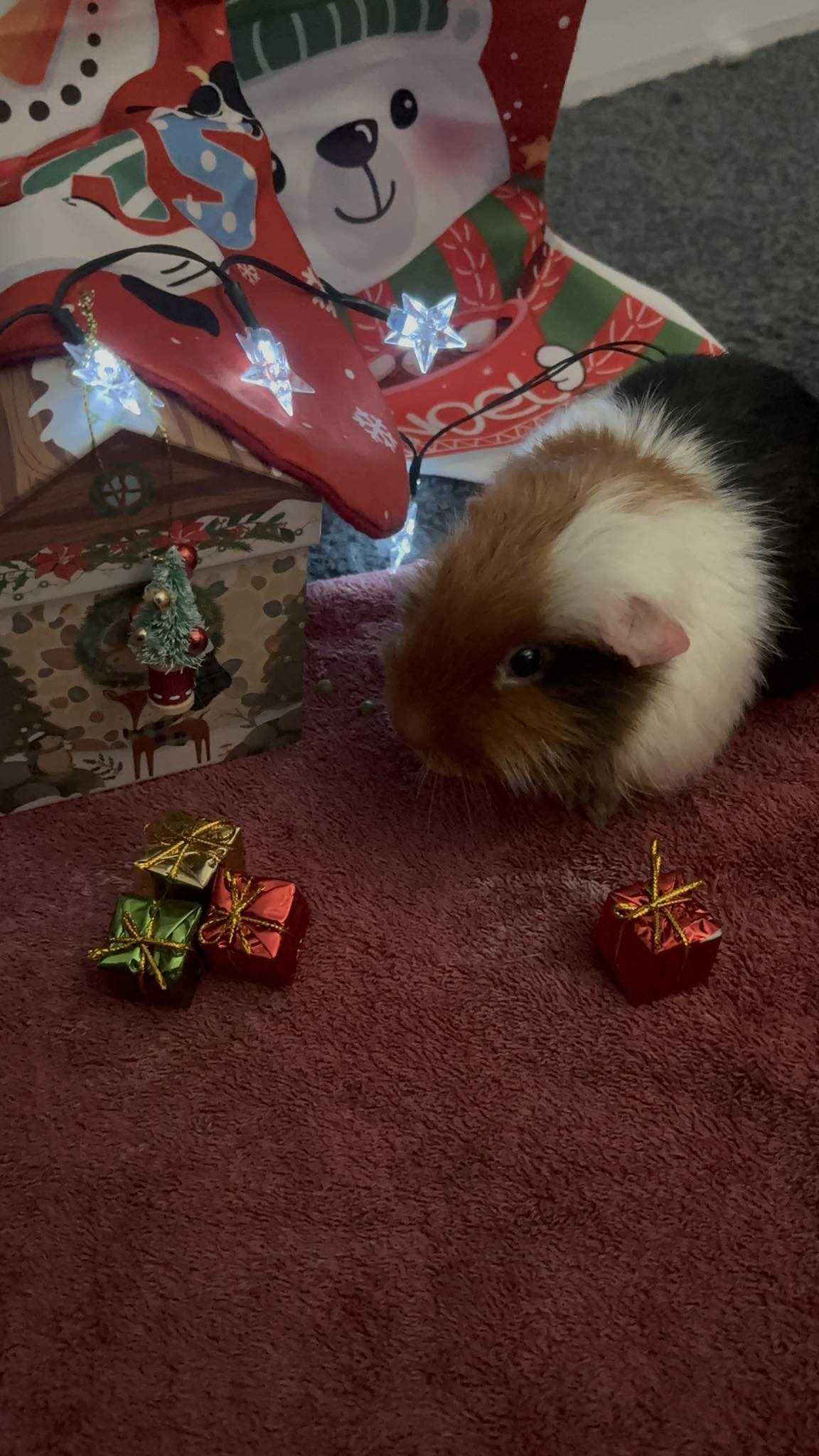
This one catches owners off guard, but Sarah sees it regularly. Guinea pigs are intensely social animals — when they have lived with a bonded companion for years, the death of that companion can cause genuine grief in the survivor.
A guinea pig that has just lost its companion may stop moving, stop eating, and stop responding to people. The animal is grieving, in the most genuine sense of the word. We have seen guinea pigs decline within days of losing their friend.
This is not “they will get over it.” Without intervention, the grieving guinea pig can stop eating entirely and develop gut stasis on top of the emotional distress.
What to do
First — contact a vet to rule out physical illness. Sometimes both animals were unwell and we only noticed when one died. Once illness is ruled out, the priority is companionship. A lone guinea pig is at high risk of declining further. Come and see us at Paradise Pets — we have a proper introduction process for bonding new companions and we can guide you through it gently. The other option is to provide significantly more daily human interaction, but this is not a substitute for another guinea pig long-term.
Cause 4: Dental Problems
This is one of the most common issues Sarah sees, and it is also one of the most preventable. Guinea pig teeth grow continuously throughout their lives. They are designed to be worn down by constant grazing on hay and grass. When the diet is wrong, or when teeth do not align properly, they can overgrow — and overgrown teeth cut into the cheeks and tongue, making eating painful, sometimes impossible.
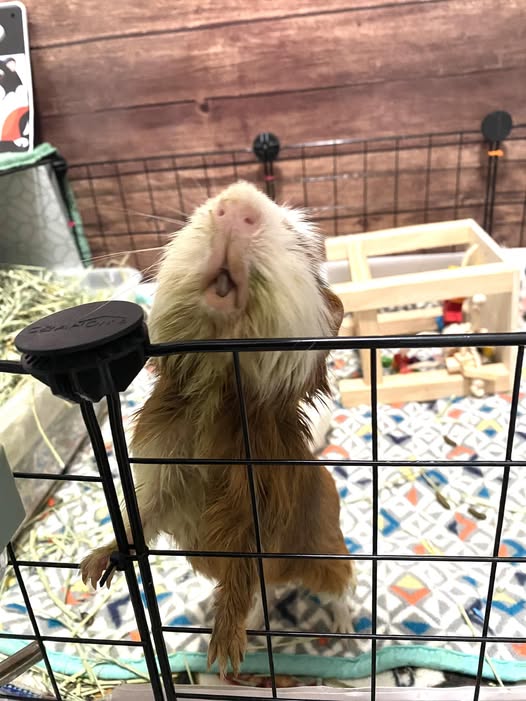
A guinea pig with dental problems will gradually stop eating, lose weight, develop wet fur around the mouth (from drooling), and eventually stop moving as it weakens.
- Animal eats less and less over days or weeks
- Drops food while trying to eat
- Wet fur or staining around the mouth and chin
- Visible weight loss — ribs and spine more prominent
- Bad breath in some cases
- Eventually becomes withdrawn and stops moving
What to do
This is a vet visit, and ideally an exotic vet who has experience with guinea pig dentistry. Overgrown teeth need to be filed down under sedation. Once done, the animal usually recovers quickly — but the underlying cause (often poor diet or genetics) needs addressing to prevent it recurring.
The best prevention is unlimited hay from day one. We covered this in detail in our guide on why guinea pigs are not easy pets — diet is the foundation of guinea pig health.
Cause 5: Respiratory Infection
Guinea pigs are particularly susceptible to respiratory infections — pneumonia, in particular, is one of the leading causes of death in pet guinea pigs in the UK. These infections can develop quickly, especially in animals that are already stressed, cold, or kept in damp conditions.
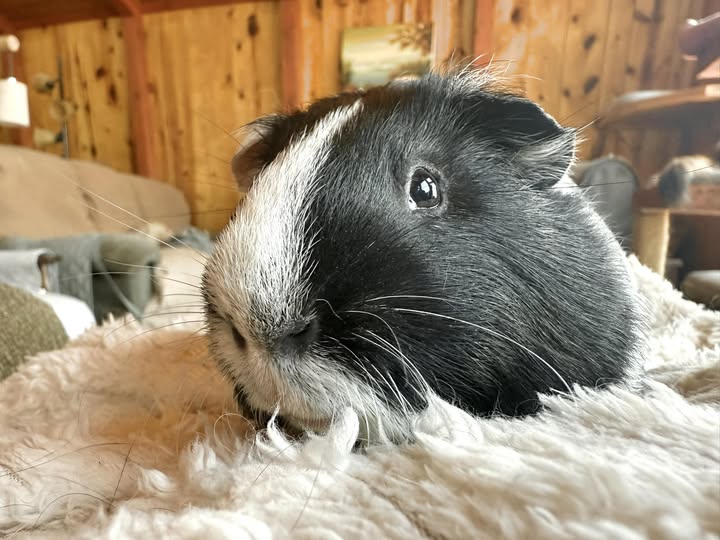
A guinea pig with a respiratory infection will sit still, breathe with effort, sometimes with a wet nose or eyes, and may make clicking or wheezing sounds when breathing. The animal often looks fluffed up and unwell.
- Laboured or rapid breathing — sometimes visible chest movement
- Clicking, wheezing, or crackling sounds when breathing
- Discharge from the nose or eyes
- Sneezing
- Loss of appetite and energy
- Hunched, miserable-looking posture
What to do
Same-day vet visit. Respiratory infections in guinea pigs progress fast and almost always need antibiotics. Without treatment, pneumonia can be fatal within a day or two. While you are arranging the vet, keep the animal warm, dry, and as stress-free as possible.
Cause 6: Old Age And End Of Life
This is the saddest cause on the list, but it does need to be talked about honestly. A guinea pig that is 6 or 7 years old or more, that has gradually slowed down over months, may be reaching the natural end of its life.
The signs are usually gradual rather than sudden — increasing sleeping, less interest in food, less responsive, eventually sitting still for long periods. This is heartbreaking but it is also the most natural thing in the world.
What to do
Even in old age cases, a vet visit is worthwhile to rule out treatable conditions. Sometimes what looks like “natural decline” is actually arthritis or a chronic infection that can be managed. If the vet confirms the animal is genuinely at end of life, your job becomes about comfort — warmth, easy access to food and water, gentle company, and quiet. There may also come a point where the kindest thing is to discuss euthanasia with your vet. That is a difficult conversation, but it is sometimes the right one.
Information To Give The Vet When You Call
Call first. Share what you already know; do not delay veterinary contact to complete this list.
- Age and medical history: mention known conditions and any prescribed medicines.
- When you noticed the change: say whether it began suddenly or developed over time.
- Eating, drinking and droppings: describe any reduction or change.
- Breathing and responsiveness: report anything unusual that you can observe without unnecessary handling.
- Environment and recent changes: mention cold or damp conditions, a move, or the loss of a companion.
These observations help the vet assess the situation. They do not identify the cause at home or in the shop. If the guinea pig feels cold, is weak or is unresponsive, tell the practice immediately and follow its instructions rather than trying to warm it before calling.
What Not To Do
Over the years, Sarah and I have also seen plenty of well-meaning owners do the wrong thing in a panic. Let us save you from the most common mistakes.
| What people do | Why it is wrong | What to do instead |
|---|---|---|
| Wait overnight | The animal can deteriorate fast — hours matter with guinea pigs | Call a vet or its out-of-hours service immediately |
| Force-feed water with a syringe | A weak guinea pig can aspirate fluid into the lungs and develop pneumonia | Offer water at floor level — let the animal drink if it can |
| Pick up and handle repeatedly | Stress alone can cause a sick guinea pig to crash | Minimal handling, quiet environment, low stress |
| Put on a hot water bottle directly | Direct heat can shock the system or cause burns | Warm the room gradually, hold the animal against your body |
| Try human medication | Most human medications are toxic to guinea pigs | Only give what an exotic vet has prescribed |
| Assume it is “just tired” | Guinea pigs do not stop moving for hours when healthy | Contact a vet immediately about unusual inactivity or other illness signs |
How To Prevent This Happening
Most of the cases Sarah and I see could have been avoided with the right setup from the start. Here is what we tell every new guinea pig owner.
- Always keep two guinea pigs — never one. Companionship is essential for their wellbeing.
- Feed unlimited hay — this should make up 80% of their diet. It keeps the gut moving and the teeth worn down.
- Provide vitamin C daily — through bell peppers, leafy greens, or a supplement. Guinea pigs cannot make their own.
- Check their accommodation — the RSPCA advises moving guinea pigs indoors below 15°C, with 17–20°C ideal for indoor rooms. Avoid draughts, damp and direct heat.
- Weigh weekly — weight loss is the first sign of illness, often before any visible symptoms.
- Have an exotic vet on standby — find one before you need them, not when you are panicking.
- Observe daily — five minutes of watching them every day will catch problems early.
Contact A Vet About Illness, Even When The Cause Is Unclear
Call a vet immediately about a guinea pig that is unusually inactive or seems ill. In particular, report:
- Reduced eating or drinking, or fewer or no droppings
- Difficulty breathing
- Injury, bleeding, collapse, seizures or reduced responsiveness
- Unusual coldness or weakness
Gradual decline and an unclear cause also need veterinary assessment. Do not wait for warming to work or ask the shop to decide whether the situation is serious. Paradise Pets can help with routine housing and feeding questions after urgent veterinary needs have been addressed.
Frequently Asked Questions
Is it normal for a guinea pig to sit still for long periods?
No. Healthy guinea pigs are constantly moving, grazing, or interacting with each other. A guinea pig that sits still for hours, especially if combined with reduced eating, is showing a warning sign that needs investigating.
How long can a guinea pig survive without eating?
There is no safe countdown to use at home. Contact your vet immediately about reduced eating or droppings, especially when the guinea pig is also unusually inactive.
What temperature is too cold for a guinea pig in the UK?
The RSPCA’s housing guidance recommends bringing guinea pigs indoors below 15°C and gives 17–20°C as ideal indoor room temperatures. These figures are not a test for whether an animal needs treatment. Contact a vet immediately about coldness with weakness, unusual inactivity or reduced responsiveness.
Can a guinea pig die of loneliness?
Loss of a companion can affect behaviour, but reduced eating or marked inactivity must not be assumed to be grief. Contact your vet immediately about these signs and seek advice about future companionship.
How quickly do I need to act if my guinea pig has stopped moving?
Contact a vet immediately. The practice can advise how urgently your guinea pig needs to be seen and what to do while arranging care. Do not use a fixed number of hours as a safe waiting period.
Where can I get urgent guinea pig advice in Swindon?
Contact your vet or its out-of-hours service immediately and explain that your guinea pig is not moving normally or appears unwell. Tell the practice the species and signs so it can advise where to attend. Do not delay care to visit the shop.
One Last Thing From Us
A guinea pig that has stopped moving is not a problem you can sleep on. We know how easy it is, when you are tired and worried, to think “let me see how she is in the morning.” Please do not do that with these animals. In Sarah’s 40 years of experience, the difference between a guinea pig that recovered and one that did not has more often than not been hours.
The lady I mentioned at the start of this article? Her guinea pig had gut stasis. We told her to go straight to the exotic vet, which she did. The vet gave fluids, pain relief, and gut motility medication. She brought the guinea pig home that evening, and within 48 hours it was eating again. Three weeks later, the lady came back with a thank-you card.
That is the outcome you want. And the only way to get it is to act when you see the signs — not the day after, not the week after, but today.
If your guinea pig is not moving normally or appears unwell, phone a vet immediately. If you are unsure how serious the signs are, describe them to the veterinary team rather than visiting the shop first.
Guinea Pig Not Moving Normally? Contact A Vet Immediately
For illness or unusual inactivity, call your vet or its out-of-hours service now and follow its advice. The Paradise Pets details below are for routine pet-care and setup enquiries; do not use a shop visit or video as a substitute for veterinary assessment.