
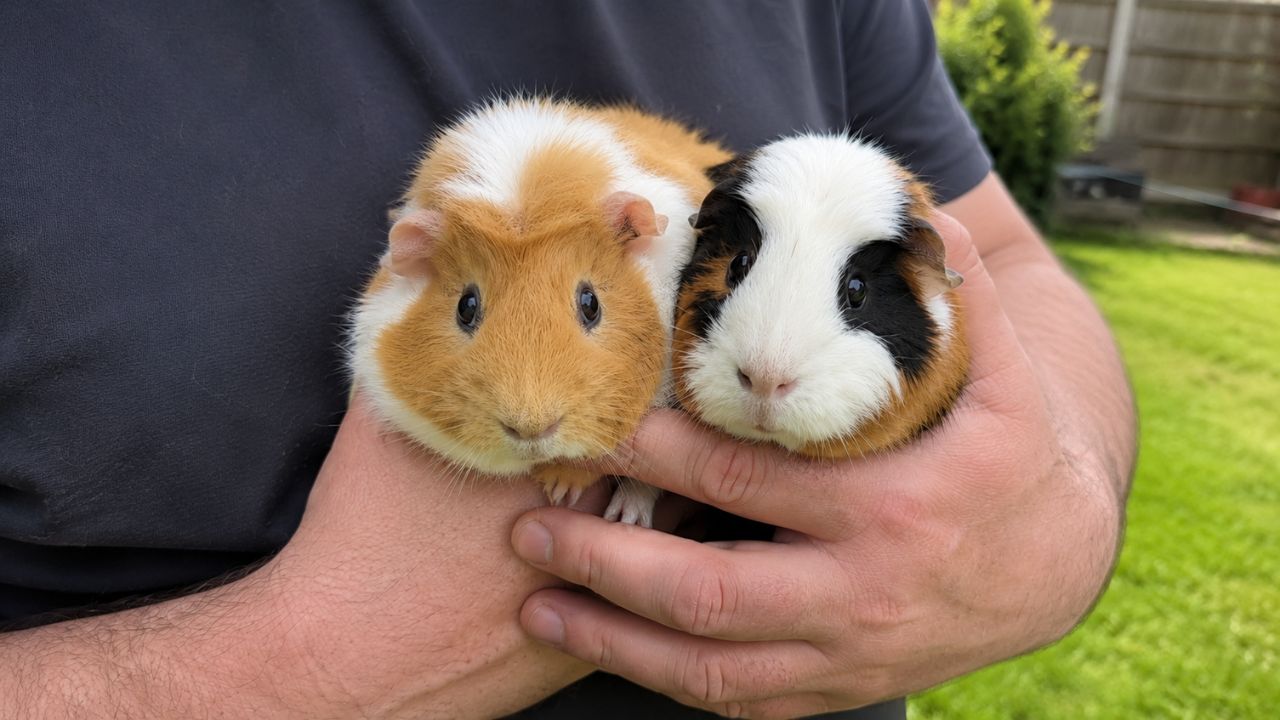

Guinea pigs can be rewarding family pets, but they depend on an adult for daily food, cleaning, observation and veterinary care. Start with a suitable pair or group, enough usable space and a realistic plan for their whole lives.
Updated 24 September 2026: expanded the housing and daily-care checklist, clarified autumn planning and revised the guidance on illness.
Before bringing guinea pigs home
- Choose the responsible adult. Children can help, but an adult needs to notice problems and arrange care.
- Measure the space. Plan the sleeping and exercise areas together before buying equipment.
- Find a vet. Confirm the practice treats guinea pigs and save its emergency contact details.
- Plan holidays and costs. Allow for hay, food, bedding, replacement equipment and veterinary bills, with a reliable carer when you are away.
- Think beyond the first year. Guinea pigs commonly live five to seven years; enthusiasm for a new pet is only the start of that commitment.
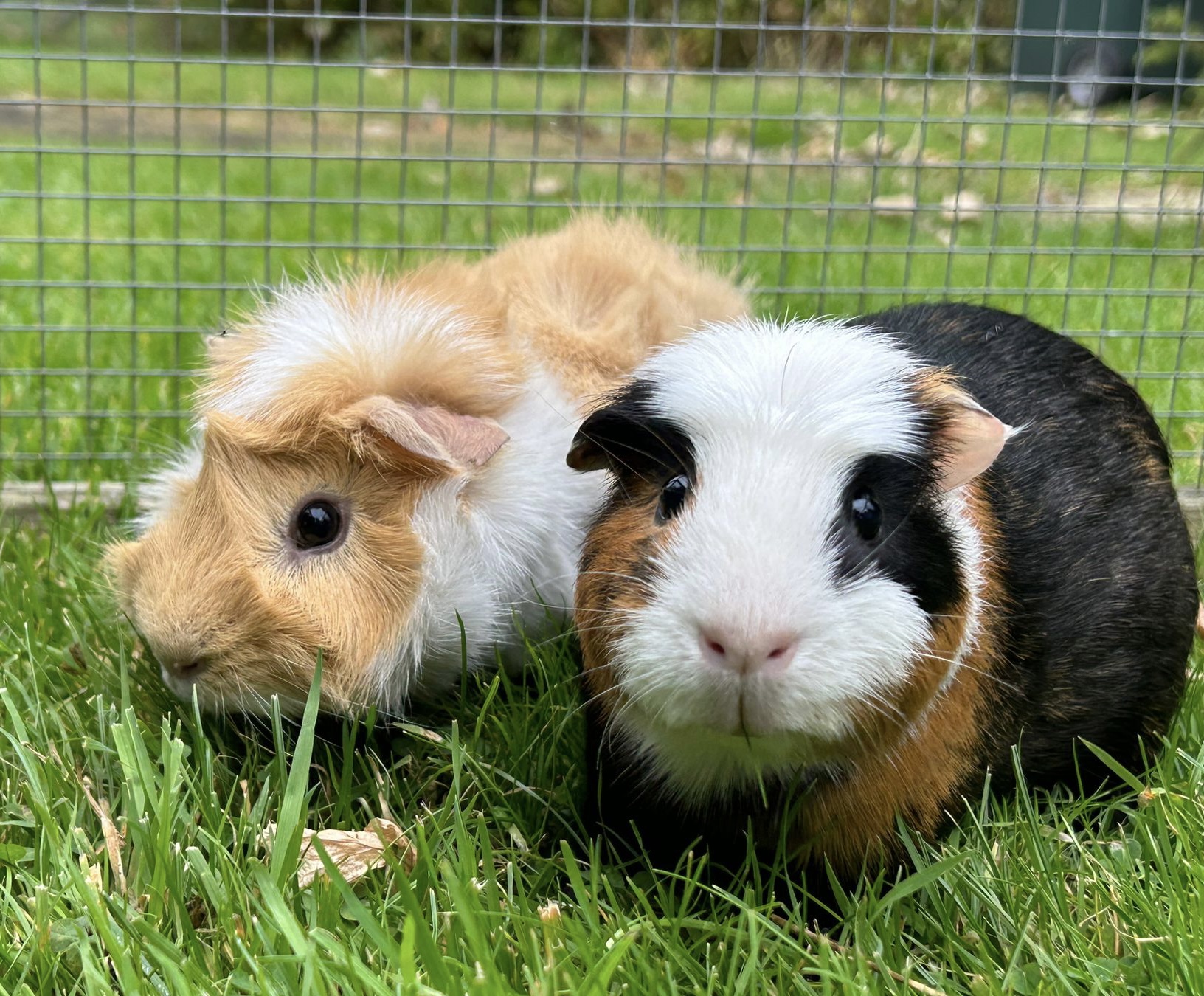
Company: a suitable guinea pig companion
Guinea pigs are social animals and should usually live with at least one friendly guinea pig. Human attention is valuable but does not replace appropriate company. The RSPCA’s companionship guidance explains that personality and compatibility matter: two females, a compatible male pair or a neutered male with females can work, with suitable introductions.
Ask a rescue, experienced behaviour professional or vet for help introducing an unfamiliar animal. Do not put a newcomer straight into an occupied enclosure and hope for the best. Provide enough food, water and hiding places so one animal cannot exclude another. If separation is needed for treatment or serious conflict, follow professional advice on how to manage it.
Do not choose a rabbit as a new companion for a guinea pig. Their behaviour and diets differ, and rabbits can injure guinea pigs. If they already live together, ask your vet for an appropriate plan rather than making an abrupt change without considering the animals.
Housing: measure floor space, not the box label
A small hutch on its own is not a complete home. Guinea pigs need a secure main living area, shelter and room to exercise. A second storey is not a substitute for usable floor space on one level.
Blue Cross gives these planning recommendations:
| Arrangement | Space guidance |
|---|---|
| Main living area for two females, with a separate run | At least 5ft × 2ft. |
| Main living area for a male pair or a trio, with a separate run | At least 6ft × 2ft. |
| Permanent indoor accommodation without a separate run | At least 6ft × 4ft. |
Its guinea pig care guide also specifies a run of at least 6ft × 4ft. These are attributed welfare recommendations, not a universal legal minimum or a guarantee that a product is suitable. More space is preferable.
Draw the layout to scale before buying. Mark the shelters, water and hay stations, then check there is still a clear route for both animals to move about. Check doors and ramps for trapping or falling risks. Keep the base solid, dry and comfortable, and make cleaning access practical for the adult doing the work.
A short autumn housing check
The RSPCA recommends moving outdoor guinea pigs indoors below 15°C. Do not wait for frost before making a plan. Check the temperature where the guinea pigs actually live, not only the weather forecast.
Prepare a quiet, ventilated indoor area away from draughts, radiators, sunny windows and other pets. Keep the pair together and bring familiar clean furnishings. Avoid repeated moves between very different temperatures. An unheated shed or garage is not automatically suitable: its actual conditions must be checked, and it must be free of vehicle exhaust and chemicals. Ask the vet about the needs of frail, ill or recovering animals.
Use comfortable, safe bedding, remove wet patches daily and check the enclosure for condensation. Review the arrangement again when spring temperatures change; moving indoors is a housing decision, not a reason to reduce space.
For a room-by-room planning table, moving-day checklist and household care routine, follow our guide to moving guinea pigs indoors for winter.
Food: hay first, with daily vitamin C
Guinea pigs cannot make their own vitamin C. They need a suitable diet every day: unrestricted feeding hay, appropriate fresh vegetables and a measured portion of guinea-pig-specific pellets, alongside constant clean water. Muesli mixes allow selective eating, so plain uniform pellets are a better choice.
Do not use rabbit food as the default substitute. Introduce dietary changes gradually and monitor what each animal eats. Our guinea pig feeding guide explains portions, food storage and a daily routine. A guinea pig eating less than normal needs a vet call, not simply a different bag of food.
Build trust and handle guinea pigs gently
Guinea pigs are prey animals. Being picked up — lifted off the ground, held in the air, unable to flee — is genuinely frightening for them, especially at first. An owner who does not understand this, and who handles a new guinea pig too roughly or too insistently in the first few weeks, can make the guinea pig more fearful of handling.
Taming a guinea pig takes time and patience. You cannot rush it. And the owners who get it right are the ones who let the guinea pig set the pace.
- For the first few days, just sit near the enclosure. Talk quietly. Let the guinea pig get used to your voice and your presence without any handling pressure.
- Offer food from your hand before you try to pick them up. A guinea pig that associates your hand with good things is a guinea pig that will start coming to you.
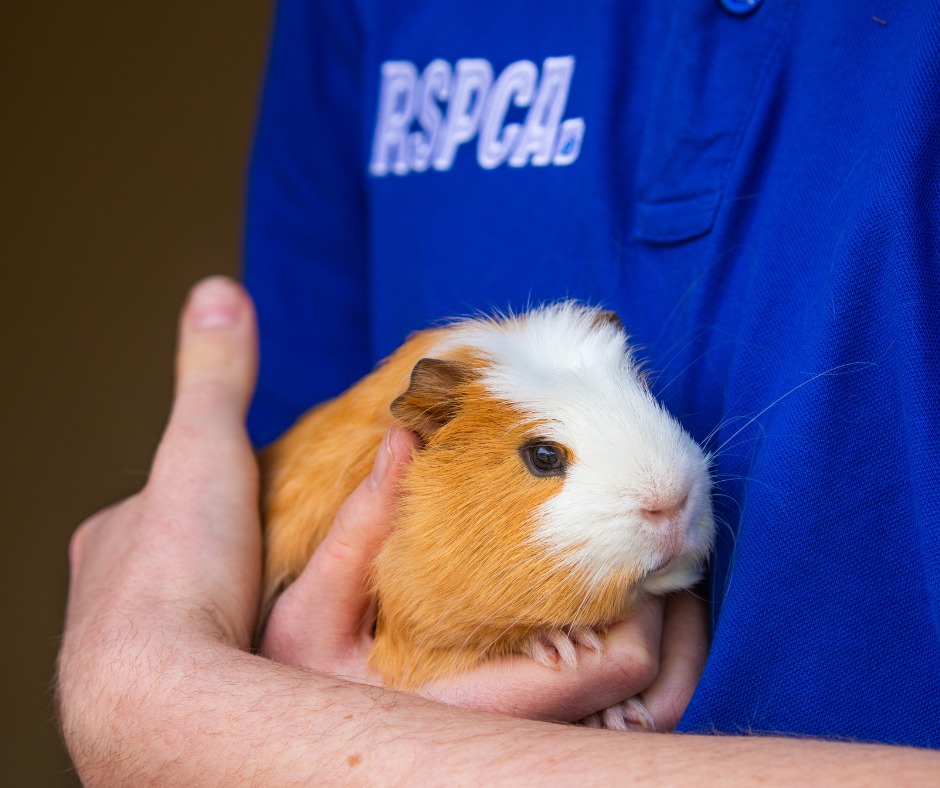
- When you do pick them up, support the whole body. One hand under the chest, one hand under the hindquarters. Never pick up by the scruff, and never let a guinea pig dangle.
- Keep early handling sessions short. Five minutes is plenty at first. End on a positive note — while the guinea pig is still calm, not after it has started struggling.
- Let children handle guinea pigs sitting on the floor. If a child drops a guinea pig from a height, the injury can be serious or fatal. Floor level is always safer.
Daily care that makes changes easier to spot
Spend time watching each guinea pig before disturbing the enclosure. Get to know how each one moves, eats, drinks and interacts; one quiet animal can be overlooked in a lively pair.
| When | Practical jobs |
|---|---|
| Morning and evening | See each guinea pig eat; replenish hay and water; check water delivery, droppings and soiled bedding. Look for a change in behaviour or movement. |
| During routine cleaning | Check shelter entrances, floor condition, loose fittings and whether both animals can reach the resources. |
| Regularly | Record each animal’s weight consistently and discuss changes with the vet. Check nails and coat condition; long-haired animals need particular grooming attention. |
| Before going away | Leave food instructions, the vet’s number and individual descriptions. Show the carer how to check the water and recognise each animal’s normal behaviour. |
When to contact a vet
The RSPCA recommends immediate veterinary advice if eating or drinking changes, or droppings reduce or stop. Do not wait until a guinea pig has been without food for 12 hours. Difficulty breathing, collapse, serious injury or a markedly swollen abdomen also need urgent veterinary attention.
Less dramatic changes matter too: hiding more, moving differently, weight loss, drooling, a dirty bottom or altered grooming can be signs of illness. A care checklist cannot diagnose the cause. Use only medicines prescribed or recommended for that animal by the vet, and never attempt to trim overgrown teeth yourself.
Budget for care before choosing the animals
Ask the practice about routine appointments and out-of-hours arrangements. Consider insurance and savings, checking what a policy covers rather than assuming the premium will be small or every condition included. The purchase price does not predict future veterinary costs.
A useful family discussion is: who can take the animals to the vet during a school or working day, who will pay, and who is the backup carer? Agree those answers while there is time to plan.
Questions families often ask
Are guinea pigs good pets for children?
They can be, with patient handling and adult responsibility. Suitability depends on the child and household, not a fixed birthday. Children should sit low to the ground when handling and always have appropriate supervision.
Can guinea pigs live outside in the UK?
Suitable outdoor housing needs protection from weather and predators, plenty of usable space and close monitoring. Have a practical indoor plan before cold weather; the seasonal guidance above applies even if they managed outdoors the previous year.
What should I bring when asking about a setup?
Bring measurements, photographs and the names of the foods you already use. Tell us how many animals will live there and where the enclosure will stand. Call Paradise Pets on 01793 512400 to check current availability before a special journey.
Thinking About Guinea Pigs? Come And See Us First
Bring your questions, your worries, and your honest situation. We will help you decide whether guinea pigs are right for your home — and if they are, make sure you go home properly set up. Free advice, no pressure, no obligation. That is how we have done things for nearly 40 years.