
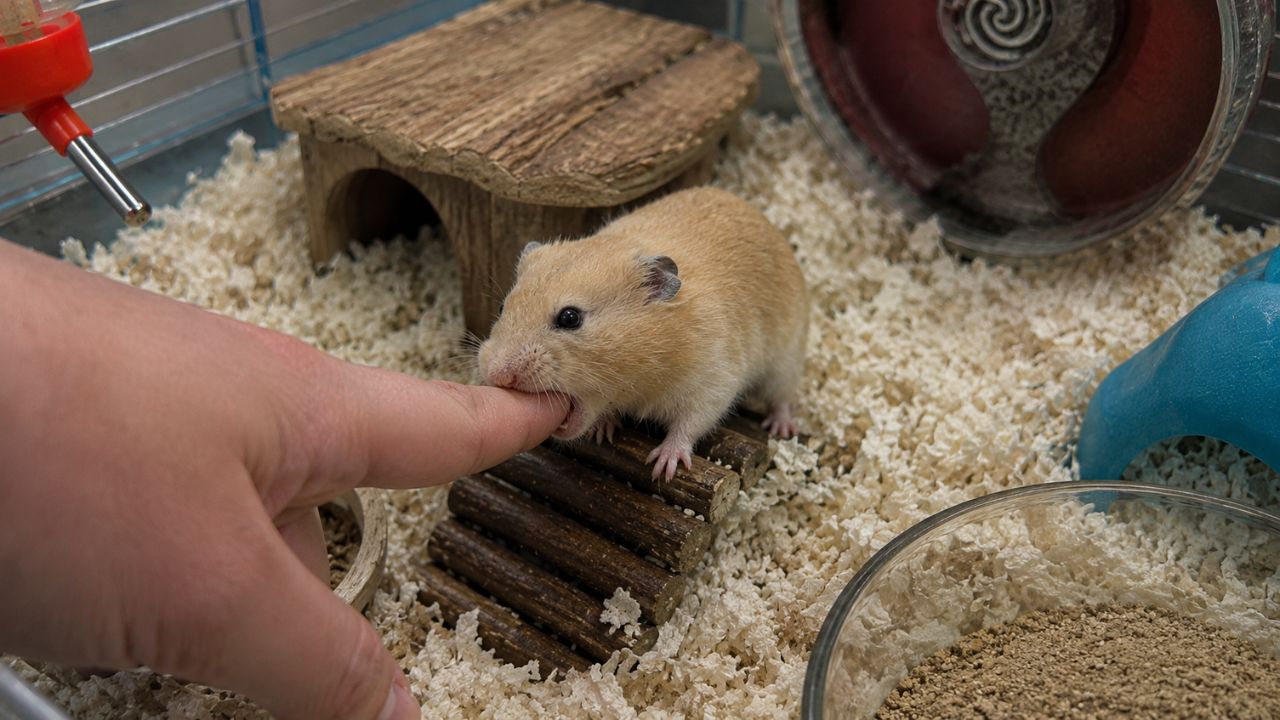

Neil has been keeping, breeding, and selling hamsters at Paradise Pets Swindon since 1988 — over 35 years of daily first-hand experience with these animals and the people who keep them. Sudden aggression in a hamster that was previously handleable is one of the most common concerns owners bring to the counter — and one of the most consistently misdiagnosed. Most owners assume the hamster has turned nasty. Almost none of them are right. This is his honest guide to why hamsters become suddenly aggressive, what each cause looks like, and what actually resolves it.
A father came into the shop with his daughter, who was about nine years old and looking genuinely upset. They had a Syrian hamster — a female, about four months old — that had been perfectly handleable for the first six weeks they had owned it. Then, apparently overnight, it had started biting. Hard. Every time either of them tried to pick it up.
The daughter had not done anything differently. The father had not done anything differently. The hamster had not been dropped or frightened by anything specific they could identify. It had just changed.
I asked a few questions. When did the biting start? About three weeks ago. Was the hamster also more active than before, spending more time running and moving around? Yes, noticeably. Was it sometimes carrying bedding into a corner and rearranging it obsessively? Actually, yes.
I told them the hamster had almost certainly come into her first oestrus cycle — into season, in plain terms — and that the aggression was hormonal, temporary, and entirely normal. Female Syrian hamsters cycle roughly every four days. During the peak of the cycle they can become significantly more defensive and reactive. The hamster had not turned nasty. She was experiencing a biological process that most owners of female hamsters are never told about before they buy the animal.
The daughter looked considerably more cheerful. The father looked like someone who wished he had been told this six weeks ago.
That is the thing about sudden hamster aggression. Almost every case has an explanation. And almost every explanation is something the owner had no idea existed before it happened.
Why Hamsters Become Suddenly Aggressive — The Honest Explanation
Before I go through the specific causes, I want to explain the context that makes hamster aggression make sense — because without that context, owners keep looking for behavioural solutions to what are almost always physical or environmental problems.
Hamsters are prey animals. Small, solitary in most species, and equipped with almost no defensive capability beyond their teeth. In the wild, a hamster that is caught off guard, handled when it is not alert, or approached while it is deep in sleep will bite — not out of character, but out of survival. The bite is not aggression in the human sense of the word. It is a defensive response from an animal that woke up to find something large gripping it before it had time to assess whether that something was safe.
Add to this the hormonal cycles of female hamsters, the pain responses of a sick or injured animal, the territorial imperative of a hamster whose cage has been cleaned and its scent removed, the stress response of a hamster in a too-small enclosure — and you have a full picture of why sudden aggression almost always has a specific, identifiable cause rather than being a character change in the animal.
- Hamsters do not become randomly aggressive — every bite has a trigger; finding the trigger is the whole task
- The most common handling mistake — waking a hamster that is still in deep sleep; a hamster woken suddenly from deep sleep will almost always bite, regardless of how tame it is; this is reflex, not personality
- Sudden aggression after a period of being handleable — almost always indicates a change in something; hormonal cycle, illness, environmental disruption, a change in handling approach; look for what changed before assuming the animal has changed
- Biting is the hamster’s only effective defence — it cannot run far, it cannot fly, it has no other mechanism; when it bites, something in its world has crossed a threshold; respecting that signal rather than pushing through it is both kinder and more effective
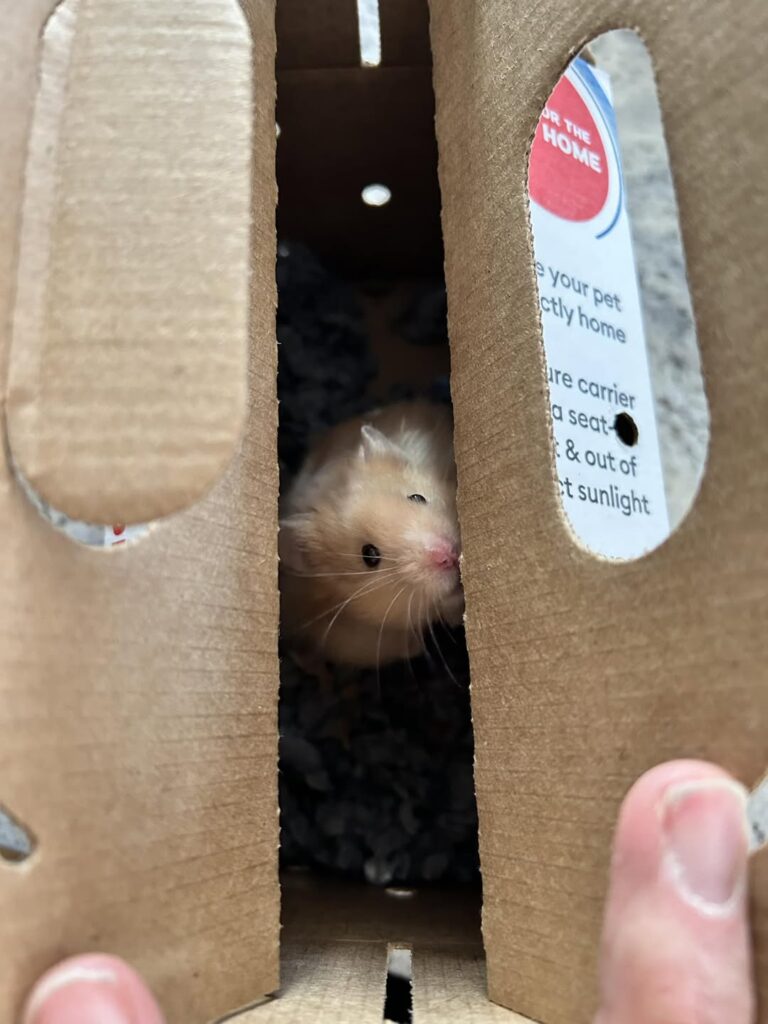
Once you understand this, the causes listed below each make immediate sense. And so does why trying to handle through the aggression — pushing past the biting to establish who is in charge — is exactly the wrong approach and makes the problem significantly worse.
The Causes — What Is Actually Making Your Hamster Bite
Here is a complete breakdown of the causes I see, in the order I consider them when an owner describes sudden aggression in a previously handleable hamster.
Being Woken During Deep Sleep
This is the single most common cause of biting in otherwise tame hamsters, and it is entirely the result of handling at the wrong time rather than any change in the animal.
Hamsters are nocturnal. Their deep sleep phase occurs during the day — and during deep sleep, a hamster is effectively unreachable by its own conscious awareness. When woken suddenly from this state, the first response is a startle-and-bite reflex that occurs before the hamster has any opportunity to recognise that the hand is familiar and safe. It is not biting you. It is biting whatever woke it up.
- Never handle a hamster that is in deep sleep — if the hamster is curled in a ball, feels limp or heavy, and is unresponsive to gentle sounds near the cage, it is in deep sleep; wait
- Handle in the early evening when the hamster is naturally becoming active — this is when the hamster is alert, engaged, and genuinely receptive to interaction; handling at this time produces a completely different experience from midday handling
- If you need to wake the hamster — make sounds near the cage first, talk quietly, tap gently on the cage side; allow the hamster to progress through lighter sleep stages and emerge voluntarily before attempting to pick it up
- Do not reach into the bedding to retrieve a sleeping hamster — this is the most alarming way possible to handle a prey animal; the hamster cannot see you coming and cannot assess whether you are a threat before you are already in contact with it
- A hamster that bites only during the day or when woken suddenly has not become aggressive — its handling schedule is wrong; adjust the timing and the biting stops
Hormonal Cycles in Female Syrian Hamsters
This is the cause I described in the opening story and it is one that surprises most owners completely — because it is almost never mentioned at point of sale.
Female Syrian hamsters have an oestrus cycle of approximately four days. During the peak of the cycle — which lasts roughly 12 hours — the female can become significantly more defensive, reactive, and bitey than at other points in the cycle. This is not a character change. It is a predictable hormonal event that occurs every four days throughout the adult life of an unspayed female Syrian hamster.
- The aggression is cyclical and temporary — it typically corresponds to a specific 12 to 24 hour window every four days; owners who track the pattern quickly recognise it as consistent and predictable
- Other signs of oestrus include a distinctive musky scent — particularly noticeable when the hamster is handled; the female may also adopt a rigid, flattened posture if pressure is applied to her back — this is lordosis, a normal oestrus behaviour, not illness or injury
- The hamster may also be more active and restless than usual — spending more time running and moving around during the oestrus peak
- The solution during oestrus is simply not to handle — on the days when the hamster is clearly in oestrus and reactive, leave it alone; handle freely on the intervening days when it is relaxed and receptive; this is management, not a long-term problem
- If the cyclical aggression is severely disruptive, discuss neutering with a vet experienced in small animals — this is a relatively minor procedure in hamsters and eliminates the hormonal cycle entirely

Pain or Illness
This is the cause I tell every owner to consider seriously when aggression has appeared suddenly with no obvious environmental or hormonal explanation — because a hamster in pain bites, and the bite is the first sign most owners get that something is physically wrong.

Hamsters are prey animals with a strong instinct to hide weakness. By the time a hamster looks visibly ill, it has typically been unwell for a significant period. Pain — from dental problems, from a tumour, from an injury, from an abscess — manifests as increased defensive reactivity before it manifests as obvious physical symptoms.
- Dental disease — hamster teeth are continuously growing and can overgrow or misalign; the resulting pain is chronic and significant; a hamster that has stopped eating seeds, is losing weight, or has wet fur around the mouth alongside new aggression may have a dental problem; this needs a vet
- Abscesses — particularly cheek pouch abscesses; the cheek pouches extend far back along the sides of the hamster’s head and body; an abscess in the pouch causes significant pain and may not be visible; if one side of the hamster’s face or flank looks asymmetrically swollen, this needs immediate veterinary attention
- Tumours — unfortunately common in hamsters, particularly in females and in older animals; a hamster with a developing tumour may become reactive when the affected area is touched or approached; run a hand gently along the body and feel for any lumps, asymmetry, or areas where the hamster flinches
- Injuries — a fall from an exercise wheel, an injury from cage furniture, a sprain or fracture; a hamster that is suddenly aggressive specifically when a particular part of the body is approached has almost certainly injured that area
- Wet tail (proliferative ileitis) — a serious bacterial infection causing severe diarrhoea, lethargy, and significant distress; a hamster with wet tail may bite when handled because it is in considerable pain; if the hamster has a wet or soiled tail area and is hunched and lethargic alongside new aggression, this is a same-day vet emergency
- Aggression that is localised — the hamster only bites when a specific area of its body is touched or approached — almost certainly indicates an injury, abscess, or tumour in that area
- Asymmetrical swelling anywhere on the face, cheeks, or body alongside new aggression
- Wet or soiled fur around the tail and hindquarters alongside lethargy and new biting — wet tail is a veterinary emergency
- Weight loss, reduced appetite, or wet fur around the mouth alongside aggression — dental disease is likely
- Any sudden change in behaviour in a hamster over 18 months old — tumours become increasingly common in older hamsters and pain is the most likely explanation for sudden behavioural change in an older animal
Cage Cleaning and Scent Disruption
This is a cause that owners almost never suspect — because cleaning the cage seems like exactly the right thing to do, and the aggression that follows seems completely disconnected from it.
Hamsters are intensely scent-oriented. Their territory is defined and maintained by scent — from their scent glands, their urine, their nest material, their own body. The cage, with all of its accumulated scent, is not just where the hamster lives. It is, in the hamster’s perception, who the hamster is and what belongs to it.
When the cage is thoroughly cleaned — all bedding replaced, all nest material discarded, all surfaces washed — the hamster returns to an environment that smells of nothing it recognises. Its territory has been erased. It is, from its perspective, in an unfamiliar space. And an unfamiliar space triggers the defensive, reactive behaviour appropriate to an unfamiliar and potentially dangerous situation.
- Never do a complete cage clean all at once — spot clean soiled areas regularly and replace only the heavily used bedding; retain a portion of the existing nest material and bedding to preserve the hamster’s scent profile
- When a full clean is necessary — replace a handful of the old bedding into the clean cage alongside the fresh material; place a small amount of the hamster’s existing nest material back into its sleeping area; this is enough to re-establish the scent signature and dramatically reduces post-clean aggression
- A hamster that bites every time after cage cleaning — and is otherwise fine — is reacting to scent erasure; the handling schedule needs to be adjusted to avoid handling for 24 to 48 hours after a full clean, while the hamster re-establishes its scent marks
- Avoid strongly scented cleaning products on the cage — bleach and other strongly scented cleaners take time to dissipate; a cage that smells of bleach is alarming to a scent-dependent animal; use pet-safe, low-odour cleaners and rinse thoroughly
Stress from Inadequate Housing
A hamster in a cage that is too small, too bare, too bright, or too exposed is a chronically stressed hamster — and chronic stress produces chronic reactive aggression. This is one of the most common underlying factors I see, and it is one that requires the most direct conversation with owners because most standard pet shop cages are genuinely inadequate.
- Cage size — PDSA’s hamster guide cites a minimum floor area of 100cm by 50cm, with more space preferable; provide room for deep bedding, hiding, exploring and foraging. Housing improvements do not rule out pain or illness as a cause of a sudden behaviour change.
- Bedding depth — hamsters are burrowing animals; they need a minimum of 20 to 30cm of bedding to dig and create burrow systems; a hamster in shallow bedding cannot perform this fundamental behaviour and the frustration and insecurity that results contributes to reactive aggression
- Wheel size — a Syrian hamster needs a wheel with a minimum running diameter of 28cm; smaller wheels cause spinal curvature and physical discomfort during running; a hamster in pain from an inadequate wheel is a hamster with a lower aggression threshold
- Light exposure — hamsters are naturally active in darkness; a cage in a brightly lit room, particularly one that receives direct sunlight, disrupts the hamster’s circadian rhythm, disturbs sleep quality, and increases generalised stress
- Noise and vibration — a cage positioned near a television, near a washing machine, or in a room with frequent loud activity disrupts sleep and increases arousal; a hamster that is chronically sleep-disturbed is a hamster with poor impulse control and a lower bite threshold

Handling Technique and Approach
Sometimes the aggression has not suddenly appeared — the handling approach has gradually become less careful, or the hamster has grown large enough that the approach that worked when it was small no longer works now that it is adult-sized and adult-strength.
- Approaching from above — the natural predator approach direction for a small prey animal is from above; a hand reaching into the cage from directly overhead triggers the defensive response reliably; approach from the side at the hamster’s level whenever possible
- Grabbing rather than scooping — a hamster should be scooped from beneath with cupped hands, not gripped from above; gripping feels like predator capture and produces a bite response
- Handling for too long — a hamster that is handled past its tolerance threshold will begin to show stress signals — stillness, tooth chattering, attempting to escape — before it bites; owners who miss these signals and continue handling will eventually get a bite; the hamster did not suddenly become aggressive; the signals were there and were not read
- Multiple people handling in sequence — a hamster that tolerates one familiar person may not tolerate multiple unfamiliar people in the same session; the cumulative handling time and the multiple different scents and approaches can push the hamster past its threshold
- Handling too soon after acquisition — a newly acquired hamster needs a minimum of one to two weeks to settle in before handling begins; handling before the hamster has established the cage as its safe territory produces the defensive responses of an animal that does not feel secure
Age-Related Changes
A hamster’s personality and handling tolerance can shift as it ages — in both directions. Some hamsters mellow with age; others become more defensive. Understanding where in the lifespan the hamster is helps interpret sudden changes.
- Adolescence in young hamsters — at around six to ten weeks, young hamsters go through a period of hormonal change that can produce temporary increased reactivity; a hamster that was handleable as a very young animal and became bitey at around two months may simply be going through adolescent hormonal change; this typically settles within a few weeks
- Older hamsters and pain — a hamster over 18 months old that has suddenly become more reactive is more likely experiencing pain from age-related conditions — tumours, dental changes, joint issues — than a behavioural shift; the vet visit is the first step, not the last resort
- Reduced vision and hearing in older animals — hamsters have relatively poor vision at all ages but it tends to worsen with age; an older hamster that is startling and biting when approached may simply not be detecting your approach as early as it did when younger; making more sound before handling gives the hamster more warning time
How To Rebuild Trust After Biting Has Started
Once a pattern of biting has been established, owners often make it worse by either avoiding the hamster entirely or pushing through the biting to desensitise it. Neither approach works. Here is what does.
- Address the underlying cause first — none of the trust-rebuilding steps below will work if the hamster is still in pain, still being woken during deep sleep, or still living in inadequate conditions; fix the cause, then rebuild
- Go back to basics — no picking up — allow the hamster to come to your hand voluntarily rather than picking it up; place your hand flat in the cage and let the hamster investigate it on its own terms; do this daily without any attempt to lift the hamster
- Use food to rebuild positive association — offer a small treat from your hand each session; the hamster learns that your hand produces good things rather than the removal experience of being lifted; this association rebuilds faster than most owners expect
- Only handle at the right time of day — early evening when the hamster is naturally alert; never during deep sleep; never when the hamster is showing stress signals
- Keep sessions very short — two to three minutes of positive, non-forced interaction is more valuable than ten minutes that ends with the hamster at its stress threshold; end every session while the hamster is still calm and engaged
- Never punish a bite — shouting, tapping the hamster, or putting it back sharply when it bites teaches the hamster that biting is followed by an unpleasant experience; this increases anxiety and makes the next session harder; the response to a bite should be to place the hand calmly back down and end the session

Frequently Asked Questions
My hamster was fine for weeks and then suddenly started biting. What happened?
Something changed. The most common changes that produce sudden biting in a previously handleable hamster are: the hamster reaching sexual maturity and beginning its hormonal cycle (particularly in females); the handling time shifting to daytime hours when the hamster is in deep sleep; a full cage clean that erased the hamster’s scent territory; the onset of pain from an injury, abscess, or developing tumour; or an environmental stressor that has increased the hamster’s baseline anxiety. Work through each of these systematically before concluding the hamster has simply changed personality.
My hamster only bites when I pick it up, not when it is in the cage. Is that normal?
Yes, and it tells you something specific. A hamster that is reactive to being lifted but calm within the cage is a hamster that is not adequately habituated to the picking-up experience — possibly because it is being handled at the wrong time of day, possibly because the lifting technique triggers the grab-from-above defensive response, possibly because it was not handled gradually enough during the taming period. Go back to basics — hand-sitting before lifting, correct time of day, scooping approach from the side — and the bite-on-lifting response typically resolves within a few weeks.
Could my hamster be biting because it smells food on my hands?
Occasionally, yes — a hamster that investigates a hand aggressively and nips at fingers is sometimes responding to a food scent; this is more exploratory than defensive and the nip is typically lighter than a defensive bite. Wash hands before handling to remove food and lotion scents. This is rarely the cause of sustained, serious biting but it does explain the occasional exploratory nip in an otherwise tame animal.
My hamster bites me but not my partner. Why?
Individual scent recognition — hamsters identify people largely by smell and they form specific associations with specific scents. If one person handles the hamster at the right time, with the right technique, and has built up a positive association, and another person handles less regularly or approaches differently, the hamster’s response to each will reflect those different histories. The less-trusted person needs to build their own association from scratch — hand sessions, treats from the hand, handling at the correct time — rather than relying on the hamster’s existing trust of someone else.
Is it safe to handle a biting hamster with gloves?
For very brief handling when necessary, thick gloves prevent injury. However, gloves also remove the scent and texture cues that allow the hamster to recognise you as familiar, which makes glove-handled sessions less effective for trust-building. Use gloves as a safety measure while you work through the trust-rebuilding process described above, not as the long-term approach to handling an aggressive hamster.
My hamster is aggressive and I think it might be in pain. What should I do?
Book an appointment with a vet experienced in small animals — specifically ask for someone with rodent or exotic small animal experience; a general small animal vet may have limited hamster-specific knowledge. In the meantime, minimise handling to absolute essentials, keep the cage environment as calm and undisturbed as possible, and do not attempt trust-building work until pain has been assessed and addressed. Pain-driven aggression does not respond to behavioural approaches and attempting to handle through it causes unnecessary distress to an already suffering animal.
Where can I get help with an aggressive hamster in Swindon?
Come in to Paradise Pets at Manor Garden Centre, Cheney Manor Industrial Estate, Swindon SN2 2QJ — or call us on 01793 512400. Tell me what is happening and when it started and I will tell you honestly what I think is causing it. If I think it needs a vet, I will tell you that rather than sending you home with a handling tip that will not fix a pain problem. Free advice, no obligation. That is how we have done things here for 35 years.
One Last Thing From Me
The father and daughter I mentioned at the start — the ones who came in about their biting Syrian female — came back about three months later. The daughter had learnt the oestrus cycle pattern and was handling the hamster on the days between cycles without any biting at all. She had also learnt to handle in the evening, to scoop rather than grab, and to end sessions before the hamster showed any stress signals.
The hamster was, by her description, perfectly tame — on the right days, handled the right way.
She said something that I thought was exactly right for a nine-year-old who had clearly thought carefully about it.
“She was not mean. She just needed me to understand her better.”
That is the honest truth about almost every case of sudden hamster aggression I have seen in 35 years. The hamster is not mean. It is not broken. It is not a bad hamster. It is an animal communicating something through the only mechanism it has — and the owner, through no fault of their own, did not have the information to understand what it was saying.
Now you have that information. Use it.
Hamster Suddenly Biting And Not Sure Why? Come In And Talk It Through.
Tell me what is happening, when it started, and what the hamster’s setup looks like. I will give you my honest read on what is most likely causing it and what to do first. Free advice, no obligation. That is how we have done things here for 35 years.