

Neil has been keeping, breeding, and selling hamsters at Paradise Pets Swindon since 1988 — over 35 years of daily first-hand experience with these animals and the people who keep them. Burrowing is the hamster behaviour that owners most consistently misunderstand — either worrying that it means something is wrong, or failing to understand why it matters enough to provide for it properly. This is his honest guide to why hamsters burrow, what happens when they cannot, and what every hamster cage in Britain should have but most do not.
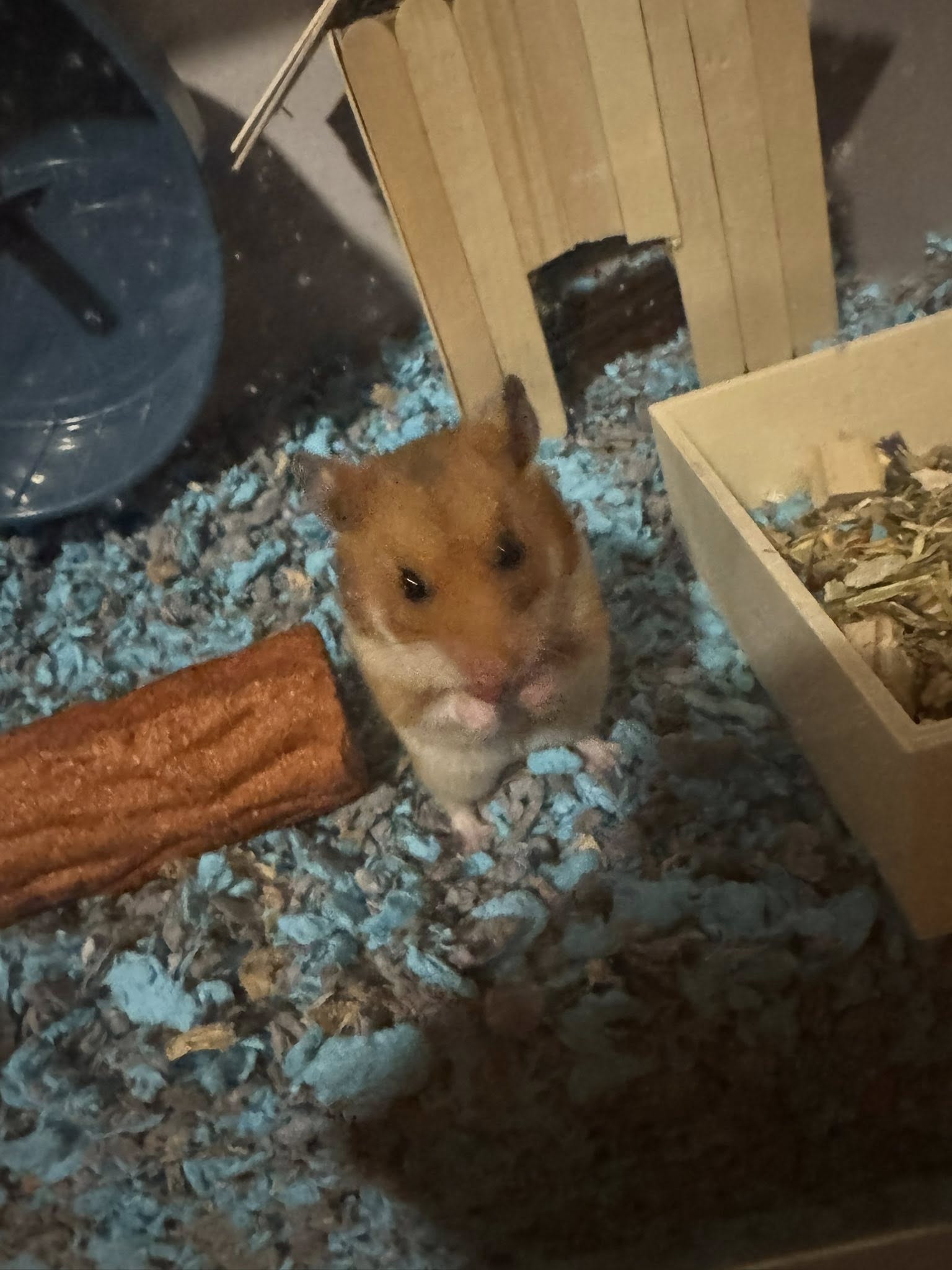
A father came into the shop on a weekday morning with a seven-year-old who had just received a hamster for her birthday. The hamster had been in its new cage for four days. Every morning when she went to check on it, the bedding had been completely rearranged — tunnelled through, pushed into one corner, compacted and restructured in ways that looked nothing like how she had set it up the evening before.
She wanted to know if the hamster was trying to escape. Or if it was bored. Or if something was wrong with it.
I told her the hamster was doing one of the most natural things a hamster can do. It was building its home. Not disturbing its cage — building its home. The fact that it was doing this every night was not a sign of a problem. It was a sign that the hamster was active, engaged with its environment, and doing exactly what its biology required of it.
The daughter looked pleased. The rearranged bedding had worried her because she thought it meant the hamster did not like what she had done. Now she understood it was the hamster making the space its own.
Then I told the father what I tell most new hamster owners — which is that whether the hamster can actually burrow properly depends entirely on how deep the bedding is, and that in the majority of starter setups in the UK, it is not deep enough. The hamster was doing what it could. Whether it could do it properly was a different question.
Why Hamsters Burrow — The Biology First
Before I go through what burrowing actually looks like and what it provides for the hamster, I want to explain the biology that drives it — because without that context, burrowing looks like restlessness or decoration rather than what it actually is.
Syrian hamsters — the most common pet hamster in the UK — are native to the arid semi-desert regions of Syria and neighbouring countries. In the wild, they live in complex burrow systems that they excavate themselves. These burrows are not simple holes. They are multi-chamber structures with distinct areas for sleeping, food storage, and waste. They extend to depths of one metre or more below the surface. They maintain a stable temperature and humidity regardless of what is happening above ground. They provide complete concealment from predators. They are, in the most literal sense, the hamster’s entire life infrastructure.
The domestic hamster has the same brain, the same hormonal system, and the same deeply hardwired behavioural drives as its wild ancestors. It does not know it lives in a plastic cage in a bedroom in Swindon. Its nervous system expects a burrow. When there is no burrow, the hamster does not simply adapt and move on — it experiences a state of low-level stress that is well-documented in small mammal welfare research. It tries to burrow in whatever substrate is available, however inadequate. It compresses bedding into corners trying to replicate a sleeping chamber. It attempts to hollow out the bedding layer even if the layer is only three centimetres deep.
- Burrowing is not optional enrichment — it is a fundamental behavioural need — in the same category as eating, sleeping, and running; denying it is not a minor welfare consideration, it is a significant one
- Wild Syrian hamsters excavate burrows to depths of one metre or more — the bedding depth that replicates this in captivity is at minimum 20 to 30 centimetres; most starter cages provide three to five centimetres; the gap between what is provided and what the animal needs is very large
- The burrow serves multiple functions simultaneously — temperature regulation, predator concealment, sleep environment, food storage, and a stable, scent-marked home territory; a hamster without a burrow lacks all of these at once
- Hamsters that cannot burrow develop stress-related behaviours — bar chewing, repetitive stereotypic movements, excessive wheel running, and general heightened reactivity; these are not personality traits, they are welfare indicators

What Hamster Burrowing Actually Looks Like — And What It Is Doing
Most owners observe the results of burrowing — the rearranged bedding, the tunnels, the compressed sleeping area — without understanding the specific things the hamster is trying to accomplish. Here is what each element of the behaviour is actually providing.
The Sleeping Chamber
The first priority in any hamster’s burrowing activity is establishing a sleeping chamber. This is the deepest, most enclosed part of the burrow — the area where the hamster spends its vulnerable sleeping hours completely concealed.
- Hamsters compact bedding into a tight, enclosed mass to create the sleeping chamber — they push material from the surrounding area inward and shape it from inside, creating a structure that holds its shape and provides insulation
- The sleeping chamber is lined with soft material — tissue, paper bedding, hay, or whatever soft material is available; hamsters will carry this material from wherever it is in the cage to the sleeping site; the carrying behaviour looks purposeful because it is
- The entrance to the sleeping chamber is typically small and plugged — a hamster that fills the entrance to its nest with bedding is not making a mistake; it is replicating the behaviour of sealing the burrow entrance to prevent predator access while sleeping
- In shallow bedding, the sleeping chamber attempt looks different — rather than tunnelling down and shaping a chamber, the hamster compresses material horizontally and creates a flattened nest; this is the best it can do with insufficient depth and it provides less thermal insulation and less concealment than a true buried chamber
Food Storage Tunnels
The second major element of wild hamster burrow architecture is the food store — a separate chamber where foraged food is brought and cached for later consumption. Domestic hamsters retain this behaviour completely.
- Hamsters fill their cheek pouches and carry food to a stored location — this is not hoarding or anxiety behaviour; it is exactly what wild hamsters do; food cached in one area of the cage is being managed, not stockpiled out of stress
- The food store is typically a separate area from the sleeping chamber — hamsters do not sleep where they store food; maintaining separation between these chambers is instinctive and reflects the wild burrow architecture
- Check the food store as part of daily observation — the food store tells you whether the hamster is eating; a cache that is not being consumed may indicate a health problem; a cache that grows significantly may indicate the hamster is eating less than normal
- Remove perishable food from the cache daily — fresh vegetables and fruits cached in the bedding will rot; check the hamster’s favourite caching locations daily and remove any fresh food that has been buried; this is particularly important in warm weather
The Latrine Area
Wild hamsters maintain a distinct latrine area in their burrow system — typically one of the uppermost and most accessible chambers, easily dug out and refreshed. Domestic hamsters retain this and will establish a specific corner or area of the cage as their toilet.
- A hamster that uses the same corner consistently for toileting is not making a mess — it is being fastidiously clean — the latrine instinct is strong and it means that the soiling in a hamster cage is concentrated, predictable, and easier to spot clean than people expect
- Spot cleaning the latrine area daily is both effective and welfare-appropriate — removing soiled material from the latrine area daily reduces odour and maintains hygiene without disrupting the rest of the burrow system; full cage cleans should be infrequent to avoid destroying the scent marking the hamster has established
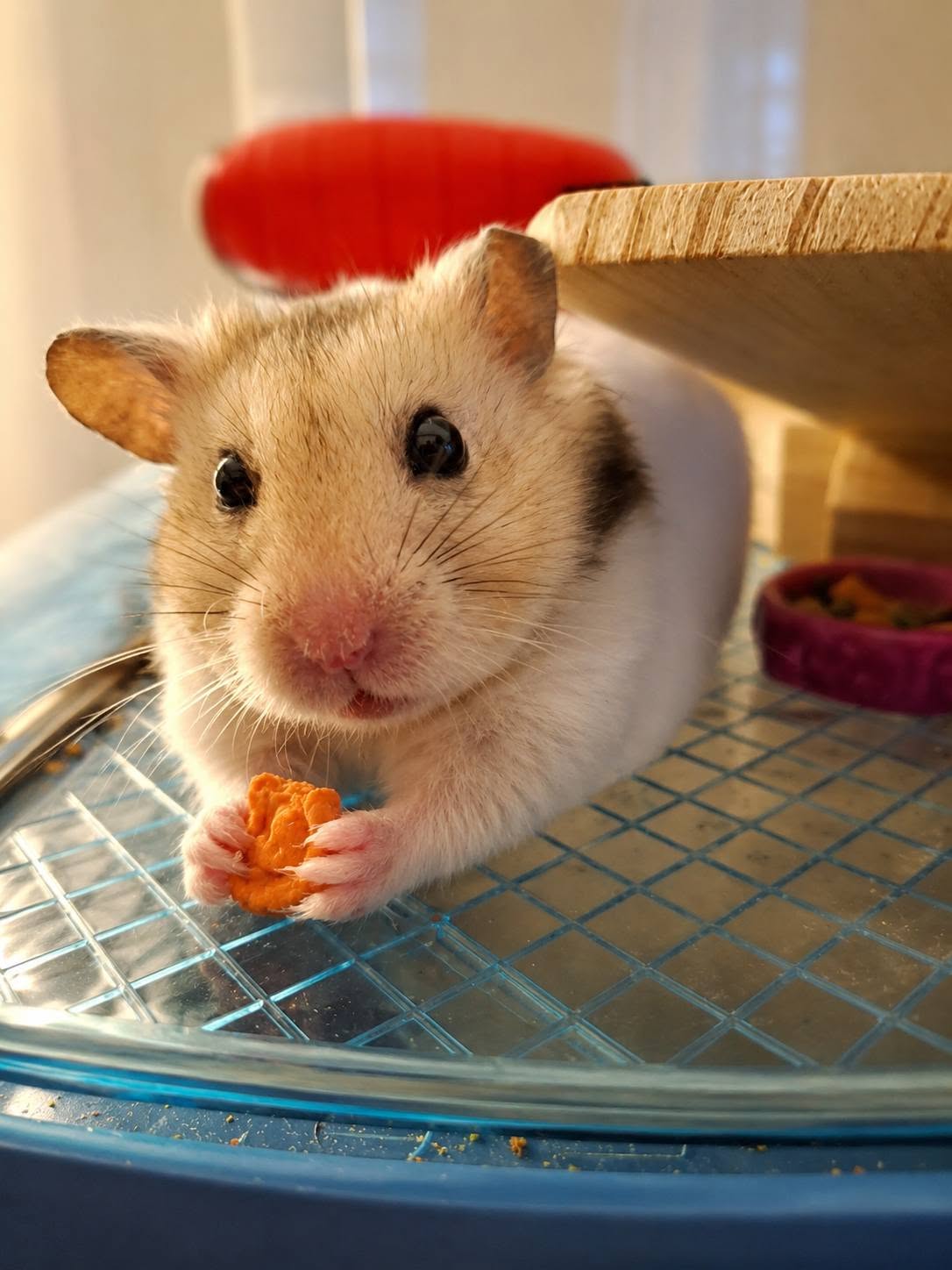
- Providing a sand bath in a corner near the latrine area is useful — hamsters will often use a sand-filled container as a latrine; the sand makes cleaning trivial and the hamster uses it for both toileting and grooming; this is worth doing in any hamster setup
What Happens When Hamsters Cannot Burrow Properly
This is the section of most practical importance for UK hamster owners, because the majority of pet hamsters in Britain are currently kept in setups that do not allow proper burrowing. The consequences are real and they show up in specific, observable ways.
- Bar chewing and cage rattling — one of the most common presentations of an under-burrowed hamster; the hamster chews at the cage bars or the cage structure not out of hunger or a desire to escape, but as a displacement activity for the burrowing drive that cannot be fulfilled; owners who address the bedding depth often find bar chewing stops entirely
- Excessive wheel running — a hamster with inadequate environmental complexity channels its activity into the wheel because it is the only available outlet; while some wheel running is normal and healthy, a hamster that runs almost continuously to the exclusion of other activities is often one that lacks burrowing opportunity as well as other environmental complexity
- Repetitive stereotypic movements — pacing, digging in corners repeatedly without making progress, running the same route around the cage; these fixed, repetitive behaviours are welfare indicators for an animal whose fundamental behavioural needs are not being met
- Hypervigilance and heightened reactivity — a hamster without adequate hiding and concealment is an anxious hamster; it cannot fully relax because it never achieves the sense of security that a proper burrow provides; this manifests as a hamster that startles easily, bites more readily, and is generally more difficult to handle than its temperament would otherwise produce
- Disrupted sleep — hamsters in shallow bedding cannot create an adequately dark, insulated sleeping chamber; they sleep in lighter, more exposed conditions; the sleep quality is lower and the hamster is effectively sleep-deprived over time; poor sleep affects immune function, mood, and overall health
- The standard starter cage sold with most hamster setups in UK pet shops has sides approximately 15 to 20 centimetres deep — which means even if filled to the top with bedding, it cannot provide the 20 to 30 centimetre minimum depth for adequate burrowing
- Most are filled with five to eight centimetres of bedding in practice, which is sufficient for the hamster to move around in but not sufficient for any meaningful burrowing behaviour
- Floor space matters as well as bedding depth: PDSA’s hamster guide cites at least 100cm by 50cm, with more space preferable. Deep bedding does not compensate for an enclosure with too little usable floor area.
- The practical solution is either a cage with sides deep enough to hold 25 to 30 centimetres of bedding, or a DIY deep-base setup using a large plastic storage container as a base with adequate ventilation added; many experienced UK hamster keepers use storage containers rather than purpose-built cages for exactly this reason
The Right Bedding — What Actually Works for Burrowing
Not all bedding materials support burrowing equally. The material needs to hold tunnel shape when compressed — if it collapses immediately, the hamster cannot create any meaningful burrow architecture regardless of depth.
- Paper-based bedding — the most versatile option — unscented paper bedding in a deep enough layer holds tunnel shape reasonably well; it is dust-free, generally safe, and available widely in the UK; the key is depth — paper bedding in a three centimetre layer does nothing useful; the same material in a 25 centimetre layer allows genuine burrowing
- Hemp bedding — excellent burrowing substrate; holds tunnel shape better than paper bedding, is dust-low, and does not have the odour of some wood-based products; increasingly available in the UK and worth seeking out for hamster keepers who want to prioritise burrowing opportunity
- Aspen shavings — safe and reasonable burrowing substrate though not as good at holding tunnel shape as paper or hemp; better than the soft wood shavings that should be avoided due to aromatic oils
- Avoid cedar and pine shavings — the aromatic oils in cedar and pine are respiratory irritants for small mammals; these were commonly sold as hamster bedding for decades and should not be used; they do not support good burrowing regardless of the safety concern
- Hay mixed into the bedding layer — adding a layer of hay within the bedding provides nesting material and structural variation; hamsters will incorporate hay into their sleeping chamber and the mixed texture creates a more naturalistic burrowing environment
- Avoid fluffy synthetic bedding entirely — the soft, cotton-wool-type synthetic bedding sold for small animals is a serious hazard; it does not support burrowing, it tangles around limbs and can cause amputations, and it can cause intestinal obstruction if ingested; remove any synthetic fluffy bedding and replace with appropriate substrate
How To Set Up A Cage That Supports Proper Burrowing
- Start with the right enclosure — allow at least 100cm by 50cm of usable floor space and room for at least 25cm of bedding, following the PDSA guidance above. It must also be secure, well ventilated and large enough for suitable enrichment.
- Fill to the correct depth — 25 centimetres minimum for a Syrian hamster; 20 centimetres as an absolute floor; less than this and meaningful burrowing is not possible regardless of how good the bedding material is
- Do not compact the bedding before adding the hamster — the hamster needs to compact it itself as part of the burrowing process; pre-compacted bedding does not allow the hamster to engage in the tunnelling behaviour that is itself part of what the hamster needs
- Mix the bedding layers to create variation — a layer of hay in the middle of the bedding layer, paper bedding above and below, creates variation in texture that makes the burrowing environment richer and more engaging
- Place the wheel at one end and food and water at the other — this creates spatial separation between activity and feeding areas and encourages the hamster to use different parts of the space; the burrowing will tend to concentrate in a specific area once the hamster has chosen a sleeping site, which is usually one of the quieter corners
- Spot clean the latrine area daily, leave the rest undisturbed — this is the most important maintenance principle for a hamster with deep bedding; daily disturbance of the whole cage destroys the burrow architecture the hamster has built and requires it to rebuild from scratch every day; spot clean only until the monthly full clean is due
Frequently Asked Questions
My hamster rearranges the bedding every night. Is something wrong?
No — the opposite. A hamster that actively rearranges and restructures its bedding every night is a hamster with the energy and drive to engage in its most fundamental behaviour. The rearranging is the hamster building and maintaining its home. The only thing to assess is whether the bedding is deep enough for the hamster to do what it is trying to do — if the bedding collapses into flat material rather than holding tunnel shapes, the hamster is working with inadequate substrate depth.
How deep should hamster bedding be?
A minimum of 20 centimetres for a dwarf hamster and 25 to 30 centimetres for a Syrian hamster. This is the depth at which genuine burrowing — tunnelling, chamber creation, and burrow maintenance — is possible. Less than this and the hamster is rearranging rather than burrowing. Most UK starter cages do not allow this depth because the sides are not deep enough to contain it.
My hamster seems to sleep in the same spot every day. Is that normal?
Yes, completely. Once a hamster has established its sleeping chamber — typically in the first few days in a new environment — it will use the same spot consistently. The sleeping chamber location is stable; it is the maintenance and structure of the chamber that the hamster adjusts nightly. A hamster that sleeps in the same corner every day has identified that corner as home; this is a good sign.
Should I clean out my hamster’s burrow?
No — not as a routine. The burrow is the hamster’s established home environment and its scent marks; destroying it with cleaning causes significant stress and requires the hamster to rebuild from scratch. Spot clean the latrine area daily. Conduct a full cage clean monthly, or less frequently if the cage is large enough that hygiene is maintained with spot cleaning alone. During a full clean, save a small amount of the old bedding to reintroduce the hamster’s scent to the fresh setup.
My hamster digs at the corners of the cage. What does that mean?
Almost always it means the bedding is too shallow. A hamster that digs persistently at the corners is trying to go deeper than the available substrate allows; when it hits the cage floor or the shallow base, it redirects to a corner which feels structurally different. This is one of the most reliable indicators that bedding depth is inadequate. Increase the bedding depth and the corner digging typically stops.
Where can I get advice about hamster housing and bedding in Swindon?
Come in to Paradise Pets at Manor Garden Centre, Cheney Manor Industrial Estate, Swindon SN2 2QJ — or call us on 01793 512400. If you want to talk through your current setup and what would improve it, I am happy to go through it. Free advice, no obligation. That is how we have done things here for 35 years.
One Last Thing From Me
The daughter whose hamster had been rearranging its bedding — I saw her again about six weeks later when her father came in for more bedding. She had, in the intervening weeks, convinced her parents to let her switch to a larger storage container as the cage and to fill it properly with deep bedding.
She described what had changed. The hamster now had actual tunnels — visible tunnels that held their shape overnight and were maintained and modified the following night. It had a clear sleeping chamber that it disappeared into every morning. Its food cache was in a completely different part of the space from where it slept. It had, in other words, a burrow.
“It looks like a proper little house now,” she said.
That is exactly what it is. Not a cage with bedding in it. A home that the hamster built for itself, in the material that was provided, to the standards that its biology requires.
The bedding depth made that possible. Before the depth, the hamster was doing what it could. With the depth, it is doing what it was built to do.
That distinction matters more than most hamster owners in this country currently know. I hope this article changes that for at least some of them.
Questions About Your Hamster’s Setup Or Bedding? Come In.
Tell me what you have and I will tell you honestly what the hamster can and cannot do in it, and what change would make the most difference. Free advice, no obligation. That is how we have done things here for 35 years.