
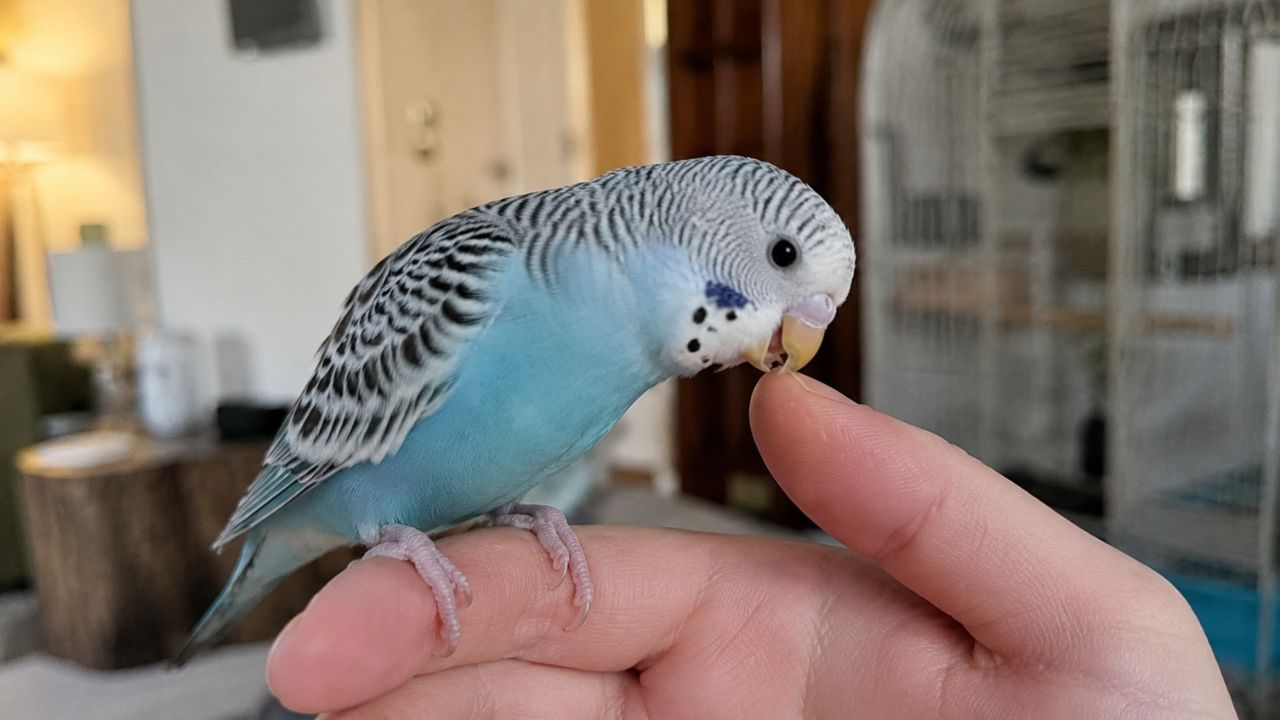

Neil has kept, bred, and sold budgies at Paradise Pets Swindon since 1988 — over 35 years of watching owners discover what life with a tame budgie actually looks like, often with a mixture of surprise and delight. The question of why a budgie licks its owner is one of the more pleasant ones he gets asked. It has a genuinely interesting answer — and it tells you something important about how your bird sees you.
A teenager came in last spring with what I can only describe as a triumphant expression.
Her budgie — a yellow male she had been patiently working with for about three months — had started licking her fingers. She had been trying to get this bird comfortable with her since the day she brought it home, following the taming process we had discussed when she bought it. And now, out of nowhere it seemed, the bird was sitting on her hand and running its tongue along her finger.
She wanted to know why it was doing it. Was it strange? Was it normal? What did it mean?
I told her it meant her three months of patient work had paid off. That what she was describing was one of the clearest signs of trust and acceptance a budgie can show a person, and that she should be pleased with herself. She looked rather pleased with herself.
The licking question — which comes in various forms, sometimes described as nibbling, sometimes as beaking, sometimes as the bird running its tongue along skin or hair — is one of the more pleasant questions I answer in this job. Because unlike most of the questions about budgies, which tend to involve something that has gone wrong, the licking question almost always involves something that has gone right.
First — Budgies Do Not Technically Lick
I want to start with a small but useful clarification, because understanding what is actually happening changes how you read the behaviour.
Budgies do not lick in the way a dog or cat licks. They do not have a long, flat tongue designed for lapping. A budgie’s tongue is short, muscular, and pointed at the tip — built for manipulating seeds and moving food around inside the beak, not for licking surfaces in the mammalian sense.
What owners describe as licking is almost always one of two things, or a combination of both: the bird pressing and moving its tongue against your skin while its beak is in contact with you, or the bird nibbling gently along a finger, a knuckle, a piece of hair. The sensation can feel very much like licking — a light, repetitive, wet-feeling contact — which is why people describe it that way. But the mechanism is slightly different from true licking.
The reason this distinction matters is that it tells you what the bird is actually doing. And what the bird is almost always actually doing, when it does this to a human it trusts, is preening.
The Real Reason — Your Budgie Is Preening You
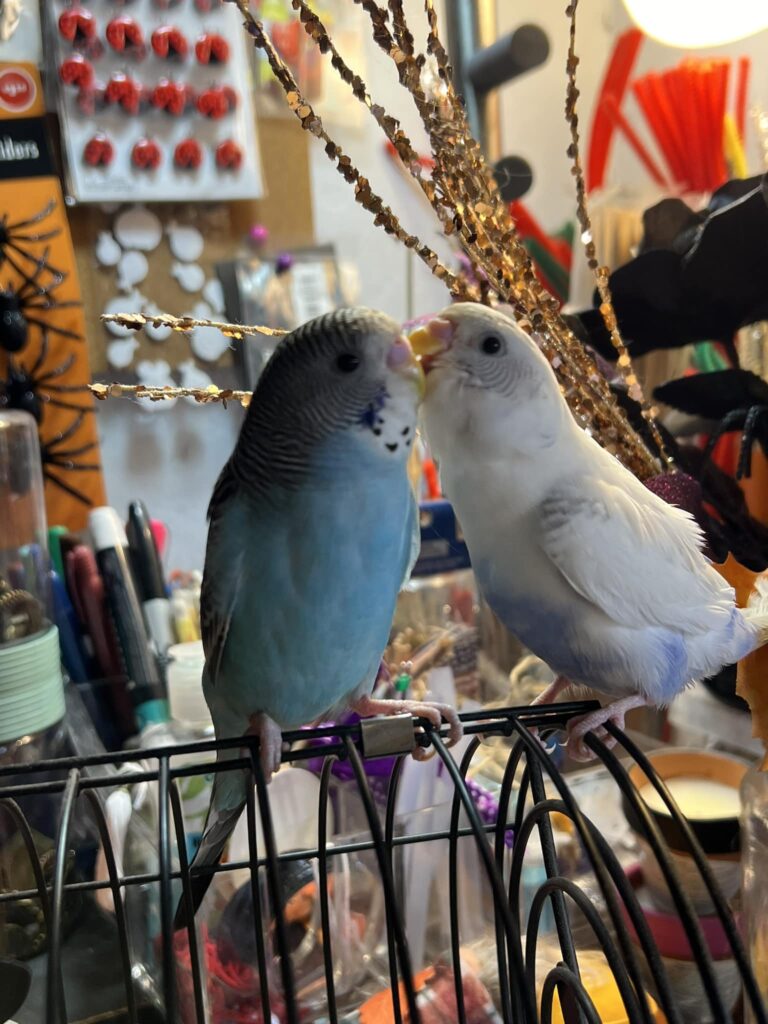
In the wild, budgies preen each other. Mutual preening — one bird working through the feathers and skin of another with its beak and tongue — is one of the central bonding behaviours in budgie flock life. It is how birds maintain each other’s feathers in the areas they cannot reach themselves: around the head, the crest, the back of the neck. It is social, it is practical, and it is a significant expression of trust and affection between individuals.
When a tame budgie nibbles at your finger, works its beak along your knuckle, runs its tongue along the skin of your hand, or investigates your hair or eyebrows with the same focused attention it would give to preening a flock mate — it is doing exactly the same thing. It has included you in its social group. You are, as far as this bird is concerned, a large and unusual flock member, and it is tending to you accordingly.
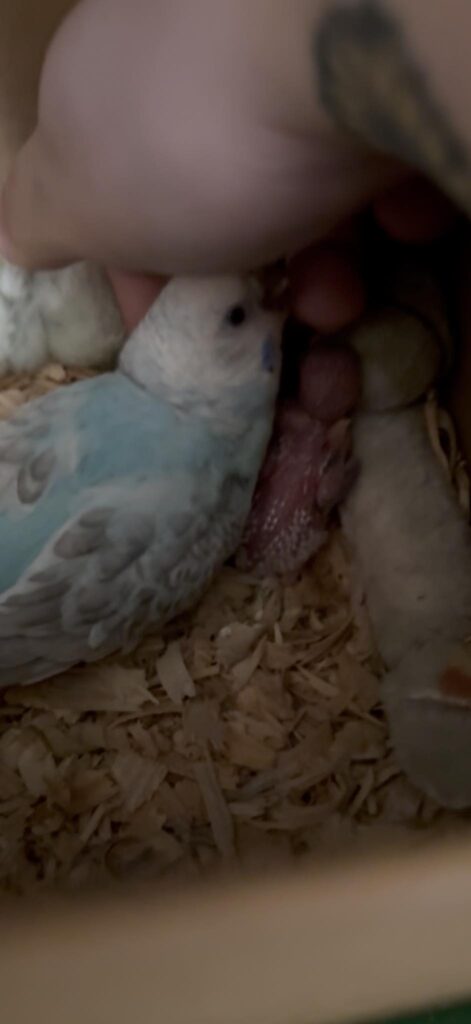
This is not a small thing. Preening is reserved for individuals a budgie trusts deeply. It does not do this with strangers. It does not do this with birds or people it has not accepted. The fact that it does it with you means something specific and significant: you are in. The taming process, however long it took, has produced a bird that now sees you as part of its flock rather than as a potential threat.
If you have been working patiently with your budgie and this behaviour has recently appeared, it is one of the clearest possible confirmations that the relationship has reached a genuine level of trust. You should be encouraged by it.
Salt and Taste Exploration — The Other Reason
Preening is the most meaningful reason, but it is not always the only one. Budgies are also exploratory animals that investigate their world partly through taste and touch, using the beak and tongue in much the same way that curious mammals might use their noses.
Human skin, particularly after exercise or in warm conditions, carries traces of salt from perspiration. Budgies have a modest but real interest in salt, and some birds that are not yet deeply tame will still approach a hand or arm with apparent interest in the salt on the skin. This is usually shorter and more nibble-focused than the extended, meditative preening behaviour of a deeply bonded bird — the bird is investigating and tasting rather than grooming.
Similarly, a budgie investigating something new on your person — a ring, a piece of jewellery, an unfamiliar texture of fabric, a new nail colour — may run its tongue and beak along the surface in exploratory tasting. This is curiosity rather than affection, and it tends to be brief and directed at the specific new thing rather than generalised across your hand.
Both of these are normal, harmless behaviours. The salt interest occasionally produces slightly more purposeful nibbling than pure grooming does — it can tip into something that pinches if the bird is really going for a patch of salt. Watch the bird’s body language and if it starts to feel less gentle and more purposeful, simply move your hand.
What It Means If Your Budgie Preens Your Hair or Eyebrows
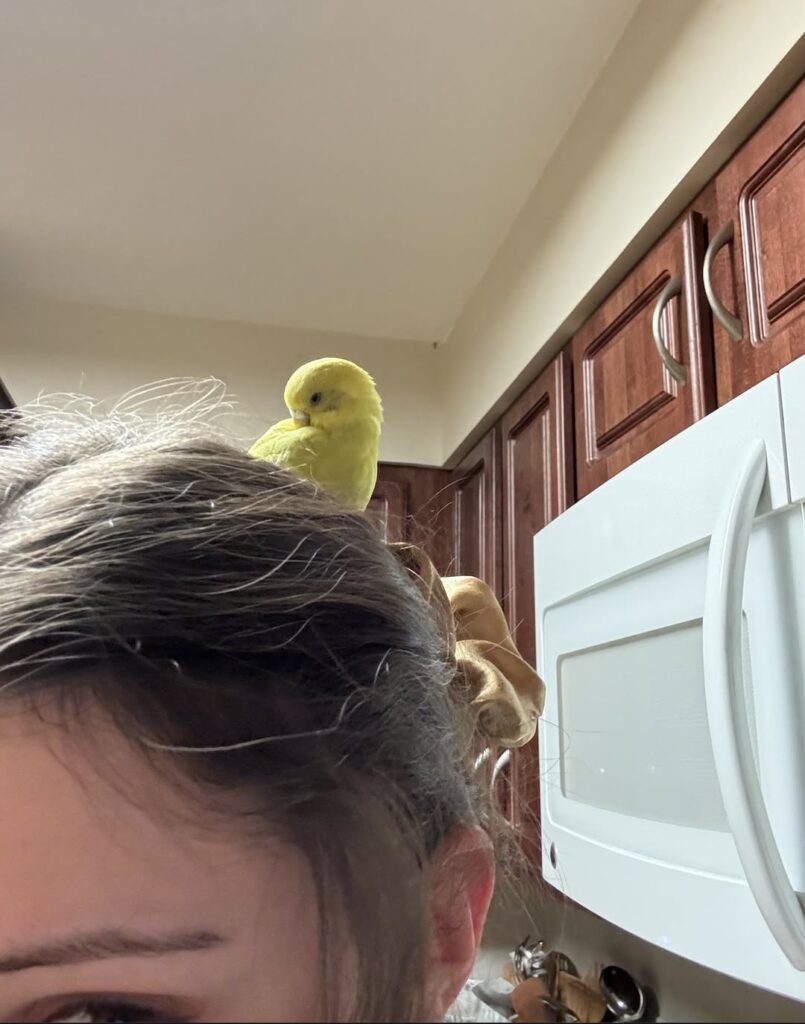
This one surprises owners enough that it deserves its own section. A budgie that sits on your head and works methodically through your hair — or that investigates your eyebrows with focused, serious attention — is doing exactly the same thing as a budgie that licks your finger. It is preening you around the head, which is precisely where birds preen each other in the wild.
The head and neck area is the one place a bird cannot preen itself. These are the feathers that require a flock mate. When a budgie comes specifically to your head and treats your hair or eyebrows as something requiring its attention, it is fulfilling one of the most fundamental social roles in its flock behaviour. It is being the bird that looks after the bits you cannot reach yourself.
This behaviour tends to appear once a bird is deeply bonded and confident — it typically develops in birds that have been tame for some time and have a strong relationship with their owner. It is, to my mind, one of the most charming things these birds do, and it is a clear sign that the relationship is in excellent shape.
The Difference Between Licking and Biting — Reading What the Bird Is Telling You
Because the beak is involved in both, it is worth being clear about what distinguishes preening from the kind of contact that is not positive.
Preening contact is gentle. It has a rhythmic, exploratory quality — the bird works methodically, with its body relaxed, often with its eyes slightly soft or partially closed in the way birds look when they are content. The beak pressure is light. The bird is leaning toward you rather than bracing to push away or flee. Its crest, if raised at all, is in a relaxed upright position rather than flattened against the head.
Biting is different in every quality. The pressure is deliberate and firm. The bird’s body is tense. It may be backing away from you while still making contact. The crest will typically be flattened. There is usually a warning in the moments before — a leaning away, an alarm call, a turning of the head — that the bird has given and that has not been responded to.
The reason this distinction matters is that owners sometimes misread early preening as biting attempts, particularly with a young bird whose beak contact is enthusiastic and not yet gentle. And occasionally owners misread the warnings before a bite as the beginning of preening, which leads to being bitten more firmly and then being confused about what happened.
If the contact is gentle, rhythmic, and the bird’s body language is relaxed — it is preening. Enjoy it.
If the contact is firm, the bird is tense, and there were warning signals you may have missed — it is a bite, and you should review whether you were doing something that made the bird uncomfortable just before it happened.
- Preening: Gentle, rhythmic, exploratory contact. Bird’s body is relaxed. Eyes may be soft. Bird is leaning toward you. Feels light and repetitive.
- Biting: Deliberate firm pressure. Bird’s body is tense. May be leaning away while biting. Crest flattened. Usually preceded by warning signals — alarm call, turning away, backing up.
- Exploratory tasting: Brief, directed at something specific and new. Not generalised across your hand. Usually shorter than preening.
- Salt-seeking nibble: Focused on a specific area, slightly more purposeful than preening. Usually brief. May become firmer if the bird is really interested in the salt — if so, simply move your hand.
Should You Encourage This Behaviour?
Generally, yes — with one small caveat.
Mutual preening is a sign of a healthy, trusting bond between you and your bird. It is not something you need to discourage or manage. A bird that wants to preen you is a bird that trusts you, and that trust is the foundation of everything good about life with a tame budgie. Let it happen. Enjoy it. It is one of the genuinely special things about keeping these birds.
The small caveat is this: make sure that what you are allowing the bird access to when it preens is safe for it. The most common practical concern is the products on your skin. Hand cream, nail varnish, perfume, sunscreen, hand sanitiser — all of these leave chemical residues on your skin that a preening bird will ingest in small amounts. Some are harmless in tiny quantities. Some are not.
The habit to develop is washing your hands before handling your bird, or before allowing it to preen you for extended periods — particularly if you have recently applied any product to your hands or arms. This is not about making the preening stop. It is about making sure what the bird tastes during preening is not a chemical residue.
A Note on Nail Varnish, Hand Cream, and Chemicals
This section is short because the principle is simple, but it is worth saying clearly because it is the one practical concern that arises from licking behaviour.
A budgie that preens your hands or arms will inevitably ingest small traces of whatever is on your skin. For most substances in small quantities this is not a crisis. For some it is worth being careful about.
Nail varnish and nail varnish remover contain compounds that are not appropriate for small birds to ingest, even in trace amounts. If your nails are painted and your budgie has a strong habit of working at your fingers, consider washing your hands thoroughly before handling, or at minimum giving the bird access to your palm and wrist rather than your fingertips.
Strongly scented hand creams — particularly those with artificial fragrance — can be irritating to a budgie’s respiratory system as well as introducing chemicals via the beak. Unscented hand cream, fully absorbed before handling, is far less of a concern than freshly applied scented products. As a general rule: no fresh products on your hands or arms before handling the bird, and wash before extended contact if you are uncertain.
When Licking Behaviour Might Be Worth Watching
In almost all cases, a budgie licking its owner is a positive sign and nothing to be concerned about. But there are a couple of situations where I would suggest paying slightly more attention.
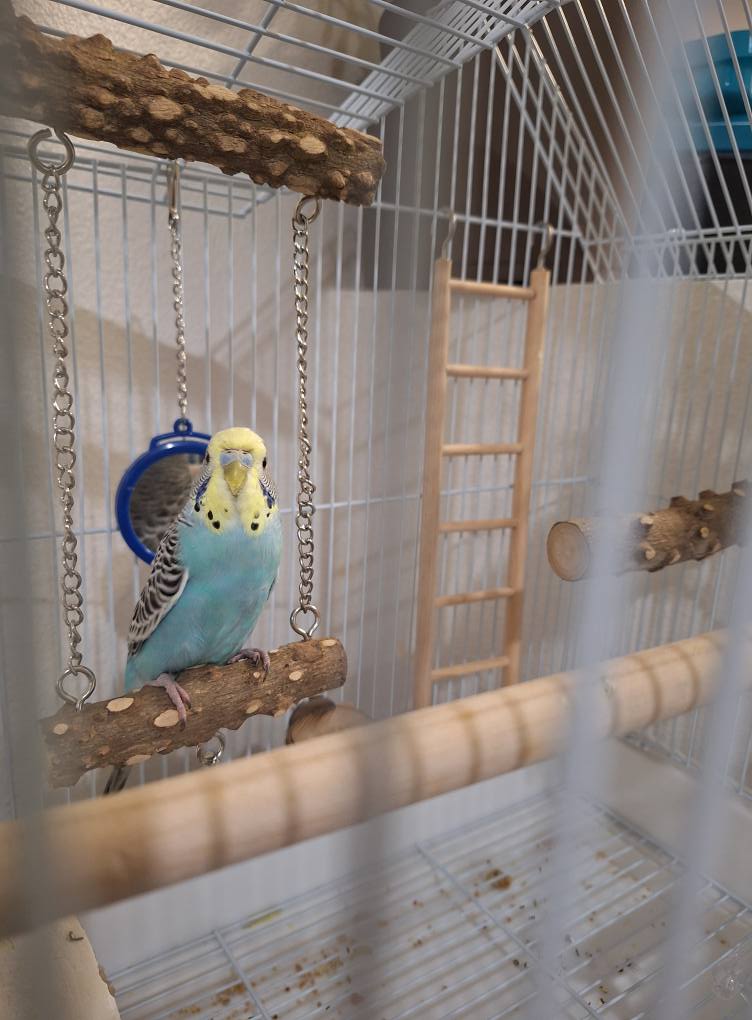
A bird that has suddenly begun licking or mouthing at things obsessively — not just you, but the cage bars, perches, toys, everything it encounters — may be experiencing a nutritional deficiency, particularly a mineral or calcium deficiency, and should be reviewed. Make sure cuttlebone is available in the cage and consider whether the diet is as complete as it should be.
A bird that licks specifically at its own feathers or skin to an unusual degree, or that is pulling or working at its feathers with the same intensity it might preen you, may be experiencing feather-destructive behaviour driven by stress, dietary issues, or skin irritation. This is a different concern from the social preening behaviour this article is mostly about, and if you are seeing it in combination with actual feather loss, it is worth a vet assessment.
Neither of these is common. The vast majority of budgies described as “licking” their owners are simply doing exactly what I described at the beginning — preening a trusted flock member and expressing, in the most characteristic budgie way, that you are fully accepted.
Quick Reference — What Different Types of Budgie Contact Actually Mean
| What You Are Seeing | What It Actually Means | What To Do |
|---|---|---|
| Gentle rhythmic nibbling along fingers or hand | Preening — deep trust and acceptance | Enjoy it. Ensure hands are clean and product-free before contact. |
| Bird working through your hair or attending to your eyebrows | Head preening — one of the strongest bonding behaviours possible | Nothing. This is the relationship working exactly as it should. |
| Brief, focused nibbling at a specific spot on your skin | Salt interest or exploratory tasting | Normal. If it becomes too firm, simply move your hand. |
| Bird investigating jewellery or unfamiliar texture | Curiosity — tasting something new | Normal exploratory behaviour. Be aware of metals and materials — some are not safe for birds to chew. |
| Firm, deliberate beak pressure that hurts | Bite — a defensive or warning signal | Review what was happening just before — was there a warning signal you missed? |
| Obsessive mouthing at everything — cage bars, perches, you | Possible mineral deficiency | Check cuttlebone is available and diet is adequate. Vet if persistent. |
| Preening own feathers excessively, feather loss | Feather-destructive behaviour — different concern | Vet assessment — may involve stress, nutrition, or skin irritation. |
What This Behaviour Is Actually Telling You
I want to end by saying something I mean sincerely, because I think it is worth hearing.
Keeping a budgie and getting it to the point where it trusts you enough to preen you is not a small achievement. It requires patience, consistency, and the kind of quiet observation of another creature’s behaviour that a lot of people find genuinely difficult to sustain over weeks or months. Most of the taming guides online make it sound quick and simple. It is often neither.
When a budgie reaches the point where it chooses to come to your hand and groom you — when it treats your fingers as part of the flock that needs tending — it is the culmination of everything that taming process was trying to achieve. The bird is not doing it because it is trained to. It is doing it because it has decided to. There is a real difference between those two things, and the fact that your bird has made that decision says something meaningful about the relationship you have built.
If you came to this article looking for a simple explanation of an odd behaviour — there it is. Your budgie is preening you. It trusts you. As far as I am concerned, after 35 years of watching these relationships develop, that is one of the nicer things a person can hear about their bird.
Frequently Asked Questions
Why does my budgie lick my fingers?
Almost certainly preening — the same mutual grooming behaviour budgies use with trusted flock mates in the wild. When a budgie runs its beak and tongue along your fingers in that gentle, rhythmic way, it is tending to you the way it would tend to another bird it had accepted as part of its group. It is one of the clearest signs of trust a budgie can show a human, and it typically appears after a period of patient, consistent taming work has built a genuine bond.
Is it safe for my budgie to lick me?
Yes, with the practical caveat that you should wash your hands before allowing extended beak contact, particularly if you have recently applied any product — hand cream, nail varnish, sunscreen, perfume. These leave chemical residues on the skin that a preening bird will ingest in small amounts. Clean, untreated skin is no concern at all. Freshly lotioned or painted hands are worth a quick wash first.
My budgie licks my eyebrows — is this normal?
Completely normal, and a sign that the bond between you is in excellent shape. The head and neck area is where birds preen each other in the wild, because these are the places they cannot reach themselves. When a budgie comes to your head and attends to your eyebrows or hair with focused seriousness, it is fulfilling one of the most fundamental flock behaviours — caring for the bits you cannot groom yourself. Take it as a compliment.
Why does my budgie nibble my skin but not lick it properly?
Because budgies do not technically lick the way mammals do. Their tongue is short and pointed rather than flat and broad. What you feel as licking is the combined sensation of the tongue pressing and the beak making gentle contact while the bird preens along your skin. The sensation is similar to licking but the mechanism is closer to gentle, exploratory nibbling. Either way, it is the same positive behaviour.
My budgie licks me and then bites — what does that mean?
Watch carefully for the transition. A bird that is preening contentedly and then suddenly bites harder has usually given a signal just before the bite that something changed — it may have become overstimulated, you may have moved in a way it did not expect, or it simply reached its comfort limit for that session. The preening does not mean the bird is always ready for unlimited contact. Learn to read when the preening is relaxed and when the bird’s body language is beginning to shift, and end the session on a positive note before it escalates.
My budgie only licks one person — why not me?
Because trust is built individually, not transferred. A budgie that preens one person has built that specific relationship with that specific person through time, consistency, and positive experience. It has not extended that trust to you yet — but that does not mean it cannot. The same patient taming approach that the other person used is what will build the same relationship with you. It is not about personality. It is about whether you have done the same work.
Where can I get a budgie in Swindon?
We always have budgies in stock at Paradise Pets — young, healthy birds at the right age for taming. Come and see us at Manor Garden Centre, Cheney Manor, Swindon SN2 2QJ, or call us on 01793 512400. We are happy to talk through the taming process and what to expect before you buy.
Questions About Your Budgie’s Behaviour? Come and Talk
If something your budgie is doing has surprised or puzzled you — good or otherwise — come in. I have been watching these birds for 35 years and there is very little I have not seen. Bring a short video on your phone if it helps. I will tell you what I think honestly, and I will not charge you for the conversation.