
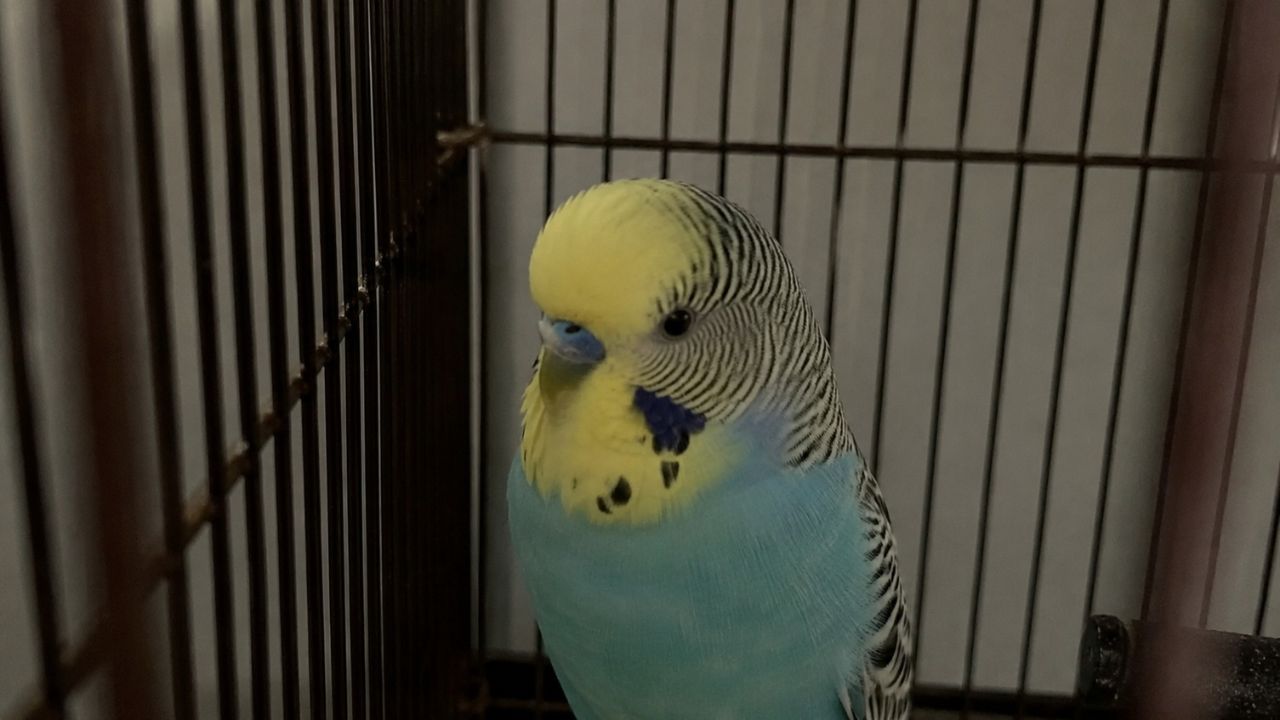

Neil has kept, bred, and sold budgies at Paradise Pets Swindon since 1988 — over 35 years of watching owners form wonderful relationships with these birds and, perhaps more often than they should, watching those relationships stall before they start. The question “why does my budgie hate me” is one he hears in various forms every single week. This is his honest answer to what is actually going on — and what to do about it.
She came in looking genuinely dejected.
She had bought a young budgie about two months earlier — a green male, well chosen, young and healthy when he left us. She had done her reading. She had been patient. She had followed the advice she had found online about sitting near the cage, about offering millet, about building trust slowly. And after two months, the bird still flew to the far end of the cage when she opened the door and sat there alarm-calling at her like she was a predator that had got into the house.
“He just hates me,” she said. “I’ve tried everything. He hates me.”
I asked her to show me what she had been doing. She picked up a piece of millet, reached into the cage, and moved her hand directly toward the bird to offer it. The bird, predictably, flew to the other side. She withdrew her hand with an expression that said — you see? He hates me.
I watched for another moment and then I said: I want to tell you what I actually saw there.
What I saw was a hand moving directly toward a small prey animal at speed. In the world of that bird, that is a predator strike. The bird did not fly away because it hates you. It flew away because its survival instincts read your hand as a threat. The fact that your hand was holding millet is completely irrelevant to a bird that has not yet learned that your hand is safe — because you have been approaching it the same way every time, and every time it has confirmed the bird’s worst suspicion.
She looked at me as though I had said something surprising. I changed one thing about what she was doing — just one — and I explained why. She came back six weeks later to buy a bigger cage. The bird was stepping up reliably. She was not its enemy. She had never been its enemy.
First — Your Budgie Does Not Hate You
I want to start here and be direct about it, because the belief that a budgie hates its owner is not just inaccurate — it is actively harmful to the process of fixing the relationship.
When you believe a bird hates you, you tend to either give up or redouble your efforts in ways that make things worse. You take the rejection personally, you try harder, you push more, you reach in more often and for longer, because you are trying to overcome what feels like an emotional barrier. And every time you do that, you confirm to the bird that its fear response was correct — that when you approach, something uncomfortable follows.
Budgies do not operate on hatred. They operate on safety and fear. A budgie that flies away from you, alarm-calls at you, bites you, or sits at the far end of the cage when you are nearby is not doing any of those things because it has a grievance against you personally. It is doing them because it has not yet learned that you are safe. That is all. And “not yet” are the two most important words in that sentence.
The distinction matters because it changes what you need to do. You do not need to overcome the bird’s negative feelings. You need to build a new association in a brain that currently associates you with threat. That is a different task, and it has a clear method.
The Most Likely Reason — The Trust Has Not Been Built Yet
In the vast majority of cases I encounter at this counter, the budgie that seems to hate its owner is simply a budgie that has not been given enough time and the right kind of approach to build trust. Not because the owner has done anything catastrophic. Just because the process takes longer than most people expect, and because most of the instinctive things owners do when they want a bird to warm to them are exactly the wrong things.
Let me be specific about the timeline, because this is where most people go wrong first.
A budgie that arrived in your home within the last month is still, from its own perspective, in a situation of significant uncertainty. It has left everything familiar. It is in a new environment surrounded by unknown stimuli, unknown sounds, and large unfamiliar creatures — you — whose intentions it cannot yet read. Even if you have been nothing but gentle and patient, a month is often not long enough for a prey animal with strong survival instincts to begin to feel genuinely safe.
Two months of the wrong approach — however well-intentioned — can produce a bird that has become more confirmed in its fear, not less. Because every time you approached and the bird felt threatened, it learned something. It learned that when you appear at the cage, something uncomfortable follows. The association is now established, and it needs to be actively dismantled, not just waited out.
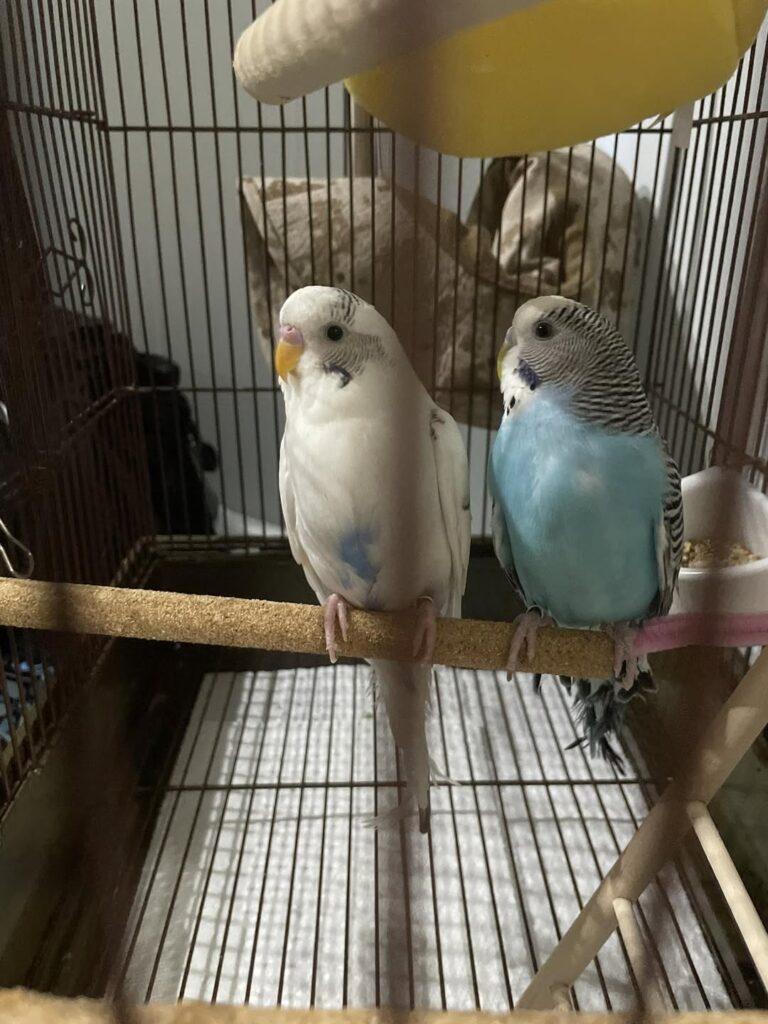
- Flies immediately to the far side of the cage when you approach: Active avoidance — the bird has not yet decided you are safe
- Alarm-calling or chattering loudly when you are near: Distress vocalisation, not aggression toward you personally
- Puffed up and sitting very still when you are nearby: Freeze response — attempting to be invisible while a perceived threat is present
- Biting when handled: Last-resort defensive response — the bird has tried every other signal and you have not responded to them
- Will not approach food while you are at the cage: Bird is suppressing its hunger drive because the perceived threat overrides it — significant fear level
- Normal behaviour the moment you leave the room: This tells you clearly that the problem is your presence, not a health issue or general distress
What You Are Probably Doing That Makes It Worse
I want to be honest about this section because it requires saying some things that owners do not always want to hear. The things that feel like trying — the things that feel like making an effort to connect with the bird — are often the precise things that are rebuilding the bird’s fear every time you do them.
Moving Your Hand Toward the Bird
This is the single most common mistake I see. An owner offers millet by moving their hand toward the bird. Or they present their finger for a step-up by reaching across the cage toward the bird. Both of these, to a bird that has not yet accepted your hand, look exactly like a predator moving in. The fact that you are moving slowly does not fully mitigate this — the direction of travel matters as much as the speed.
The hand should enter the cage and stay still. Low, away from the bird, not moving toward it. The bird has to choose to approach the hand. The moment you move toward the bird, you have taken the choice away from it, and what might have been a voluntary first approach becomes another flight response.
Reaching In Every Day Whether the Bird Is Ready or Not
Consistency in taming means consistent presence and consistent method — it does not mean forcing the same interaction every day regardless of the bird’s response. A bird that alarm-calls and backs away is telling you it is not ready for that step today. The right response is to withdraw calmly, end the session, and come back tomorrow. Pressing on with the interaction after the bird has given a clear avoidance signal teaches the bird that its signals do not work — which typically leads to escalation, including biting.
Long, Intense Sessions
A taming session that goes on for twenty minutes or half an hour — particularly with a bird that is not yet settled — is not twice as effective as a ten-minute one. It is more stressful for the bird, it accumulates more negative association, and it exhausts the bird’s tolerance in a way that makes the next session harder. Ten minutes of calm, consistent, patient presence is worth more than an hour of intense effort.
Trying to Speed Things Up After a Bad Session
The day after the bird bit you, or the session where it alarm-called the whole time — the temptation is to go back in and do more, to correct the negative experience quickly. This is counterproductive. A bad session needs a step back, not an escalation. Go back to a previous step. Rebuild from there.
- Moving your hand toward the bird: The bird comes to you. You do not go to the bird. Stay still and wait.
- Sessions longer than 10–15 minutes: Short and consistent beats long and intense at every stage of taming.
- Pressing on when the bird is alarm-calling or backing away: End the session. The bird has told you it is done for today.
- Reacting quickly when bitten: A sudden movement after a bite confirms to the bird that biting works. Slow, calm withdrawal only.
- Letting other people rush the process: Children particularly. Budgies read movement and energy. Quick, loud, unpredictable humans undo weeks of progress.
- Approaching from above: Birds are prey animals. Things coming from above means predator. Always approach at or below the bird’s level.
The Approach and Timing Problem
Something that catches owners out repeatedly, and that is worth its own section, is the question of when and how you approach the cage — not just what you do once you get there.
Budgies are most active and most receptive in the morning and early evening, roughly matching the activity patterns they would have in the wild. Approaching during these times, when the bird is naturally alert, active, and engaged, is significantly more productive than approaching at midday when the bird may be resting, or late at night when it is winding down.
Approaching from directly in front of the cage, at the bird’s level, calmly and without rushing, gives you the best starting conditions. Approaching from the side or above, approaching quickly, or approaching immediately after the room has been loud or disturbed gives you worse conditions. These details seem small but they accumulate across dozens of sessions.
Your own energy and body language matter more than most owners realise. Budgies are prey animals with highly developed threat-detection. A person who approaches the cage tense, hurried, or frustrated communicates something different from a person who approaches calm, unhurried, and with no particular expectation of the outcome. If you have had a stressful day and you go to the cage hoping the bird will finally step up and make you feel better — the bird reads that differently than you think. Go to the cage when you are actually calm.
Is It a Female? The Sex Factor Owners Often Overlook
This comes up less often than the other reasons, but it matters enough to include: if your budgie was sold to you as a male and turns out to be female, or if you simply bought without knowing the sex, this may be a significant part of what you are dealing with.
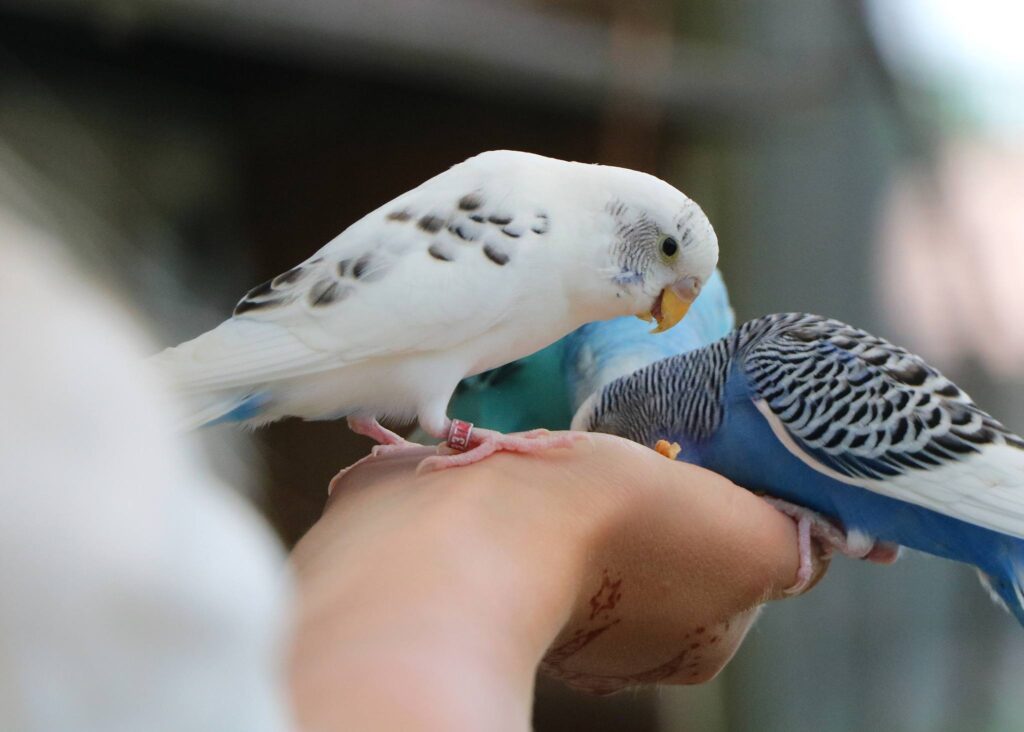
Female budgies are naturally less inclined toward social interaction with humans than males. They can be tamed — many female budgies become comfortable with handling — but they tend to reach a level of tolerance rather than the active seeking-out of human contact that a confident male budgie often shows. A female budgie that accepts your hand without immediately fleeing, allows brief contact, and then goes about her own business is probably doing well for her temperament. She is not a bird that hates you. She is a bird that does not prioritise human interaction the way a male often does.
The cere — the fleshy area above the beak — tells you the sex in adult birds. Blue or purple-blue means male. Brown, white, or tan means female. If you expected a male bird’s level of engagement and you have a female, adjusting your expectations is part of solving the problem.
Could It Be Pain or Illness?
A budgie that is consistently defensive, bites when touched in particular areas, or seems to have become less tolerant of handling over time after a period of relative acceptance — may be in pain or unwell, and it is worth ruling this out.
A bird that previously allowed handling and has now become defensive about being touched is not necessarily regressing in its taming. It may be telling you that being touched is currently uncomfortable. Check the bird carefully: is the coat in normal condition, are the eyes clear, is it eating and drinking normally, is there any change in the droppings? A vet visit to rule out underlying illness or injury is worthwhile if the change in behaviour has been sudden or significant.
Pain-related defensiveness tends to be more specific than fear-based avoidance — the bird may be fine at the cage door but suddenly defensive when you touch a particular part of the body. Fear-based avoidance tends to be general — the bird is uncomfortable with your presence across the board. If you can identify that the bite or alarm response only happens when you touch a specific area, take that to a vet rather than treating it as a taming problem.
The Bird With a History — Older and Previously Mishandled Birds
Some birds come to owners with history. A budgie that was grabbed and chased in a previous home. A bird that spent months in a shop cage with minimal positive human contact. An older bird rehomed from a family that did not handle it regularly. These birds are not starting from neutral — they are starting from a position where the association between humans and unpleasant experiences is already established.
This does not make them untameable. It makes them a longer project, and it requires an adjustment in expectations. A bird that arrives frightened or defensive because of its past may take three months to reach the point that a young bird raised well from the start reaches in six weeks. The method is the same. The timeline is different.
With these birds in particular, the most important thing is patience that does not feel like waiting. Active, consistent positive work — presence, millet, calm voice, no pressure — every day, even when progress seems imperceptible. Birds have good memories for negative associations and slower-building positive ones. You are gradually tilting the balance.
What Actually Works — The Honest Path
I have a full taming guide elsewhere on this site and I will not repeat all of it here. But in the specific context of a bird that seems to have decided it dislikes you, here is what I would tell you to do.
Stop what you have been doing for one week. Do not attempt handling. Do not put your hand in the cage. Sit near the cage for ten minutes each day, talk quietly, and do nothing else. You are resetting the association. The bird gets a week where it learns that your presence near the cage means nothing threatening happens. That is the foundation you need to rebuild from.
After a week, begin again from the beginning of the taming process — not from where you left off. Hand in the cage, still, low, not toward the bird. Millet on the tip of the fingers, not pushed toward the bird. Let the bird choose to approach. Do not move toward the bird. End every session before the bird shows alarm rather than after.
Measure progress in weeks, not sessions. A bird that, four weeks from now, does not immediately fly to the far end of the cage when your hand enters is making progress — even if it has not approached the hand yet. Progress at this stage is the removal of the fear response, not the presence of a positive one. The positive comes later.
How Long Should You Keep Trying?
This is the question that brings a lot of people to the counter, and I want to answer it honestly.
There is no single right answer, but here is the honest framework I use. If you have been applying the correct method — genuinely correct, not the things-that-feel-like-trying method — for three months without any measurable progress at all, it is worth reassessing. Not giving up — reassessing. Is there an illness factor you have not considered? Is there something in the environment that is maintaining a state of chronic stress? Is the bird being disturbed during the day by another pet, by noise, by something you have not identified?
A healthy budgie given genuinely correct taming work for three months will almost always show some measurable progress — even if it is just slightly less violent avoidance, slightly more time before the alarm-calling starts. Zero progress over three months of correct work suggests something else is happening.
One more thing I will say plainly: some budgies tame more fully than others, and some never reach the level of interaction their owner was hoping for. That is not a failure of the owner and it is not hatred from the bird. It is individual personality, and it deserves to be respected rather than fought. A bird that reaches a point of tolerating your presence without alarm, accepting food from your hand occasionally, and living a calm and comfortable life in its cage has reached a good outcome — even if it never becomes the shoulder-sitting, word-speaking bird you imagined when you bought it.
Quick Reference — What the Behaviour Actually Means
| What You Are Seeing | What It Actually Means | What To Do |
|---|---|---|
| Flies to far end of cage when you approach | Active fear — you are not yet safe in its world | Build presence from a distance. Stop approaching the cage for a week. Rebuild. |
| Alarm-calling when you are nearby | Distress vocalisation — not aggression, fear | Sit quietly and ignore it. Do not react. The calling should reduce as it learns your presence means nothing threatening. |
| Biting when your hand is in the cage | Last resort defensive response — its earlier signals were not respected | Go back two steps. Rebuild from still hand in cage, not moving toward bird. The bird bites because it has learned nothing else works. |
| Fine until you open the cage, then panics | The open door signals something it has learned to associate with handling it does not want | Open the cage without putting your hand in for several sessions. Change the association with the open door first. |
| Accepts millet when you hold it still, but only just | Progress — genuine voluntary approach despite fear | This is exactly right. Do not move toward the bird. Let it come to you. Repeat daily. Extend the sessions slowly. |
| Comfortable with one person, flies from everyone else | Bonded to one person — others have not done the taming work | Other people need to do the same quiet presence work from scratch. The trust does not transfer automatically. |
| Previously tame, now suddenly defensive | Possible pain, illness, or a significant scare that reset its comfort level | Rule out illness first — vet visit if any other symptoms. Then identify what changed and rebuild from that point. |
| Female bird, tolerates presence but does not seek it | Normal female budgie temperament | Adjust expectations. A female that tolerates your hand without alarm is doing well. Do not compare her to a confident male. |
The Honest Truth About You and This Bird
I want to end on something that I think helps more owners than any specific technique.
The birds that end up being described as hateful, difficult, or impossible are almost never genuinely difficult birds. They are birds whose owners, for completely understandable reasons, approached the taming process in a way that was not working — and kept doing it because they did not know there was a different way. The gap between what owners instinctively do and what actually works with budgies is large, and it is not obvious from the outside.
What budgies need from you is consistency, patience, and the ability to read what they are telling you. They do not need you to try harder. They need you to try differently — and to have enough patience to let the relationship build at the speed the bird dictates rather than the speed you want.
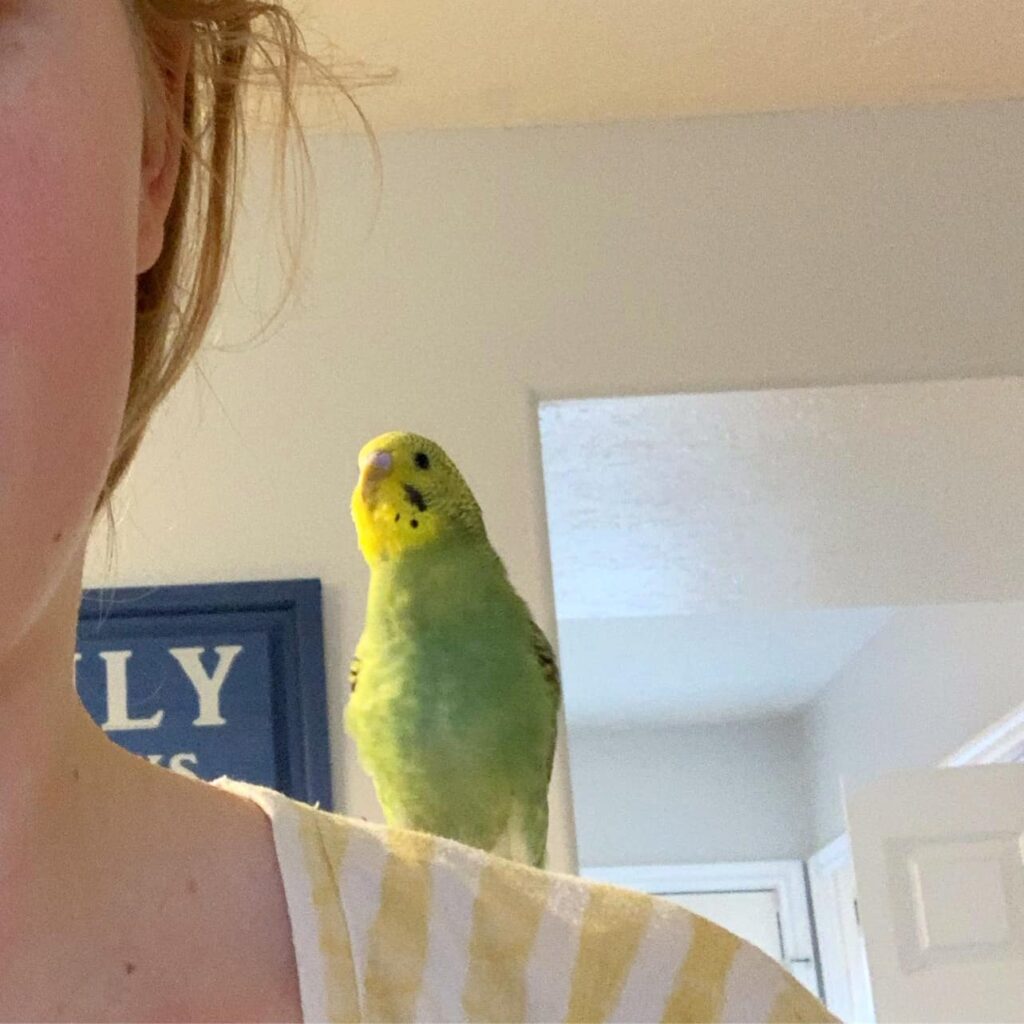
The woman I started this article with — the one who was convinced her budgie hated her — sends me a photo every few months. The bird now sits on her shoulder when she works at her desk. It took time, and it took changing one specific thing about her approach. It was not about the bird. It was never about the bird.
Frequently Asked Questions
My budgie bites me every time — does that mean it hates me?
No. Biting is a last-resort defensive response from a bird that has run out of other options. Before biting, a bird will typically give several warning signals — flying away, alarm-calling, puffing up, moving away from your hand. If those signals are consistently ignored or not recognised, the bird learns that the only thing that works is biting. The bite is not hatred. It is the bird telling you it is frightened and that nothing else has made the frightening thing stop. Go back to basics, learn to read the earlier warning signals, and respond to those before the bird feels it needs to bite.
My budgie is fine with my partner but flies from me — why?
Because your partner has, intentionally or not, built a different association than you have. Budgies do not transfer trust from one person to another — each relationship is built independently. Watch what your partner does differently — how they approach the cage, how they speak, how they move — and apply it yourself. You will also need to do the same patient presence work your partner has done, from the beginning. The good news is that a bird that has accepted one person has demonstrated it is capable of trusting a human. It is capable of trusting you too. It just has not had the same experience with you yet.
How long until my budgie stops being scared of me?
With consistent, correct technique — meaning calm daily presence, no forced handling, millet offered without moving toward the bird, ending sessions before the bird shows alarm — you should see measurable improvement within four to six weeks. The first milestone is a bird that does not immediately fly to the far wall when you sit near the cage. The second is a bird that does not immediately flee when your hand enters the cage. The step-up can follow within another few weeks from there. If you are seeing no measurable change at all after eight weeks of this, review what you are actually doing and consider whether something in the environment is maintaining chronic stress.
My budgie lets me near the cage but bites when I open the door — what does this mean?
The open cage door has become a specific trigger — the bird has learned that when the door opens, something it does not want tends to follow. Separate the associations. Spend several sessions opening the cage door, doing absolutely nothing, and closing it again. Let the bird learn that an open door does not necessarily mean an approaching hand. Once that association is broken, begin the standard hand-in-cage process from the beginning.
Is it possible my budgie will never tame?
For most healthy budgies given correct taming work, some level of trust is achievable. The question is how far that trust extends — and that varies with individual personality, age, history, and sex. Some budgies become genuinely affectionate and interactive. Others reach a level of tolerating your presence without panic and accepting food from your hand. Both are valid outcomes. The birds most resistant to taming are typically older birds with established negative histories, or birds with underlying health issues that make being handled genuinely uncomfortable. In both cases, focus on what you can achieve rather than measuring against the most interactive budgie you have seen on social media.
Where can I get a young budgie in Swindon to start fresh?
We always have young budgies in stock at Paradise Pets — well-handled, healthy birds at the best age for taming. Come and see us at Manor Garden Centre, Cheney Manor, Swindon SN2 2QJ, or call us on 01793 512400. If you are coming in because an existing bird is not taming, bring that question too — I am happy to talk through what might be going wrong and what to change.
Struggling With a Budgie That Won’t Warm to You? Come and Talk
If your taming process has completely stalled and you are not sure what to change — come in. Bring a short video on your phone if you can. I will watch what is happening, tell you honestly what I think is going wrong, and give you a specific adjustment to try. This is a conversation I have had hundreds of times. There is almost always a clear reason, and there is almost always something practical to do about it.