
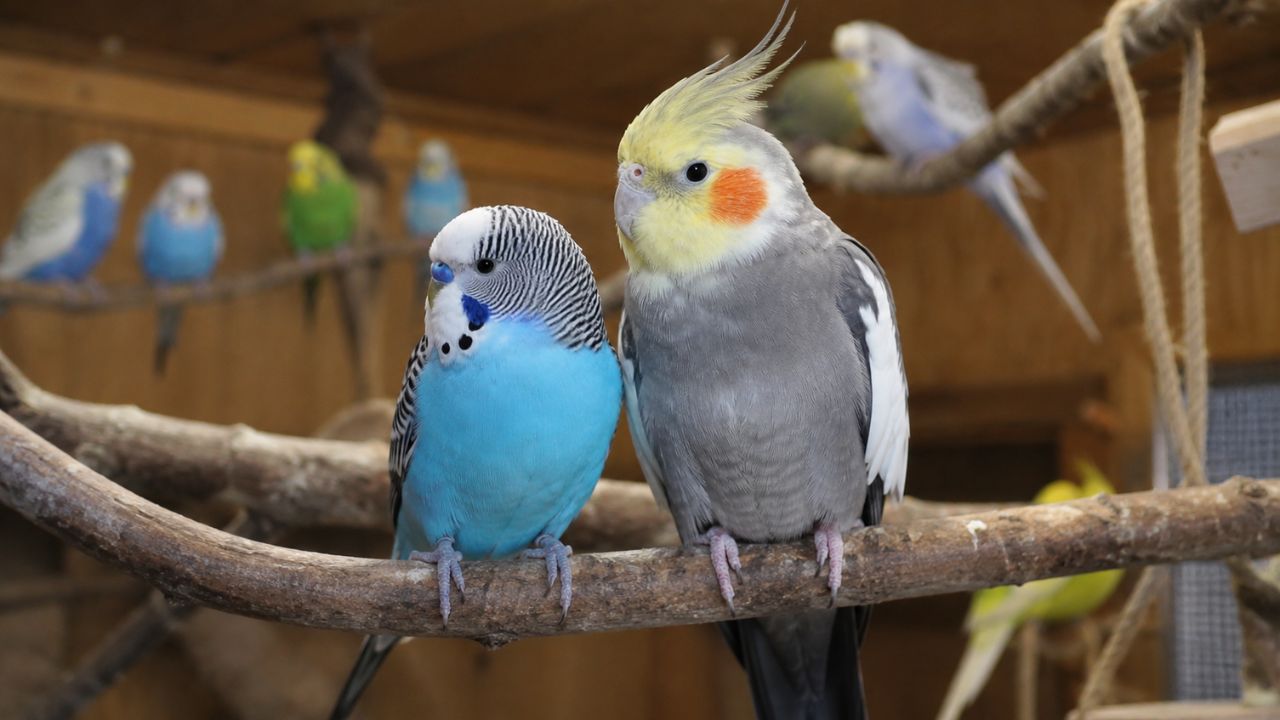

Neil has kept, bred, and sold budgies and cockatiels at Paradise Pets Swindon since 1988 — over 35 years of watching both birds thrive with the right owner and struggle with the wrong one. In that time, the budgie or cockatiel question has been asked at his counter more times than almost any other. This is his honest answer.
It is, without question, the most common bird question I am asked.
A family comes in. They have decided they want a pet bird. They have done some reading — enough to narrow it down to two candidates. And they stand there at the counter looking from one cage to the other, and one of them says: “Which one should we actually get?”
I have had this conversation hundreds of times. Maybe more. And I have learned something from having it that often: most people asking the question are not really asking what they think they are asking.
They think they are asking about the birds. Which one is friendlier? Which one talks? Which one is easier to look after? But what they are actually asking — what they need an honest answer to — is a question about themselves. About their household, their time, their tolerance for noise, and how seriously they have thought through what a pet bird actually involves.
Because here is the truth. Both budgies and cockatiels can make wonderful first pet birds. And both of them can be a very wrong choice, if the fit is not right. The difference is not which bird is better in the abstract — it is which bird is right for the specific household standing in front of me.
This article is my attempt to give you the honest answer I would give at the counter, without the softening that tends to happen when a family is looking at a bird with big eyes and asking nicely.
Budgies — What They Actually Are, Not What Most People Think
Budgerigars — budgies — are the most popular pet bird in the United Kingdom, and have been for decades. That popularity is well earned. They are hardy, adaptable, social, endlessly characterful, and available at a price that makes them genuinely accessible.
But there is a version of a budgie that lives in people’s heads before they get one, and there is the version of a budgie that actually arrives home with them. The gap between those two things is where most of the problems start.
The head version is a charming little bird that sits on your finger, says a few words, chirps pleasantly in the background, and generally fits into the household like a decorative addition. The real version is a small animal with a significant personality, a strong social drive, a beak it will absolutely use if it is not happy, and a level of noise that surprises almost everyone who has not lived with one before.
Budgies are flock animals. In the wild, they move in groups of hundreds or thousands, communicating constantly. That instinct does not disappear in a cage in a living room. A budgie wants company. It wants stimulation. It wants to interact with something — either another bird, or you. A budgie left alone in a cage for most of the day with minimal interaction will become bored, then stressed, then often unwell.
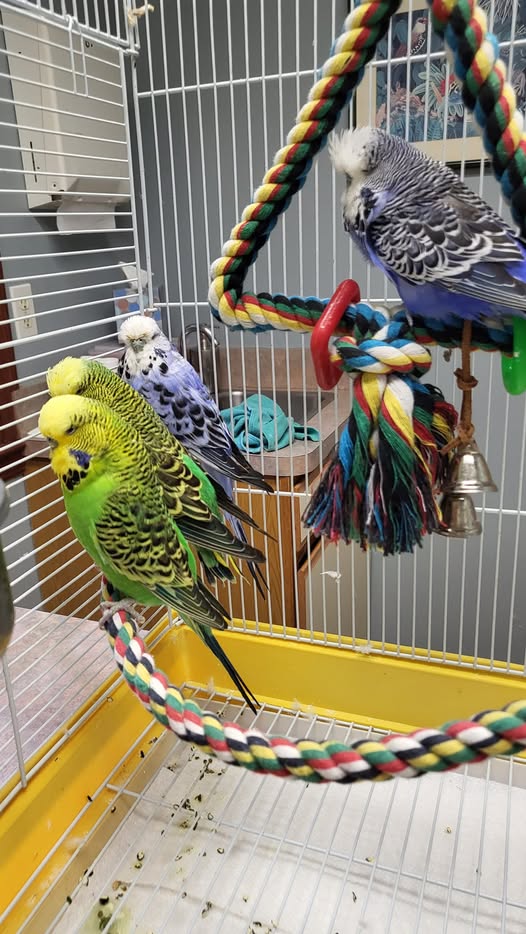
This is why I almost always recommend a pair of budgies rather than a single bird, particularly for households where the bird will be alone for large parts of the day. Two budgies together are a different experience from one: more entertaining to watch, better for the birds’ welfare, and — importantly — far less dependent on you for all of their social needs. The downside is that a pair of budgies bonded to each other is harder to tame individually and less likely to want to sit on your hand. You gain welfare, you trade some interaction.
A single budgie given enough time and patient handling can become remarkably interactive. Some will talk — genuinely talk, with clear words, not just mumbling — and some will whistle tunes and mimic household sounds. But this requires real time investment, particularly in the first few months. It does not happen automatically.
- Lifespan: Typically 7–12 years with good care. A real commitment, not a short-term pet.
- Noise level: Constant chattering when active — not loud, but persistent. Not a background bird.
- Social needs: High. Pair is better for welfare. Single budgie needs significant daily interaction from you.
- Talking: Some do, some do not. Males are more likely to talk. There are no guarantees.
- Handling: Possible and rewarding, but requires patient taming. Not naturally a hand bird from the start.
- Cost: Lower purchase price and lower ongoing costs than cockatiels.
- Space: Smaller than cockatiels, but still need a properly sized cage — not a tiny decorative cage.
Cockatiels — What They Actually Are
If budgies are the bird that surprises people with how much personality they pack into a small frame, cockatiels are the bird that surprises people with how much they need.
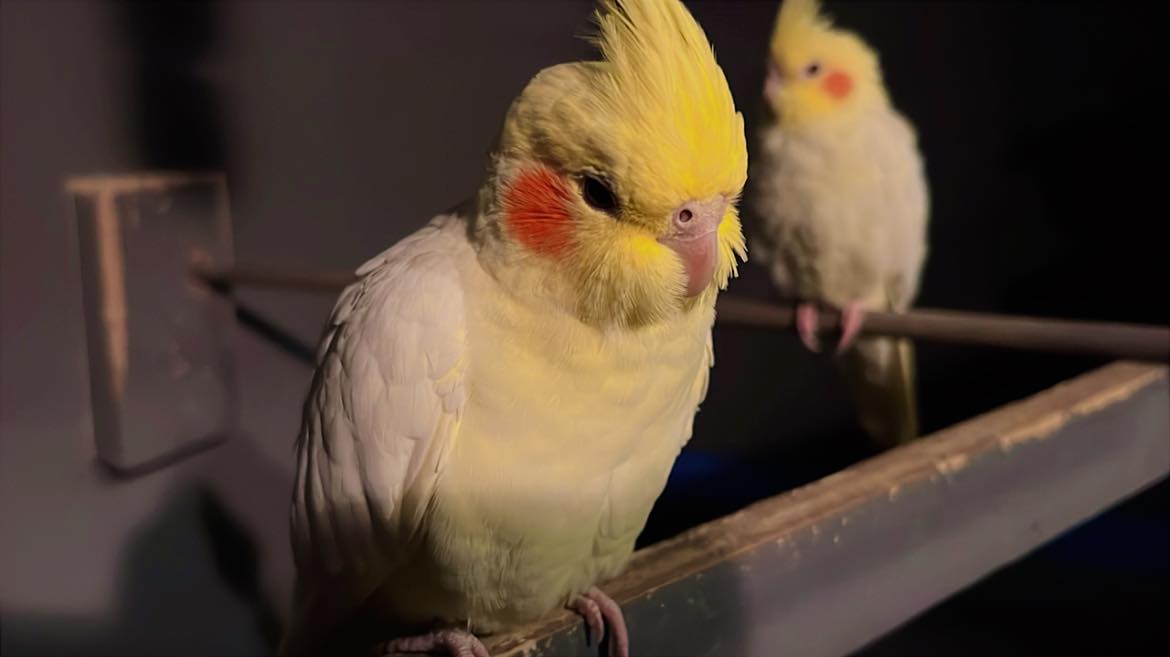
Cockatiels are companion birds in a way that budgies are not, at least not in the same degree. A cockatiel does not just live in your house. It bonds with you. It chooses a person — sometimes one person in the household, sometimes a few — and it attaches to that person in a way that is genuinely touching and, if you are not prepared for it, genuinely demanding.
A well-bonded cockatiel will want to be near you. It will sit on your shoulder while you work. It will follow you from room to room. It will call for you — loudly, persistently — if it cannot see you or does not know where you are. That call is not a gentle chirp. It is a contact call, and it carries. People living in flats, in terraced houses, or anywhere with close neighbours need to take the cockatiel noise question seriously before buying one.
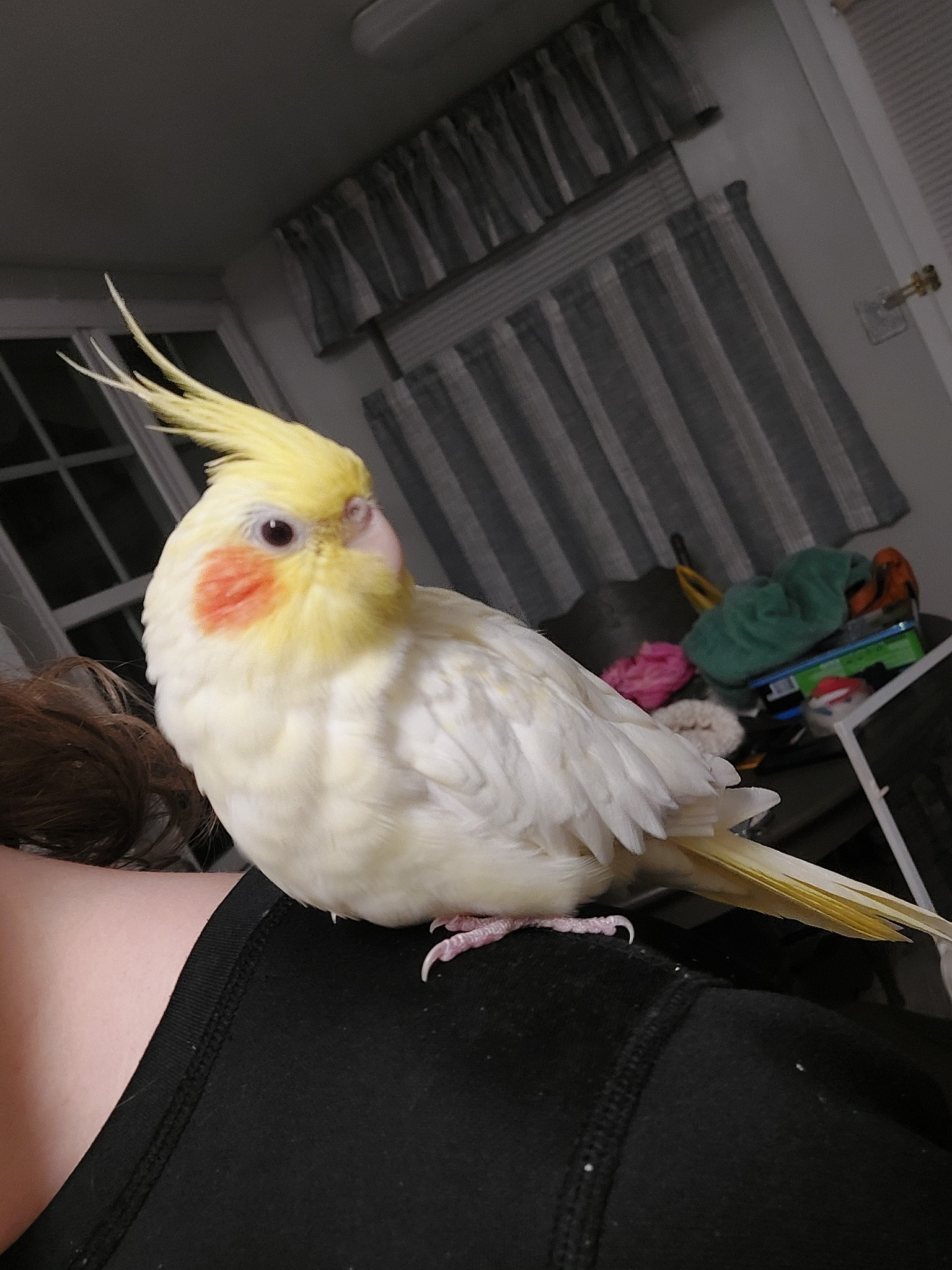
Cockatiels are also significantly longer-lived than budgies. A well-kept cockatiel commonly reaches 15 to 20 years, and some individuals live beyond that. I have customers who bought their cockatiel in their thirties who are now in their fifties with the same bird. This is not a trivial detail — it is the single most important thing I tell prospective cockatiel buyers, and it is the one most likely to cause people to reconsider. A cockatiel bought for a ten-year-old child may still be alive when that child is 30.
In terms of interaction, cockatiels are exceptional. They are gentle, intelligent birds that can learn to whistle complex tunes — some are genuinely musical — and some will talk, though cockatiels are more variable talkers than budgies on the whole. What they do reliably is respond to you. They enjoy being scritched around the crest and cheeks. They will lean into your hand. They are, in the truest sense, a companion.
- Lifespan: 15–20+ years. This is the commitment most people underestimate — and it must be taken seriously before purchase.
- Noise level: Contact calling when they cannot see you can be loud and persistent. Not a flat-friendly bird unless you have tolerant neighbours.
- Social needs: Very high. Cannot be left alone all day with no interaction. Needs either a companion bird or significant daily time with you.
- Bonding: Deep, specific bonding to one or two people. Extraordinary if you have the time. A welfare problem if you do not.
- Handling: Often more naturally inclined to human contact than budgies, particularly hand-reared birds.
- Cost: Higher purchase price and higher ongoing costs than budgies. Avian vet bills are a real consideration over a 20-year lifespan.
- Space: Larger bird needing a significantly larger cage — and daily out-of-cage time.
The Differences That Actually Matter When You Are Choosing
There are a lot of ways to compare these two birds. Colour, size, sound, speech ability — people ask about all of these. But in my experience, the differences that actually determine whether the ownership experience is a good one come down to four things. Here they are, plainly.
Time — The Question Most People Underestimate
Both birds need your time. But they need it differently, and they need different amounts of it.
A pair of budgies can, if kept together with proper housing and enrichment, manage reasonably well with an hour or two of your engaged attention per day — talking to them, letting them out for flight time, cleaning and maintaining the cage. They will entertain each other for much of the rest of the time.
A cockatiel, particularly one kept alone, needs more from you than that. An hour of attention is the floor, not the ceiling, for a single cockatiel. And the quality of that time matters — sitting near the cage half-watching television is not the same as active, engaged interaction. Cockatiels read the difference.
If your household has genuinely limited time — busy parents, children with full schedules, work patterns that mean the bird is alone for eight or nine hours a day — be honest with yourself about that before you buy a cockatiel. A lonely cockatiel screams. A bored cockatiel plucks. These are not behavioural problems. They are the bird telling you it is not getting what it needs.
Noise — The Thing That Ends Neighbourly Relations
I want to be direct about this because I think pet shops, including ones like mine, sometimes soften it.
Budgies are not quiet birds. When they are active and happy, they chatter, chirp, and squabble constantly. It is a pleasant sound to many people and an irritating one to others. It is medium volume — it fills a room but is unlikely to bother your upstairs neighbour.
Cockatiels, when they are contact-calling for attention or calling for a flock member they cannot find, are loud. Not parrot-loud. But genuinely, carrying loud. A cockatiel in full contact call will be heard from the other end of a semi-detached house without difficulty.
If you are in a flat, or if noise is a sensitive issue in your household for any reason, budgies are the more realistic choice.
Lifespan — The Commitment Nobody Calculates
This is the conversation I have with every prospective cockatiel buyer, and I will not shorten it here.
A budgie that lives to twelve years is a relatively long-lived budgie. Most live somewhere in the seven to ten year range. That is a significant commitment, but most people can hold that thought comfortably when they are standing in a pet shop deciding.
A cockatiel that lives to twenty is not unusual. Twenty-five is not impossible with excellent care. When a parent buys a cockatiel as a family pet for their eight-year-old, they need to be thinking about who is caring for that bird when the child leaves home at eighteen. And at twenty-five. And potentially at thirty.
I am not saying this to discourage you from cockatiels — they are exceptional birds and a 20-year relationship with a good one is a genuine privilege. I am saying it because the number of cockatiels that end up in rehoming situations because no one thought through the lifespan is genuinely sad, and I would rather have this conversation with you now.
Affection and Bonding — What Kind of Bird Experience Are You Looking For?
This is the question that resolves most decisions, once everything else has been considered.
Do you want a bird to watch, enjoy, and interact with on your terms — a lively, entertaining presence in the room that you can handle and connect with but that has its own life and its own company?
Or do you want a companion — a bird that genuinely attaches to you, wants to be with you, responds to your presence, and becomes a significant relationship in its own right?
The first description is a budgie. The second is a cockatiel.
Neither is wrong. They are different things, and understanding which one you are actually seeking is the most useful question you can ask yourself before you buy.
Who Should Get a Budgie
Based on 35 years of these conversations, here is who I typically recommend budgies to:
Families with younger children — budgies are more tolerant of the occasional noise and unpredictability of a busy family home than cockatiels tend to be. They are also a more manageable first experience of bird ownership before committing to something with a 20-year lifespan.
People who are away from home for significant portions of the day and cannot have a companion bird for their budgie. A lone budgie with proper enrichment and a couple of hours of real attention daily can do reasonably well. A lone cockatiel in the same situation will not.
Anyone in a flat or shared house where noise is a genuine constraint.
Anyone buying their first bird who wants to understand what bird ownership actually involves before making a longer or larger commitment.
Budget-conscious buyers — not because budgies are cheap pets exactly, but because the upfront cost, the cage cost, the vet cost, and the food cost are all significantly lower than with cockatiels.
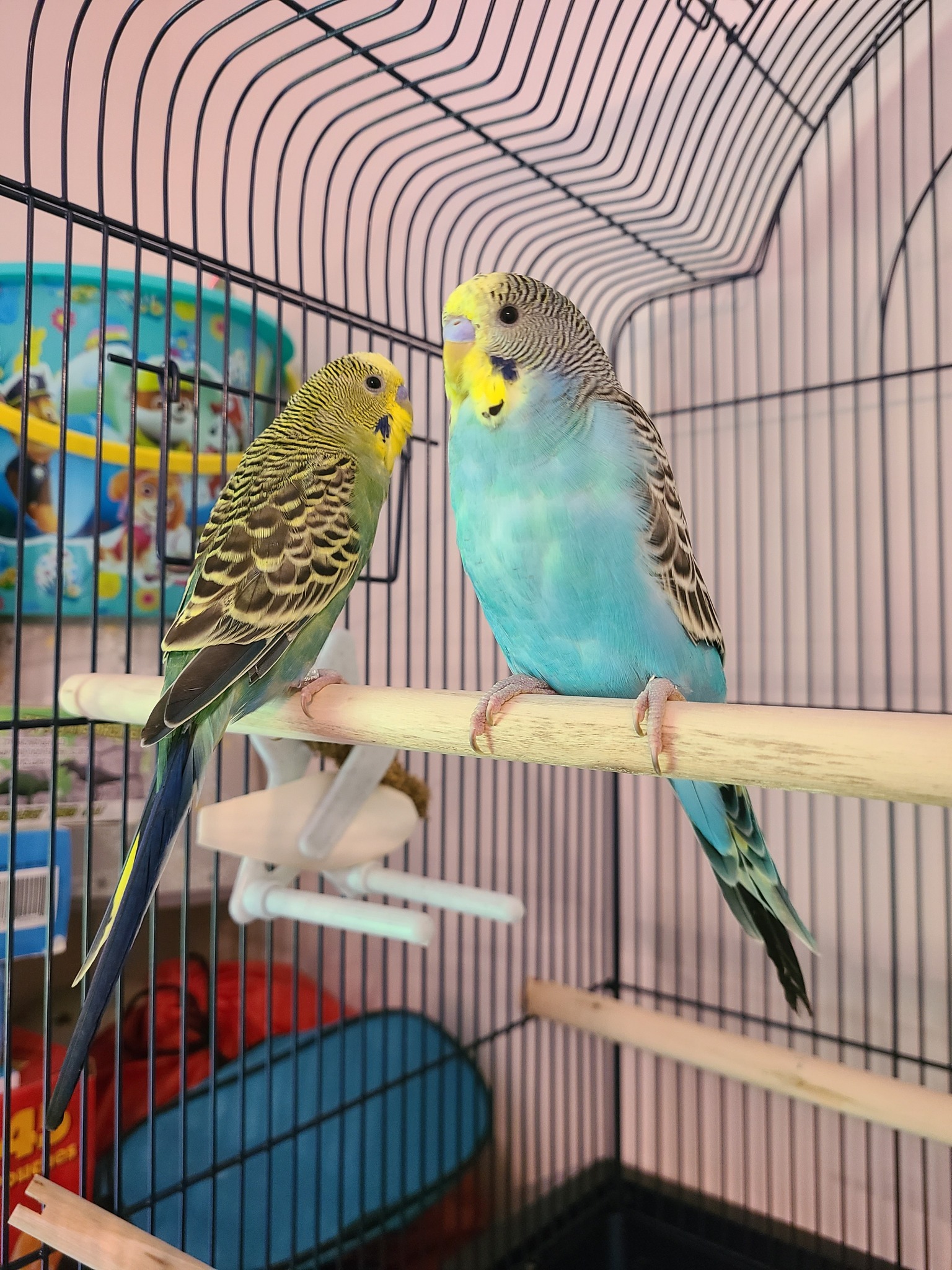
Who Should Get a Cockatiel
Cockatiels are the right choice for a different kind of owner:
Someone who genuinely wants a companion bird and has the time to be one — not just a bird owner in a passive sense, but someone who wants a relationship with their bird and is prepared to put the hours in.
Adults and older teenagers living at home, or households where at least one person is home for a meaningful portion of the day. Cockatiels need presence, not just proximity.
Anyone who has had birds before — a budgie, a rescue bird, anything — and understands what bird ownership actually involves in practice.
Anyone who has clearly thought about the lifespan question and is comfortable with the commitment that a 15-to-20-year bird represents.
People in houses rather than flats, or in flats with tolerant neighbours who will not be bothered by the occasional contact call.
The Question I Ask Before I Recommend Either One
When someone comes to the counter and asks me this question, I usually ask them one back before I answer.
“In a typical week, how many hours would this bird be on its own with no one in the house?”
The answer tells me almost everything I need to know.
Less than four hours a day: either bird can work, and we move on to discussing what kind of relationship they want.
Four to six hours: budgies in a pair are the more practical choice. A single cockatiel in this situation needs very careful thought and significant compensating interaction when you are home.
More than six hours most days: I am honest with them. A cockatiel in that situation is going to be unhappy, and an unhappy cockatiel makes itself known. We talk about whether now is actually the right time for a pet bird at all, or whether a pair of budgies with a large enough cage and the right setup might work.
It is not always the answer people want to hear at the counter. But it is the answer that results in happy birds and happy owners, and those are the outcomes I care about.
Quick Comparison — Budgie vs Cockatiel at a Glance
| Factor | Budgie | Cockatiel |
|---|---|---|
| Typical lifespan | 7–12 years | 15–20+ years |
| Noise level | Moderate — constant chattering, manageable | Higher — contact calls can be loud and persistent |
| Bonding with owner | Social but more independent | Deep, specific one-person bonding |
| Talking ability | Good — some become excellent talkers | Variable — better whistlers than talkers typically |
| Handling and tameness | Possible with patience — not naturally a hand bird | Often more naturally tactile, especially hand-reared |
| Time needed daily | 1–2 hours engaged attention (pair) | 2–4 hours minimum for a single bird |
| Best kept as | Pair recommended for welfare | Alone with owner interaction, or bonded pair |
| Cost to buy | Lower | Higher |
| Cage size needed | Smaller, but bigger is always better | Larger cage essential — bigger bird, more active |
| Good for complete beginners? | Yes — more forgiving first bird | Yes, if time and commitment are genuinely there |
| Flat-friendly? | Generally yes | Depends on neighbours — contact calling is significant |
| Right for families with young children? | Yes — more resilient to busier households | Better with older children — more sensitive bird |
My Honest Answer — After 35 Years
If someone asks me which bird is better for a first-time owner, and I can only give one answer, it is this: for most people, a pair of budgies is the safer, wiser, more honest first choice.
Not because cockatiels are difficult birds — they are extraordinary birds, and some of the most rewarding animals I have sold in 35 years at this counter. But because the commitment a cockatiel asks of you is more specific, more demanding, and longer than most people standing in a pet shop have fully reckoned with. And a cockatiel that ends up in the wrong household — too little time, too much noise sensitivity from neighbours, an owner who underestimated the bond — is a bird that will be unhappy in ways it will make very clear.
Budgies, kept properly and in the right numbers, are more forgiving of imperfect conditions, more appropriate for busier households, and a genuine enough experience of bird ownership to teach you what you actually need to know before you go further.
If, after reading this, you are confident that you have the time, the household, and the genuine desire for a companion bird that will attach itself to you for the next two decades — get a cockatiel. You will not regret it. It is one of the better decisions a bird owner can make.
But if there is any doubt in your mind — if the lifespan question gave you pause, if the noise section made you hesitate, if the time requirements felt like more than you can honestly commit to right now — start with a pair of budgies. Give it a year. See what bird ownership actually involves. And come back and talk to me after.
Frequently Asked Questions
Which is easier to tame — a budgie or a cockatiel?
It depends partly on the individual bird and partly on how it was raised. Hand-reared cockatiels are often naturally more comfortable with human handling from the start. Parent-reared budgies need patient, gradual taming work — but many become very tame and interactive with the right approach. The key in both cases is consistency, calmness, and not rushing the process. I have a guide on taming birds on our site that covers the principles in detail.
Which bird is better at talking?
Budgies, on average, are more reliable talkers than cockatiels. A well-socialised male budgie given enough time with a patient owner has a good chance of learning clear, identifiable words and phrases. Cockatiels can talk, but they are more naturally inclined to whistle — they tend to pick up tunes and whistled signals more readily than spoken words. Neither species is guaranteed to talk. If talking is the main appeal, a budgie is the more likely bet.
Can budgies and cockatiels be kept in the same cage?
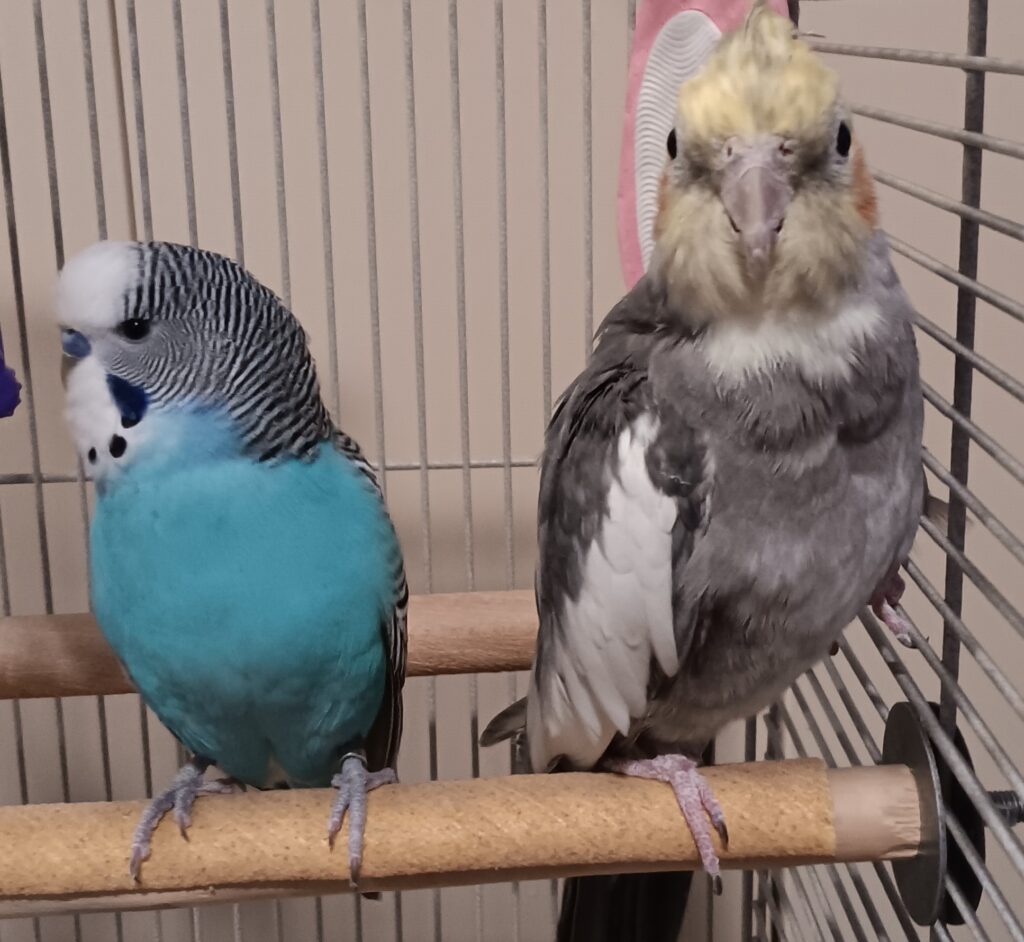
No — and I would not recommend keeping them in the same cage even if they appear to tolerate each other at first. Budgies can be surprisingly aggressive towards birds larger than themselves and have been known to damage a cockatiel’s feet or beak. They are best kept separate. They can share a room, and will often interact through cage bars in a curious but non-aggressive way, but housing them together is not something I would advise.
Is a cockatiel too much for a child?
That depends entirely on the age of the child and the level of parental involvement. A cockatiel is not an appropriate pet for a young child to be the primary carer of — the bird will bond with the adult in the household, not the child, and the long-term commitment means the parents are effectively taking on the animal. As a family pet that an older child can interact with under supervision, cockatiels are wonderful. But the adults need to go in with open eyes about who is really responsible for this bird, now and for the next twenty years.
Do cockatiels need to be kept in pairs?
Not necessarily — cockatiels can thrive as single birds if they receive enough human interaction and time out of the cage. In fact, a cockatiel kept alone tends to bond more deeply with its owner than one kept with a companion bird. The caveat is that the human in that equation has to show up consistently. If a single cockatiel is going to be left alone for long stretches regularly, a companion bird is the more responsible choice for the bird’s welfare.
Where can I see budgies and cockatiels in Swindon?
We always have budgies in stock at Paradise Pets, and we regularly have cockatiels too. Come and see us at Manor Garden Centre, Cheney Manor, Swindon SN2 2QJ — you can see both birds, ask whatever questions you have, and get an honest assessment of which one suits your household. Call us on 01793 512400 to find out what we have in stock before you visit.
Still Not Sure Which Bird Is Right for You? Come and Talk to Me
If you have read this article and still want to talk it through with someone who has sold both birds for 35 years — come in. I will give you an honest answer based on your actual household, your actual lifestyle, and what you actually want from a pet bird. No sales pressure. No softening. Just the straight answer.