

Neil has kept, bred, and sold budgies at Paradise Pets Swindon since 1988 — over 35 years of first-hand experience with these birds. This question reaches him in two very different situations: owners planning a holiday, and owners who have just noticed their bird has not eaten. The answer matters urgently in both cases. This guide gives it properly.
Two types of people ask me this question.
The first is someone about to go on holiday. They are not being irresponsible — they are trying to understand whether a big feeder left on Friday will still have food in it on Monday, and whether the bird will be fine until they get back.
The second is someone who has just noticed their budgie has not touched its food. They are standing in front of the cage, looking at a full bowl that should have been half empty by now, and they do not know whether they have hours or days before this becomes an emergency.
The answer to both situations is the same. And it is shorter than almost everyone expects.
The Honest Answer — Shorter Than Most People Expect
A healthy budgie in normal conditions can survive without food for approximately twenty-four to forty-eight hours. That is the outer limit — not a comfortable window, not a margin to plan around. It is the point at which a bird that was fine begins to become seriously unwell.
In practice, significant deterioration begins well before the forty-eight-hour mark. A budgie that has not eaten for twelve hours is already running low. By twenty-four hours without food it is weakened, stressed, and its immune system is compromised. By forty-eight hours, the situation is life-threatening.
The reason the window is so short is metabolic. Budgies are small birds with a very high metabolic rate — their bodies burn energy quickly and constantly, powering flight, thermoregulation, and the rapid cellular activity of a small, active bird. Unlike larger animals that carry meaningful fat reserves, a budgie has very little stored energy to fall back on. When food stops coming in, there is almost nothing in reserve to bridge the gap.
This is not a situation that allows for a “wait and see if it improves tomorrow” approach. If your budgie has stopped eating today, act today. I will cover what acting looks like in practical terms as we go through this guide.
Why Budgies Cannot Go Long Without Food — The Biology
Understanding why the window is so short helps owners take it seriously rather than assuming the bird will manage.
A budgie’s resting metabolic rate is far higher than a similarly sized mammal. Everything runs faster — heart rate, breathing, cellular activity, thermoregulation. A budgie at rest is still working hard by mammalian standards. In flight, the energy demands are extraordinary. All of that energy comes from food, and it has to come from food continuously because the storage capacity is minimal.
The fat reserves on a healthy budgie are small. A bird that has been well-fed and is in good condition has more reserves than a thin or previously unwell bird — but even a healthy bird has very limited storage compared to what its metabolism demands. When food stops arriving, those reserves begin depleting almost immediately.
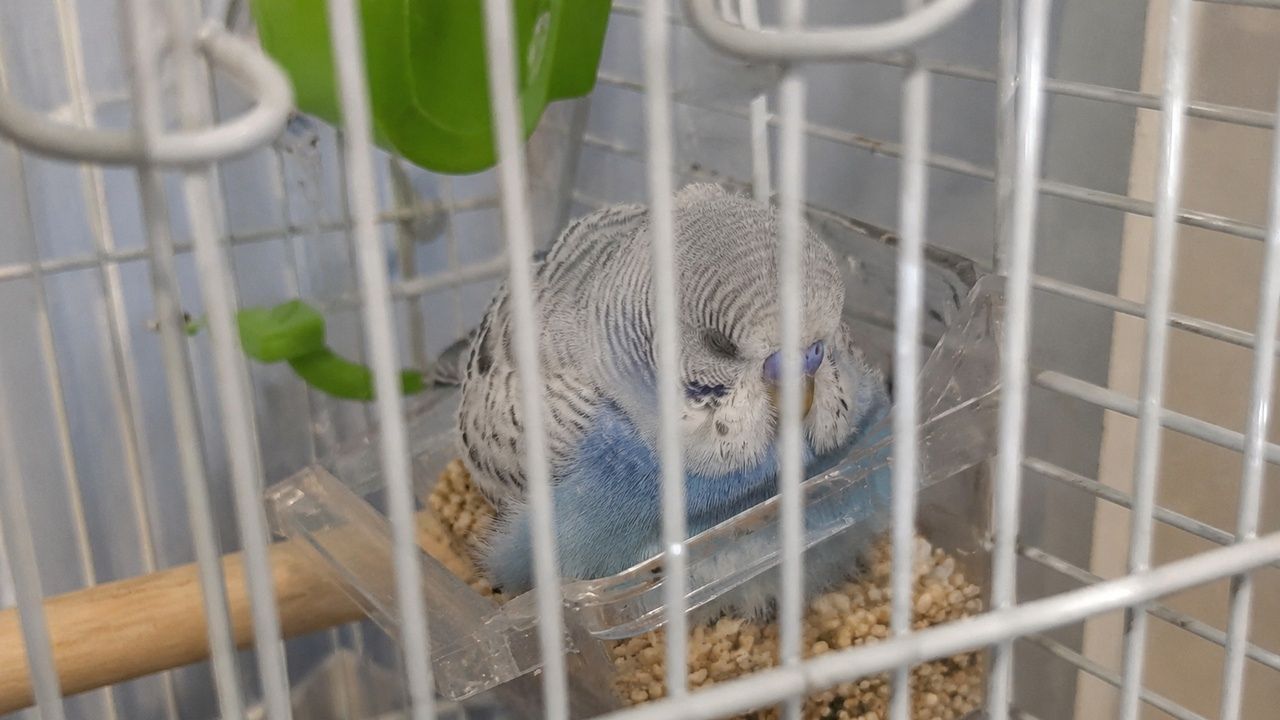
Body temperature is the critical factor. Budgies maintain a core temperature significantly higher than mammals — around 40 to 42 degrees Celsius. Maintaining that temperature requires constant energy. A bird that has been without food for twenty-four hours is struggling to maintain its core temperature, which is why a bird in the early stages of starvation will often sit puffed up — the puffed feathers are an insulating response, the bird trying to retain heat with the energy it has left.
This is why a puffed-up, quiet budgie is always a signal to act on immediately, not observe for another day.
The Difference Between Not Eating and Not Being Seen Eating
Before the alarm bells, it is worth being clear about one important distinction.
Budgies often eat when they are not being observed. A bird that seems to ignore its food bowl while you are in the room may be eating perfectly well the rest of the time. Budgies in households with busy activity patterns may eat primarily in the quieter morning or evening hours, and an owner who checks the bowl at lunchtime and sees it looking untouched may be drawing the wrong conclusion.
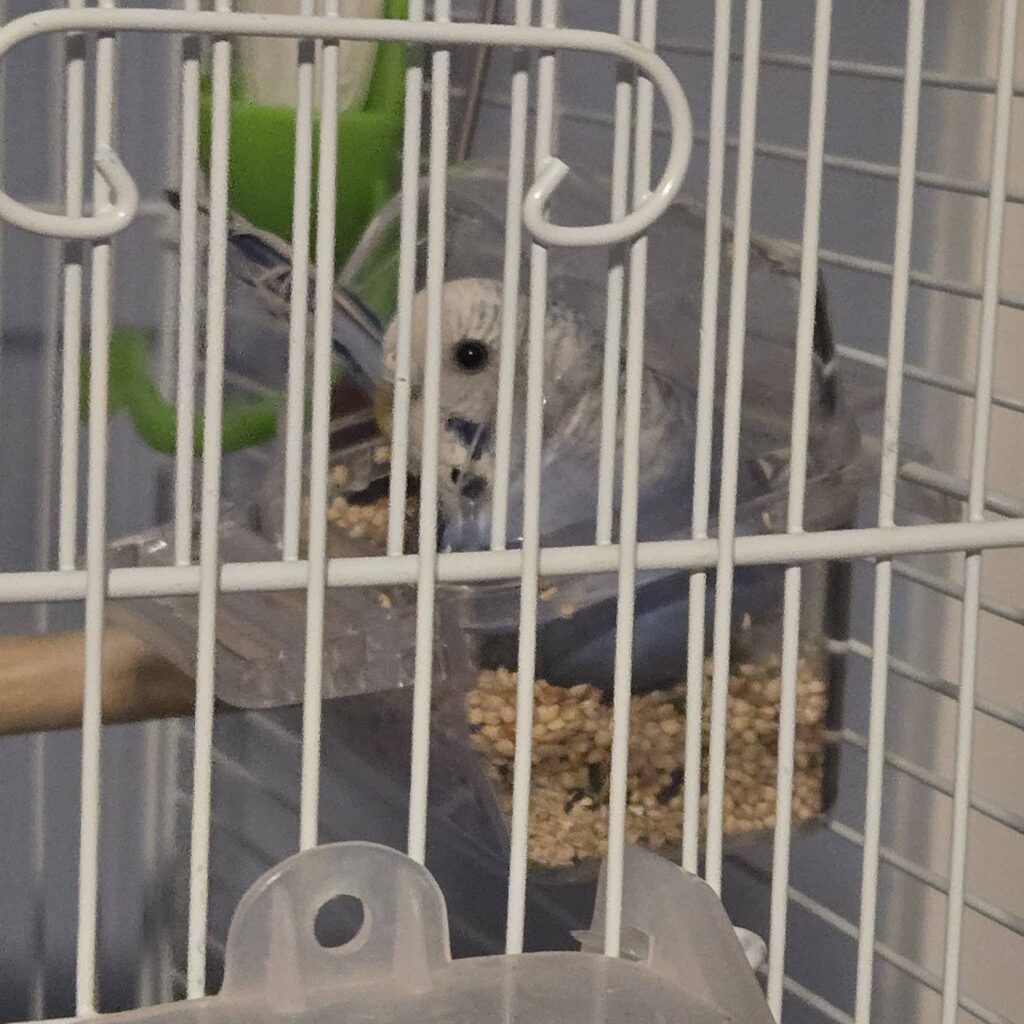
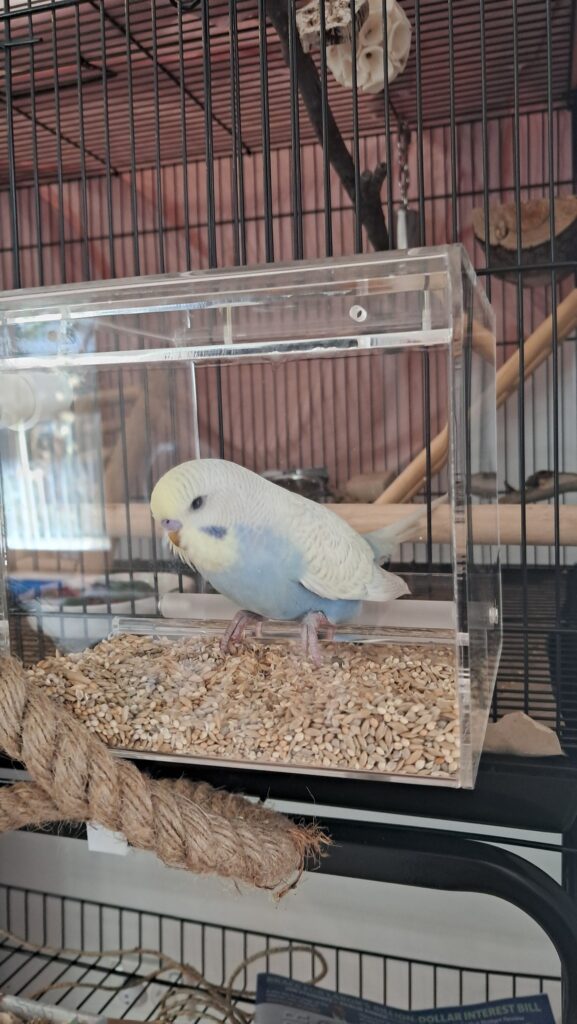
The way to tell whether a budgie is actually eating is not to watch the bird — it is to watch the bowl. A budgie that is eating will hull its seeds, leaving empty husks in the bowl. If the bowl has husks in it — even a small number — the bird has been eating. If the bowl looks identical to how it was filled, with no hulls, no disturbance, and the food surface completely undisturbed after several hours, that is a more meaningful signal.
Weigh the food before and after. A kitchen scale accurate to one gram will tell you whether the bird has consumed anything. This is particularly useful if you have a bird that is a reluctant eater and you are trying to track actual intake.
Droppings also tell you something important. A budgie that is eating will produce droppings regularly — small, well-formed, with distinct green-brown and white components. A bird that has not eaten for a significant period will produce fewer droppings, or droppings that are abnormal in consistency. Check the cage floor as well as the food bowl.
When a Budgie Stops Eating — What It Means and What to Do
A budgie that genuinely stops eating is almost always unwell. Healthy budgies eat consistently throughout the day. When appetite disappears, it is because something is wrong — not because the bird is bored of its food, not because it is having a quiet day, not because the weather has changed.
The most common reasons a budgie stops eating:
Illness. Respiratory infection, digestive problems, liver disease, parasites — all of these suppress appetite in budgies. The bird feels unwell and stops eating, which accelerates the decline. A bird that has not eaten and also seems quiet, puffed up, or is sitting lower in the cage than usual needs a vet the same day. I have written in more detail about the signs of a seriously unwell budgie in our guide on why budgies sit at the bottom of their cage.
Stress from a new environment. A budgie that has just arrived in a new home may eat significantly less for the first few days while it adjusts. This is different from illness — the bird should still be eating something, and should be progressing toward normal intake within three to five days. A new bird eating very little but otherwise alert, reactive, and moving normally is less alarming than a bird that has completely stopped and is sitting still.
A food change it does not recognise. A bird that has eaten the same seed mix for years and is suddenly presented with a different brand, pellets, or an unfamiliar food will sometimes refuse to eat until familiar food is reintroduced. This is neophobia — instinctive caution about unfamiliar food. It is manageable but needs to be recognised quickly so the bird does not go without food while the owner assumes the transition is going fine.
A change in the household. Moving the cage, adding a new pet, a significant change in routine, loud construction nearby — budgies are sensitive to environmental disruption and appetite can drop in response. If disruption is the cause, appetite usually returns within a day or two as the bird adjusts.
In all cases: if the bird has not eaten for twelve or more hours and you cannot identify an obvious, benign cause — contact a vet.
Going on Holiday — The Right Way to Handle It
This is the version of the question I hear most often before school holidays.
The answer is that you cannot leave a budgie with just a large food supply and hope for the best. Even if the food lasts — and a well-designed feeder can extend the window — the water situation alone makes unsupervised absence for more than twenty-four hours inappropriate. Budgies dip food into their water constantly. A water source that was clean on Friday morning is a bacterial risk by Friday evening.
Beyond water, a budgie left alone for several days is a budgie in a stressful, unstimulating situation with no way to signal that something has gone wrong. If the bird becomes ill on Saturday, there is nobody to notice until Monday.
The right solution for a budgie owner going on holiday is a trusted person — a friend, a family member, a professional pet sitter — visiting at least once daily. Not to provide extensive care, but to refill food and water, observe the bird for a few minutes, and confirm that it is alert, eating, and behaving normally. Fifteen minutes a day is enough to catch a problem early rather than arriving home to a crisis.
Brief absences of up to twelve hours — a full working day — are fine for a healthy budgie with a full food and water supply. Beyond that, daily visits are not optional. They are necessary.
If you do not have anyone local who can help and you are going away for more than a day, a reliable boarding option — an avian boarding service or a friend with bird experience who can take the cage — is the correct approach. We are always happy to recommend options to regular customers. Come in and ask us.
How to Check If Your Budgie Is Actually Eating
The food bowl check is the most useful daily habit a budgie owner can develop.
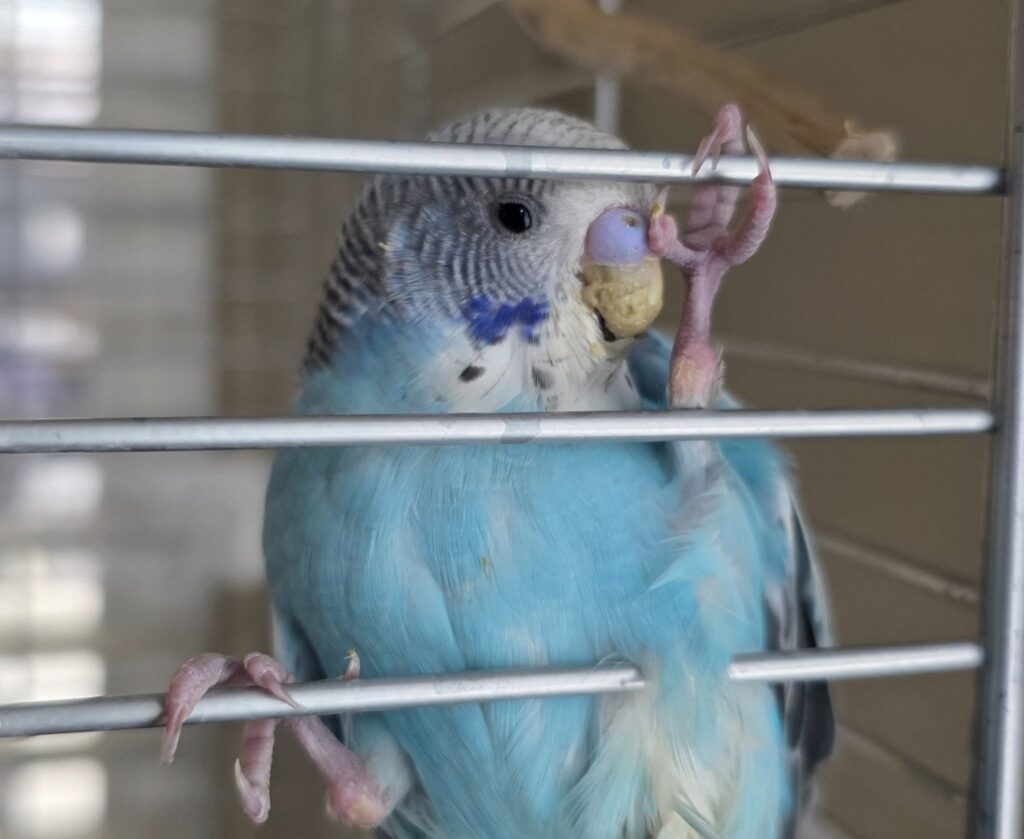
Each morning, empty the bowl completely — blow or tip out the husks from the previous day’s seeds — and refill with a measured amount. Each evening, look at the bowl. Are there husks present? Has the level dropped? Has the surface been disturbed? These are your indicators that the bird has been eating.
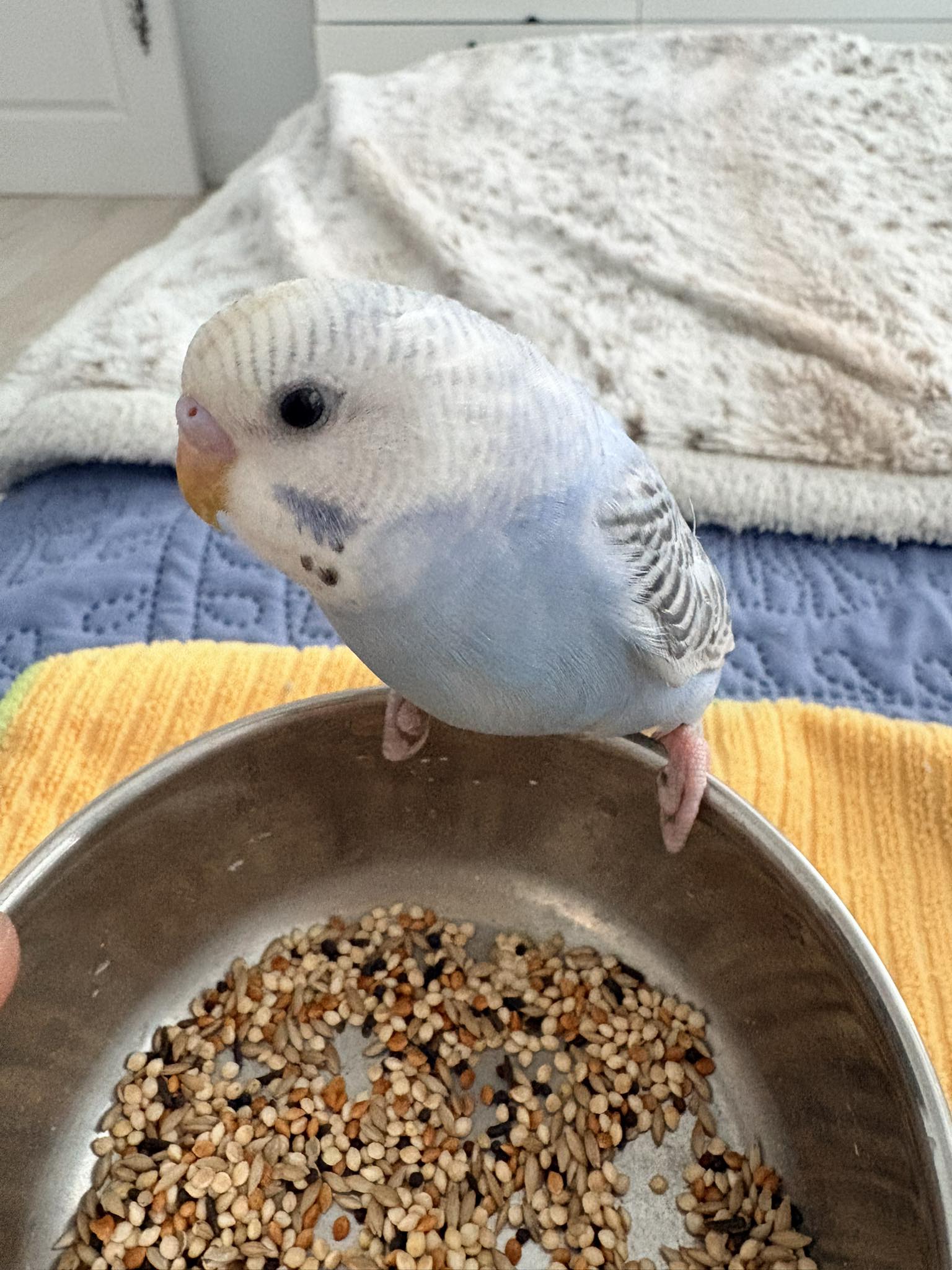
For more precise monitoring — particularly if you have a bird that has been unwell, or one you are trying to transition to a new diet — weigh the food. Put the bowl on a kitchen scale before you refill it in the morning and note the weight. Check the weight again in the evening. The difference is the amount consumed. A healthy budgie of normal size should consume roughly one to two teaspoons of seed per day — around five to eight grams, depending on the bird’s size and activity level.
Body weight is the most reliable long-term indicator. A budgie that is eating adequately maintains a consistent body weight. A bird losing weight over days or weeks is not eating enough, even if food is disappearing from the bowl. Weigh your bird weekly on a kitchen scale — a small perch placed on the scale makes this easier. Know the normal weight for your bird specifically, so you recognise a downward trend before it becomes serious.
Normal body weight for a healthy adult budgie is typically between twenty-five and forty grams, depending on the individual bird and type. An English budgie will be at the higher end of that range.
Water — Even More Urgent Than Food
If food deprivation becomes critical around the twenty-four to forty-eight hour mark, water deprivation moves faster. A budgie without access to clean water for twelve hours is already in the early stages of dehydration. Beyond twenty-four hours without water, the situation is life-threatening faster than food deprivation alone.
Budgies dip food into their water, splash when preening, and regularly contaminate their water source throughout the day. What looks like a full, clean water bottle at nine in the morning may be fouled and bacteria-laden by late afternoon. This is one of the strongest arguments for changing water every morning without exception and not assuming that because there is water in the bottle, it is water the bird should be drinking.
Signs of dehydration in a budgie: sunken appearance around the eyes, skin that does not spring back immediately when gently pinched, lethargy, and loss of skin elasticity around the cere. These are late signs — by the time they are visible, the bird has been dehydrated for some time. Do not wait for visible signs before acting on a water situation you are aware of.
If a budgie has been without water — due to a blocked bottle nozzle, an accidentally empty bowl, or a holiday absence — do not assume it will rehydrate on its own. Offer fresh water immediately and watch carefully. A bird that does not drink within the first hour or two, or one that shows any signs of distress, needs veterinary attention.
- “The bowl is full so it must be eating” — A full bowl of seed is not evidence of a bird that is eating. Budgies hull seeds and leave the empty cases in the bowl. A bowl full of husks contains nothing edible. Empty and refill the bowl every day rather than topping up, so you actually know what has been consumed.
- “It’ll be fine for the weekend — it has plenty of food” — Food quantity is only one part of the equation. Water contamination, an undetected illness, a blocked feeder — any of these can turn a “fine for the weekend” situation into a crisis by Sunday. Budgies need daily monitoring, not weekly.
- “She’s just being fussy — she’ll eat when she’s hungry enough” — A budgie that is genuinely refusing food is almost certainly unwell, not fussy. And a bird that is ill cannot afford to wait until hunger forces the issue — it has almost no energy reserve to spare. Fussiness is not a meaningful concept in a bird that has always eaten normally and suddenly stopped.
- “He went a whole day without eating last year and was fine” — Survived is not the same as fine. A budgie that went twenty-four hours without food was under significant physiological stress during that period, even if it appeared normal afterwards. It is not evidence that the window is safe — it is evidence the bird was lucky or in better-than-average condition at the time.
- “I left a big feeder so it would last the whole week away” — Food quantity was not the limiting factor. Water quality, the bird’s health during that week, and the absence of daily observation were. A week is too long to leave any bird unsupervised regardless of how much food is available.
Warning Signs That Mean Act Today — Not Tomorrow
- The food bowl is completely undisturbed and it is already late in the day.
If you filled the bowl this morning and it looks identical twelve hours later — no hulls, no disturbance — the bird has not eaten. This is not a wait-and-see situation. Call a vet today. - The bird is sitting puffed up and is quieter than normal.
A puffed budgie that is not singing, not moving around its cage, and is sitting in a hunched position is a bird in energy deficit. Combined with not eating, this is urgent. Do not leave it overnight. - The bird is on the cage floor or on a low perch it does not normally use.
Budgies go to the floor when they do not have the energy to maintain height. This is a late sign of serious illness. Vet today — call ahead so they know you are coming. I have written more about this in detail in our guide on budgies sitting at the bottom of the cage. - The bird has lost visible weight — the breastbone is prominent when you handle it.
Run your finger gently along the bird’s breastbone. In a healthy bird at healthy weight, there is flesh either side of the bone and the keel is not sharply pronounced. If the bone feels like a ridge with almost no flesh either side, the bird has lost significant weight. Vet today. - The water has been unavailable or compromised and the bird seems off.
Blocked bottle nozzle, empty bowl, an absence of more than twelve hours without water — if any of these have occurred and the bird is now lethargic or not drinking when water is reintroduced, vet today. Dehydration in a small bird moves fast. - The bird has not eaten for more than twenty-four hours for any reason.
Twenty-four hours is the limit at which veterinary involvement becomes necessary regardless of what else you observe. Do not wait to see if it improves. The metabolism of a budgie does not allow for extended waiting.

What I Tell Owners at the Counter
When someone comes in asking how long their budgie can go without food, the answer I give depends on why they are asking.
If they are planning a holiday, I explain the daily care requirement clearly and help them think through the practical options — a trusted person, a pet sitter, a boarding arrangement. I do not tell them the bird will be fine for a long weekend unsupervised, because it will not necessarily be fine, and saying so to make the conversation easier is not something I am willing to do.
If they are worried about a bird that has stopped eating, I ask a few quick questions — how long, what behaviour changes, what the bowl looks like — and then tell them honestly whether what they are describing sounds manageable or urgent. In most cases where the owner has come in because something feels wrong, something is wrong. The instinct is usually right.
The overarching message I always give is this: small birds have no margin. The safety window that exists for a dog or a cat — where a day of not eating is concerning but not immediately dangerous — does not exist for a budgie. The response time needs to match the biology of the animal.
If you are worried about your budgie and want to talk it through before deciding whether to call a vet, come in and see us. We are at Manor Garden Centre, Cheney Manor Industrial Estate, Swindon, SN2 2QJ — open every day. Or call us on 01793 512400. We would always rather help you assess the situation early than hear that it went wrong because someone waited.
You can also read our guide on why budgies stop eating for a more detailed look at the specific causes and what to do about each one.
Visit Us at Paradise Pets Swindon
We stock budgies year-round alongside everything you need to keep them well — quality seed mixes, pellets, water bottles, and appropriate feeders. If you have a concern about your bird’s eating — or anything else — come in and talk to us. Thirty-five years of experience means we have seen almost every situation, and we are always happy to help owners work out what they are dealing with before it becomes a crisis.
We also stock cockatiels, canaries, and finches, alongside a full range of guinea pigs, rabbits, and gerbils and hamsters.