
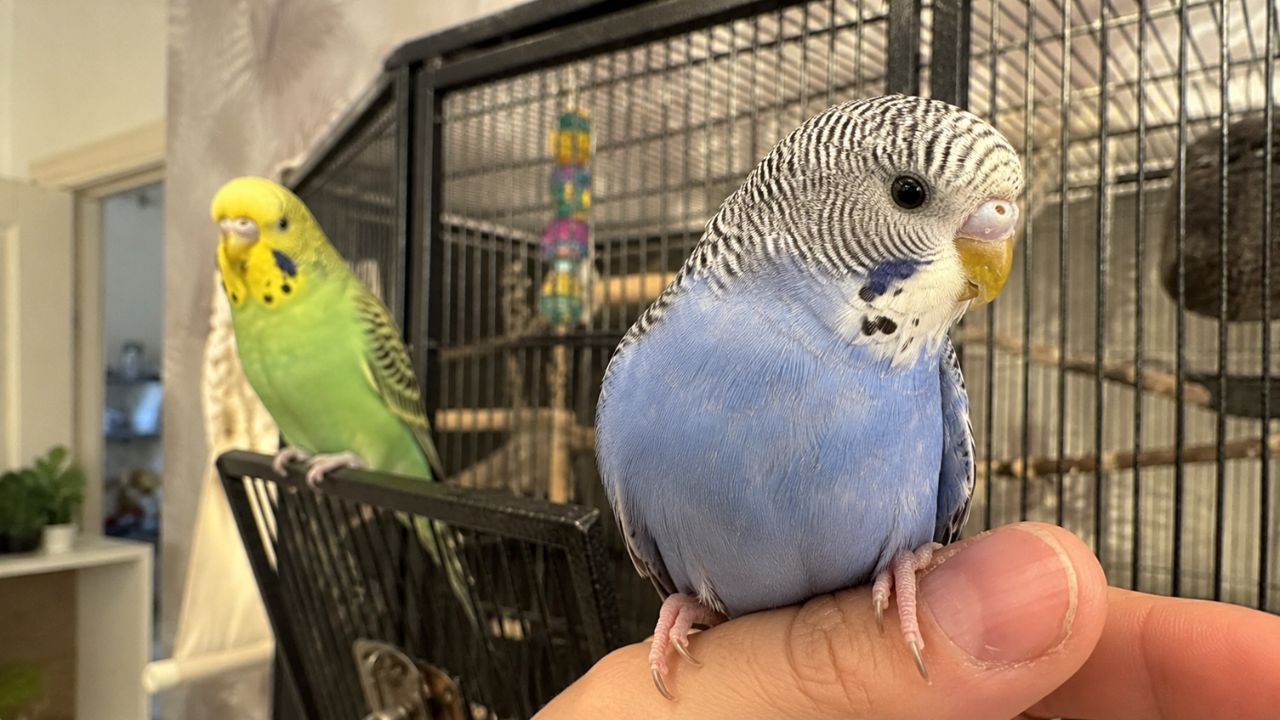

Neil has kept, bred, and sold budgies at Paradise Pets Swindon since 1988 — over 35 years of first-hand experience with these birds. In that time, some of his most rewarding conversations have been with older customers choosing their first bird — or returning to bird-keeping after years away. This article is his honest guide for them.
She was in her mid-seventies and she had not owned a budgie since her children were small. That had been forty-odd years ago, and she had missed having a bird in the house ever since. Her children had grown up and moved away. The house was quieter than she liked. She wanted something with a bit of life in it.
She stood at the counter for a while, watching the birds. Then she said: “I suppose they need a lot of looking after, don’t they.”
It was not quite a question. It was more of a concern — an expectation, shaped by forty years of being told that pets are demanding, that older people should not take on too much, that a quiet life is an easier life.
I told her the truth. A well-chosen budgie, properly set up, is one of the most rewarding and manageable companions an older person can have. It is not demanding in the physical sense. It does not need walking. It does not need grooming. The daily care — food, water, a few minutes of interaction — is genuinely achievable for almost anyone. And what it gives back, over years, is something that is difficult to describe until you have experienced it.
She left with a young male budgie. She still rings the shop occasionally, four years later, to tell me what he has said recently.
Why Budgies Suit Older Owners So Well
The match between budgies and older owners is, in my experience, one of the most consistently successful in the pet world. And the reasons are not complicated.
Budgies are home birds. They do not need to go outside. They do not need exercise beyond what they get in a well-sized cage and regular out-of-cage time. The daily physical demands are light — fresh food and water, a clean cage, and time spent nearby. For anyone with reduced mobility, limited energy, or simply a preference for a quieter domestic routine, these are significant advantages.
But the real reason budgies suit older owners is the quality of the companionship. A budgie that has bonded with one person becomes deeply attuned to that person — their voice, their movements, their routine. The bird knows when you come into the room. It reacts differently to you than to anyone else. It fills the house with sound and movement in a way that is genuinely enriching, without any of the physical demands of a dog or cat.
Many older owners who live alone tell me that their budgie has changed the character of the house. Not dramatically, not in a way that is difficult to explain — just a presence, a noise, a reason to have the radio on less because there is already something interesting happening in the room.
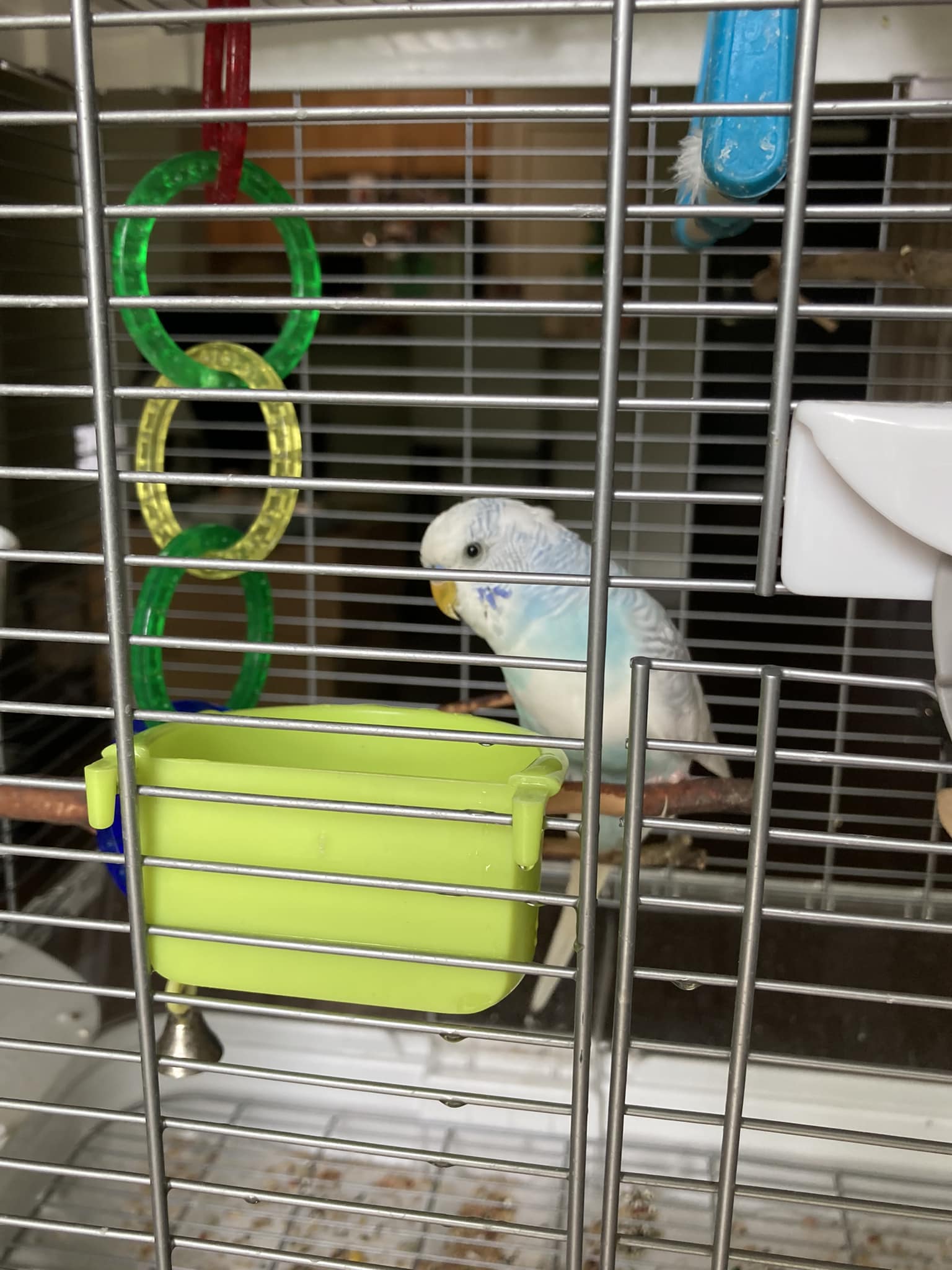
Which Budgie Is Actually Right — My Honest Recommendation
Not every budgie suits every older owner, and the choice matters. Here is how I think about it when someone comes in looking for a companion bird for later life.
Standard Budgies — The Talkative Choice
Standard budgies are the variety most people picture — the bright, active, vocal birds that have been kept as pets for over a century. A male standard budgie, well-tamed and given consistent company, has the best chance of developing speech. Clear words, short phrases, sometimes remarkable vocabularies. For someone who wants a bird that talks back — and this is a very common priority for older owners who live alone — a male standard budgie is the most reliable starting point.
They are active and entertaining. They fill a room with sound. They have strong personalities and distinct preferences. They are, in my experience, the most rewarding budgie for someone who is home most of the day and can spend real time with the bird.
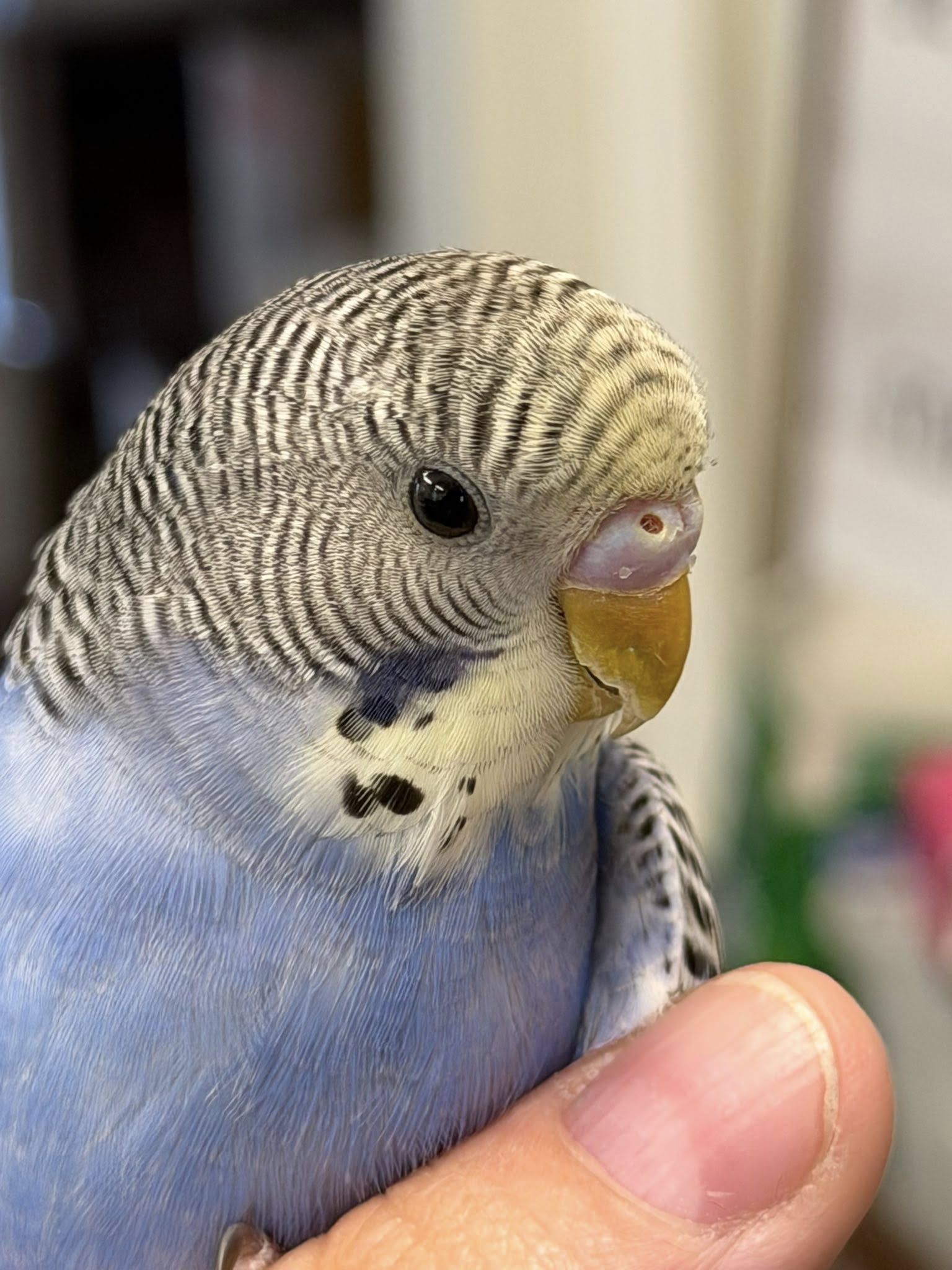
English Budgies — The Calm Choice
English budgies are larger, calmer, and less frenetically active than standard varieties. They have the distinctive fluffy head feathering that many people find particularly appealing, and their temperament is gentler and more measured. They are less likely to develop extensive speech, but they are often more relaxed to handle and less demanding in terms of stimulation.
For someone who wants a bird with a calm, settled presence rather than a lively, chattery companion, an English budgie can be an excellent choice. They are also, in my experience, slightly easier to tame for someone who has not kept birds recently, because their slower movements make early handling less daunting.

Male or Female?
For most older owners who want interaction and companionship, I lean toward recommending a male — particularly if speech is a priority. Males are more inclined to vocalise, more likely to develop words, and generally more outwardly sociable. But this is a generalisation and individual personality matters more than sex. If you want the full breakdown, our guide on male versus female budgies covers it in detail.
One Bird or Two — The Honest Answer
I am often asked whether an older owner should get one bird or two. The answer depends on circumstances.
If you are home for most of the day and can give the bird regular, genuine interaction — a single bird can form an extraordinarily close bond with you and will often develop richer speech and more personalised interaction than a paired bird. Many older owners with a single budgie tell me it is the most rewarding pet relationship they have had.
If you go out regularly for extended periods — medical appointments, visiting family, shopping — a paired bird is kinder. Two birds together are calmer and less stressed during absences. They are also often friendlier with people than owners expect, because they are not desperately seeking company.
There is no wrong answer here. It depends on your honest assessment of how much time you are home.
Practical Considerations — What I Always Raise
There are a few practical points I always cover with older customers, not to put them off but to make sure the experience is positive from day one.
Cage Position
The cage needs to be at approximately eye level when you are seated — not on the floor, not high on a shelf. A bird at eye level is a bird you can interact with comfortably, and one that can see and engage with the room. This also means the daily care — food, water, cage cleaning — can be done without bending or reaching.
Cage Size
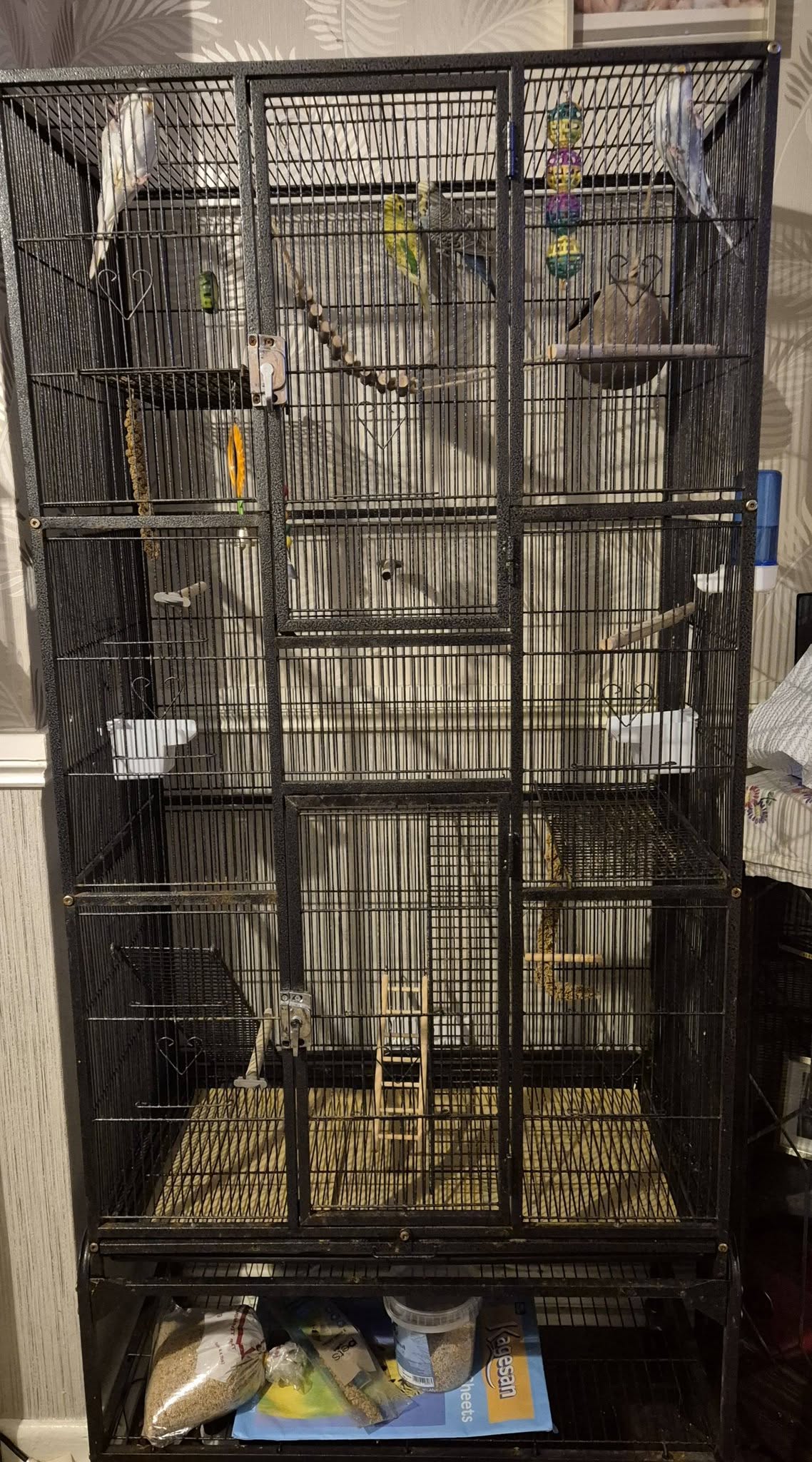
A proper-sized cage — minimum 60cm wide — is important. Not because it is more work, but because a bird in a well-sized cage with appropriate enrichment is calmer, healthier, and more entertaining. A cramped cage produces a stressed, less engaged bird. This is worth getting right from the start.
Holiday and Absence Planning
What happens when you go away or are unwell? This is the question I always raise, and it is the one most people have not fully thought through. A budgie bonded to one person needs someone it knows to care for it during absences — not a stranger in a strange environment. If you have family nearby who would step in, that works well. If not, it is worth thinking about how you would manage this.
Avian Vet
Find a vet with avian experience in your area before you need one. When a bird is unwell, time matters — and searching for an avian vet while worried is not the moment to be doing it for the first time. Ask us for recommendations when you visit the shop.
What To Expect — The Honest Version
I want to tell you what owning a well-chosen budgie actually looks like for an older owner — because the reality is better than people often expect going in.
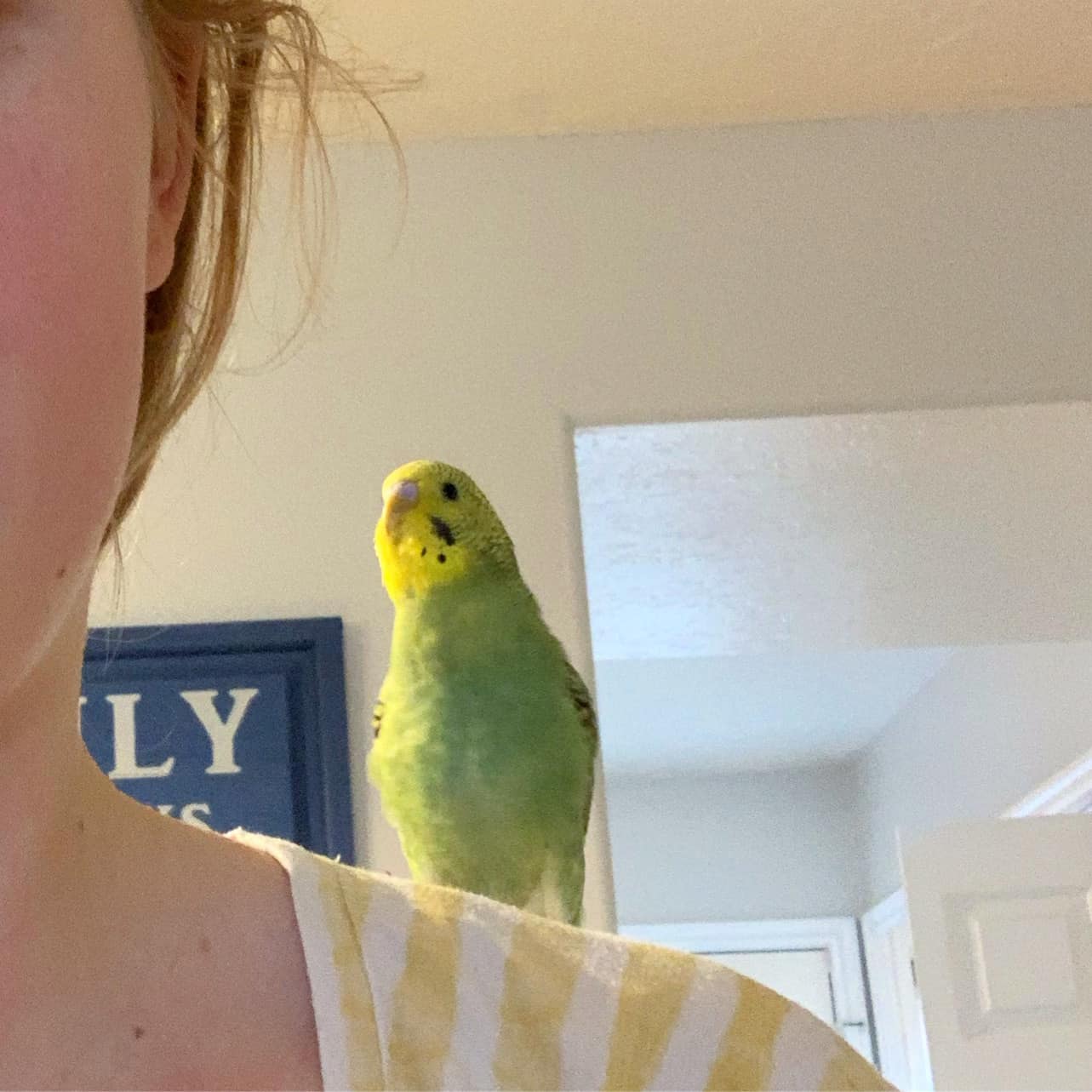
A male budgie that has been tamed carefully and kept with consistent, gentle interaction will become a genuinely present companion. He will know the sound of your voice. He will call when you leave the room and quiet when you return. If he develops speech — and many do — you will hear your own words and phrases replayed back at you in a small, clear voice that is genuinely startling the first time it happens.
The sound of a contented budgie — the soft, continuous warbling of a bird that is comfortable and engaged — fills a room in a way that many owners describe as the most peaceful background sound they have ever lived with. It tells you, every time you hear it, that the bird is well and happy. And the absence of it tells you, just as clearly, when something is not right.
That relationship is entirely achievable. It just needs the right start.
One Last Thing
If you come into Paradise Pets and tell me your situation — your age, your home, your routine, what you are hoping for — I will not tell you whether you should or should not have a bird. That is your decision. What I will do is help you make it with full information, and help you choose the right bird if you decide to go ahead.
I have sold budgies to people in their eighties who went on to have five or six years of genuine joy with their birds. I have also had conversations where the honest answer was that the timing was not quite right and something else might be more suitable. Every situation is different.
Come in and talk to us. We stock budgies year-round in a range of colours and varieties, all UK-bred and handled from a young age. There is no pressure and no rush. The right bird, in the right home, is worth taking the time to find.
Visit Us at Paradise Pets Swindon
We stock standard and English budgies year-round — males and females, various colours. All UK-bred, all handled from young. Come in and spend some time with the birds. We are always happy to talk through what is right for your situation.