

Updated : Reworked regurgitation and vomiting guidance to explain diagnostic limits and when to contact an avian vet.
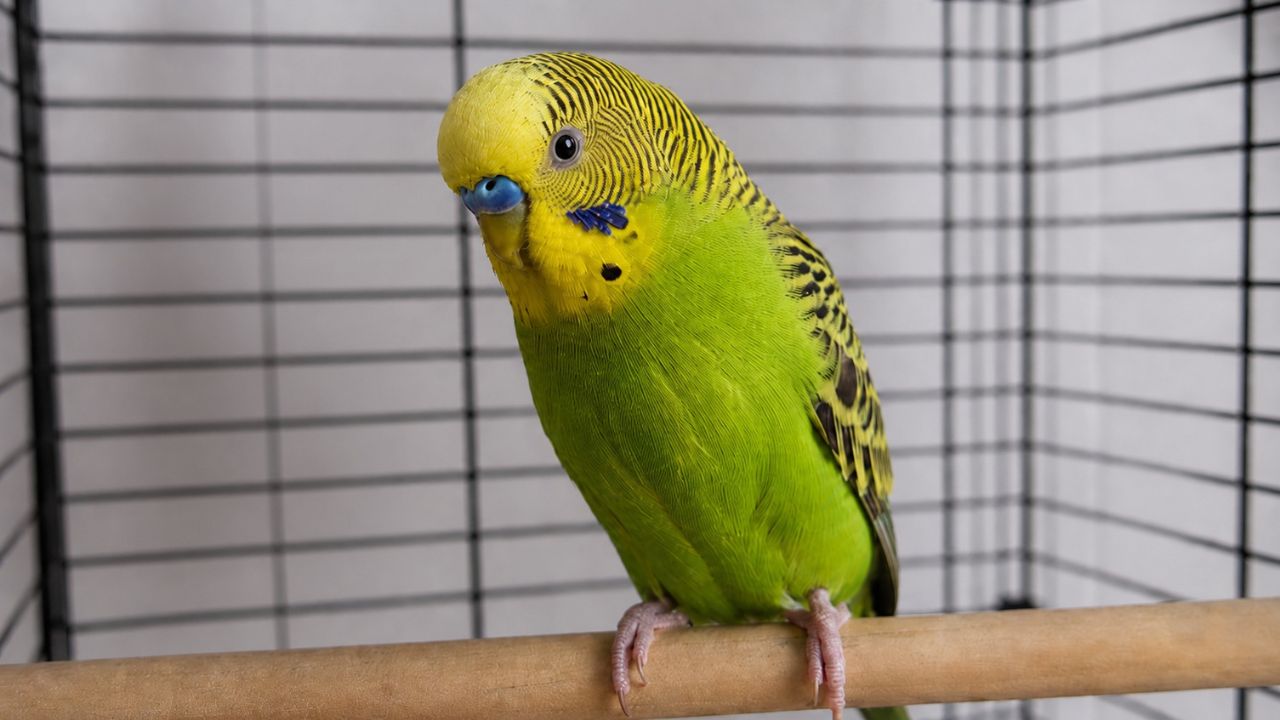
A budgie may bring up food during courtship, but regurgitation can also accompany illness. Head movements, a favourite toy or the position of the food cannot reliably rule out a medical problem. If this is new, repeated or worrying behaviour, contact an avian vet rather than trying to diagnose it from a checklist.
Suspected vomiting, weight loss, reduced appetite, unusual droppings or a change in activity needs prompt veterinary advice. Breathing difficulty, collapse or suspected poisoning needs emergency help. Do not wait until later in the week because your bird is still eating.
Can regurgitation be normal behaviour?
Yes. Offering food can be part of courtship. A bird may direct it towards another bird, a person or an object such as a mirror. That context can help a vet understand what you have seen, but it does not prove the bird is healthy.
VCA’s guidance on sexual behaviour in birds explains both courtship feeding and the need to seek veterinary advice when vomiting or regurgitation might indicate illness.
Why appearance alone is not enough
Vomiting may involve side-to-side head shaking and food or fluid landing on the head or cage. Those observations are useful to report. They are not a reliable home test that separates every healthy bird from every sick bird.
Infections and other digestive problems can cause regurgitation too. The Merck Veterinary Manual’s causes of regurgitation includes both courtship and medical conditions. A calm appearance or rhythmic movement does not exclude those conditions.
What to tell the vet
- When the episodes began and how often they happen.
- What the bird was doing immediately beforehand and whether food was directed towards a particular bird, person or object.
- Any change in eating, drinking, activity, breathing or droppings.
- Any weight records you already have and any recent change in diet, toys, cage equipment or possible exposure to harmful substances.
A short video taken without disturbing the bird can be useful. Recording one should not delay calling for help. Ask the practice how to transport your bird safely and whether it wants a sample or photographs.
Could it be a crop infection or avian gastric yeast?
These are possibilities, not diagnoses an owner can make from seed on the head or a prominent breastbone. Different conditions can share signs. A vet may need examination and tests to identify the cause and choose treatment.
The Merck owner guide to digestive disorders explains that avian gastric yeast can involve weight loss and regurgitation, and that testing may need to be repeated. Do not start leftover antibiotics, antifungal treatment or crop manipulation without veterinary instructions.
What if it happens repeatedly at a mirror?
A mirror or favourite object can become the focus of courtship behaviour. Removing the object may reduce that focus, but persistent food-bringing, weight loss or other changes still need veterinary assessment. Do not treat adding a new bird as a quick cure: companionship, compatibility and introductions require planning.
Provide appropriate activity and ask an avian vet or qualified behaviour professional for help if the behaviour persists. The RSPCA’s bird-enrichment guidance offers ideas for foraging, climbing and safe exploration.
Further help
For a broader husbandry overview, read our budgie care guide. For illness concerns, an avian vet is the right first contact; the shop cannot diagnose the cause from a description or video.
For general bird-care and supplies enquiries, contact Paradise Pets at Manor Garden Centre, Cheney Manor Industrial Estate, Swindon, SN2 2QJ, on 01793 512400 or [email protected].