
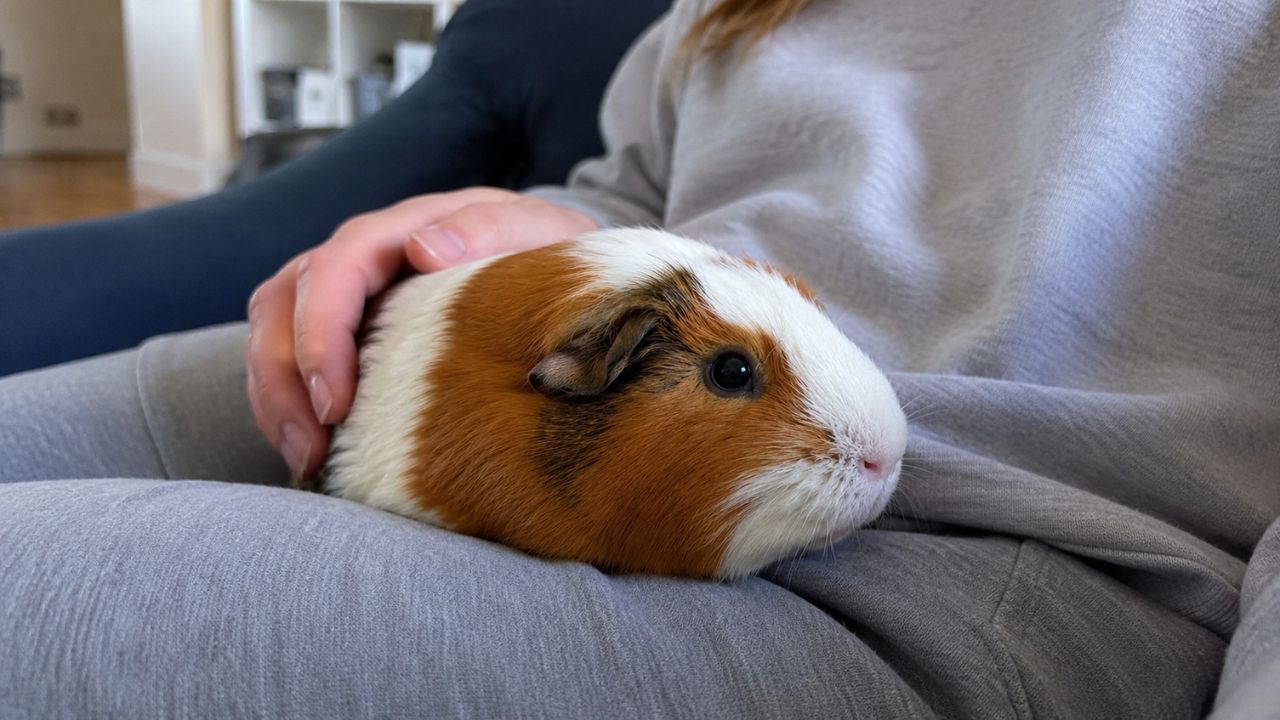

Neil has sold and kept guinea pigs at Paradise Pets Swindon since 1988 — over 35 years of first-hand experience with one of the UK’s most popular small animals. In that time, he has watched hundreds of families struggle with guinea pigs that ran from every approach, and a smaller number who got the taming process right from the beginning and ended up with genuinely confident, handleable animals. This article is his honest, complete guide on how to tame a guinea pig in the UK — what actually works, what most owners do wrong, and why patience is not just advice, it is the mechanism.
A grandmother came in with her granddaughter a while back. The girl was about nine, and she had two guinea pigs she had been given a few months earlier. She loved them. She spent time with them every day. She talked about them constantly.
But she could not pick them up.
Every time she reached into the enclosure, both guinea pigs fled to the far corner and pressed themselves against the wall. If she managed to catch one, it struggled, kicked, and called out. She had been scratched. She had been bitten once, lightly. She was beginning to think something was wrong with her guinea pigs, or with her.
Nothing was wrong with either. What had gone wrong was the process — or rather, the absence of one. No one had told her, when she got the guinea pigs, that taming takes time. That the first weeks are not about picking up. That trust is built in a specific way and cannot be rushed or bypassed.
That conversation, and ones very like it, is one I have regularly. And the reason it matters is that guinea pigs are not instinctively tame. They are prey animals. Their default assumption is that something larger than them is a threat. Overcoming that assumption — building the trust that produces a genuinely handleable guinea pig — requires understanding how they think, and working with that rather than against it.
Here is how you do it.
Understanding the Guinea Pig Mind First
Before you start any taming process, you need to understand something fundamental about guinea pigs — something that changes everything about how you approach them.
Guinea pigs are prey animals. Not in a vague, theoretical sense — genuinely, evolutionarily, wired-into-every-instinct prey animals. In the wild, a guinea pig’s survival depends on correctly identifying threats and fleeing from them immediately. The cost of a false positive — running from something that was not a predator — is low. The cost of a false negative — not running from something that was a predator — is death.
This means that a guinea pig’s default interpretation of any large, fast-moving object approaching from above is: predator. A hand reaching into their enclosure from above looks, to the guinea pig’s nervous system, almost identical to a hawk. It does not matter that the hand belongs to someone who has fed and cared for the guinea pig for months. The shape, the speed, the direction — all of it triggers the flight response before the conscious part of the guinea pig’s brain has time to process the situation differently.
This is not stubbornness. It is not bad temperament. It is a survival instinct doing exactly what it evolved to do.
The entire taming process is about building enough familiarity, positive association, and trust that the guinea pig’s learned experience overrides the initial threat response. This takes time. It takes consistency. And it requires that you consistently approach the guinea pig in ways that do not reinforce the threat response — which means avoiding the approaches that trigger it.
Once you understand this, the specific techniques in this guide make immediate sense.
Before You Start — The Setup Has to Be Right
The most overlooked part of guinea pig taming is the enclosure setup. How and where the guinea pig lives affects how receptive it is to taming before you have done anything else.
A guinea pig in a small hutch or cage is a guinea pig living in a state of low-level chronic stress. It cannot express natural behaviours — running, exploring, foraging, hiding. This chronic stress makes the flight response more hair-trigger, not less. A stressed guinea pig is harder to tame than a settled one, and the setup is where that settlement begins.
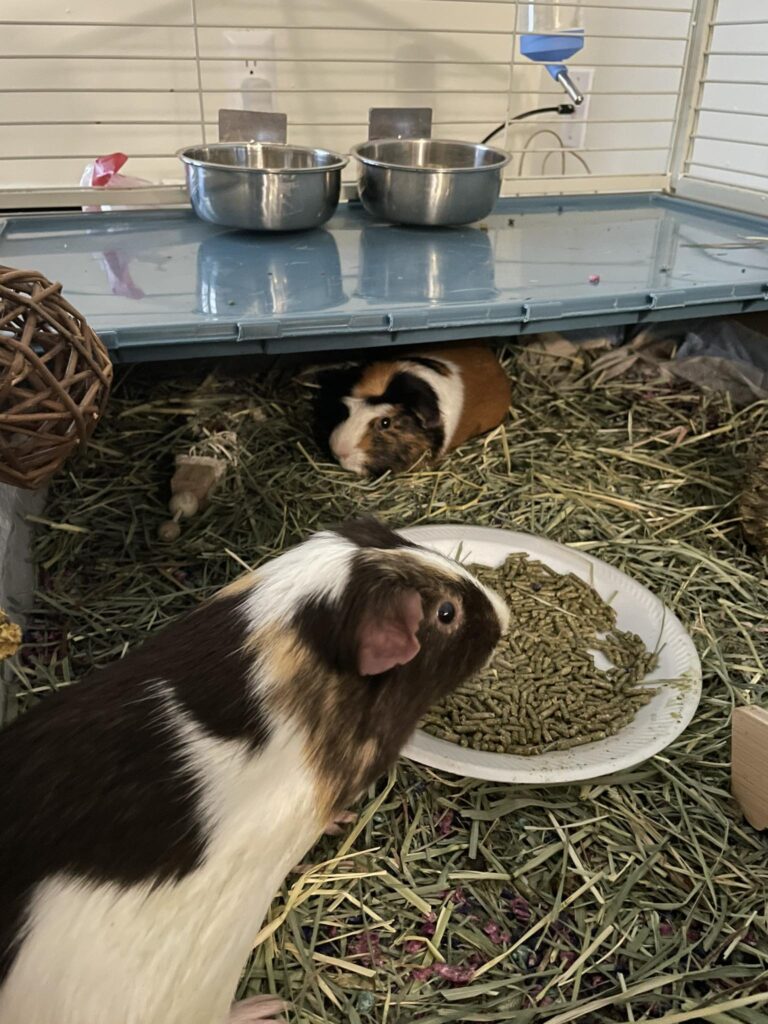
- The enclosure must be large enough — the minimum recommended in the UK is now 120cm by 60cm for a pair, and larger is consistently better. A cramped guinea pig is a stressed guinea pig
- Always keep guinea pigs in pairs or groups — a lone guinea pig is chronically stressed from social isolation, which makes taming significantly harder
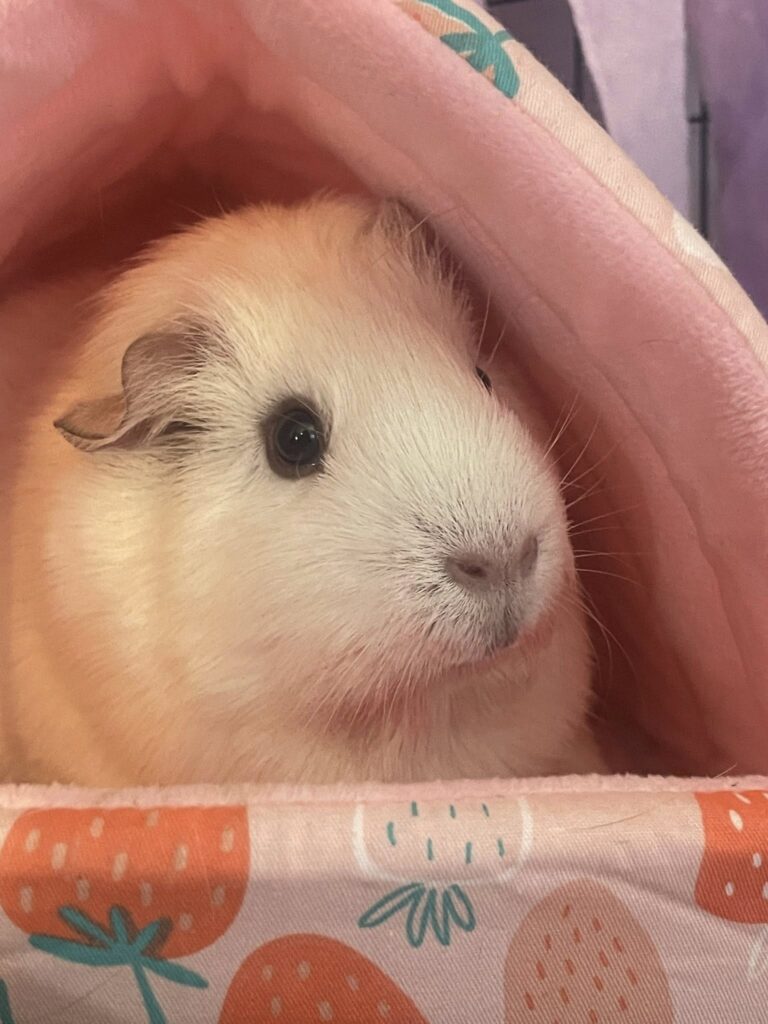
- Provide hides — at least one per guinea pig, ideally more. A guinea pig that has somewhere to retreat to when it feels threatened is more confident than one that has nowhere to go. Counter-intuitively, hides make guinea pigs easier to tame, not harder
- Position the enclosure at a level where the guinea pigs can see human activity — not isolated in a shed or garage. Familiarity with human movement and sounds is the first step in taming, and it happens passively when the guinea pig can observe daily life
- Avoid housing the guinea pigs where cats or dogs can approach or watch them — predator presence keeps the threat response permanently activated
Week One — Do Almost Nothing
This is the part that feels hardest for new owners, particularly children. You have your guinea pigs. You are excited. You want to hold them and interact with them.
Week one is not for that. Week one is for the guinea pig.
A guinea pig that has just been moved to a new environment is experiencing significant stress. Everything is unfamiliar — the smells, the sounds, the layout, the people. The instinctive response is heightened alertness and threat-readiness. Approaching for handling in this state guarantees a frightened, struggling animal and sets back the taming process significantly.
What to do in week one:
- Let the guinea pigs settle without being picked up or approached for handling
- Carry out feeding and water changes calmly and slowly, without sudden movements
- Talk quietly near the enclosure while you go about other things — the sound of your voice, heard regularly without anything unpleasant happening, begins the association between your presence and safety
- Sit near the enclosure at floor level and simply be present — reading, talking on the phone, anything that keeps you nearby and calm without directing attention at the guinea pig
- Observe — watch how the guinea pigs move around their enclosure, where they prefer to be, which one is more confident. This information will be useful later
- Do not invite children to interact beyond watching during this period — the temptation to reach in will be strong, but resisting it now pays dividends later
By the end of week one, most guinea pigs will be visibly more settled — moving around more freely, no longer pressed against the back of the enclosure when you approach, perhaps coming out when they hear the food container.
Week Two — Voice and Presence
Week two introduces the first real active taming step, and it is entirely about positive association.
The goal this week is simple: your presence near the enclosure should consistently predict something pleasant. That pleasant thing, in almost every case, is food.
- Begin offering food by hand through the enclosure bars or over the side — small pieces of vegetable, a fragment of leafy green, a small piece of carrot or sweet pepper
- Hold the food still and wait. Do not push it toward the guinea pig. Let it come to you
- The first time a guinea pig eats from your hand without retreating afterward is a significant moment — it means the positive association is beginning to form
- Keep your hand low and still during these sessions — no movement toward the guinea pig beyond extending the food
- Talk quietly throughout. The combination of your voice and food is building the association: this person, this voice, equals food and safety
- Keep sessions short — five to ten minutes, twice a day if possible. Consistency matters more than duration
- Do not attempt to stroke or pick up during this week — the hand feeding is the whole goal
By the end of week two, most guinea pigs will be reliably coming to take food from a stationary hand. Some will be doing so with minimal hesitation. This is genuine progress and it is the foundation for everything that follows.

- Going well: guinea pig approaches your hand with decreasing hesitation, takes food without immediately retreating, is beginning to investigate your hand beyond the food
- Going well: guinea pig vocalises with soft sounds — purring or low chattering — when you are present and calm
- Slow down: guinea pig is still running to the far end of the enclosure every time you approach after ten days
- Slow down: guinea pig takes food but immediately flees and presses against the wall
- Start again if needed: if a frightening event has occurred — accidental drop, loud noise during handling, rough handling — give the guinea pig three to four days of no-pressure presence before attempting hand feeding again
Weeks Three and Four — Introduction to Touch
Once a guinea pig is reliably taking food from your hand with minimal hesitation, you can begin introducing touch — but in a specific way.
The mistake most owners make at this stage is moving too fast. The guinea pig is taking food. They try to stroke it while it eats. The guinea pig startles, retreats, and the next food session is more hesitant than the one before. Two steps forward, one step back.
The correct approach is slower and more deliberate.
- Continue hand feeding as the foundation of each session
- Once the guinea pig is eating calmly and settled, slowly move your free hand to rest near — not on — the guinea pig. Let it be aware of the hand without the hand touching it
- After a few sessions where the guinea pig accepts the nearby hand while eating, try a very brief, light touch — on the shoulder or back, not the head — while the guinea pig is focused on eating
- If the guinea pig flinches but returns to eating, that is acceptable — continue at the same pace
- If the guinea pig bolts, do not chase. Let it settle. End the session shortly after and try again the next day with less touch
- Gradually extend the duration of touch — a second, then two seconds, then a gentle stroke along the back — as the guinea pig becomes more comfortable
- Always approach from the side, not from above. Approach from above looks like a predator strike. Approach from the side is far less threatening
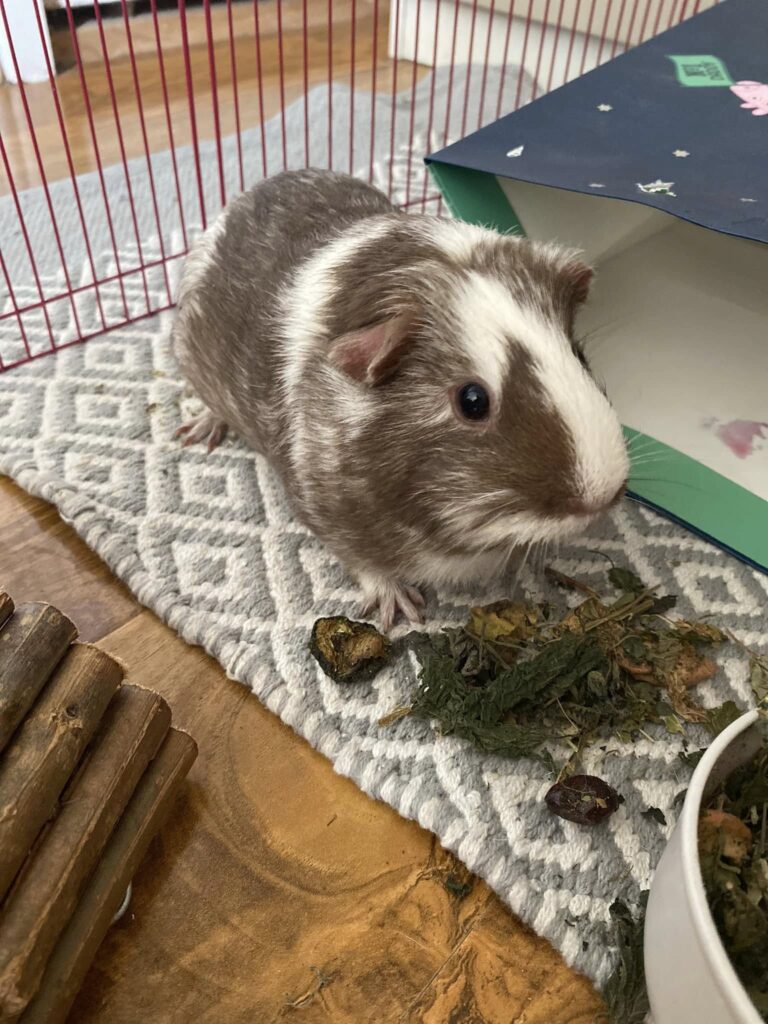
By the end of week four, most guinea pigs will accept being stroked on the back while eating, and many will accept brief stroking without the motivation of food.
The First Pick-Up — How to Do It Without Undoing Everything
This is the step that most owners rush and most commonly get wrong. The first pick-up needs to be as non-threatening as possible and it needs to happen after the groundwork has been genuinely laid — not after three days.
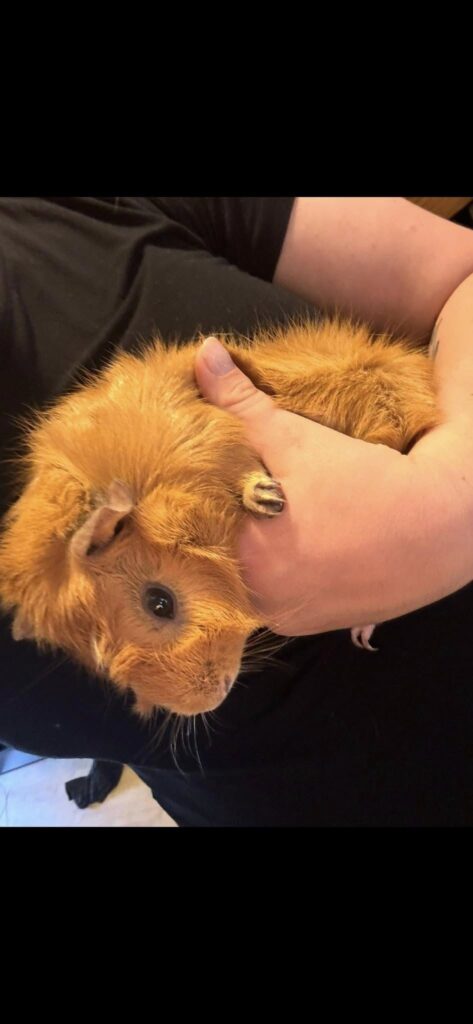
- Do it at floor level.
Sit on the floor with the guinea pig in your lap or on the floor in front of you, rather than lifting it to standing height. A guinea pig at floor level has a short drop if it escapes. A guinea pig held at waist height is in real danger if it jumps. Keep everything low until the guinea pig is confident. - Scoop from underneath, never grab from above.
Place one hand under the guinea pig’s chest and the other supporting the hindquarters. The movement should be smooth and continuous — not a hesitant approach that gives the guinea pig time to read the threat and bolt. A confident, smooth scoop is less frightening than a slow approach that the guinea pig has thirty seconds to get increasingly anxious about. - Hold securely but not tightly.
A guinea pig held loosely will struggle. Hold it firmly enough that it feels supported — both hands supporting the body, the animal held against your chest or lap. A guinea pig that feels held properly is less likely to panic than one that feels it might fall. - Keep the first pick-up very short.
Thirty seconds to two minutes. The goal is not a long interaction — it is a pick-up that ends before the guinea pig panics. Put the guinea pig down while it is still calm. Ending on calm is what the guinea pig remembers. - Put the guinea pig down by lowering it to the floor — not dropping it back into the enclosure.
The enclosure drop triggers the threat response again. Lower smoothly to the floor and let the guinea pig walk off your hands. End the interaction positively with a food treat offered immediately after. - Repeat daily, extending duration gradually.
Each session, if the previous one ended calmly, can be slightly longer. Build from two minutes to five, from five to ten, over the course of several weeks.
Children and Guinea Pig Taming — Specific Guidance
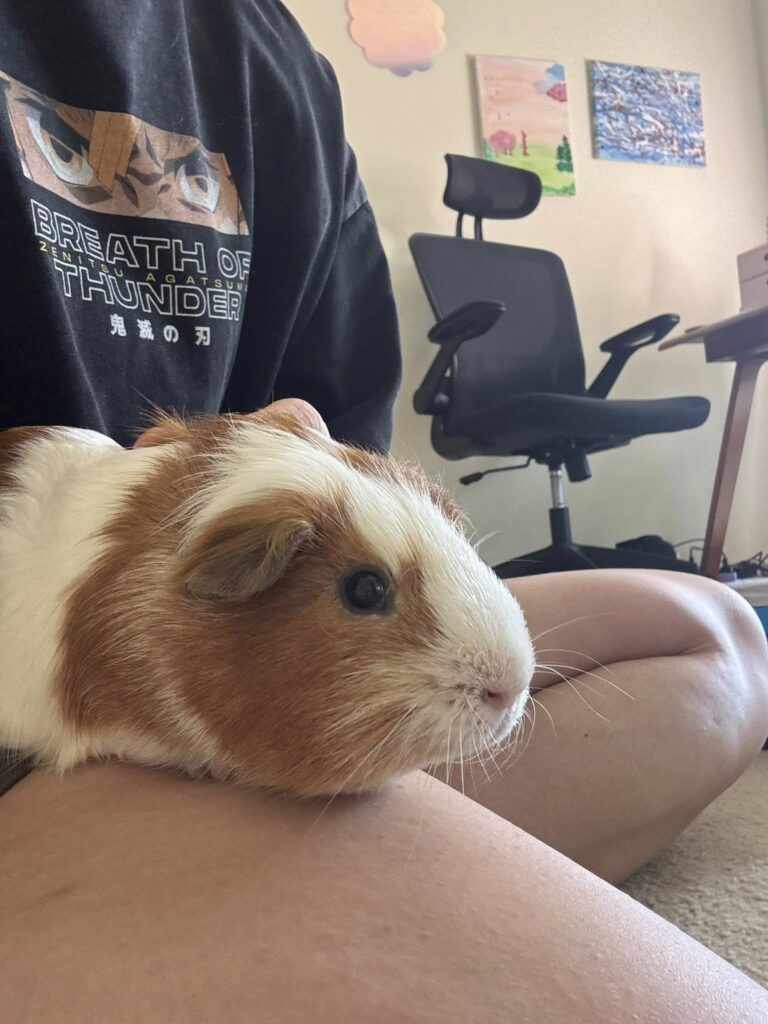
Most of the families I speak to have children who are the primary owners. Children and guinea pig taming is a specific topic that deserves its own section, because the approach needs adjustment for a younger handler.
The challenges with children are speed, noise, and unpredictability. Guinea pigs read these as threat signals. A child who approaches at a run, reaches in quickly, and makes excited noises is, from the guinea pig’s perspective, doing everything a predator does. The retreat is not personal.
- Teach children the slow approach before they ever try to handle the guinea pig — make it a rule that they sit quietly for a minute before reaching in
- Demonstrate correct handling technique to the child before the child attempts it — let them watch you do it several times before they try themselves
- Do the first pick-ups for the child and pass the guinea pig over once it is already calm in your hands
- Make sitting on the floor a non-negotiable rule for children until the guinea pig is confident with them — no holding at standing height until both child and guinea pig are experienced
- Keep sessions short and calm — five to ten minutes is plenty for a child’s first sessions, and ending while everything is still going well is far better than pushing until the guinea pig struggles
- Teach children to read the guinea pig’s signals — freezing, wide eyes, tensing up — and to put the animal down when it shows these signs rather than holding on
- Never leave a young child unsupervised with a guinea pig until both have demonstrated reliable, calm handling over many weeks
What Setbacks Look Like — And How to Handle Them
Every taming process has setbacks. An accidental drop. A loud noise that frightens the guinea pig during handling. A rough handling session by a well-meaning child. A long period without interaction during a family holiday.
Setbacks are not failures. They are part of the process. What matters is how you respond to them.
- After a frightening event, return to an earlier stage of the process — back to hand feeding without touch, or touch without pick-up, depending on how significant the setback was
- Give three to four days of calm, no-pressure presence before resuming active taming after a significant fright
- Do not attempt to compensate for a setback by immediately trying more handling — the guinea pig needs time to reset, not more handling while it is still in a heightened state
- After a period of no interaction — holidays, illness, disrupted routine — treat the guinea pig as if it needs gentle reintroduction, even if it was previously well tamed. A week without interaction is not a crisis, but it does require acknowledging
- A guinea pig that was previously tame and has become suddenly resistant to handling should see a vet — pain, illness, or pregnancy can all cause a previously handleable animal to resist being picked up
Signs Your Guinea Pig Is Genuinely Tame — What to Look For
Owners sometimes ask me how they will know when the process has worked. Here is what genuine tameness looks like in a guinea pig.
- The guinea pig approaches the enclosure edge when it sees or hears you, rather than retreating
- It accepts being picked up with minimal resistance — no scrambling, no calling out, no attempt to flee before your hands make contact
- It settles in your arms or lap within thirty seconds of being picked up, rather than remaining tense and constantly seeking escape
- It produces soft vocalisation — purring or low chattering — when being stroked
- It will eat from your hand while being held, which requires a significant degree of calm confidence
- It does not bolt when you open the enclosure — it may investigate you first or simply continue what it was doing
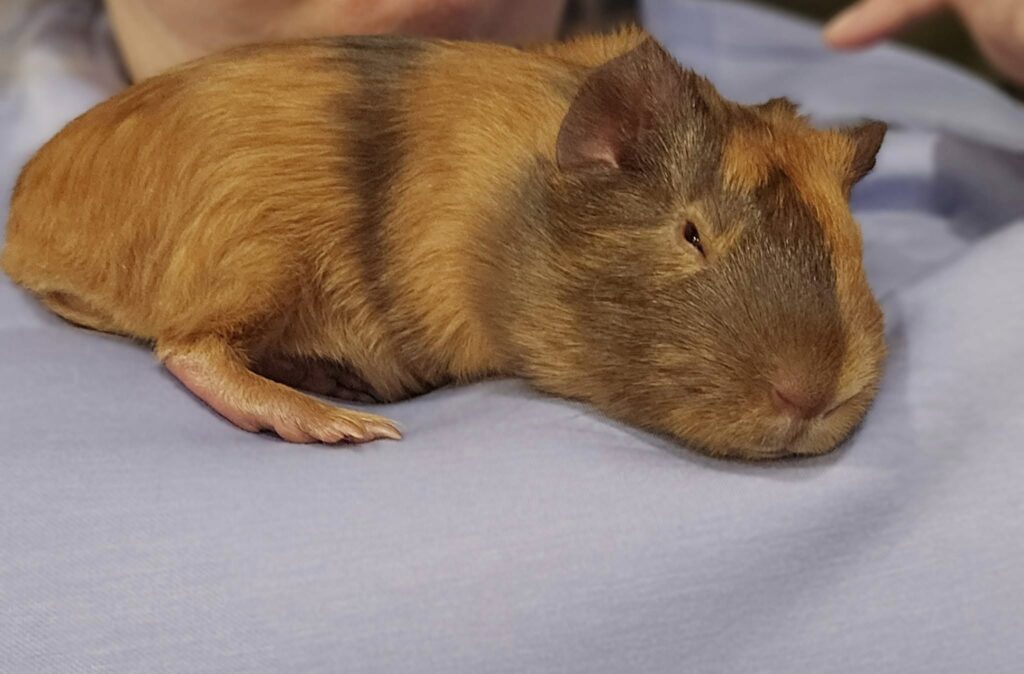
These signs develop gradually. You will not wake up one morning to a fully tame guinea pig — you will notice, over weeks, that each interaction is slightly easier than the last, that the hesitation is reducing, that the animal is spending more time near you and less time at the back of the enclosure.
That gradual change is what the process is supposed to produce. Trust it.
What Not To Do — The Mistakes That Set Taming Back
| What people do | Why it sets taming back | What to do instead |
|---|---|---|
| Chase the guinea pig around the enclosure to catch it | Confirms the guinea pig’s threat assessment — being chased is what predators do. Undoes trust that has been built | Calmly herd into a corner using a tunnel or hide, or wait until the animal is calm and approach from the side |
| Pick up from the first day | A newly arrived guinea pig is already stressed; early forced handling creates negative associations that persist | Allow a full settling week before any active taming attempts |
| Hold on when the guinea pig is struggling | A struggling guinea pig that is held tighter learns that struggling is ineffective — which produces more extreme escape attempts over time | Put the guinea pig down calmly before it reaches peak struggle; end on relative calm |
| Let children handle too soon or too roughly | Sets significant negative associations early that are hard to undo with a prey animal | Demonstrate correct technique; pass the animal over once already calm; supervise all early sessions |
| Skip the food association stage | Trust is built through positive association — without the food-building stage, there is no foundation for pick-up acceptance | Spend at least a week on hand feeding before attempting touch; at least two weeks before pick-up |
| Handle infrequently — once a week or less | Taming requires consistent exposure; infrequent handling means the guinea pig never fully builds the positive association and treats each session as a fresh threat | Short daily sessions are far more effective than long infrequent ones |
Frequently Asked Questions
How long does it take to tame a guinea pig?
For most guinea pigs, with the correct approach and consistent daily sessions, four to eight weeks produces a genuinely handleable animal. Some guinea pigs — particularly those that have had positive early socialisation from a good breeder — settle faster. Others, particularly those with difficult early experiences, take longer. The process cannot be meaningfully rushed, but it can be done reliably with patience and consistency.
My guinea pig bites when I pick it up — what should I do?
Go back to an earlier stage. Biting is a fear response, not aggression, and it means the guinea pig is not ready for pick-up yet. Return to hand feeding without touching for a week, then reintroduce touch without pick-up, then attempt pick-up only once the animal is completely calm with touch. The biting is information — the guinea pig is telling you it is not confident enough yet. Listen to it.
Can older guinea pigs be tamed?
Yes, though it takes longer. An adult guinea pig that has had limited human contact has a more established threat response than a youngster, but the same process applies — it just requires more patience and more time at each stage. I have seen genuinely tame guinea pigs produced from adults that were completely wild at the start of the process. It is possible. Do not give up because the animal is older.
Should I tame both guinea pigs at once or one at a time?
Work with both at each session, but do not be surprised if one progresses faster than the other. One guinea pig in a pair is usually more confident — it often helps to let the more confident one lead, as guinea pigs take social cues from each other. If the confident one approaches and takes food calmly, the more cautious one often follows. Work with the pair together rather than separating them — separation adds its own stress.
My child’s guinea pig was tame and now runs away — what has changed?
Several possible causes. A period without regular handling allows the positive association to fade. A frightening experience — accidental drop, loud noise, rough handling — can reset the trust significantly. Illness or pain can make a previously handleable animal resistant to being touched. If there are no obvious behavioural triggers and the change was sudden, a vet check is worthwhile to rule out a health issue.
Where can I get guinea pig advice in Swindon?
Come and see us at Paradise Pets, Manor Garden Centre, Cheney Manor Industrial Estate, Swindon SN2 2QJ. Or ring us on 01793 512400. We have been selling and advising on guinea pigs for over 35 years and we will give you honest, practical guidance — not just reassurance.
One Last Thing From Me
The grandmother and granddaughter came back about two months after that first visit. They had followed the process — one week of settling, hand feeding through the second week, gentle touch in week three and four, first pick-ups by week five. The grandmother had been present for the early sessions, demonstrating the technique before letting her granddaughter try.
The granddaughter held one of the guinea pigs on her lap for ten minutes while we talked. The animal was completely relaxed — not struggling, not trying to escape, just sitting there with occasional quiet purring. The girl stroked it and it stayed settled.
She said it had taken five weeks before she could pick it up without it running. She said she had nearly given up in week three. She said it was worth it.
That is always worth it. A guinea pig that trusts you is a fundamentally different experience from one that tolerates you reluctantly. And the process that gets you there — however slow, however frustrating at the midpoint — is the same process every time.
Patient, consistent, food-based, from the guinea pig’s perspective rather than the owner’s.
That is all it takes. Come and see us if you need help along the way.
Struggling to Tame Your Guinea Pig? Come In and We’ll Help
We have been advising on guinea pig care and behaviour for over 35 years. Come in, describe what you are seeing, and we will walk you through exactly what to do next. Free advice, no obligation. That is how we have always done things.