
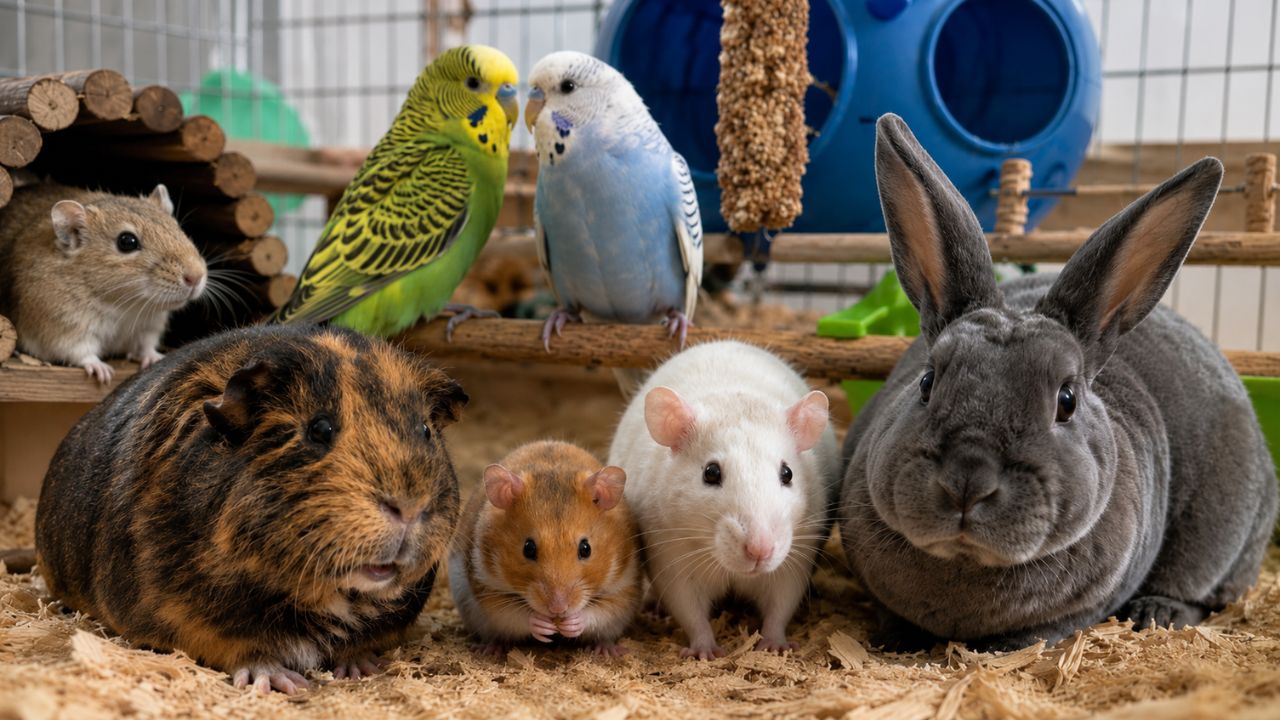

Neil has sold small animals at Paradise Pets Swindon since 1988 — over 35 years of first-hand experience with every common small pet kept in UK homes. In that time, he has helped thousands of families choose the right animal for their situation — and watched many more choose the wrong one because they were not given honest information. This article is his complete, honest guide to the five best small pets for UK homes, who each one actually suits, and the questions every family should answer before they decide.
The most common mistake I see at the counter is not a bad owner. It is a mismatch.
A family that wanted a cuddly, handleable animal buying gerbils because they were “easy.” A child who wanted something active during the day getting a hamster because the cage was affordable. A couple in a flat buying guinea pigs without understanding the noise level or the space requirement. A parent buying a rabbit for a five-year-old because they thought it would be simpler than a dog.
None of those families were careless. They just had not been given enough honest information to make a good decision. And in most cases, the animal suffered for it — not through cruelty, but through a mismatch between what the animal needed and what the situation could provide.
After 35 years of selling small animals, I have a clear picture of which animals suit which situations. This article is that picture, laid out as honestly as I know how to.
I am not going to tell you that any of these animals is easy. None of them are completely easy. What I will tell you is which ones are realistic for different types of household — and why getting that match right makes the difference between a genuinely rewarding experience and a difficult one.
Before the List — The Questions That Actually Matter
Before I go through the five animals, let me give you the questions I ask every family that comes in. The answers to these shape everything else.
- How old are the children involved?
This changes the answer significantly. Under seven, over ten, teenager — each age group suits different animals for different reasons. I will cover this for each animal below. - How much time is genuinely available each day for the animal?
Not in theory — in practice, on a Tuesday in November when everyone is tired. Some animals need daily significant interaction to stay healthy and tame. Others are more independent. Be honest. - Does the household have cats or dogs?
This affects which animals are appropriate and what safeguarding is needed. A guinea pig in a household with a persistent cat requires specific housing arrangements. - What is the living situation — house with garden, or flat?
Some animals are better suited to indoor keeping with no outdoor component. Others benefit from outdoor space. Some are significantly noisier than people expect. - Is the parent prepared to take over full care if the child loses interest?
They will sometimes lose interest. Every parent should answer yes to this honestly, or reconsider. - What is the real budget — not just for purchase, but for ongoing costs?
Bedding, food, vet bills, enclosure upgrades. These are real costs that vary between species. Some small animals require vet attention more frequently than others.
1. Guinea Pigs — The Best All-Round Family Small Pet
If I had to recommend one small animal to the broadest range of UK families, it would be guinea pigs. Not because they are the easiest — they are not — but because the combination of qualities they offer matches what most families actually want better than any other small animal.
Guinea pigs are gentle. Their bite, if they bite at all, is relatively mild — far less painful than a hamster or rat bite. They vocalise in ways that most people find genuinely charming — the wheek, the purr, the rumbling. They are active during normal household hours, visible during the day, and responsive to their owners in a way that feels more like a genuine animal relationship than some other small pets provide.
They are also substantial. A guinea pig is big enough for a child to hold properly. They are not as fragile as gerbils or mice, and a child who is old enough to be shown correct handling technique can manage them safely. From around seven or eight years old upwards, guinea pigs and children are a genuinely good match.
- Best age for children: seven and above for handling; younger children can enjoy them as household pets with adult management
- Must be kept in pairs or groups — a single guinea pig will decline. Always buy at least two
- Noisier than most people expect — the wheek is penetrating and happens when the animal is hungry, excited, or wants attention. Charming to most, but worth knowing about
- Space requirement is significant — minimum 120cm by 60cm for a pair, and they need daily free-range time if kept indoors. Not a hutch-in-the-garden pet that can be largely ignored
- Lifespan is four to eight years — longer than most small animals. This is a commitment
- Vet costs can be significant — dental disease, urinary problems, and respiratory infections are common. Find an exotic vet before you need one
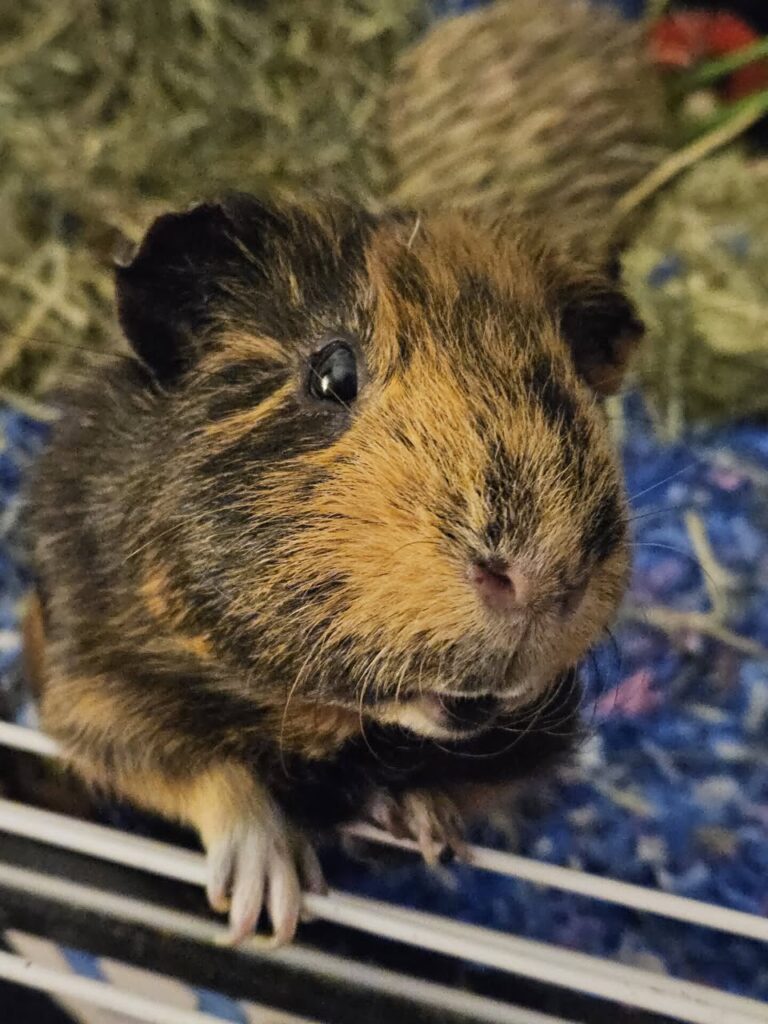
Who guinea pigs suit: families with children aged seven and above who can commit to daily care and interaction, who have enough indoor space for a proper enclosure, and where at least one adult is prepared to stay involved even when the child’s enthusiasm fluctuates.
Who they do not suit: families in very small flats with no suitable space for a large enclosure; very young children as primary keepers; households where no one has time for daily hands-on care.
2. Budgerigars — The Best Small Pet for Active Daily Engagement
Budgerigars are not always thought of in the same conversation as small mammals, but they belong on this list because for the right household, they are genuinely one of the most rewarding small pets you can keep in a UK home.
A well-kept budgie — properly caged, properly fed, given adequate interaction and enrichment — is an active, vocal, engaging presence in the house throughout the day. They talk. Or at least they produce sounds that approximate words and phrases with enough consistency that it counts. They interact with their owners. They have clear individual personalities. They are entertaining to watch. And they take up comparatively little physical space.
What they require in return is genuine daily engagement. A budgie stuck in a cage in the corner that gets fed once a day and ignored otherwise is not a happy animal. It becomes quiet, inactive, and eventually unwell. Budgies need to be part of household life — talked to, interacted with, let out for flight time regularly.
- Best age for children: ten and above for primary care; younger children can enjoy them as household birds with adult management of handling and daily care
- Must be kept in pairs if the owner cannot provide several hours of daily interaction — a single budgie left alone most of the day will not thrive
- Cage size is critical — most cages sold as “budgie cages” in UK pet shops are too small. Minimum 90cm wide for a pair, wider is better
- Daily free-flight time in a bird-proofed room is necessary for physical and psychological health
- Lifespan is eight to fifteen years with good care — longer than any mammal on this list. This is a significant commitment that families often underestimate
- Low allergy risk compared to mammals — relevant for households with animal allergies
- Relatively odourless if cage is maintained properly

Who budgies suit: households where someone is home for a significant part of the day, where the noise of an active, vocal bird is welcome rather than a problem, and where there is genuine enthusiasm for interaction rather than passive ownership.
Who they do not suit: households that want a pet they can largely leave alone; families wanting something children under ten will primarily manage; anyone who finds persistent vocalisation irritating.
3. Gerbils — The Best Small Pet for Watching and Learning
Gerbils occupy a specific niche that makes them excellent for certain families and genuinely unsuitable for others. Understanding that niche is the key to knowing whether they are the right choice.
Gerbils are daytime animals — active, curious, and visible during normal household hours. They are highly entertaining to observe. A pair or group of gerbils in a well-set-up tank is genuinely engaging — digging, tunnelling, wrestling, grooming, investigating. For families with children who are genuinely interested in animals — who want to watch and learn, not just hold and cuddle — gerbils are outstanding.
What they are not is lap pets. They do not sit still. They do not tolerate passive holding in the way guinea pigs do. Interaction with a gerbil is fast, active, and on the gerbil’s terms. A child who wants something to cuddle will be frustrated. A child who finds them fascinating to watch and enjoys the challenge of earning the animal’s trust will be genuinely rewarded.
- Best age for children: eight and above for handling; under eight can enjoy them as observation pets managed by adults
- Must be kept in pairs from the same litter — same rules as guinea pigs, different scale
- Require a deep-substrate tank, not a wire cage — digging is a fundamental behaviour and they need at least 20cm of substrate depth. Most cage setups sold in shops are inadequate
- Fast and difficult to catch when loose — a genuine practical consideration with young children
- Lifespan three to five years — shorter than most on this list
- Very low odour — gerbils produce minimal urine and a well-maintained tank has almost no smell
- Never pick up by the tail — the skin can detach, causing permanent injury. This rule must be understood before any handling

Who gerbils suit: families with children aged eight and above who have genuine curiosity about animals; households that want an active, observable pet rather than a handleable one; anyone who has the right setup — a glass tank, deep substrate, proper space.
Who they do not suit: families with very young children who will handle without supervision; owners who want a cuddly, still pet; anyone who cannot provide the correct deep-substrate enclosure.
4. Rats — The Best Small Pet for Older Children and Adults
I include rats on this list because they are, in my honest opinion, one of the most underrated small pets in the UK — and one of the most consistently rewarding for the right owner.
Rats are highly intelligent. Not “intelligent for a small animal” — genuinely intelligent in ways that are visible and engaging. They learn their names. They come when called. They learn tricks. They bond with their owners in a way that is closer to a dog’s bond than anything else on this list. A tame rat that has been properly socialised will actively seek out its owner, explore confidently, and interact with genuine curiosity and warmth.
The barrier is almost entirely perceptual. People who have never interacted with a tame rat have a mental image built from wild rats, and it does not correspond to reality. I have had many customers come in sceptical, handle a socialised rat for five minutes, and leave with a completely different view.
- Best age for children: ten and above — ideally twelve or thirteen as primary keeper. The intelligence of rats means they respond best to owners who engage them thoughtfully
- Must be kept in pairs or groups — same rule as every social species on this list
- Large enclosure needed — a proper rat cage is significantly bigger than a hamster cage. Rats need vertical space and complexity — multiple levels, ropes, hammocks, things to investigate
- Highly active and need daily free-range time outside the cage in a rat-proofed space
- Lifespan is only two to three years — the shortest on this list, and a genuine emotional consideration. Rats bond deeply and their loss is felt significantly
- Prone to respiratory infections and tumours in later life — vet costs are a real consideration, and finding a vet experienced with rats is important
- Nocturnal to crepuscular — most active in the evenings, which works well for school-age children and adults

Who rats suit: older children, teenagers, and adults who want a genuinely interactive small animal with personality and intelligence; families prepared for the emotional investment of a shorter-lived animal that bonds deeply.
Who they do not suit: anyone who cannot get past the perceptual barrier; families wanting a low-maintenance observational pet; households where vet costs for a small animal are not realistic.
5. Syrian Hamsters — The Best Small Pet for Independent Older Children and Adults
Syrian hamsters have been one of the UK’s most popular small pets for decades, and with good reason — when kept correctly, by the right person, they are genuinely good pets. The problem is that they are consistently mismatched with households that do not suit them, and the results are poor for both owner and animal.
Let me be clear about what a Syrian hamster actually is before anything else. It is a solitary, nocturnal animal. It must be kept alone — unlike every other animal on this list, a Syrian hamster in the company of another Syrian hamster will fight, sometimes to the death. And it is most active between roughly 8pm and midnight, which means it is asleep for most of a child’s active daytime hours.
Those two facts alone disqualify hamsters for a significant proportion of the families that buy them. A child who wants to interact with a pet after school will find a sleeping hamster. A family that bought two hamsters because “they’ll keep each other company” has created a welfare problem.
- Best age for children: ten and above, with realistic expectations about nocturnal activity. Not the right primary pet for young children
- Must be kept alone — Syrian hamsters are solitary and will fight other hamsters if housed together
- Primarily nocturnal — active in the evenings and at night. Not an appropriate pet for a child who wants daytime interaction
- Enclosure must be large — the minimum I recommend is 100cm by 50cm, though larger is always better. The small “starter cages” sold in most UK pet shops are inadequate and cause significant welfare problems
- Deep substrate required — like gerbils, hamsters need to dig and burrow. Minimum 20cm of suitable bedding
- A large solid wheel is essential — minimum 28cm diameter for a Syrian. Small wheels cause spinal damage
- Lifespan two to three years — short, but the bond formed can be genuine and the loss real
- Bite is more significant than gerbils — a frightened hamster bites harder. Correct handling from the beginning is essential

Who Syrian hamsters suit: older children, teenagers, and adults who are genuinely available in the evenings; people who appreciate an independent animal and enjoy the process of taming and building a relationship on the animal’s terms; households that will provide a genuinely large enclosure.
Who they do not suit: young children who want daytime interaction; anyone who will buy the small cage from the supermarket; families who want a social, interactive pet available throughout the day.
The Honest Comparison Table

| Animal | Best child age | Active hours | Handleability | Minimum space | Lifespan | Keep alone? |
|---|---|---|---|---|---|---|
| Guinea Pigs | 7 and above | Day and dusk | High — settles in lap | 120cm × 60cm pair | 4–8 years | Never — need pairs |
| Budgerigars | 10 and above | Daytime | Medium — not lap birds | 90cm wide cage pair | 8–15 years | Not ideal — pairs better |
| Gerbils | 8 and above | Day and dusk | Low-medium — fast and active | 80cm × 40cm tank pair | 3–5 years | Never — need pairs |
| Rats | 10–12 and above | Evening and night | Very high — bonds deeply | Large multi-level cage pair | 2–3 years | Never — need pairs |
| Syrian Hamsters | 10 and above | Evening and night | Medium — takes time to tame | 100cm × 50cm single | 2–3 years | Always — must be alone |
What About Rabbits?
You may have noticed rabbits are not on this list. That is deliberate.
Rabbits are wonderful animals — I have sold them for 35 years and I have great respect for them as pets. But they are not small pets in the sense this article is addressing. A properly kept rabbit in the UK requires more space, more specialist veterinary care, more daily time, and more commitment than any of the animals above. They are a medium-sized pet commitment in a small animal’s body, and I think they deserve to be presented honestly rather than lumped in with gerbils and hamsters as though the demands are comparable.
If you are interested in rabbits specifically, come and have a full conversation with us about what they actually need. It is a longer conversation than this article allows.

Frequently Asked Questions
What is the easiest small pet for a first-time owner?
There is no genuinely easy small pet — they all require specific knowledge and consistent care. But for a first-time owner who wants a manageable starting point, guinea pigs offer a good combination of hardiness, predictable behaviour, and rewarding interaction. Gerbils are also relatively robust and their care requirements, once the setup is right, are consistent and not too complex.
What is the best small pet for a child under seven?
Honestly — none of the animals on this list are appropriate as a primary pet for a child under seven. All of them can be in the household and enjoyed by young children, but daily care and handling should be managed by adults or older children. This is not overprotective — it is accurate to what these animals need and what very young children can reliably provide.
What small pet smells the least?
Gerbils produce very little urine and are the lowest-odour option on this list, followed by budgerigars whose enclosures kept clean have minimal smell. Guinea pigs and rats produce more waste and require more frequent cleaning to stay odour-free, though a well-maintained enclosure for either is not unpleasant.
Which small pet lives the longest?
Budgerigars, by a significant margin — eight to fifteen years with good care, and occasionally longer. Guinea pigs are second at four to eight years. Gerbils, hamsters, and rats all fall in the two-to-five-year range. Lifespan matters for two reasons: the commitment involved, and the eventual loss, which is a real emotional consideration particularly for children.
Can small pets be kept in a flat?
Yes, most of them. Guinea pigs need the most space but can be kept indoors in a flat with a suitable large enclosure and daily floor time. Budgerigars need daily free-flight time in a bird-proofed room. Gerbils, rats, and hamsters are well suited to flat living provided the enclosure is correctly sized. The primary consideration is neighbours — guinea pigs and budgerigars can be audible, which matters in flats with thin walls.
Where can I get honest advice on choosing a small pet in Swindon?
Come and see us at Paradise Pets, Manor Garden Centre, Cheney Manor Industrial Estate, Swindon SN2 2QJ. Or ring us on 01793 512400. We stock all of the animals in this article and we will take the time to match the right animal to your actual situation — not just sell you whatever is in stock.
One Last Thing From Me
The families I remember most fondly from 35 years at this counter are not the ones who had the easiest experience. They are the ones who had the right experience — who chose an animal that genuinely suited them, set it up correctly, and ended up with a small creature that was genuinely part of their household life.
The grandmother whose grandchildren spent every visit watching the guinea pigs run laps of their enclosure. The teenager who taught his rats to navigate a course he built from cardboard boxes. The family whose budgie learned to say the dog’s name, which confused both animals considerably.
None of those outcomes happened by accident. They happened because the families asked the right questions before they bought, chose the animal that suited their actual situation, and set up properly from day one.
That is all this guide is trying to give you. The right questions, honestly answered, so you can make a good decision rather than a popular one.
Come and see us if you want help with the rest of it.
Not Sure Which Small Pet Is Right for Your Family? Come In and Let’s Work It Out
We stock guinea pigs, budgerigars, gerbils, rats, hamsters, and more — all from UK sources we know personally. Come in with your questions, your children if you have them, and your honest situation. We will give you a straight answer about what fits and what does not. Free advice, no obligation. That is how we have always done things.