
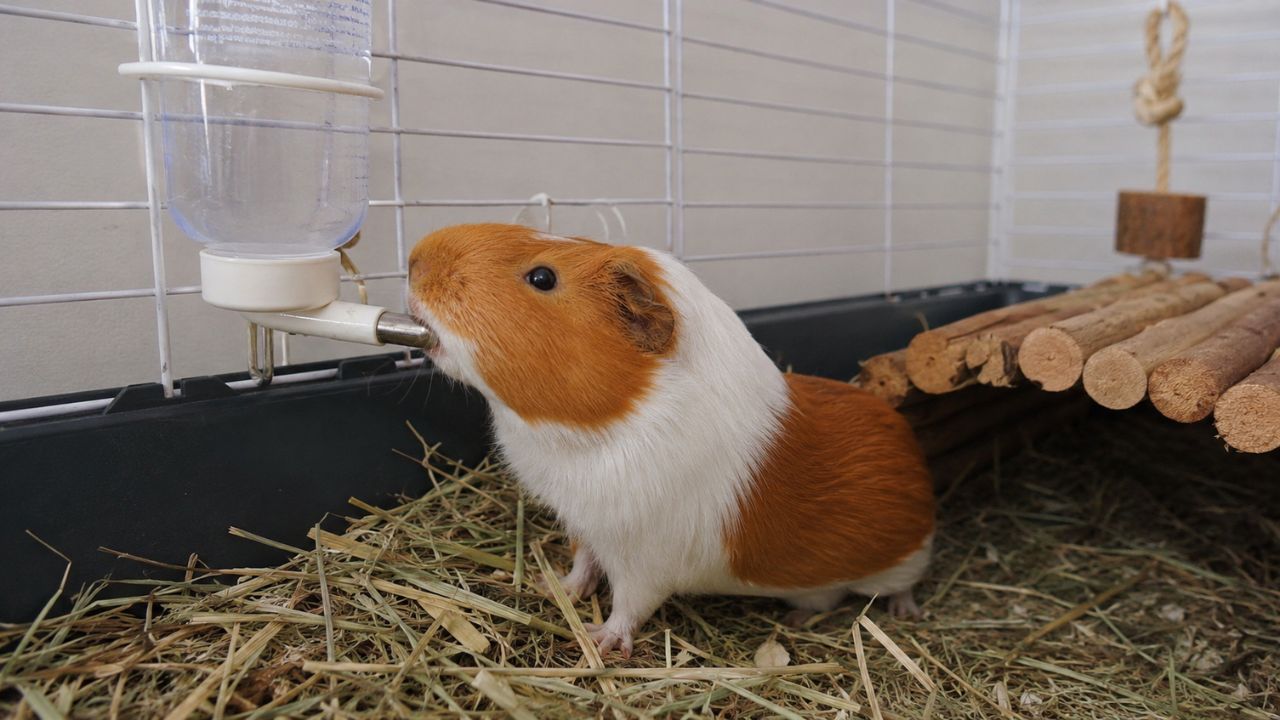

Neil has sold and kept guinea pigs at Paradise Pets Swindon since 1988 — over 35 years of first-hand experience with one of the UK’s most popular small animals. In that time, he has spoken with many worried UK owners who have noticed their guinea pig drinking far more water than usual. This article is his honest, urgent guide on what excessive thirst in guinea pigs really means, the causes behind it, and what to do today.
A father came in one Saturday morning, his teenage daughter beside him. They had two guinea pigs — sisters, both around two years old. One of them, he said, had been drinking constantly. He had refilled the water bottle twice in a day. The other guinea pig was drinking normally. The one that was drinking more was also quieter than usual, he thought. Maybe a bit thinner. He wasn’t sure if he was imagining it.
He wasn’t imagining it.
I asked a few questions. How long had this been going on? About a week, he thought — maybe longer, he hadn’t been watching closely. Was she eating? Yes, but perhaps not quite as enthusiastically as before. Any changes in her droppings? He hadn’t checked.
That conversation, or one very much like it, happens in my shop with some regularity. And the reason I take it seriously every time is this — in guinea pigs, drinking significantly more water than usual is almost never normal. It is almost always the body trying to compensate for something that is going wrong.
In some cases it is manageable. In others it is urgent. But in every case, it means something, and it means something that needs a vet to identify properly.
First — What Is Normal Drinking for a Guinea Pig?
Before we talk about what too much looks like, it is worth being clear about what normal looks like. Because guinea pig water intake varies, and context matters.
A healthy adult guinea pig typically drinks between 80ml and 100ml of water per day — roughly a third to half a small water bottle. Some drink a little more, some a little less. The important thing is consistency — you get to know roughly how much your guinea pig drinks, and when that changes noticeably, that change itself is the signal.
Water intake naturally increases in warm weather, when fresh vegetables are limited in the diet, or when a guinea pig is pregnant or nursing. These are normal fluctuations. What is not normal is a guinea pig that suddenly begins drinking two, three, or four times its usual amount for no obvious environmental reason — particularly when combined with other changes in behaviour or condition.

The medical term for excessive thirst is polydipsia. When it is paired with excessive urination — which it usually is — the combined term is PU/PD: polyuria and polydipsia. If you see this phrase at the vet, that is what it means.
- Normal water intake is roughly 80ml to 100ml per day for an adult guinea pig
- Hot weather and a dry diet can increase intake slightly — this is normal
- Pregnant or nursing sows drink more — this is normal
- A sudden, sustained increase not explained by weather or diet is a warning sign
- Increased drinking combined with increased urination doubles the concern
- Increased drinking combined with weight loss, reduced appetite, or lethargy makes this urgent
- Book a vet appointment today or tomorrow — do not wait weeks
- Use a vet with experience in guinea pigs or exotic small animals where possible
- Note down how much the guinea pig is drinking — refilling frequency, approximate volume
- Check the droppings — are they normal in size, quantity, and consistency?
- Weigh the guinea pig if you can — weight loss combined with polydipsia is more urgent
- Check for other symptoms — lethargy, hunched posture, reduced appetite, hair loss, crusty eyes
- If you are local to Swindon and unsure how urgent it looks, ring us on 01793 512400
The Main Causes of Excessive Thirst in Guinea Pigs
There are several conditions that cause polydipsia in guinea pigs, and they vary significantly in their seriousness and their treatment. A vet examination with appropriate diagnostic tests is the only way to confirm which you are dealing with. But understanding the possibilities helps you understand why this symptom matters and why acting quickly gives the best outcome.
Cause 1: Diabetes — More Common Than People Think
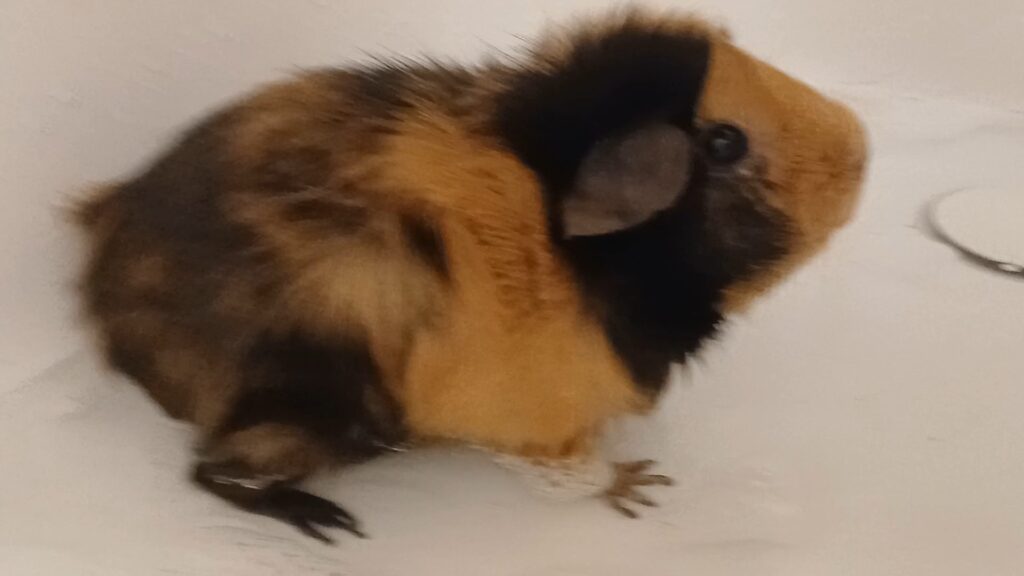
Diabetes mellitus is one of the most common causes of polydipsia in guinea pigs, and it is the one that most owners do not think of first because they associate diabetes with dogs and cats rather than small animals.
Guinea pigs can develop type 2 diabetes — a condition in which the body does not regulate blood sugar properly. The excess glucose in the bloodstream is filtered through the kidneys into the urine, which draws large amounts of water with it. The guinea pig urinates more frequently and in larger amounts, and drinks more to compensate for the fluid loss. The kidneys are under sustained strain.
Guinea pigs that are overweight, fed a diet high in fruit and sugary treats, or that have been on a primarily pellet-based diet low in hay and fresh vegetables are at higher risk. Obesity is a significant contributing factor. Some lines appear to have a genetic predisposition — certain strains of guinea pig develop diabetes even on a good diet.
- Significantly increased water intake and urination together
- Weight loss despite eating — the body cannot use glucose properly so it burns muscle and fat
- Increased appetite in some cases — the body signals hunger because it cannot access the energy in food
- Lethargy and reduced activity over time
- Cataracts developing in the eyes — cloudiness or opacity in one or both eyes
- Urine that smells sweet or unusually strong
- History of a high-fruit or high-pellet diet
What to do
A vet visit with blood and urine testing will confirm or rule out diabetes. Blood glucose levels and urine glucose testing are the primary diagnostic tools. If diabetes is confirmed, the treatment is primarily dietary — a significant reduction in sugary foods, strict limitation of fruit, a hay-led diet, and careful weight management. Some cases require insulin, though this is less common in guinea pigs than in dogs. The condition can be managed effectively with the right approach.
Cause 2: Kidney Disease
Kidney disease is another common cause of polydipsia in guinea pigs, particularly in older animals. The kidneys are responsible for filtering waste from the blood and concentrating urine. When they are not functioning properly, the ability to concentrate urine is reduced — the guinea pig passes large volumes of dilute urine and must drink more to stay hydrated.
Kidney disease in guinea pigs can be caused by infection, chronic dehydration, dietary issues — particularly excess calcium from a diet heavy in certain vegetables or vitamin supplements — or simply age-related degeneration. Older guinea pigs of three years and above are more susceptible, though kidney disease can occur at any age.
- Increased drinking and urination, often the first and most obvious sign
- Weight loss — often gradual and progressive over weeks
- Reduced appetite, particularly for dry food — the animal may preferentially eat fresh vegetables for their water content
- Hunched posture and reduced movement
- Rough or puffed coat — the guinea pig not grooming properly is often a sign of feeling unwell
- Gritty or white deposits in the urine — calcium-rich urinary sludge common in guinea pigs with kidney stress
- The guinea pig is three years or older

What to do
Blood work — specifically urea and creatinine levels — will indicate kidney function. Urinalysis can reveal what the kidneys are producing. If kidney disease is confirmed, management depends on severity. Mild cases respond well to dietary adjustment — reducing high-calcium vegetables, increasing water intake through fresh food, ensuring unlimited hay. More advanced cases may require fluid therapy and supportive medication. Early detection matters enormously here — kidneys that are caught failing early can often be supported for a long time. Kidneys that have been failing without treatment for months are a much harder problem.
Cause 3: Urinary Tract Infection or Bladder Stones
Urinary tract infections and bladder stones or sludge are very common in guinea pigs, and both cause changes in urination that typically drive increased water intake.
Guinea pigs are prone to urinary calcium problems because their bodies process calcium differently from many other animals — they absorb almost all dietary calcium regardless of need and excrete the excess through the urine. A diet high in calcium-rich foods creates urine with high calcium content, which over time can form sludge, gravel, or stones in the bladder. This is painful, causes straining and frequent urination, and the body compensates by drinking more.
Bacterial urinary tract infections cause similar symptoms — frequent urination, sometimes blood in the urine, pain when passing urine, and increased thirst as the body tries to flush the system.
- Increased drinking alongside frequent, small amounts of urination
- Straining in the litter area — visible effort to urinate
- Blood in the urine — pink or red tinge, or visible red spots on bedding
- Crying or vocalising when urinating — the guinea pig is in pain
- Wet fur around the hindquarters from dribbling urine
- White chalky deposits on the bedding from calcium-rich urine
- A diet historically high in spinach, kale, parsley, or other high-calcium foods
What to do
A vet visit with urinalysis and X-rays or ultrasound to check for stones. Urinary tract infections are treated with antibiotics. Bladder sludge can sometimes be managed through dietary change and increased fluid intake — reducing high-calcium foods significantly. Bladder stones may require surgical removal. This is not something to manage at home without veterinary guidance — urinary blockages in particular are life-threatening emergencies. A guinea pig that is straining to urinate and producing nothing is an immediate vet visit, day or night.
Cause 4: Dental Disease
This one surprises people — the connection between dental problems and increased thirst. But it is a real and consistent link that I have seen many times.
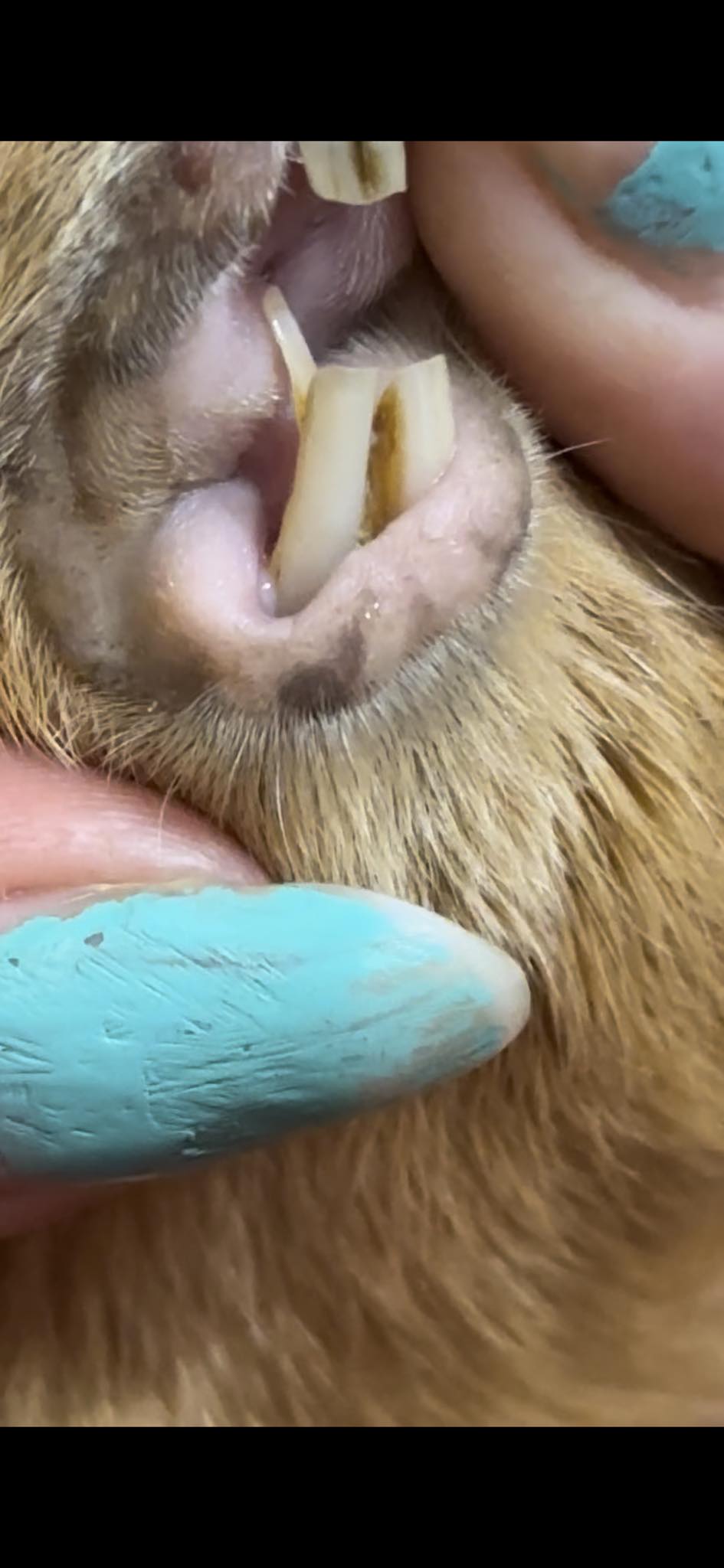
A guinea pig with dental disease — overgrown teeth, sharp spurs on the cheek teeth, or tooth root problems — is in pain when it eats. As a result it eats less dry food and hay, and compensates by drinking more water and eating more fresh vegetables for their water content and softer texture. The increased water intake in these cases is not the primary problem — it is a symptom of a dental problem that is the primary problem.
Like rabbits, guinea pigs have teeth that grow continuously throughout their lives and require constant wearing through fibrous food. A diet insufficient in hay leads to abnormal tooth wear and the development of the sharp spurs that cause pain and difficulty eating.
- Increased drinking alongside reduced eating — particularly avoiding dry food and hay
- Weight loss, sometimes rapid
- Drooling or wet fur on the chin and chest
- Dropping food — picking up pellets or hay and letting them fall
- Preferring soft fresh food over dry food
- A diet historically low in hay
What to do
A vet examination including the back teeth — which require sedation and specialist equipment to properly assess. Dental work under sedation to file or remove problematic teeth if needed. A long-term shift to a hay-led diet to prevent recurrence. Guinea pigs with significant dental disease often need repeated dental procedures every few months, which is why getting the diet right from the start matters so much.
Cause 5: Pyometra and Reproductive Disease in Sows
This is one that affects unspayed female guinea pigs specifically, and it is serious enough that I want to give it its own section.
Pyometra is an infection of the uterus that can develop in unspayed sows, particularly in middle-aged and older animals. The infected uterus fills with pus, the animal becomes systemically unwell, and one of the signs can be increased thirst as the body tries to manage the infection and the toxins it produces. Pyometra in guinea pigs can be rapidly fatal if not treated.
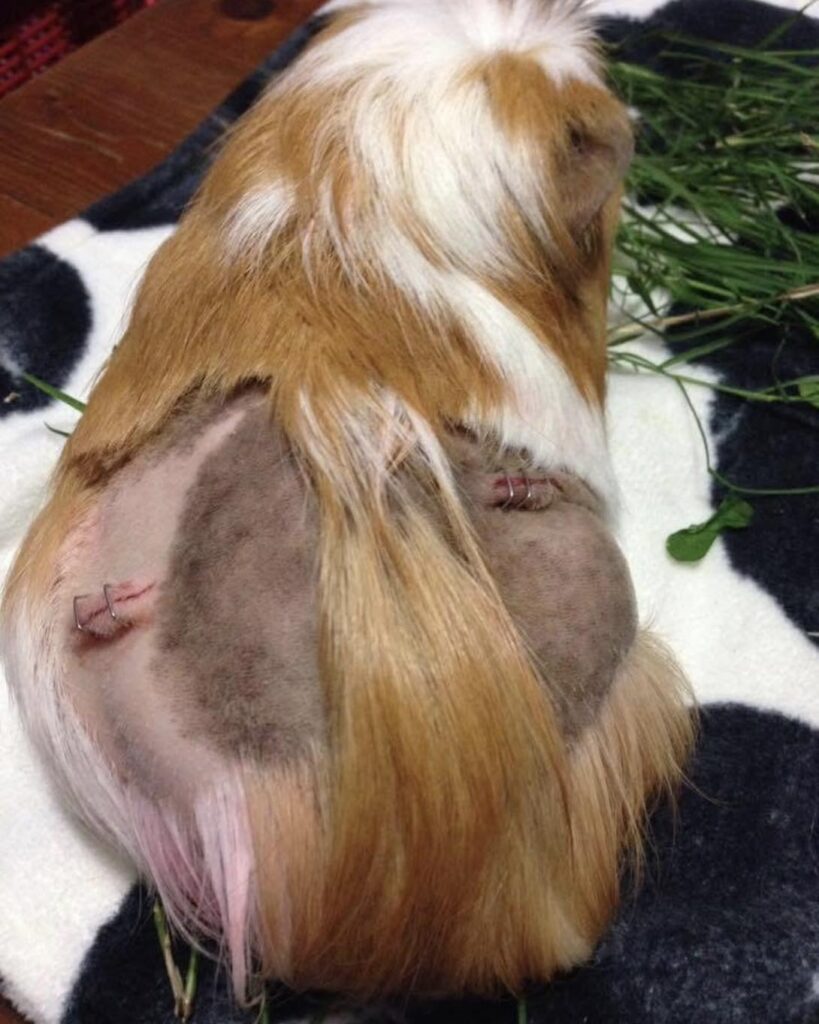
Ovarian cysts — fluid-filled cysts on the ovaries — are also extremely common in unspayed female guinea pigs, particularly from two years of age. They cause hormonal disruption, hair loss along the flanks, behavioural changes, and sometimes increased thirst.
- The guinea pig is an unspayed female
- Symmetrical hair loss along both flanks — a classic sign of ovarian cysts
- Vaginal discharge — any discharge from an unspayed sow needs urgent vet attention
- Lethargy and loss of appetite alongside increased drinking
- Distended or painful-looking abdomen
- Behavioural changes — mounting other guinea pigs, increased agitation
What to do
Any unspayed female guinea pig showing increased thirst alongside the signs above needs a vet today. Pyometra in particular moves quickly. The vet will assess via physical examination and ultrasound. Treatment for pyometra is typically surgical — spaying to remove the infected uterus. Ovarian cysts can sometimes be managed with hormonal treatment, or surgically. Either way, this is not a situation to monitor from home.
Cause 6: Heatstroke and Dehydration
This cause is distinct from the others in this list because it is environmental rather than disease-based — but it is relevant in the UK context, particularly during warm summers, and I want to cover it.
A guinea pig that has been exposed to high temperatures — in a hutch in direct sunlight, in a conservatory, in a car, or in a room without adequate ventilation during a heatwave — can develop heatstroke. One of the body’s responses to overheating and dehydration is significantly increased water intake when the animal is able to drink.
If you notice your guinea pig drinking frantically, combined with lethargy, rapid breathing, drooling, or an unsteady gait, and the animal has been in a warm environment — think heatstroke first.
- Rapid, frantic drinking
- Lethargy and unsteadiness
- Rapid or laboured breathing
- Drooling or wet mouth area
- The animal has been in a warm or sunny environment
- Limp or unresponsive in severe cases

What to do
Move the guinea pig to a cool environment immediately. Do not put it in cold water — this can cause shock. Dampen the ears gently with cool, not cold, water. Offer fresh cool water but do not force it. Phone a vet immediately — heatstroke can cause organ damage that is not visible externally. This is always a vet call, even if the animal seems to recover quickly.
What I Check When a Guinea Pig With Polydipsia Comes Into the Shop
When an owner describes a guinea pig that is drinking excessively, I work through a consistent set of questions to understand what we might be dealing with.
- How much more is it drinking, and for how long?
Slightly more for a day or two is different from dramatically more for a week. The severity and duration both matter. - What else has changed?
Weight loss, reduced appetite, changes in droppings, lethargy, changes in coat condition — any of these alongside the increased drinking raises the urgency significantly. - What is the diet?
High in fruit and sweet vegetables — possible diabetes risk. High in spinach, kale, parsley — possible urinary calcium problem. Low in hay — possible dental issues. Diet tells me a lot very quickly. - What is the age and sex of the guinea pig?
An older animal raises the possibility of kidney disease. An unspayed female raises the possibility of reproductive disease. Age and sex both affect which causes are most likely. - Is it urinating more as well?
Increased drinking paired with increased urination points toward diabetes or kidney disease. Increased drinking with straining or blood in urine points toward urinary tract or bladder problems. - Is the environment warm?
Recent hot weather, hutch position, room temperature — environmental causes are worth ruling out quickly. - Has it seen a vet?
If not — that is the answer, and I will say so clearly and without hesitation.
The Diet Connection — Prevention Matters
Several of the causes on this list are directly linked to diet, which means several of them are at least partially preventable. After 35 years of selling guinea pigs, the diet conversations I have with owners are some of the most important ones I have.
The foundation of a good guinea pig diet is hay — unlimited, good quality hay available at all times. Hay drives healthy digestion, keeps teeth wearing down properly, and keeps the gut moving. A guinea pig with unlimited hay is a guinea pig whose baseline health is being supported every hour of every day.
- Hay — unlimited, always. Timothy hay and meadow hay are ideal. It should make up the majority of the diet by volume
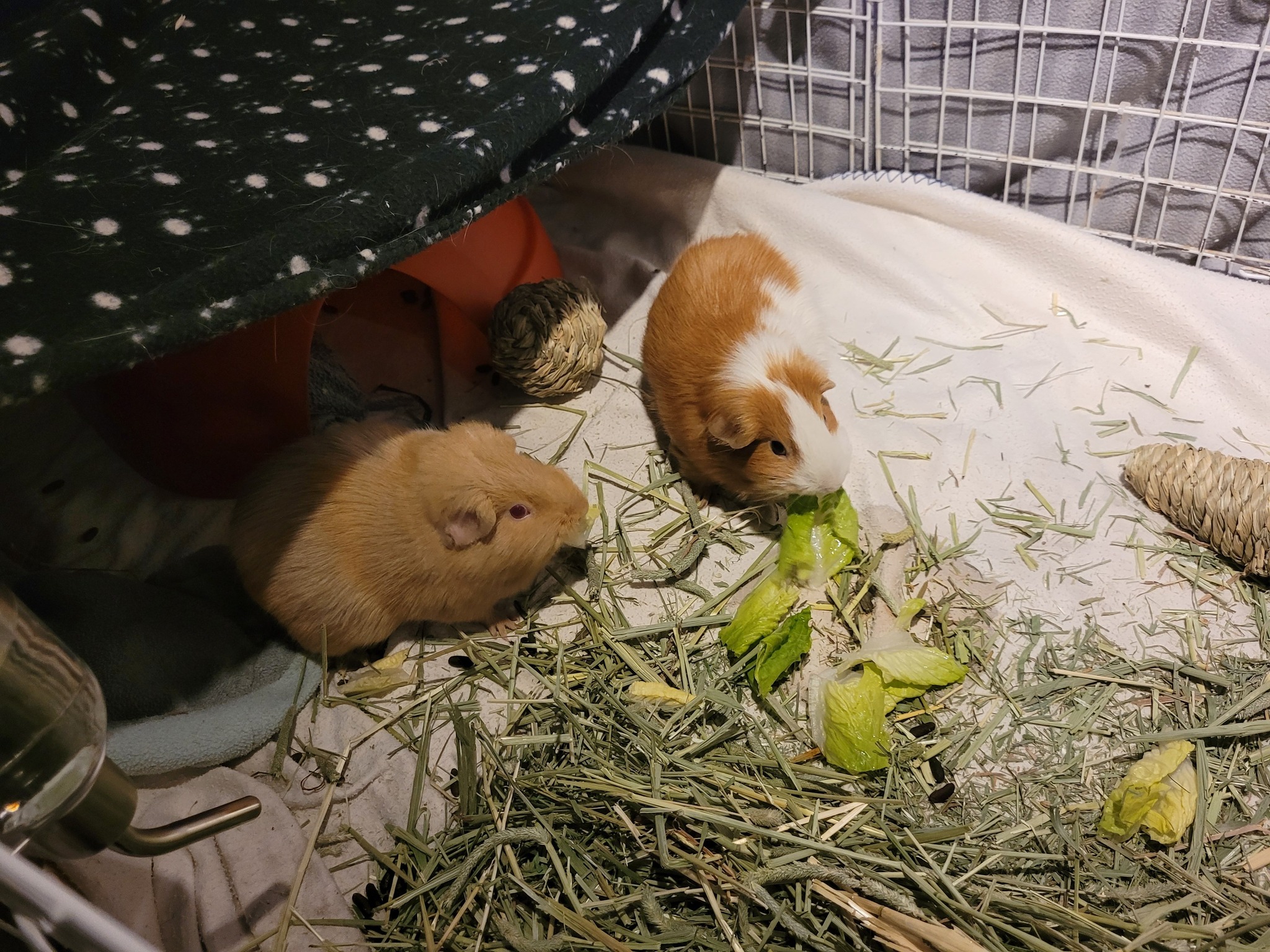
- Fresh leafy greens daily — but be mindful of calcium content. Romaine lettuce, cucumber, courgette, and fresh herbs are good regular choices. Spinach, kale, and parsley are nutritious but high in calcium — offer them two to three times a week at most, not daily
- Pellets — a small, measured daily amount — not a bowl kept constantly topped up. Vitamin C-fortified pellets are important as guinea pigs cannot synthesise vitamin C
- Fruit — occasional treat only — the sugar content in fruit is a diabetes and weight risk. A small piece once or twice a week at most
- Fresh water daily — change the water every single day. A clean water bottle or bowl, checked and changed daily, is non-negotiable
- No iceberg lettuce — almost entirely water and nutritionally empty; in large amounts it causes diarrhoea
- No processed human food — no crackers, bread, cereal, or anything with salt, sugar, or seasoning
What Not To Do
Over the years I have seen well-meaning owners make the same mistakes when their guinea pig starts drinking excessively. Here is what to avoid.
| What people do | Why it is wrong | What to do instead |
|---|---|---|
| Reduce water access to slow the drinking | The excessive drinking is a symptom — restricting water makes the underlying condition worse and risks dangerous dehydration | Always provide unlimited fresh water; address the cause, not the symptom |
| Wait several weeks to see if it resolves | Most causes of polydipsia in guinea pigs worsen without treatment; diabetes and kidney disease progress silently | Book a vet appointment within a day or two of noticing the change |
| Assume it is just the weather | Hot weather increases thirst moderately — dramatically increased intake in normal temperatures is not weather-related | If the intake is significantly above normal and the weather does not explain it, see a vet |
| Give vitamin supplements in the water | Supplements in water degrade quickly, encourage bacterial growth, and the dose is impossible to control | Provide vitamin C through fresh food — peppers, leafy greens, and quality pellets |
| Assume the other guinea pig would be affected too if it was serious | Many of the conditions that cause polydipsia are individual health conditions, not infectious — the other guinea pig being fine means nothing about the one that is unwell | Assess the unwell guinea pig on its own merits and get it to a vet |
| Give human medication for pain or illness | Most human medications are toxic to guinea pigs — including common ones like ibuprofen | Only use medication prescribed specifically by a vet for that guinea pig |
When To Go Straight To The Vet Without Stopping Here First
I am always happy to talk things through and help owners work out what they are seeing. But some situations need a vet before they need anything else. These are them.
- Increased drinking combined with complete loss of appetite for more than twenty-four hours
- Increased drinking combined with no droppings or dramatically reduced droppings
- Straining to urinate, blood in urine, or crying when urinating
- A visibly distended or painful abdomen
- Any vaginal discharge in an unspayed female
- The guinea pig is limp, unresponsive, or has laboured breathing
- Rapid deterioration over hours rather than gradual change over days
- Weight loss that is visible when you handle the guinea pig
For everything else — the guinea pig that is drinking more but otherwise eating, moving, and producing droppings normally — the answer is still a vet, just not necessarily in the next hour. Today or tomorrow. Not next week.
Frequently Asked Questions
Is it normal for guinea pigs to drink a lot of water?
Guinea pigs drink a reasonable amount relative to their size — roughly 80ml to 100ml per day. A consistent, significant increase beyond this that is not explained by hot weather or a change in diet is not normal. It should be investigated by a vet. The earlier the cause is identified, the better the outcome.
Can guinea pigs get diabetes?
Yes. Type 2 diabetes is one of the more common causes of polydipsia in guinea pigs. It is associated with obesity, a high-sugar diet, and in some cases genetic predisposition. It is diagnosable with blood and urine testing and manageable with the right diet, though it requires ongoing veterinary support.
My guinea pig is drinking more but seems otherwise fine — should I still see a vet?
Yes. Many of the conditions that cause polydipsia in guinea pigs — particularly diabetes and early kidney disease — progress gradually. The animal can appear broadly normal for some time while the condition worsens silently. Catching it early means better treatment outcomes. Do not wait for other symptoms to appear before acting on the increased drinking.
How do I know if my guinea pig has bladder stones?
You cannot know for certain without veterinary examination — bladder stones are diagnosed by X-ray or ultrasound. Signs that suggest urinary problems include straining to urinate, blood in the urine, white chalky deposits on the bedding, and wet fur around the hindquarters. Any of these alongside increased drinking means a vet visit today.
Can the diet cause increased drinking in guinea pigs?
Yes, in several ways. A high-calcium diet can cause urinary sludge and stones that disrupt urination and drive increased thirst. A high-sugar diet contributes to diabetes. A low-hay diet leads to dental problems that change how the guinea pig eats and drinks. Diet is central to most of the conditions on this list — getting it right is the single most effective preventive measure.
Where can I get guinea pig advice in Swindon?
Come and see us at Paradise Pets, Manor Garden Centre, Cheney Manor Industrial Estate, Swindon SN2 2QJ. Or ring us on 01793 512400. We have been selling and advising on guinea pigs for over 35 years and we will give you an honest assessment and point you in the right direction.
One Last Thing From Me
The father and daughter from the start of this article — they went straight to a guinea pig-experienced vet that afternoon. Blood and urine tests confirmed early kidney disease in the younger of the two sisters. Caught at that stage, the vet was able to make dietary recommendations that significantly slowed progression. A year later, the guinea pig was still with them.
The father came back in to tell me. He said the vet had told him that owners who notice these things early and act quickly make all the difference. He seemed genuinely pleased that his daughter had been paying close enough attention to spot it.
She had been paying attention. That is the thing. A guinea pig drinking too much water is not a subtle sign — it is visible, it is consistent, and it is telling you something important. The owners who do right by these animals are the ones who notice and act.
You noticed. Now act. Book the vet appointment today.
And if you want to talk it through first, you know where we are.
Worried About Your Guinea Pig? Come In Or Give Us A Ring
For anything urgent — not eating, straining to urinate, unresponsive, vaginal discharge — go straight to a guinea pig-experienced vet. For everything else, come in and let me take a look. Thirty-five years of guinea pigs means I have seen this before. Free advice, no obligation.