
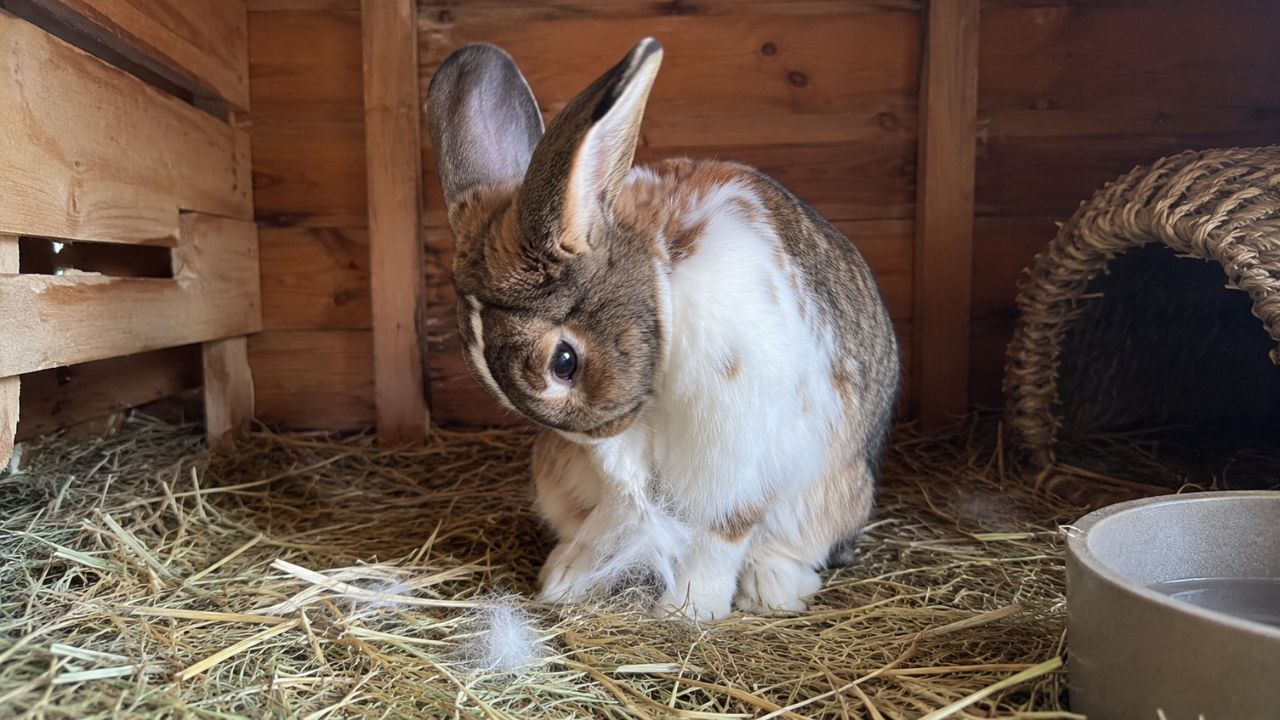

Neil has kept, bred, and sold rabbits at Paradise Pets Swindon since 1988 — over 35 years of first-hand experience with these animals. Fur pulling is one of the most common rabbit concerns he is asked about. This is his honest guide to what it means, what causes it, and what to do.
It is one of those things that stops you cold when you first see it.
You go to check on your rabbit and there is a patch of fur missing. Or you find a clump of it in the corner of the hutch. Or you actually catch them doing it — pulling at their own coat in a way that looks deliberate and wrong. And the first thought is almost always the same: something must be seriously wrong.
Sometimes it is. Sometimes it is not. But it is always worth understanding, because the cause matters enormously for what you do next.
I have been keeping and selling rabbits in Swindon for over thirty-five years. Fur pulling comes up regularly — more than most people expect. Let me take you through what is actually going on.
The First Thing to Establish — Where Is the Fur Coming From
Before anything else, you need to work out whether your rabbit is pulling fur from their own body, or pulling it from another rabbit. These are different problems with different causes, and conflating them sends you in the wrong direction.
A rabbit pulling fur from itself will have patches of thinning coat or bare skin on areas they can reach — typically the chest, flanks, belly, or the base of the tail. The fur you find in the hutch will be in loose clumps, sometimes gathered together.
A rabbit pulling fur from a cagemate is a different dynamic — usually dominance-related, occasionally barbering, and almost always a sign that the pairing or the space needs attention.
This article is primarily about a rabbit pulling its own fur. If the fur is coming from another rabbit in the same enclosure, that is a separate issue and worth discussing with us directly.
The Most Common Reason — And It Is Not Always What People Fear
The single most common reason a rabbit pulls its own fur is nesting behaviour. And the most common reason for nesting behaviour is a false pregnancy — pseudopregnancy — in an unspayed female.
It happens more often than most owners realise. An unspayed doe can experience hormonal cycles that mimic pregnancy even with no male present, or after a sterile mating. She will start gathering bedding, pulling fur from her chest and belly to line a nest, and sometimes becoming noticeably more protective of a particular area of the hutch.
The fur pulling in these cases is not distress. It is instinct. The rabbit is doing exactly what a pregnant rabbit does — she just is not pregnant. The behaviour usually passes within a few weeks.
If your rabbit is an unspayed female and this is what is happening, you are unlikely to need to do anything beyond monitoring the situation. But if it happens repeatedly — and in unspayed does it often does, cycle after cycle — it is worth discussing spaying with a rabbit-savvy vet. Repeated false pregnancies are not just a management inconvenience. They carry longer-term health risks including uterine cancer, which is unfortunately common in unspayed does.
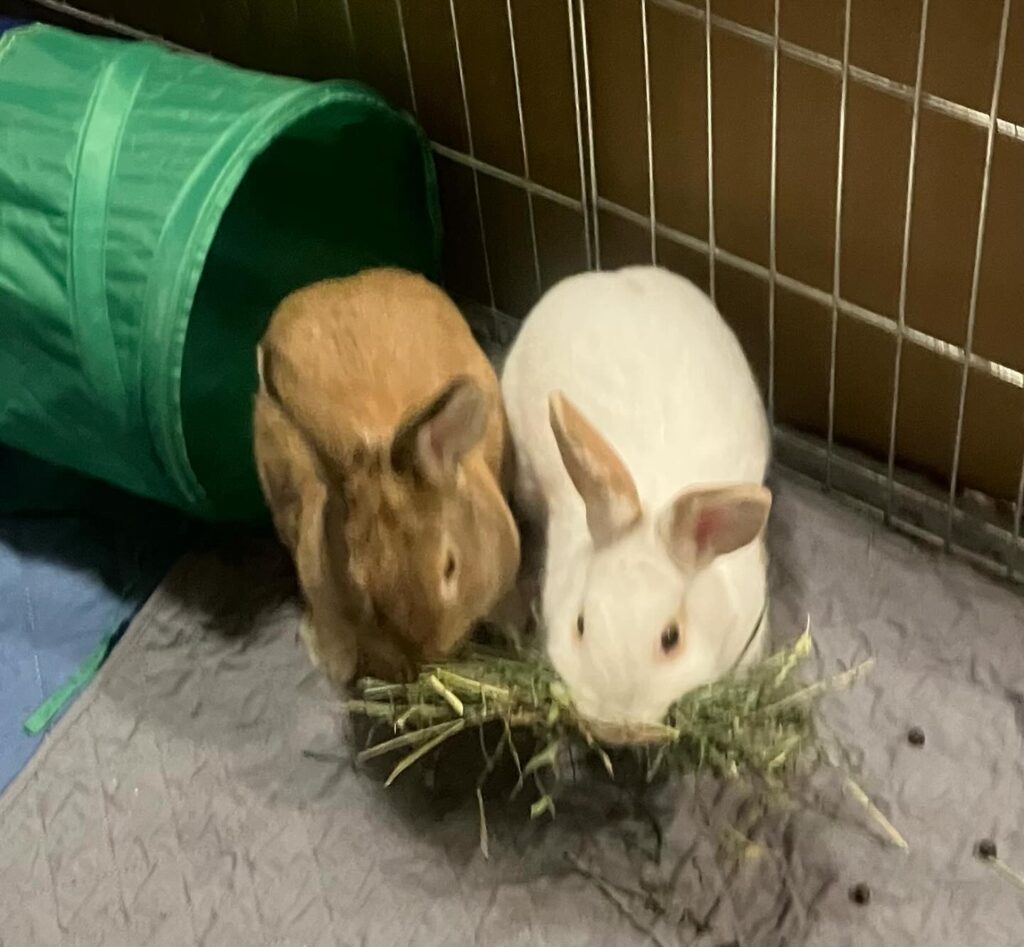
When It Is a Pregnant Rabbit — What to Expect
If your doe has had contact with an entire male — even briefly, even in what seemed like a supervised situation — pregnancy is a genuine possibility, and fur pulling in the days before the due date is entirely normal behaviour.
A rabbit’s gestation period is approximately thirty-one days. In the final few days, a pregnant doe will pull fur from her chest and belly — where the fur is softest and most insulating — to line the nest for her kittens. This is instinctive, deliberate, and not something to interfere with.
If you suspect your rabbit is pregnant, provide plenty of nesting material — hay works well — and make sure she has a quiet, sheltered area in her hutch or enclosure where she feels safe. Keep disturbances to a minimum in the days around the due date.
If this was an unplanned pregnancy or your rabbit is very young, speak to a vet. There are situations where veterinary support around the birth is genuinely worthwhile.
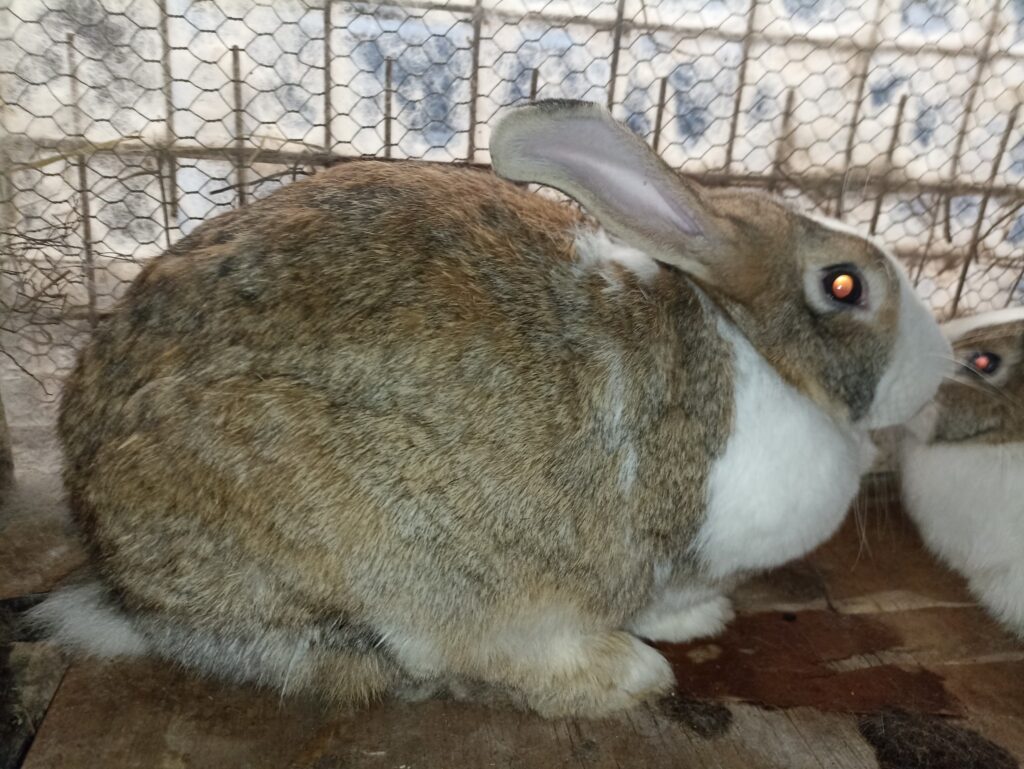
Stress — The Cause That Gets Missed Most Often
Stress-related fur pulling is the one I see most often go unidentified. The owner assumes it is a physical problem and goes looking for a skin condition or parasite, when the real issue is that the rabbit is not happy in its environment.
Rabbits are sensitive animals. They do not show stress in obvious ways — they rarely vocalise, rarely display it in the way a dog or cat might. What they do instead is redirect. Repeated behaviours. Bar chewing. Digging obsessively at the same spot. And, in some cases, pulling at their own fur.
The triggers for stress in rabbits are usually one of the following.
Not Enough Space
This is the most common one. The minimum enclosure size recommended by the RWAF for a pair of rabbits is three metres by two metres — and that is a minimum. Many of the hutches sold in pet shops fall well short of this. A rabbit in a hutch it cannot properly binky, run, or explore in will develop behavioural problems. Fur pulling is one of them.
If your rabbit’s living space is smaller than it should be, that is the first thing to address. Not a supplement, not a spray, not a vet visit — more space.
Boredom and Lack of Stimulation
Rabbits are intelligent animals with a genuine need for mental engagement. A rabbit with nothing to do — no foraging, no digging, no chewing, no variety — will find ways to occupy itself that you will not enjoy. Fur pulling falls into this category.
Cardboard boxes, tunnels, digging trays, willow balls, hay stuffed into toilet roll tubes — none of this is complicated or expensive, and it makes a real difference to a rabbit that needs something to do.
Loneliness
Rabbits are social animals. A rabbit kept alone, with no rabbit companion and limited human contact, is a rabbit under chronic low-level stress. The RWAF recommends keeping rabbits in bonded pairs for precisely this reason.
I am aware that some owners keep single rabbits very successfully, with a lot of human interaction. But if your single rabbit is displaying stress behaviours including fur pulling, loneliness is one of the first things to consider honestly.
A Predator Nearby
A rabbit that can see, smell, or hear a predator — a neighbourhood cat sitting on the hutch roof, a dog that runs along the fence line, a fox that comes into the garden at night — will be in a state of ongoing stress even if the animal has never actually reached them. Prey animals do not distinguish between a threat they can escape and a threat they cannot. The stress response is the same.
If the hutch or run is in a position where predators can access it or are regularly nearby, changing that position is often the fastest way to resolve stress-related behaviour.
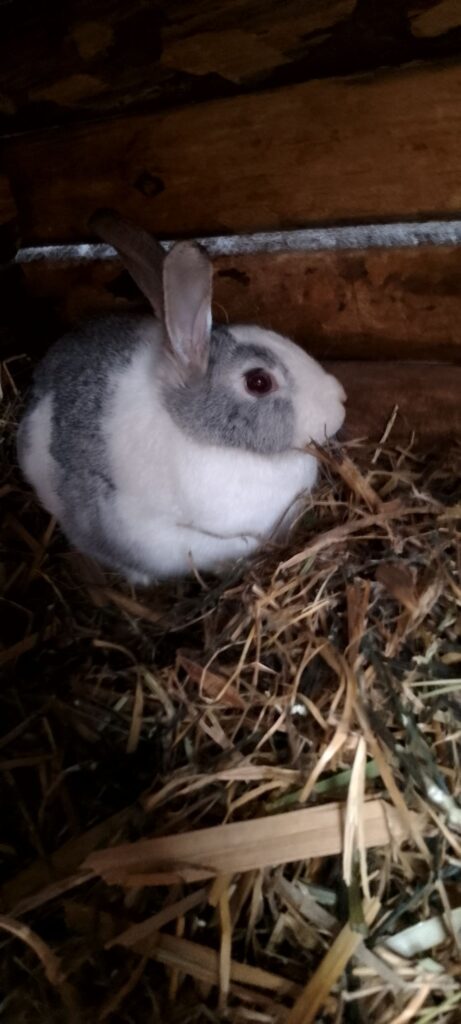
Skin Conditions and Parasites — What to Rule Out
Not all fur pulling is behavioural. Sometimes the rabbit is pulling at fur because the skin underneath is irritated, itchy, or painful. If the fur pulling is accompanied by scratching, head shaking, skin redness, flaking, or small dark specks in the coat, a physical cause needs to be investigated.
Mites
Fur mites — Cheyletiella — are relatively common in rabbits and cause a characteristic dandruff-like scaling, typically along the back and at the base of the neck. The rabbit will scratch and pull at the affected area. It is contagious between rabbits and treatable with appropriate veterinary products. It needs a vet, not an over-the-counter remedy.
Ear mites cause a different pattern — intense head shaking, scratching at the ears, and a dark crusty discharge inside the ear canal. This also needs prompt veterinary treatment.
Ringworm
Despite the name, ringworm is a fungal infection rather than a worm. It causes circular patches of fur loss with slightly crusty or scaly skin at the edges. It can spread to other animals and to humans, which makes prompt identification important. A vet swab will confirm it.
Fleas
Rabbits can carry fleas, and flea irritation will cause scratching and fur pulling at the sites of bites — typically around the head, neck, and base of the tail. Check for small dark specks at the skin level. Any flea treatment must be rabbit-safe — many cat and dog flea products are toxic to rabbits, and this is not a situation where improvisation is safe.
Dental Problems
This one surprises people. A rabbit with dental pain — particularly molar spurs, which are very common in rabbits — will sometimes pull at the fur around its face and jaw area as a response to discomfort. If the fur pulling is concentrated around the face, and particularly if the rabbit is also eating less or dropping food, a dental check with a rabbit-savvy vet is worth doing.
Barbering — When One Rabbit Pulls Another’s Fur
If you have more than one rabbit and the fur pulling is coming from one rabbit removing another’s coat rather than their own, this is barbering — a dominance or boredom behaviour where one rabbit chews or pulls the fur of a cagemate.
The rabbit doing the barbering is usually the dominant one. It tends to target the same areas repeatedly — often the flanks, back, or around the ears of the submissive rabbit. The affected rabbit may not appear distressed by it, which can make it easy to miss.
Barbering is usually a sign of one of three things: not enough space, not enough enrichment, or an incompatible pairing that needs reassessing. Separating the pair and reintroducing on neutral ground, with more space and more to do, resolves it in many cases. If it continues, come and talk to us — we can help you think through the pairing.
Overgrooming — When It Becomes Compulsive
In some rabbits, particularly those that have been kept in poor conditions or have experienced significant stress, fur pulling can become compulsive — a repetitive behaviour that continues even after the original trigger has been removed. This is sometimes called overgrooming or psychogenic alopecia.
A rabbit in this pattern will pull at the same areas repeatedly, often the belly or flanks, to the point of creating bald patches or even skin damage. It can be difficult to resolve completely, and in established cases it often requires both environmental improvement and guidance from a vet with rabbit behavioural experience.
If you have addressed the obvious causes — space, companionship, predator access, diet — and the behaviour continues, do not wait. Get a vet involved. Compulsive behaviours in rabbits do not tend to resolve on their own.
Diet — The Connection Most People Miss
A rabbit that is not getting enough fibre will find ways to compensate. Fibre — specifically the long fibre from hay — is not just about digestion. It is essential for keeping a rabbit occupied. Hay should make up approximately eighty percent of a rabbit’s diet, and it should always be available. Not a small handful. A pile as big as the rabbit, topped up constantly.
A rabbit that runs out of hay has nothing to do with its mouth. Nothing to chew, nothing to forage through, nothing to process. Boredom and digestive restlessness that results from a low-fibre diet can contribute to fur pulling and other repetitive behaviours.
If your rabbit is living primarily on pellets with limited hay, that is the first thing to change — before anything else.
What To Do — A Clear Order of Action
When someone comes to me with this problem, this is broadly how I advise them to think through it.
First, establish whether it is a female rabbit showing nesting behaviour. If she is unspayed, if she has had any contact with a male, or if she is going through a hormonal cycle, this is the most likely explanation. Monitor it. If it is recurring frequently, discuss spaying with a vet.
Second, rule out physical causes. Look carefully at the skin under the fur. Any redness, scaling, dandruff, dark specks, or crusty patches means a vet visit to check for mites, fungal infection, or fleas. Any fur pulling concentrated around the face warrants a dental check.
Third, assess the environment honestly. Is the space large enough? Is there enough to do? Is there a companion rabbit? Are there predators nearby at any point in the day or night? These are the most common stress triggers, and they are the ones most often overlooked because they require effort to change.
Fourth, look at the diet. Is unlimited hay available at all times? If not, that changes immediately.
Fifth, if none of the above explains it, speak to a vet. A rabbit that continues pulling fur after the obvious causes have been addressed needs a proper examination. There may be something internal — pain, hormonal imbalance, something not visible from the outside — that only a vet can identify.
Finding a Vet Who Actually Knows Rabbits
This is something I say every time rabbits come up in a health context, because it genuinely matters. Rabbits are classified as exotic pets. Not every vet has significant experience with them, and the difference between a vet who sees rabbits regularly and one who does not can be significant when it comes to diagnosis and treatment.
When looking for a vet, look specifically for one who lists rabbits or exotic pets as an area of practice. The RWAF maintains a list of rabbit-friendly vets at rabbitwelfare.co.uk. The RCVS accreditation search at rcvs.org.uk is also useful.
If you are in the Swindon area and are not sure where to start, come and ask us. We will point you in the right direction.
One Last Thing
Fur pulling is one of those behaviours that is easy to dismiss as “just a habit” or to worry about far more than necessary, depending on which way you go. Neither response is particularly useful.
What it always is, without exception, is a signal. Something in the rabbit’s world — their body, their environment, their hormones, their social situation — is asking for attention. Finding that thing, and addressing it, is what makes the difference.
If you are not sure what you are looking at, come in and describe it to us. We are at Manor Garden Centre, Cheney Manor, Swindon SN2 2QJ, and we are happy to talk it through. Sometimes a five-minute conversation at the counter saves a lot of unnecessary worry — and occasionally it prevents something more serious from being left too long.
Get in touch here or call us on 01793 512400. We are here every day.
Visit Us at Paradise Pets Swindon
We stock rabbits year-round alongside all the food, housing, and enrichment they need. If you have a concern about your rabbit’s behaviour or health, come in and talk to us — we are always happy to help.