
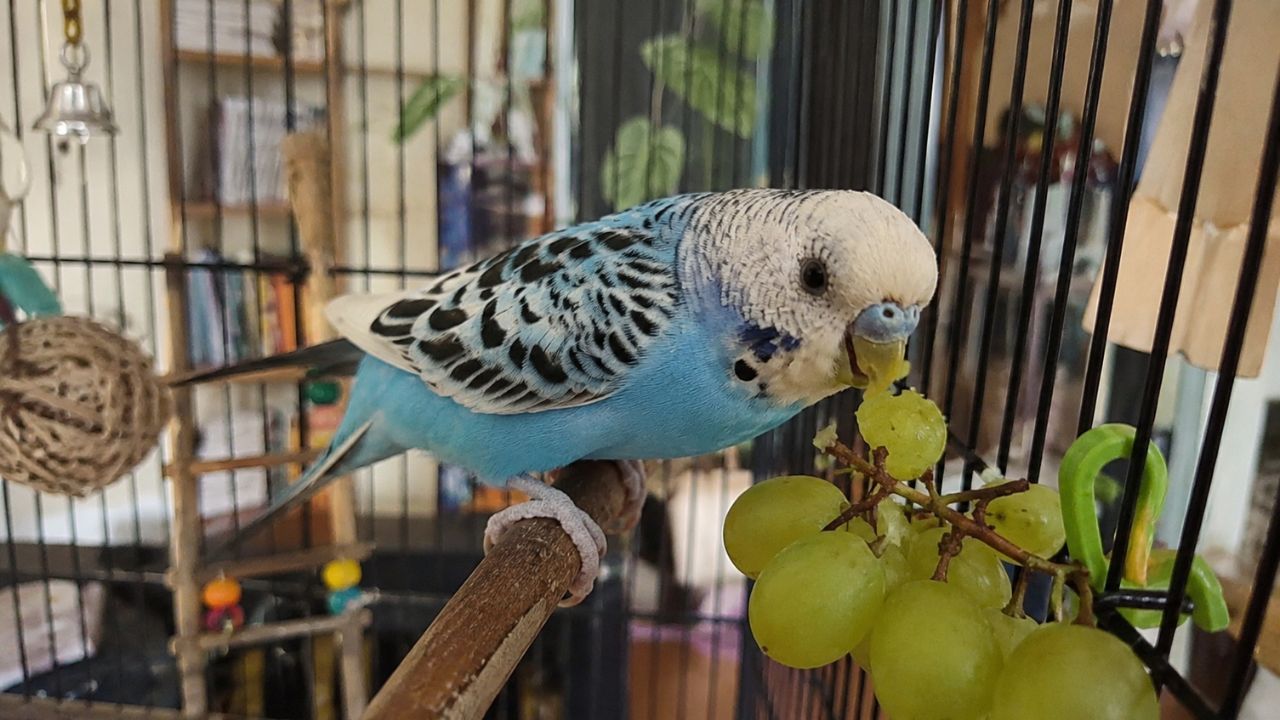

Neil has kept, bred, and sold budgies at Paradise Pets Swindon since 1988 — over 35 years of answering questions about what these birds can and cannot eat. The grape question comes up regularly, and it is a gateway to a more important conversation about budgie diet that most owners in the UK have never been given properly. This is his honest answer — to the grape question and the bigger one behind it.
A father came in last summer holding a single grape, slightly self-consciously.
His daughter’s budgie had spotted him eating grapes at the table and had shown what he described as considerable interest — flying to the nearest perch, tilting its head, doing that focused watching thing budgies do when something captures their attention. His daughter had immediately asked if the budgie could have one. He had told her he would check first.
I respected that. It is exactly the right instinct — check before you give — and it is not as common as it should be.
I told him the straightforward answer: yes, budgies can eat grapes. They are not toxic. The bird will not be harmed by a small piece of grape. But I also told him that the grape question is actually a much more interesting conversation than it first appears, because fruit in a budgie’s diet opens up a topic that most UK budgie owners have never properly been given the information on — which is what a budgie should actually be eating, and why the diet most of them get is not as complete as their owners believe.
He stood at the counter for about twenty minutes. He came back the following week and bought a bag of vegetables.
That is the conversation I want to have in this article.
The Direct Answer — Can Budgies Eat Grapes?
Yes. Grapes are not toxic to budgies. They are not on any list of foods that harm these birds, and a budgie given a small piece of grape will almost certainly enjoy it and come to no harm from it.
That said, the honest answer has conditions attached — not because grapes are dangerous, but because the way you offer them and how often matters. These conditions are simple and practical, and I will go through them in the sections below. None of them should put you off giving your budgie grape. They should just make sure you are doing it in a way that is actually good for the bird rather than just something it enjoys in the moment.
The short version before we go into detail: small pieces, washed thoroughly, occasionally rather than daily, seedless or with seeds removed, and treated as a treat rather than a dietary staple. If you are doing all of those things, grapes are a perfectly reasonable addition to what your budgie eats.
The Sugar Question — Why Moderation Matters
The main reason grapes should be an occasional treat rather than a regular food is their sugar content. Grapes are one of the higher-sugar fruits available — a significant proportion of their weight is fructose, which is fine in small amounts for a small bird but is genuinely not something a budgie should be consuming in large quantities or on a daily basis.
A budgie in the wild eats seeds, grasses, plant material, and occasional fruit when it is available — which in the dry environments these birds come from is not particularly often. Their digestive systems are adapted for a relatively low-sugar, low-moisture diet. Feeding large amounts of fruit, including grapes, consistently can cause loose droppings, an upset digestive balance, and over time may contribute to problems with blood sugar regulation and weight in birds that are already not getting enough exercise.
This does not mean grapes are harmful. It means they are a treat. A slice of cake is not harmful if you have it occasionally. It would be harmful if it replaced your main meals. That is the principle here.
How much is appropriate? A single grape, cut into small pieces — perhaps three or four pieces for a single budgie — two or three times per week at most, as part of a varied diet that includes fresh vegetables and is not dominated by fruit. That is a reasonable guideline. If you notice loose or very watery droppings after giving grapes, reduce the frequency further.
Seeds and Pesticides — The Preparation That Matters
There are two practical steps that matter every time you give grapes to your budgie, and skipping either of them is where problems can arise.
Remove the Seeds — Or Buy Seedless
Grape seeds contain small amounts of compounds that are potentially problematic for small birds. The amounts are low, and a budgie eating the odd seed from a grape is not in immediate danger — but consistently exposing a small bird to something with any level of potential toxicity over months and years is not a risk worth taking when it is completely avoidable.
The practical solution is simply to buy seedless grapes, which are readily available in every UK supermarket and are what most households buy anyway. If you have seeded grapes, remove the seeds before offering any piece to the bird. It takes seconds and removes the concern entirely.
Wash Them — Properly
This is the one I see most people overlook because it feels obvious and therefore easy to assume has been done. Grapes are one of the fruits with consistently high pesticide residue levels in UK supermarket testing. The waxy skin that gives grapes their appearance is also the surface that holds pesticide residue, and a budgie eating unwashed grapes is potentially ingesting meaningful amounts of chemicals that its small body is not equipped to process safely.
Wash grapes under cold running water for at least thirty seconds, rubbing the surface to dislodge any surface residue. If you want to go further — and I would not think you were being excessive if you did — a brief soak in water with a small amount of white vinegar followed by a thorough rinse is effective at removing more pesticide residue than water alone.
Organic grapes, if you have access to them, reduce the pesticide concern significantly. They cost more, but you are not buying large quantities — a small bunch goes a long way as a treat for a single budgie.
- Buy seedless grapes where possible. If seeded, remove all seeds before giving any piece to the bird.
- Wash thoroughly under cold running water for at least 30 seconds, rubbing the surface. Organic grapes preferred.
- Cut into small pieces — a whole grape is too large for a budgie and the round shape presents a choking risk. Three or four small pieces per serving.
- Offer at room temperature — not straight from the fridge. Cold food can cause digestive upset in small birds.
- Remove any uneaten fruit from the cage within a few hours. Fruit left in a warm cage ferments quickly and can cause illness.
- Frequency: two to three times per week maximum as part of a varied diet. Not daily.
Red Grapes or Green Grapes — Does It Matter?
This comes up occasionally and deserves a straightforward answer. Both red and green grapes are safe for budgies. There is no meaningful toxicological difference between the two colours. Red grapes contain slightly higher levels of certain antioxidants, including resveratrol, which is neither beneficial nor harmful to budgies in the quantities involved in a small treat serving. Green grapes tend to be slightly more tart and lower in sugar, which marginally makes them the better choice for regular offering — but the difference is not significant enough to be a rule.
Give whichever you have in the house. Wash them, seed them if needed, cut them up. The colour is not the consideration.
The Bigger Picture — What This Reveals About Budgie Diet in the UK
Now I want to have the longer conversation, because grapes are a small part of a much more important topic that most UK budgie owners have not been given honest information about.
The vast majority of budgies kept in the UK are fed a diet that is almost entirely composed of commercial seed mix. Seed mix is what gets sold alongside the bird in most pet shops. It is what the packaging implies is appropriate. It is what most owners default to, and most owners assume that a good-quality seed mix, perhaps supplemented with cuttlebone, covers everything their bird needs.
It does not.
Seeds are calorie-dense and relatively low in several vitamins and minerals that budgies require for long-term health — particularly vitamin A, vitamin D, iodine, and a range of other micronutrients. A budgie eating seeds as its entire diet is receiving adequate calories but inadequate nutrition. The consequences of this are not usually obvious in the short term, which is why it persists. But over years, a seed-only diet is a significant contributor to liver disease, immune problems, and the generally shorter lifespans that are more common in budgies than they should be.
Fresh fruit and vegetables — including grapes, but more importantly a range of vegetables — are not optional extras for a budgie on an otherwise good seed diet. They are part of what makes a diet actually complete. The challenge is that most budgies raised on seed-only diets are initially reluctant to eat anything different, because they have never learned that other foods are food.
What Fruit Budgies Can Eat — Beyond Grapes
Grapes are one option among many, and not the most nutritious one. Here is a practical list of fruits that are safe and appropriate for budgies in the UK, along with the honest notes on each.
Apple — safe and most budgies enjoy it. Remove the core and seeds, which contain cyanogenic compounds. A standard slice, seeds removed, is a good starting fruit for a bird new to fresh food because it is mild and palatable.
Pear — safe, milder and less sweet than apple, seeds removed as with apple. Good for birds that find apple too sharp initially.
Berries — strawberry, blueberry, raspberry — all safe, and blueberries in particular are nutritionally useful. Soft enough for most budgies to eat without much preparation. Wash thoroughly.
Mango — safe and popular with most budgies. Remove the skin and stone. High in vitamin A, which many seed-fed budgies are deficient in, so this is one of the more useful fruits to offer.
Melon — watermelon, cantaloupe — safe, high in water content. Good in small amounts, particularly in warm weather. Remove seeds.
Kiwi — safe, high in vitamin C. The skin should be removed. The small seeds inside are fine in the quantities present in a small piece of kiwi.
Banana — safe and most budgies like it. High in sugar and starchy, so offer in small amounts and less frequently than other fruits.
Pomegranate — safe, seeds included. Messy, but many budgies enjoy working at the seeds.
Grapes — as discussed above. Safe, seedless, washed, occasional.
Foods to Never Give a Budgie — The List Every Owner Should Know
The positive list is long. The avoid list is shorter but more important, because some of the foods on it are genuinely dangerous.
- Avocado: Toxic to budgies and most pet birds — contains persin, which causes serious cardiac and respiratory problems. Even small amounts can be fatal. Never.
- Onion and garlic: Toxic to birds. Can cause serious blood and digestive problems. This includes cooked onion and garlic in prepared foods.
- Apple seeds and cherry stones: Contain cyanogenic compounds. The flesh is fine — the seeds and stones are not.
- Chocolate: Toxic to birds as well as dogs. Even small amounts.
- Caffeine — tea, coffee, energy drinks: Toxic. Never intentionally given, but be aware of cups left within reach of a free-flying bird.
- Alcohol: Obvious, but worth saying — including anything fermented or accidentally fermenting in the cage.
- Salt: The budgie’s kidneys cannot handle salt the way ours can. No crisps, no salted crackers, no seasoned human food of any kind.
- Dairy: Budgies are lactose intolerant. No milk, cheese, or yoghurt.
- Mushrooms: Not all are safe and identifying which are suitable is not worth the risk. Avoid entirely.
- Rhubarb: Contains oxalic acid. Toxic to birds.
- Fruit that is overripe or fermented: Fermented fruit contains alcohol produced by yeast. Leave no fresh food in the cage for more than a few hours.
Vegetables — More Important Than Fruit for a Budgie’s Diet
I want to make this clear because the grape question is about fruit, and fruit gets the attention — but vegetables are more important to a budgie’s diet than fruit is.
Fruit, including grapes, is essentially a treat food for budgies — appreciated, nutritionally useful in moderation, but high in sugar and not something that should make up a significant daily portion. Vegetables, on the other hand, can and should make up a meaningful part of what a budgie eats every day alongside its seed and any pellet component.
The vegetables most useful to budgies — and most accepted by birds willing to try new things — are: leafy greens such as spinach, kale, and rocket; carrot, both grated and in sticks; pepper of any colour, including the seeds; broccoli florets; courgette; cucumber; and corn on the cob. All of these provide vitamins and minerals that seed cannot.
The challenge is introducing them to a bird that has only ever known seed. I will address this in the next section.
Introducing New Foods to a Budgie That Only Eats Seed
This is the practical problem most owners hit when they decide to improve their budgie’s diet. The bird looks at the piece of carrot or the grape slice and treats it as a completely alien object, possibly a threat. This is not unusual — budgies learn what food is partly through watching other birds eat, and a bird raised on seed alone has never seen another bird eat a grape. It does not recognise it as food.
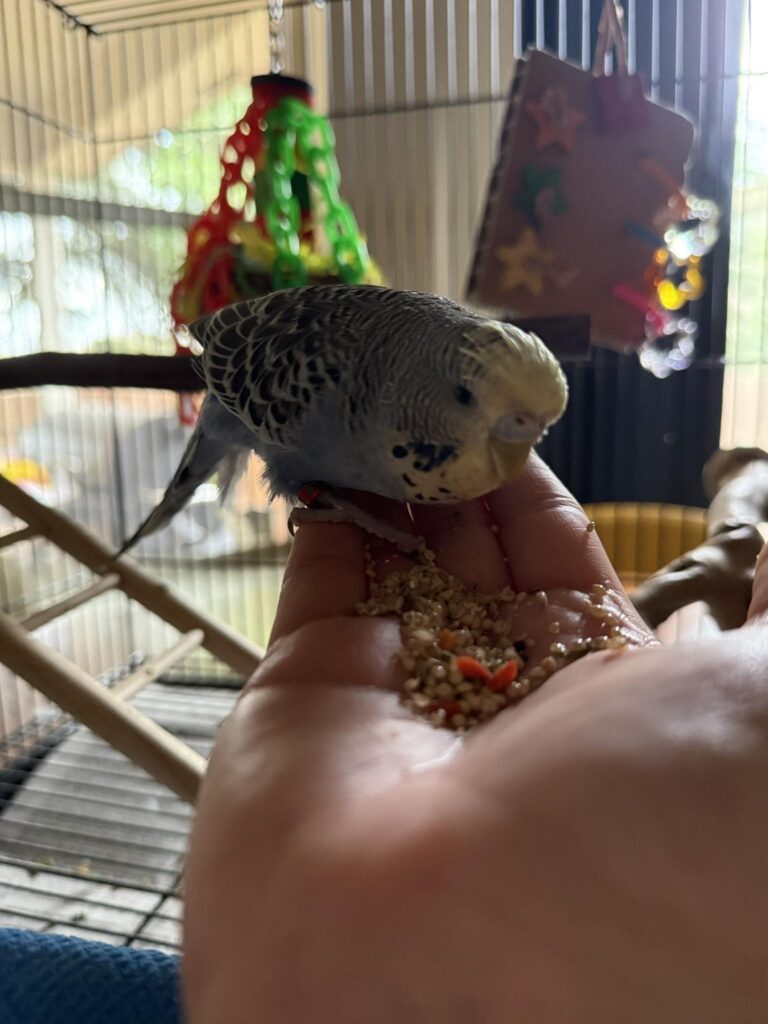
The method that works, in my experience, is gradual exposure rather than replacement. Do not remove the seed and hope hunger drives the bird to the vegetables. This is stressful and usually unsuccessful. Instead, place fresh food in the cage alongside the normal food, every day, without removing the seed.
The bird will ignore it at first. Then it will investigate it without eating it. Then it may try a small amount. Then it will eat it regularly. This process can take two to four weeks for some foods and much less for others — every bird is different, and some take to new food quickly while others take months to accept a single vegetable.
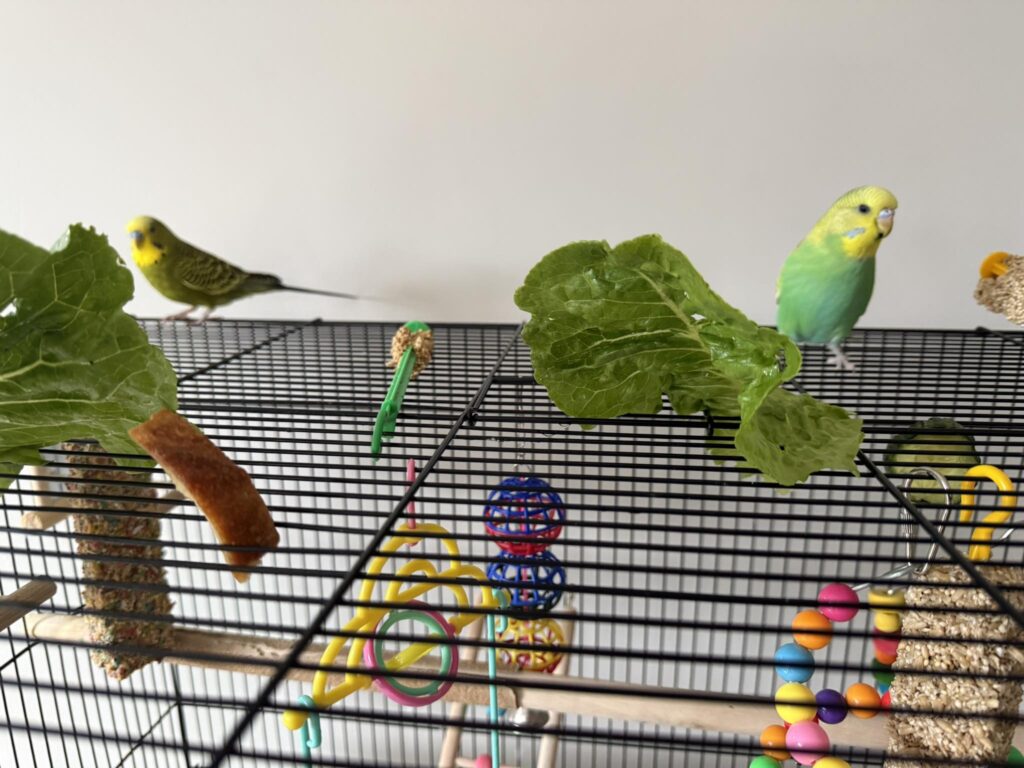
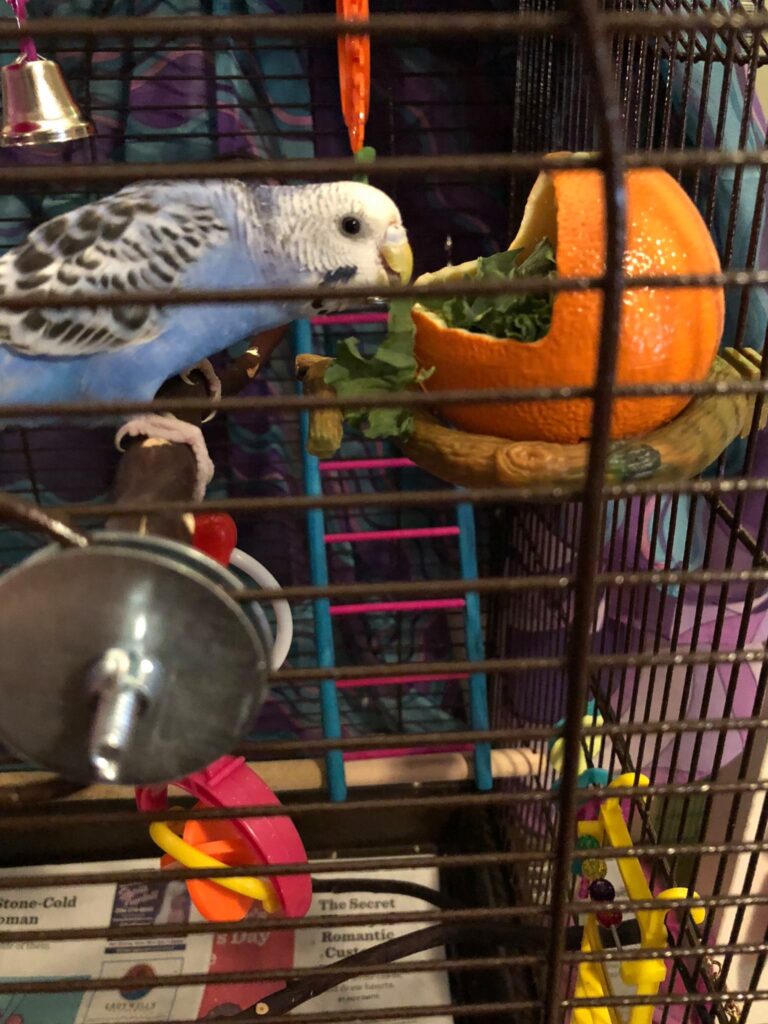
Things that speed the process: hanging greens from the cage bars in a way that makes them look like something to investigate rather than something frightening placed in the food bowl. Putting a small amount of millet seed on top of a piece of vegetable so the bird comes to the vegetable for the millet and notices the vegetable in the process. Eating near the cage yourself — budgies are flock feeders and will sometimes investigate what the rest of the flock is eating.
Quick Reference — Safe Foods, Treat Foods, and Foods to Avoid
| Food | Safe? | Notes |
|---|---|---|
| Grapes (seedless) | Yes — treat | Wash thoroughly. Cut small. 2–3 times per week max. Not daily. |
| Apple | Yes — regular | Remove core and seeds. One of the best starting fruits. |
| Mango | Yes — regular | Remove skin and stone. High in vitamin A — nutritionally useful. |
| Blueberries | Yes — regular | Wash well. Good nutritional value. Popular with most birds. |
| Banana | Yes — treat | High sugar and starchy. Small amounts, less frequently. |
| Watermelon | Yes — treat | Remove seeds. High water content. Good in warm weather. |
| Carrot | Yes — daily | Grated or in sticks. Excellent vitamin A source. Most budgies accept it readily. |
| Spinach / kale / rocket | Yes — daily | Hang from cage bars. Excellent nutrition. Introduce gradually. |
| Broccoli | Yes — regular | Raw florets. Nutritious and accepted by most birds once introduced. |
| Pepper (any colour) | Yes — regular | Seeds included — fine for budgies. High in vitamin C. |
| Avocado | Never | Toxic — can be fatal. No exceptions. |
| Onion and garlic | Never | Toxic in any form, including cooked. |
| Chocolate | Never | Toxic. No amount is safe. |
| Apple seeds / cherry stones | Never | Contain cyanogenic compounds. Flesh is fine — seeds and stones are not. |
| Salted or seasoned food | Never | No crisps, crackers, or any human food with added salt or seasoning. |
The Rule I Give Every Budgie Owner About Diet
If your budgie is eating exclusively seed mix and nothing else, that is the most important thing to change about how you are keeping it — more important than almost any other single factor. Not because seed mix is poisonous. Because it is incomplete, in the same way that eating only one type of food every day for a decade produces nutritional deficiencies that quietly accumulate.
The goal is variety. Not necessarily complexity — you do not need to be preparing elaborate meals. A small piece of carrot, a floret of broccoli, a leaf of spinach, and a few pieces of fruit offered in rotation through the week, alongside a seed mix and cuttlebone, is already dramatically better than seed alone. It takes minutes to prepare, costs very little, and is one of the most significant welfare improvements most UK budgie owners could make.
The bird will not accept everything immediately. That is normal. Keep offering. Keep the safe variety in the cage alongside the seed. Over time, almost every budgie will begin to eat at least some fresh food — and the ones that do live noticeably better lives than the ones that do not.
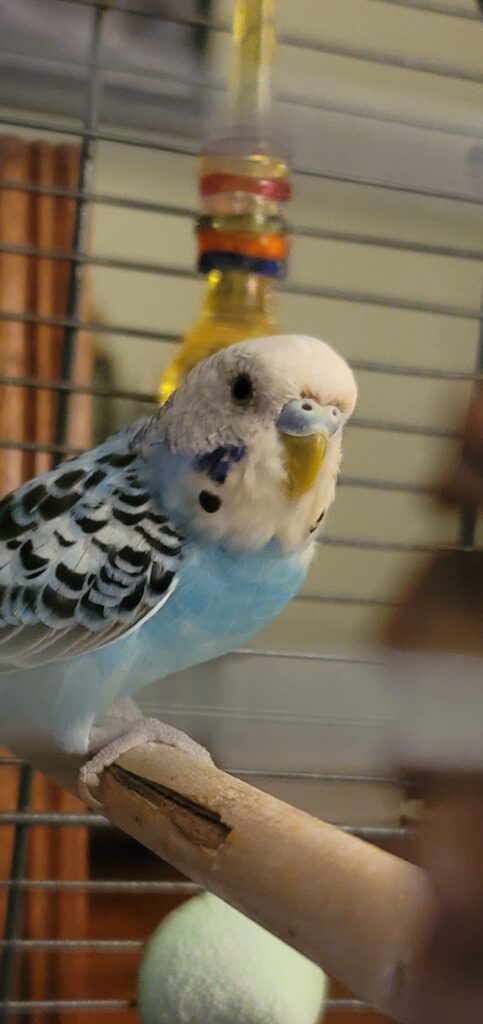
Frequently Asked Questions
Can budgies eat grapes every day?
No — every day is too frequent. Grapes are high in sugar for a bird of a budgie’s size, and daily fruit of any kind can cause loose droppings, digestive imbalance, and over time may contribute to blood sugar and weight issues. Two to three times per week, in small amounts — three or four pieces of cut grape per serving — is a reasonable frequency as part of a varied diet that includes plenty of vegetables.
Are grape seeds dangerous to budgies?
Grape seeds contain small amounts of compounds that may be problematic for small birds with repeated exposure. The risk from the occasional seed is low, but it is easily avoided by buying seedless grapes or removing seeds before offering any grape to your bird. Given that seedless grapes are standard in most UK supermarkets, this is not an inconvenience — just make it a habit to buy seedless.
My budgie showed no interest in the grape — is that normal?
Completely normal, particularly in a bird raised on a seed-only diet. Budgies learn what food is partly through watching other birds eat it. A bird that has never seen another bird eat a grape has no reason to recognise it as food. Leave the grape piece in the cage alongside the normal food, fresh, for a couple of hours, then remove it. Repeat over several days. Many birds will eventually investigate and then eat something they initially ignored completely. Some take longer than others. Patience and consistency are the method.
Can budgies eat raisins (dried grapes)?
No — and I would not offer any dried fruit to a budgie. Drying fruit concentrates the sugar content dramatically. A raisin has far more sugar per gram than a fresh grape. Dried fruit also often contains added sulphites or other preservatives that are not appropriate for small birds. Stick to fresh fruit.
What vegetables should I start with to expand my budgie’s diet?
For a bird that has never eaten anything other than seed, the easiest starting point is usually carrot — it is mild, not strongly scented, and many budgies will approach it relatively quickly. Grated carrot sprinkled on top of the food bowl is less intimidating than a large piece placed separately. From carrot, most owners find it easier to introduce other vegetables. Leafy greens, broccoli, and pepper are all worth trying in rotation once the bird has accepted any fresh food at all.
Where can I find out more about budgie diet and care in Swindon?
Come and talk to us at Paradise Pets. We stock budgies and carry a range of appropriate feeds, fresh food options, and supplements. Our full care guide is also available on the site — or come to Manor Garden Centre, Cheney Manor, Swindon SN2 2QJ and ask at the counter. We are happy to discuss diet, cage setup, or anything else about these birds without a sales agenda. Call us on 01793 512400 before visiting to find out what we currently have in stock.
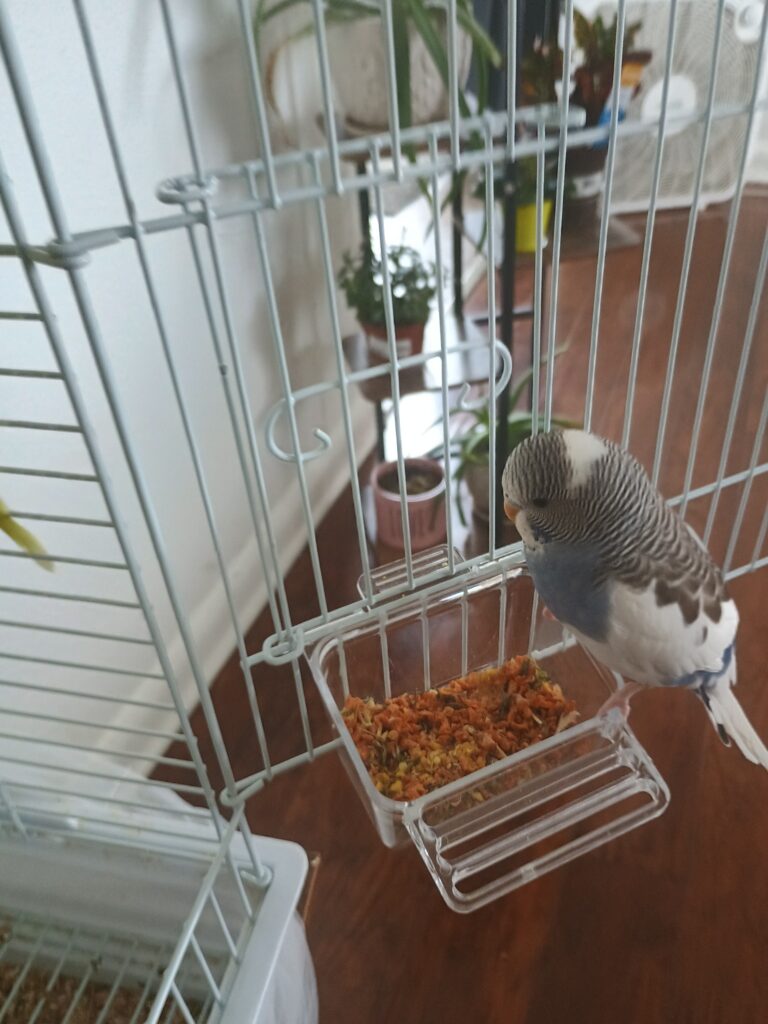
Questions About What to Feed Your Budgie? Come and Ask
If you want to know more about what your budgie should actually be eating — beyond what it says on the back of a seed bag — come in. I will give you the honest version from 35 years of keeping these birds. No upselling. Just the practical information that makes a genuine difference.