
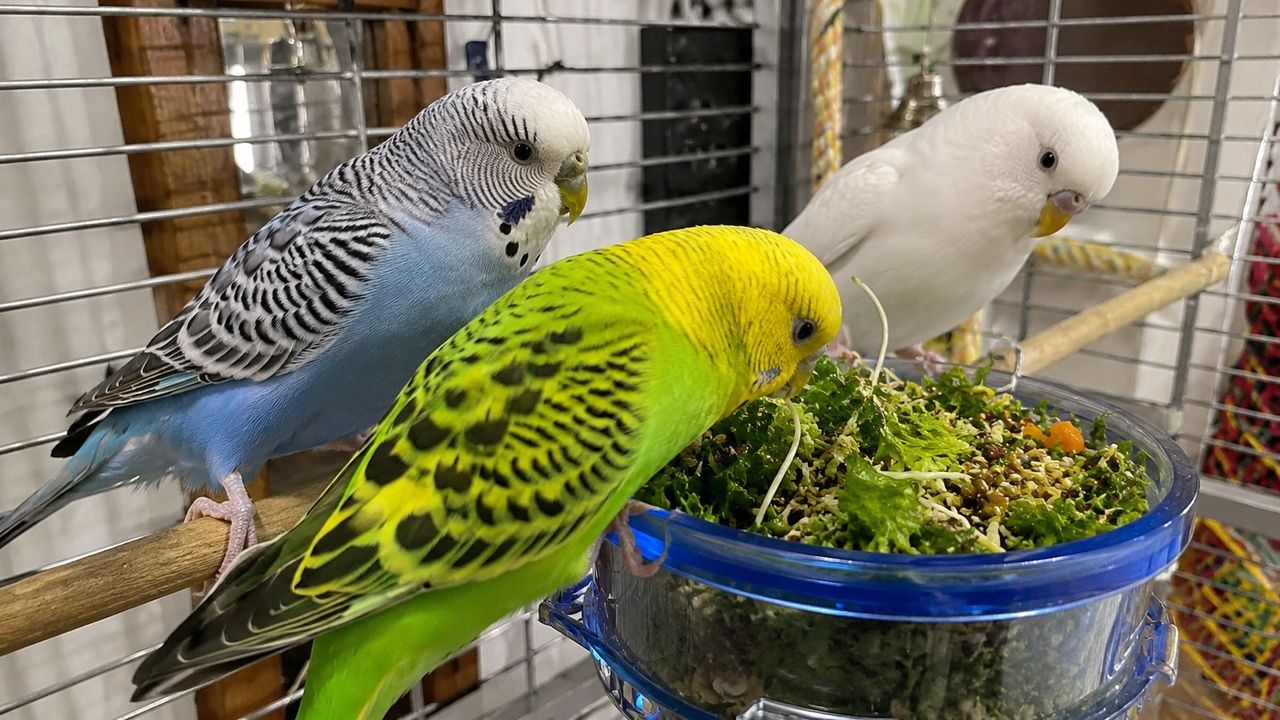

Neil has kept, bred, and sold budgies at Paradise Pets Swindon since 1988 — over 35 years of first-hand experience with these birds. In that time, he has watched diet shorten more budgie lives than almost anything else. This is his honest, practical feeding guide for every UK budgie owner — based on what actually works, not what is sold.
A woman came into the shop a few months ago with a worried look. “Neil,” she said, “I’ve had my budgie for three years and I just feed him the seed mix from the supermarket. He always seems hungry. He doesn’t look quite right. Am I doing something wrong?”
I asked her to bring him in, and when she did, I had a proper look. The bird’s feathers were dull, he was overweight, his beak was slightly overgrown, and his cere was the wrong colour for a healthy male. It was not dramatic — most owners would not have spotted anything wrong. But to my eye, this was a textbook case of a budgie on the wrong diet, slowly heading toward serious health problems.
The honest truth is this — diet is the single biggest factor in how long and how well your budgie lives, and the standard “budgie seed mix” sold in most UK shops is genuinely not enough. Most owners feed their budgie what they think it eats, based on what is sold in supermarkets and general pet shops. And most owners are accidentally cutting years off their budgie’s life as a result.
In 35 years of selling budgies, I have seen this pattern again and again. The owner means well, feeds the seed mix the packet says, and wonders why their bird does not live as long as the figures suggest. The answer is almost always in the food bowl.
This article is the conversation I have at the counter, written down for every UK budgie owner who wants to feed their bird properly. By the end of it, you will know exactly what budgies should be eating, what to avoid, and how to give your bird the best possible chance of a long, healthy life.
First — Why The Standard Seed Mix Is Not Enough
Let me start with the difficult truth, because it matters. The colourful seed mix sold as “budgie food” in most UK supermarkets and general pet shops is not a complete diet. It is the cheap convenience option, and it has been sold for so long that most owners assume it is what budgies are supposed to eat. It is not.
The problem with seed-only diets is fundamental. Seed is high in fat and low in many essential nutrients — particularly vitamin A, calcium, and several other vitamins and minerals that budgies genuinely need. A budgie fed only on seed will, over months and years, develop a range of health problems linked to poor nutrition:
- Fatty liver disease — extremely common in seed-only budgies, often fatal
- Vitamin A deficiency — affects skin, feathers, respiratory health, and immunity
- Obesity — leading to a range of secondary problems
- Calcium deficiency — particularly serious in females, leading to egg binding
- Iodine deficiency — can cause thyroid problems and goitre
- Reduced lifespan — by years, in many cases
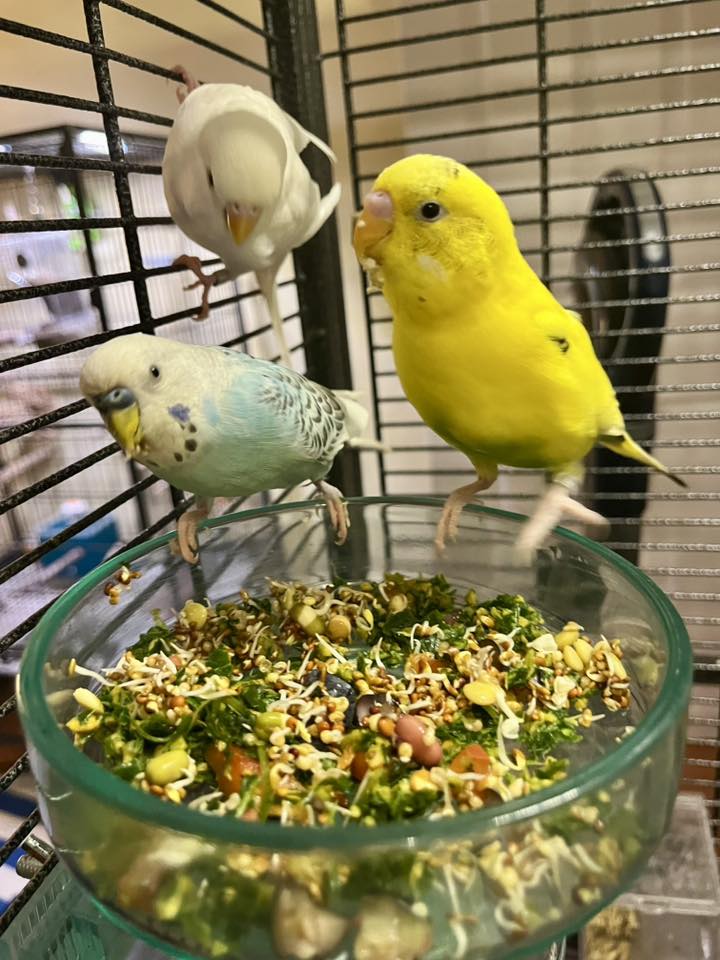
This is not a small issue. It is genuinely the single most common cause of preventable shortened life in UK pet budgies. So if you take one thing from this article, take this — your budgie needs more than just seed to thrive.
The Honest Budgie Diet — What They Should Actually Eat
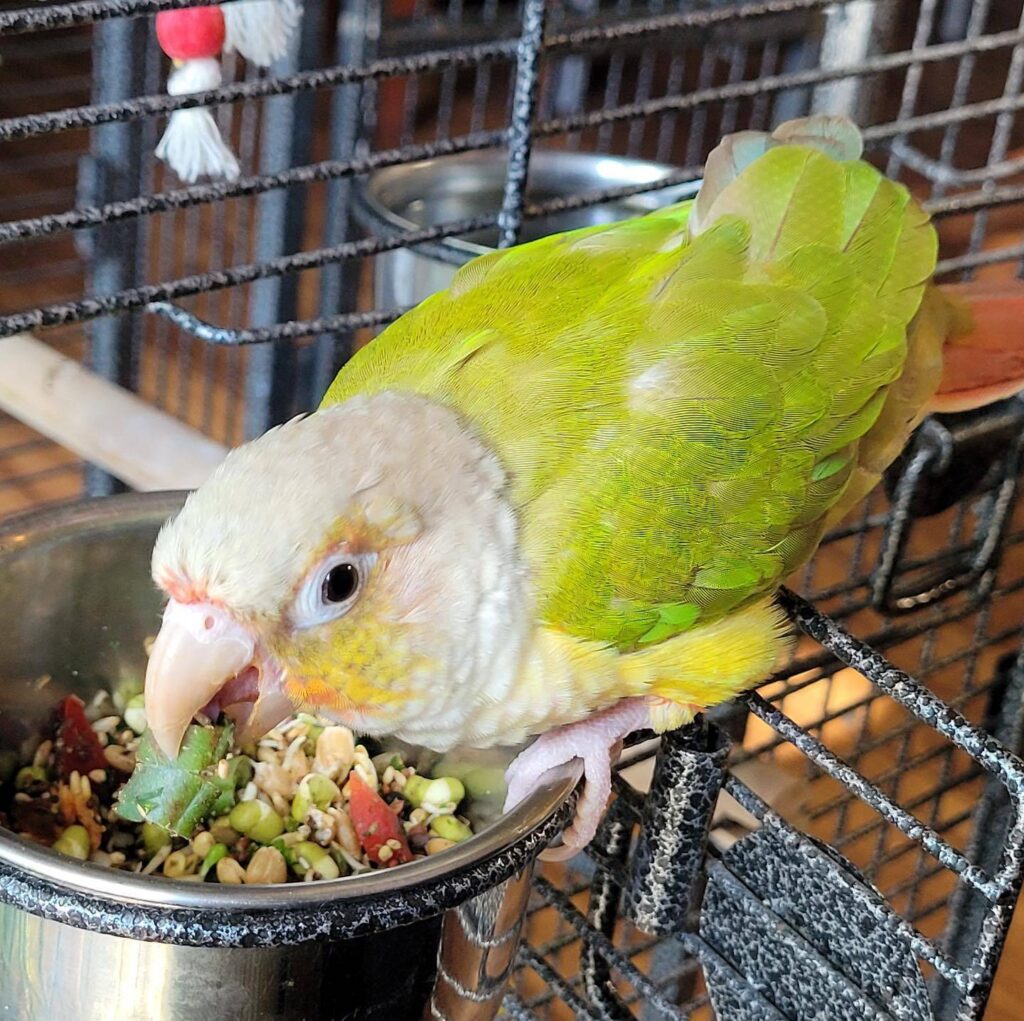
Here is what a proper budgie diet actually looks like, based on 35 years of feeding these birds and watching what works. A healthy budgie diet has four main components, in roughly the proportions below.
| Food Group | Proportion Of Diet | What It Provides |
|---|---|---|
| Quality pellets | 50-60% | Complete balanced nutrition, vitamins, minerals |
| Fresh vegetables and leafy greens | 20-25% | Vitamin A, fibre, hydration, variety |
| Quality seed mix | 15-20% | Essential fats, foraging enjoyment, natural variety |
| Treats and supplements | 5% maximum | Occasional variety, training rewards |
This is the diet I recommend to every UK budgie owner who walks through my door. It is not complicated, it is not expensive, and once you have set up the routine, it takes only a few minutes a day to maintain.
Let me walk you through each component honestly.
1. Quality Pellets — The Backbone Of A Good Diet
This is the single biggest change most UK budgie owners need to make, and it is the most important. A good quality budgie pellet — formulated specifically for small parrots — provides balanced, complete nutrition in every bite. Unlike seed, where a budgie can pick out its favourites and leave the rest, pellets ensure the bird gets a proper mix of vitamins, minerals, and balanced protein every time it eats.
Pellets should form the largest single part of a budgie’s diet — somewhere between 50 and 60 percent. There are several reputable brands available in the UK, and a good budgie pellet costs perhaps a bit more than basic seed but lasts longer and genuinely transforms the bird’s health.
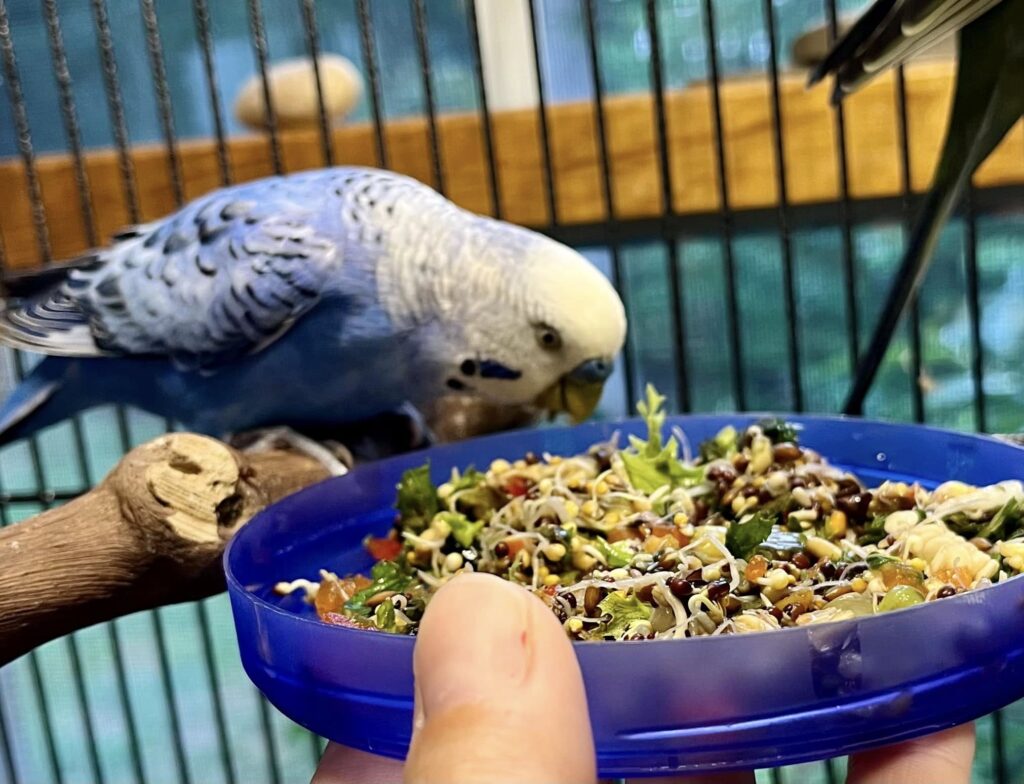
- Budgies raised on seed often refuse pellets at first — they do not recognise them as food
- Introduce pellets gradually over several weeks, mixing them with the existing seed
- Slowly reduce the seed proportion as the bird accepts pellets
- Be patient — switching can take a month or more for stubborn birds
- Never starve a budgie into eating pellets — they can deteriorate quickly without food
- If the bird absolutely refuses pellets after weeks, focus on getting more fresh vegetables in instead
Choosing The Right Pellets
Not all pellets are equal. Look for:
- Pellets specifically formulated for budgies or small parrots
- Natural-coloured pellets rather than artificially dyed bright ones (the bright colours add nothing nutritionally and some birds find them off-putting)
- A reputable UK or European brand from a specialist pet shop, not the cheapest supermarket option
- Whole, balanced formulations rather than seed-based mixes that pretend to be pellets
2. Fresh Vegetables And Leafy Greens — Daily Variety
This is the part most owners skip entirely, and it makes an enormous difference. Fresh vegetables provide vitamin A (which budgies desperately need), fibre, hydration, and a range of nutrients that simply are not in seed or even pellets in the same form. They should make up around 20 to 25 percent of the daily diet.
Offer fresh vegetables every single day, in small amounts. A budgie does not need huge portions — a small handful of chopped vegetables is plenty for one bird. The variety matters more than the quantity. Rotate what you offer so the bird gets a range of nutrients over time.
- Dark leafy greens — kale, romaine lettuce, watercress, dandelion leaves, rocket. Excellent for vitamin A.
- Orange and red vegetables — grated carrot, sweet potato (cooked), red pepper, butternut squash. Rich in beta-carotene.
- Broccoli — both florets and leaves. Highly nutritious.
- Cucumber and courgette — good for hydration, well-accepted by most budgies.
- Sweetcorn — in moderation, most budgies love it.
- Fresh herbs — basil, parsley, coriander, mint. Great variety and nutrition.
- Peas and beans — fresh or thawed from frozen, never tinned.
How To Serve Fresh Vegetables
Wash everything thoroughly. Chop into manageable pieces — budgies have small beaks and prefer food they can grip. Clip greens to the cage bars with a vegetable clip, or place chopped vegetables in a separate dish. Remove anything uneaten after a few hours so it does not spoil and become a health risk.
Some budgies are initially suspicious of fresh food — they were not raised on it. Be patient. Try different vegetables. Mix new foods with familiar ones. Eventually, most budgies discover that fresh food is genuinely enjoyable.
3. Quality Seed Mix — Yes, Still Part Of The Diet
Seed has its place in a budgie’s diet — just not as the entire diet. A good quality seed mix should still make up 15 to 20 percent of what the bird eats. Seed provides essential fats, foraging enjoyment, and the kind of variety that pellets alone do not offer.
The key word here is quality. Cheap supermarket seed mixes are often dusty, full of poor-quality fillers, and lacking in variety. A proper budgie seed mix from a specialist shop contains a variety of small seeds — millet (white and red), canary seed, oats, and a small amount of larger seeds for variety.
- Look for dust-extracted, fresh-smelling seed — old or dusty seed can cause respiratory irritation
- Choose mixes with visible variety — not just one or two types of seed
- Avoid mixes with bright artificial-coloured pieces — usually low-quality treats
- Store seed properly — sealed container, away from heat and damp
- Replace if it smells off or has any signs of weevils or mould
4. Treats — Small And Occasional
Budgies, like all animals, enjoy treats — and there is nothing wrong with offering them, in small amounts, occasionally. The mistake many UK owners make is treating “treats” as a daily food rather than an occasional reward.
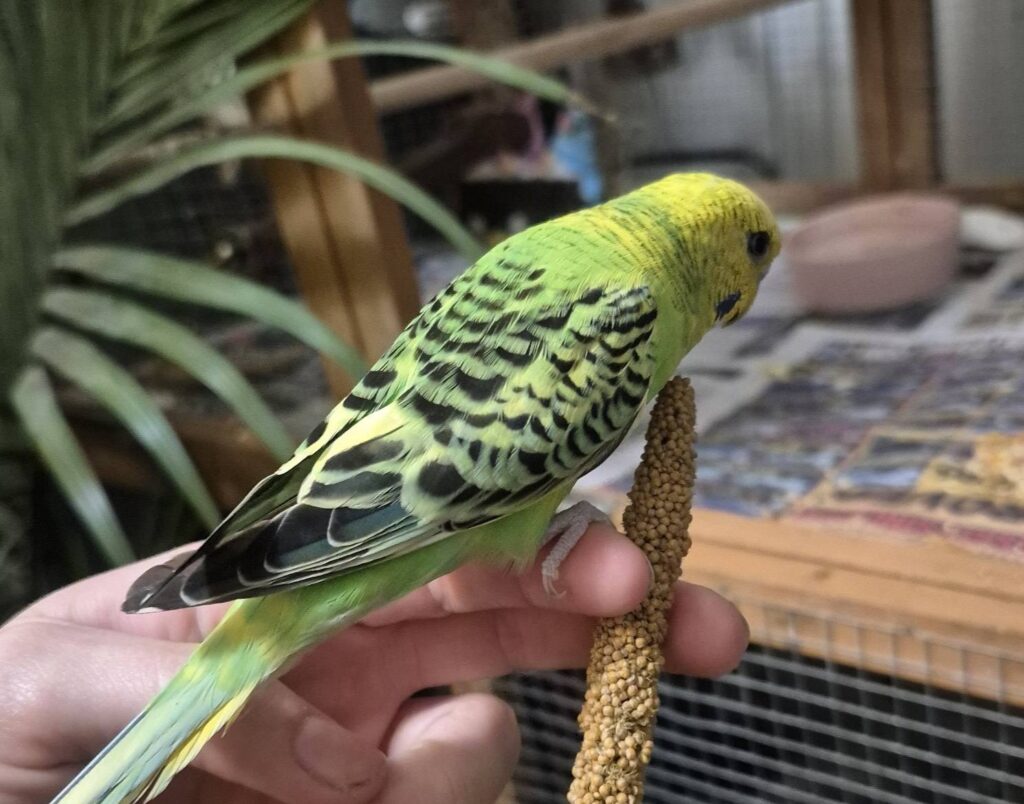
- Millet spray — a budgie favourite, but only as an occasional treat, not daily
- A small piece of apple (without seeds — apple seeds are toxic) — occasional fruit
- A small piece of banana, mango, or melon — once or twice a week maximum
- A few cooked grains — quinoa, brown rice, in tiny amounts
- A tiny piece of wholemeal bread — occasional, not daily
- Sprouted seeds — highly nutritious when fresh, an excellent occasional treat
The honest rule of thumb — if your budgie’s favourite food is one specific item, you are probably feeding too much of it. Variety prevents fussy eating and ensures balanced nutrition.
What Budgies Should Never Eat — The Dangerous List
This list is genuinely a matter of life and death, and every UK budgie owner needs to know it. Some everyday human foods are toxic to budgies and can kill them, sometimes very quickly.
- Avocado — highly toxic, can cause sudden death
- Chocolate — toxic to birds, never offer any amount
- Caffeine — coffee, tea, energy drinks — all dangerous
- Alcohol — even tiny amounts can be fatal
- Apple seeds, cherry stones, peach stones — contain cyanide compounds
- Onion and garlic — can cause anaemia and digestive issues
- Salty, sugary, or fatty processed foods — crisps, biscuits, fried food
- Mushrooms — many varieties are toxic to birds
- Rhubarb leaves — toxic
- Iceberg lettuce — not toxic but mostly water, no nutrition
- Mouldy or spoiled food of any kind
If your budgie accidentally eats any of these, contact an avian vet immediately. Time matters. Do not wait to see if it will be fine.
Other Important Parts Of A Healthy Diet
Beyond the main food groups, there are a few essentials that every budgie needs daily access to.
1. Fresh Water — Changed Daily
Clean, fresh water should always be available. Change the water at least once a day — more often if it gets soiled with food or droppings. Tap water is fine in most UK areas, though some owners prefer filtered. The water container itself should be cleaned thoroughly every few days to prevent bacteria build-up.
2. Cuttlefish Bone — For Calcium
A cuttlefish bone clipped to the side of the cage provides a constant source of calcium and helps keep the bird’s beak naturally worn. Essential for all budgies, particularly females. Replace when it gets dirty or significantly chewed down.
3. Mineral Block Or Iodine Block
A small mineral block provides additional trace elements. Iodine is particularly important for budgies — deficiency can cause thyroid problems. A good budgie mineral block covers this.
4. Grit — Yes, But Carefully
There is debate about whether budgies need grit. They digest food differently from chickens, and excessive grit can actually cause digestive problems. A tiny amount of mineral grit available occasionally is fine; offering large quantities is not necessary and can be harmful.
A Simple Daily Feeding Routine
For UK owners new to all this, here is a practical daily routine that works in real life and takes only a few minutes a day.
- Morning (5 minutes)
Refresh water, top up pellets, clip a small portion of fresh vegetables or leafy greens to the cage. Remove any leftover food from yesterday. - Throughout the day
The bird grazes on pellets and seed at its own pace. Watch the cage floor occasionally for husks and droppings. - Mid-afternoon (1 minute)
Remove fresh vegetables before they wilt or spoil. A quick visual check on food and water levels. - Evening (2 minutes)
Top up seed if needed, ensure water is fresh, glance at cage cleanliness for the night. - Weekly (10 minutes)
Deep clean food and water containers. Refill mineral blocks and cuttlefish if needed. Inspect for any spoiled food or seed.
That is genuinely the whole routine. Less than 10 minutes a day, plus a weekly deeper clean, gives your budgie the foundation of a long, healthy life.
How To Tell If Your Budgie’s Diet Is Working
A budgie on a proper diet looks visibly different from one on a poor diet. After 35 years, I can usually tell within seconds of looking at a bird whether it is being fed properly. Here are the signs to look for in your own bird.
| Sign | Well-Fed Budgie | Poorly-Fed Budgie |
|---|---|---|
| Feathers | Bright, sleek, well-aligned | Dull, ragged, missing patches |
| Eyes | Bright and alert | Dull or partially closed |
| Cere (above beak) | Vibrant, healthy colour | Pale, scaly, or wrong colour |
| Beak | Smooth, correct length | Overgrown, flaky, misshapen |
| Weight | Sleek and healthy | Overweight or underweight |
| Energy | Active, vocal, engaged | Lethargic, quiet, withdrawn |
| Droppings | Firm, well-formed | Loose, discoloured, or sparse |
If your bird is showing several signs from the right-hand column, the diet is one of the first things to look at. Most diet-related problems improve significantly within a few weeks of proper feeding.
What I Ask Owners At The Counter
When an owner brings in a budgie with vague concerns — feathers not right, less active, just “off” — diet is the first thing I ask about. Here is the conversation I have.
- What does the bird actually eat each day?
Be honest. “Just the seed mix” is the most common answer, and it tells me a lot. - How often do you offer fresh vegetables or greens?
“Never” or “occasionally” suggests vitamin A deficiency is likely. - Does the bird eat pellets?
If never, that is the biggest single change to work on. - Is there a cuttlefish bone and mineral block in the cage?
Essentials that some owners overlook. - How fresh is the seed?
Old or dusty seed contributes to poor health and respiratory issues. - How much does the bird eat in a day?
Overeating or undereating both indicate problems.
Five minutes of these questions almost always reveals where the diet needs to improve.
How To Transition A Budgie To A Better Diet
If your budgie is currently on a seed-only diet, you cannot simply remove the seed and expect it to start eating pellets and vegetables overnight. Birds need to be transitioned gradually, both for their physical wellbeing and to give them time to recognise new foods as food.
Here is the approach that works:
- Week 1-2 — Introduce a small amount of pellets mixed into the existing seed. Offer a tiny amount of one vegetable daily, even if the bird ignores it.
- Week 3-4 — Gradually increase the pellet proportion. Try different vegetables to find what the bird accepts. Keep offering even rejected foods — recognition takes time.
- Week 5-8 — Continue increasing pellets and vegetable variety. Most budgies start accepting at least some new foods by this point.
- Long term — Aim for the proportions described earlier, with daily fresh vegetables and pellets as the main food source.
Patience is essential. Some budgies switch quickly. Others take months. Never starve a budgie into trying new food — they can become seriously ill within a couple of days without eating. Always ensure they have food they will actually eat, even during the transition.
Frequently Asked Questions
What is the best food for a pet budgie in the UK?
A balanced diet of around 50-60% quality pellets, 20-25% fresh vegetables and leafy greens, 15-20% quality seed mix, and 5% occasional treats. Plus constant access to fresh water, a cuttlefish bone for calcium, and a mineral block. This combination provides everything a budgie needs to thrive.
Can budgies live on seed alone?
Not well, and not for long. A seed-only diet causes vitamin A deficiency, fatty liver disease, obesity, and calcium problems. Budgies on seed-only diets typically live 3 to 5 years less than properly-fed birds. Seed has a place in the diet, but it should not be the whole diet.
What vegetables can budgies eat every day?
Dark leafy greens (kale, romaine, watercress, dandelion), orange vegetables (carrot, sweet potato, red pepper, butternut squash), broccoli, courgette, peas, and fresh herbs are all excellent daily options. Variety is more important than quantity — a small handful of chopped vegetables daily is plenty for one budgie.
How do I get my budgie to eat pellets?
Introduce them gradually, mixing pellets with the existing seed. Slowly reduce the seed proportion over several weeks as the bird accepts the pellets. Be patient — switching can take a month or more. Never starve a budgie into eating pellets, as they can deteriorate quickly without food.
What foods are toxic to budgies?
Avocado, chocolate, caffeine, alcohol, apple seeds, cherry stones, peach stones, onion, garlic, mushrooms, rhubarb leaves, salty or sugary processed foods, and mouldy food of any kind. These can cause serious harm or death. If your budgie eats any of these, contact an avian vet immediately.
How much should I feed my budgie each day?
A single budgie eats around 1.5 to 2 teaspoons of pellets and seed combined per day, plus a small handful of fresh vegetables. The bird grazes throughout the day, so keep food available, but do not overfill the bowls. Replace fresh foods daily and uneaten dry food regularly.
Where can I get honest budgie advice in Swindon?
Come and see us at Paradise Pets, Manor Garden Centre, Cheney Manor, Swindon SN2 2QJ. Or give us a ring on 01793 512400. The advice is free and we have been doing this for 35 years.
One Last Thing From Me
“What should I feed my budgie?” is the question. The honest answer, after 35 years of selling these birds, is — more than just seed. Pellets, fresh vegetables, a small amount of quality seed, calcium, and clean water. It is not complicated, it is not expensive, and it genuinely transforms your bird’s health and lifespan.
The woman I mentioned at the start of this article? Once we worked through her budgie’s diet, the answer was clear. She made the changes — switched to a quality pellet, introduced fresh vegetables daily, replaced the cheap supermarket seed with a proper mix, added a cuttlefish bone. About three months later she came back with the bird for me to see. The feathers were sleek and bright. The beak was the right length. The cere was a healthy colour. The bird had lost the excess weight. He looked, frankly, like a different bird.
That is the difference good food makes. Not dramatic overnight changes, but steady, real improvement that can add years to a budgie’s life and visible health to every day of it. The owners who get the diet right are the ones whose budgies live longest and look best.
If you are reading this and realising your budgie’s diet could be better, please do not feel guilty — almost everyone starts out feeding the wrong things, because that is what is sold. The important thing is to make the changes now, gradually and patiently, and watch your bird thrive. And if you are local and unsure what to buy or how to start, come and see us. We stock proper budgie pellets, quality seed mixes, and everything else you need, and we are always happy to talk through what is right for your bird.
Want To Feed Your Budgie Properly? Come And See Me
Come and have a proper chat about your budgie’s diet, what to switch to, and how to transition. I will help you put together a feeding plan that genuinely works. Free advice, no obligation. That is how we have done things for 35 years.