

Neil has kept, bred, and sold budgies at Paradise Pets Swindon since 1988 — over 35 years of first-hand experience with these birds. In that time, he has spoken to countless worried owners whose previously friendly budgies have turned aggressive — and helped them work out what is really going on. This is his honest guide on why budgies become aggressive and what to actually do about it.
A woman came into the shop one Saturday looking properly upset. “Neil,” she said, “my budgie has completely changed. He used to sit on my finger every day, give me kisses, follow me around the room. Now he’s lunging at me, screeching, attacking my hand when I come near the cage. He’s drawn blood twice this week. I don’t know what’s happened to him.”
It is one of the most heartbreaking conversations I have at the counter, because the owner is not just confused — they are genuinely hurt. The bird they bonded with seems to have rejected them, and they cannot work out why. I have had this conversation hundreds of times over the years, and the honest answer is almost always the same.
The truth is this — a budgie that has turned aggressive is not a “bad” bird, and it has not stopped loving you. It is communicating something specific, and once you work out what, the aggression almost always resolves. Aggression in budgies is a symptom, not a personality. And in 35 years of selling these birds, I have learned that the same handful of causes explain almost every case I see.
This article is the conversation I have with worried owners at the counter, written down. It walks you through why budgies become aggressive, what the common causes are, how to tell them apart, and exactly what to do to get your friendly little bird back. Because in most cases, you genuinely can.
First — Is It Actually Aggression Or Something Else?
Before we go into the causes, let me be careful here, because some of the “aggression” complaints I get at the counter turn out to be normal budgie behaviour the owner has misread. So let me help you tell the difference.
Normal budgie behaviours that sometimes get mistaken for aggression include nipping during play (gentle, exploratory beak use), beak fencing during bonding (gentle sparring with another bird or your finger), defensive behaviour from a frightened bird (warning lunges without follow-through), and hormonal displays in young birds testing boundaries.
What we are talking about in this article is genuine aggression — repeated, deliberate biting hard enough to hurt or draw blood, lunging attacks, persistent territorial defence of the cage, sustained screeching with biting attempts, or a sudden change from a previously friendly bird to one that wants nothing to do with you.
That kind of aggression has a cause. And working out the cause is the whole game.
The 7 Main Causes Of Aggression In Budgies
After 35 years, I can usually narrow down what is causing a budgie’s aggression within a few minutes of talking to the owner. Here are the seven most common causes I see, roughly in the order I encounter them.
Cause 1: Hormones — The Most Common Cause By Far
This is the cause I see most often, and the one most worth understanding first. Budgies, like all birds, go through hormonal phases — particularly during the breeding season — that significantly affect their behaviour. A previously gentle bird can become territorial, aggressive, and downright difficult when hormones kick in.
Hormonal aggression is most common in young birds reaching sexual maturity (around 6 months to a year old), and in adult birds during peak breeding seasons in spring and summer. Males often become more territorial and protective of “their” space. Females, particularly those laying or wanting to lay eggs, can become extremely defensive and aggressive — sometimes the most aggressive birds I see.

- Sudden change in behaviour in a previously friendly bird
- Bird is between 6 months and 2 years old, or in spring/summer breeding season
- Increased territorial defence of the cage
- Females shredding paper, defending nests, or laying eggs
- Males regurgitating to objects or mirrors, displaying constantly
- Aggression is more focused around the cage than away from it
- Bird is otherwise healthy and active
What to do
Reduce the triggers that activate hormones. Cover the cage for slightly longer at night (12+ hours of darkness reduces hormonal stimulation). Remove anything that might encourage nesting — paper bedding piles, dark hidden corners, mirrors for males. Avoid stroking down the back, which mimics mating behaviour. Maintain a calm, stable environment. Hormonal phases usually pass after a few weeks. If the behaviour is severe or persistent across seasons, an avian vet can advise on further options.
Cause 2: Territoriality And Cage Defence
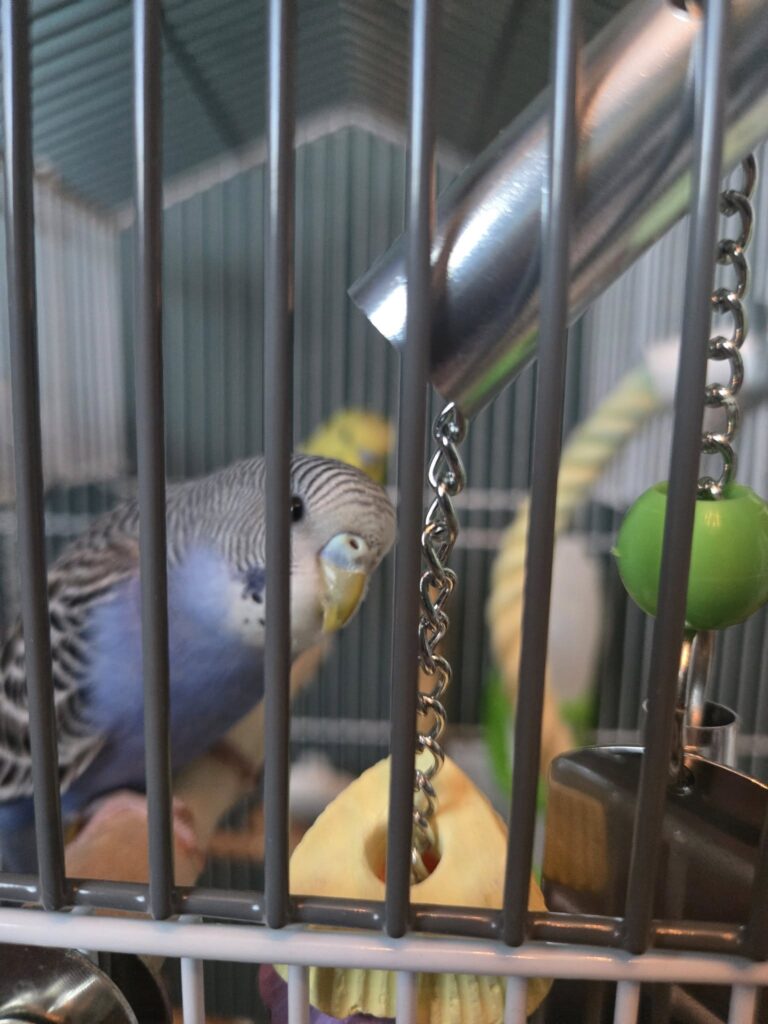
This is closely related to hormones but worth covering separately, because it has a clear practical solution. Some budgies become extremely protective of their cage, treating it as their territory and attacking anything — including hands — that enters their space.
This is often worst around the cage door, the food bowls, and any favourite perches. The bird may attack a hand reaching in for cleaning or feeding, even when it is otherwise calm and friendly outside the cage. This kind of aggression is genuinely confusing for owners, because the same bird that bites them at the cage door may happily perch on their finger across the room.
What to do
Respect the bird’s territory while gradually working to reduce defensiveness. Approach the cage calmly and predictably — never suddenly. Use a perch or a stick rather than your hand to invite the bird out, then handle it away from the cage. Clean and refresh the cage when the bird is out of it rather than reaching in. Over time, gentle consistent handling outside the cage builds trust that the cage door is not a threat. Avoid using hands for anything stressful at the cage — they should be associated with positive things only.
Cause 3: Fear — A Bird That Has Lost Trust
This is one of the saddest causes of aggression I see, because it almost always traces back to something the owner did not realise was scary for the bird. A frightened budgie defends itself the only way it knows how — by biting and lunging.
Fear-based aggression usually comes from a specific cause. A traumatic experience like a wing clip done badly, being chased to be caught, a frightening encounter with a cat or dog, rough handling by a child, or being grabbed when sleeping. The bird associates you (or hands) with that frightening experience, and reacts defensively even when you mean no harm.
Signs that aggression is fear-based — the bird flees when you approach, attacks only when cornered, freezes and then lunges, and shows other signs of stress like fluffed feathers, rapid breathing, or wide eyes around you.

What to do
Rebuild trust from scratch, very slowly. Spend time near the cage doing nothing, just being present and talking gently. Offer treats through the bars without trying to handle. Let the bird come to you rather than reaching for it. Never force interaction. Trust takes weeks or months to rebuild, but it can be done with patience. Avoid any further situations the bird finds frightening. For more on building trust with a budgie, our guide on choosing and bonding with a budgie covers the patient approach that works.
Cause 4: Pain Or Illness
This is the cause that worries me most, because it is the one that requires veterinary attention. A budgie that is suddenly aggressive, particularly if it was friendly before, may genuinely be in pain or unwell. Aggression in birds is sometimes the only outward sign of illness — they hide other symptoms but lash out when handled because they hurt.
This is more likely if the aggression is sudden, the bird seems less active overall, it is eating less or drinking differently, the feathers are not quite right, or it bites particularly when touched in a specific area. Hidden conditions like internal pain, tumours, joint problems, or infections can all cause behavioural changes including aggression.
- Sudden onset of aggression with no obvious trigger
- Reduced activity or energy overall
- Changes in eating, drinking, or droppings
- Fluffed feathers, dull eyes, or visible illness
- Bird flinches when touched in a particular area
- Weight loss or poor condition
- Any other changes alongside the aggression
What to do
See an avian vet promptly. A sudden change in temperament in a previously friendly bird is always worth a vet check, particularly if combined with any other signs. The aggression may simply be the most visible sign of an underlying problem that needs treatment.
Cause 5: Lack Of Socialisation Or Bad Early Handling
Some budgies are aggressive because they were never properly socialised in the first place. A bird that was not hand-reared, was poorly handled by previous owners, or has been left without daily interaction will often be fearful and aggressive simply because it has not learned that humans are safe.
This is particularly common with budgies bought from poor sources, with adult birds rehomed from situations where they were neglected, or with birds that have been left in cages with no interaction for years. They are not “bad” birds — they have just never had the chance to learn otherwise.
What to do
Treat the bird as if you are taming it from scratch. Be patient — this can take weeks or months. Spend time near the cage. Offer treats by hand. Build up gradually to gentle interaction. Some long-untamed birds never become fully hand-tame, but most can be brought to a state of calm acceptance with consistent positive interaction. Lower your expectations and let the bird set the pace.
Cause 6: Boredom And Frustration
This is one of the most underrated causes of aggression in pet budgies. A bored, under-stimulated bird becomes frustrated, and that frustration can come out as aggression toward owners or cage mates. A bird in a tiny cage with no toys, no interaction, and nothing to do has no outlet for its energy and intelligence — and the result is often a difficult, aggressive bird.
This is particularly common in single budgies kept in inadequate setups, or in pairs where one bird bullies the other due to lack of resources.
What to do
Enrich the bird’s environment. More toys, rotated regularly. Foraging opportunities. A bigger cage if the current one is too small. More daily interaction and out-of-cage time. Multiple perches at varied heights. For pairs, ensure plenty of food bowls, perches, and toys so there is no competition. A genuinely well-stimulated budgie has far less reason or energy for aggression.
Cause 7: A New Stressor In The Environment
This catches owners off guard because they have not changed anything intentionally. But budgies are extraordinarily sensitive to environmental change, and even small things can trigger stress-based aggression in a previously content bird.
- A new pet in the house — cat, dog, another bird? Even just the presence can stress a budgie.
- Cage moved to a new location — change in light, noise, or activity around it
- Construction or noise nearby — building work, road works, loud neighbours
- Change in household routine — new work hours, new baby, family upheaval
- New people in the home — guests staying, new family members
- Changes to the cage — new toys, moved perches, different food bowl position
- Predator visible — cats sitting on window sills near the cage, hawks visible outside
What to do
Identify and address the stressor where possible. Move the cage if it has been placed somewhere stressful. Cover predator views. Restore familiar routines. If the stressor cannot be removed (new baby, new pet), help the bird adjust by maintaining everything else as consistent as possible. Most environmental aggression settles once the bird adjusts to the new situation, which can take days to weeks.
How To Tell The Causes Apart

This is the practical skill that makes everything else work. Different causes of aggression have different patterns, and reading those patterns helps you identify what is actually going on. Here is a quick comparison.
| Cause | Key Signs | Timing |
|---|---|---|
| Hormonal | Sudden, seasonal, with nesting behaviour | Spring/summer or 6-12 months old |
| Territorial | Cage-focused, fine away from cage | Often persistent |
| Fear | Defensive, freezing, after specific event | Started after a triggering incident |
| Pain/Illness | Sudden, with other illness signs | Sudden onset, no behavioural reason |
| Poor socialisation | Generally fearful, never been friendly | From the start of ownership |
| Boredom | In bored, under-stimulated bird | Develops gradually |
| Environmental stress | Started after a household change | Began with a specific change |
Most cases I see at the counter are clearly one or two of these once we work through the signs and timing. Once you know the cause, the solution becomes obvious.
What I Ask Owners At The Counter
When an owner brings in or rings about an aggressive budgie, I work through a sequence of questions. Here is what I ask, and what the answers tell me.
- How old is the bird, and how long have you had it?
Young birds entering maturity often go through aggressive phases. - Was it friendly before, and when did the change happen?
Sudden change in a friendly bird is often hormonal, fear-based, or health-related. - What time of year did this start?
Spring/summer onset often suggests hormones. - Is it aggressive everywhere or only around the cage?
Cage-focused aggression is often territorial. - Did anything change in the home recently?
New pet, new baby, moved cage, building work? - Is the bird otherwise healthy and active?
Any other signs of illness alongside the aggression? - What is the cage setup like?
Too small, under-enriched, badly placed can all contribute. - Has anything frightening happened to the bird recently?
A bad handling experience, predator visit, or rough child?
Five minutes of these questions usually identifies the cause clearly, and the solution follows from there.
What NOT To Do With An Aggressive Budgie
This section matters as much as the previous ones, because some common reactions to aggression actually make it worse. Here is what to avoid.
- Do not punish the bird — they do not understand punishment and it damages trust further
- Do not shout or react dramatically to bites — your reaction can become reinforcement
- Do not avoid the bird completely — this often makes the situation worse over time
- Do not grab or chase — this destroys trust and creates fear-based aggression
- Do not keep doing what is not working — change your approach if the same actions keep triggering aggression
- Do not assume the bird “hates” you — birds do not work that way; they are communicating something specific
- Do not give up — most cases of budgie aggression resolve with the right approach
How To Rebuild Trust With An Aggressive Budgie
For most causes — particularly fear, poor socialisation, and post-stressor aggression — the path forward is rebuilding trust patiently. Here is the approach that works.
- Slow down completely — let the bird set the pace. No demands, no forced interaction.
- Spend time near the cage doing nothing — just being present, talking softly
- Offer treats through the bars by hand — millet is excellent for this. The bird learns hands bring good things.
- Use a perch or stick at first — not your hand. Reduces association of hands with stress.
- Reward calm behaviour — treats, soft praise, anything positive
- Build up gradually — finger near the bars, then in the cage, then offered as a perch, over days or weeks
- Stop and back off at the first sign of stress — pushing through creates regression
- Be patient — weeks to months, not days — trust takes time to rebuild
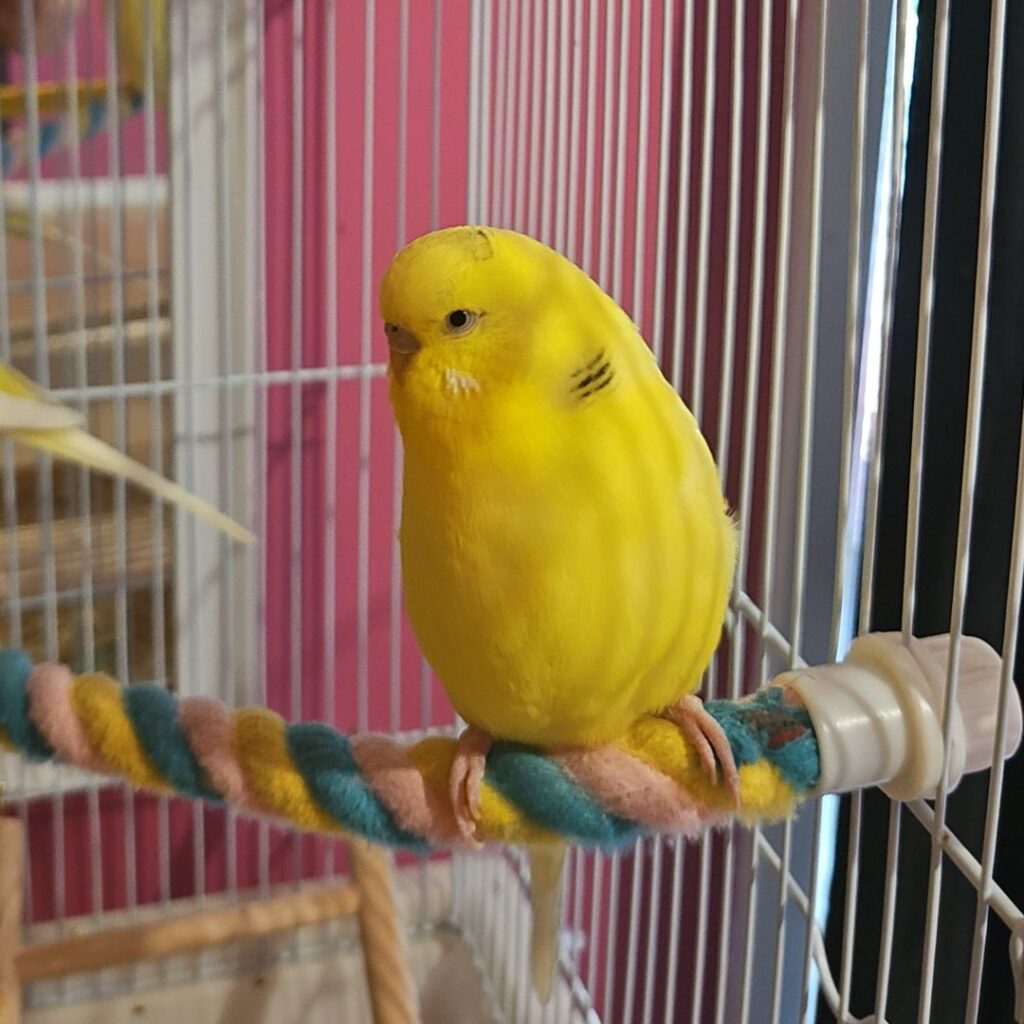
The key insight is that aggression is communication. When you change what you are communicating — moving from threat to safety, from demand to invitation, from imposed contact to chosen contact — the bird’s behaviour changes in response. It is genuinely one of the most rewarding processes in bird keeping when it works.
Frequently Asked Questions
Why has my budgie suddenly become aggressive?
The most common causes of sudden aggression are hormones (particularly in spring/summer or in young birds reaching maturity), a frightening experience that has damaged trust, a new stressor in the environment, or underlying pain or illness. Work through what has changed recently and consider the bird’s age and the time of year — these usually point to the cause.
Will my aggressive budgie ever be friendly again?
In most cases, yes. Aggression in budgies is almost always a response to something specific — hormones, fear, stress, illness — rather than a permanent personality change. Once you identify and address the cause, most birds return to their previous friendly behaviour over weeks. Patience and the right approach are essential.
Why does my budgie attack my hand when I clean the cage?
This is usually territorial aggression — the bird is defending its space. Try approaching the cage calmly and predictably, use a perch or stick rather than your hand for stressful tasks, and clean when the bird is out of the cage if possible. Over time, gentle consistent handling outside the cage helps reduce defensiveness.
Is hormonal aggression in budgies permanent?
No, hormonal aggression is seasonal and usually passes within a few weeks to a couple of months. Reducing triggers — longer dark periods at night, removing nesting opportunities, maintaining a calm environment — helps significantly. If it persists strongly across multiple seasons, an avian vet can advise on further options.
Why is my female budgie more aggressive than my male?
Female budgies, particularly those approaching laying or already laying eggs, can be extremely territorial and aggressive. This is biologically driven — they are protecting their nest. Reducing nesting triggers (paper piles, dark corners, mirrors), maintaining a calm environment, and ensuring the female has plenty of space and resources usually helps significantly.
Should I punish my budgie for biting?
Absolutely not. Budgies do not understand punishment, and any attempt to punish them — shouting, tapping, isolating — only damages trust and makes aggression worse. The right approach is to identify why the bird is biting and address that cause, while rebuilding trust through positive interaction. Punishment never helps with birds.
Where can I get honest budgie advice in Swindon?
Come and see us at Paradise Pets, Manor Garden Centre, Cheney Manor, Swindon SN2 2QJ. Or give us a ring on 01793 512400. The advice is free and we have been doing this for 35 years.
One Last Thing From Me
“Why has my budgie become aggressive?” is the question. The honest answer, after 35 years of selling these birds, is — your budgie is communicating something specific, and once you work out what, the aggression almost always resolves.
The woman I mentioned at the start of this article? When we worked through the questions, the cause became clear quickly. Her budgie was about ten months old, the time of year was early spring, and the aggression had started recently. It was hormones, almost certainly. We talked through reducing triggers — longer dark hours at night, removing the piece of mirrored ornament she had hung near the cage, avoiding stroking down his back. She came back about six weeks later, and her bird was back to his old self. Sitting on her finger, giving her kisses, following her around. The hormonal phase had passed, and once it had, the gentle bird she knew was still there.
That is the outcome you want. A bird that goes through a difficult phase and comes out of it as itself again. Or in the case of fear-based or socialisation-based aggression, a bird that learns over weeks and months that you are safe — and gradually rebuilds the trust that makes the relationship possible.
If you are reading this with an aggressive budgie at home, please do not give up on the bird. Work through the causes in this article, identify what is most likely happening, and address it. Most cases resolve with the right approach. And if you are local and unsure, come and see us. We will work through your specific situation, and help you find the path back to the friendly little bird you used to know. That is genuinely one of the most rewarding parts of the job.
Worried About Your Aggressive Budgie? Come And See Me
Bring your questions about what is happening and when it started. I will help you work out the cause and the best approach. Free advice, no obligation. That is how we have done things for 35 years.