
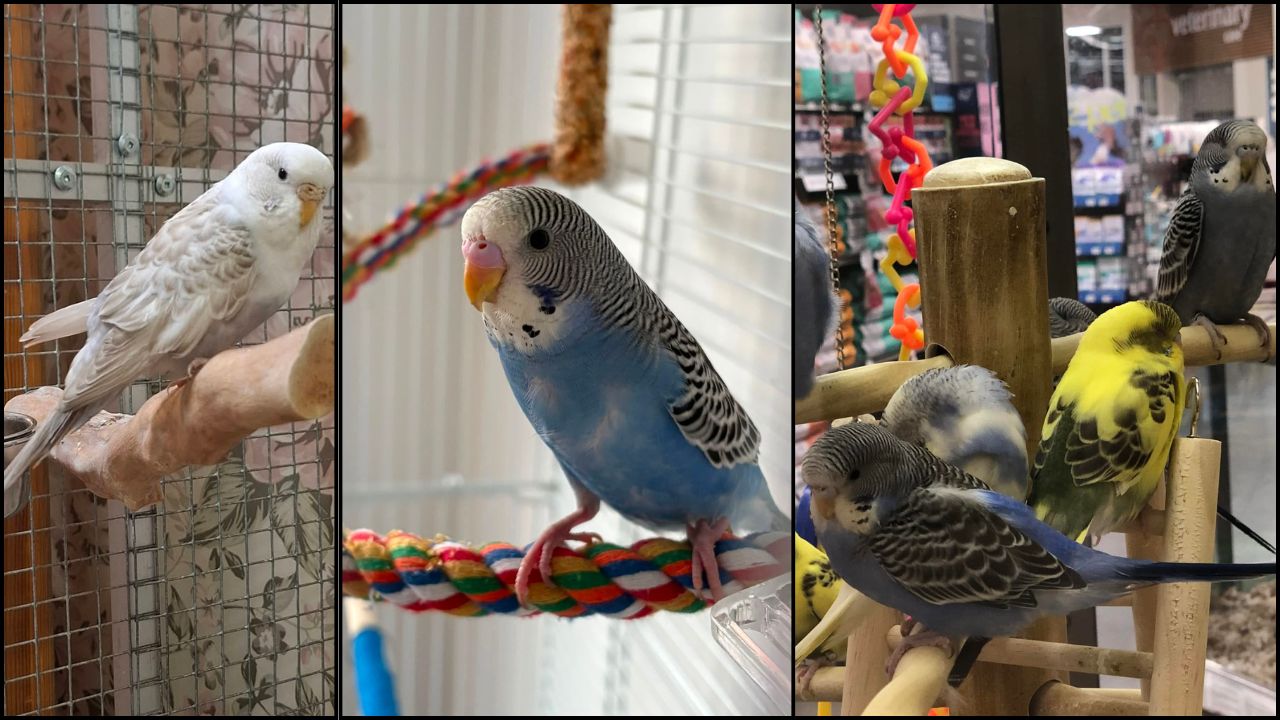

Neil has kept, bred, and sold cage and aviary birds at Paradise Pets Swindon since 1988 — over 35 years of first-hand experience with budgerigars, cockatiels, canaries, finches, and dozens of other species. UK pet bird ownership has reached three million — up sixty percent since 2000. The surge is real and in many ways welcome. But after 35 years watching what happens when birds arrive in homes that are not ready for them, Neil has a clear view on the one thing that surge is still getting dangerously wrong.
Three million pet birds in UK homes. Sixty percent more than there were twenty-five years ago. I find that number genuinely encouraging in most of the ways it could be interpreted — more people experiencing the particular quality of having a bird in their lives, more awareness of what birds are capable of, more households that understand something about bird behaviour that they would not otherwise know.
But I have been watching this counter long enough to know that numbers alone do not tell you whether the birds in those three million homes are being kept well. The number tells you how many birds there are. It does not tell you whether those birds are thriving, or merely present.
And in one specific area — the same area I identified as a problem when I started in 1988, the same area that has remained a problem through every shift in pet keeping culture since — the sixty percent growth in bird ownership has not been accompanied by a sixty percent improvement in knowledge. The numbers have gone up. The gap in this one area has not closed. If anything, it has widened, because more birds are being acquired by people who have less preparation and less knowledge than the average bird keeper of twenty-five years ago.
The one thing the surge is still getting dangerously wrong is this: the approach to veterinary care.
Not diet, though diet is a widespread problem. Not cage size, though that is frequently inadequate. Not enrichment, though enrichment provision remains poor in the majority of pet bird setups I see. Veterinary care. Specifically, the complete absence of any plan for it in the vast majority of the three million bird-owning households in the UK today.
What the Three Million Number Actually Represents
The growth in UK pet bird ownership since 2000 reflects several converging trends that are worth understanding, because they shape who is now keeping birds and what level of preparation they have typically arrived with.
The first is the general growth in pet ownership across the UK, accelerated significantly by the pandemic years when companion animals of all kinds saw a surge in acquisition. Birds benefited from this alongside dogs, cats, and small animals — they are visible, interactive, relatively affordable to acquire, and suited to indoor living in the way that a larger pet is not.
The second is the increasing visibility of pet birds on social media. Budgies and cockatiels with large followings on various platforms have introduced the idea of pet birds to audiences who would not previously have encountered them, and have made them seem appealing in ways that sometimes do not include the full picture of what keeping a bird well involves.
The third is the availability of birds through online marketplaces and private sales that operate entirely outside the framework of responsible retail — no guidance at point of sale, no follow-up, no ongoing relationship with a source that knows the bird and can advise on its care. A bird acquired through a Facebook listing from a seller who is rehoming it to get it off their hands arrives with none of the background information that would help its new owner make good decisions.
The result is a larger pet bird population than at any previous point in UK history, kept by a more diverse ownership base than ever before — and with a knowledge gap, particularly around veterinary care, that is wider and more consequential than it was when the numbers were smaller and the typical bird keeper was more likely to have sought out specialist knowledge before acquiring their first bird.
Why Veterinary Care Is the Thing the Surge Is Getting Wrong
I want to be specific about why I identify veterinary care as the critical gap, rather than the other areas — diet, cage size, enrichment — that are also widespread problems. The reason is not that those other areas do not matter. They do, and I have written about them extensively. The reason is consequence.
A bird on a suboptimal diet suffers consequences over months and years. A bird in a cage that is too small experiences reduced welfare over its lifetime. A bird without adequate enrichment has reduced quality of life. These are real harms and they matter.
A bird that needs veterinary care and does not receive it can die in days. The consequence of the veterinary care gap is not gradual and accumulated — it is acute and irreversible in a way that the other gaps are not. And it affects every bird, regardless of how good the diet and the cage size are, because every bird that lives long enough will eventually need professional care. The question is not whether but when.
What makes this particularly dangerous is the biology I return to repeatedly: birds hide illness. By the time a bird is visibly unwell, it has typically been managing a developing problem for days or weeks. The owner who notices the problem on a Thursday evening and then spends Friday morning searching for an avian vet they have never identified, discovers the nearest one is forty-five minutes away, cannot get an appointment until Monday, and presents a bird that has been in developing crisis for a week — that owner and that bird are in a situation that planning would have prevented entirely.
The Scale of the Veterinary Preparation Gap
I do not have a precise figure for how many of the three million UK pet bird owners have an avian vet identified before they need one. But from my experience over 35 years — from the questions I am asked, the situations customers describe when they come in, and the outcomes I hear about — I am confident that it is a small minority.
Most pet bird owners in the UK have never taken their bird to a vet. Many of them do not know that avian-experienced vets are different from general practice vets in ways that matter for outcomes. Most have not thought about how they would pay for a veterinary bill if one arose. Most do not know what out-of-hours avian cover is available in their area. Most would, in the event of a bird becoming acutely unwell, be starting from zero in their search for appropriate care — at the worst possible moment, under the worst possible time pressure.
Against the backdrop of three million pet birds, this is not a fringe problem. It is the norm. And the sixty percent growth since 2000 has added more birds to that norm rather than changing it.
Why has it not changed? Partly because veterinary preparation does not feel urgent when everything is fine. The bird seems healthy. The vet visit seems like an expense to incur when something goes wrong. The online search for a specialist seems like something to do when it becomes necessary. These are human responses to a risk that feels distant until it is not. The problem is that birds deteriorate faster than the search can be completed, and the margin for error is smaller than most owners imagine.
What Getting It Right Actually Looks Like — The Practical Standard
I want to give a clear, practical picture of what adequate veterinary preparation looks like for a UK pet bird owner in 2026, because vague advice to “find a vet” is not enough.
- Identify an avian-experienced vet before the bird comes home — not after. Search specifically for practices with declared avian or exotic animal experience. Use the British Veterinary Zoological Society find-a-vet resource as a starting point. Call practices and ask directly: how many birds do you see per week, do you have a vet who specifically works with small parrots and budgies, do you have in-house imaging for birds. A practice that answers these questions confidently is worth registering with. A practice that hedges is worth treating as an emergency backup rather than a primary vet.
- Register the bird with the practice before it needs treatment. This means a new bird health check — typically within the first few weeks of ownership — that establishes a health baseline, gives the vet a reference point for the individual bird, and gives you the confidence of knowing what the bird’s normal looks like from a professional perspective. The cost of a new bird check is modest relative to the value it provides.
- Know the out-of-hours provision. Birds do not schedule emergencies for convenient hours. Know whether your avian practice has out-of-hours cover, and if not, know what the nearest out-of-hours option with avian experience is. Have the number saved in your phone before you need it.
- Have a financial plan for veterinary costs. A dedicated savings pot — five to ten pounds per month, ring-fenced for the bird’s veterinary use — builds a buffer that means a bill does not produce a crisis. Pet insurance for longer-lived species like cockatiels is worth investigating; for budgies, the savings pot is typically more practical. The critical thing is having some provision, not which form it takes.
- Know the signs that mean a vet today, not a vet sometime this week. Open-beak breathing in a comfortable-temperature environment. Tail bobbing with each breath. Sitting on the cage floor. Unresponsiveness. These signs mean same-day veterinary attention, not monitoring. Having this knowledge before the signs appear is what allows the right action at the right speed.
- Schedule an annual health check regardless of whether anything appears wrong. A bird that appears healthy may have developing conditions that annual professional assessment would identify. The cost of an annual check is modest. The cost of missing a developing condition is not.
Why the Growth in Bird Ownership Makes This More Urgent, Not Less
There is a way of thinking about the three million figure that suggests the problem is getting better — more birds means more interest, more knowledge, more resources, more community. And in some respects this is true. There is more online information about bird care than there has ever been. There are more specialist suppliers. There are more experienced keepers visible on social media.
But the growth in ownership has also changed the composition of who is keeping birds in ways that make the veterinary care gap worse rather than better. The typical new bird keeper of 2026 is more likely to have acquired their bird through an online marketplace than through a specialist retailer. More likely to have received no guidance at point of acquisition. More likely to have based their initial care decisions on social media content than on specialist advice. More likely to be unaware that avian veterinary care is a distinct specialism rather than something any vet can provide.
The knowledge infrastructure that surrounded bird keeping when the numbers were smaller — the specialist shops, the bird clubs, the experienced keepers who mentored newcomers — has not scaled at the same rate as the bird population. More birds have entered UK homes. The density of knowledge supporting those birds has not kept pace.
The result is a three-million-bird population with a veterinary care gap that is, in absolute terms, larger than it has ever been. This is the thing the surge is still getting dangerously wrong.
The Cost Argument — Addressing the Objection Directly
The most common reason I hear for not having a veterinary plan is cost. Avian vet consultations are not cheap — forty to seventy pounds for a consultation alone, more with diagnostics — and against the backdrop of a bird that cost fifteen to thirty pounds to acquire, the cost of veterinary care can feel disproportionate.
I want to address this directly because I think the cost objection, while understandable, reflects a misunderstanding of what the cost actually is when it is not planned for.
A bird owner with no veterinary plan who faces an emergency bill of two hundred pounds is in a genuinely difficult situation — not because the bill is avoidable, but because it arrives without preparation. The same owner, having put ten pounds a month aside for two years, has two hundred and forty pounds available and the bill is not a crisis.
The cost of veterinary care does not change based on whether you have planned for it. What changes is whether it produces a financial crisis that influences the care decision at the moment it matters most. An owner who cannot afford an emergency consultation may delay. May choose a less appropriate general practice vet because it is cheaper. May attempt home management of something that needs professional intervention. These decisions have consequences for the bird that a modest monthly provision entirely prevents.
The ten pounds a month argument is not abstract. It is the practical mechanism through which three million bird owners could move from unprepared to prepared at a cost that is genuinely affordable for almost everyone keeping a pet bird in the UK. The problem is not that it is unaffordable. The problem is that it has not been framed as a standard expectation of responsible bird ownership.
I am framing it that way now. It is a standard expectation. Not an optional extra for conscientious owners. A baseline provision that every bird owner should have, in the same way that having food and water is a baseline provision.
What the Industry Needs to Do — An Honest Assessment
I want to say something here that sits slightly outside my usual lane but that I think matters at the scale we are discussing.
The veterinary preparation gap in UK pet bird keeping is not primarily the fault of individual owners. It is the result of an acquisition experience — particularly through online marketplaces and discount pet retail — that does not provide the information and guidance that would close the gap. A bird sold without any conversation about veterinary care, without any information about what avian experience means, without any guidance on signs of illness or how to find appropriate care, is a bird whose owner is set up to fail by the process of acquisition.
Responsible pet retail should include, as a minimum, a conversation about veterinary preparation at every point of sale. Not a pamphlet handed over with the cage. An actual conversation about where to find an avian vet, what the costs look like, why it matters, and what the signs are that need same-day rather than routine attention.
We do this at Paradise Pets. We have done it since 1988. It does not add significant time to a sale and it makes a measurable difference to the outcomes I hear about from customers six months and a year later. It is not complicated. It is just a conversation. And at the scale of three million birds, that conversation — consistently had at the point of acquisition — would close the gap faster than any other single intervention.
Frequently Asked Questions
How do I find an avian-experienced vet in my area?
Start with the British Veterinary Zoological Society’s find-a-vet directory, which lists practitioners with declared interest or qualification in avian medicine. The Association of Avian Veterinarians also maintains UK resources. Once you have candidates near you, call them and ask the specific questions I outlined above — how many birds they see per week, whether they have in-house imaging, which vet in the practice specifically handles birds. The answers tell you more than the directory listing does.
Is pet insurance for birds worth it in 2026?
For longer-lived species — cockatiels at fifteen to twenty years, lovebirds, and any parrot species — yes, the maths are increasingly favourable as veterinary costs rise. A single serious illness can cost several hundred pounds, and a monthly premium of fifteen to twenty pounds provides meaningful protection against that risk over the bird’s lifespan. For budgies, a dedicated savings pot is typically more practical given the premium-to-claim ratio for shorter-lived species. The key point is having some provision rather than none.
My bird has been healthy for three years without a vet visit. Is it really necessary?
Three years without a visible health crisis does not mean three years of confirmed good health — it means three years without the bird showing signs visible enough for the owner to notice. Birds conceal illness until they cannot sustain the concealment. The bird that has never been assessed by an avian vet is a bird whose health baseline has never been professionally established, whose developing conditions have never been identified early, and whose owner has no professional point of reference for what the bird’s normal looks like. Three years without a crisis is good fortune. It is not the same as confirmed good health.
What are the signs that mean I need a vet today rather than this week?
Open-beak breathing in a comfortable environment. Audible breathing sounds — clicking, wheezing, rattling. Tail bobbing with each breath. Sitting on the cage floor rather than perching. Unresponsiveness to your voice or presence. Any of these signs in isolation, and certainly in combination, mean same-day veterinary contact — not monitoring, not a wait-and-see approach. Call your avian vet, describe what you are seeing, and follow their guidance on how quickly to bring the bird in.
Where can I get honest advice about veterinary preparation for my bird in Swindon?
Come and see us at Paradise Pets, Manor Garden Centre, Cheney Manor, Swindon SN2 2QJ, or call us on 01793 512400. We will talk through what veterinary preparation looks like for your specific situation, what we know about local avian provision, and what financial planning makes sense for the species you keep. Free advice, no obligation — that is how we have done things since 1988.
One Last Thing
Three million pet birds. It is a number worth celebrating in the sense that it represents three million households that have discovered something about what birds bring to a home. The company. The personality. The particular quality of having a living creature that knows your voice and chooses your shoulder.
But those three million birds deserve more than to be present in homes that have no plan for their care when it matters most. The sixty percent growth since 2000 is an opportunity as well as a number — an opportunity to raise the standard of care across a larger population than has ever kept birds in the UK before.
The standard starts with veterinary preparation. Not as a premium service for the most conscientious owners. As the baseline expectation for every one of those three million birds.
If you are reading this and you do not have an avian vet identified, do it today. Not this week. Today. It is the single most important thing you can do for a bird that is currently fine and will not always be.
No Avian Vet Identified for Your Bird Yet? Come In and We Will Help You Sort That Today
We will tell you what to look for, what to ask, and what we know about local avian provision — before you need it in a crisis. Free advice, no obligation. That is how we have done things since 1988.