

Neil has kept, bred, and sold cage and aviary birds at Paradise Pets Swindon since 1988 — over 35 years of first-hand experience with budgerigars, cockatiels, canaries, finches, and dozens of other species. In that time, avian veterinary care in the UK has changed significantly — in what is available, what it costs, and what owners can reasonably expect. This is his honest account of where things stand today, and what every pet bird owner should know before they need to find out the hard way.
When I started in this business in 1988, avian veterinary care in the UK was a different world. If your budgie was ill, your options were limited. Most general practice vets had little meaningful experience with birds. There were avian specialists, but they were few, concentrated in certain areas, and not always easy to access. The honest truth was that a sick small bird in 1988 had a worse chance of proper diagnosis and treatment than a sick dog or cat by a considerable margin.
That has changed. Not completely, and not evenly across the country — but the change is real, and it matters. There are more avian-experienced vets in the UK today than at any point in my time in this trade. Diagnostic capability has improved. Treatment options have expanded. The knowledge base that a good avian vet can draw on in 2026 is significantly greater than it was in 1988.
But there are things about avian vet care in the UK today that every bird owner needs to understand clearly, because the picture is not straightforwardly positive. Access is still uneven. Costs have risen sharply and continue to rise. The gap between a vet with genuine avian experience and one without it is wider than most owners realise — and knowing which one you are walking into matters enormously for the outcome.
After 35 years of watching this from the shop floor — seeing birds come back from the vet recovered, and seeing birds that did not make it because the right care was not found in time — I want to give bird owners an honest account of where things stand. Not the reassuring version. The useful one.
How Avian Veterinary Care in the UK Has Actually Changed
The change I have seen over 35 years is genuine and worth acknowledging, because it represents real progress for bird owners.
In the late 1980s and through much of the 1990s, avian medicine was a niche within a niche. Most veterinary training gave birds relatively little attention. The diagnostic tools available — imaging, blood panels, specialist cultures — were less developed, less accessible, and more expensive in real terms than they are now. Treatment options for many bird illnesses were limited. Outcomes that are now routinely achievable were not.
The growth of specialist avian veterinary practice in the UK — practices that focus primarily or exclusively on birds and exotic animals — has been one of the most significant developments for bird owners over this period. These practices exist in numbers that would have been unimaginable in 1988. They have equipment and knowledge that general practice cannot replicate. For a bird with a serious or complex illness, access to one of these practices can make the difference between a correct diagnosis and a missed one.
Alongside this, the general knowledge base within the broader veterinary profession has improved. Continuing education in avian medicine has expanded. There are vets in general practice today who have made birds a genuine area of interest and have meaningful experience with them — not equivalent to a dedicated avian specialist, but significantly better than a complete generalist.
The internet has also changed things for owners, in ways that are not entirely positive but include genuine benefit. Information about bird health, symptoms, and the importance of avian-experienced vets is more accessible than it was. Owners who look for it can find it. The challenge is that not all of it is accurate, and the line between useful information and dangerous misinformation is not always obvious to someone without a background in bird care.
What Has Not Changed — And What Has Got Harder
Progress in avian medicine has been real. But there are realities about the current state of avian vet care in the UK that would be dishonest to leave out.
Geographic Access Is Still Uneven
The distribution of avian veterinary expertise in the UK remains uneven. In and around major cities — London, Birmingham, Manchester, Bristol — the options are reasonably good. There are dedicated avian practices, vets with strong exotic animal experience, and enough concentration of provision that most owners can reach someone with genuine expertise within a reasonable distance.
Outside those areas, the picture is more variable. There are regions of the UK where finding an avian-experienced vet within a practical distance is genuinely difficult. There are areas where the nearest dedicated avian specialist is an hour or more away — which for a small bird in distress is not a trivial journey. I know this because I hear about it from customers who have had to make it.
This is not a criticism of the veterinary profession. It is a structural reality of how specialist services distribute themselves geographically, and it affects bird owners in ways that dog and cat owners — with their far greater density of general practice provision — often do not face.
Costs Have Risen Significantly and Continue to Rise
Veterinary costs across all species have risen sharply over the past several years, and avian veterinary care is no exception. In the twelve months to January 2026, veterinary care and services for companion animals rose 5.5 percent — significantly faster than general pet product costs, which rose 0.9 percent in the same period. And this follows years of above-inflation increases that have compounded into a significantly different cost landscape from what existed five or ten years ago.
An avian vet consultation today — at a practice with genuine avian expertise — typically costs between forty and seventy pounds for the consultation alone, before any diagnostics, treatment, or medication. A consultation with blood work and imaging can reach several hundred pounds. A course of treatment for a respiratory infection, crop infection, or other common bird illness can run to similar amounts.
For owners of longer-lived species — cockatiels, African grey parrots, lovebirds — these costs can recur multiple times over the bird’s lifetime. The financial planning question is not whether you will face a veterinary bill for a bird you keep for fifteen or twenty years. It is when, and whether you will be prepared for it when it arrives.
I am not saying this to discourage anyone from keeping birds. I am saying it because the alternative — not knowing, not planning, and facing the bill unprepared — is worse for both the owner and the bird.
The Gap Between Good and Poor Avian Care Is Wide
This is the point I feel most strongly about, because it is the one with the most direct consequence for outcomes.
A vet with genuine avian experience and a vet without it are not equivalent options for a sick bird. Birds are physiologically different from mammals in ways that matter enormously for diagnosis and treatment. Their respiratory system works differently. Their metabolism is faster. Doses that are appropriate for a mammal can be dangerous for a bird. Symptoms that are recognisable to an experienced avian vet can be missed entirely by someone without that background.
I have spoken to customers over the years who took a sick bird to a general practice vet — not out of negligence, but because it was the nearest option and the bird was in distress — and received treatment that was well-intentioned but wrong. Some of those birds recovered despite the wrong treatment. Some did not.
The lesson is not that general practice vets are bad. It is that avian medicine requires specific knowledge, and that knowledge is not uniformly distributed. Knowing the difference, and knowing where to go, is something every bird owner needs to establish before they are in a situation where the wrong choice has consequences.
How to Find a Genuinely Avian-Experienced Vet — What to Ask
The question I get asked most often on this subject is how to tell a good avian vet from a general practice vet who will see birds if needed. It is a fair question and the answer is not as simple as checking a list.
The British Veterinary Zoological Society and the Association of Avian Veterinarians maintain lists and directories of vets with declared interest or qualification in avian medicine. These are a useful starting point, but a declared interest is not the same as deep experience, and being on a directory is not a guarantee of expertise.
The more reliable method is to ask specific questions of a practice before you need to use them in a crisis. Questions that distinguish genuine expertise from general willingness to see birds:
- How many birds do you see per week? A practice with genuine avian experience sees birds regularly — not occasionally. A practice that sees two or three birds a month is not building the clinical experience that complex cases require.
- Do you have in-house imaging for birds? Radiography is a standard diagnostic tool for many bird conditions. A practice that has to refer out for basic imaging is limited in what it can diagnose and how quickly.
- Which vet in the practice sees birds most often? Avian experience is often concentrated in one or two individuals within a general practice. Knowing who they are, and being able to request them specifically, matters.
- Do you have out-of-hours avian cover? Birds deteriorate quickly. A crisis at seven in the evening is a different situation if the practice has out-of-hours cover than if it does not. Know this before you need it.
- Have you treated this species before? Experience with budgies does not automatically transfer to cockatiels, and neither transfers automatically to parrots. Species-specific experience matters for some conditions and treatments.
A practice that answers these questions confidently and specifically is a practice worth registering with. A practice that hedges or gives vague reassurances is worth noting as a second option rather than a first.
Pet Insurance for Birds — The Honest Assessment
Pet insurance for birds exists in the UK, and the question of whether it is worth it has a more nuanced answer than it does for dogs and cats.
For longer-lived species — cockatiels at fifteen to twenty years, lovebirds at ten to fifteen, African grey parrots at forty or more — the maths of insurance become increasingly favourable as veterinary costs rise. A single serious illness requiring specialist intervention, hospitalisation, and a course of treatment can cost several hundred to over a thousand pounds. Against a monthly premium of ten to twenty pounds, the financial case for insurance for these species is real.
For shorter-lived species — budgies at ten to fifteen years, canaries at eight to twelve — the calculation is less straightforward. Insurance premiums for budgies can approach or exceed the cost of a single consultation, and the claims process introduces a layer of administration that not all owners find worthwhile. For these species, a dedicated savings pot — a small amount set aside monthly, ring-fenced for veterinary use — is often a more practical solution.
What is never a practical solution is having no plan at all. An owner who has not thought about veterinary costs for their bird is an owner who will, at some point, face a choice between a bill they cannot afford and a bird that does not get the treatment it needs. Planning eliminates that choice.
Signs That Need a Vet — Not the Internet, Not a Home Remedy
One of the most consistent mistakes I see is owners turning to online forums or home remedy advice for symptoms that need veterinary attention. I understand why — vets are expensive, access can be difficult, and the internet is immediate. But birds deteriorate quickly, and the cost of a delayed correct diagnosis is often higher than the cost of the consultation that would have provided it.
The following signs in a bird warrant veterinary attention promptly — not monitoring at home, not a search for home remedies, but a call to your avian vet:
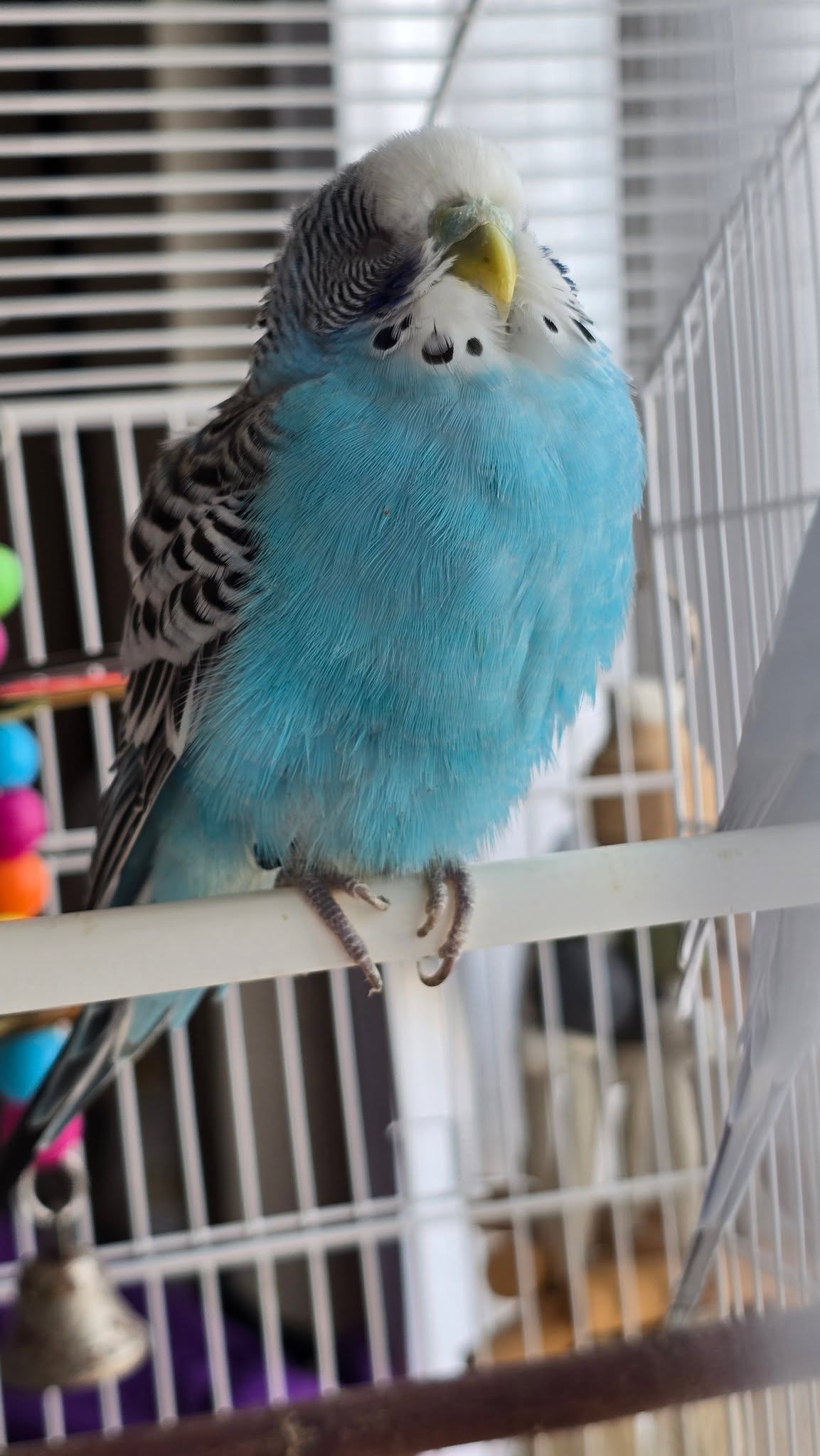
- Persistent fluffing at normal room temperature. A bird that sits fluffed up when it is not cold is a bird conserving heat because something is wrong. This is one of the earliest and most reliable signs of illness in birds.
- Tail bobbing with each breath. Visible tail movement coordinated with breathing indicates respiratory effort — the bird is working to breathe. This needs same-day veterinary attention.
- Discharge from nostrils or eyes. Any discharge, crust, or wetness around the nares or eyes that is not present normally warrants investigation.
- Significant change in droppings lasting more than 24 hours. All-liquid droppings, very dark or black droppings, or any blood in droppings need prompt attention.
- Not eating or drinking for more than 12 hours. Birds have fast metabolisms. A bird that has not eaten for half a day is already under stress. Beyond 24 hours without food, the situation is serious.
- Inability to perch or sitting on the cage floor. A bird on the floor of its cage is a bird that is too weak to perch. This is an emergency.
- Sudden significant change in behaviour or activity level. You know your bird’s normal. A sudden departure from it — particularly toward quiet and inactivity — is worth acting on, not watching.
What I Tell Every New Bird Owner at the Point of Sale
When someone walks out of this shop with a new bird, there are several things I tell them about veterinary care that I consider as important as anything else I say.
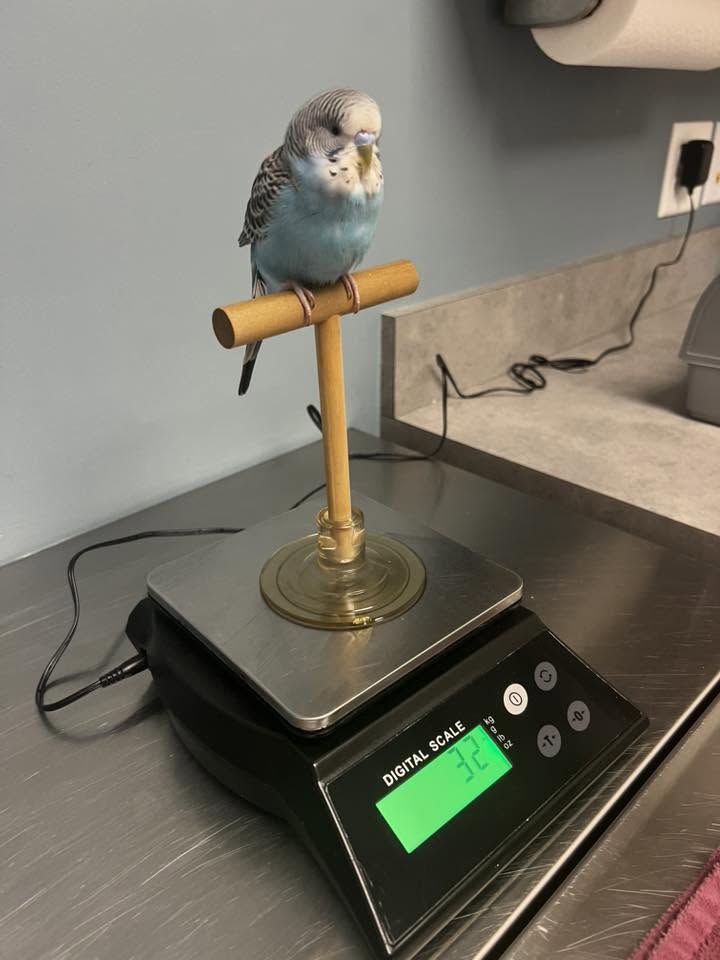
The first is to register with an avian-experienced vet within the first few weeks — not when the bird is ill, but now, while everything is fine. A vet who has seen your bird when it is healthy has a baseline to compare against if it becomes ill. A vet who sees your bird for the first time in a crisis is working without that reference.
The second is to know the out-of-hours number for that practice or for an avian emergency service in the area. Birds do not schedule their illnesses for convenient hours. A bird that is visibly unwell on a Saturday evening needs to reach avian-experienced care that evening, not on Monday morning. Knowing where that is before you need it is the preparation that makes the difference.
The third is to take financial planning for veterinary costs seriously from day one. A small amount set aside monthly, a pet insurance policy for longer-lived species, a conversation with yourself about what you are prepared to spend. These are not pleasant conversations, but they are necessary ones, and having them before the bird is ill rather than during it is considerably easier.
Frequently Asked Questions
How do I find an avian vet near me in the UK?
Start with the Find a Vet tool on the British Veterinary Zoological Society website, which lists vets with declared interest in exotic and avian species. The Association of Avian Veterinarians also maintains a directory. Once you have candidates near you, call them and ask the questions I listed above. The answers will tell you more than any directory listing.
Is pet insurance for budgies worth it?
For most budgie owners, a dedicated savings pot is more practical than insurance — a small monthly amount, five to ten pounds, ring-fenced for veterinary use. Insurance premiums for budgies can be a significant proportion of what a single consultation costs, and the claims administration adds friction that many owners find unhelpful. That said, if you are someone who would find the certainty of insurance easier to manage than a savings pot, it is worth comparing policies. The key is having some plan rather than none.
My nearest avian vet is over an hour away. What do I do?
Know this now and plan around it. Register with that practice anyway — a phone consultation with a genuinely avian-experienced vet is worth more than an in-person consultation with one who is not. Find out whether they offer telephone triage for established patients. Find the nearest general practice that has someone with reasonable bird experience as a local emergency option. Having both contacts — the specialist an hour away and the nearest reasonable local option — gives you something to work with in a crisis rather than nothing.
My budgie seems fine — do I really need to register with a vet now?
Yes. Birds hide illness until they can no longer sustain it. By the time your budgie looks visibly unwell, it has typically been ill for some time. The owner who has an avian vet already identified, already registered, already knowing the out-of-hours number, is the owner who can act within the hour when the bird needs it. The owner who is searching for a vet at that point is already behind.
Can I get avian vet advice in Swindon?
We can point you in the right direction. Come into Paradise Pets at Manor Garden Centre, Cheney Manor, Swindon SN2 2QJ, or call us on 01793 512400. We know the local landscape and we will tell you honestly what we know about avian veterinary provision in this area. We are not a vet, and we will always refer you to one when a bird needs professional care — but we can help you find the right one.
One Last Thing
The woman whose budgie recovered — the one I mentioned in the mistakes article — recovered in part because she found an avian-experienced vet quickly once she knew what to look for. The vet diagnosed a respiratory infection that had been developing for weeks, treated it correctly, and the bird came back. Not all of them do, and the difference between the ones that do and the ones that do not is often not the severity of the illness. It is how quickly the right care was accessed.
Avian veterinary care in the UK is better than it was in 1988. It is also more expensive, still unevenly distributed, and more important than ever to locate before you need it. That combination of better and harder is the honest picture of where things stand, and I would rather give you that picture now than have you discover it under pressure.
Find your avian vet. Do it this week. It is the most important piece of bird keeping advice I give, and it costs nothing to act on while everything is fine.
Not Sure Where to Start With Avian Vet Care? Come In and We Will Help You Work It Out
We will tell you what we know about avian vet provision locally, what questions to ask, and what to have in place before you need it. Free advice, no obligation — that is how we have done things since 1988.