
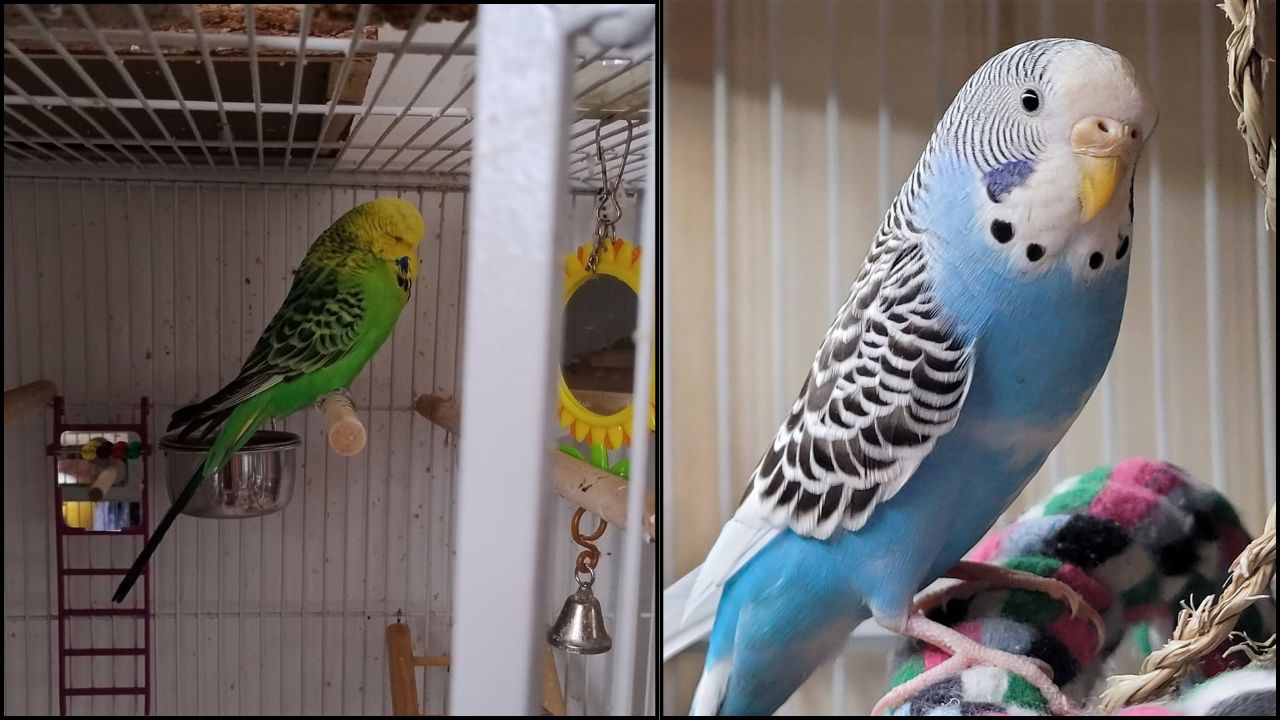

Neil has kept, bred, and sold cage and aviary birds at Paradise Pets Swindon since 1988 — over 35 years of watching these animals communicate in ways their owners frequently miss until the signs are no longer quiet. The birds that do best are almost always the ones whose owners knew what to look for before they needed to. This guide is for those owners.
She came in on a Friday afternoon with her budgie in a small carrier, and I could tell before she spoke that she already knew something was wrong.
He had been off, she said. Just off. For about a week. She could not put her finger on it. He was eating — or she thought he was eating. He was moving around. But something was different. She had gone back and forth about whether to call the vet, told herself she was probably imagining it, and then come in to ask me.
I took the bird out carefully and held it for a moment. The keel felt noticeably sharp — sharper than it should have been. The feathers around the head were very slightly dull. And when I held the bird near my ear, there was the faintest sound with each breath. Not a wheeze exactly. A quality to the breathing that was not quite right.
I told her to call the vet that afternoon and to describe what I had just described. She called me on Monday. The vet had confirmed a respiratory infection alongside early-stage weight loss. Treatment had started. The bird was already doing better.
She said: “I kept telling myself he was fine because he was still moving.”
That is the thing I want to explain in this article. Birds that are unwell are still moving. They are still, in most cases, eating something. They are not performing obvious distress. They are doing what prey animals have evolved over millions of years to do: concealing their condition for as long as their body will permit. By the time a bird is obviously, unmistakably, undeniably sick — it has usually been sick for some time.
The quiet signs are the window. This is what they look like.
Why Birds Hide Illness — and Why This Makes You the Critical Variable
I have explained this in several individual articles and I want to explain it again here, plainly, because it shapes everything that follows.
Birds are prey animals. In the wild, a bird that shows visible weakness — that sits hunched, that flies poorly, that fails to maintain its normal activity — is a bird that attracts predators. The pressure on these animals to suppress and mask signs of illness has been intense throughout their evolutionary history, and it is reflected directly in their physiology.
A sick bird will, for a significant period, maintain something close to normal behaviour. It will continue to eat, even if it eats less. It will continue to move, even if it moves less. It will continue to vocalise, even if it vocalises less. It is not performing wellness — it is genuinely using its remaining reserves to maintain the appearance of a healthy animal.
What this means for an owner is specific: you cannot rely on your bird to show you it is sick. You have to look for illness. You have to know what healthy looks like so precisely that any departure from it registers. And you have to know that a bird that is still eating, still moving, and still making some noise is not necessarily fine — because at the early stage of most illnesses, all of those things will be true.
The owner is the first line of detection. There is no substitute for you knowing your specific bird well enough to notice the quiet changes. That is what this guide is designed to help you do.
Sign One — A Change in Weight You Can Feel
This is the first sign I check and the one I consider most reliable, which is why I check it first before anything else.
Feel the keel — the breastbone — by holding the bird gently and running your finger along the centre of the chest. In a healthy bird with good muscle mass, the keel is present as a slight ridge flanked by muscle, so the overall feel is smooth and gently rounded. You feel the bone, but it is not sharp.
In a bird that has been losing weight — which may be invisible through feathers and may not have produced any obvious behavioural change — the muscle either side of the keel has reduced, and the keel itself becomes noticeably more prominent. The feel shifts from smooth and rounded to sharper, more defined, like a ridge rather than a rise.
This change happens before the bird looks thinner. It happens before the bird stops eating. It can happen before any other sign you can observe without handling the bird. It is, in my experience, the most sensitive early indicator available to an owner who checks regularly.
Check it now. Then check it again next week. The value is not in the single reading — it is in knowing your baseline so that when it changes, you feel it immediately.
Sign Two — A Subtle Change in Vocalisation
This is the sign that bird owners who know their animals well almost always catch first — and the sign that owners who do not know their bird’s normal pattern miss entirely.
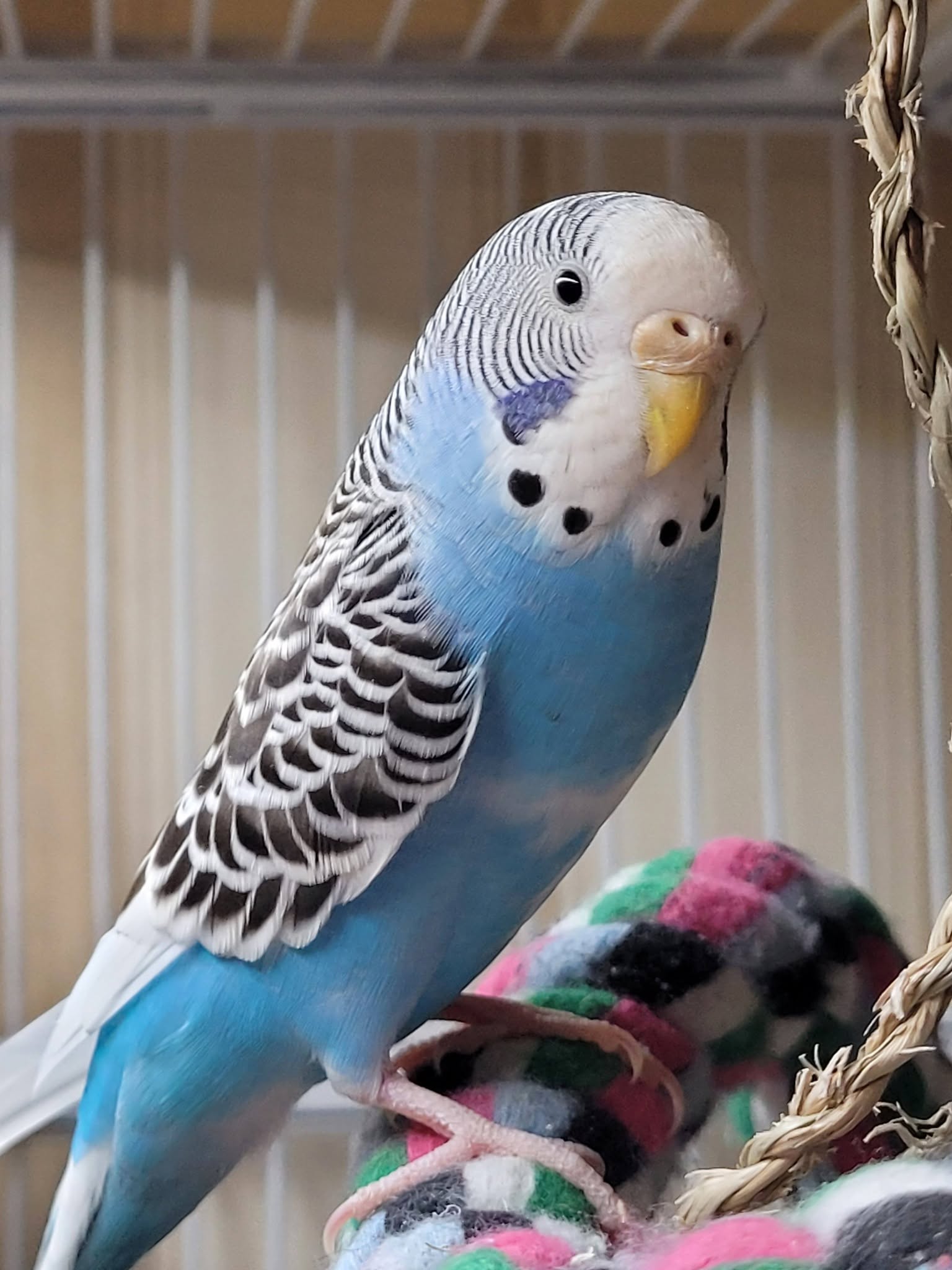
Healthy birds have vocalisation routines. A cockatiel that calls when you leave the room. A budgie that chatters during the first hour after its cage is uncovered. A canary that sings at particular times of day with particular consistency. These routines are so normal that they fade into the background of daily life.
When they change — when the morning chattering is reduced in volume or duration, when the contact call does not come, when the male canary’s song is shorter or less frequent than usual — that change is the bird’s vocalisation system under strain. Vocalisation requires energy and physical function. A bird that is using more of its reserves on managing illness, or whose respiratory function is even slightly impaired, will often reduce or alter its vocalisation before any other change becomes visible.
The reduction may be subtle. It may not be silence — it may be that the bird vocalises for twenty minutes when it usually does so for forty. It may be that the quality of the sound has changed slightly — a roughness or flatness that is not quite right. It may be that the timing has shifted.
The owner who can identify this early is the owner who knows what normal sounds like for this specific bird, not in general terms but precisely. If you do not know what your bird’s morning routine sounds like, start paying attention now — before you need to notice that it has changed.
Sign Three — Feather Position and Texture
Feathers are not just aesthetic — they are functional indicators of physical state, and a bird that is cold, stressed, or unwell will adjust its feather position in characteristic ways.
Puffed feathers during periods when the bird should be alert and active is one of the clearest visible signs that something is wrong. A bird fluffs its feathers to trap warm air close to the body — it is a thermoregulatory response. A bird that is puffed during its active period is doing this because its body temperature regulation is compromised, which typically means the bird is fighting something.
The distinction from normal: a sleeping bird often appears slightly puffed as a relaxation of normal feather position. This is fine — it is sleep, and the bird should be puffed to some degree when resting. A bird that is puffed and awake, or puffed during a period when it is normally active and alert, is the situation to pay attention to.
Feather texture is a secondary indicator: dull, slightly unstructured feathers that lack the normal sheen can reflect nutritional deficiency or early illness. The change is subtle and requires knowing your bird’s usual coat quality as a baseline — but if your bird’s feathers have looked slightly different for the past few weeks, that is worth noting.
- Puffed feathers during the active period — the bird is awake but sitting puffed: The most visible early illness posture. Not sleeping — unwell.
- Feathers puffed consistently through the day rather than occasionally: Sustained puffing is more concerning than brief or occasional.
- Dull, slightly unstructured feathers that used to look neat and shiny: May reflect nutritional deficiency or chronic low-grade illness — worth monitoring.
- Ruffled feathers around the face or head that are not related to grooming: Can indicate localised irritation or systemic illness.
- Feather loss outside a moult — patchy or unexplained bare areas: Requires investigation — may be feather-destructive behaviour, nutritional deficiency, or illness.
Sign Four — Posture and Body Position
Healthy birds hold themselves in characteristic ways — upright, alert, with good postural control. The specific posture varies by species, but a well bird has a quality of physical engagement with its environment that is difficult to fully describe and immediately recognisable once you know what it looks like.
A sick bird’s posture changes. The most common changes: a slight forward lean or hunch — the body held at a different angle than normal. The tail may drop slightly rather than being held at the species-typical angle. The bird may shift its weight from foot to foot in a way that is not its usual resting posture. It may sit lower in the cage than it normally does.
These are all subtle changes, and individually any one of them might have an innocent explanation — an uncomfortable perch, a moment of inattention. What is significant is persistence. A posture change that is still present the next day, and the day after, is not a momentary adjustment. It is the bird’s body adapting to something that is physically affecting it.
Stand back and watch your bird for two minutes from a position where it cannot see you and is not performing for your presence. Note what you see. Then do it again tomorrow. The comparison is more informative than any single observation.
Sign Five — Breathing You Can Notice
Normal bird breathing is invisible. You do not see it or hear it. The chest moves, but the movement is so slight and so regular that it does not draw attention.
When breathing becomes noticeable — when you find yourself looking at the bird and realising you can see it breathing, or when you hear a sound with each breath that you did not hear before — that noticeability is itself the sign.
Tail bobbing: if the tail is moving visibly with each breath, the bird’s body is working harder than normal to breathe. This is one of the most reliable respiratory distress signs in small birds and should be treated as an act-today signal.
Audible sounds: a clicking, rattling, or slightly wet sound audible when you hold the bird near your ear is a respiratory sign that needs same-day veterinary attention. These sounds indicate fluid, obstruction, or infection in the airways.
Open-mouth breathing at rest: a bird that is sitting quietly and breathing through an open beak — not after exertion, not in heat, simply at rest — is working hard to get enough air. This is not normal and needs acting on the same day.
Sign Six — Changes in Droppings
Droppings are one of the most informative health indicators available to a bird owner, and one of the most underused.
A normal bird dropping has three components: the faecal portion (the solid dark centre), the urate portion (the white or cream paste surrounding it), and the urine portion (a small amount of clear liquid). The proportions and consistency of each part are relatively consistent for a specific healthy bird in its normal environment and on its normal diet.
Changes in any component are worth noting. Droppings that are entirely liquid or very watery — without the solid faecal component — may indicate digestive disruption, infection, or stress. Droppings that are unusually dark or unusually pale. Droppings with a lime-green urate component in a bird that normally produces white — this specific colour change is associated with psittacosis in parrots and cockatiels, and in budgies with liver disease. An unusual smell from droppings that does not resolve.
The change that matters is change from the bird’s own baseline — not comparison to some universal standard but comparison to what this specific bird’s droppings usually look like. Start noticing now, if you have not been, so that you have a reference point.
One caveat: fresh vegetables and fruit affect dropping appearance — a bird that has eaten a lot of cucumber or dark leafy greens will produce wetter, darker, or differently coloured droppings temporarily. This is dietary, not illness. But persistent changes that do not track with specific foods eaten are worth noting.
Sign Seven — Reduced Interest in Food Without Reduced Food Bowl
This is a subtlety that catches many owners out, and I described it in my budgie weight loss article — but it belongs here as well.
A bird that appears to be eating normally may not be eating normally. Budgies hull their seeds before eating them — they remove the outer husk and eat the kernel inside. The discarded husks accumulate in the food bowl and look, from above, identical to whole seeds. An owner who tops up the food bowl by looking at it may be providing an increasingly husk-filled bowl that contains very little actual nutrition.
A bird that is eating less due to early-stage illness may be consuming barely anything while its food bowl still looks full. The weight loss on the keel is the result — and it appears before the owner realises the bird is not eating properly.
Blow gently across the food bowl daily to remove husks and check what remains. This takes five seconds and tells you immediately whether the bowl is full of food or full of empty shells.
Secondary sign: a bird that was previously enthusiastic about fresh food, treats, or foraging, and has lost that enthusiasm without an obvious reason, is a bird that has reduced its engagement with its environment. This is an early behavioural change worth noting.
Sign Eight — The Contact Call That Does Not Come
This applies most specifically to cockatiels, and I have described it in my cockatiel quiet article — but it is worth including here because it is one of the most sensitive early warning signs for this species.
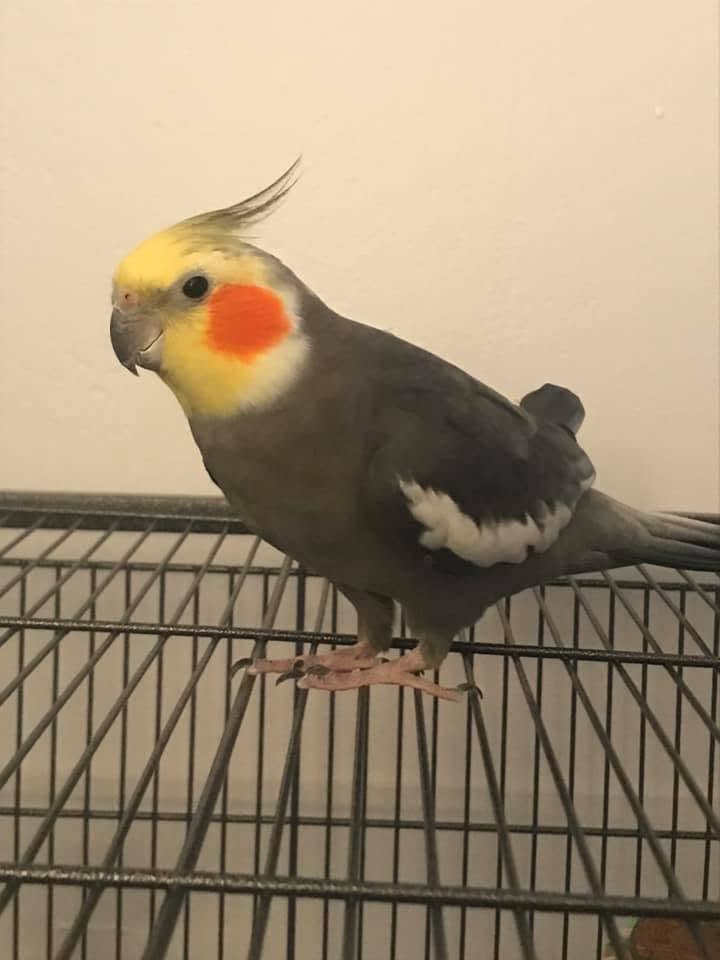
A bonded cockatiel calls for its owner when the owner moves to a different part of the house. This is the contact call — the flock-locating behaviour of an animal that monitors its bond person’s position. A cockatiel that has a strong bond with its owner and a normal daily routine will almost always respond to the owner calling to it from another room.
When a cockatiel stops responding to the contact call — when the exchange that is usually automatic and immediate simply does not happen for two or more consecutive days — that absence is one of the earliest and most consistent signs that something is physically wrong. The bird’s vocalisation system is under strain, or its energy reserves are being directed away from social communication toward managing illness.
Test it now. Call your bird in your normal way from another room. If it responds reliably today and you are maintaining that baseline, you will know immediately when it stops.
Sign Nine — Spending Time at the Bottom of the Cage
A bird that is spending time on the floor of the cage — rather than on its perches — is a bird that has significantly reduced energy or is in significant physical discomfort. Perching requires constant muscular effort; the feet are maintained in grip by active muscle contraction. A bird that cannot sustain perching will seek the floor as a resting place.
This is not a quiet sign — it is a visible and concerning one. But I include it here because it is the natural endpoint of the quieter signs that precede it, and because owners sometimes see a bird on the cage floor and still hesitate, still wonder whether to act.
A bird on the cage floor needs same-day veterinary attention. This is not early-stage. This is a bird that has been declining and has reached a point where normal perching is beyond it. Act immediately.
- Bird on the cage floor, unable or unwilling to perch: Significant weakness — same-day vet
- Tail bobbing visible with each breath at rest: Respiratory distress — same-day vet
- Audible clicking, rattling, or wet sound with breathing: Respiratory infection — same-day vet
- Open-mouth breathing at rest: Struggling to breathe — same-day vet
- Puffed and unresponsive during active hours: Sick posture plus suppressed alertness — same-day vet
- Keel feels sharply prominent and any other sign present alongside it: Weight loss plus symptoms — same-day vet
- Any sign you cannot explain that has persisted for more than 24 hours: Do not extend the wait. Call a vet and describe what you are seeing.
The Observation Habit — What Actually Catches Things Early
I want to be direct about what separates the owners whose birds are caught early from the ones who come in when it is already difficult.
It is not specialist knowledge. It is not years of experience. It is a habit of looking, specifically and briefly, every single day.
Two minutes in the morning. Before you uncover the cage or while you are preparing food or before you leave the house. Stand back from the cage and look at the bird. How is its posture? Are its feathers in their normal position? Is it in its normal location in the cage? What is it doing?
Then, once a week, handle it. Feel the keel. Check the feet. Look at the eyes and the nostrils. Note the condition of the feathers close up.
This does not require medical training. It requires you to look at your bird as an individual with a specific normal condition, and to notice when that condition has changed. The tools for the detection are already available to you. The habit is what needs to be built.
The birds that get caught early are the ones whose owners built that habit before they needed it.
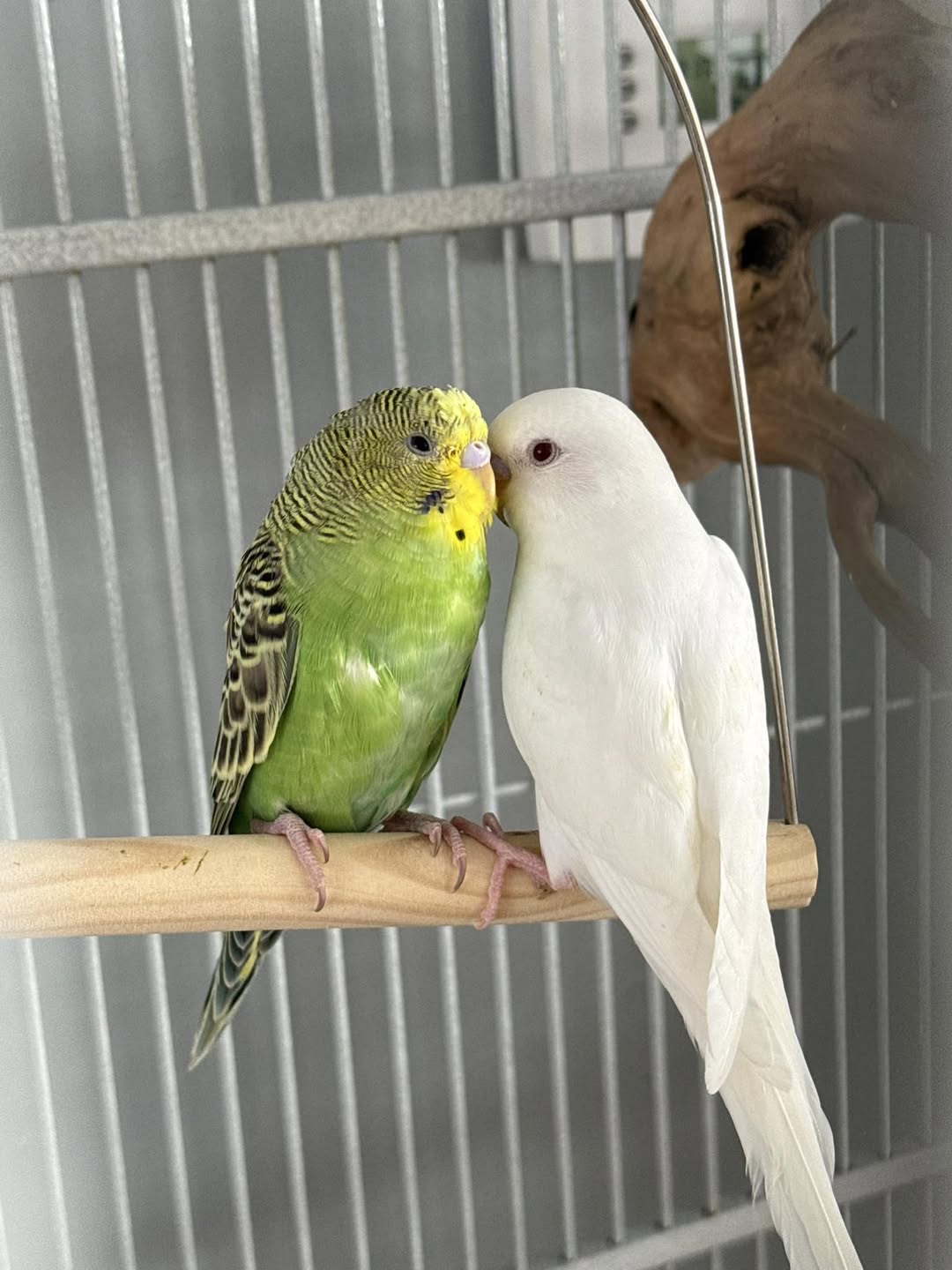
Quick Reference — The Quiet Signs and What They Mean
| What You Notice | What It May Indicate | What To Do |
|---|---|---|
| Keel feels sharper than usual when you handle the bird | Weight loss — possible illness or nutritional problem | Check food bowl for husks. Vet this week if confirmed or if any other sign present. |
| Vocalisation reduced — quieter than usual, shorter routines | Early illness, respiratory strain, or reduced energy | Monitor for 24–48 hours. If not improving or if other signs appear — vet the same day. |
| Puffed feathers during active hours, bird awake but puffed | Illness posture — thermoregulation disrupted | Same-day vet if sustained. This is one of the clearest illness signs available. |
| Posture slightly changed — forward lean, tail lower than normal | Physical discomfort or early illness | Monitor if single occurrence. Persistent over two or more days — vet this week. |
| Breathing visible — tail bobbing, audible sounds, open-mouth | Respiratory distress — infection, obstruction, or systemic | Same-day vet. No exceptions. |
| Dropping changes — liquid, lime-green, very dark, persistent | Digestive disorder, liver issue, or infection | Vet this week. Mention the colour and character of the change specifically. |
| Food bowl full but bird losing weight — husks vs seeds | Bird is not eating adequately despite apparent food availability | Blow husks off daily. If weight loss confirmed on keel — vet this week. |
| Cockatiel not responding to contact call for 2+ days | Significant early illness sign in a species for which this is reliable | Same-week vet. Same-day if any other sign present alongside. |
| Bird spending time on cage floor rather than perches | Significant weakness — late-stage early warning | Same-day vet. This is not an early sign — it is an act now sign. |
Frequently Asked Questions
How do I know if my bird is unwell if it is still eating?
The fact that a bird is still eating does not rule out illness — it reflects the prey animal instinct to maintain normal-appearing behaviour for as long as reserves allow. Check the keel weight by handling the bird, watch for any change in vocalisation routine, observe posture during the active period, and check the food bowl for husks versus actual seed. A bird can be losing weight, showing early respiratory signs, and reducing its vocalisation while still visiting the food bowl. The food bowl tells you very little on its own.
What is the most reliable early sign of illness in a bird?
In my experience, a change in vocalisation routine — particularly in cockatiels and budgies whose owners know their normal pattern well — is the most sensitive early indicator. Weight change on the keel is the most objective and the most useful for owners who are not sure whether they are imagining a behavioural change. Both together are more reliable than either alone. The key in both cases is knowing the baseline before you need it.
My bird seems off but I can’t say exactly what is wrong — should I call a vet?
Yes. The inability to identify exactly what is wrong is not a reason to wait — it is a reason to call someone who can identify it. Describe what you are seeing: the vocalisation change, the posture, the weight change if you have checked it. An avian vet experienced with small birds can often identify early-stage illness from a description and will either give you reassurance or tell you to bring the bird in. A two-minute call costs nothing and is always the right response to genuine uncertainty about a bird’s condition.
Do all bird species show illness the same way?
The underlying mechanism is the same across species — prey animal masking of illness — but the specific early signs vary slightly by species. Cockatiels are most reliably detected through the contact call change. Budgies through vocalisation change and keel weight. Canaries through changes in song quality and duration. The posture signs, breathing signs, and feather signs are broadly consistent across species. Knowing your specific bird’s individual normal is always more useful than knowing the species average.
Where can I get urgent advice about my bird in Swindon?
Come to Paradise Pets — Manor Garden Centre, Cheney Manor, Swindon SN2 2QJ. Bring the bird if you can, or a short video. I will assess what you are seeing honestly and tell you directly whether I think it needs same-day veterinary attention. Call us on 01793 512400 before visiting.

Something Not Right With Your Bird? Come in Before It Gets Worse
If you have noticed something quiet and cannot decide whether to act — come in. Bring the bird. I have been watching these animals for 35 years and I will tell you honestly what I see. The owners whose birds do best are the ones who come in when the signs are still quiet. I would rather spend twenty minutes looking at a bird that turns out to be fine than have you come back when the window has closed.