

Neil has kept, bred, and sold budgies at Paradise Pets Swindon since 1988 — over 35 years of watching these birds thrive and, more often than he would like, watching the early warning signs of illness get missed until they were harder to treat. A budgie losing weight is one of the most serious signals an owner can encounter, and one of the most consistently underestimated. This is his complete guide to what weight loss in a budgie actually means — and why it demands prompt attention.
An elderly gentleman came in on a Thursday morning carrying his budgie in a small travel cage, covered with a cloth.
He had owned the bird for three years, he told me. A bright green male, always active, always noisy. In the last few weeks he had seemed different — quieter, less interested in his mirror, spending more time sitting still. The man had not been able to say exactly what was wrong until his granddaughter had visited the weekend before and picked the bird up. She had asked why it felt so light.
He had not noticed until then. But once he felt for himself, he knew immediately she was right. The bird felt different from how it used to. He could feel something he had not felt before — a sharp ridge where there used to be a rounder shape.
He had come in the next day.
I checked the bird carefully. The keel — the breastbone — was prominently sharp. The muscles on either side, which in a healthy bird give the chest a gently rounded profile, had wasted significantly. This bird had been losing weight for some time. Not dramatically, not suddenly — gradually, in the way that prey animals lose condition when something is wrong internally.
I told him to call a vet that morning, not that week. Not to wait and see.
He called me two days later. The vet had confirmed Macrorhabdus — a fungal organism that causes chronic wasting in budgies. The bird was on treatment. It was going to be a long process.
I am telling that story because it contains almost everything important about budgie weight loss. The gradual onset. The masking of other symptoms until a sharp observer catches something. The critical importance of knowing how to check a bird’s weight in your hands. And the truth that by the time weight loss is obvious, time has usually already passed.
First — How to Actually Check If Your Budgie Has Lost Weight
Most owners notice weight loss in a budgie either by accident — the way the gentleman in my story did — or not at all until the bird is visibly unwell. This is because budgies carry their feathers in a way that makes body condition very hard to assess visually. A budgie that has lost 20 percent of its body weight can look entirely normal from outside the cage, because the feathers expand to fill the same silhouette regardless of what is happening underneath.
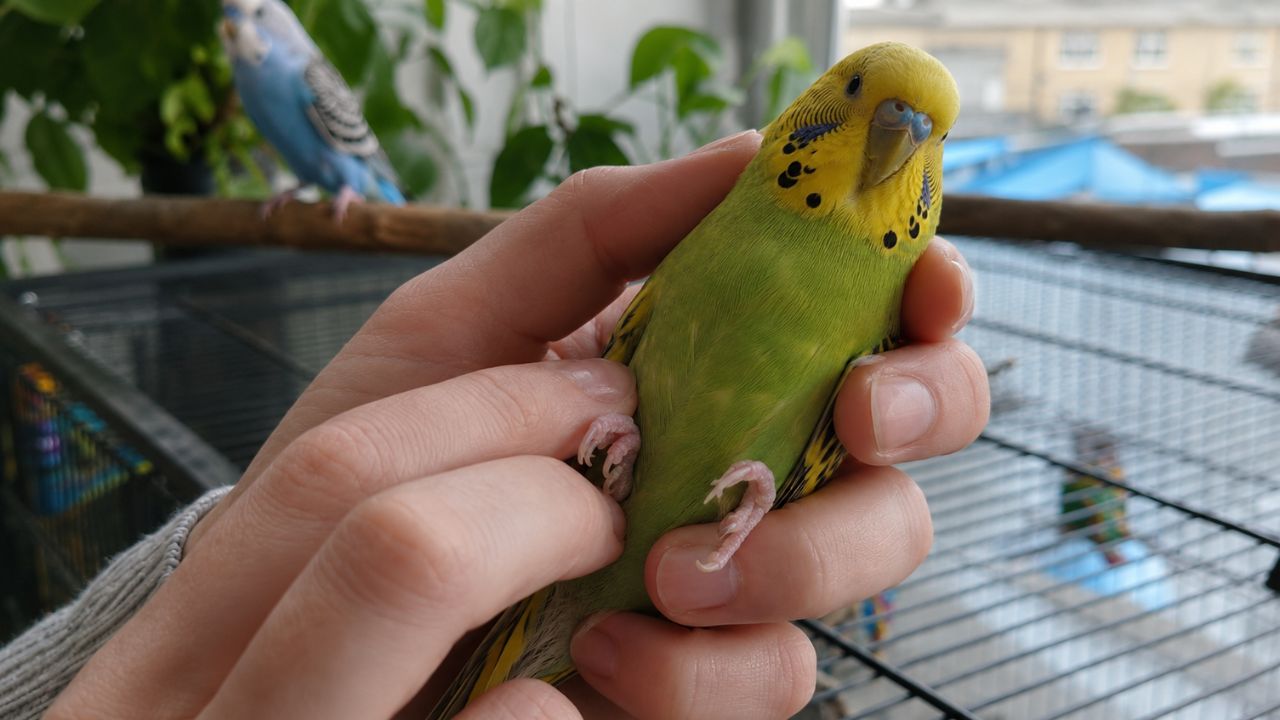
The only reliable way to check a budgie’s weight and condition is to handle it and feel the breastbone.
The breastbone — the keel — runs down the centre of the bird’s chest. In a healthy budgie with good muscle mass, you can feel the keel as a slight ridge, but the muscles on either side of it fill out the chest so that the overall feel is smooth and gently rounded. The keel is present but not prominent.
In an underweight budgie, the muscles on either side of the keel have wasted. What you feel is a sharp, prominent ridge — the keel sticking out because the tissue that should be flanking it has reduced. It can feel like running your finger along the edge of a knife compared to running it over a gently curved surface. The difference, once you have felt both, is unmistakable.
Check your bird now if you are reading this with any concern. Hold the bird gently in your hand and use your index finger to feel the centre of the chest. That is the most direct and honest assessment of your bird’s current condition that you can get in thirty seconds. Do it regularly — once a week if you are attentive to your bird’s health — so that you know what normal feels like for this specific bird, and will notice any change.

Why Budgie Weight Loss Is Harder to Catch Than It Should Be
Before going into the specific causes, I want to spend a moment on the reason that budgie weight loss gets missed so consistently — because understanding the mechanism is part of understanding why prompt action is so important.
Budgies are prey animals. In the wild, a bird that shows visible signs of illness is a bird that gets targeted. The evolutionary pressure on these animals to mask weakness is intense, and it is reflected in their physiology and behaviour. A budgie with a serious internal illness will, for a significant period, continue to eat, continue to vocalise at some level, continue to move around the cage — while its body quietly uses its reserves to maintain that appearance of normality.
This means the visible symptoms that owners notice — the quietness, the fluffing, the reduced activity — tend to appear relatively late in the progression of a problem. Weight loss, which happens gradually throughout that hidden period, is often the most reliable early indicator available, if someone is checking for it. But most owners do not check regularly, because no one has told them to.
A small bird has limited reserves. The window between early-stage illness and serious crisis is shorter than most owners expect. Catching weight loss early — while the bird still has the physical resources to respond to treatment — produces dramatically better outcomes than catching it when the bird is already obviously unwell.
“Going Light” — The Budgie-Specific Condition Every UK Owner Should Know
There is a term used in budgerigar keeping — particularly in UK aviculture — that describes progressive weight loss in budgies specifically: going light.
A budgie that is going light is a bird that is losing weight steadily, often while appearing to eat relatively normally, often without the obvious acute illness signs that owners associate with a sick bird. The name comes from the characteristic feel of the bird when you pick it up — it feels lighter than it should, and the keel becomes increasingly prominent as the muscle and fat reserves deplete.
Going light is not a diagnosis in itself — it is a description of a clinical presentation that can have several causes. But the most common cause in UK budgies, and the one most associated with the going-light syndrome, is Macrorhabdus ornithogaster — previously known as Megabacteria, a name that still appears in many older guides and is still used colloquially.
Macrorhabdus — What It Is and Why It Matters
Macrorhabdus ornithogaster is a fungal organism — not a bacterium despite the old name — that colonises the proventriculus and ventriculus of birds, the parts of the digestive system responsible for the initial stages of food processing. When present in significant numbers, it disrupts normal digestion in a way that means the bird cannot extract adequate nutrition from what it eats — even if it appears to be eating normally.
This is why the condition is so insidious. The bird eats. The seed goes in. But the digestive dysfunction means that not enough of it is being converted to usable nutrition. The bird slowly loses condition while the owner, watching the food bowl being emptied, has no visual reason to suspect a problem.
Other signs that Macrorhabdus may be involved: the bird may regurgitate occasionally, or you may find what appear to be barely digested seeds in the droppings — seeds that have passed through without being properly processed. The droppings may be darker or more liquid than usual. The bird may become progressively less active and quieter over weeks or months rather than declining acutely.
Macrorhabdus is diagnosed by a vet through faecal examination or crop swab analysis. Treatment exists — antifungal medication — and is most effective when started while the bird still has reasonable physical reserves. A bird caught at early-to-moderate going-light stage responds significantly better to treatment than one caught late. This is another reason why regular handling and keel checks matter.
- Keel feels sharp and prominent when you handle the bird: Muscle mass has reduced — weight loss is real and significant
- Bird appears to eat but loses weight steadily over weeks or months: Classic Macrorhabdus presentation — digestion is compromised
- Regurgitation or partially digested seed in droppings: Digestive system is not processing food normally
- Gradually quieter and less active over time: Progressive decline, not acute — often missed as “getting older”
- Dropping weight despite food being available: The problem is absorption, not access — more food will not fix this
- What to do: Vet visit this week. Mention weight loss and the possibility of Macrorhabdus specifically. Ask about faecal examination or crop swab.
Liver Disease — The Other Common Cause of Gradual Weight Loss
I have written about liver disease in the context of overgrown beaks and I will mention it here because it is one of the most frequently diagnosed conditions in middle-aged and older UK budgies, and weight loss is a core symptom.
The liver plays a central role in metabolism, protein synthesis, and the processing of fats. When liver function is significantly compromised — as it is in hepatic lipidosis, the fatty liver disease most common in seed-fed budgies — the metabolic disruption affects body condition directly. A bird with liver disease may eat, but its body is not managing the energy and nutrients it takes in effectively, and the result over time is progressive weight loss alongside the other signs of liver disease: the beak changes and discolouration I described in my beak article, changes in the colour of the urine portion of droppings, and a swollen or distended abdomen in more advanced cases.
A budgie on a predominantly seed-only diet that is losing weight and showing any of the other liver disease signs is a strong candidate for a same-week vet assessment with blood testing for liver function. The diet connection is direct — this is a disease of seed-only feeding in most cases, and catching it before it is advanced gives the best possible prognosis with diet change and appropriate treatment.
Tumours — More Common in Older Budgies Than Most Owners Know
This is something I find myself explaining more often than I would like, because it is a reality of budgie keeping that is not widely enough understood.
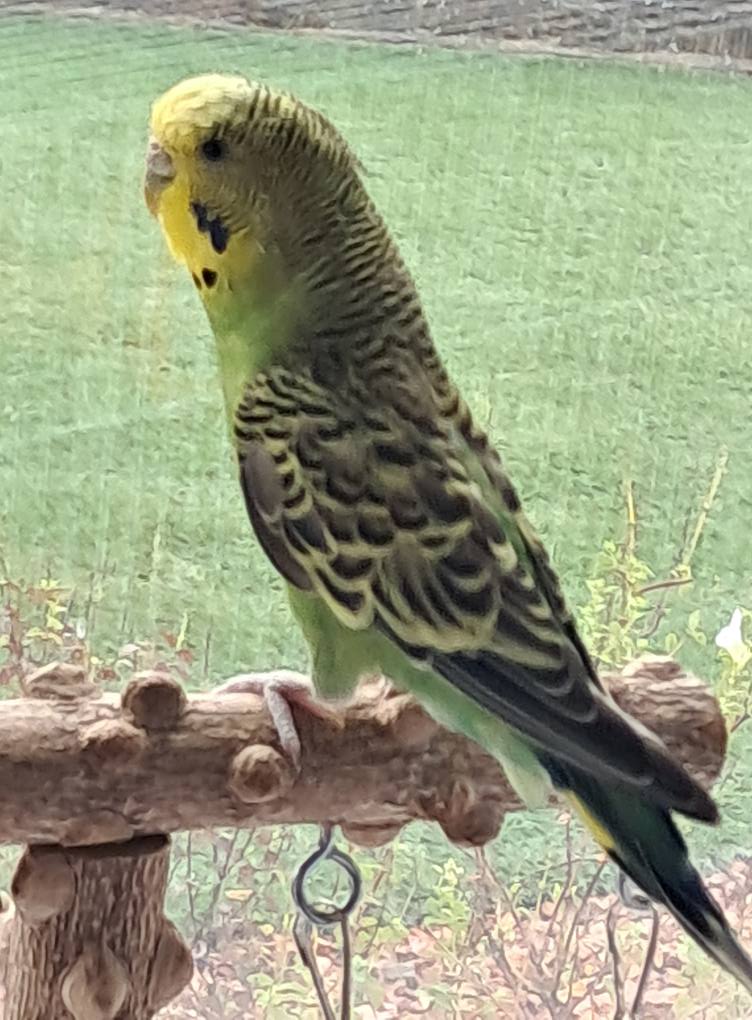
Budgies have a relatively high incidence of tumours compared to many other pet species. Kidney tumours, testicular tumours in males, and various internal tumours are not unusual findings in budgies over three years of age, and they become more common as birds age beyond five or six years. A budgie with an internal tumour may show progressive weight loss as the tumour draws on the bird’s resources, while other symptoms may be subtle or absent for a significant period.
An older bird — three years or above — that is losing weight without an obvious dietary or infectious explanation should have tumour considered as a possibility. This is not a diagnosis to make at home, and it requires veterinary assessment — often including physical examination and sometimes imaging. The honest reality is that some tumours in budgies are not treatable, but some are or are manageable, and the only way to know is proper assessment.
I raise this not to alarm owners of older budgies but to discourage the habit of attributing unexplained weight loss in a bird over three years old to “old age” without proper investigation. Old age is not a diagnosis.
Dental and Beak Problems — When Eating Hurts or Is Difficult
Weight loss can also result from a bird that is physically struggling to eat rather than one with a systemic illness. An overgrown or misaligned beak makes the mechanical process of hulling seeds and processing food significantly more difficult, and a bird that is finding eating painful or laborious will eat less over time — with predictable consequences for body condition.
I have a full article on overgrown beak elsewhere on this site, but in the context of weight loss: any bird that is losing weight and has a beak that looks longer than usual, hooks more than normal, or has an abnormal texture or colour should have the beak assessed as a possible contributing factor. The weight loss in this case is a consequence of reduced food intake rather than a metabolic or infectious problem, and addressing the beak problem may resolve or significantly improve the weight loss.
Other signs that a beak or dental issue may be affecting eating: the bird drops more seed than usual while trying to eat, takes much longer over the food bowl than it used to, or seems to attempt eating without actually consuming much. Watch feeding behaviour closely — it is informative.
The Empty Seed Bowl Trap — A Practical Problem Many Owners Do Not Realise They Have
Before leaving the subject of why a budgie might not be getting enough nutrition, I want to address something that is not a health problem but produces health consequences if it goes unnoticed.
Budgies hull their seeds before eating them. They remove the outer husk and eat the kernel inside. The discarded husks look very similar to whole seeds, and a food bowl that appears full of seed may actually be full of empty husks — the kernels already consumed, nothing of nutritional value remaining.
An owner who tops up the food bowl by looking at it and judging it “still full” may be leaving their bird with nothing to eat for significant periods. The bird goes to the bowl, finds nothing to eat, and over time loses condition.
The solution is to blow gently across the food bowl before each top-up — the light husks will blow away, revealing whether there are actual seeds beneath. Better still, empty and refill the food bowl completely each day rather than topping it up. This takes thirty seconds and eliminates the husk problem entirely.
This is worth checking immediately if your budgie is losing weight and you cannot identify another cause. It is an embarrassingly simple explanation but I have seen it produce real weight loss in birds, and more than one owner has been relieved to find that this was the entirety of the problem.
Cage Mate Competition — When Two Birds Share a Bowl
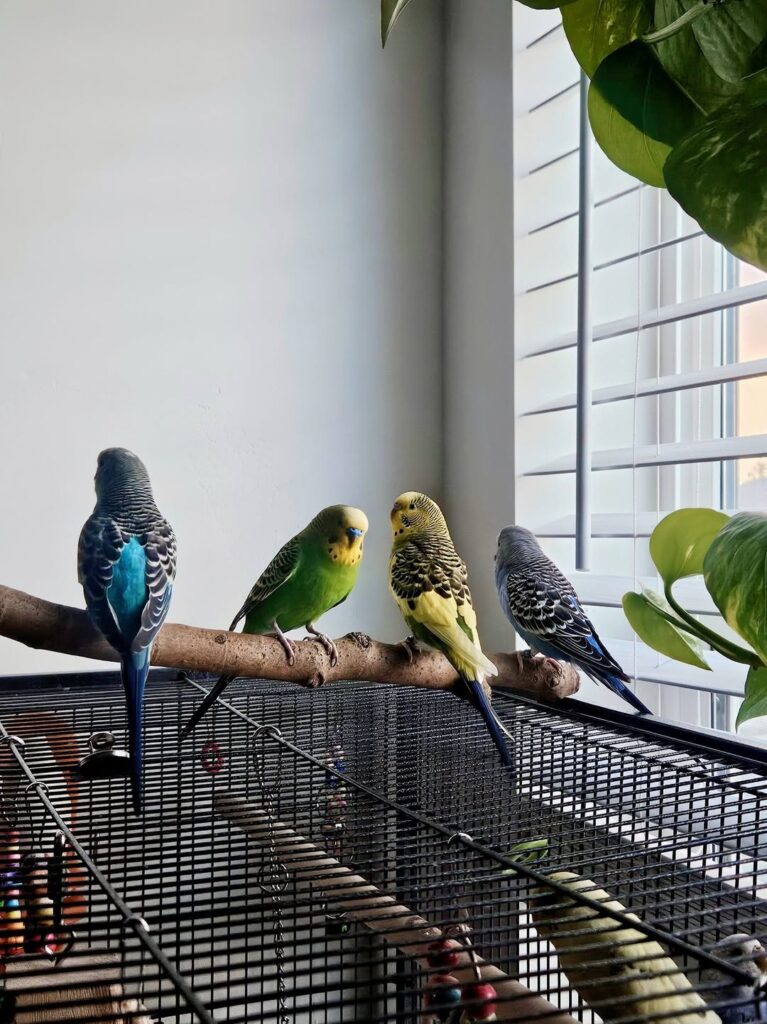
A paired or grouped cage where one bird is significantly more dominant than the other can produce weight loss in the subordinate bird even when food appears freely available. The dominant bird may guard the food bowl, preventing the other from eating freely, or may simply consume a disproportionate share.
Signs that competition may be a factor: the weight loss is in one bird of a pair while the other maintains normal condition, or you notice that one bird moves away from the food bowl when the other approaches. Providing a second food bowl on the opposite side of the cage, ideally at a different height, gives the subordinate bird access without having to compete.
If you have a bird losing weight in a shared cage and the other bird appears healthy, this is worth investigating before assuming illness — although illness should still be ruled out by a vet if the weight loss is significant.
When to See a Vet — The Decision Guide
- Keel feels sharp and prominent — same week, do not delay: Significant weight loss has already occurred. A bird at this stage needs assessment promptly while it still has physical reserves to respond to treatment.
- Weight loss plus any other symptom — same day: Fluffed feathers, tail bobbing, open-mouth breathing, regurgitation, or changed droppings alongside weight loss means the bird is more unwell than the weight loss alone suggests.
- Weight loss in a bird over three years old — same week: Tumour needs to be considered. Do not attribute unexplained weight loss to age without proper assessment.
- Gradual quietness and reduced activity over weeks alongside weight loss: This progression is the classic going-light presentation. Vet this week.
- Weight loss not explained by environmental factors (husks, competition): If you have ruled out the practical causes and the bird is still losing condition, this is a health issue. Act.
- Any budgie that has been losing weight for more than two weeks: Even if other symptoms seem mild, two weeks of progressive weight loss in a small bird is a meaningful amount of time. Do not extend the wait-and-see period further.
What the Vet Will Do — What to Expect
An avian vet presented with a budgie that is losing weight will approach it as a diagnostic process, and it helps to know what to expect so you can make the most of the appointment.
The vet will handle the bird and assess body condition directly — confirming the keel prominence and getting an objective sense of the degree of weight loss. They will examine the bird generally: the eyes, nostrils, vent, plumage, and any other visible signs. They will ask about the diet, the environment, the duration of symptoms, and any changes you have noticed in behaviour or droppings.
Blood testing for liver function is often recommended for birds showing weight loss alongside other potential liver signs. Faecal examination or crop swab can identify Macrorhabdus and other parasites or organisms. Imaging — X-ray or ultrasound — may be suggested if tumour or internal organ abnormality is suspected.
Go to the appointment with as much information as you can provide. What the bird eats, how long it has been losing weight, what changes in behaviour you have noticed, what the droppings have been like. The more precise the history, the more useful the assessment.
Quick Reference — Why Your Budgie Is Losing Weight
| What You Are Seeing | Most Likely Cause | What To Do |
|---|---|---|
| Prominent keel, gradual weight loss, bird appears to eat normally | Macrorhabdus / going light | Vet this week. Request faecal exam or crop swab. Early treatment matters. |
| Weight loss plus beak discolouration, seed-only diet, older bird | Liver disease | Vet this week. Blood tests for liver function. Diet change essential. |
| Weight loss in bird over 3 years, no obvious other cause | Possible tumour | Vet this week. Do not attribute to old age without investigation. |
| Weight loss plus overgrown or misaligned beak | Eating difficulty — beak problem | Vet for beak assessment and professional trim. Address underlying beak cause. |
| Food bowl appears full but bird losing weight | Empty seed husks — no actual food available | Blow husks off bowl daily. Refill completely rather than topping up. Check for immediate improvement. |
| One bird of a pair losing weight, other healthy | Possible cage competition | Add second food bowl. Monitor. Vet if weight loss continues after access improved. |
| Weight loss plus regurgitation or undigested seed in droppings | Macrorhabdus / digestive disorder | Same-week vet. Mention regurgitation and dropping changes specifically. |
| Weight loss plus fluffed feathers, tail bobbing, open-mouth breathing | Systemic illness — advanced | Same-day vet. This bird is more unwell than weight loss alone suggests. |
The Rule I Give Every Budgie Owner — Check the Keel
If there is one practical thing I could get every budgie owner in the UK to do, it would be this: pick your bird up once a week and feel the keel.
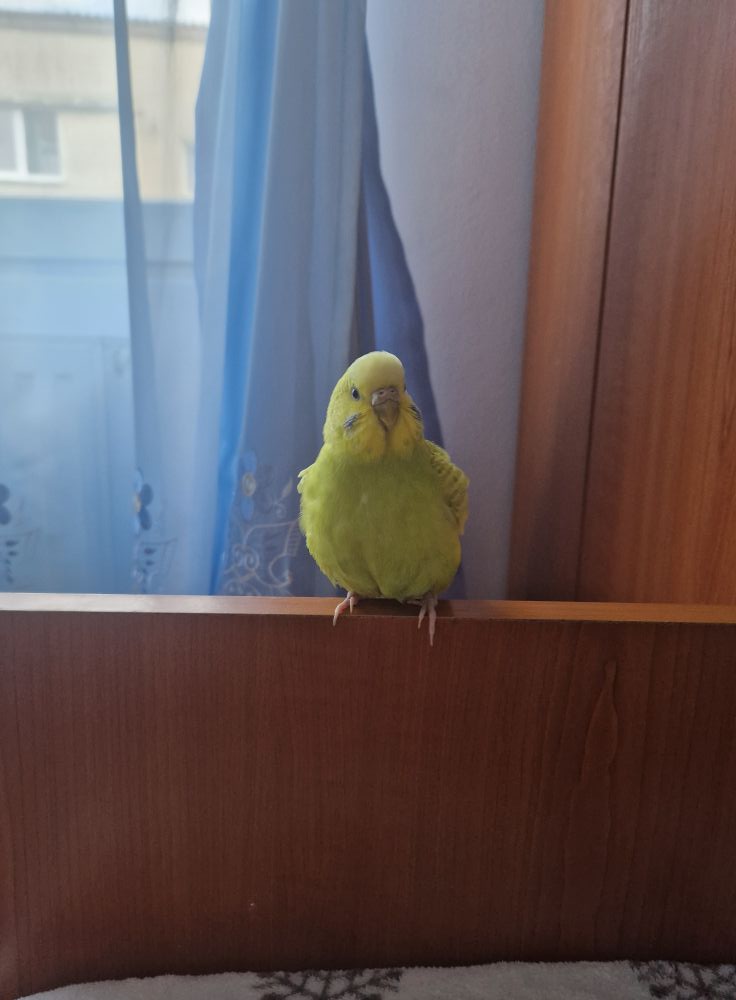 Not to alarm it. Not to tame it or train it. Just to hold it for thirty seconds and run a finger down the centre of its chest. Learn what normal feels like for this specific bird. Build a baseline. Because when something changes — when the keel that used to feel smooth and rounded starts to feel sharper, when the muscle mass either side of it has reduced even slightly — you will feel it immediately. And you will be in a position to act while the bird still has the reserves to respond well to treatment.
This single habit, applied consistently, catches weight loss earlier than any other method available to a home owner. It costs nothing. It takes seconds. And in 35 years of watching owners deal with sick budgies, the ones who noticed weight loss early — because they were checking — are the ones whose birds more often recovered.
Do it tonight. Then do it again next week. Keep doing it.
Frequently Asked Questions
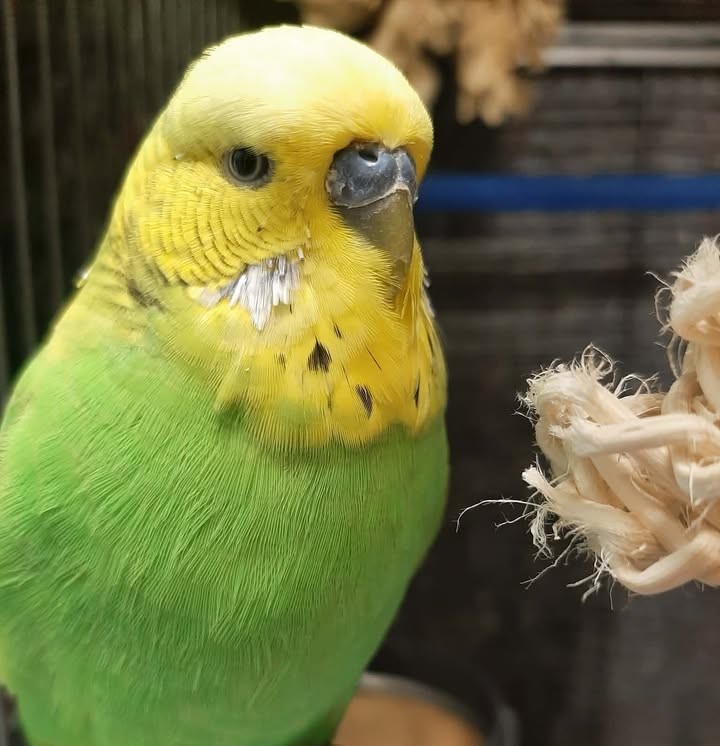
How can I tell if my budgie has lost weight?
The most reliable method is handling the bird and feeling the breastbone — the keel. In a healthy budgie with good muscle condition, the keel is present as a slight ridge but is flanked by muscle so the overall feel is smooth and gently rounded. In an underweight bird, the muscles either side of the keel have wasted and the keel feels sharp and prominent — like a ridge sticking out rather than a gentle rise. Visual assessment through the cage bars is not reliable because feathers maintain the same silhouette regardless of underlying body condition. Handle the bird and feel for yourself.
What is going light in budgies?
Going light is a term used in UK budgerigar keeping to describe progressive weight loss in budgies, typically where the bird loses condition steadily while appearing to eat relatively normally. The most common cause is Macrorhabdus ornithogaster — previously called Megabacteria — a fungal organism that colonises the digestive tract and prevents normal absorption of nutrients from food. It is diagnosed by faecal examination or crop swab at the vet and treated with antifungal medication. Early treatment, while the bird still has physical reserves, produces significantly better outcomes than late treatment.
My budgie seems to eat fine but is still losing weight — why?
This is the classic presentation of a digestive disorder, particularly Macrorhabdus. The bird eats, but its digestive system cannot extract adequate nutrition from what it consumes — food passes through without being properly processed. You may notice partially digested seeds in the droppings, or the droppings may be more liquid or darker than usual. A bird that is eating but losing weight needs a vet assessment that specifically includes digestive function — not just a general check. Mention the weight loss and the apparently normal food intake together, because that combination points the vet toward the right area.
Could my budgie be losing weight just because it is old?
Age-related muscle wasting does occur in very elderly budgies — typically those over six or seven years — but it should not be assumed without ruling out treatable causes. Liver disease, Macrorhabdus, tumours, and dental problems are all more common in older birds and all produce weight loss that looks like ageing from the outside. A budgie over three years losing weight deserves a proper veterinary assessment before the conclusion of “just getting old” is accepted. Old age is not a diagnosis. It is sometimes the explanation — but it should be the explanation only after other possibilities have been properly investigated.
My budgie is losing weight and regurgitating — how urgent is this?
Quite urgent. Regurgitation alongside weight loss is a combination that points strongly toward digestive dysfunction — Macrorhabdus being the most likely candidate. This combination means the bird is not absorbing food adequately and is also losing further nutrition through regurgitation. The physical reserves of a small bird are limited, and a bird in this state deteriorates faster than one with weight loss alone. A vet visit this week is the right response — sooner if the bird is also showing other symptoms such as fluffed feathers, reduced activity, or tail bobbing.
Where can I get advice about my budgie’s health in Swindon?
Come and see us at Paradise Pets — Manor Garden Centre, Cheney Manor, Swindon SN2 2QJ. Bring the bird or a video if that helps. I will check the bird’s condition honestly and tell you what I think is happening. If it needs a vet, I will say so clearly. Call us on 01793 512400 before visiting. We are happy to talk through what you are seeing before you commit to a vet appointment if you are uncertain.
Worried Your Budgie Is Losing Weight? Come and See Us
If your budgie seems lighter than it used to be, or if the keel feels sharper than normal, come in. Bring the bird if you can. I will check it properly and give you an honest assessment from 35 years of keeping these birds. If I think it is serious, I will tell you straight — because the owners whose birds do best are the ones who act while there is still time to act.