


Neil has kept, bred, and sold cockatiels at Paradise Pets Swindon since 1988 — over 35 years of watching these birds communicate in ways that most owners underestimate. A cockatiel that has gone quiet suddenly is one of the more significant signals an owner can observe, and one of the most important to take seriously. This guide explains every reason it might be happening — and which ones need acting on today.
A man came in on a Wednesday morning looking the way people look when they have been worrying about something for a few days and have finally decided to do something about it.
His cockatiel, he said, had gone quiet. Not completely silent — but noticeably, significantly quieter than normal. The bird had been his companion for about four years. It had a morning routine: a sequence of whistles when the cover came off, contact calls throughout the morning while he was in the house, a longer bout of vocalisation around early evening. He knew this routine so well he could have described it to the minute.
For the past five days, the routine had not happened. The cover came off and the bird was quiet. He moved around the house and there were no contact calls. The evening vocalisation was absent. The bird was still eating, he said. Still moving around. Just quiet.
I asked him one question: when you whistle the bird’s name, does it whistle back?
He thought about it. It had not been responding to him the past few days. He had noticed that too but had not connected it to the overall quietness until I asked.
I told him that the combination — a previously vocal bird that has stopped its established routine and stopped responding to contact calls from its bond person — was not something to leave for another week. I told him to book a vet appointment that day.
He came back a week later. The vet had found an early respiratory infection. Treatment had started quickly. The bird was already responding well and had begun whistling again by the end of the treatment course.
He said: “I nearly waited another week to see if it improved.”
I told him he was right not to wait. That is what this article is about.
Why Sudden Quietness Matters More in Cockatiels Than in Most Other Birds
Before going into the specific causes, I want to explain why sudden quietness in a cockatiel is a more significant signal than the same symptom in, say, a budgie — because the difference matters for how urgently you should respond.
Cockatiels are naturally, characteristically, and persistently vocal. They have specific contact calling drives that budgies do not share to the same degree. A bonded cockatiel calls for its person when it cannot see them. It has morning routines, evening routines, whistled dialogues with household sounds. It responds when spoken to. It announces when the doorbell rings and when cars pull up outside. The vocal life of a well-settled, healthy cockatiel is a constant background presence in whatever room it lives in.
This means the owner of a cockatiel almost always knows their bird’s normal vocalisation pattern better than the owner of a quieter species. They hear when it is missing. And when it is missing — when the morning whistle does not happen, when the contact call does not come, when the bird sits quietly while its owner moves around the house without responding — it is immediately noticeable.
This noticeability is useful. It means you are getting an early signal rather than a late one. The problem is that a cockatiel’s ability to mask other illness signs while this early vocalisation change is happening means the quietness is sometimes the only signal you have at the stage when action matters most. By the time the bird is obviously fluffed and clearly unwell, the window for early intervention may have narrowed.
The Contact Call Test — Do This Before Anything Else
This is the most practically useful diagnostic available to any cockatiel owner with a bird that seems quiet, and it takes ten seconds.
Go to the bird or call from another room, in whatever way you normally do — its name, a specific whistle, whatever your usual contact call interaction is. A healthy cockatiel that has a bond with you will almost always respond. It may be a brief response, it may be less enthusiastic than usual, but it will be there. The response is the bird answering the flock call, confirming it is present and functioning.
A sick cockatiel often does not respond, or responds weakly and briefly before falling quiet again. The absence of the contact call response — from a bird that normally gives it reliably — is one of the most consistent early signs of illness I have observed in these birds over 35 years.
This test does not tell you what is wrong. It tells you whether the quietness is the natural fluctuation of a comfortable bird or the suppressed communication of a bird that is not well. Combined with any other physical signs, it gives you a much clearer picture.
If your bird has consistently not responded to your contact call for two or more days — act on that
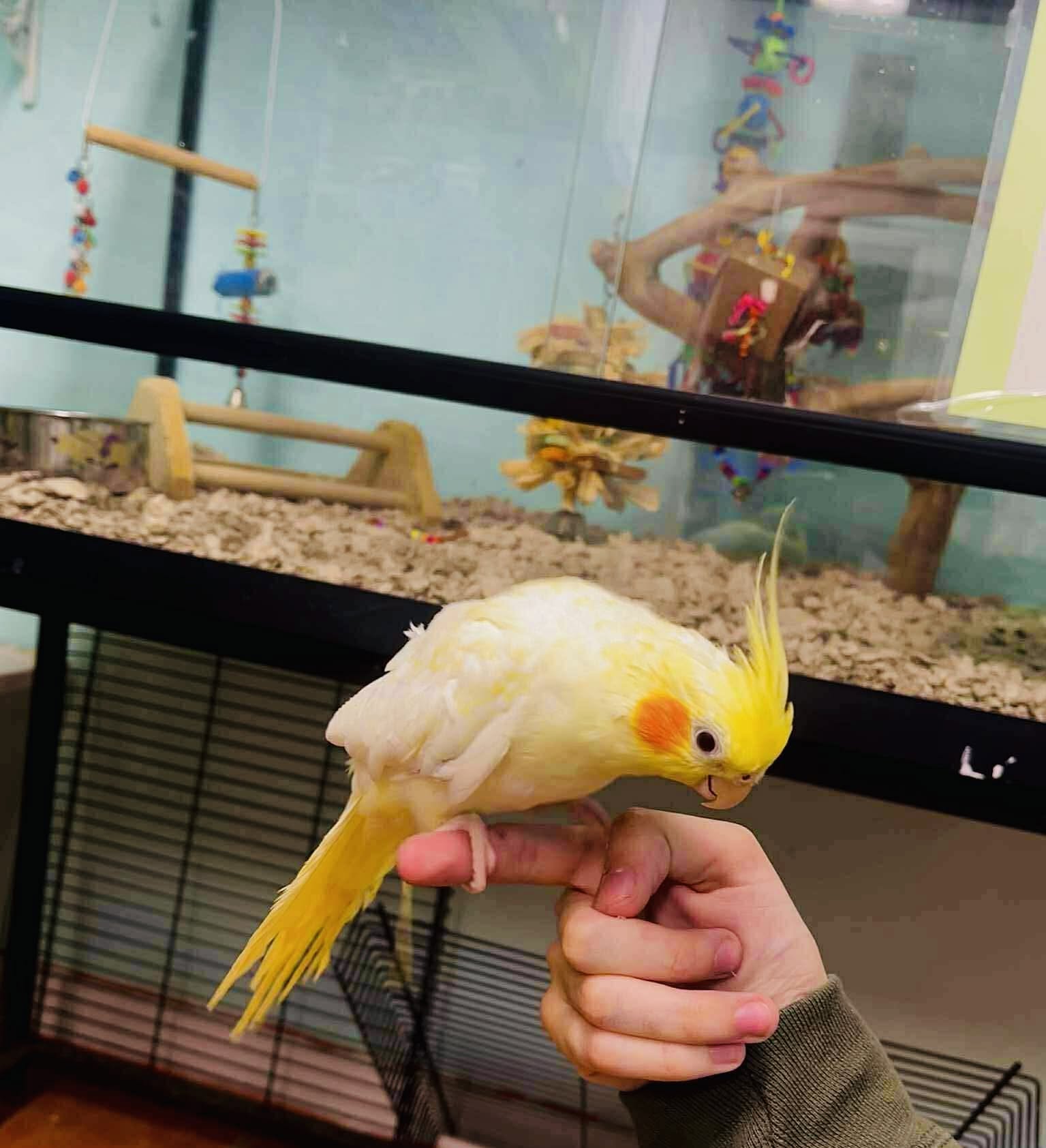
Normal Reasons for Temporary Quietness — Start Here
Not every quiet cockatiel is a sick cockatiel, and I do not want owners reading this to go immediately to the worst conclusion. There are legitimate, normal reasons a cockatiel may be temporarily quieter than usual.
Moulting
Cockatiels moult regularly, and the moult — particularly a heavy moult where significant numbers of feathers are being replaced at once — is physically demanding. The pin feathers growing through the skin are sensitive, the process requires energy, and many cockatiels become noticeably quieter, slightly more irritable, and less active during a significant moult.
A moulting cockatiel that is quieter than usual will typically show visible evidence of the moult: pin feathers visible around the head and neck, loose feathers in the cage, slightly ruffled or uneven plumage as new and old feathers coexist. It will still respond to contact calls, still eat normally, and still engage when it wants to. The quietness during moult is subdued — different in quality from the absence of communication that characterises illness-related quietness.
If your bird is moulting and seems quieter, ensure good nutrition — a varied diet that supports feather production — and give the bird more space and less handling while the pin feathers are sensitive. The vocalisation will return as the moult completes.
Seasonal Light Changes
Cockatiels, like all birds, are sensitive to photoperiod — the length of the light period each day. As autumn shortens the days in the UK, many cockatiels become noticeably less vocal. The shorter light period reduces the hormonal drive that underlies a significant portion of their vocalisation, and the bird may be genuinely quieter through the darker months.
If the quietness has appeared in September or October and is accompanied by a general slight reduction in activity — and the bird is otherwise healthy, eating well, and still responding to contact calls — seasonal adjustment is a reasonable explanation. A full-spectrum light providing additional light hours through winter can help moderate this effect.
Environmental Change or Stress
A new pet arriving in the household, a significant change in household routine, furniture being moved near the cage, a building work period with unpredictable noise, a family member who is usually present being away — any of these can produce a temporary withdrawal in a bird that has been unsettled.
This kind of stress-quiet tends to reduce as the bird adjusts, typically over a few days to a week. The bird will still respond to contact calls, still eat, and there will be an identifiable change in the environment that coincides with the quietness.
- Visible pin feathers, slightly ruffled plumage, bird still eating and responding to contact calls: Moulting — give good nutrition and space. Quietness will resolve.
- Quieter every autumn/winter, livelier every spring — annual pattern: Seasonal photoperiod response. Consider full-spectrum lighting through darker months.
- Quiet since a specific change in the household — new pet, new person, rearranged room: Stress adjustment. Give the bird time. Should improve within a week.
- Quieter after a period of intense vocalisation — after singing for a long time: Rest period. Completely normal.
- In all of the above — the bird still responds to your contact call: This is the key distinguishing sign. A bird that responds to you is communicating. A bird that does not respond should be taken more seriously.
When Sudden Quietness Means Something Is Wrong
Everything I described above involves a bird that is temporarily quieter for understandable reasons. The situation that demands more urgency is a bird that has changed — specifically and recently — without the environmental or physical context that would explain it.
The sudden in your question is the word that matters. A gradual reduction over several weeks, correlated with shorter days or a moult, is different from a noticeable change that occurred over a day or two without obvious cause.
A cockatiel that was whistling its morning routine on Monday and is not doing it by Wednesday — with no moult, no environmental change, nothing to explain the shift — is telling you something is wrong inside the bird. The vocal suppression is often the first outward sign of an internal change that has not yet progressed to visible physical symptoms.
Respiratory Infection
Respiratory infection is the most common serious cause of sudden quietness in cockatiels, and it is worth spending time on because the connection is direct.
Cockatiels have a syrinx — the vocal organ of birds — located at the junction of the trachea and bronchi. Unlike the larynx of mammals, the syrinx is positioned deep in the respiratory tract. When a respiratory infection affects the airways, it also directly affects the bird’s ability and willingness to vocalise. A bird with a respiratory infection may stop whistling and contact calling before any visible respiratory symptoms — the laboured breathing, tail bobbing, and open-mouth breathing that later-stage respiratory problems produce — become obvious.
This means that sudden unexplained quietness in a previously vocal cockatiel should prompt the owner to watch carefully for any respiratory signs: a slight click or wheeze audible when the bird is breathing, tail bobbing at rest, nasal discharge, open-mouth breathing. If any of these appear alongside the quietness, the bird needs a vet the same day.

Even if respiratory symptoms are not yet visible, a cockatiel that has stopped responding to contact calls and has lost its normal vocalisation routine for more than two days — without a clear non-medical explanation — is worth a same-week vet call and probably a same-day one.
Psittacosis — Worth Knowing About
Psittacosis — also called chlamydiosis, caused by the bacterium Chlamydia psittaci — is a respiratory and systemic infection that affects parrots and related birds including cockatiels. It is worth mentioning specifically because it is more common in cockatiels than in budgies, it can present initially as quietness and reduced activity before more obvious respiratory symptoms appear, and it is also a zoonotic disease — meaning it can, in rare circumstances, be transmitted to humans.
Signs of psittacosis in cockatiels include quietness, reduced activity, ruffled feathers, nasal or ocular discharge, changes in dropping colour — often lime green — and weight loss over time. If your cockatiel has gone quiet and is also showing lime-green droppings or any discharge, mention psittacosis specifically to your vet. It is diagnosable and treatable with the appropriate antibiotics, but it requires a specific test to confirm.
- Stops responding to your contact call for 2 or more days: This is the single clearest early warning sign — a bird that will not respond to its bond person
- Quietness plus tail bobbing at rest: Respiratory distress — same-day vet
- Quietness plus clicking or wheezing sound when breathing: Respiratory infection — same-day vet
- Quietness plus ruffled feathers through the active day: Illness posture alongside the vocal change — same-day vet
- Quietness plus lime-green or unusual droppings: Possible psittacosis — mention this specifically to the vet
- Quietness plus visible weight loss — keel feels prominent: The bird has been unwell for longer than you realised — same-day vet
- Sudden quietness with no environmental explanation, lasting more than 2 days: Do not wait for more symptoms. Act while the window is still open.
Grief and Bereavement — When the Bird Has Lost Someone
Cockatiels form deep bonds — deeper and more specific than most owners who have not previously kept them expect. When a cockatiel loses its primary bond — whether that is a companion bird, a person who has left the household, or a person whose daily routine has changed significantly — the response can be profound and visible.
A grieving cockatiel often goes quiet. The contact calls that were previously directed at the missing individual simply stop, because the individual they were directed at is no longer there. The bird may also eat less, be less active, and spend more time in the area of the cage where it used to be nearest to the person or bird it has lost.
Grief-quiet has a different quality from illness-quiet, and it is possible to distinguish them if you observe carefully. A grieving bird will still respond to other social stimuli — it will react to sounds in the house, it will engage with you even if less enthusiastically than normal, it will show normal physical signs of health. A sick bird’s withdrawal is more global — it suppresses all communication, not just the calls directed at the absent individual.
If your household has recently changed — someone has moved out, a partner has changed their working pattern, a companion bird has died — and the quietness followed that change, bereavement is worth considering. The management involves increased presence and engagement from whoever is available, consistency in routine, and time. For a bird that has lost a companion animal, the question of whether and when to introduce a new companion is worth careful thought — come and speak to me about that specifically if you are in that situation.
Loneliness and Withdrawal — The Long-Term Quietness
This is different from sudden grief and worth distinguishing, because it describes a pattern that develops over weeks rather than days.
A cockatiel kept alone with insufficient human interaction — one that is home alone for long hours, whose owner is regularly absent for significant periods, whose cage is in a room where household activity does not happen — may gradually become quieter over time as its social needs go unmet. This is not illness. It is depression, in the most practical sense of the word: a social animal whose social life has been insufficient for long enough that it has begun to disengage.
A gradually quieting bird over weeks is different from sudden quietness and is less likely to represent acute illness. But it is still a welfare concern that needs addressing. Increased human interaction, out-of-cage time, positioning the cage in a social area of the house, and — in the most significant cases — a companion bird are all responses worth considering.
If you are unsure whether the quietness is sudden (illness territory) or gradual (welfare territory), ask yourself honestly: was the bird quieter a month ago than three months ago? Gradual progressive quietening over months is the welfare pattern. A bird that was fully vocal last week and is quiet this week is the illness pattern.
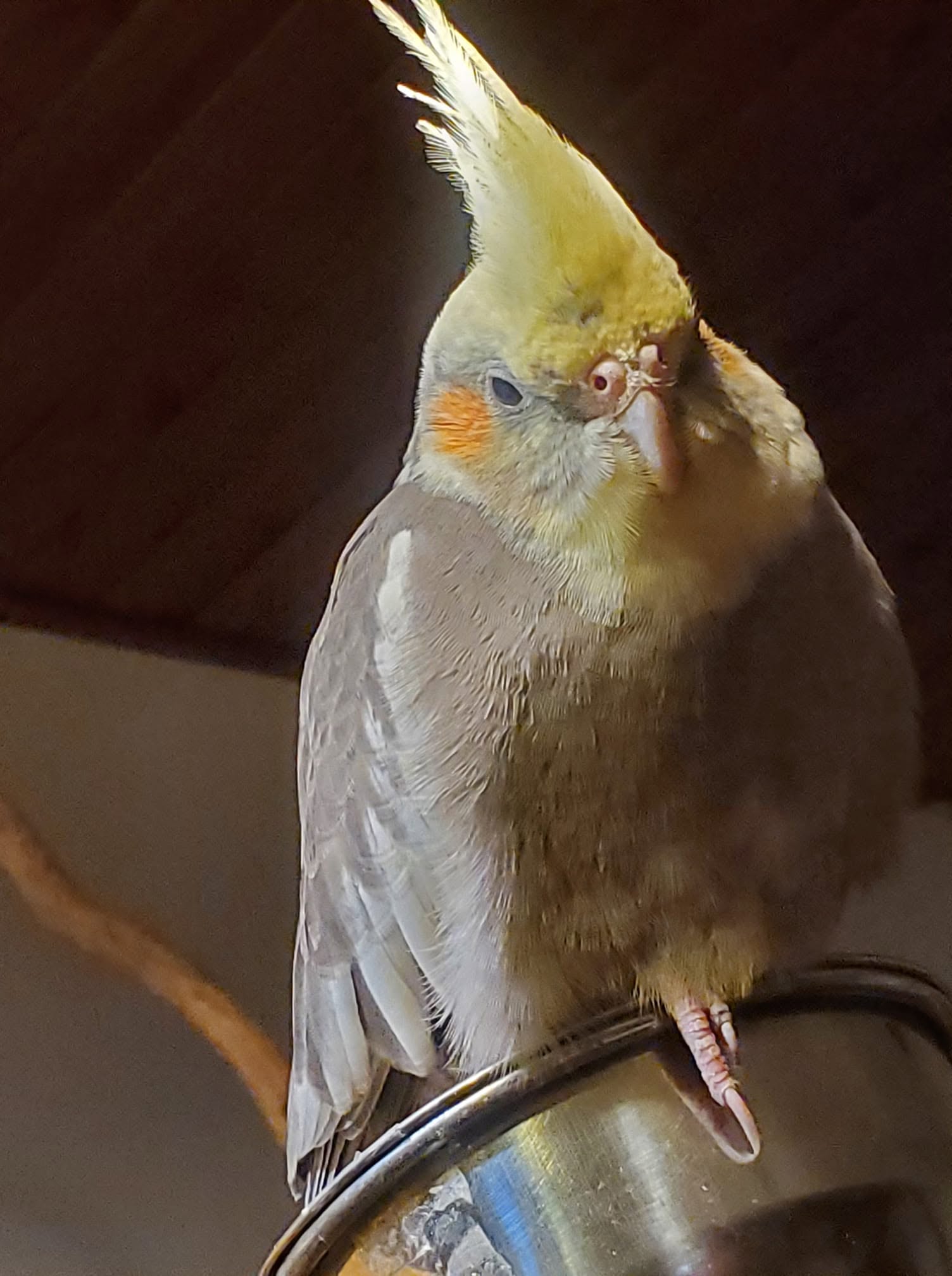
The Weight Check — Do This Alongside Everything Else
As I described in my budgie weight loss article, the keel check is a reliable and early indicator of health decline in small birds. The same applies fully to cockatiels.
Pick your bird up and feel the breastbone — the keel — with your finger. In a healthy cockatiel with good muscle mass, the keel is present as a slight ridge flanked by muscle, giving the chest a gently rounded feel. In a bird that has been losing condition — often before other visible symptoms appear — the keel becomes more prominent, the flanking muscle less full, and the feel becomes sharper.
If your cockatiel has gone quiet and the keel feels sharper than usual, the bird has been losing weight, and the quietness is a late-arriving visible sign of something that has been happening for longer than you knew. This combination — quiet plus prominent keel — is a same-day vet situation.
Do this check now if you have not done it. Cockatiels that are losing weight gradually without an obvious cause are often catching the owner’s attention through the quietness first, and the weight loss confirms the problem is systemic.
Quick Reference — Why Your Cockatiel Has Gone Quiet
| What You Are Seeing | Most Likely Cause | What To Do |
|---|---|---|
| Quieter, visible pin feathers, still eating and responding to contact calls | Moulting — normal | Good nutrition, less handling, wait for moult to complete. |
| Quieter every autumn, livelier every spring | Seasonal photoperiod response | Full-spectrum lighting through darker months. Normal pattern. |
| Quieter since a specific household change — new pet, absent person | Stress or adjustment | Give it a week. Still responding to contact calls should resolve. |
| No longer responding to your contact call for 2 or more days | Possible illness — early warning sign | Same-week vet at minimum. Same-day if any other symptom present. |
| Suddenly quiet with no environmental explanation, morning routine gone | Illness — respiratory or systemic | Same-day vet. This is the pattern that needs prompt action. |
| Quiet plus tail bobbing, clicking or wheezing | Respiratory infection | Same-day vet. Do not wait. |
| Quiet plus lime-green droppings or discharge | Possible psittacosis | Same-day vet. Mention psittacosis specifically. |
| Quiet plus keel feels sharp — weight loss | Systemic illness — bird has been declining longer than noticed | Same-day vet. The weight loss confirms this is not temporary. |
| Gradually quieter over months, alone most of the day | Loneliness and social withdrawal | Increase interaction, move cage to social area, consider companion bird. Vet if any physical symptoms also present. |
| Quiet since a companion bird or person left the household | Grief and bereavement | Increased presence and consistency. Time. Vet if weight loss appears alongside the grief. |
The Rule I Give Every Cockatiel Owner
Know your bird’s normal. This is the rule, and it is worth more than any symptom list I can give you.
 A cockatiel owner who knows exactly what their bird sounds like on a typical morning, who knows the contact call pattern, who knows the evening whistling routine — that owner will notice a two-day change immediately. They will not wait a week to see if it resolves. They will act while the bird still has the physical reserves to respond well to treatment.
Cockatiels are not subtle birds in health. They are communicative, present, and vocal in ways that make changes stand out if you have been paying attention. The owners who come to me too late are almost always the ones who normalised the change rather than recognised it — who told themselves the bird was fine, it was probably moulting, it would pick up. The owners whose birds do best are the ones who trusted what they observed and acted when it was new.
Sudden, unexplained quietness in a normally vocal cockatiel is not a wait-and-see symptom. It is an act-now symptom that does not have other obvious signs attached to it yet. That absence of other signs is not reassurance — it is the early window, and that window is worth using.
Frequently Asked Questions

My cockatiel has suddenly gone quiet — should I be worried?
If the quietness is sudden, has lasted more than two days, and you cannot identify a clear non-medical reason for it — moulting, seasonal change, a specific environmental event — yes, take it seriously. The most useful test is the contact call: go to the bird or call to it in your normal way and see whether it responds. A bird that has stopped responding to its bond person is showing a significant change in behaviour that warrants veterinary assessment. Same-week at minimum; same-day if any physical symptoms accompany the quietness.
Could my cockatiel be quiet because it is moulting?
Yes — moulting cockatiels often become quieter, slightly more withdrawn, and less tolerant of handling. The distinguishing features of moult-quiet: visible pin feathers around the head and neck, loose feathers in the cage, and the bird still responding to your contact call even if less enthusiastically. A moulting bird has good reason to be subdued. A non-moulting bird that has suddenly gone quiet does not, and needs investigating.
My cockatiel stopped whistling its usual morning routine — is that a health sign?
In an established bird with a known morning routine, yes — stopping that routine suddenly is worth taking seriously. The morning vocalisation is partly habitual and partly driven by the bird’s physical state. A bird that feels unwell will often suppress its usual routines before any other visible symptoms appear. If the morning routine has been absent for two or more days with no other explanation, contact a vet.
Could my cockatiel be quiet because it is lonely or sad?
Yes — but distinguish between sudden quietness (more likely illness) and gradual increasing quietness over weeks (more likely welfare issue — loneliness, under-stimulation). A bird that has become progressively quieter over months in a household where it is alone for long periods and receives limited interaction is showing the behavioural signs of an insufficiently social life. Increasing your interaction, moving the cage to a social area, and considering a companion bird are all appropriate responses. If the bird is also losing weight or showing physical symptoms, do not attribute the quietness to loneliness alone — get it seen.
What is psittacosis and should I be worried about it?
Psittacosis is a bacterial infection caused by Chlamydia psittaci that affects cockatiels and other parrots. It can present as quietness, reduced activity, respiratory symptoms, and lime-green droppings. It is treatable with appropriate antibiotics but requires a specific laboratory test to confirm. It is worth knowing about because it is more common in cockatiels than in budgies, and because it is very occasionally transmissible to humans. If your cockatiel is quiet and has lime-green droppings or discharge, mention psittacosis to your vet when you call.
Where can I get advice about my cockatiel in Swindon?
Come to Paradise Pets at Manor Garden Centre, Cheney Manor, Swindon SN2 2QJ. Bring the bird or a video on your phone. I will give you my honest assessment from 35 years of keeping and selling cockatiels, and I will tell you clearly whether I think it needs same-day veterinary attention. Call us on 01793 512400 before visiting.
Worried About Your Quiet Cockatiel? Come and Talk
If your cockatiel has gone quiet and you are not sure how seriously to take it — come in. A short video of the bird’s behaviour is worth more than a description. I have been watching these birds for 35 years and I will tell you honestly what I think is happening. If it needs a vet today, I will say so directly.