


Neil has kept, bred, and sold cockatiels at Paradise Pets Swindon since 1988 — over 35 years of first-hand experience with these birds. The crest is the most expressive feature a cockatiel has. Once you can read it accurately, you can read the bird’s emotional state from across the room. This guide teaches you exactly how to do that — and explains the one flat-crest position that should prompt an immediate vet call.
People who have never owned a crested bird often do not realise, when they first bring a cockatiel home, quite how much information that crest is broadcasting at any given moment.
Within the first few weeks of keeping a cockatiel, most owners begin to notice a pattern. The crest goes up. The crest goes flat. Sometimes it is somewhere in between. Sometimes the bird tilts it forward at a specific angle. Sometimes it raises just the front feathers while the rest stay flat.
Each of these positions means something specific. The cockatiel is not moving its crest at random. It is communicating its emotional state continuously and involuntarily — the crest responds to the bird’s arousal level the way a dog’s tail position reflects its mood, except that cockatiels are doing it with considerably more precision.
Flat against the head is the position owners most often ask about. And the answer — depending on the context — ranges from “the bird is perfectly content” to “this bird needs to see a vet today.”
Context, as always, is everything.
The Crest Position Spectrum — A Complete Reading Guide
Before focusing on flat specifically, I want to give you the full picture. Understanding where flat sits on the spectrum makes its meaning much clearer.
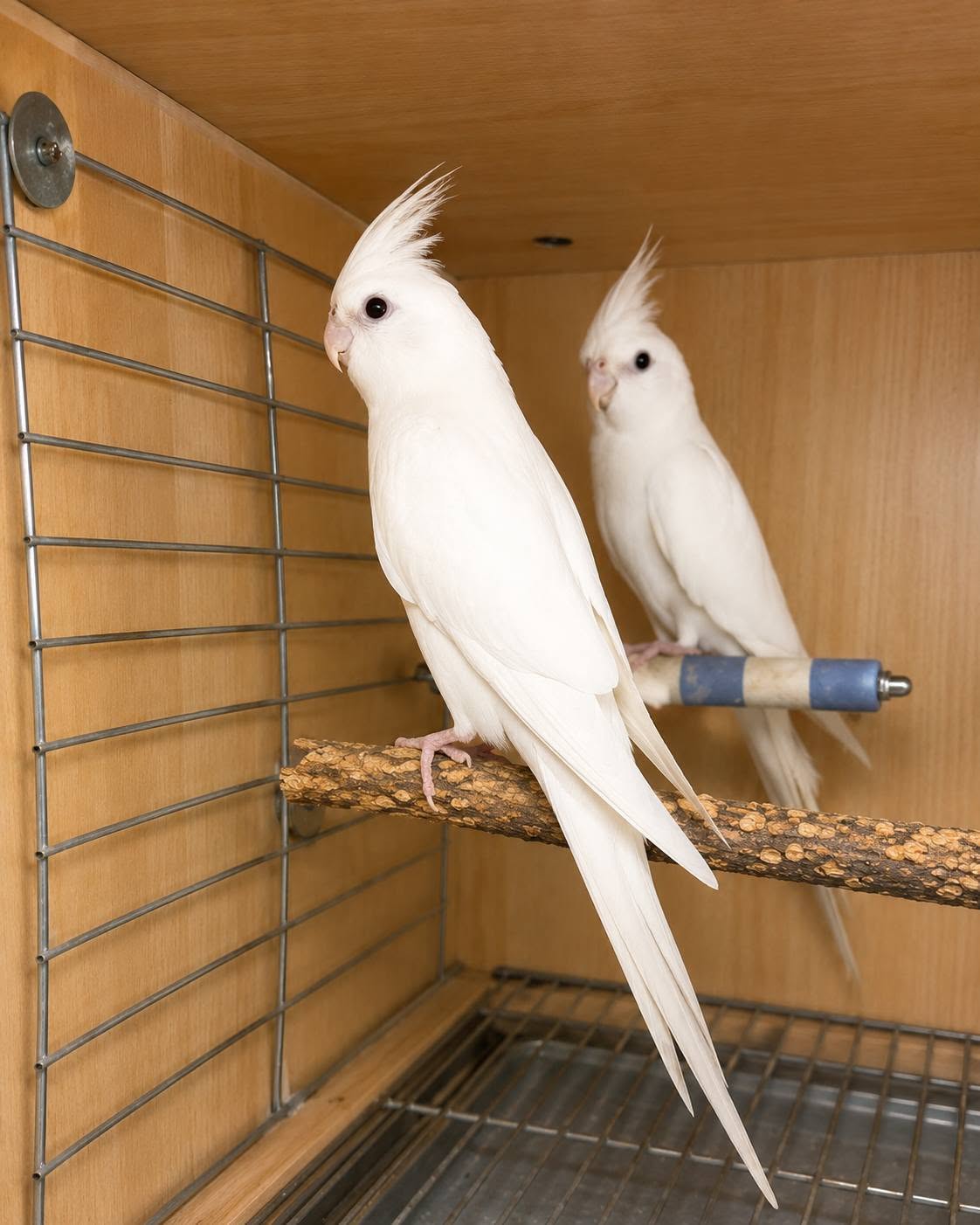
Crest fully raised — vertical or slightly forward. The bird is alert, interested, or excited. Something has caught its attention. It may be investigating a new object, responding to an interesting sound, or reacting to your presence. This is the position of engagement. In a confident, well-socialised bird, a fully raised crest directed at you often means the bird is pleased to see you and interested in what you are about to do.
Crest raised and held slightly tilted back. Relaxed alertness. The bird is comfortable and at ease but aware of its surroundings. This is the neutral-positive position in a settled, content bird. Most owners come to know this as their bird’s default state when everything is fine.
Crest at forty-five degrees, tilted slightly forward. Curiosity and mild investigation. The bird has noticed something interesting and is assessing it. Not alarmed, not certain — working out what something is.
Crest slightly flattened but not fully compressed. Mild discomfort, mild wariness, or the transition into relaxed sleep preparation. Context determines which one — a bird settling to sleep will lower its crest as it relaxes; a bird mildly unhappy about something will lower its crest as a mild warning signal.
Crest fully flat — feathers compressed against the skull. This position has several possible meanings, and the context is what separates them. I cover each one fully below.
Crest fully flat with wings slightly raised from the body and beak slightly open. This is the alarm/threat position — the hissing posture. The bird feels significantly threatened. This is accompanied by other body language that makes it unambiguous.
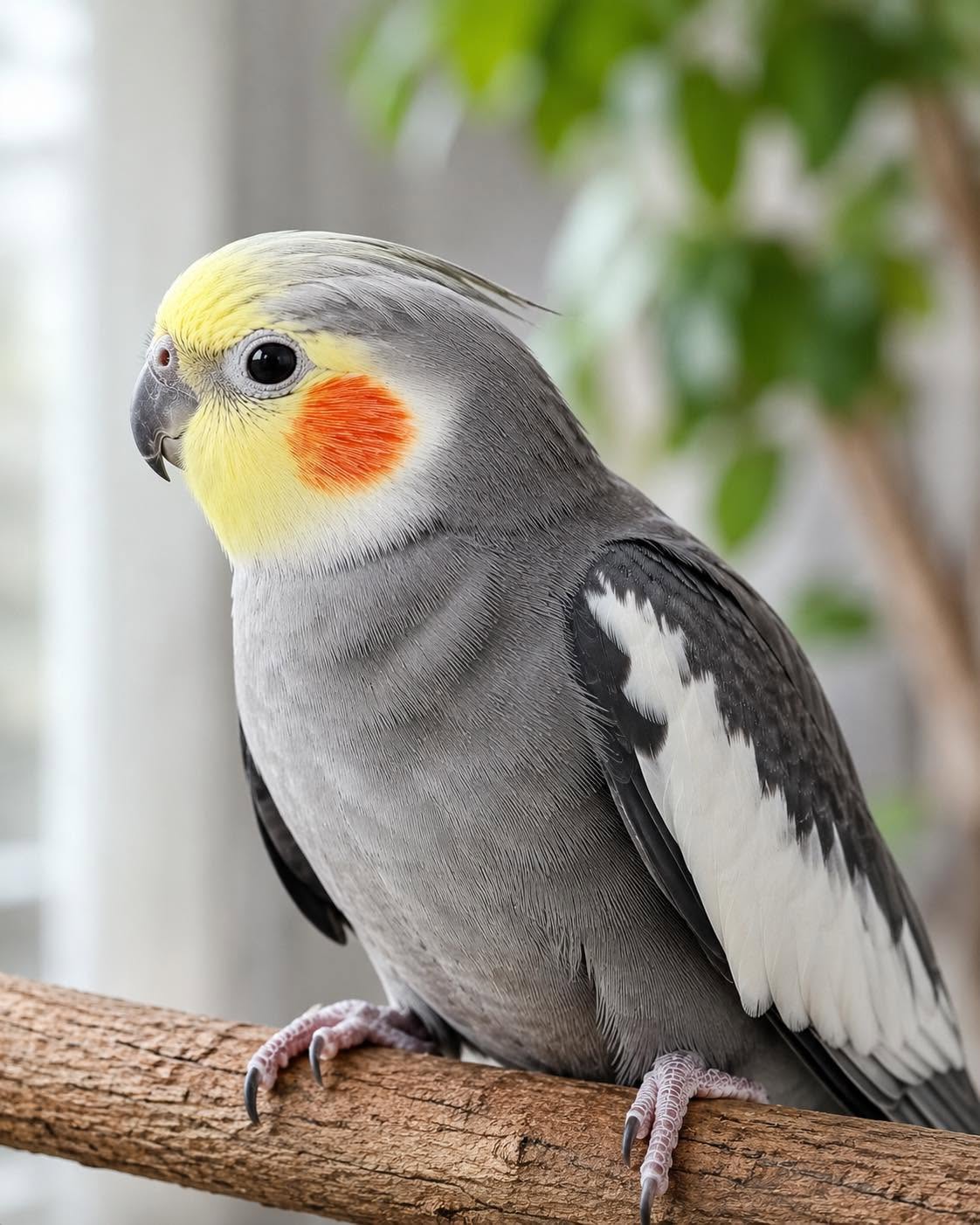
Flat Crest in a Relaxed, Settling Bird — Entirely Normal
The most common reason a cockatiel’s crest is flat is also the least worrying: the bird is relaxed and preparing for or in the middle of sleep.
As a cockatiel transitions from alertness to rest, the crest gradually lowers. A bird that is thoroughly comfortable, that has eaten, that feels safe in its environment, and that is beginning to doze will have a noticeably flatter crest than the same bird during its active periods. In deep sleep, the crest is flat or very slightly raised — compressed against the head, feathers slightly loosened for warmth.
If you observe your bird’s crest position across the course of a day, you will notice this pattern clearly: crest raised and active during the morning activity period, gradually lowering toward the early afternoon rest period, raised again as the bird becomes active in the late afternoon, and lowering again in the evening as it settles for sleep.
A bird sleeping with a flat crest is not a bird in distress. It is a bird that feels safe enough in its environment to enter rest — which, for a prey animal, requires a level of trust in the safety of its surroundings that is genuinely earned rather than assumed.
The distinction: a sleeping bird has a flat crest combined with relaxed, slightly puffed feathers (for warmth), eyes closed or half-closed, body weight settled on one foot. The entire posture is relaxed. This is good.
Flat Crest in a Tense, Alert Bird — Fear or Threat Response
This is the version of flat crest that means something is wrong — not with the bird’s health, but with the bird’s emotional state. Something in its environment is making it feel threatened or alarmed.
A cockatiel in a fear or threat response has a flat crest but the rest of its posture is not relaxed. The body is elongated and tense, not loosely settled. The feathers are not puffed for warmth — they are sleeked tightly to the body, making the bird look slim and compact rather than rounded. The eyes are wide open and tracking whatever is causing the alarm. The bird may be pressed toward the back of its cage or into a corner, seeking cover.
The combination of flat crest, tightly sleeked feathers, and a tense, tracking body posture is the fear response. The bird is not comfortable. Something in its environment is registering as a threat.
Common causes: a new pet in the household — a dog or cat that has come too close to the cage. A new person who has made a sudden movement near the bird. A change in the cage environment — a new object placed too close, a rearrangement that has removed the bird’s sense of security. Exterior threats — a bird of prey visible through a window, a sudden loud noise.
The response is to identify and remove the cause of the alarm where possible, or to give the bird time and space to adjust if the change is necessary and cannot be undone. A cockatiel that is repeatedly in this state — permanently on alert, crest always flat, never relaxed — is a bird that is chronically stressed, and chronic stress has real health consequences over time. I cover this in our guide on what affects cockatiel lifespan.
Flat Crest in a Puffed Bird — The Health Warning
This is the combination that needs your attention.
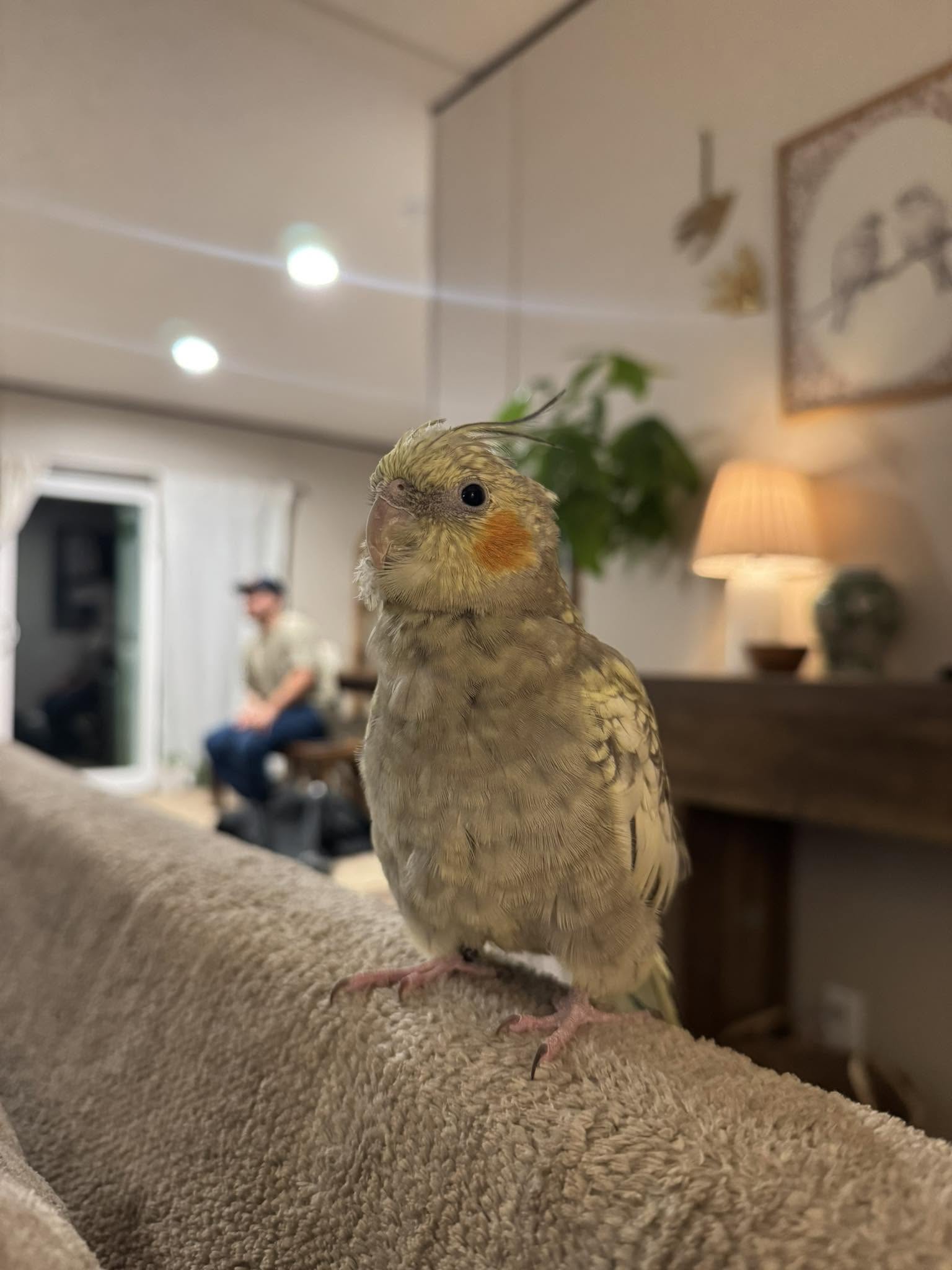
A flat crest combined with puffed body feathers — the bird looks round and fluffed rather than its normal shape — combined with quiet or subdued behaviour, is a health warning. This is not a sleeping bird. This is not a frightened bird. This is a bird whose body is trying to retain heat because it does not have enough energy to maintain its normal temperature regulation. It is the posture of a bird that is unwell.
The puffing is the key differentiator. A sleeping bird has slightly loosened feathers but maintains its normal shape. A sick bird has significantly puffed feathers, making itself look distinctly rounder than normal. The flat crest in a healthy sleeping bird sits on top of a bird that is essentially normal-shaped and positioned normally. The flat crest in an unwell bird sits on top of a bird that looks physically different — rounder, heavier, lower in its posture.
Other signs that confirm this is a health concern and not rest: the bird remains in this posture for extended periods without moving to eat, drink, or engage with its environment. It may be sitting on the cage floor or a low perch rather than its normal high sleeping spot. Its eyes may be half-closed but without the quality of genuine relaxed sleep — there is a heaviness to the posture rather than ease. The bird does not respond normally to your presence or voice.
This combination — flat crest, puffed body, quiet, low in the cage, unresponsive — is one I take seriously immediately, every time. It tells me the bird has been struggling for some time and has reached the point where it can no longer maintain normal behaviour. A bird does not reach this state in one morning. It has been declining, and the puffing is the point at which the concealment stops.
See a vet today. Not this week — today. Keep the bird warm while you arrange it.
Flat Crest in the Hissing Posture — Clear Defensive Warning
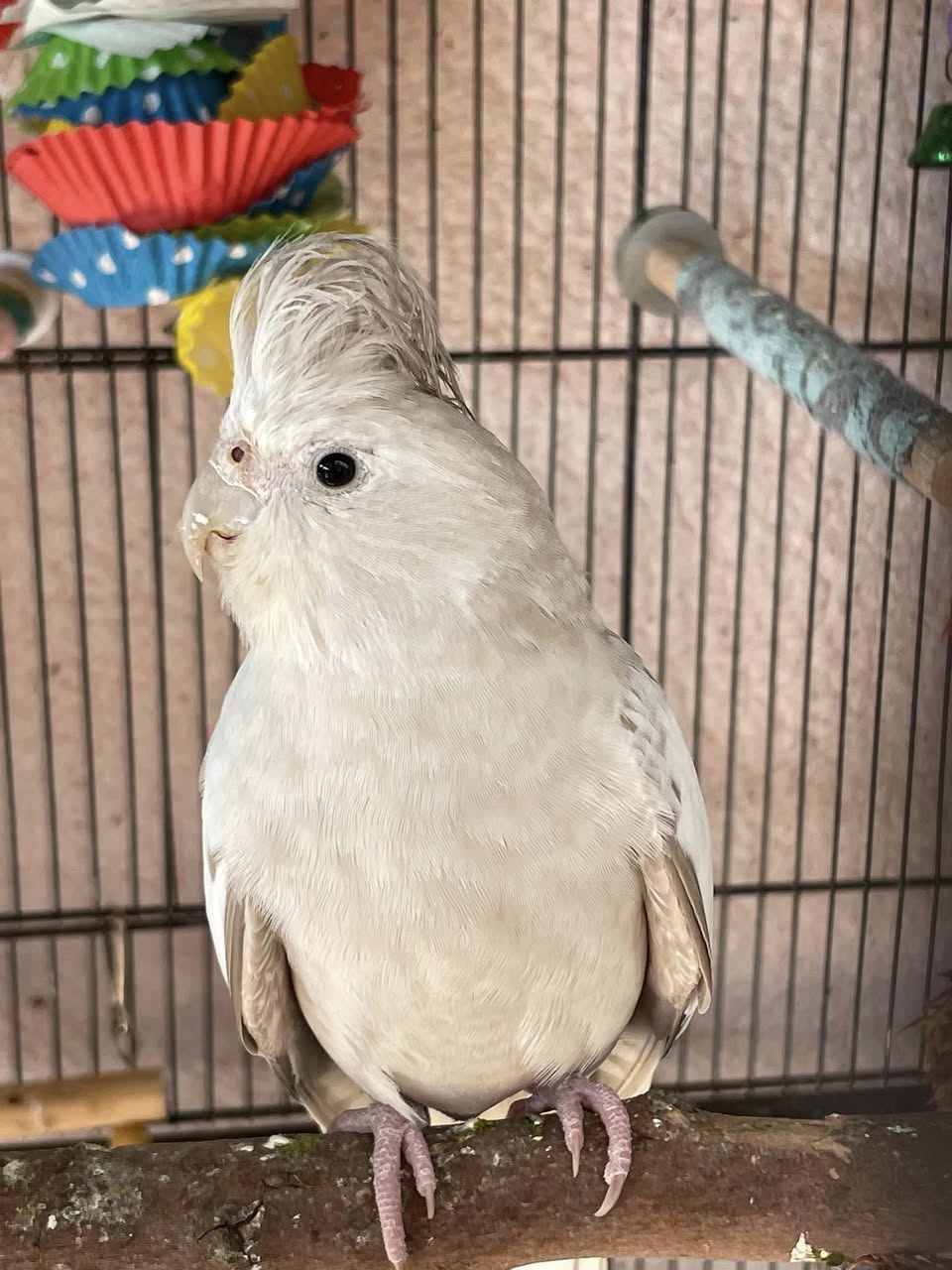
This is the most dramatic version of the flat crest, and it is the least ambiguous. When a cockatiel is in full defensive mode — threatened by something close, prepared to bite — the crest goes completely flat and the wings are held slightly away from the body. The beak may open. The bird produces a hissing sound. The body crouches and leans forward.
This is the pre-bite warning posture. The bird is not calm. It is not sleeping. It is telling you — and anything else nearby — to back off.
I cover this in detail in our guide on why cockatiels hiss. The short version for this guide: if you see this posture, respect it. Create distance. Give the bird space. Do not push through it. The bite comes after the hiss, and cockatiel bites from a seriously alarmed bird are not minor.
New Bird Flat Crest — What Happens in the First Weeks
A newly arrived cockatiel will often spend significant time in the first week or two with its crest relatively flat. This is the settling-in response — the bird is in a new environment with new sounds, new smells, new people, and a new cage. Everything is unfamiliar. The crest reflects the bird’s state of mild ongoing wariness as it maps this new world.
This is not illness. It is not a sign the bird is unhappy or unsuitable. It is a normal response to comprehensive unfamiliarity.
The pattern you should see: the flat crest of the first few days gradually giving way to more varied crest positions as the bird becomes more comfortable. More raised crest during active periods. More relaxed, slowly lowering crest as sleep approaches. By week two or three, a crest that is spending significant time in the alert-positive raised position that characterises a comfortable, settled bird.
If the crest remains consistently flat for more than two to three weeks without any variation, or if the bird seems genuinely unwell rather than simply cautious — that is worth assessment.
The settling-in period for a cockatiel is typically one to two weeks of increased wariness, followed by gradual improvement. Give the bird time, maintain a calm and consistent environment, and do not push for interaction before the bird is ready.
Reading the Crest Alongside Other Body Language
The crest does not operate in isolation. Every crest position is more informative alongside the rest of the bird’s body language — the feather position, the posture, the eye state, the foot position, the tail position.
Here is how the most important combinations read:
Flat crest + relaxed, slightly puffed feathers + eyes closed or half-closed + sitting on one foot. Sleeping or resting. Entirely normal. The most common version of the flat crest. Nothing to do.
Flat crest + sleeked feathers + tense posture + wide open eyes. Fear or alarm response. The bird is in threat-detection mode. Identify and address the cause.
Flat crest + significantly puffed feathers + quiet, low position + no response to you. Health warning. Vet today.
Flat crest + wings slightly open + beak open + hissing sound. Defensive warning before bite. Give the bird space immediately.
Flat crest + forward lean + tail slightly fanned. Display or mild territorial assertion, often seen in hormonal behaviour. Usually resolves quickly.
Crest at half-mast + slight head tilt + eyes slightly soft. Contentment and engagement — this bird is comfortable and watching you with interest. A good sign.
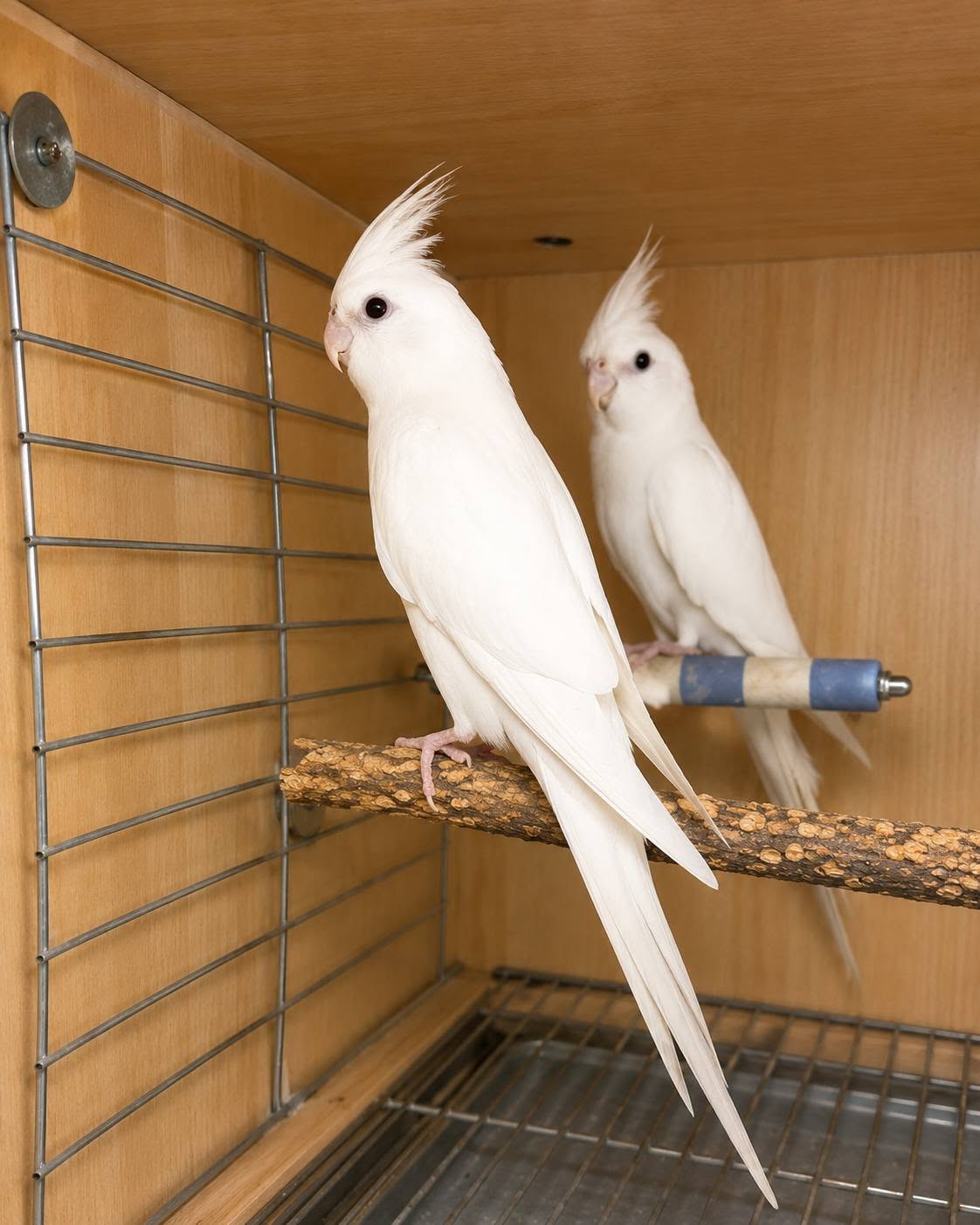
- “The crest is flat so it must be unhappy” — Flat crest can mean content and relaxed, particularly in a resting bird. The crest does not have a single meaning across all contexts. Read the whole bird alongside the crest, always.
- “It keeps its crest flat around me — it must not like me” — A bird that keeps its crest flat around specific people is most likely wary or uncertain about those people, not expressing active dislike. Wariness in a bird that has not yet fully bonded is normal and reducible through consistent, patient, non-threatening interaction over time.
- “It raises its crest when I approach — that means it’s happy to see me” — A raised crest on your approach means the bird has been alerted by your approach. This can be positive alertness — the bird is pleased you are there — or it can be alarm alertness. The quality of the raised crest, the speed of the response, and what the rest of the bird is doing tells you which one.
- “The crest goes flat when it’s puffed up — it must be cold” — A bird that is puffed up significantly and has a flat crest is displaying the illness combination, not the I-am-cold combination. A cold bird that is otherwise healthy will seek a warmer spot and its behaviour will be otherwise normal. A sick bird is puffed, flat-crested, and disengaged from its environment. If you have moved the bird somewhere warmer and it remains puffed and flat — see a vet.
- “My last cockatiel always had its crest raised — this one must be less happy” — Individual cockatiels have different default crest positions. Some birds are naturally more animated with their crest; others keep it lower as their resting neutral. What matters is not the absolute position but the range of positions across the day and the response to specific stimuli. A bird that raises its crest when stimulated and lowers it when relaxed, regardless of where its neutral position sits, is communicating normally.
When to See a Vet — The Clear Summary
- Flat or lowered crest in a bird that is visibly resting — one foot up, eyes closed or half-closed, settled on a high perch, feathers slightly loosened but normal shape.
Normal resting behaviour. No action needed. Note this as the bird’s normal sleep posture so you can identify it confidently in future. - Flat crest in a bird that is awake and tense — sleeked feathers, eyes wide, body elongated, pressed toward the back of the cage.
Fear or alarm response. Identify the cause — new person, new pet, new object, outside threat. Remove or manage the cause. If the bird is new to the household, give it more settling time before increasing interaction. - Flat crest combined with significantly puffed body feathers, bird quiet and unresponsive, sitting lower than usual or on the cage floor.
Health warning. Vet today. Keep the bird warm while you arrange to be seen. Do not wait overnight. - Flat crest with wings held slightly away from body, beak open, hissing sound.
Defensive display before bite. Create space immediately. Read our guide on why cockatiels hiss for how to manage this situation. - New bird with consistently flat crest for the first one to two weeks, eating and drinking, no other symptoms.
Settling-in adjustment. Normal. Give the bird time and a consistent, calm routine. Crest variation should appear within two to three weeks. - Any crest position that is permanently flat — day and night, active and resting, without variation — combined with any other health changes.
Vet assessment appropriate. A bird that has lost all crest variation alongside other changes may have a neurological or health issue affecting normal expression.
What I Tell New Cockatiel Owners About the Crest
When someone buys a cockatiel from us, the crest reading is one of the things I always cover before they leave. Not in overwhelming detail — but enough that they know the three most important positions and what each means.
Raised and alert: engaged and interested.
Flat on a resting, puffed bird: possible health concern — watch it.
Flat on a sleeping, relaxed bird: entirely normal.
Those three distinctions cover the majority of what they will see and the majority of questions I would otherwise be answering six weeks later. The rest of the nuance comes with time and observation — learning their specific bird’s default positions and responses.
The broader point I make is this: cockatiels communicate clearly and continuously. Their emotional state is broadcast through the crest in a way that, once understood, gives an owner a real-time window into how the bird is feeling. That is enormously useful for catching problems early — a bird whose crest behaviour has changed, a bird that is spending more time than usual in the flat-puffed position — those changes are visible and actionable.
Learning the language takes a few weeks of conscious observation. After that, it becomes automatic. You will stop consciously thinking about it and start simply knowing, from across the room, how your bird is doing.
Come in if you have questions about what you are seeing with your cockatiel. We are at Manor Garden Centre, Cheney Manor Industrial Estate, Swindon, SN2 2QJ — open every day. Or call us on 01793 512400.
Visit Us at Paradise Pets Swindon
We stock cockatiels year-round — normal greys, lutinos, pieds, pearls, and cinnamons depending on availability. All UK-bred, all handled from a young age. If you have a concern about your cockatiel’s crest, posture, or behaviour — or if you are thinking of buying one and want to understand what you are taking on — come in and talk to us.
We also stock a full range of budgerigars, canaries, and finches, alongside guinea pigs, rabbits, and gerbils and hamsters.