


Neil has kept, bred, and sold budgerigars at Paradise Pets Swindon since 1988 — over 35 years of hands-on experience with these birds. In that time, the most common mistake he sees is owners not knowing what a healthy budgie actually looks like. This is his honest, practical guide to reading the signs correctly — what a thriving UK pet budgie looks like, how to tell a stressed bird from a sick one, and the specific health indicators every owner should know.
A couple came in not long ago, convinced their budgie was unwell. The bird was quiet, sitting low, feathers slightly puffed. They had had it for three weeks. They were worried.
I asked them a few questions. Where was the cage positioned? Had the bird been eating? Was it new to the house when they got it?
Yes — three weeks was how long they had owned it. The cage was in a busy room near a window. And the bird had come straight from a pet shop into a new environment without any settling-in period to speak of.
The bird was not ill. It was stressed and unsettled. There is a difference, and it matters enormously — because the response to each is completely different. Treating a stressed bird like a sick one, or missing a sick bird because you assumed it was just settling in, are both errors with real consequences. After 35 years at the counter, I see this confusion regularly, and the consequences range from unnecessary vet bills to budgies that did not get help in time.
What both errors have in common is not knowing what a genuinely healthy budgie looks like in the first place. That is what this article is for.
By the end of it, you will know exactly what a healthy budgie looks like across every key indicator — feathers, eyes, cere, posture, activity, eating, droppings, and weight — what subtle changes mean trouble, how to distinguish stress from illness, and how to build the kind of observation habit that genuinely protects your bird’s health long-term.
Why Most Owners Cannot Tell
Budgerigars are prey animals. In the wild, appearing ill makes you a target. So budgies — more than almost any other common pet — have evolved to mask the signs of illness until they physically cannot anymore. By the time a budgie looks obviously sick to an untrained eye, it has often been unwell for some time.
This means that recognising health in a budgie is not straightforward. You are not looking for the absence of dramatic symptoms. You are building a picture of what normal, thriving actually looks like — so that anything that falls short of it registers as a change worth paying attention to.
The signs of a healthy budgie are specific. Once you know them, they are easy to read. Until you know them, it is very easy to assume all is fine when it is not, or to worry unnecessarily about a bird that is actually perfectly well.
Feathers — The First Thing to Look At
The feathers are the most immediate indicator of a budgie’s condition, and the one most owners look at without really knowing what they are seeing.
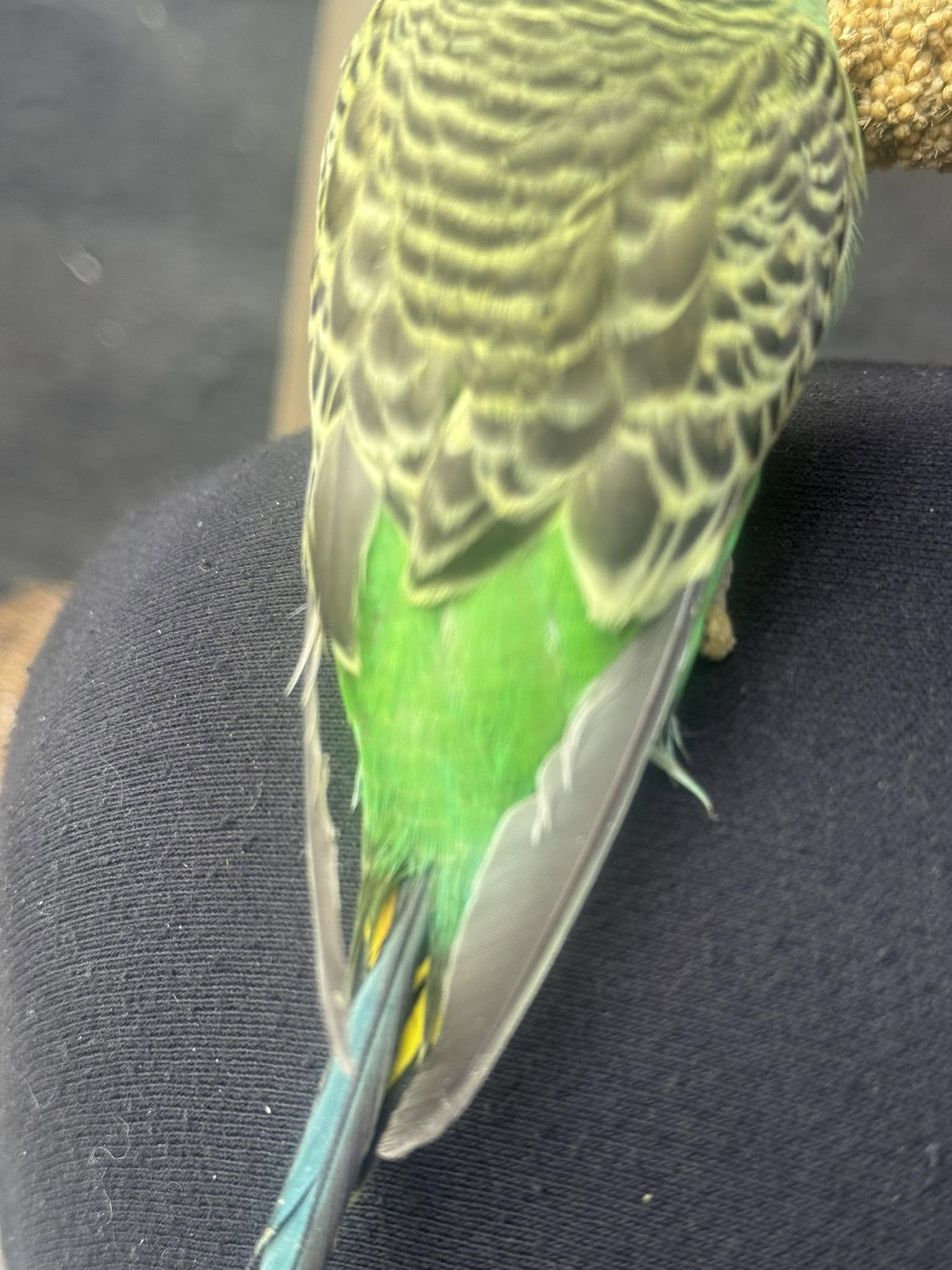
A healthy budgie’s feathers should be smooth, close to the body, and have a sheen to them. The bird holds them neatly — not plastered flat, not puffed out. There is a tidiness to a well-kept budgie’s plumage that becomes obvious once you have seen it.
Puffed feathers — where the bird is sitting with its feathers fluffed outward, appearing rounder and fluffier than usual — is the sign most people notice but misread. Some puffing is normal: birds fluff briefly when they are cold, or when they are dozing. The problem is sustained puffing. A budgie that is sitting puffed for most of the day, particularly in a warm room, is conserving energy. That is what a bird in poor condition does.
Ragged, frayed, or missing feathers are different again. Some feather loss is normal during a moult, which budgies go through periodically. But bald patches, feathers that look chewed or broken at the shaft, or a generally dishevelled appearance outside of moult is worth investigating — it can indicate feather destructive behaviour, mites, or nutritional deficiency.
What to look for specifically with feathers:
- Smooth, sleek, held close to body — healthy baseline you want to see
- Bright sheen, particularly in good light — sign of good nutrition and condition
- Even colour distribution — no patches, stains, or unusual marks
- Sustained puffing during the day in a warm room — energy conservation, possibly unwell
- Bald patches outside of normal moulting — mites, plucking, or deficiency
- Stained or matted feathers around vent — possible digestive issue
- Stained feathers around beak — possible regurgitation or respiratory discharge
- Pin feathers and patchy loss during normal moult — healthy seasonal pattern
Eyes — What Alert Actually Looks Like
A healthy budgie has bright, round, fully open eyes. Both of them. The area around the eye should be clean — no discharge, no crusting, no swelling of the surrounding tissue.
The brightness is the thing to look for. A well budgie’s eyes have a particular alertness to them — the bird is watching, tracking, responsive. Even a resting budgie, if you move near the cage, should have an eye on you.
A bird with partially closed eyes — particularly if this is combined with puffed feathers and low posture — is showing you a cluster of signs that together indicate something is wrong. One sign on its own can sometimes be explained. Several signs together, particularly the classic trio of puffed feathers, partially closed eyes, and low on the perch, is a picture that needs a vet.
Discharge around the eye, swelling of the tissue surrounding it, or one eye that remains partially or fully closed are all reasons to seek veterinary advice. Do not wait to see if it resolves.

Eye observations to make every day:
- Both eyes fully open, round, and bright — healthy baseline
- Alert tracking when you approach the cage — sign of engaged, responsive bird
- Clean tissue around the eyes — no crusting, no stain
- Symmetrical appearance both sides — any asymmetry worth noting
- One eye partially closed during day — possible localised eye issue, vet check
- Both eyes partially closed — systemic illness sign, urgent
- Crusty deposits or wet discharge — infection or respiratory issue
- Swelling around eye — sinus involvement, vet attention
The Cere — The Small Detail Most Owners Overlook
The cere is the fleshy band of tissue sitting above the beak, where the nostrils are located. It is one of the most useful health indicators on a budgie, and one of the most consistently overlooked.
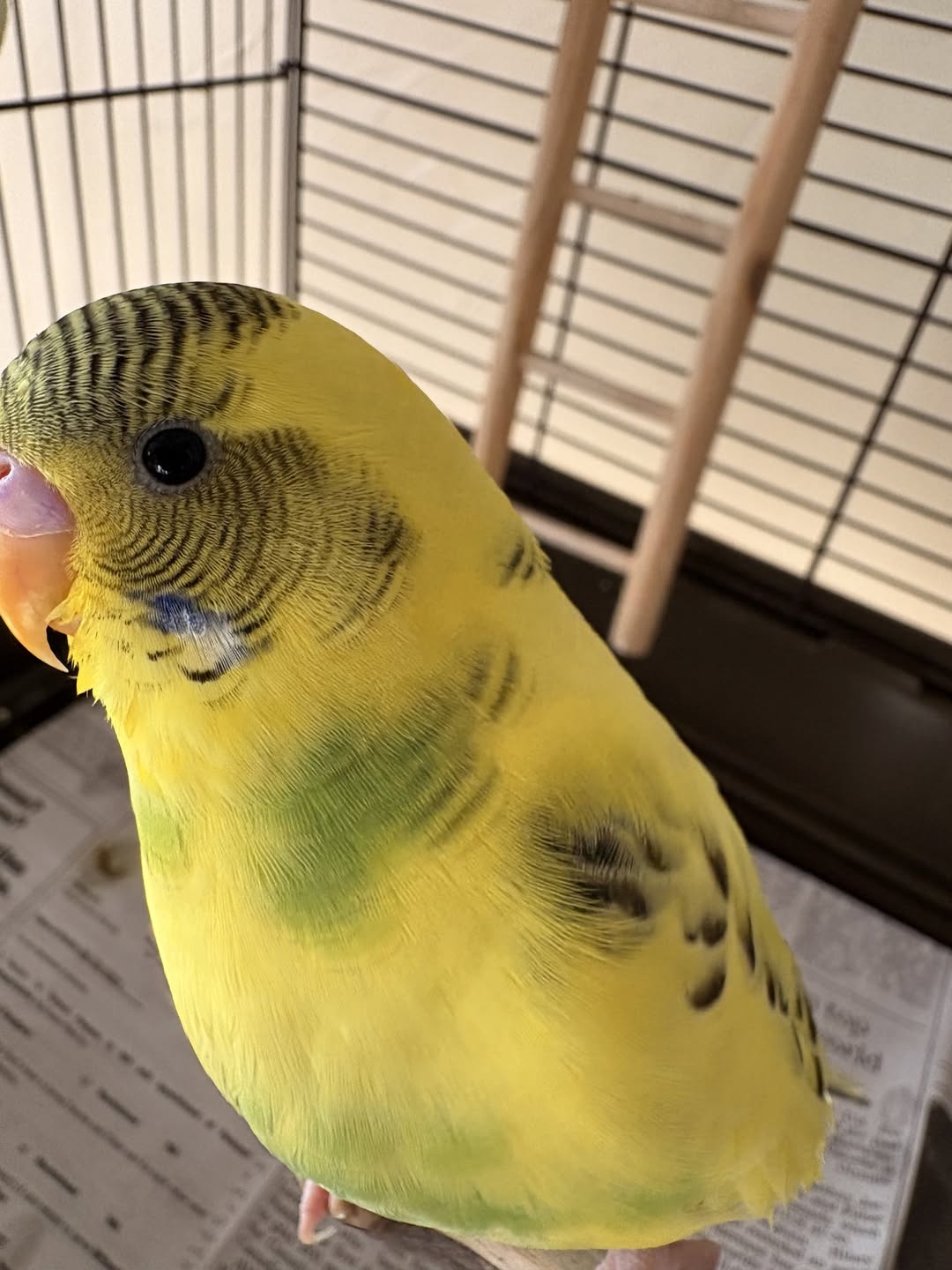
In a healthy male budgie, the cere is typically blue or purplish-blue. In a healthy female, it is brown or tan. In young birds, it can be pink or whitish before the adult colouration develops. These are the normals — and any significant change from what is normal for your individual bird is worth noting.
The nostrils within the cere should be clean, open, and symmetrical. There should be no discharge — watery or crusty — around or within them. A cere that looks crusty, encrusted, or has changed colour significantly from the bird’s established normal can indicate illness, hormonal changes, or in females, a condition called brown hypertrophy of the cere, which a vet should assess.
A healthy cere also has a smooth texture. Rough, scaly, or honeycomb-textured tissue around the cere and beak — often spreading to the legs as well — is a classic sign of scaly face mite, a treatable condition but one that needs veterinary attention. It is more common than many owners realise, and easily missed in its early stages if you do not know what you are looking for.

Cere observations to make weekly:
- Adult male — blue to purplish-blue, smooth surface — healthy baseline
- Adult female — brown to tan, slightly textured — healthy baseline
- Young bird — pink or whitish before maturity — normal juvenile appearance
- Clean dry nostrils, symmetrical — no discharge or crusting
- White or honeycomb-textured patches — possible scaly face mite, vet needed
- Significant colour change in established adult — hormonal or health issue
- Crusty deposits inside or around nostrils — respiratory issue
- Severely thickened brown female cere — possible hypertrophy, vet check
For more on cere changes specifically, our detailed article on what cere colour changes really mean covers this in more depth, and our guide on white spots on a budgie’s beak covers the scaly face mite signs in detail.
Posture and How the Bird Sits
A healthy budgie sits upright and balanced. Both feet gripping the perch. Weight evenly distributed. Head up. The bird is not leaning, not hunched, not favouring one side.
This sounds obvious, but it is worth being deliberate about observing. A bird sitting with its weight shifted, one foot hanging loose, or its body tilted is showing you something. It may be minor — a temporary rest in an unusual position — or it may be more significant, particularly if it is consistent.
A bird on the cage floor is a more serious sign. Healthy budgies do not spend time on the cage floor unless they are foraging briefly or exploring. A bird sitting on the floor for extended periods — particularly in a hunched posture, or if it has difficulty getting back up to a perch — needs prompt veterinary attention.
Tail bobbing at rest is another posture indicator worth knowing. Watch the tail when the bird is sitting still and relaxed. The tail of a healthy resting budgie should be relatively still. A tail that bobs visibly with each breath indicates that the bird is working harder than it should to breathe. That is a respiratory sign and it warrants same-day veterinary contact.
- Bird on the cage floor for extended periods — fundamental loss of strength
- Tail bobbing visibly with every breath at rest — respiratory distress
- Hunched posture combined with eyes closed — classic seriously ill picture
- Inability to grip a perch — significant weakness or neurological issue
- Open-beak breathing when not active — respiratory emergency
- Loss of balance, falling from perches — neurological or systemic issue
- Head tilted persistently to one side — possible ear or neurological problem
- Wings held low or drooping — significant weakness or injury
Activity and Vocalisation — What an Engaged Bird Looks Like
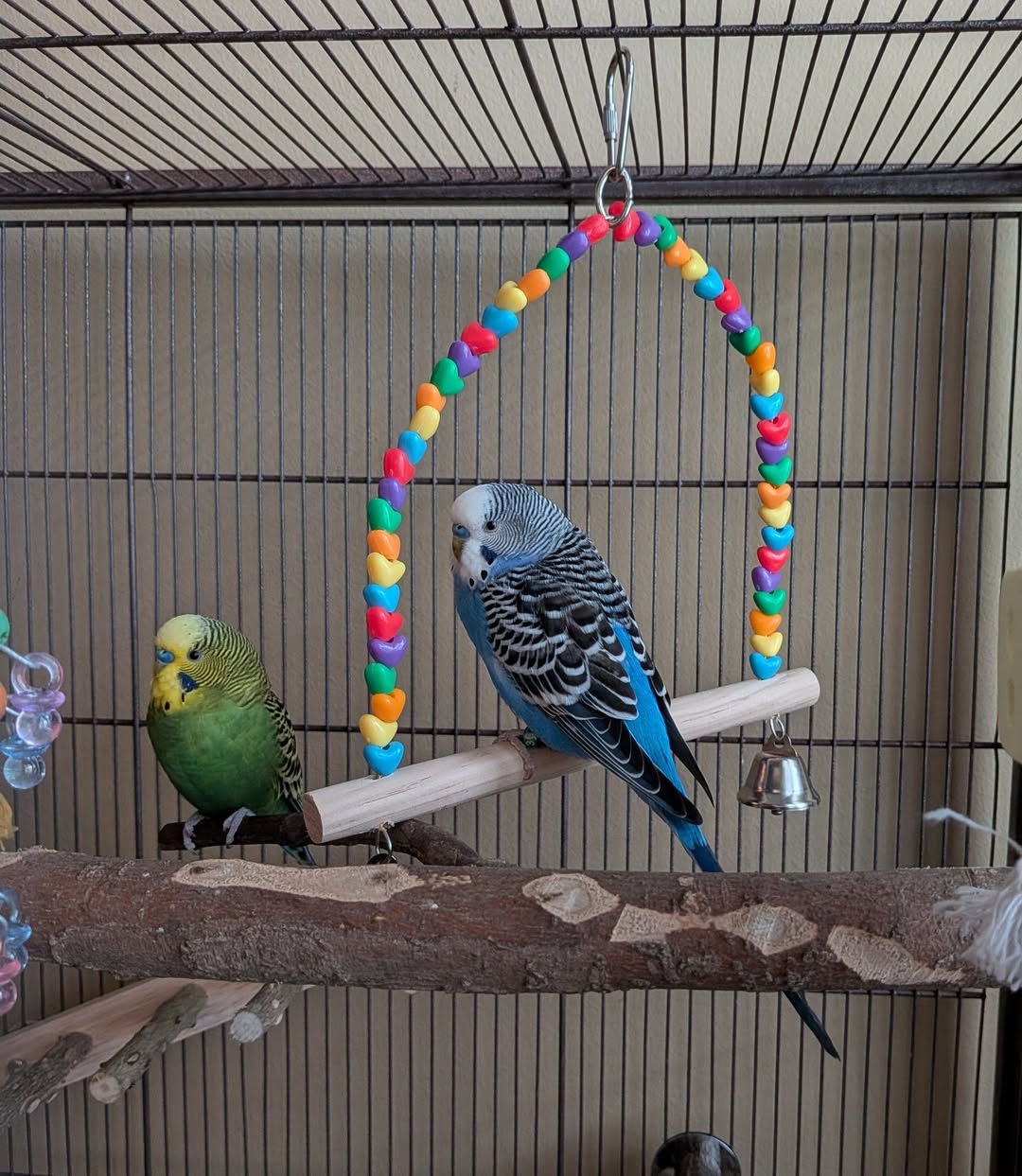
A healthy budgie is active. It moves around the cage. It climbs. It chews. It interacts with toys, with mirrors, with you. It makes noise — chattering, contact calls, singing, mimicking. The exact amount of activity varies between individuals, and some budgies are naturally quieter than others, but there should be a baseline level of engagement with the environment.
Vocalisation is one of the earliest things to change when a budgie is unwell. A bird that chatters regularly and suddenly goes quiet — for more than a day, in the absence of an obvious stressor like a change in environment — is worth watching closely. Silence is not always sinister, but silence combined with any of the other signs in this article builds a picture.
The evenings are often the most active time. If your budgie is consistently quiet and inactive during what should be its busy period, that is the pattern worth paying attention to.
Activity indicators of a thriving budgie:
- Active movement around cage during waking hours — climbing, hopping, exploring
- Regular vocalisation — chatter, contact calls, songs, possibly mimicry
- Engagement with toys, mirrors, or perches — interactive interest in environment
- Beak grinding when resting — sign of contentment
- Regular preening throughout the day — normal grooming behaviour
- Response to your presence — turning to watch, calling, approaching cage front
- Active evening period — many budgies are most vocal late afternoon to dusk
- Sleep periods balanced with activity — daytime naps but clear active windows
Eating, Drinking, and Droppings
A healthy budgie eats regularly throughout the day. It should be visiting the food bowl, husking seed, and showing interest in anything new you introduce to the cage. It should be drinking — not excessively, which can itself indicate a problem, but regularly.
The seed bowl check is essential. Blow gently across the surface of the seed — husks will lift away and reveal whether there is whole seed underneath. A bowl that looks full may be full of empty husks. A bird that has not been eating will leave those husks undisturbed.
Droppings should be checked daily. Normal budgie droppings have a small dark green or dark solid portion, a white urate component, and a small clear liquid component. Droppings that are entirely watery, lime green throughout, very dark, or blood-tinged are outside the normal range. A change in droppings, particularly combined with other signs, warrants prompt attention.
Eating, drinking, and droppings observations:
- Regular visits to food bowl throughout day — sign of healthy appetite
- Visible husking activity and seed shells accumulating — proof of actual eating
- Interest in fresh vegetables or treats — engagement with food beyond basic seed
- Regular but not excessive water drinking — proper hydration without polyuria
- Three-part droppings — dark solid, white urate, clear liquid — healthy baseline
- Adequate number of droppings overnight — proof of overnight activity and digestion
- Refusal of food for more than half a day — significant warning sign
- Watery droppings with no solid component — vet attention needed
- Blood-tinged or unusually coloured droppings — urgent vet attention
Weight — The Sign You Cannot See Without Weighing
This is the one health indicator that cannot be assessed by looking alone, and it is one of the most sensitive early warning signs available.
A budgie that is losing weight may show no other visible signs for days. The feathers cover the body effectively enough that significant weight loss can be hidden until it is quite advanced. But if you weigh your bird regularly — using small digital kitchen scales, which work well for this — a drop from the established baseline becomes visible very early.
Healthy adult budgerigars typically weigh between 30 and 40 grams, though this varies by individual. What matters more than the absolute number is consistency for your individual bird. Weigh at the same time of day, note the number, and track it over time. A drop of more than a gram or two from the bird’s usual weight, particularly if sustained, is worth a vet conversation.
It takes thirty seconds. Once you have a baseline, it is one of the most useful checks you can build into your routine.
- Get small digital kitchen scales accurate to 1 gram
Available cheaply in any UK supermarket or online. £5-£15 typically. - Place a small dish or container on the scales, zero them out
The container gives the bird something to stand on without flying off. - Step the bird into the container gently
With a tame budgie, this takes seconds. Some birds tolerate it better than others — be patient. - Note the weight in a simple log
Date and weight. A phone note works. Pattern over time is what matters. - Weigh at the same time of day
Morning before feeding is most consistent. Same day of the week if possible. - Track for at least 4 weeks to establish baseline
Individual budgie weights vary; your bird’s normal is what matters. - Act on consistent drops of 2g or more
A single low reading may be variation. A sustained drop matters. - Combine with visual observation
Weight tracking supplements but does not replace the daily visual check.
After 35 years, I have come to view regular weighing as one of the most underused tools in UK budgie care. The owners who weigh weekly catch problems weeks earlier than the owners who only observe visually.
The Difference Between Stressed and Sick
I want to come back to the couple I mentioned at the start, because the distinction they needed to make is one that comes up regularly at the counter.
A newly acquired budgie, or a budgie in a changed environment, will often display signs that look like illness — quiet, low on the perch, feathers slightly puffed, not eating well. In a bird that has just moved into a new home, this is very often stress and adjustment rather than sickness.
The way to tell the difference is time and trajectory. A stressed bird should improve steadily over days and weeks as it settles. An unwell bird will not improve, and will often decline.
If a newly acquired budgie is showing these signs, give it a quiet environment, cover the cage partially to reduce stimulation, and avoid excessive handling. Watch carefully. If the bird is not showing clear improvement within a few days — or if it gets worse at any point — do not wait. Get it seen.
A bird that is genuinely unwell and is assumed to be settling in is a bird that may not get timely help. That is the error I want you to avoid.
| Sign | Stressed Bird | Sick Bird |
|---|---|---|
| Timeline | Linked to recent change (new home, new cage, new household) | May develop in stable established environment, or worsen progressively |
| Trajectory | Improves over days and weeks with calm environment | Does not improve, often worsens despite supportive care |
| Response to quiet | Calms down, becomes more active after rest periods | Stays subdued regardless of environment changes |
| Appetite | Reduced initially but returns within days | Persistently reduced or absent |
| Activity level | Slowly increases as bird settles | Continues to decrease |
| Droppings | May be reduced or slightly off but normalise within days | Remain abnormal, may worsen |
| Eye and feather condition | Slightly off but improving | Worsens — increased puffing, eyes more closed |
| Response to handling | Fearful initially, gradually more accepting | Increasingly unresponsive, weak |
| Vet attention needed | Usually no — give it time, monitor closely | Yes — within days or sooner if signs worsen |
Common Mistakes UK Budgie Owners Make
For balance, here are the genuine mistakes I see at the counter when UK owners describe how they monitor their budgies. Avoiding these makes the daily health observation genuinely effective.
- Only looking when the bird seems “off” — too late by then, baseline never established
- Assuming a quiet bird is content — silence can mean unwell, particularly in usually-vocal budgies
- Confusing seed husks with eaten seed — full bowl can mean nothing was eaten
- Waiting weeks for signs to “settle” — illness does not improve with time the way stress does
- Treating every change as illness — leads to unnecessary stress and vet bills for normal variations
- Ignoring the cere changes — one of the earliest and most useful indicators
- Never weighing the bird — missing the most sensitive early-warning sign available
- Cleaning the cage thoroughly before looking at droppings — destroying critical diagnostic information
- Assuming budgies show illness like other pets — they hide it far better than dogs or cats
- Not having an avian vet identified before needing one — wastes critical time in an emergency
The single most common mistake I see is owners who only look at their bird when something already seems wrong. Daily observation against an established baseline is the difference between catching problems early and missing them entirely.
Building The Observation Habit
For UK owners who want to actually build the kind of routine that genuinely protects their budgie’s health, here is the practical approach I recommend at the counter.
- Morning glance — 1 minute
Before you uncover the cage fully or refill anything, just look. Posture, eyes, feathers, overnight droppings. - Mid-day quick check — 30 seconds
Is the bird active? Eating? Drinking? Engaged with environment? - Evening proper observation — 2-3 minutes
This is the longest check of the day — activity level, vocalisation, breathing at rest, eating throughout the day. - Weekly weighing
Same day, same time. Log it. Watch the trend. - Weekly close-up cere check
Specifically look at the cere texture and colour weekly. Subtle changes are easy to miss day-to-day. - Monthly photograph
Phone photo from the same angle. Visual comparison over months catches changes you would otherwise miss. - Note anything different
Even minor things. A simple log gives you context if a vet visit is needed. - Have your avian vet contact saved
Before you need it. Label it clearly in your phone.
This routine takes about 5 minutes total per day. Once it is habit, it costs you almost nothing — and gives you the level of familiarity with your bird that genuinely protects its health long-term.
For broader bird health monitoring, our guide on what to check on your bird twice every day covers the wider observation approach in detail, and our article on how to know if your budgie is dying covers the serious warning signs that need immediate attention.
Frequently Asked Questions
My budgie sleeps a lot during the day — is that normal?
Some daytime rest is normal, particularly around midday. But a budgie that is consistently inactive throughout the day, and quiet during what should be its active evening period, is showing you a change in pattern worth investigating. A healthy budgie has clear active periods each day, particularly in the morning and late afternoon to evening.
My budgie’s droppings have changed since I gave it new food — should I be worried?
Fresh fruit and vegetables will often change the colour and consistency of droppings temporarily — this is normal. If the change is solely connected to a dietary addition and resolves when that food is removed, it is likely dietary rather than a health concern. If the change persists, or if there is blood or the droppings are entirely watery with no solid component, seek veterinary advice.
How do I know if my budgie’s feather loss is a moult or something else?
During a normal moult, feather loss is gradual and evenly distributed across the body. You will often see pin feathers — new feathers growing in — alongside the loss. Bald patches, feathers that look chewed or broken, or loss concentrated in one area is not typical moult and warrants investigation.
My budgie’s cere has changed colour — what does that mean?
Some cere colour change is normal, particularly in females during hormonal cycles. A brown cere in a female can be normal or, if it becomes very thick and rough, may indicate a condition called brown hypertrophy, which a vet should assess. A blue cere turning brown in a male, or any significant change in texture, is worth a vet conversation.
Is it normal for a budgie to sit at the bottom of the cage?
Occasionally and briefly, yes — to forage or explore. Consistently and for extended periods, no. A budgie that is spending significant time on the cage floor, particularly in a hunched posture or with other signs of illness, needs veterinary attention promptly.
How long does it take a new budgie to settle in?
For most UK budgies, basic settling takes 1-2 weeks, with full comfort and trust developing over 4-8 weeks. During the settling period, expect quieter behaviour, reduced eating in the first day or two, and slower interaction with you. The key indicator is improvement over time — a settled bird gets steadily more confident, vocal, and active.
Where can I get advice on budgie health in Swindon?
Come and see us at Paradise Pets, Manor Garden Centre, Cheney Manor, Swindon SN2 2QJ. We are always happy to talk about what you are seeing in your bird, and we can advise on whether something looks like it needs vet attention. For genuine medical emergencies, please contact an avian vet directly. Ring us on 01793 512400. The advice is free and we have been doing this for 35 years.
One Last Thing
The owners who manage their budgies’ health well are not necessarily the ones with the most experience. They are the ones who took the time, early on, to learn what their individual bird’s healthy baseline actually looked like — and who built the habit of comparing what they see each day against that baseline.
A budgie that is genuinely thriving is a pleasure to observe. Alert, active, vocal, engaged. Once you have seen it and know what it looks like, the contrast when something is off becomes clear very quickly. After 35 years at the counter, I have come to believe that this single piece of foundational knowledge — knowing what healthy looks like — is more valuable than almost anything else UK owners can learn about budgie care.
Start there. Know what healthy looks like. Everything else follows from that.
The couple with the stressed budgie that morning? They went home with a clear plan — quieter environment, partial cage cover for a few days, reduced handling, careful daily observation. Two weeks later they came back to thank me. The bird had transformed — chattering, active, eating properly, settled. It had not been ill. It had simply needed time and the right environment to settle into its new home. That is the kind of confident assessment every UK owner should be able to make about their own bird, once they know what they are looking at.
If you have a concern about your budgie’s health or behaviour that this article has not addressed, come and find us at Manor Garden Centre, Cheney Manor, Swindon SN2 2QJ. Get in touch here or call 01793 512400.
Want To Build Confidence In Your Budgie Care? Come And See Me
We stock budgerigars year-round alongside everything you need to keep them well. If you have a concern about your budgie’s health or behaviour, come in and talk to us. Free honest advice based on 35 years of UK budgie keeping. That is how we have done things since 1988.