
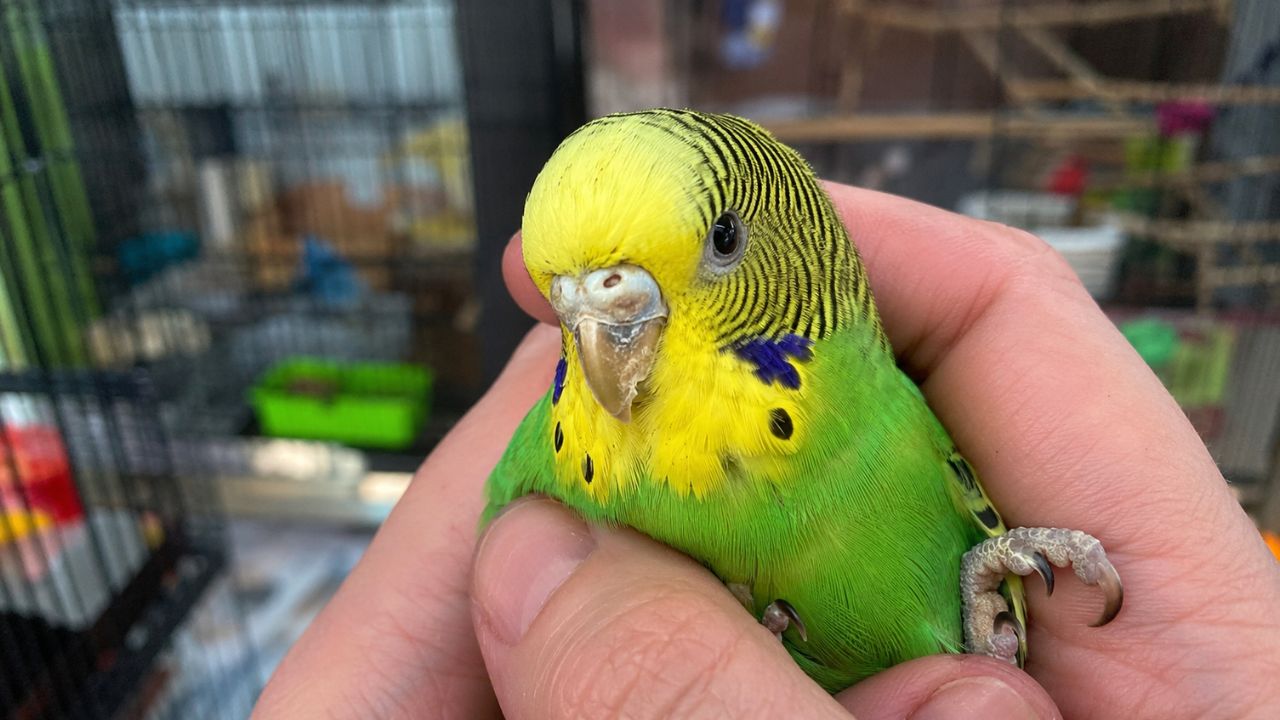

Neil has kept, bred, and sold budgies at Paradise Pets Swindon since 1988 — over 35 years of first-hand experience with these birds. In that time, he has had countless worried UK owners walk in with a budgie showing strange white spots, crusty patches, or honeycomb-like growths on the beak. This is his honest, practical guide on what those white spots really mean, why they almost always need veterinary attention, and exactly what UK owners should do when they spot them.
A young woman came into the shop one Saturday morning, holding a small travel cage with her budgie inside. “Neil,” she said, “I have been watching Sunny for a couple of weeks and I keep noticing these tiny white spots on his beak. They look like little holes, almost like the beak has been sandpapered in places. He seems fine otherwise — eating, chirping, flying around. But it’s getting worse. What is going on?”
I asked her to bring him out properly so I could have a good look in the light. Within about thirty seconds I knew what I was looking at. Sunny had a textbook case of scaly face mite — a parasitic infection that produces exactly the appearance she had described. White, honeycomb-textured patches on the beak, slowly extending up toward the cere. Left untreated, the infection would deform his beak permanently and potentially spread to other birds if she had any. With proper veterinary treatment, the prognosis was genuinely good. Within a few weeks of starting prescription anti-parasitic medication, the beak would begin to heal.
But this had been going on for a fortnight already without her recognising what it was. That delay was typical of what I see across 35 years at the counter — UK owners notice something different about their bird’s beak, hope it might be nothing serious, and end up waiting weeks before seeking help. The earlier white spots on a budgie’s beak are identified and treated, the better the outcome.
This article is the conversation I have at the counter with worried UK owners who have noticed something different about their bird’s beak. By the end of it, you will understand what white spots actually mean, how to identify the most likely cause, when it is genuinely urgent, and exactly what to do today if you see it on your own bird.
First — What A Healthy Budgie Beak Looks Like
Before we get into the causes of white spots, you need to know what normal looks like so you can be confident about what is abnormal. Many UK owners I see at the counter are not entirely sure whether what they are noticing is genuinely concerning or just a feature of the bird’s natural appearance.
A healthy adult budgie beak should be:
- Smooth in texture — no rough patches, no pitting, no honeycomb appearance
- Even in colour — typically yellow, orange, or pale, depending on the bird’s mutation
- Free from white deposits — no chalky spots, no crusty patches
- Symmetrical — both sides of the beak look the same
- Properly aligned — upper and lower beak fit together cleanly
- Free from visible holes or pits — surface should be continuous
- Right length — not overgrown, not abnormally short

A normal beak does have a few features that can sometimes look unusual if you have not seen them clearly before. The upper beak (rhamphotheca) has a subtle grain to it. The cere — the fleshy area at the base of the beak — can be smooth (males) or slightly textured (females in breeding condition). There can be very minor surface variations from normal wear and use. None of these look like white spots, pitting, or honeycomb-textured growth.
If what you are seeing is genuinely white spots, chalky patches, pits, or any change from the smooth even surface described above — it is almost always a problem that needs identifying and addressing.
The 5 Real Causes Of White Spots On A Budgie’s Beak
After 35 years of looking at this in UK pet budgies, the causes I see fall into five distinct patterns. Identifying which one matches your bird is the key to deciding what to do next — though in nearly every case the answer involves an avian vet.
1. Scaly Face Mite (Knemidocoptes) — By Far The Most Common
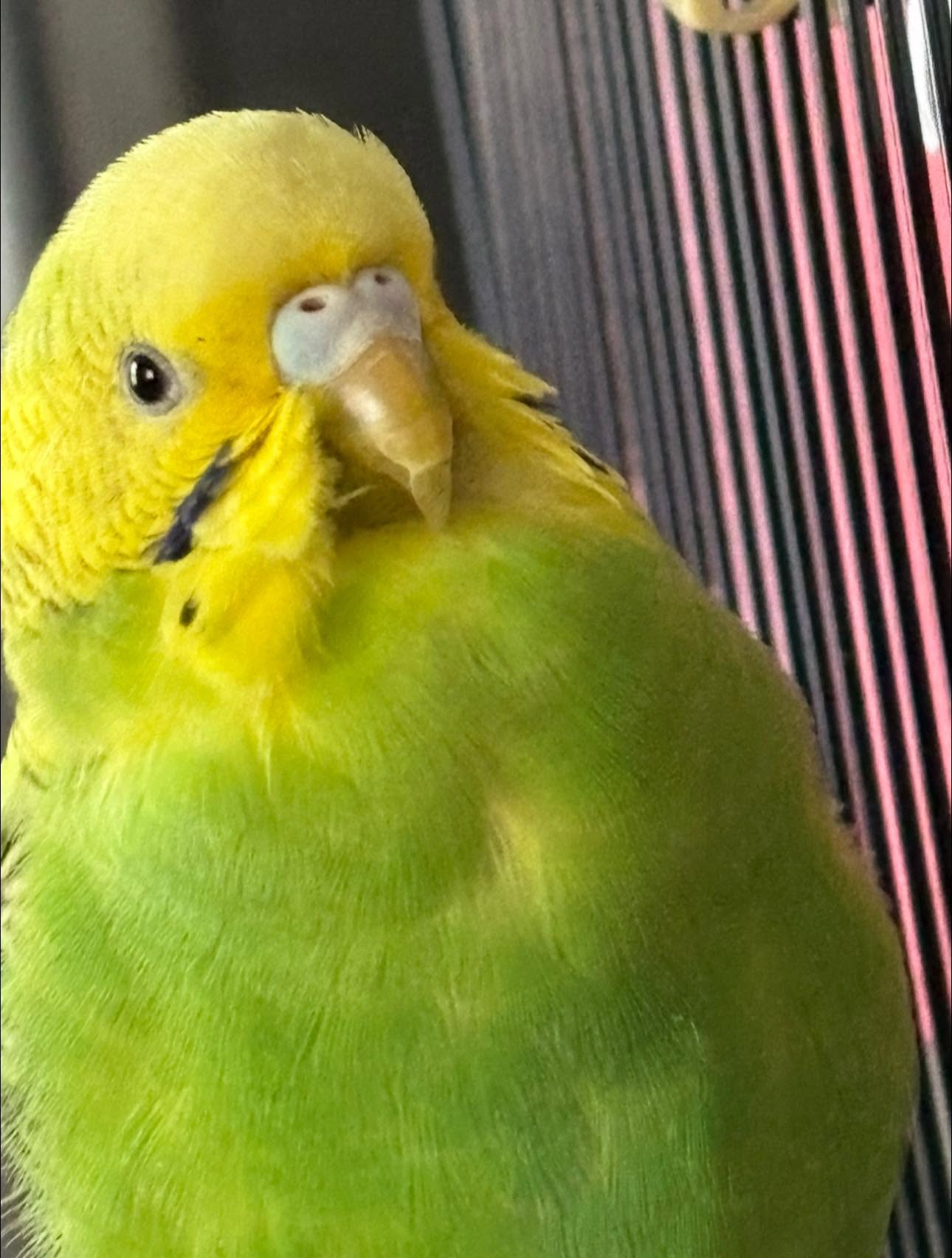
This is the cause I see most often at the counter, and it accounts for the great majority of white spot cases in UK pet budgies. Scaly face mite is a microscopic parasite that burrows into the surface of the beak, cere, and sometimes the legs and around the eyes. The mites cause characteristic damage that has a very specific appearance — once you have seen it properly, you can recognise it almost immediately.
What scaly face mite looks like:
- White, chalky, or pale spots on the beak surface — often starting small
- Honeycomb-textured patches — small holes or pitting in the beak
- Crusty growths around the cere and beak edges
- Sometimes affects the eyelids, legs, and around the vent
- Progressive spread over weeks — patches grow and join up
- The bird may scratch at the face more than usual
- Beak can become deformed if left untreated
- Highly contagious to other budgies in the same household

What causes it: Knemidocoptes pilae mites, which are microscopic parasites that spread between birds through direct contact or shared cage equipment. The mites are common in budgie populations — many birds carry them in low numbers without symptoms, but stress, age, or immune compromise can let the infestation become visible.
What to do: see an avian vet. Scaly face mite is treatable with prescription anti-parasitic medication — typically ivermectin given as drops on the skin. The bird usually shows improvement within a few weeks, with the beak gradually returning to normal as new healthy tissue grows. Home remedies and pet shop sprays are usually not effective on their own — proper prescription treatment is needed.
If you have other budgies, they will likely need treating too even if they show no symptoms, because the mites spread easily between cage mates.
2. Fungal Infection
This is the second cause I see, though less commonly than mites. Fungal infections of the beak — usually involving Aspergillus or similar fungi — can produce white or pale patches on the beak surface. These tend to look slightly different from mite damage.
Signs of fungal beak infection:
- Pale white or off-white patches that may look slightly fuzzy
- Often less defined edges than mite damage
- May be combined with general illness — bird looking unwell
- Sometimes accompanied by respiratory signs (mouth breathing, breathing difficulty)
- Often associated with poor cage hygiene, damp conditions, or contaminated seed
- Bird may be on antibiotics for another condition (which can encourage fungal overgrowth)
- Sometimes affects the mouth and crop too
What to do: avian vet today. Fungal infections in budgies can be serious systemic problems that affect more than just the beak. Diagnosis usually requires microscopic examination of the affected tissue, and treatment involves antifungal medications. The bird’s environment also needs review — cage hygiene, food storage, and ventilation all matter.
3. Nutritional Deficiency Damage
A budgie on a poor diet for an extended period — particularly one deficient in vitamins, minerals, and calcium — can develop beak surface problems including white or pale patches that look chalky or unevenly worn. This tends to develop gradually over weeks or months.
Signs of nutritional beak damage:
- Gradual onset over weeks or months, not sudden
- History of seed-only diet, little to no fresh vegetables or supplements
- Beak may also be slightly overgrown or unevenly worn
- Often combined with general signs of poor health — dull feathers, reduced activity
- Other birds in same household with same diet may also show similar signs
- The patches tend to be less defined than mite damage
- Sometimes accompanied by leg or feet scaling changes
What to do: improve diet immediately and see an avian vet. Add quality fresh vegetables daily, ensure cuttlefish bone is always available, and consider quality bird supplements under vet guidance. A vet can also rule out other causes and may prescribe specific nutritional support. Improvement usually takes weeks to months as new healthy beak tissue grows in.
4. Old Healed Trauma Or Injury
Sometimes what appears to be a white spot is actually a healed scar or area of damaged beak tissue from a previous injury — a crash, a fight, beak damage from chewing inappropriate materials, or an old infection. These tend to be stable rather than progressive.
Signs of trauma-based marks:
- Mark has been present and stable for weeks or months without changing
- Often a single defined area rather than spreading patches
- Bird is otherwise healthy and well
- Possible history of known injury or rough cage feature
- Surface may be slightly irregular but not progressively worsening
- Does not spread to other body areas
What to do: an avian vet check is still worthwhile to confirm this is what you are seeing rather than something else. Stable old healed marks usually do not need treatment, but professional confirmation gives peace of mind and rules out progressive conditions that just happen to look similar.
5. Tumours Or Growths On The Beak
This is the least common cause but worth knowing about. Older budgies — typically over 4 years — can occasionally develop tumours or unusual growths on or near the beak that may have a whitish or pale appearance. These tend to look different from mite damage.
Signs of tumour-related marks:
- Single area rather than spreading patches
- May appear as a lump rather than surface damage
- Often raised or distinct from surrounding tissue
- Older bird, often over 4 years
- May be combined with other signs of advancing age or illness
- Can affect eating or beak alignment if growing in critical areas
- Tends to grow slowly
What to do: avian vet for proper assessment. Diagnosis usually requires examination and sometimes imaging or biopsy. Treatment depends on the specific type of growth and the bird’s overall condition.
Why You Cannot Just Wait And See
For UK owners considering whether to monitor the white spots for a few weeks before acting, here is the honest answer based on what happens in real cases.
Scaly face mite, the most common cause, is progressive. Left untreated:
- The mite population grows and spreads to wider areas
- Beak deformity can become permanent
- The infection can spread to legs, eyelids, and other body areas
- Other birds in the same household are at increasing risk
- The bird may eventually struggle to eat properly
- Treatment becomes harder and outcomes worse
- Quality of life decreases noticeably as the condition advances
Fungal infections are similar — they tend to progress rather than resolve on their own, and may indicate broader health problems that need addressing.
Nutritional deficiency causes are less acute, but they indicate the bird’s diet has not been adequate for some time, which has broader health implications beyond just the beak.
In none of the common causes does the white spot improve on its own without intervention. The bird that gets help in the first few weeks recovers well. The bird whose owner waited months has worse outcomes. This pattern is consistent across 35 years.
What To Do Right Now — Your First 48 Hours
For UK owners reading this with a white-spotted-beak budgie at home, here is the practical immediate action plan. Work through these steps in order.
- Take clear photographs of the beak in good light
Multiple angles, close-up. You will want a record to compare against over the coming weeks, and the vet may want to see the photos. - Check the bird’s overall condition properly
Posture, eyes, breathing, droppings, eating, drinking, weight. The wider picture helps identify the cause. - Examine the legs, eyelids, and around the vent carefully
Scaly face mite often spreads to these areas. Any crustiness or unusual scaling supports a mite diagnosis. - Check any other birds you have for similar signs
If you have multiple budgies and one has mites, the others very likely need treating too. - Phone an avian vet
Not a general vet — an avian or exotic vet wherever possible. Explain what you are seeing and ask for the earliest available appointment. - Do not start home remedies before the vet visit
Topical treatments, oils, or pet shop sprays can mask symptoms and make proper diagnosis harder. - Clean the cage thoroughly
Hot water and gentle cleaning. Replace bedding completely. This reduces parasite load while you wait for treatment. - Separate from other birds temporarily
If you have multiple budgies, consider separating the affected bird until the vet has diagnosed the cause.
The single most important action is the vet appointment. Most other steps can wait. Do not delay the vet call to do other things.

- Do not scrub, pick, or scrape the white spots — causes damage and pain
- Do not apply human creams, ointments, or antifungal products — many are toxic to birds
- Do not use pet shop “mite sprays” without vet advice — often ineffective and can give false reassurance
- Do not assume the bird will be fine because it is eating — birds compensate for serious problems
- Do not wait weeks “to see if it goes away” — it will not
- Do not buy treatments from online sources without vet confirmation — diagnosis matters
- Do not handle the affected area excessively — causes stress and possible damage
- Do not delay because cost concerns — early treatment is much cheaper than late treatment
What To Expect At The Avian Vet
For UK owners taking their budgie to the vet for white spots on the beak, here is what typically happens. Knowing the process in advance helps you prepare.

| Stage | What Usually Happens |
|---|---|
| Initial assessment | Visual examination of beak, cere, legs, and overall body condition. Vet will ask history questions — how long, what changes, other birds, diet. |
| Diagnostic examination | Close inspection under magnification. May take a small sample for microscope examination if needed to confirm parasites or fungi. |
| Diagnosis and explanation | The vet should clearly explain what they think is causing the spots and why. Most cases can be diagnosed during the visit. |
| Prescription treatment | For scaly face mite — typically ivermectin drops on the skin, often a single application repeated after 2-3 weeks. For other causes — appropriate medications for the specific diagnosis. |
| Home care guidance | Cage cleaning advice, treatment of other birds if needed, signs of improvement to watch for, when to return. |
| Follow-up plan | Typically 2-4 week recheck to confirm treatment is working. Multiple treatments may be needed for full clearance. |
The visit usually takes 20-30 minutes for straightforward cases. Costs in the UK typically range from £40-80 for the initial consultation, with additional costs for medications. Most cases respond well to treatment when caught reasonably early.
The Recovery Timeline — What To Expect
For UK owners whose bird has been diagnosed and is being treated, here is the realistic recovery timeline for the most common cause (scaly face mite).
- Week 1 — Treatment begins
First dose of medication applied. Bird may not show immediate visible change. Mites begin dying off. - Week 2-3 — Initial response
White patches may stop spreading or grow slightly less crusty. Sometimes a second treatment is needed at this point. - Week 4-6 — Visible improvement
Affected beak tissue begins shedding as new healthy tissue grows underneath. Bird may show improvement in any associated symptoms. - Week 6-8 — Significant healing
Most of the white spots have faded or shed. Beak surface appears smoother. Energy and activity should be normal. - Month 3-4 — Full recovery
For most cases caught reasonably early, beak appearance has returned to normal. Permanent damage minimal. - Follow-up vet visit
Confirms full clearance and discusses long-term prevention.
Severe cases that were left untreated for months may have permanent beak deformity even after successful mite treatment. The earlier the intervention, the better the cosmetic and functional outcome.
Preventing White Spots From Returning
For UK owners who want to reduce the risk of these problems developing or returning, here are the practical prevention steps that genuinely help.
- Quarantine all new birds — 30 days minimum in a separate cage before any contact with existing birds. This prevents introducing parasites and infections.
- Maintain excellent cage hygiene — regular cleaning, replacing perches periodically, removing droppings daily
- Proper varied diet — quality seed plus daily fresh vegetables, cuttlefish bone always available
- Avoid sources of stress — stable temperature, calm environment, adequate sleep, social companionship where appropriate
- Watch closely for early signs — daily observation lets you catch changes when they are small and easy to treat
- Annual avian vet checks for adult birds — catches issues before they become serious
- Reduce parasites in the environment — vet-approved preventive treatments where needed for at-risk populations
- Maintain a balanced household population — overcrowded conditions increase disease transmission
- Choose healthy birds from reputable sources — quality matters at the point of purchase
For more on supporting overall bird health, our guide on complete UK budgie feeding guide covers nutrition in detail, and our article on budgie cere colour changes covers another distinctive head-area concern that often appears alongside beak issues.
How To Examine Your Budgie’s Beak Properly
For UK owners who want to check their bird’s beak regularly to catch problems early, here is how to do it without stressing the bird.
- Observe from outside the cage first
Watch the bird for a few minutes while it is calm. Note any obvious changes in beak appearance, colour, or shape. - Use natural light or bright artificial light
Beak surface details are much easier to see in good lighting. Move the cage near a window or use a daylight bulb. - Take a photo at the same time each week
Comparison photos make subtle changes far more obvious. Use the same angle and lighting. - Look for symmetry between both sides
A healthy beak looks the same on both sides. Any asymmetry is worth investigating. - Check the cere and surrounding skin
The fleshy area at the beak base should be smooth and even. Crustiness or texture changes are important. - Note any changes in surrounding feathers
Feathers around the beak should be clean and well-groomed. Stained or matted feathers can indicate problems. - Watch the bird eating
Difficulty picking up seed, dropping food, or unusual head movements can indicate beak problems. - Note any face-scratching or head-rubbing behaviour
Increased scratching can indicate developing irritation or parasites.

Five minutes a week of careful observation catches most beak problems while they are still in the easy-to-treat early stages. This is genuinely the most useful preventive practice any UK budgie owner can develop.
What If You Have Multiple Budgies?
This deserves its own section because scaly face mite — the most common cause of white spots — is contagious between budgies in the same household. If one of your birds has mites, the others may need treatment too.
What to do with multiple budgies when one shows white spots:
- Separate the affected bird from others if possible, particularly during the diagnosis phase
- Ask the vet about prophylactic treatment for the other birds — often a single dose of the same medication
- Thoroughly clean any shared cage equipment with hot water
- Watch the other birds closely for the next 2-4 weeks for any early signs
- Keep a close eye on shared perches, food bowls, and toys
- Do not introduce any new birds during treatment
- Consider treating the whole flock if any single bird is confirmed positive
For breeders or owners of larger groups, scaly face mite can sometimes work through an entire group if not addressed properly. Treating one bird while ignoring others usually means the problem returns within months.
Frequently Asked Questions
What causes white spots on a budgie’s beak?
The most common cause by far is scaly face mite, a parasitic infection that produces characteristic white, honeycomb-textured patches on the beak. Other causes include fungal infections, nutritional deficiency damage, healed trauma, and occasionally tumours in older birds. All of these need veterinary diagnosis to identify which is involved and to provide the right treatment.
Is scaly face mite dangerous?
Untreated, scaly face mite is genuinely serious. It progresses over weeks and months, eventually causing permanent beak deformity, spreading to other body areas, and reducing the bird’s quality of life. With prompt veterinary treatment — typically prescription ivermectin drops — the prognosis is good and most birds recover fully. Early action is the key to good outcomes.
Can I treat my budgie’s white beak spots at home?
Not safely. Pet shop “mite treatments” and home remedies are usually not effective for scaly face mite, and applying inappropriate products to the beak can cause further damage. The correct treatment requires prescription medication from an avian vet — usually ivermectin given as drops. Home treatment without diagnosis often delays proper care and worsens outcomes.
How long does it take for scaly face mite to clear?
With proper veterinary treatment, visible improvement usually appears within 2-4 weeks, with significant healing over 6-8 weeks. Full beak recovery for moderate cases typically takes 3-4 months as new healthy tissue replaces damaged areas. Severe cases left untreated for a long time may have permanent damage even after successful treatment.
Will the white spots spread to other budgies?
Yes — scaly face mite is contagious between budgies. If you have multiple birds and one shows symptoms, the others may need treatment too. The vet may recommend treating the whole household as a precaution. Cage equipment should be cleaned thoroughly, and new birds should always be quarantined for 30 days before contact with existing birds.
How can I prevent scaly face mite in my budgie?
The main prevention measures are quarantining all new birds for 30 days minimum, maintaining excellent cage hygiene, providing a quality varied diet that supports immune function, reducing stress, and annual avian vet checks. Healthy well-cared-for birds in clean environments are much less likely to develop visible mite infestations.
Where can I get budgie health advice in Swindon?
Come and see us at Paradise Pets, Manor Garden Centre, Cheney Manor, Swindon SN2 2QJ. We can advise on prevention, products that support overall bird health, and which local vets have good avian experience. For diagnosis and treatment of specific health concerns including beak problems, please contact an avian vet directly. Ring us on 01793 512400.
One Last Thing From Me
“What are these white spots on my budgie’s beak?” is one of the most common worried questions I get from UK owners, and one I am genuinely glad to answer because the most common cause is so treatable when caught early. The honest answer, after 35 years of selling these birds, is — white spots on a budgie’s beak are almost always something specific, almost always treatable, but almost never safe to ignore. The earlier you act, the better the outcome.
The young woman with Sunny that Saturday morning? She went home with photos of the affected beak, phoned an avian vet that afternoon, and had Sunny seen on the Monday morning. The diagnosis was scaly face mite as I had suspected. Two doses of prescription ivermectin, thorough cage cleaning, and four weeks later Sunny’s beak was already looking dramatically better. Three months later they came in for some advice on his diet, and Sunny’s beak was completely back to normal — smooth, even, and healthy. She told me she had nearly waited a few more weeks before getting help, and was relieved she had not.
That is the experience I want every UK owner to have. Not because I want to alarm you, but because the difference between acting in the first week or two and waiting months is genuinely the difference between a bird that recovers completely and a bird that has permanent damage. The treatment is generally straightforward, the prognosis is generally good, and the only thing that makes the situation worse is delay.
If you are reading this with a budgie that has white spots on its beak, please do not wait. Take photos. Examine the bird carefully. Phone an avian vet today, or first thing tomorrow if it is late. Get the diagnosis confirmed, start treatment promptly, and follow the vet’s plan completely. Your bird’s beak — and probably the rest of your budgies if you have more than one — will thank you for it.
If you are local to Swindon and unsure what you are seeing, come and have a chat. We have helped countless UK owners through exactly this concern over 35 years, and we are always happy to take a proper look and point you toward the right next step.

Worried About White Spots On Your Budgie’s Beak? Come And See Me
Bring the bird or a clear photo, and I will tell you honestly what I think you are looking at and where to go next. Most cases need an avian vet for diagnosis and treatment — but I can help you decide how urgent it is and what to expect. Free advice, no obligation. That is how we have done things for 35 years.