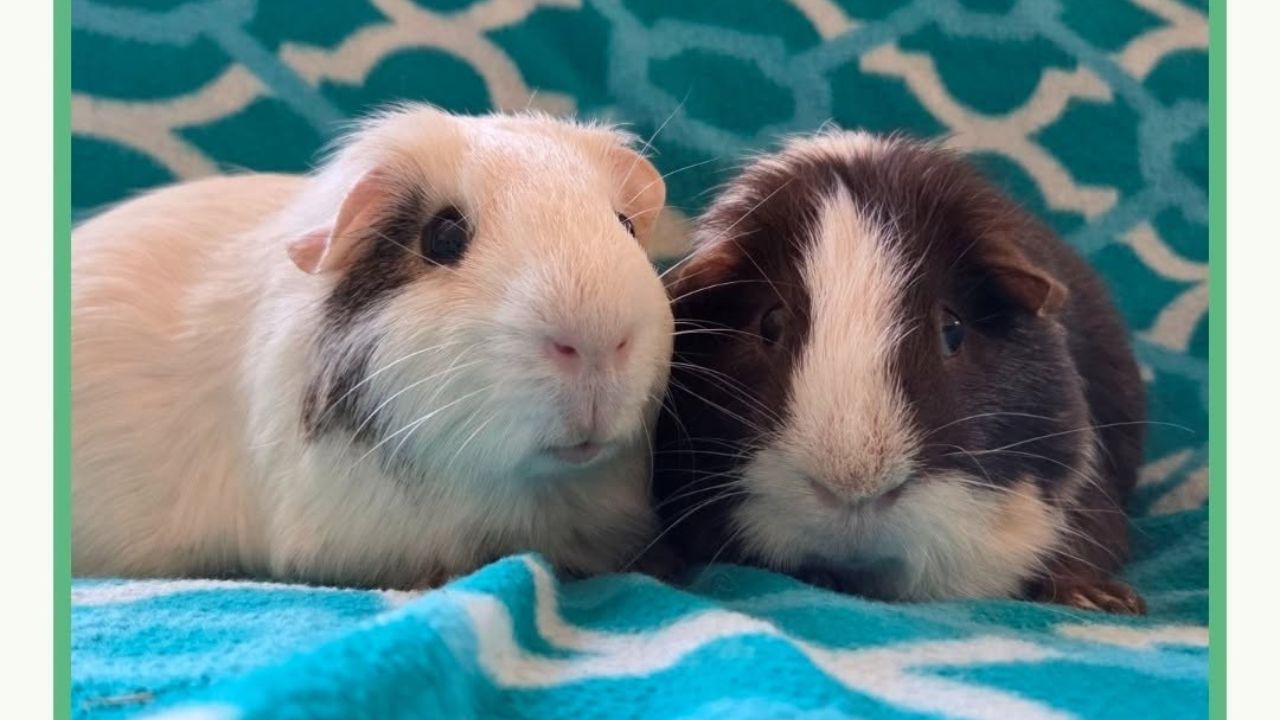
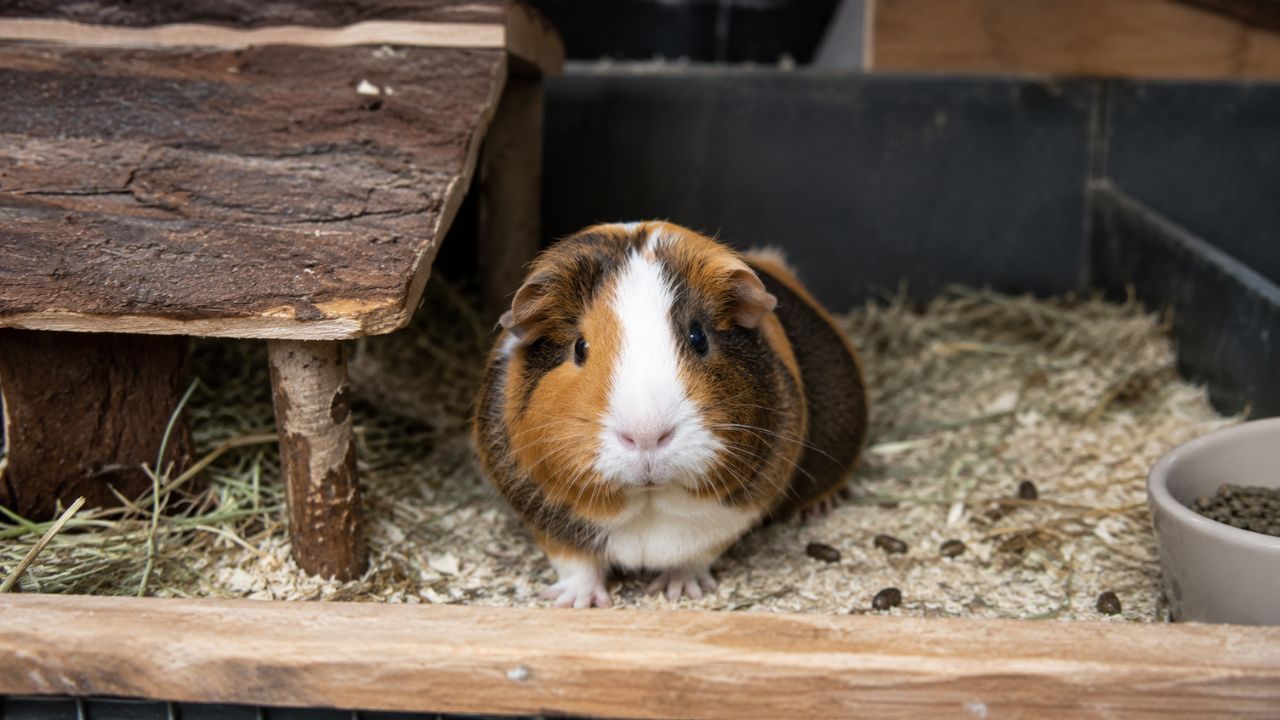

Neil has kept, bred, and sold guinea pigs at Paradise Pets Swindon since 1988 — over 35 years of watching these animals thrive in the right conditions and suffer, gradually and quietly, in the wrong ones. The single most common welfare mistake he sees with guinea pigs is also the most preventable. This article is his honest account of it.
A woman came in last spring carrying a guinea pig in a box.
She had lost his companion three weeks earlier. The two males had lived together for four years. Now she had one, and she wanted my honest opinion on whether she needed to get another.
I asked her to describe how the remaining pig had been since his companion died.
She said: quieter. Not eating quite as much. Sitting in the corner of the hutch more than he used to. She had been spending more time with him — carrying him around, letting him sit on her lap while she watched television. He seemed to enjoy that, she said.
I told her gently that what she was describing was not a guinea pig who was adjusting. It was a guinea pig in distress, partially masked by the comfort she was providing but not resolved by it. And I told her that the distress would continue and would very likely worsen, and that the solution was another guinea pig — not as a replacement for the one she had lost, but as what guinea pigs actually require in order to live a normal life.
She looked at me for a moment and then said: “I thought he might be all right if I gave him enough attention.”
I said: “Human attention is not guinea pig company. For a guinea pig, those are not the same thing.”
What Guinea Pigs Actually Are — The Starting Point That Changes Everything
Most of the problems I encounter with lone guinea pigs come from a misunderstanding of what the animal fundamentally is. So I want to start there, clearly.
Guinea pigs — Cavia porcellus — are descended from wild cavies that live in the grasslands and scrubland of South America. In the wild, these animals live in groups: typically three to ten individuals, though larger aggregations are not unusual. The group is not optional. It is the environment in which every aspect of the animal’s behaviour, physiology, and emotional life has evolved to function.
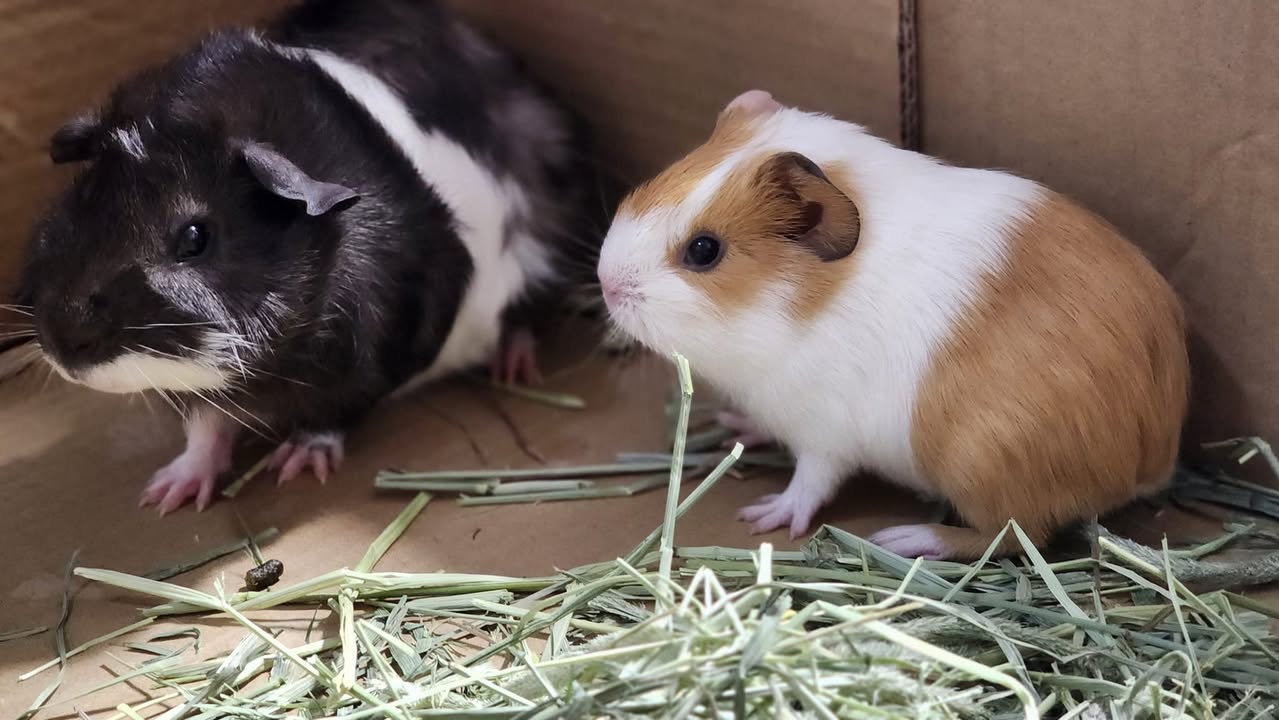
Guinea pigs in a group communicate constantly. They vocalise to each other — wheeks, purrs, rumblings, teeth chattering — in a continuous social dialogue that conveys information about food, safety, threat, and social status. They sleep in physical contact, their bodies touching. They groom each other, particularly around the face and behind the ears. They forage together, each individual monitoring the others for signs of alarm. They are, in the most complete sense, animals whose entire nervous system has been calibrated for the presence of other guinea pigs.
Remove that presence and you do not have a simpler version of a guinea pig. You have a guinea pig whose nervous system is operating in a state of chronic alarm, whose social drives are unmet, and whose behaviour will reflect that unmet need in ways that are sometimes obvious and sometimes subtle but are never absent.
This is not an opinion. This is what the animal is.
What Actually Happens to a Guinea Pig Living Alone
I want to be specific about this because I think the general statement “guinea pigs are social animals and should not be kept alone” is true but incomplete. Owners who hear that statement can too easily absorb it as advice without fully understanding what the alternative actually involves for the animal.
Chronic Stress and Elevated Cortisol
Studies measuring cortisol levels — the primary stress hormone — in singly housed guinea pigs consistently show elevated levels compared to group-housed animals in equivalent conditions. This is not stress in the way that a fright or a trip to the vet is stressful — a temporary spike that resolves. It is chronic baseline elevation, meaning the animal’s stress response is permanently activated at a level above what it would be with appropriate company.
Chronic elevated cortisol has real physiological consequences: suppressed immune function, disrupted digestive processes, increased susceptibility to illness, and accelerated ageing at the cellular level. These consequences do not produce obvious visible symptoms quickly. They accumulate. The lone guinea pig that appears to be doing fine is, at the biochemical level, operating under a permanent load that a group-housed animal is not carrying.
Behavioural Changes That Owners Often Miss
A lone guinea pig will typically show some combination of: reduced spontaneous activity — less popcorning, less exploration, less playful behaviour; increased time in the shelter or hiding area; reduced vocalisation (because there is no one to vocalise to) or increased distressed calling; reduced interest in enrichment and environmental novelty; and a general flattening of the behavioural repertoire that looks, to an owner who does not know what they are missing, simply like a calm animal.
The problem is that the owner never had this guinea pig with a companion, or has had it without a companion for long enough that the current subdued state has become their reference for normal. They are not comparing the animal’s behaviour to what it should be — they are comparing it to how it was yesterday.
The Emotional Dependency Trap
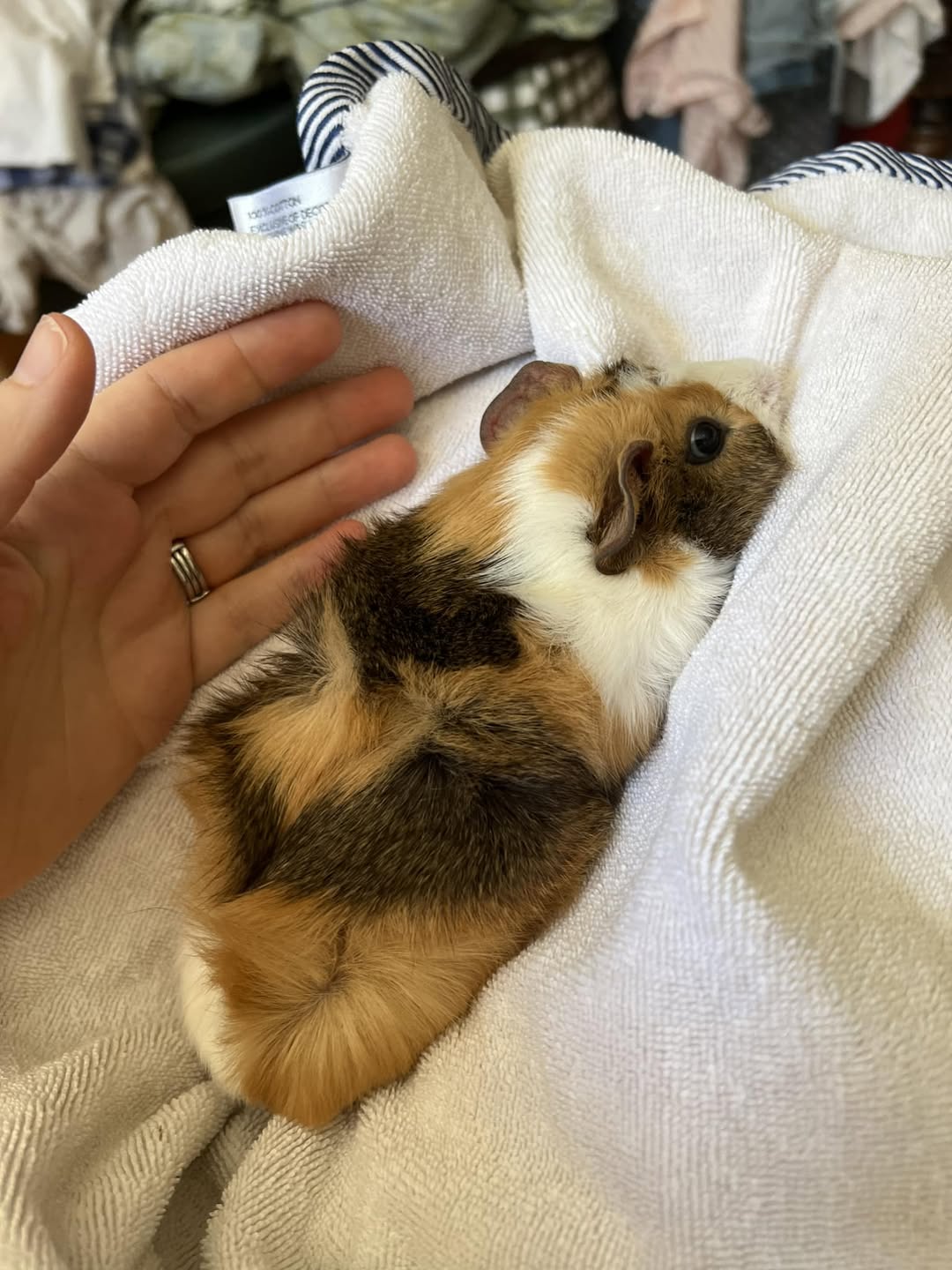
A lone guinea pig, denied conspecific company, will increasingly fixate on its owner as its sole social connection. This produces an animal that is very attached to human presence and very distressed by human absence — not the balanced, well-socialised pet that most owners want, but one whose emotional state is tethered to a human schedule that cannot reliably provide what a companion guinea pig would provide for eighteen to twenty-four hours a day.
The owner who tells me their lone guinea pig loves being held and gets very upset when put back in the cage is usually describing an animal that has transferred its social dependency onto the human because no other option is available — not a guinea pig that is thriving.
The Masking Problem — Why “Seems Fine” Is Not a Reliable Assessment
I want to spend a moment on this because it is the most common reason lone guinea pigs stay alone for longer than they should.
Guinea pigs are prey animals. In the wild, a guinea pig that shows obvious signs of distress, illness, or weakness is a guinea pig that gets eaten. The evolutionary pressure on these animals to mask suffering — to appear normal even when they are not — is intense and is reflected in their physiology and behaviour.
What this means in practice is that a guinea pig living in chronic social deprivation will not, for the most part, display obvious distress in a way that is immediately legible to an owner. It will not pace frantically. It will not refuse all food. It will not produce obvious distress calls continuously. It will be quieter, slightly less active, slightly less engaged — and those changes will be interpreted by an owner who is not specifically looking for them as the animal being calm, settled, or simply its own individual personality.
The absence of obvious suffering is not the presence of wellbeing. These are not the same thing. A guinea pig that is quiet, stays in one area, eats adequately, and seems to enjoy being held can be simultaneously in a state of chronic welfare compromise that its prey animal masking instinct is preventing you from reading.
If you do not know what a happy, companioned guinea pig looks and sounds like, you cannot properly assess whether your lone one is fine or not.
Why Human Attention Does Not Substitute for Guinea Pig Company
This is the argument I hear most often, and I want to address it directly rather than dismissing it — because it comes from a place of genuine care.
“I spend a lot of time with my guinea pig. I handle it every day. It sits with me for hours. Isn’t that enough?”
The answer is no, and the reason is specific rather than general. Guinea pig social needs are not simply needs for company — they are needs for guinea pig company. The behaviours that meet those needs are things that only another guinea pig can provide.
Grooming: a guinea pig can groom its owner and can be stroked by its owner, but the reciprocal grooming of its own species — the specific tactile communication that happens between bonded guinea pigs — is not replicated by human stroking. The guinea pig’s nervous system reads these as different inputs.
Vocalisation dialogue: guinea pigs communicate with each other in a continuous vocal exchange that is species-specific. The sounds a guinea pig makes to another guinea pig and the sounds it receives in return are not replicable by human voices, however familiar and however much the animal responds to them.
Sleep contact: guinea pigs sleep with their bodies in contact with each other. They cannot do this with a human who is not present for most of the 24-hour period.
Night-time: your guinea pig is active and needs company in the early hours of the morning when you are asleep. No amount of daytime handling compensates for the hours between midnight and six am when the animal is awake and alone.
What Switzerland Understood — and What the UK Law Actually Requires
Switzerland made it illegal to keep a single guinea pig in 2008. The reasoning was that guinea pigs are social animals whose needs include the company of their own species, and that failing to provide this constitutes a failure to meet their basic welfare requirements. The law requires that guinea pigs be kept with at least one other guinea pig, or, if one of a pair dies, that a replacement companion be found within a reasonable period.
In the UK, we do not have equivalent specific legislation. But the Animal Welfare Act 2006 requires that any person responsible for an animal must take reasonable steps to meet the animal’s needs, including its need to be able to exhibit normal behaviour patterns. Social behaviour — the vocalisation, contact, and interaction that guinea pigs exhibit with members of their own species — is normal behaviour. Preventing it constitutes a failure to meet the Act’s requirements, regardless of whether there is a specific prosecution attached to that failure.
I am not telling this to alarm anyone. I am telling it because I think the legal framework reflects a scientific and ethical consensus that I believe is correct — guinea pigs have a species-specific social need that is not optional, not a preference, and not adequately substituted by human interaction.
When a Companion Dies — What to Do and When
This is the situation the woman I described at the beginning was in, and it is the one that most commonly produces a lone guinea pig in households that started with the right intention.
The death of one guinea pig in a pair is genuinely difficult for the surviving animal. The grief response — reduced activity, changed eating, altered behaviour — is real and is documented. Some owners interpret this response as the animal needing to be left alone to adjust, when in fact it reflects the degree to which the animal has lost something fundamental.
The question of timing for a new companion is one I answer honestly when people ask: sooner is better than later, with appropriate care given to introductions. The surviving guinea pig’s distress is real and is increasing, not resolving, the longer it continues. Leaving it for several weeks before acting allows the animal’s condition — physical and emotional — to deteriorate further.
The process of finding a companion should begin within the first week of loss, not the first month. Come and speak to us, contact a rescue organisation, or check with reputable breeders. Same-sex companions from rescue organisations often work well because the rescue has already had the opportunity to assess the animal’s temperament and compatibility.
How to Introduce a New Companion — Getting It Right
Introductions between guinea pigs require careful handling, and I want to address this because the fear of introduction problems is one of the reasons owners delay getting a companion.
The first principle: never put a new guinea pig directly into the existing animal’s cage. The cage smells of the resident animal and introducing a stranger into that territory will almost always produce conflict. Introductions should happen on neutral ground — a space that neither animal has previously occupied, an area of floor space covered with a clean towel, or a spare run.
The second principle: size compatibility matters. A small, young, or nervous guinea pig introduced to a much larger, more assertive resident may be bullied. If possible, choose a companion of similar size and temperament — your rescue organisation or breeder can help with this.
The typical introduction process: place both animals in the neutral space simultaneously, with multiple food and water points so they are not competing for resources. Watch carefully. Chasing, mounting (even between same-sex pairs — this is dominance behaviour, not sexual), and some teeth chattering are normal parts of the negotiation process. True aggression — biting that draws blood, continuous sustained chasing without the pursued animal being able to rest — requires intervention and separation.
Most introductions, done correctly, result in two guinea pigs living together within a few days. The process of two animals establishing social hierarchy between them is sometimes noisy and sometimes alarming to watch, but it resolves into a settled pair in the majority of cases.
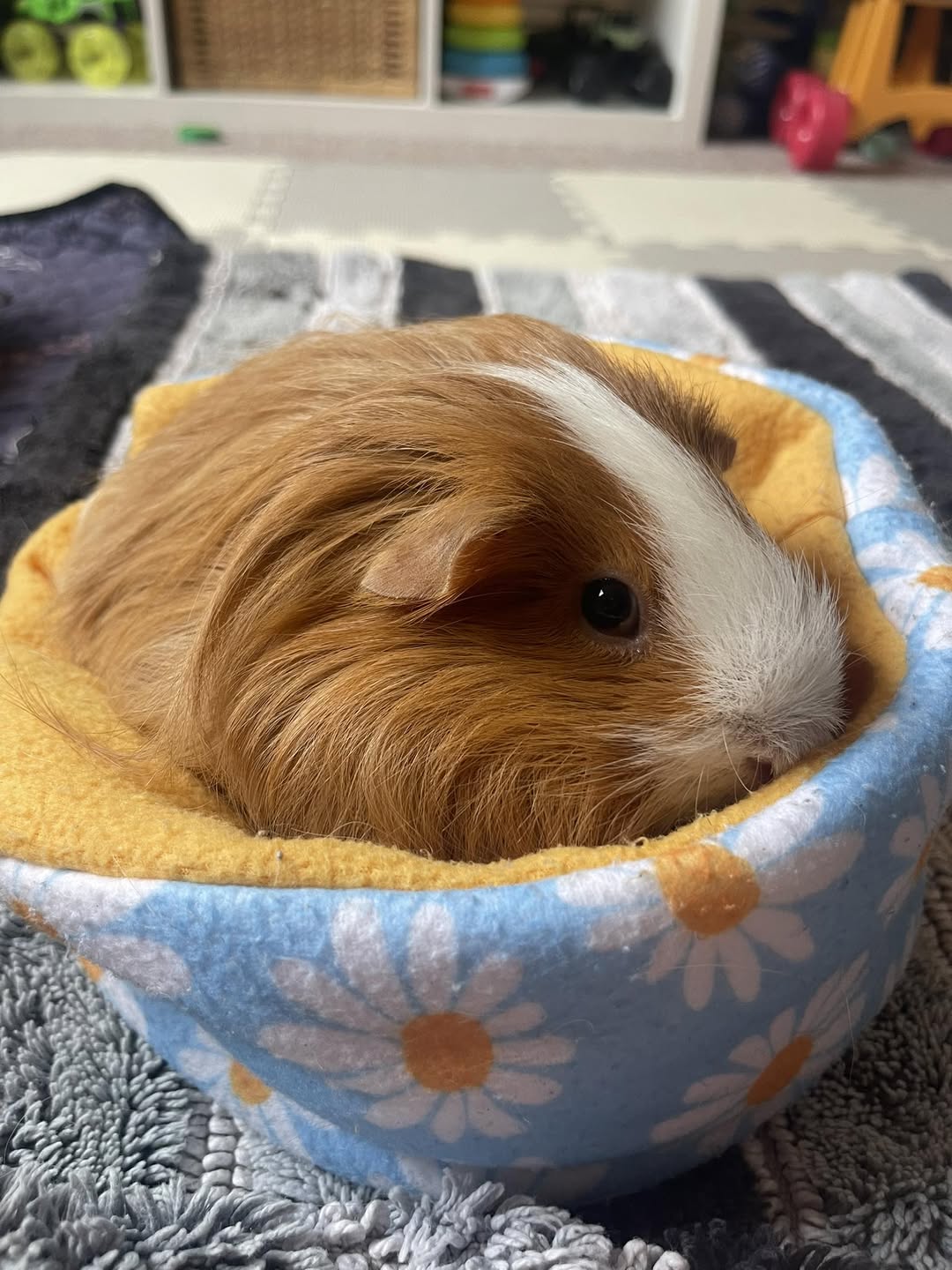
- Spends most of its time in the hiding area or one corner of the enclosure: Reduced exploratory behaviour — sign of chronic low-level stress
- Reduced vocalisation or absence of the social sounds you used to hear: A lone guinea pig has no one to talk to — its vocal repertoire diminishes
- Seems very attached to you but distressed when put back in the cage: Emotional dependency on human company — means the animal has no other social outlet
- Less active generally — less popcorning, less spontaneous exploration: Reduced activity in the absence of the stimulation that conspecific company provides
- Eating less or weight loss: Stress and low mood affect appetite — worth checking weight weekly
- Repetitive behaviours — bar chewing, pacing the same route repeatedly: Stereotypic behaviour indicative of chronic environmental deprivation
The Objections — Answered Honestly
“My guinea pig seems perfectly happy alone.”
See the masking problem section above. A prey animal that appears calm and functions adequately is not necessarily well. The absence of visible distress is not evidence of wellbeing. If your guinea pig has never been compared to a companioned guinea pig in the same conditions, you do not have a reference point for what it is missing.
“I don’t want to end up with lots of guinea pigs.”
Two same-sex guinea pigs — two females, or two males — will not produce more guinea pigs. Same-sex pairs are the standard recommendation for this reason. If you acquire a male-female pair, neutering the male is a straightforward procedure that prevents breeding while maintaining the social benefits of the pair. We can advise you on this when you visit.
“What if they fight?”
Guinea pigs establishing a social hierarchy go through a process that looks alarming and involves some noise and some chasing. This is normal and usually resolves within a few days. Genuine sustained aggression that causes injury is rare, particularly in introductions done on neutral territory with appropriate space. The risk of a failed introduction is real but much lower than the welfare cost of keeping the animal alone.
“My guinea pig had a companion and they fought constantly.”
Persistent conflict between guinea pigs in a pair usually indicates either incompatibility between those specific animals, or an environment problem — a cage too small, insufficient resources, or a configuration that forces the animals into constant proximity without the ability to establish space. These are addressable problems. The solution is not to keep the animal alone — it is to find a more compatible companion and to ensure the environment is adequate.
“I’ll get a companion when I have more time/money/space.”
The animal’s welfare is happening now, not at a future point when conditions are better. If you have a lone guinea pig today, it is experiencing social deprivation today. The question of whether to address that is a welfare question that does not have a comfortable deferral.
Quick Reference — Guinea Pig Companionship
| Situation | What to Do | Notes |
|---|---|---|
| Buying a guinea pig for the first time | Buy a same-sex pair minimum — never a single animal | Two females is typically the most straightforward pairing. Two males can work with adequate space. |
| One guinea pig of a pair has died | Begin finding a companion within the first week | Contact rescues first — many have lone guinea pigs needing a bonded home. |
| Currently have a lone guinea pig | Find a compatible companion as soon as possible | Introduce on neutral ground. Give it time. Most introductions succeed with the right method. |
| Considering male-female pair | Neuter the male to prevent breeding | A neutered male and a female is a successful and often harmonious pairing. |
| Introduction has not gone smoothly | Separate temporarily, retry on neutral ground with more space and resources | Check cage size — most conflict in introductions is exacerbated by inadequate space. |
| Guinea pig has become very dependent on you | Introduce a companion — this is a sign of the problem, not evidence the animal is fine | Dependency on human company is what happens when guinea pig company is unavailable. |
The Rule I Give Every Guinea Pig Owner
A guinea pig is not a suitable single pet. This is not a preference or a guideline — it is a reflection of what the animal actually is and what it actually needs to live a normal life.
When people come in to buy a guinea pig, I will not sell them one. I will sell them two. And when people come in with a lone guinea pig whose companion has died, I do not tell them to wait and see. I tell them to act quickly, and I explain why waiting makes the problem worse.
I have been saying this at this counter for 35 years, and I have seen enough lone guinea pigs to be confident in what I say: the animal that has a companion is more active, more vocal, more engaged, and more itself than the animal that does not. These are not subtle differences. They are visible to anyone who has watched both.
If you have a guinea pig living alone today, the most useful thing you can do for its welfare is to begin the process of finding it a companion. Not tomorrow. Today.
Frequently Asked Questions
Can guinea pigs live alone if I give them lots of attention?
No — not in the sense of living a normal, welfare-adequate life. Human attention addresses some needs but not the species-specific social needs that only another guinea pig can meet: reciprocal grooming, vocalisation exchange, physical sleep contact, and the continuous social presence that the animal’s nervous system requires. A lone guinea pig given lots of human attention will be better off than a neglected lone guinea pig, but it will still be experiencing chronic social deprivation that human contact cannot resolve.
Is it cruel to keep a guinea pig alone?
Yes — by any welfare framework that takes the animal’s nature and documented physiological and behavioural needs into account. Switzerland made single guinea pig keeping illegal in 2008 for this reason. In the UK, the Animal Welfare Act requires that the five welfare needs be met, including the need to exhibit normal behaviour — and normal guinea pig behaviour is social behaviour with members of its own species. A lone guinea pig cannot exhibit this behaviour and its welfare is compromised accordingly.
My guinea pig’s companion just died — how long should I wait before getting a new one?
Do not wait longer than a week to begin looking for a companion. The surviving animal’s distress is real and increasing from the moment of the companion’s death. Leaving it for several weeks in the belief that it needs time to adjust allows its condition — physical and emotional — to deteriorate. Begin the process of finding a compatible companion immediately, and allow the introduction process to happen carefully once you have found one.
How do I introduce a new guinea pig to an existing one?
Always introduce on neutral ground — a space neither animal has previously occupied. Provide multiple food and water points. Expect some chasing, mounting, and teeth chattering — this is normal social negotiation. Watch for true aggression (biting that draws blood, sustained chasing without rest) which requires separation. Most introductions done correctly on neutral territory resolve into a settled pair within two to four days. Come and speak to us before introducing — we can give you practical guidance specific to your situation.
Do guinea pigs grieve when a companion dies?
Yes — and this is well enough documented that it should be taken seriously by owners. A guinea pig that has lost a companion typically shows reduced activity, changed eating patterns, altered behaviour, and sometimes searching behaviour — moving around the enclosure looking for the missing animal. This response is genuine and it does not resolve on its own over time in the way owners hope. The resolution is a new companion, not time alone.
Where can I buy guinea pigs or get advice about companions in Swindon?
We breed and stock guinea pigs at Paradise Pets — always in appropriate pairs or available to be matched with a lone animal. Come and see us at Manor Garden Centre, Cheney Manor, Swindon SN2 2QJ, or call us on 01793 512400. We are happy to talk through compatibility, introductions, and everything else before you buy or adopt.
Guinea Pig Living Alone? Come and Talk to Me About What to Do Next
If you have a lone guinea pig and want honest advice about finding a companion, making introductions work, or understanding why this matters — come in. I will give you practical guidance specific to your animal and your situation. This is one of the conversations I care most about having honestly.