


Neil has kept, bred, and sold rabbits and small animals at Paradise Pets Swindon since 1988 — over 35 years of first-hand experience watching UK families bring rabbits home and then come back, sometimes weeks later, sometimes years later, with the same difficult realisation. This is his honest, practical guide on the single most common rabbit hutch mistake almost every first-time UK owner makes — what it is, why it happens, why it matters more than most owners realise, and what to do today if you recognise your own setup in this article.
A family came into the shop one Sunday morning — mum, dad, and two children with hopeful expressions. They had been thinking about getting a rabbit for months and had finally decided to come in and discuss it properly. The dad opened his phone and showed me the hutch they had already ordered from a popular online retailer. It would arrive on Tuesday. They wanted to know what else they needed.
I looked at the hutch on his phone. It was a perfectly typical first-time-buyer hutch — wooden, two storeys, the kind you see in every garden centre and pet shop across the UK. It had a picture of a happy rabbit on the box. It was advertised as “spacious” and “ideal for one or two rabbits.” It cost about £85.
I asked him gently if he would mind if I gave them my honest opinion before the hutch arrived. They said yes. I told them what I am about to write in this article. They cancelled the order that afternoon, came back the following week, and ended up with a setup that has now housed two happy bonded rabbits for over four years. Both rabbits are still thriving as I write this.
That conversation happens at my counter, in some form, hundreds of times across the years. Most UK first-time rabbit owners come in having already bought, or about to buy, a hutch that is genuinely too small for the rabbit they want to keep in it. The hutch on the box looks fine. The picture shows a content rabbit. The packaging uses words like “spacious” and “deluxe.” The shop has rows of them stacked up looking like reasonable accommodation.
This article is the conversation I have at the counter with hopeful first-time UK rabbit owners. By the end of it, you will know exactly what the size mistake is, why it matters more than most owners realise, what the proper requirements actually are, what to do if you already have a too-small hutch, and how to set up rabbit accommodation that will let your animal genuinely thrive.
First — What Is The Mistake?
The mistake is buying a hutch that meets the rabbit’s basic survival requirements but not the rabbit’s actual behavioural and welfare requirements. Most standard UK pet shop hutches are sized for a rabbit to fit inside them — not for the rabbit to live in them properly.
A typical UK rabbit hutch sold to first-time owners measures approximately:
- 120 cm long
- 60 cm deep
- 50-90 cm tall (often two storeys with a small ladder)
- Sometimes marketed as “ideal for two rabbits”
- Sometimes labelled “deluxe” or “extra large”
- Sometimes shown with two rabbits in the packaging photo
A rabbit kept in this size hutch can technically eat, drink, sleep, and breathe. What it cannot do is:
- Take three full hops in any direction — basic exercise requirement
- Stand fully upright on its hind legs without bumping its head
- Run, even briefly — running is essential rabbit behaviour
- Stretch out fully when lying down
- Perform binkies (joyful jumps) — sign of happy rabbit
- Have separate areas for eating, toileting, sleeping, and playing
- Express natural behaviours like digging, foraging, exploring
- Live with a properly-bonded companion in adequate space

The crucial point — these are not luxuries. These are basic behavioural needs that rabbits evolved over millions of years to require. Denying them does not produce a content rabbit. It produces a rabbit that develops welfare problems — physical, behavioural, and psychological — that shorten its life and reduce its quality of existence.
This is the mistake that almost every first-time UK owner makes. They buy what looks like a perfectly reasonable hutch from a shop they trust, and they unknowingly start their rabbit’s life in accommodation that is genuinely inadequate.
Why The Standard UK Hutch Is Not Big Enough
For UK owners who want to understand why the standard hutch causes welfare problems — and why it is not just a matter of “the rabbit will manage” — here is the honest picture based on what 35 years of selling rabbits has taught me.
Rabbits are prey animals that evolved to live in extensive warren systems with substantial above-ground territory. A wild rabbit might range across an area many times larger than any garden hutch in a single evening’s foraging. They sprint, they zigzag, they leap, they dig, they explore — and they do these things because their bodies and minds require them, not because they are choosing to.
When you confine a rabbit to a small hutch, several things happen:
- Muscle development becomes inadequate — particularly the powerful hind leg muscles
- Skeletal problems develop — including spinal issues from inability to stretch and stand
- Obesity becomes nearly inevitable — rabbits cannot self-regulate weight without exercise
- Digestive issues become more common — gut motility depends on movement
- Behavioural problems develop — aggression, depression, stereotyped behaviours
- Mental wellbeing deteriorates — confined rabbits show genuine signs of psychological distress
- Bonding with humans becomes harder — stressed rabbits are not friendly rabbits
- Lifespan reduces significantly — well-housed rabbits often live years longer

The effects are not always immediately obvious. A rabbit in a too-small hutch may appear fine for months or even years. Then welfare problems emerge — often presenting as health issues, behavioural changes, or shortened lifespan that the owner attributes to other causes. The link back to the original housing decision is often missed entirely.
This is the cruel detail of the standard hutch problem. The harm is delayed, distributed, and invisible until it is too late to easily undo.
What The UK’s Leading Rabbit Welfare Organisations Recommend
For UK owners who want the actual welfare-standard recommendations rather than the pet-trade-standard ones, the picture is clear and well-documented. UK organisations including the RSPCA, the Rabbit Welfare Association and Fund (RWAF), the PDSA, and most veterinary practices specialising in exotic animals all recommend significantly more space than the standard UK pet shop hutch provides.
The widely accepted UK welfare minimum for a pair of average-sized rabbits is:
- 3 metres long by 2 metres wide by 1 metre tall — minimum sheltered/hutch area combined with run access
- Or equivalent total area with the rabbit able to access the full space at all times
- Permanent access between sheltered area and exercise area — not just “let out for an hour”
- Height to allow standing fully upright on hind legs
- Length to allow at least three consecutive hops
- Width to allow movement around obstacles and resources
- Multiple resources distributed across the space — food, water, toilet area, sleeping area, hiding areas

For comparison, the typical UK pet shop hutch provides approximately 0.72 square metres of total floor area. The recommended welfare minimum is approximately 6 square metres. The difference is significant — roughly eight to ten times the space the standard hutch provides.
This is not a small adjustment. This is recognising that the entire UK pet trade has been selling something that does not meet the animal’s actual needs. The good news is that creating proper accommodation is not as expensive or complicated as it sounds — but it does require a different approach from what most first-time owners initially plan.
What Proper UK Rabbit Accommodation Actually Looks Like
For UK owners who want to provide genuinely good rabbit accommodation, here are the realistic options that work for most households. None of them require a fortune. All of them work better than the standard hutch.
1. Hutch Plus Permanent Attached Run
This is the most accessible upgrade for owners who have already bought or are committed to a hutch-based setup. The hutch itself becomes the sheltered sleeping/eating area, and a permanently attached run gives the rabbit the exercise space it actually needs.
Key features:
- Standard hutch (or larger) as the shelter component
- Run attached to the hutch with permanent open access
- Minimum total length 3 metres, width 1.5-2 metres
- Predator-proof construction throughout
- Rain and weather cover for at least part of the run
- Multiple shelter options within the run
- Solid base or proper digging substrate
Costs in the UK typically range from £200-£500 for a complete setup, depending on size and quality. Significantly more than just the hutch alone, but genuinely workable for most households.
2. Walk-In Aviary Style Accommodation
This is the gold standard for outdoor rabbit accommodation in UK gardens. A walk-in enclosure gives the rabbit a substantial permanent home with all the space and enrichment they need.
Key features:
- Permanent walk-in structure, typically 2 metres tall to allow human access
- Floor area of 6 square metres or more
- Solid roof or substantial waterproof cover
- Predator-proof construction including roof and underground
- Multiple shelter areas within the enclosure
- Natural substrate areas for digging
- Easy human access for cleaning and interaction
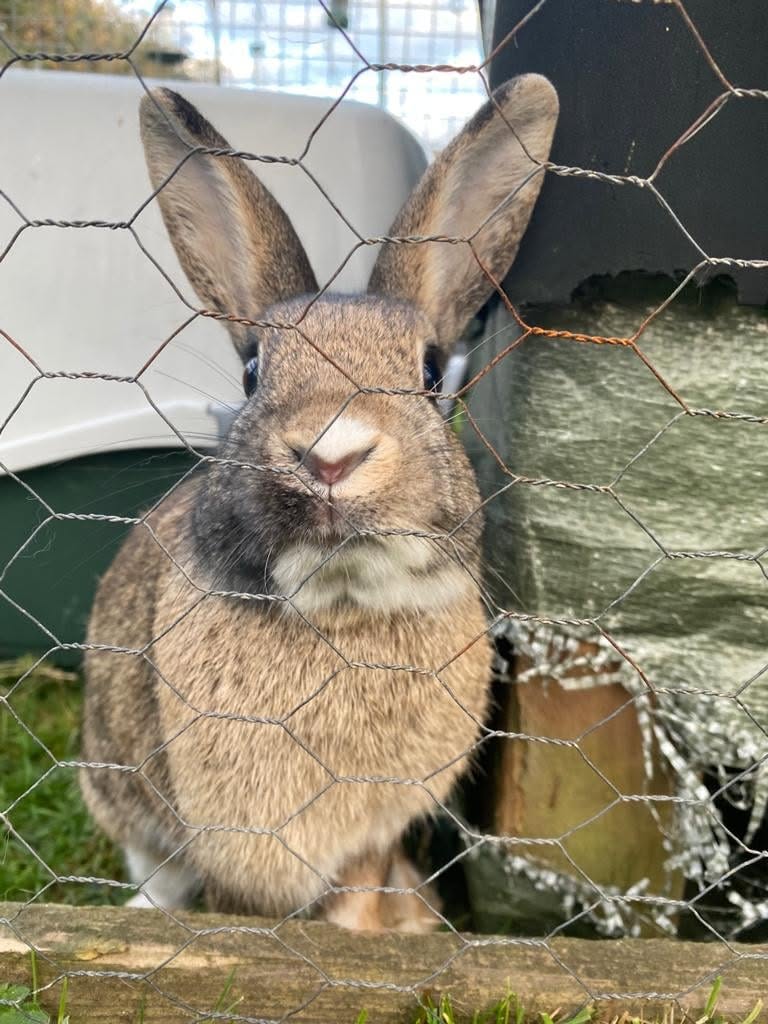
Costs typically £500-£1,500 depending on size and construction quality. Higher initial investment but provides excellent welfare for the rabbit’s full lifetime.
3. Indoor House Rabbit Setup
Increasingly popular across UK households, indoor rabbits can live in dedicated rooms or large pen areas within the home. With proper setup, this can provide excellent welfare and exceptional bonding between rabbit and family.
Key features:
- Dedicated room or large pen area (minimum 6 square metres)
- Rabbit-proof environment — no exposed wires, chewable hazards, escape routes
- Free movement within the designated space
- Multiple resources distributed across the area
- Litter trays for toileting (rabbits litter train well)
- Comfortable flooring (not slippery laminate)
- Hiding areas and enrichment opportunities
Costs vary widely depending on whether you are using an existing room or buying equipment. Often the most affordable proper option for households without garden space.
4. Garden Shed Conversion
This is the option many experienced UK rabbit keepers eventually adopt. A standard garden shed converted for rabbits provides substantial sheltered space with attached run access.
Key features:
- Standard garden shed (6×4 feet minimum, 8×6 feet better)
- Modified for rabbit access — secure door, ventilation, lighting
- Permanent attached run extending into garden
- Insulation for UK winter conditions
- Drainage and easy cleaning
- Multiple levels and shelter areas within
- Human-accessible for daily care
Costs typically £400-£900 for shed and conversion, but provides outstanding welfare and durability.
The Real Costs Of Getting It Wrong
For UK owners considering whether the standard hutch is “good enough,” here is the honest picture of what happens when accommodation is inadequate. These are the patterns I have seen across 35 years at the counter.
- Obesity — rabbits in small spaces almost always become overweight
- Spinal and skeletal problems — particularly from inability to stand fully upright
- Sore hocks (pododermatitis) — pressure sores from inadequate floor surface and lack of movement
- Dental problems — from boredom and poor enrichment leading to inadequate chewing
- Digestive issues (GI stasis) — gut motility depends on movement, which confined rabbits lack
- Behavioural problems — aggression, destructive behaviour, depression
- Stress-related illness — chronic stress weakens immune system
- Shortened lifespan — confined rabbits often live half the years they could have
- Failure to bond with humans — stressed unhappy rabbits do not become friendly pets
- Premature death — accumulated welfare problems sometimes prove fatal
None of these outcomes are inevitable. A rabbit in proper accommodation typically lives 8-12 years and shows none of these problems. A rabbit in inadequate accommodation often lives 4-6 years and develops several of them. The accommodation choice at the beginning shapes everything that follows.
How To Know If Your Current Hutch Is Too Small
For UK owners who already have a rabbit and want to honestly assess whether their setup is adequate, here is the practical check.
- Can your rabbit perform three full hops in a straight line within the hutch?
If not, the hutch is too short. - Can your rabbit stand fully on its hind legs without its ears or head touching the ceiling?
If not, the hutch is too short in height. - Can your rabbit lie fully stretched out — body and back legs extended?
If not, the hutch is too narrow or short. - Does your rabbit have access to the full space at all times, not just for an hour a day?
“Let out for exercise” is not adequate — they need permanent access. - Is there room for the rabbit to choose where to be — eating, toileting, sleeping, hiding all in different areas?
A rabbit forced to sleep next to its toilet is in welfare trouble. - Can two bonded rabbits coexist without conflict in the space?
Bonded rabbits need room to move apart when they want to. - Does your rabbit show natural behaviours — running, binkying, digging, exploring?
A rabbit that never expresses these behaviours is welfare-compromised. - Does your rabbit appear genuinely active and engaged with its environment?
A bored, listless rabbit is a rabbit in inadequate housing.
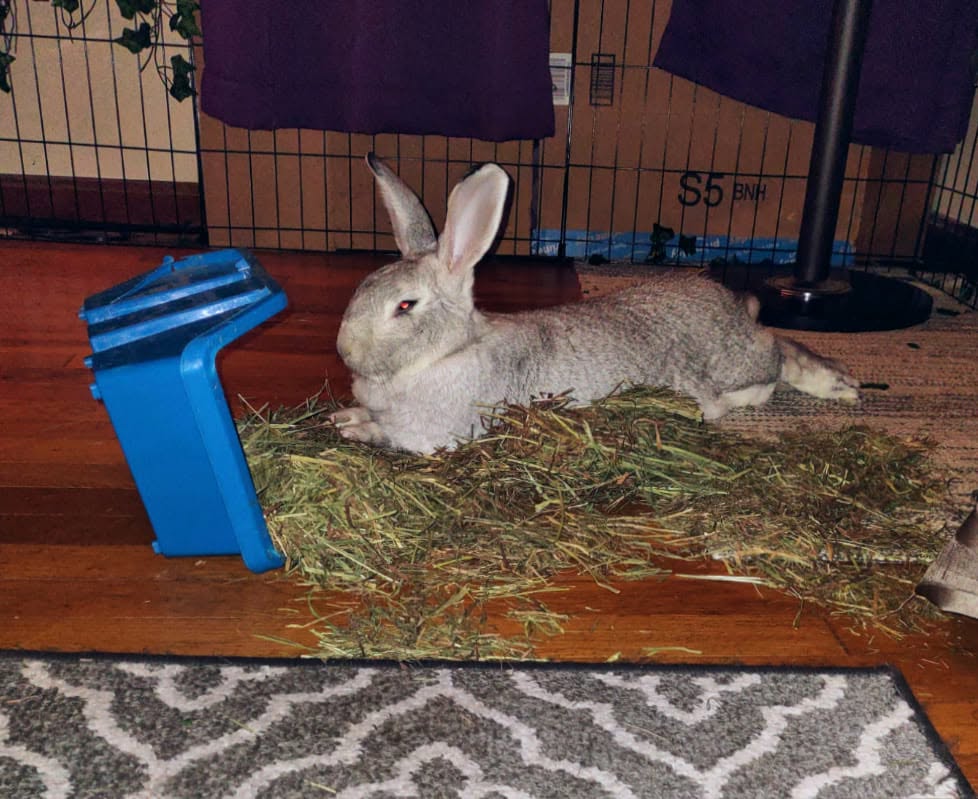
If you answered “no” to two or more of these questions, your current setup needs upgrading. The good news is that adding a permanent attached run, converting a shed, or moving to an indoor setup is usually achievable for most UK households with some planning.
What To Do If You Have Already Bought A Too-Small Hutch
For UK owners who have just realised their hutch is inadequate, here is the practical immediate action plan. Do not panic — but do plan to upgrade as soon as practical.
- Increase exercise time immediately
While you plan the upgrade, give the rabbit several hours of supervised exercise outside the hutch daily. This is a stopgap, not a solution. - Add an attached run as the first priority
A permanent attached run is the single most impactful upgrade. Even a basic run extending from the existing hutch transforms welfare. - Improve enrichment within the existing space
Tunnels, multi-level platforms, hiding areas, foraging toys — better use of small space helps while you plan bigger changes. - Plan the longer-term solution
Walk-in enclosure, shed conversion, or indoor setup. Set a realistic timeline (3-6 months) and budget for the upgrade. - Source the upgrade gradually if budget is limited
You can build proper accommodation in stages — run first, then expansion, then sheltering improvements. - Consider second-hand options
Excellent rabbit accommodation is often available second-hand from owners moving house, upgrading, or no longer keeping rabbits. - DIY where possible
A walk-in run from timber and mesh, properly constructed, is much cheaper than buying ready-made. - Do not give up — every improvement helps
A rabbit going from a tiny hutch to a hutch-plus-run is genuinely better off. Every step toward proper welfare matters.
The goal is not perfection from day one. The goal is recognising the gap between what your rabbit currently has and what your rabbit actually needs, then closing that gap as steadily as you can manage.
Why The Pet Trade Keeps Selling Inadequate Hutches
This is the question every UK owner asks me when they discover the welfare gap. The honest answer is uncomfortable but worth understanding.
Why standard UK hutches remain on sale despite being too small:
- The hutches meet minimum legal requirements — UK welfare law sets very basic standards
- Larger hutches are harder to display and sell — space and price both matter to retailers
- First-time buyers often choose by price — and small hutches are cheaper
- The harm is delayed and distributed — owners do not connect future problems to the original purchase
- Welfare standards have evolved faster than pet trade practice — what was acceptable 30 years ago is now known to be inadequate
- Marketing emphasises convenience and cost, not the animal’s actual needs
- Without regulation pressure, the trade lags behind welfare science
- Picture-perfect packaging shows the hutch with rabbit appearing content
At Paradise Pets, we stopped selling the smallest standard hutches years ago and refused to bring them back. We always recommend proper accommodation to anyone considering a rabbit. Sometimes this loses us a sale. We are happy to lose those sales, because the alternative is selling animals into accommodation we know is inadequate. After 35 years, that is not a trade-off I can make.
For UK Owners Just Starting Out — What To Do First
For UK households considering a rabbit for the first time, here is the order I recommend approaching the decision based on 35 years of seeing what works.
- Decide on accommodation BEFORE getting the rabbit
This is the single most important step. Plan and prepare the proper setup first. - Calculate the total minimum space
3m x 2m for a pair, or equivalent total area. This is your starting point. - Decide between outdoor and indoor
Both can work brilliantly. Pick what suits your household and garden. - Budget for the full setup, not just the rabbit
£300-£800 for proper accommodation is realistic. Plan for it. - Buy or build the accommodation first
Set it up completely before bringing a rabbit home. - Plan for two rabbits if possible
Rabbits are social and welfare guidance strongly recommends a properly-bonded pair. - Find a reputable source for the rabbits themselves
Rescue centres or experienced ethical breeders. Avoid impulse purchases. - Budget for ongoing costs realistically
Food, hay, vet care, insurance. A rabbit pair costs £400-£800 per year to keep properly.
This sequence — accommodation first, rabbit second — is the opposite of what most UK families do. Most families fall in love with the rabbit first and then try to fit it into accommodation that does not match its needs. Reversing this order is the single most important change a first-time owner can make.
For more on whether rabbits are right for your household, our article on why rabbits are not the low-maintenance pets people think they are covers the broader commitment question, and our guide on how long rabbits live sets realistic expectations for the years of commitment involved.
Common Objections — Honest Answers
For UK owners considering this and feeling resistance, here are the honest answers to the objections I most commonly hear at the counter.
“I do not have space for a 3m x 2m setup.”
For genuinely small UK gardens, indoor rabbit setups work brilliantly and require less garden space. A spare room or large pen area can provide excellent rabbit welfare. Many UK families have moved their rabbits indoors for exactly this reason.
“This sounds expensive.”
The setup costs more upfront, but rabbits in proper accommodation typically live longer, develop fewer health problems, and have fewer vet bills. The lifetime cost of a properly-housed rabbit is often lower than the lifetime cost of an under-housed one once health issues are factored in.
“My current rabbit seems fine in its small hutch.”
Most rabbits appear “fine” in small hutches for months or years. The welfare problems develop slowly and are easy to attribute to other causes. The honest test is whether the rabbit can perform natural behaviours — running, binkying, exploring, standing fully upright — within its accommodation. If not, “fine” is doing a lot of work in that sentence.
“The pet shop assured me this hutch was suitable.”
Pet shop staff are often working from outdated or trade-standard guidance rather than welfare-standard guidance. The legal minimum is significantly below the welfare recommendation. Trust the welfare organisations and experienced keepers over the pet trade on this specific issue.
“I have always had rabbits in hutches like this.”
Welfare standards have changed significantly over the past 20 years. What was considered standard practice in the 1980s and 1990s is now known to be inadequate. Doing better than how things used to be done is a sign of progress, not of having done something wrong before.
Frequently Asked Questions
What is the most common rabbit hutch mistake?
The most common mistake is buying a standard pet shop hutch that meets minimum legal requirements but is significantly too small for proper rabbit welfare. UK welfare organisations including the RSPCA and Rabbit Welfare Association recommend much larger accommodation than typical pet shop hutches provide — roughly eight to ten times the space. Almost every first-time UK owner makes this mistake before they understand the proper requirements.
How big should a rabbit hutch be?
UK welfare guidance recommends a minimum of 3 metres x 2 metres x 1 metre for a pair of average-sized rabbits, with permanent access to the full space at all times. A rabbit should be able to perform three full hops in a straight line, stand fully upright on its hind legs, and lie completely stretched out. Most standard UK pet shop hutches provide approximately one-eighth to one-tenth of this recommended space.
Can a rabbit be happy in a small hutch?
Honestly, no — not for any extended period. Rabbits in small hutches develop welfare problems including obesity, skeletal issues, behavioural problems, and shortened lifespans. A rabbit may appear “fine” in a small hutch initially, but the negative effects accumulate over time. Proper accommodation is essential for rabbit welfare, not optional.
What is the best rabbit accommodation for UK gardens?
For UK outdoor setups, a walk-in aviary-style enclosure (6 square metres or more) or a converted garden shed with attached run typically provide excellent welfare. Hutch-plus-permanent-run setups also work well if properly sized. The key requirements are adequate total space, permanent access, predator-proofing, weather protection, and multiple resources distributed across the area.
Should I keep rabbits indoors or outdoors in the UK?
Both can work brilliantly with proper setup. Outdoor setups need substantial space, weather protection, and predator-proofing. Indoor setups need rabbit-proofing, dedicated space (typically a room or large pen), and acceptance of rabbits in the home. Indoor rabbits often develop stronger bonds with humans, but outdoor rabbits with proper accommodation can also live excellent lives.
How much does proper rabbit accommodation cost in the UK?
Realistic ranges are £200-£500 for hutch-plus-run setup, £500-£1,500 for walk-in aviary, £400-£900 for shed conversion. Indoor setups vary widely depending on existing space. While more expensive than the standard inadequate hutch, proper accommodation typically saves money long-term through reduced vet costs and increased rabbit lifespan.
Where can I get honest rabbit advice in Swindon?
Come and see us at Paradise Pets, Manor Garden Centre, Cheney Manor, Swindon SN2 2QJ. We will give you honest welfare-standard advice on rabbit accommodation, including pointing you toward proper setups rather than the standard inadequate hutches. Ring us on 01793 512400. The advice is free and we have been doing this for 35 years.
One Last Thing From Me
“What hutch should I buy for my first rabbit?” is one of the most common questions I get from UK customers, and one I always answer honestly even though the honest answer is not what most first-time buyers initially want to hear. The honest answer, after 35 years of selling rabbits, is — the standard hutches on most UK pet shop shelves are too small. Proper rabbit accommodation requires significantly more space than the pet trade has normalised. Getting this right at the start shapes everything that follows for the rabbit’s entire life.
The family with the Tuesday hutch delivery? They went home, cancelled the order, and spent a couple of weeks researching properly. They came back the following week with a clearer plan. They ended up with a 2.4m x 1.2m walk-in aviary-style setup in their garden, properly weatherproofed, with attached sheltered area, multiple resources, and room for two bonded rabbits. Four years on, both rabbits are thriving. The setup cost about £400 in total — more than the hutch they had originally ordered, but less than they had expected once they understood what they were actually building. The children, now older, look after their rabbits brilliantly. The whole family came in last Christmas to thank me for the conversation that Sunday morning.
That is the experience I want every UK first-time rabbit owner to have. Not “I got my rabbit and now I am realising my accommodation is inadequate,” but “I planned properly first, set up the right accommodation, and now have rabbits that are thriving.” The difference is enormous, for both the rabbits and the families.
If you are considering a first rabbit, please plan the accommodation before you plan the rabbit. If you already have a rabbit in inadequate housing, please plan the upgrade as soon as you reasonably can. And if you are local to Swindon and want honest welfare-standard advice, please come and see us. We have been doing this honestly for 35 years and we always will.

Planning A First Rabbit? Get Honest Advice First
We stock proper rabbit supplies and we give honest welfare-standard advice rather than just selling whatever we have on the shelf. Plan your accommodation properly first — your rabbit will live a longer, happier life because of it. Free advice, no obligation. That is how we have done things for 35 years.