


Neil has kept, bred, and sold both gerbils and hamsters at Paradise Pets Swindon since 1988 — over 35 years of helping UK families decide between these two small animals that look similar at first glance but actually live very different lives. This is his honest, practical guide on how to choose between them — and why the right answer almost always comes down to one specific thing about your own daily life that most people never think about before they buy.
A family came into the shop one Saturday morning — mum, dad, and a ten-year-old daughter who had clearly done her research. She had brought a printed list of pros and cons for gerbils and for hamsters. She knew about cage sizes, lifespans, dietary requirements, handling guidance, and welfare considerations. She was, by any reasonable measure, an exceptionally well-prepared first-time small-pet owner. And she had no idea which species to choose.
“Neil,” her mum said, “we have been reading and watching videos for weeks and we still cannot decide. Can you help us?”
I sat them down on the bench by the gerbil cages and asked one question. “When is your daughter at home and awake? Mornings? Afternoons? Late evenings? Weekends only?” The mum looked slightly puzzled but answered honestly. School during the day, home from about half past three, in bed by nine in the evening. Most awake and engaged time would be between four and eight in the afternoon.
I told them they needed a gerbil. The decision was that simple, once they had answered that one question. Hamsters spend most of those exact hours asleep. A child going to bed at nine would see their hamster for about twenty minutes a day, perhaps less. A gerbil, by contrast, would be active and visible throughout the afternoon and early evening — exactly when this family was at home.
Three years later, the daughter still comes in occasionally to buy supplies. Her two gerbils are thriving, she has watched them dig, build, and interact every afternoon for years, and she has the kind of relationship with them that you can only have with an animal whose schedule matches your own.
This article is the conversation I have at the counter hundreds of times across the years with UK families trying to choose. By the end of it, you will know exactly which species fits your household, what each one’s daily life genuinely looks like, what other considerations matter once the main question is answered, and how to make a decision that will give both you and your future pet the best possible chance of a happy relationship.
First — The One Thing That Decides It
The one thing about you that decides this is your daily schedule. Specifically — when you are at home, awake, and available to watch or interact with a small pet.
This sounds obvious. It is not obvious — because most UK families considering these animals never think about it. They compare cage requirements, food, lifespan, and handling temperament. They watch videos of both species being adorable. They read articles about welfare and cost. They make detailed pros-and-cons lists.
But almost no one stops to ask the simple practical question — when is the family actually home, and when is each animal actually awake?
The answer matters more than nearly any other consideration, because:
- A pet you cannot see is not really a pet you have — it is a small life happening in a box in your house while you are asleep
- Children especially need to see their pets active — sleeping pets do not teach children responsibility, observation, or attachment
- The bond between owner and animal depends on shared waking time — there is no substitute for this
- Welfare requires interaction — pets that are never observed are pets whose problems are caught late
- Owner satisfaction depends on enjoyment — and enjoyment depends on being able to see the pet
- Schedules cannot be changed — your work, school, and sleep patterns are largely fixed

This is why I always ask the schedule question first. Everything else is secondary, because if the species’s natural activity pattern does not match yours, you have made the wrong choice no matter how much you researched cage sizes or food.
What A Hamster’s Day Actually Looks Like
For UK families considering a hamster, here is what a typical day in the life of your future pet would genuinely involve. This is based on watching thousands of hamsters across 35 years at the counter — not on marketing material or wishful thinking.
A typical Syrian hamster’s daily schedule:
- Morning (7am-9am) — winding down from overnight activity, retreating to nest
- Late morning to mid-afternoon (9am-4pm) — deeply asleep, hidden in nest
- Late afternoon (4pm-6pm) — still asleep, occasionally stirring
- Early evening (6pm-8pm) — gradually waking, brief activity if disturbed
- Evening (8pm-10pm) — emerging properly, eating, exploring
- Late evening to early morning (10pm-6am) — fully active, running on wheel, foraging, social with humans if used to them

Hamsters are crepuscular and nocturnal — meaning their natural activity peaks are at dawn and dusk, with extensive overnight activity. They are deeply asleep during most of the daytime hours when most UK families are at home from work and school.
This is the genuine, fundamental fact about hamsters that most UK first-time owners discover only after they have bought one. The pet they were so excited about is asleep when they are home, awake when they are asleep, and visible mostly during a narrow window in late evening when many household routines are winding down.
A hamster suits UK households where:
- Adults are home and awake in late evenings (after 8pm)
- Late-night activity is welcomed (wheel sounds, exploration)
- Children are old enough to be up at hamster-active times
- Bedrooms are not located next to the hamster cage
- The household genuinely enjoys nocturnal animal activity
- Someone is regularly up at 9pm or later for interaction
A hamster does NOT suit UK households where:
- Children go to bed at 7-8pm and want to see their pet awake
- The whole household keeps morning-to-evening routines
- The cage is in a bedroom and noise overnight is a problem
- The expectation is daytime observation and interaction
- Family time is afternoons and early evenings only
None of this is the hamster’s fault. They evolved to be active at dawn, dusk, and through the night because that is when wild hamsters are safest from predators in their natural Syrian habitat. They are doing exactly what they should do. The question is simply whether their schedule matches yours.
What A Gerbil’s Day Actually Looks Like
For comparison, here is what a typical day in the life of a gerbil genuinely looks like. Again, this is based on thousands of gerbils observed across 35 years.
A typical gerbil’s daily schedule (gerbils usually live in same-sex pairs or small groups, and they typically synchronise their schedules):
- Early morning (6am-8am) — waking from rest periods, beginning activity
- Mid-morning (8am-12pm) — moderately active, eating, exploring, occasional rest
- Midday (12pm-2pm) — quieter period, rest naps in burrows
- Afternoon (2pm-6pm) — increasing activity, digging, building, social interaction
- Early evening (6pm-9pm) — peak activity for many UK home gerbils
- Late evening to overnight (9pm-6am) — quieter, more rest periods, occasional brief activity
Gerbils are crepuscular with substantial daytime activity. They do not sleep in long unbroken blocks like hamsters — they take multiple short rest periods through the day and are awake and visible for much of the time most UK households are home.
Crucially, gerbils are social animals that synchronise their activity with their cage companions and with the household routine. A pair of gerbils kept in a family room will often be most active when the family is most active — they tune their schedule to their environment far more than hamsters do.
A gerbil suits UK households where:
- Family is home in afternoons and early evenings
- Children want to watch and interact with their pets during daytime
- The household keeps relatively normal day-evening hours
- Multiple animals living together socially is appealing
- Watching natural digging and burrowing behaviour is interesting to the family
- Afternoon and early evening are the main pet-observation times
A gerbil does NOT suit UK households where:
- You want to keep just one animal (gerbils must live in pairs or small groups)
- You cannot accommodate the larger tank-style setup gerbils need for digging
- You want to handle the pet frequently (gerbils tolerate handling but are not cuddly)
- The household is empty all day (gerbils are most active when humans are around)

The schedule match is dramatically better for typical UK family households. Most UK families are at home in afternoons and early evenings — exactly when gerbils are most active. This is not a coincidence in why gerbils tend to be more satisfying first pets for many families.
The Second Consideration — Solo Pet Or Social Group
The other major difference between gerbils and hamsters — important enough to be the deciding factor if your schedule could work for either species — is the social requirement.
Syrian hamsters must live alone after they reach maturity. They are solitary in the wild and become aggressive toward other hamsters as adults. Two Syrian hamsters housed together will fight, often seriously, sometimes fatally. This is not negotiable or trainable — it is fundamental to the species.
Gerbils must live in pairs or small groups. They are intensely social in the wild and suffer genuine welfare problems when kept alone. A solo gerbil is a depressed gerbil. Keeping a single gerbil long-term is now considered a welfare violation by UK animal welfare organisations.
This affects your decision in several ways:
- If you want one pet only — a Syrian hamster is the suitable choice
- If you want to observe social interaction — gerbils are far more interesting to watch
- If budget for two animals is tight — hamster might be more affordable per animal
- If you want deeper individual bonding — hamster allows for one-on-one relationship
- If you want a small family to care for — gerbils provide the experience of caring for a small group
- If you can only fit one cage — both species fit similar-sized cages, but two gerbils share one cage while two hamsters need two
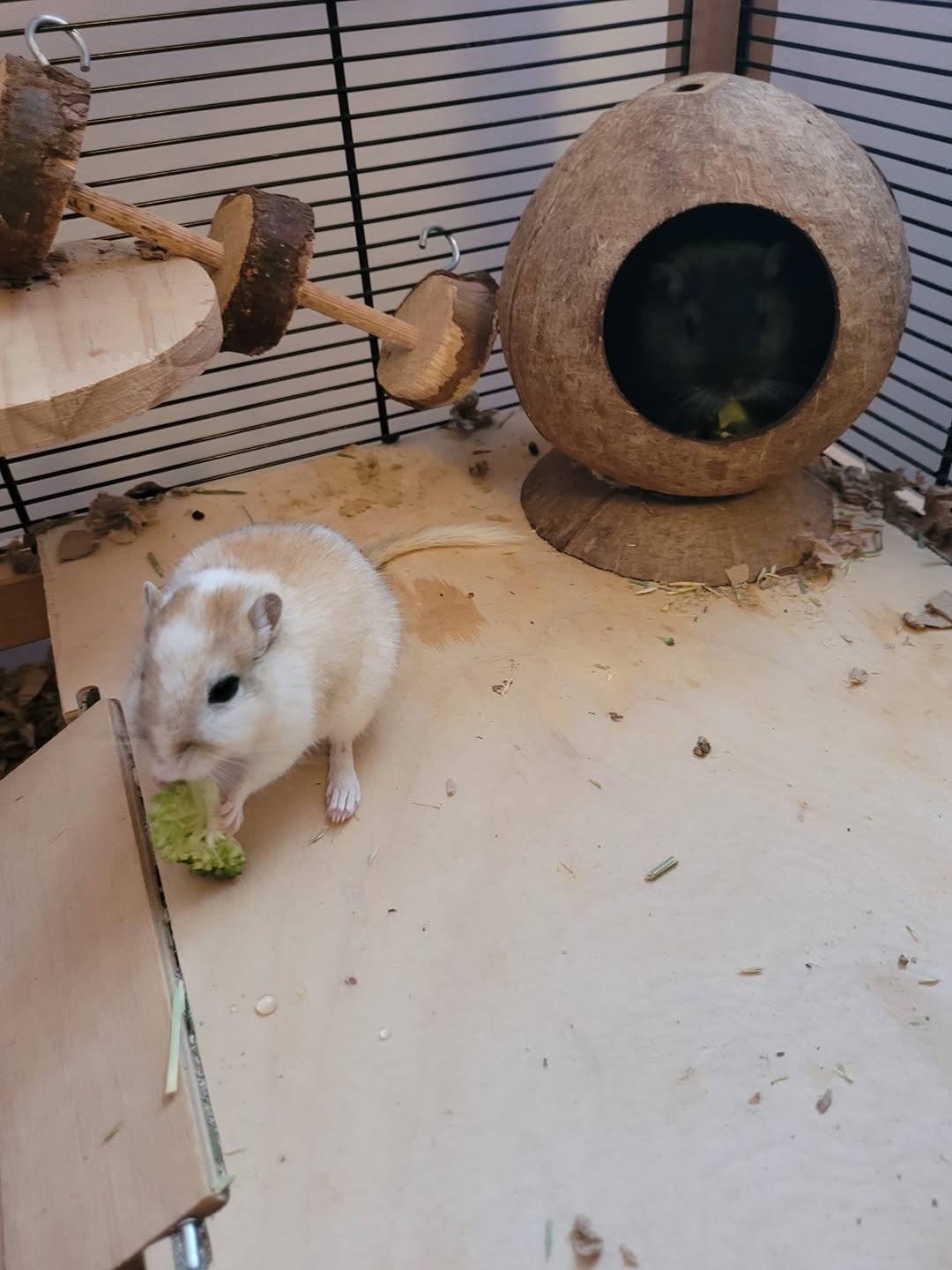
For most UK families with children, the social aspect of gerbils is genuinely appealing — children love watching them interact, groom each other, sleep in piles, and communicate. For households with adults who want a focused individual pet relationship, a single hamster can provide that more directly.
The Direct Comparison — Side By Side
For UK households who want the practical comparison alongside the schedule consideration, here is the honest side-by-side that 35 years of selling both species has taught me.

| Factor | Hamster (Syrian) | Gerbil |
|---|---|---|
| Active when | Late evening, overnight, dawn | Daytime and early evening |
| Lives alone or in groups | Strictly alone after maturity | Must live in pairs or small groups |
| Lifespan | 2-3 years typically | 3-4 years typically |
| Handling | Most species tolerate handling well when accustomed | Tolerate handling but prefer not to be held for long |
| Cage type | Standard cage with substrate and accessories | Tank/aquarium-style for deep digging substrate |
| Substrate depth needed | 15-20cm minimum | 30cm+ for proper burrowing |
| Smell | Some smell if cage not maintained | Very minimal smell — desert species, dry waste |
| Noise overnight | Significant — wheel use, exploration | Minimal overnight activity |
| Suitable for children | Older children who can stay up later | Younger children who want daytime pet |
| Bonding pattern | One-to-one with primary handler | Bonded with each other and family observation |
| Watching their behaviour | Solo activities, wheel, foraging | Social interaction, digging, burrowing |
| Water needs | Drink regularly | Drink very little — desert animals |
| Diet | Quality hamster mix plus fresh foods | Quality gerbil mix (lower fat than hamster mix) |
| Initial setup cost | £80-£200 for proper setup | £100-£250 for tank setup with substrate |
| Ongoing cost | £15-£25 monthly | £15-£30 monthly for a pair |
This table gives you the practical comparison. But notice — the first row is the most important by far. Everything else can be managed. The schedule mismatch cannot.
The Quick Decision Test
For UK families who want a fast way to settle the question, here is the simple decision framework I use at the counter.
- Are children involved in the choice, and what time do they go to bed?
Bedtime before 9pm → almost certainly gerbils. Bedtime after 9.30pm → either could work. - When does your household want to interact with the pet?
Daytime/early evening → gerbils. Late evening → hamster. - Do you want one pet or a small social group?
One pet → hamster. Pair/small group → gerbils. - Will the cage be in or near a bedroom?
Yes → gerbils. No → either could work. - Do you want to handle and pick up the pet often?
Yes → hamster (with patience). Just observe and gentle interaction → gerbils. - Do you have space for a tank-style setup (60-90cm long)?
Yes → either. Only have a standard cage spot → hamster fits better. - Is anyone in the family allergic to dust or strong-smelling pets?
Strong allergies → gerbils (less smell, less dander). - Do you understand that gerbils must live in pairs?
Yes and you accept this → gerbils. Want only one → hamster.
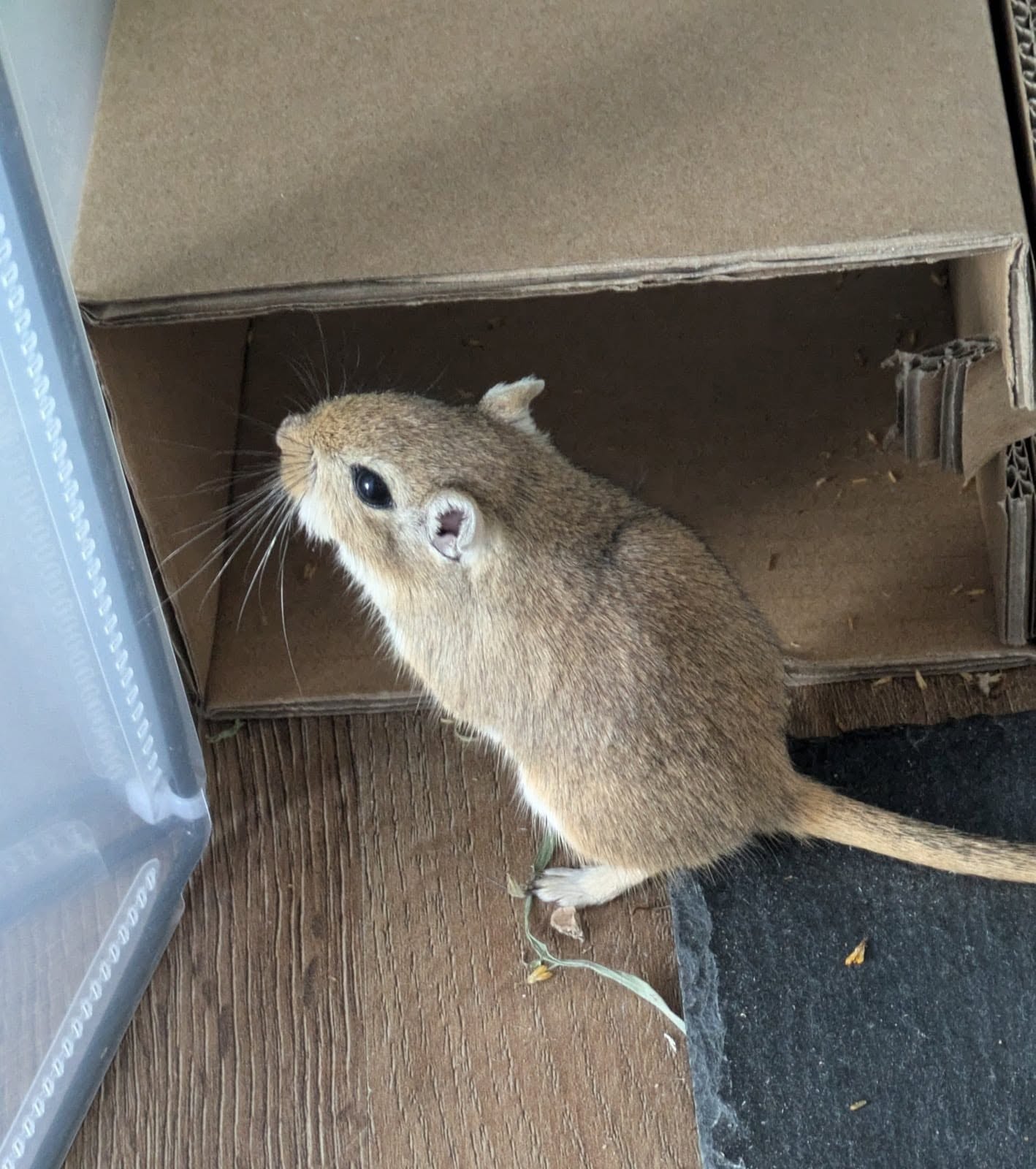
Work through these eight questions. Most UK families end up with a clear answer after the first three. The remaining questions confirm what you have already worked out, or refine the choice if you are genuinely on the fence.
The Mistakes UK Families Most Often Make
For balance, here are the genuine mistakes I see at the counter when families choose between these two species. Avoiding these helps you make a better decision.
- Choosing the cuter-looking one without considering schedule — both species are cute, but only one fits your life
- Believing the marketing photos showing pets awake during the day — staged for sales, not representative of reality
- Assuming children will adapt to pet’s schedule — they will not, particularly young children
- Buying a single gerbil — genuinely cruel to keep one gerbil alone long-term
- Buying two Syrian hamsters expecting them to live together — they will fight, sometimes fatally
- Underestimating cage size requirements — both species need significantly more space than standard small cages provide
- Choosing based on cost alone — proper setup costs more than the animal itself, for either species
- Buying for a child too young — both species need careful handling that under-7s often cannot provide
- Picking up at the wrong life stage — buy gerbils as a bonded pair from the start; do not try to introduce later
- Forgetting that pets live years — 2-4 years of commitment, not a phase
The single most common mistake is what I called out at the start of this article — choosing based on features and welfare considerations without honestly assessing whether the animal’s daily schedule matches the family’s. Get the schedule question right, avoid the common mistakes, and you have set both your family and your future pet up for success.
What If You Are Still Unsure?
For UK families who have worked through this article and still cannot decide, here is what I recommend at the counter.
- Track your actual daily schedule for a week
Write down when each family member is home, awake, and likely to interact with a pet. Be honest. - Visit a shop where you can observe both species at different times of day
Watch a hamster in the morning (asleep) vs in early evening (probably still asleep). Watch gerbils at the same times (active and visible). - Talk to current owners of both species
Friends, family, or experienced keepers can share honest assessments of their daily reality. - Consider whether your household routine could change
If you have flexibility (older teenagers, adults willing to stay up), hamster might work. If routines are fixed (young children, early bedtimes), gerbils are the answer. - Think about the long-term commitment
3-4 years for either species. Choose the one that fits your life now AND in the foreseeable future. - Come and have a chat with someone experienced
A 10-minute honest conversation at a proper pet shop can clarify what days of research cannot. - Do not buy on the day if you are uncertain
Sleep on it. Come back next week if needed. A good pet deserves a confident decision. - Trust the schedule answer
When in doubt, the schedule match question is the most reliable guide. Match it and you will be happy.
For most UK families, ten minutes of honest reflection on the schedule question genuinely settles the decision. The other research only adds detail to what the schedule answer has already told you.
The Wider Picture — Other Small Pets To Consider
This deserves a brief mention. Gerbils and hamsters are not the only small pet options for UK families, and sometimes the honest answer to “gerbil or hamster?” is actually “neither — consider a different small pet.” Worth knowing what else is on the table.
Other UK small pet options to consider:
- Guinea pigs — daytime active, very sociable, larger and longer-lived, need pairs
- Rabbits — significant commitment, long-lived, need substantial space (see our rabbit articles)
- Mice — sociable in groups, smaller setup needs, slightly more delicate
- Rats — exceptionally intelligent, very bondable, larger than mice, social
- Chinchillas — long-lived, more specialist care, primarily evening active
For more on choosing the right small pet, our guide on the 5 best small pets for UK families covers the wider picture, and our article on what pets are best for children goes into the family decision aspect in more detail.
Frequently Asked Questions
Are gerbils or hamsters better for children?
For most UK family households with primary-school-age children, gerbils are usually the better choice — they are active during the afternoon and early evening when children are home from school and awake. Hamsters spend most of these hours asleep. Older children or teenagers who stay up later may be fine with hamsters. The key question is when the child is actually awake and home, not the abstract preferences of either species.
Can I keep one gerbil alone?
No, this is now considered a welfare violation. Gerbils are intensely social animals and a solo gerbil suffers genuine welfare problems including depression, stress-related illness, and behavioural changes. Always buy gerbils as a bonded same-sex pair (usually two brothers or two sisters from the same litter). Keeping a single gerbil long-term is no longer acceptable practice.
Can I keep two hamsters together?
Syrian hamsters absolutely not — they will fight, often seriously and sometimes fatally. Syrians must live alone after maturity. Some dwarf hamster species can sometimes be kept in pairs or small groups in suitable conditions, but this often fails as the animals mature, and dwarf hamster pair-keeping has higher risks than gerbils. For first-time owners, a single Syrian hamster or a pair of gerbils are the safer choices.
Which is easier to handle, a gerbil or a hamster?
With patience and proper acclimatisation, hamsters are generally easier to handle directly — they can be picked up, held in cupped hands, and accustomed to gentle handling. Gerbils tolerate handling but prefer not to be held for long periods — they are more for observation and gentle interaction. If you want a pet you can pick up frequently, a hamster (with patience to build trust) is usually the better choice.
Do gerbils or hamsters smell more?
Hamsters tend to have more noticeable smell, particularly if their cage is not maintained regularly. Gerbils are desert species that produce very dry waste and have minimal smell. For UK households sensitive to pet smells, gerbils are noticeably better in this respect.
Which is louder at night, a gerbil or a hamster?
Hamsters significantly louder. They are most active at night and use wheels, climb cages, and explore extensively during the hours most humans are asleep. A hamster cage in or near a bedroom can be genuinely disruptive. Gerbils are quieter overnight as they sleep in blocks similar to humans, with their main activity during the day.
Where can I get honest gerbil and hamster advice in Swindon?
Come and see us at Paradise Pets, Manor Garden Centre, Cheney Manor, Swindon SN2 2QJ. We will give you honest advice based on your specific household and schedule, not just push whichever species we have most in stock. Ring us on 01793 512400. The advice is free and we have been doing this for 35 years.
One Last Thing From Me
“Gerbil or hamster?” is one of the most common questions I get from UK families considering their first small pet, and one I am always glad to answer honestly. The honest answer, after 35 years of selling both species, is — the right choice depends almost entirely on one thing about your household — when you are actually home, awake, and available. Get that question right and the rest of the decision is straightforward. Get it wrong and you will spend years with a pet you barely see.
The family with the well-researched ten-year-old that Saturday morning? They went home with the information they actually needed, came back the following week, and chose two gerbils from a bonded litter. Three years on, those gerbils are still thriving in their large tank setup with deep substrate for digging. The daughter has learned more about animal behaviour from watching them every afternoon than she would have learned from any number of books. She comes in once every couple of months to update me on what they are doing. Last visit she brought a video of them rearranging the chambers of their burrow system. They have, in her words, “completely redesigned their living room.”
That is the kind of relationship you can have with a small pet when the schedule matches. Daily observation. Learning by watching. Knowing your pets so well that you can tell when something is different. Real attachment, formed over hours of shared waking time. That is what every UK family should be aiming for when they choose between a gerbil and a hamster — not just an animal in a box in the corner of the room, but a small life you are genuinely sharing your home with.
If you are still uncertain, please ask yourself the schedule question honestly. Then come and see us. We will give you the same honest advice I would give my own family. The decision is too important — for you and for the animal — to make based on which species looks cuter on the shelf.

Trying To Decide Between A Gerbil And A Hamster? Come And See Me
We will help you make the right choice for your specific household — not the choice that benefits us. Free honest advice based on 35 years of selling both species and knowing which works for which families. That is how we have done things since 1988.