


Neil has kept, bred, and sold budgies at Paradise Pets Swindon since 1988 — over 35 years of answering questions from families with young children who want to know about birds. The question of which budgies are best for toddlers’ bedrooms comes in various forms. The honest answer involves pushing back on the premise — gently but clearly. This article explains why, and what actually works instead.
I want to be straightforward with you from the start, which is what I try to be with everyone who asks me a question at this counter.
If you have arrived at this article because you are thinking of putting a budgie in your toddler’s bedroom — in the room where your two or three year old sleeps — I want to walk you back from that idea before we go any further. Not because budgies and children cannot coexist happily, because they absolutely can. But because a toddler’s bedroom is, specifically, the wrong location for a budgie, and the reasons are worth understanding.
And if you have arrived here because you want to know which colour or variety of budgie is friendliest with small children, or whether there is a particular type of budgie that suits a family with young children — that is a better question, and I will answer it properly.
First though, let me deal with a couple of things the title of this article assumes that are not quite right.
First — Budgies Do Not Have Breeds
Dogs have breeds. Cats have recognised breeds. Guinea pigs have breeds. Budgies do not — not in the same sense.
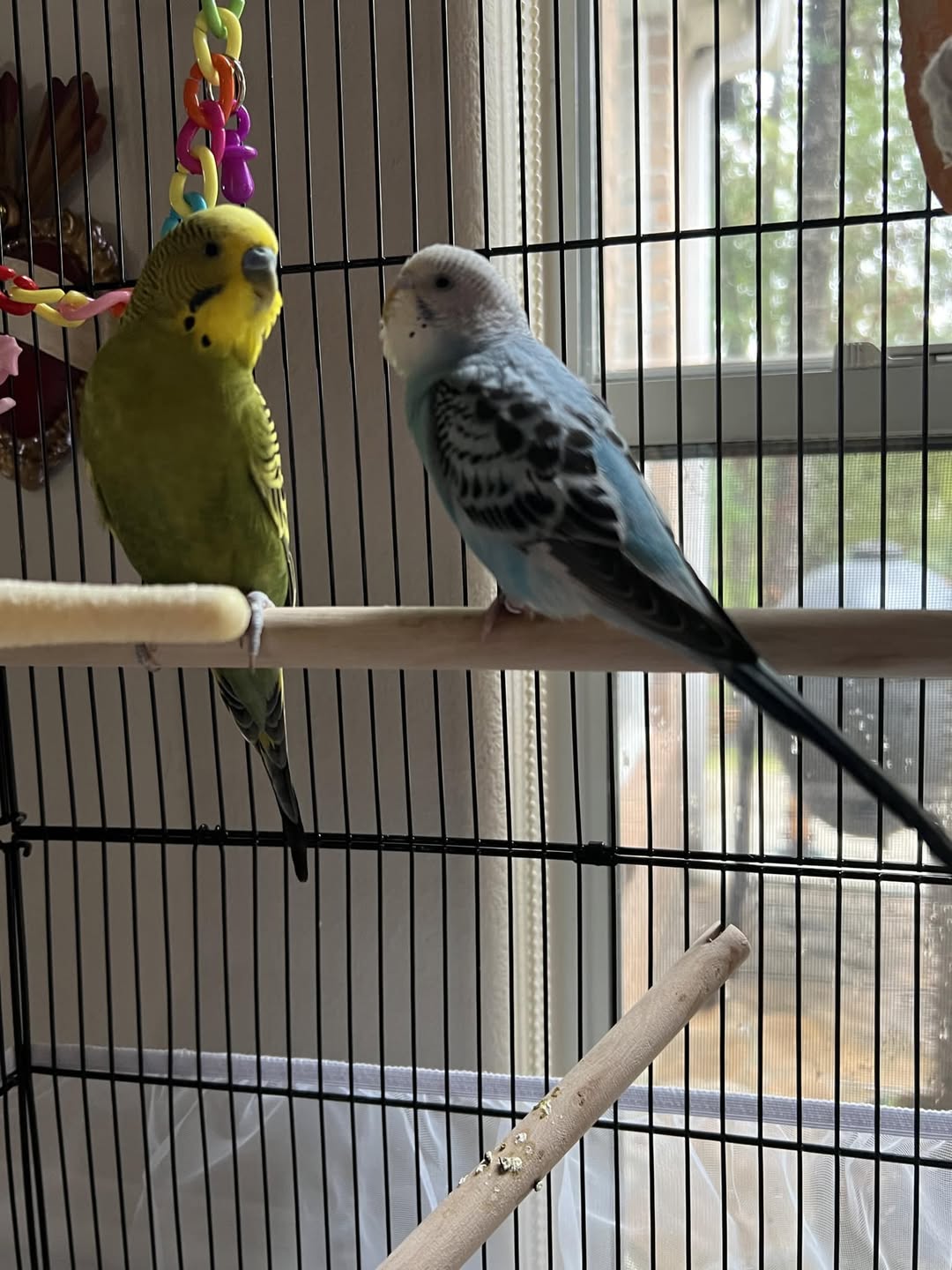
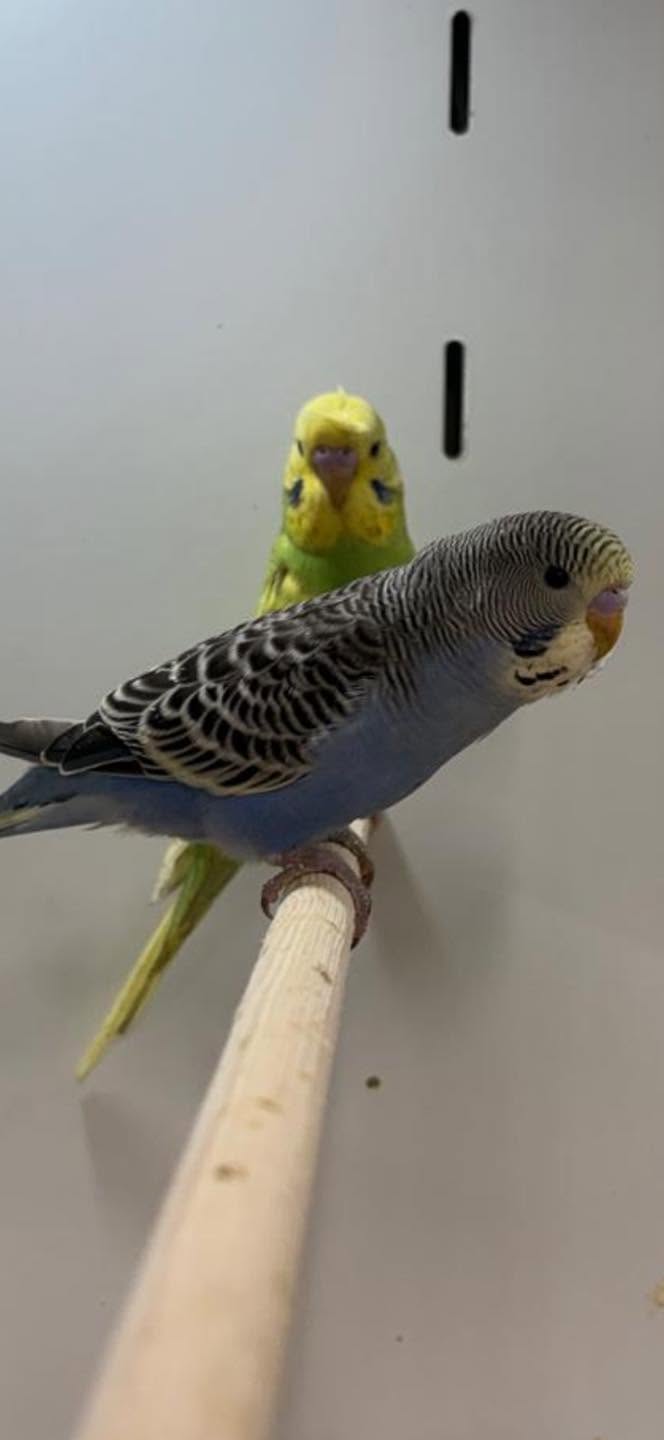
What budgies have are colour mutations and varieties. There are dozens of them — green, blue, yellow, white, grey, violet, recessive pied, dominant pied, opaline, clearwing, spangle, crested, and many others. The English show budgerigar is a larger, more heavily feathered bird than the standard pet budgie. The standard pet budgie is smaller and more nimble.
But none of these differences correspond to meaningful differences in temperament, friendliness, or suitability for any specific household or purpose. The colour of a budgie’s feathers tells you nothing about its personality. The size of its crest tells you nothing about how it will behave around children. These are aesthetic variations, not temperamental ones.
The personality of an individual budgie is shaped primarily by three things: its individual character, how it was raised and handled, and how it has been kept since. A well-handled young budgie of any colour variety from a good, attentive source is more likely to be friendly with children than a poorly handled one, regardless of its mutations. A budgie kept in stressful or inadequate conditions will be more nervous around children, regardless of its colour.
If you are looking for a budgie that will be good with your children, the questions to ask are about how the bird has been socialised, not what colour it is.
Second — A Toddler’s Bedroom Is Not the Right Location
I want to say this clearly and explain the reasons, because it is important for both the bird’s welfare and your child’s health.
The Bird’s Sleep Needs
Budgies need ten to twelve hours of genuine darkness and undisturbed quiet every night. This is not a preference — it is a physiological requirement for immune function, hormonal health, and basic wellbeing. I have written a full guide on this subject elsewhere on this site.
A toddler’s room is, by its nature, the opposite of this. Toddlers wake in the night. Night lights provide ambient glow. The hours between two and six in the morning are often when a toddler calls out or needs attention. A budgie kept in a toddler’s room is subjected to unpredictable disturbance during its natural sleep period — noise, light, activity — that will cause genuine chronic stress over time.
A stressed budgie shows that stress. It becomes more reactive, more nervous, less well. The bird in a toddler’s bedroom is not being given the conditions it needs to stay healthy.
The Child’s Respiratory Health
This is the concern I raise most seriously when anyone mentions birds in a child’s bedroom, because it is the one that has real health implications.
Birds produce dander — fine particles from feathers and skin — and in the case of budgies, a very fine powder-down dust that is a feature of their preening. This dust is continuously present in the air around a bird’s cage. In an open living space it disperses. In a closed bedroom, particularly one that is kept at night with the door shut, it accumulates.
There is a condition called hypersensitivity pneumonitis — sometimes called bird fancier’s lung — that develops in some individuals as a result of prolonged inhalation of bird proteins from dander and feather dust. It is not the most common outcome of living with birds, but it does occur, and young children’s developing respiratory and immune systems are more vulnerable to sensitisation than adults.
I am not saying a budgie in the general household will cause problems for your child. Many thousands of families have budgies in their homes with no issues whatsoever. But the concentrated, sustained exposure of a closed bedroom overnight is a different situation from a bird in the living room or kitchen. The bedroom is where your child breathes for eight to ten hours a night with the door closed. That is not the right place to accumulate bird dander.
The Unpredictability Problem
Toddlers are unpredictable. They move quickly, make sudden loud noises, do not understand why the bird needs to be handled gently, and cannot reliably be trusted to leave the cage alone. None of this is a criticism of toddlers — it is a description of what toddlers are, developmentally.
A budgie in a toddler’s bedroom will be subjected to a level of unpredictable stimulus — sudden loud noises, the cage being touched or shaken, the bird being approached without warning — that is stressful for a prey animal whose threat detection system is calibrated for exactly this kind of rapid, unpredictable movement. The cage may be positioned where it can be reached. Things may be put through the bars. The cover may be pulled off in the night.
This is not the environment in which a budgie will be calm, tame, or healthy. It is the environment in which a budgie will be chronically stressed.
- Sleep disruption: Toddlers wake at night — the budgie’s essential 10–12 hours of darkness and quiet cannot be guaranteed
- Respiratory concern: Bird dander concentrated in a closed bedroom overnight creates sustained inhalation exposure for a developing child’s airways
- Chronic stress for the bird: Toddlers’ unpredictable movements, sounds, and interactions with the cage will produce ongoing alarm responses in a prey animal
- Safety for both: A budgie outside its cage in a room with a toddler — even supervised — carries real risk of accidental injury to the bird
- The right location: A living room, kitchen, or family room where the bird is part of household life but the room is darkened and quiet at night
Budgies and Children — What Actually Works
Having said all of that clearly, I want to be equally clear about this: budgies and children can be a genuinely wonderful combination, and a family household with a budgie in the right place and with children who are involved appropriately is exactly the kind of home many budgies thrive in.
Children bring energy, noise, and movement to a household — all of which a sociable budgie finds stimulating and interesting rather than threatening, once it has been properly habituated to them. A budgie that grows up in a family kitchen or living room, where children come and go and talk and make noise in the normal course of family life, typically becomes more outgoing and more interactive than a budgie in a quiet adult household. The stimulation that would be stressful in extreme or unpredictable form is enriching in the background form of ordinary family life.
Children also, given the right guidance and the right expectations, make excellent participants in the gradual process of building a relationship with a tame budgie. The patience required for taming is not beyond many children in the five-to-twelve age range. The reward — a bird that steps onto their hand, that whistles back when they whistle — is one of the more genuinely satisfying small animal relationships available.
The key is the right location, appropriate supervision, and honest guidance about what children can and cannot be expected to do with the bird at different ages.
What Age Are Children Ready for a Bird?
This is the question that matters more than which colour the bird is, and I want to answer it honestly rather than generously.
Toddlers — children under the age of three — are not ready to interact with a budgie without direct one-to-one adult supervision at all times. The combination of quick movements, unreliable grip, and inability to follow instructions consistently means that contact between a toddler and a budgie outside its cage is genuinely risky for the bird. The toddler may love the bird and want to hold it, and the result of that love may be an injury. This is not about the toddler being unkind — it is about developmental stage.
Children from about four or five upwards can begin to learn the basics: quiet movement near the cage, gentle voice, offering treats through the bars, building familiarity with the bird over time. They cannot be left alone with a free-flying bird, but they can participate meaningfully in the relationship.
Children from seven or eight upwards — particularly those who are naturally patient and gentle — can be involved in the full taming process with guidance. Some of the best tamed budgies I have seen have been tamed by children in this age range who had the patience that some adults lack and who spent consistent daily time with the bird.
The budgie is not primarily a child’s pet in the way a hamster sometimes is. It is a family pet that children can be involved with at the appropriate level for their age, under adult guidance.
What Budgie Varieties Are There — and Do Any Matter for Families?
Since the original question asked about budgie breeds, it is worth covering what the actual varieties are and whether any of them have meaningful relevance for families with children.
The standard pet budgie — sometimes called the American budgie or the Australian budgie — is the smaller, more agile bird that most people picture when they think of a budgie. It is highly varied in colour, comes in virtually every shade from green to white to yellow to blue and many combinations, and is the most widely available budgie in UK pet shops. These birds are active, quick, and when well tamed, interactive and engaging.
The English show budgerigar is a larger, heavier bird with more elaborate head feathering and a different overall silhouette. These birds were developed for exhibition purposes and tend to be calmer and more placid in movement than standard pet budgies. Some owners find them more suitable for patient handling work because they are less flighty. They are less commonly available than standard budgies and tend to cost more.
For families with children, the practical distinction is not between colour varieties — none of which differ meaningfully in temperament — but potentially between standard pet budgies and the larger, calmer English show type if a more placid bird is specifically what the family is looking for. Even this is a generalisation — individual temperament varies significantly within both types.
The most important factor for a family bird, regardless of type or colour, is how well it has been handled from a young age and what its individual character is like. Come and see the birds, watch how they behave, ask about their handling history. That will tell you considerably more than their colour will.
The Right Setup for a Family With Young Children
If you have young children and you want a budgie, here is the setup that I recommend after 35 years of seeing what works.
The cage belongs in a room where normal family life happens — living room, kitchen, family room. Somewhere with activity and stimulation during the day, but somewhere that can be darkened and quieted at night independently of children’s sleep routines. Not in any child’s bedroom.
The cage should be larger rather than smaller. A family home is a stimulating environment and a budgie in a well-sized cage with good enrichment manages that stimulation better than one in an inadequate small cage. I have covered minimum cage sizes elsewhere on this site.
Pair recommended for welfare. Two budgies are more appropriate for a household where attention may be variable — they have each other on the days when the family is busy and no one has time for the bird. A single budgie in a busy family household that cannot always provide consistent daily interaction is a single budgie that is often under-stimulated. Two birds solve this problem.
Establish clear rules with children from the start. The cage door is not touched without an adult present. The bird is not woken during the day. Hands near the cage move slowly and quietly. These rules are achievable for most children from five or six upwards and set the foundation for a relationship with the bird that is good for both parties.
Quick Reference — Budgies and Families With Young Children
| Question | Honest Answer |
|---|---|
| Are there specific budgie breeds for children? | No. Budgies have colour mutations and varieties, not breeds. Temperament is shaped by individual character and handling, not colour. |
| Can a budgie go in a toddler’s bedroom? | No — not recommended. Sleep disruption for the bird, respiratory concern for the child, and stress from unpredictable toddler behaviour all make this a poor setup. |
| Where should the cage go in a family home? | Living room, kitchen, or family room. A social space that can be darkened and quietened at night independently of children’s routines. |
| What age can children interact with a budgie? | Supervised looking and gentle approach from any age. Feeding treats through bars from approximately 4–5 with adult supervision. Taming participation from approximately 7–8 with guidance. |
| Single bird or pair for a family? | Pair strongly recommended. Variable family attention levels mean a single bird risks under-stimulation. Two birds have each other on busy days. |
| Which colour budgie should I get? | Whichever colour appeals to you and your children. Colour has no bearing on temperament or suitability. Ask about handling history and individual character instead. |
| English show type or standard budgie? | Standard pet budgies are more widely available and equally suitable. English show types are larger and sometimes calmer — a consideration if a more placid bird is specifically wanted. |
Frequently Asked Questions
What is the friendliest type of budgie for children?
There is no specific colour or variety of budgie that is inherently friendlier with children than any other. The friendliness of a budgie is determined by how it was raised, how consistently it has been handled, and its individual temperament. When choosing a budgie for a family with children, ask the seller how the bird has been handled, watch the bird’s behaviour when approached, and choose a confident, curious individual over a nervous or defensive one. Colour is not the relevant variable.
Is bird dust from a budgie dangerous for children?
In normal household conditions — a bird in the living room or kitchen — budgie dander is not a concern for most families. The specific concern I raise is the sustained exposure of a closed bedroom overnight, which concentrates the dander in a confined space for the hours when your child breathes with the door shut. Some individuals, particularly those with respiratory sensitivities or a family history of allergy, develop sensitisation to bird proteins. If there is any respiratory sensitivity in your household, speak to your GP before getting a bird.
My toddler wants to hold the budgie — is this safe?
Not without direct adult one-to-one supervision and with a bird that is already fully tamed and calm. An untamed bird and a toddler together is not a safe combination for the bird. Even with a tame bird, a toddler’s grip can be inadvertently too firm, and a sudden noise or movement can cause the bird to startle and the toddler to react. Hold the bird yourself and allow the toddler to stroke it gently on your hand, rather than transferring the bird to the child’s hand at this age.
Will a budgie enjoy living in a family home?
Yes — potentially very much so. Budgies are social, stimulation-seeking animals that respond well to the activity and variety of a busy family environment. A cage in the living room of an active household, with varied sounds and interesting things to observe and respond to, provides good mental stimulation. The key is that the stimulation is consistent background activity rather than unpredictable stressful interaction, and that the bird still gets its sleep in a darkened, quiet environment at night.
Where can I buy budgies in Swindon?
We always have budgies in stock at Paradise Pets — young birds from good UK stock, in a range of colour varieties. Come and see us at Manor Garden Centre, Cheney Manor, Swindon SN2 2QJ. I am happy to talk through which individual bird seems right for your family and how to set up for the best possible start. Call us on 01793 512400 before visiting to find out what we currently have available.
Getting a Budgie for a Family With Young Children? Come and Talk First
If you have young children and you are thinking about getting a budgie — come in before you buy. I will tell you honestly what setup will work, what to expect at different ages, and which individual birds seem right for a family environment. This is one of the more important conversations to have before the bird comes home rather than after.