
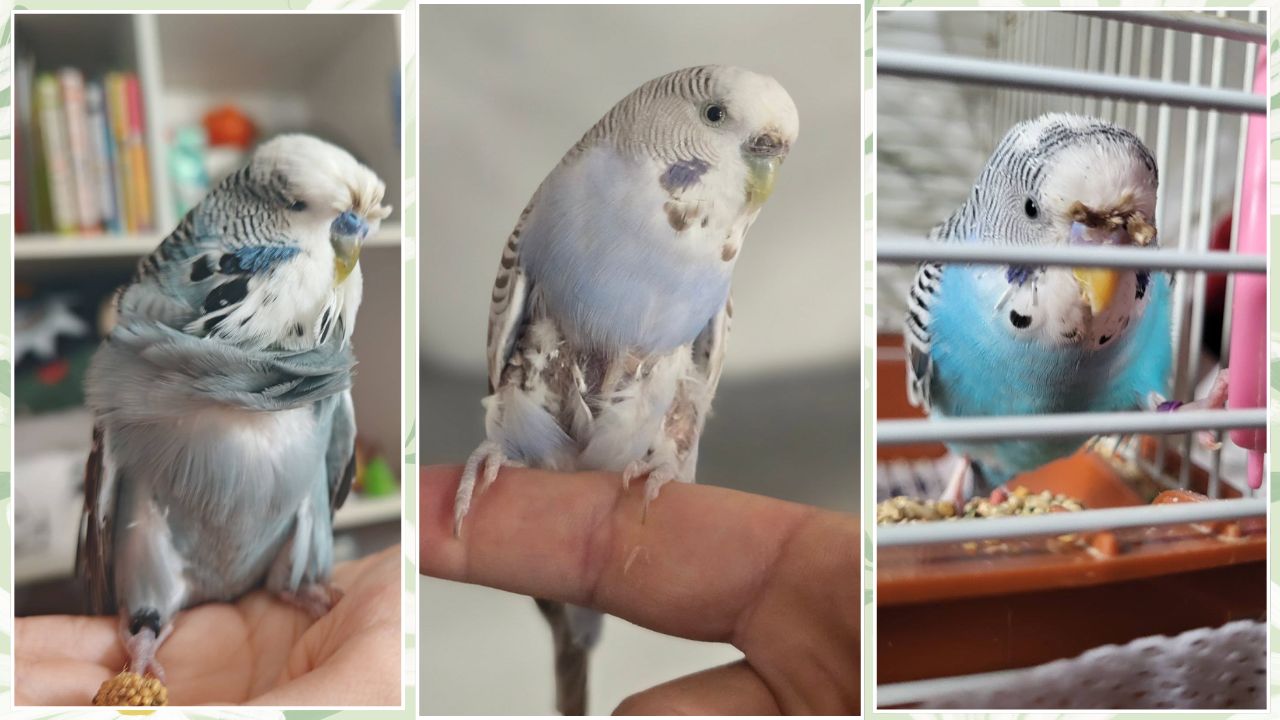

Neil has kept, bred, and sold cage and aviary birds at Paradise Pets Swindon since 1988 — over 35 years of first-hand experience with budgerigars, cockatiels, canaries, finches, and dozens of other species. Feather plucking is one of the most distressing things a budgie owner can witness, and one of the most misunderstood. This is Neil’s honest account of why it actually happens and what UK owners should genuinely do about it.
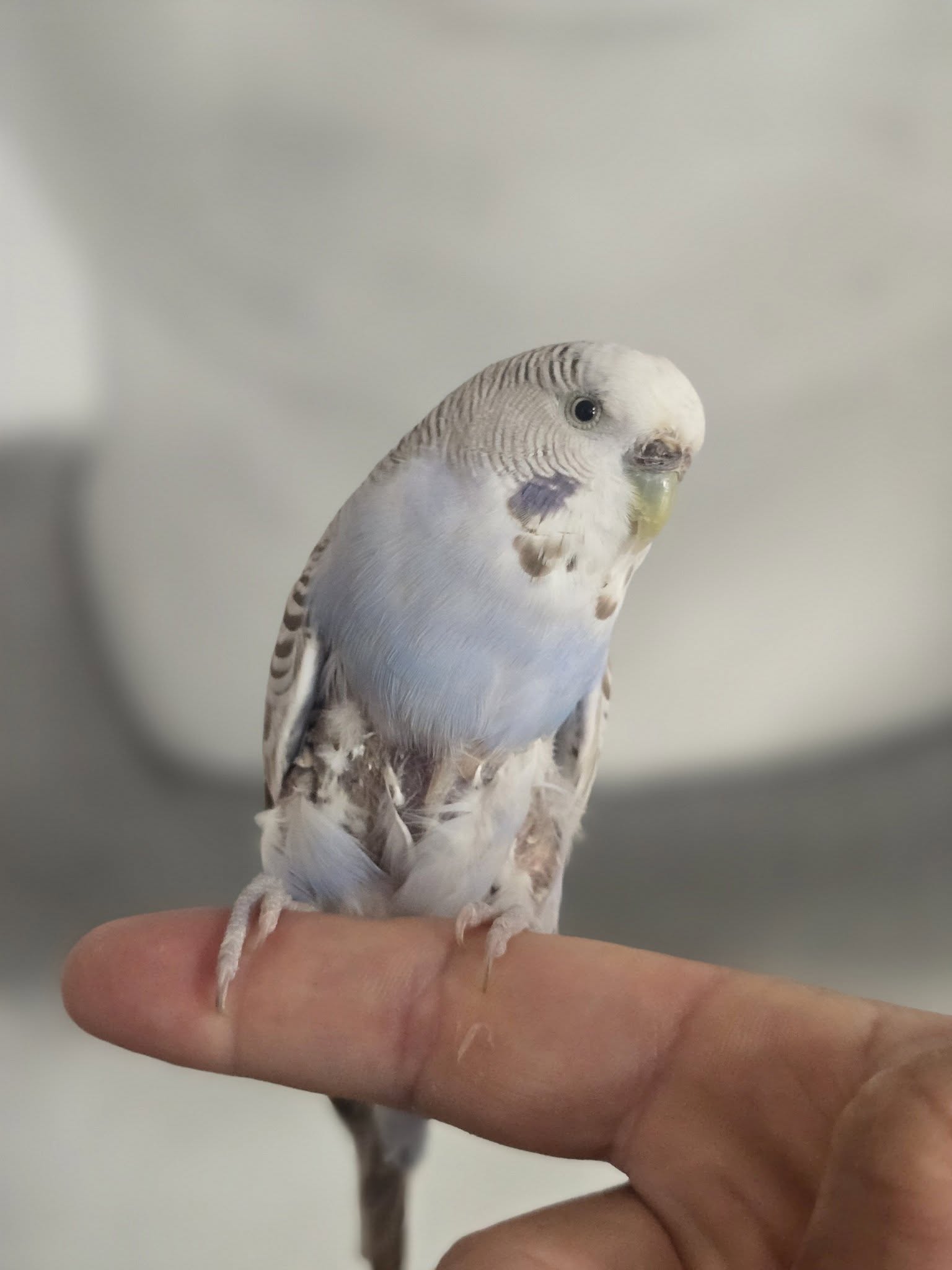
A man came into the shop a few months ago holding his phone out before he had even said hello. A photo of his budgie — bald patches across the chest, a few feathers scattered on the cage floor in the background. He looked genuinely frightened. He said, “I don’t know what I’ve done wrong.”
That sentence is the one I hear almost every time this comes up, and it is worth addressing directly before anything else. Feather plucking in budgies is rarely the result of a single obvious mistake. It is usually the result of an accumulation of smaller things — some environmental, some medical, some behavioural — and working out which combination applies to your bird is the actual task, not assigning blame to yourself.
I have seen feather plucking many times over 35 years. I have seen it resolve completely with the right changes. I have also seen it become a long-term, chronic pattern that never fully disappears even with good care. The honest truth is that this is not always a simple problem with a simple fix, and any article that promises one is not being straight with you.
What I can give you is an honest account of the actual causes, in the order I see them most often, and a clear sense of what genuinely helps versus what is well-meaning but ineffective.
What Feather Plucking Actually Is — And What It Is Not
Before going into causes, it is worth being precise about what we are talking about, because owners often conflate several different things.
Normal moulting is the regular, gradual loss and replacement of feathers that all healthy budgies go through several times a year. Moulting feathers come out cleanly, are replaced in a structured pattern, and the bird’s overall feather coverage remains largely intact throughout. This is not plucking. This is normal.
Feather plucking is different. It is the bird actively removing its own feathers — biting, pulling, chewing — often beyond what normal moult would account for, frequently in specific areas (chest, under the wings, legs) that the bird can reach with its beak, and typically leaving visible bald patches, stubble, or damaged feather shafts rather than the smooth, structured pattern of normal moult.
There is also a distinction worth making between feather plucking and feather damaging behaviour more broadly, which can include over-preening, barbering (chewing feathers down without fully removing them), and in more severe cases, self-mutilation that goes beyond feathers into the skin itself. The underlying causes overlap significantly, but the severity and the urgency of the response differ.
If you are uncertain which you are looking at, that uncertainty is itself a reason to involve an avian vet rather than guess. The difference matters for how seriously and how quickly you need to respond.
The Medical Causes — Why a Vet Visit Comes First, Not Last
I want to be direct about this because it is the single most important piece of advice in this entire article: the first step with a plucking budgie is an avian vet visit, not a change to the cage setup or the diet. Too many owners — understandably, because vet visits cost money and home changes do not — try environmental and behavioural fixes first and only see a vet when nothing has worked. This sequence is backwards, and it can mean weeks or months of an underlying medical problem going untreated.
Medical causes of feather plucking in budgies are common, and they include several specific possibilities that only a vet can properly investigate.
Skin Conditions and Parasites
Mites, particularly Knemidokoptes (scaly face and leg mites) and feather mites, cause irritation that drives birds to over-preen and pluck at affected areas. Bacterial or fungal skin infections produce similar irritation. These are identifiable on proper veterinary examination and treatable, but they will not resolve through environmental changes alone — they need direct medical treatment.
Underlying Pain or Illness
A bird in pain from an internal condition — issues with the liver, kidneys, reproductive system, or respiratory tract — will sometimes pluck at the area near the source of discomfort, or pluck generally as a stress response to chronic pain. This is one of the reasons home remedies rarely work for plucking that has a medical cause: you are addressing the visible symptom while the actual source of distress continues unaddressed.
Nutritional Deficiency
A poor diet — particularly the seed-only diets I have written about extensively elsewhere — can contribute to feather plucking both directly, through poor feather and skin quality that becomes irritating, and indirectly, through the general decline in health and immune function that a deficient diet produces over time. Vitamin A deficiency in particular has been linked to skin and feather problems in budgies.
Hormonal Factors
Budgies, like many parrot species, can experience hormonally driven plucking, particularly in birds approaching or in breeding condition, or in birds with reproductive tract abnormalities. This is a more complex area that genuinely requires veterinary assessment, as the management depends heavily on the specific situation.
A proper avian vet examination — which should include a physical exam and, depending on findings, may extend to blood work, skin scrapes, or other diagnostics — is the only reliable way to rule these in or out. Skipping this step and assuming the cause is behavioural is the most common mistake I see owners make, and it is the one that delays the bird actually getting better.
The Environmental Causes — What in the Setup Might Be Driving It
Once medical causes have been investigated and ruled out or treated, environmental factors are the next area to examine. These are genuinely within an owner’s control, and addressing them properly does make a real difference for many birds.
Low Humidity
UK homes, particularly with central heating running through autumn and winter, can have very low humidity. Budgies evolved in environments with specific humidity ranges, and excessively dry air affects skin and feather condition, contributing to itchiness that drives plucking. A humidifier near the cage, or regular light misting with water (which most budgies tolerate well and some genuinely enjoy), can make a meaningful difference.
Inadequate Lighting
Budgies kept without access to natural daylight or appropriate full-spectrum lighting can develop deficiencies and disrupted natural rhythms that contribute to feather and skin problems. A position near a window with natural light, or a full-spectrum UV bird lamp for birds kept in rooms without good natural light, supports the bird’s overall physiological health in ways that indirectly support feather condition.
Boredom and Understimulation
A budgie with nothing to occupy its attention — no toys, no foraging opportunities, no variety in its environment, no out-of-cage time — can develop plucking as a displacement behaviour, essentially redirecting normal foraging or chewing instincts onto its own feathers because there is nothing else to direct them toward. This is one of the more genuinely fixable causes, and it overlaps significantly with general welfare improvements that benefit the bird regardless of whether plucking is present.
Cage Position and Stress
A cage positioned somewhere that exposes the bird to repeated stress — too much foot traffic, proximity to predatory pets, draughts, direct exposure to loud or sudden noises, or a position that does not allow the bird to feel secure — can produce a chronic stress state that manifests as plucking. Reviewing the cage’s position against the principles I have set out in other articles is worth doing as part of investigating a plucking problem.
The Behavioural and Psychological Causes
Once medical and environmental causes have been addressed, behavioural and psychological causes form the remaining category, and these are often the most complex to fully resolve.
Stress and Anxiety
Budgies are sensitive to disruption in their routine and environment. A house move, a new pet, a change in the household, a significant change in the amount of attention they receive, or even rearranged furniture near the cage can trigger a stress response that manifests as plucking. Identifying a specific trigger is not always possible, but considering whether anything has recently changed is a useful starting point.
Lack of Social Contact or Loneliness
A single budgie that has bonded primarily to its human keeper but is not receiving adequate social contact — left alone for long periods, minimal daily interaction — can develop plucking as a manifestation of that social deprivation. This connects directly to something I have written about before: a single budgie’s social needs do not disappear because there is no second bird, they simply need to be met by the human keeper instead, and when they are not met, the consequences show up in behaviour like this.
Learned Behaviour
In some cases, particularly where plucking has been present for an extended period, the behaviour can become habitual — continuing even after the original trigger has been resolved, simply because the bird has developed a pattern. This is one of the reasons early intervention matters so much. The longer plucking continues, the more likely it is to become self-sustaining independent of its original cause, which makes it considerably harder to resolve.
What Actually Helps — A Practical, Honest Approach
- Book an avian vet appointment first. Before anything else. This is not optional and it is not a last resort — it is the first and most important step. A proper examination rules in or out the medical causes that home changes cannot fix.
- Review the diet honestly. Is it varied, with fresh greens regularly, or is it seed-only or seed-dominant? If the diet needs improvement, start that process alongside the vet visit, introducing changes gradually.
- Check humidity and lighting. Especially in winter with central heating running. A simple humidity gauge near the cage tells you whether this is a factor. Address it if it is.
- Increase environmental enrichment. More toys, rotated regularly so they stay interesting. Foraging opportunities — food hidden in paper or safe materials the bird has to work to access. Safe branches with bark to chew. This redirects the chewing and foraging instinct toward something other than feathers.
- Increase social contact if the bird is alone for long periods. More daily interaction, more out-of-cage time with you present, radio or television on when you are out so the bird is not in silence.
- Review the cage position. Is it somewhere the bird can feel secure, away from repeated stress, draughts, and excessive disturbance?
- Be patient and consistent. Feather plucking, once established, does not always resolve quickly even when the cause has been correctly identified and addressed. Give changes weeks, not days, before judging whether they are working. And keep your vet informed of progress — they may want to reassess if things are not improving.
What Does Not Help — And Can Make Things Worse
There are some commonly suggested responses to feather plucking that I think owners should be cautious about, because the evidence for their effectiveness is weak or because they risk making the situation worse.
Bitter-tasting anti-pluck sprays, sold widely in UK pet retail, are intended to discourage the bird from chewing its own feathers by making them taste unpleasant. In my experience these have limited and inconsistent effectiveness, and they do nothing to address whatever underlying cause is actually driving the behaviour. If anything, relying on them can delay an owner from pursuing the vet visit and root-cause investigation that would actually help.
Punishing or scolding a bird for plucking is counterproductive. The bird is not plucking out of defiance or naughtiness — it is responding to a medical, environmental, or psychological cause. Punishment adds stress, which is itself one of the contributing factors to plucking, and risks making the underlying problem worse while damaging the bird’s trust in you.
Collars and physical restraints to prevent a bird from reaching its feathers are sometimes used in severe, chronic cases under direct veterinary guidance, but they are not a first response and should never be used without professional advice. They address the physical act of plucking without addressing why it is happening, and used incorrectly they cause their own welfare problems.
Assuming it will resolve on its own without investigation is the most common mistake. Some mild, transient plucking around a stressful event does sometimes resolve without intervention. But persistent or worsening plucking very rarely resolves itself, and the longer it continues untreated, the more entrenched it tends to become.
When to Be Concerned About Severity
Most feather plucking, while distressing to witness, does not represent an emergency in itself. But there are signs that indicate the situation needs urgent attention rather than the standard investigative approach.
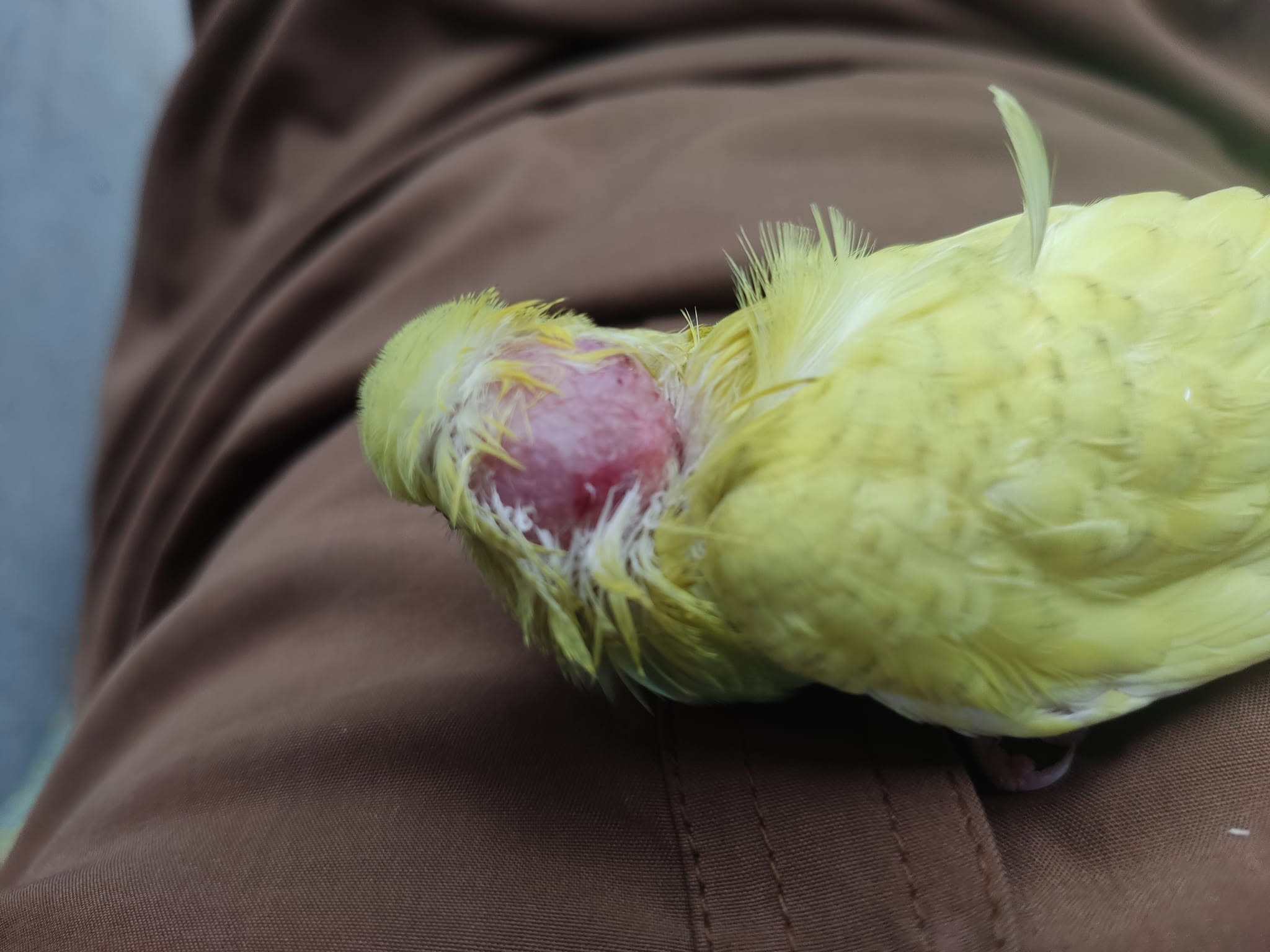
If the bird is damaging skin, not just feathers — visible wounds, bleeding, or open sores — this needs same-day veterinary attention. Self-mutilation beyond feather removal is a more serious welfare concern and can become infected or cause significant harm if not addressed promptly.
If the plucking is accompanied by other signs of illness — lethargy, not eating, changes in droppings, fluffed posture — treat this as a sick bird requiring prompt veterinary care, not solely a feather plucking case.
If the bird is plucking to the point of significant loss of body feathers affecting its ability to regulate temperature, additional warmth and prompt veterinary input become important, particularly in colder months.
Frequently Asked Questions
Is feather plucking in budgies common in the UK?
It is one of the more commonly reported behavioural and welfare concerns in pet budgies, though exact figures are hard to pin down because many cases go unreported or are mistaken for normal moulting in early stages. In 35 years I have seen it regularly enough that I do not consider it rare, but I also would not say it affects the majority of well-kept budgies. Good husbandry — diet, environment, social contact — significantly reduces the likelihood.
Will my budgie’s feathers grow back after plucking stops?
In most cases, yes — feather follicles that have not been permanently damaged will regrow normal feathers once the underlying cause is resolved and the bird stops plucking. This can take one or more moult cycles, so patience is needed. In cases of chronic, long-term plucking, some follicle damage can occur that affects future feather quality in the affected area, which is another reason early intervention matters.
Can stress alone cause feather plucking, even with a good diet and setup?
Yes. Stress is a genuine standalone cause, and a bird with an otherwise excellent diet and environment can still pluck in response to a specific stressor — a house move, a change in routine, a new pet, reduced attention from the owner. This is why investigating recent changes in the household is a useful part of working out the cause, even when the physical setup appears to be correct.
How much does treating feather plucking cost at the vet?
This varies considerably depending on what is found. An initial consultation typically costs forty to seventy pounds. If diagnostics such as blood work or skin scrapes are needed, costs rise from there, potentially into the low hundreds. Ongoing treatment, if a specific medical cause is identified, adds further cost. This is one of the clearer examples of why having a financial plan for veterinary costs — savings or insurance — matters, because a plucking investigation is exactly the kind of multi-step process that can accumulate cost over several visits.
Where can I get help with my plucking budgie in Swindon?
Come and see us at Paradise Pets, Manor Garden Centre, Cheney Manor, Swindon SN2 2QJ, or call us on 01793 512400. We will talk through the diet, the setup, and what you have noticed, and we will be honest about what we think needs a vet versus what might be addressed at home. We are not a substitute for veterinary care, but we can help you think it through and point you toward the right next step.
The Last Thing I Want to Say
The man with the photo on his phone — his budgie’s diagnosis turned out to be a combination of things. A vitamin deficiency from a seed-only diet that had gone on too long, combined with low humidity from a flat with central heating running constantly through winter, combined with a cage that had been moved next to a busy hallway a few months earlier without him realising the stress it had caused. No single dramatic cause. Three smaller things, stacked together.
He fixed all three. The plucking did not stop overnight — it took the better part of three months and two follow-up vet visits before the feathers properly came back. But they did come back, and the bird he has now is, by his own description, a completely different animal from the one in that first photograph.
That is usually how this goes, when it goes well. Not a single fix. A combination of honest investigation, patience, and the willingness to start with the vet rather than ending there. If your budgie is plucking, that is where I would tell you to start too.
Worried About Your Budgie’s Feathers? Come In and We Will Help You Think It Through
Bring photos, bring your questions about diet and setup, and we will give you an honest view of what we think is happening and what to do next. Free advice, no obligation — that is how we have done things since 1988.