
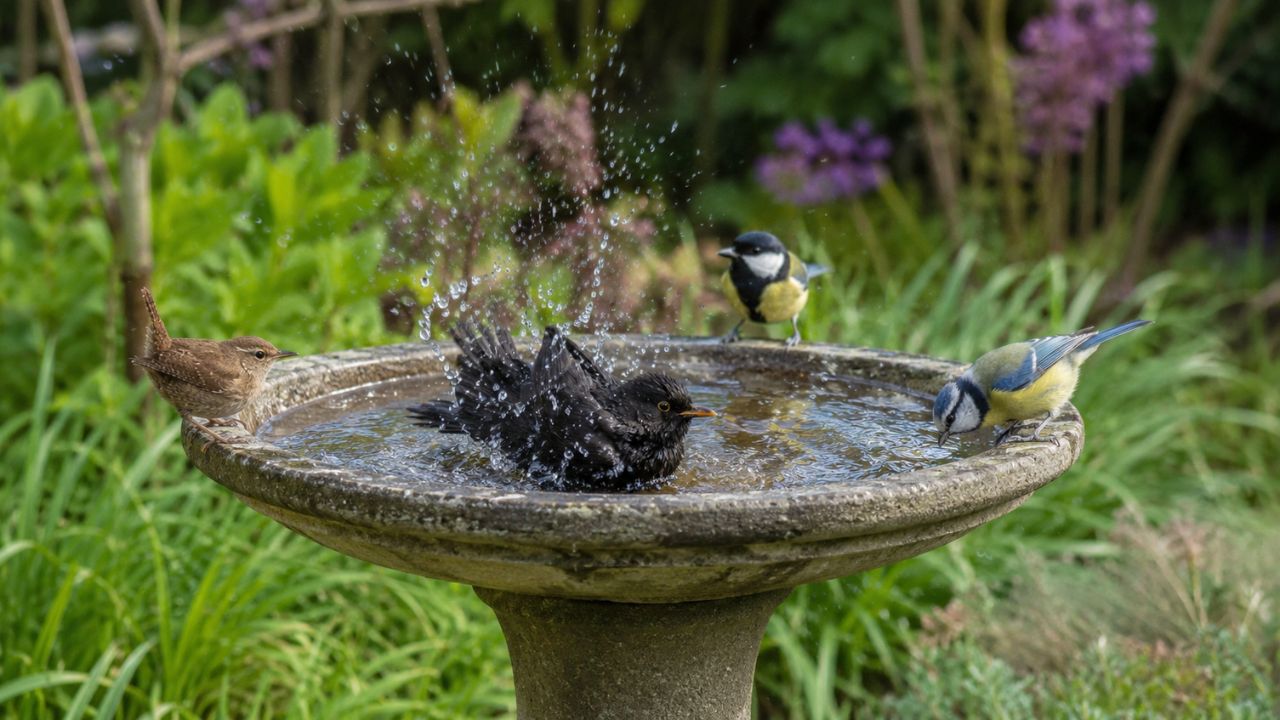

Neil has kept, bred, and sold birds at Paradise Pets Swindon since 1988 — over 35 years of conversations with British gardeners and birdwatchers about how to bring more wildlife into their gardens. This is his honest, practical guide on the single simple change UK households are using this season to attract more birds — what it actually is, why it works so well, and how to set it up properly in your own garden without making the mistakes most people make first time round.
A woman came into the shop one Tuesday afternoon, slightly breathless and clearly excited. “Neil,” she said, “I have been watching the birds in my garden for ten years and I have never seen this many before. I tried something my neighbour suggested three weeks ago and the difference is unbelievable. I just wanted to come and tell you, and ask you about getting the right setup for it.”
I asked her what she had done. “A shallow water dish on the lawn,” she said. “Just a normal ceramic plant saucer with clean water. That is all. I have always fed the birds, I have always had feeders, but I never put out water on the ground. The change in three weeks has been incredible. Robins, blackbirds, sparrows, a song thrush, two starlings, and yesterday a blue tit had a bath in it. From one little dish of water.”
This is the thing British birdwatchers have been quietly rediscovering this season. While the shops are full of complicated feeders, expensive seed mixes, and intricate bird tables, the actual breakthrough most British households are reporting comes down to water. A shallow dish, refreshed daily, placed properly, and you can transform a garden in a fortnight.
After 35 years of selling birds and talking to gardeners, I have watched countless approaches come and go — exotic feed mixes, automated feeders, designer bird tables, peanut wreaths, suet sculptures. All of them help to varying degrees. But none of them produces the consistent, dramatic transformation that a proper water source does. Water is what most UK gardens are missing, and it is the single change that brings the most species in the shortest time.
This article is the conversation I have been having with delighted customers all year. By the end of it, you will understand why water works so well, what makes a good water source different from a bad one, where to put it, what to avoid, and how to make sure the birds you attract are safe while they are using it.
First — Why Water Matters More Than Most Gardeners Realise
Before we get into the practical setup, it is worth understanding why this works so dramatically. Once you understand the bird’s perspective, the rest of the article makes sense.
British gardens have changed enormously over the past few decades. Many natural water sources that birds historically relied on have disappeared from suburban areas. Garden ponds have become less common in many UK gardens, replaced by patios, decking, or low-maintenance designs. Streams and ditches in suburban areas are often piped underground. Puddles dry out quickly on modern hard surfaces. Even traditional cattle troughs and farm water sources are less accessible to garden birds.
What this means for the birds in your garden:
- Many birds in suburban Britain are genuinely short of accessible drinking water
- Birds need water year-round, not just in summer
- Bathing is essential for feather condition, particularly during moults
- Hot summer days can cause real dehydration risk for small birds
- Freezing winters lock away natural water sources for weeks at a time
- A garden offering reliable water becomes genuinely valuable territory for many birds
The reason a water source produces such dramatic results is that birds need water every day, twice a day, sometimes more. They need it during the breeding season for their chicks. They need it during moult for feather condition. They need it during hot weather and during cold weather. There is no time of year when a reliable water source does not matter to a British garden bird.

A garden with reliable food but no water is like a restaurant with no glasses — birds will visit, but they cannot make the most of it. A garden with both food and water is somewhere they want to stay.
Why This Approach Works So Much Better Than Just Feeding
British gardens that put out food but not water typically attract a smaller range of species — primarily the birds that can get their water from natural sources or from the food itself. Adding water dramatically expands the bird community using your garden, often within days.
What you typically see in a garden with only feeding:
- Regular visits from sparrows, finches, tits, and pigeons
- Occasional robins and blackbirds
- Concentrated activity around feeders, less elsewhere in the garden
- Less time spent on the ground
- Fewer summer visits as natural food becomes available
What you typically see after adding water:
- All the above species, but more frequently and for longer periods
- New species — song thrushes, starlings, dunnocks, wrens, possibly goldcrests
- Birds spending more time across the whole garden, not just at feeders
- Visible bathing behaviour — particularly enjoyable to watch
- Better feather condition in the regular birds
- Continued summer activity as breeding birds return for water
The difference is genuine and consistent. Customers who come back to the shop after adding water are nearly always surprised at how quickly and dramatically their garden bird community expands. It is not magic — it is simply meeting a fundamental need that most gardens were missing.
What Makes A Good Bird Water Source
This is where most British gardeners make their first mistakes. Not every bird bath works well. Not every dish is suitable. After 35 years of selling and recommending water solutions, here are the principles that matter most.
- Shallow depth
2-3 cm is ideal. Deeper water excludes small birds and risks them drowning. Larger birds can still drink and bathe from shallow water. - Gradual slope or graded depth
A dish that goes from very shallow at the edge to slightly deeper in the middle gives different sized birds the depth they prefer. - Rough or textured base
Ceramic, stone, or textured plastic gives birds grip. Smooth glazed surfaces are slippery and stressful. - Generous diameter
30 cm or wider lets multiple birds use it at once and gives space for proper bathing wing movements. - Stable positioning
The dish should not wobble or tip when birds land on it. Heavy ceramic dishes are best. - Easy to clean
You will need to clean and refill daily. A dish that is easy to lift, rinse, and replace will get used. One that is awkward will get neglected. - Made from safe materials
Ceramic, stone, terracotta, or food-safe plastic. Avoid metal that can become very hot in summer or freeze hard in winter.

The single most common British mistake I see at the counter is buying a beautiful but impractical bird bath — too deep, too steep-sided, too narrow, or made from a slippery glazed surface. Many decorative bird baths are designed for gardens rather than for birds, and they look stunning but get little use.
The Simplest Setup That Works Brilliantly
For UK households who want to try this for the first time without spending much, here is the setup I recommend at the counter. It costs almost nothing and works as well as any expensive solution.
- A standard ceramic plant saucer — the kind you put under a flowerpot, around 30 cm wide
- Or an upturned metal dustbin lid (used in many traditional British gardens)
- Or a shallow terracotta dish from any garden centre
- Or a simple stone or concrete shallow dish
That is genuinely all you need. The saucer that came with a plant pot you bought five years ago, repurposed. The bin lid from your garage. A dish from a charity shop. Birds do not care about aesthetics — they care about water at the right depth, in the right place, kept clean.
Place the dish on the ground or on a low table, fill with clean water to a depth of 2-3 cm, refresh daily, and watch what happens. Most British gardens see results within two to three weeks. Some see new species within days.

Where To Place Your Water Source
Position matters as much as the dish itself. The best dish in the wrong location will be ignored. The right position transforms an ordinary dish into a thriving garden centrepiece. Here is what to think about.
- Close to cover, but not right against it
Birds need escape routes from predators. A dish placed 1-2 metres from a hedge or shrub gives birds quick cover if a sparrowhawk appears, but enough open space to feel safe approaching it. - Not directly under low overhanging branches
Cats can ambush from above. Leaves and bird droppings also fall into the water. - Visible from indoors if possible
You will enjoy this far more if you can watch from a window. Birds quickly learn that a quiet observer is not a threat. - Away from main bird feeders
Separating water and food reduces competition and prevents food contamination in the water. - Out of direct strong sunlight
Water heats quickly in summer sun, which can encourage algae and bacteria growth. Partial shade is ideal. - Sheltered from prevailing wind
Windy positions evaporate water faster and chill birds in winter. - Multiple dishes if your garden is large
Two or three smaller water sources at different points work better than one large one. - On the ground or low table
Most British garden birds are ground or low-feeders. Tall pedestal bird baths look beautiful but get less use.

The single biggest placement mistake I see at the counter is putting a bird bath in the middle of a lawn with nothing nearby. Birds feel exposed and avoid it. Move that same dish to within a metre or two of a hedge or shrub and it will be used within days.
Year-Round Water Care — The British Calendar
A water source is not a summer project. The British birdwatchers who have the most transformative experiences with this approach are the ones who maintain water year-round, through every season. Here is what each season requires.

Spring — March to May
This is when bird activity around water peaks for the year. Breeding birds need extra water for themselves and for their chicks. Birds also drink and bathe more during the spring moult.
- Increase water source size if possible — more birds, more often
- Refresh daily, twice daily during warm spells
- Keep water levels topped up — small dishes can dry out fast
- Watch for nesting material being brought to the water — birds sometimes wet feathers to take moisture to chicks
Summer — June to August
Heatwaves are when British birds are most vulnerable to dehydration. A reliable water source can be genuinely life-saving during a long hot spell.
- Refresh at least twice daily during heatwaves
- Position in deeper shade if possible during hot weather
- Consider adding a second dish in another part of the garden
- Watch for fledglings learning to drink and bathe — particularly entertaining
- Clean more frequently as algae and bacteria multiply in warm water
Autumn — September to November
Migration and pre-winter feeding mean continued water demand. Many British gardeners stop providing water in autumn — this is a mistake.
- Maintain daily refresh routine
- Clean more frequently as leaves fall into water
- Position to avoid the worst of leaf fall if possible
- Watch for occasional unusual visitors during autumn migration
Winter — December to February
This is when reliable water becomes most critical and most challenging. Frozen natural water sources mean birds rely heavily on whatever you provide.
- Break ice each morning if temperatures drop below freezing
- Refill with cool tap water — not warm water (which can shock birds)
- Consider a slightly thicker ceramic dish that retains warmth longer
- Position out of the worst frost pockets
- Do not use antifreeze or salt — both are toxic to birds
- If you cannot refill before going to work, fill last thing at night
British gardens that maintain a reliable winter water source often see significantly more bird activity than neighbouring gardens that only feed. Water in winter is rarer than food in winter, and birds remember.
Keeping The Water Source Clean And Safe
A neglected water source becomes a health hazard rather than an asset. Standing dirty water can spread disease between birds, and a bath that birds avoid because it is unclean is worse than no bath at all. Here is the genuine cleaning routine I recommend.
- Daily — refresh the water
Tip out the old water, rinse the dish briefly, refill with clean fresh water. - Weekly — proper clean
Empty completely, scrub with hot water and a stiff brush. No detergents needed for most cases. Rinse thoroughly before refilling. - Monthly — deeper clean if needed
For visibly stained or algae-affected dishes, soak in hot water and a tiny amount of mild washing-up liquid, scrub well, rinse very thoroughly. - After disease outbreaks in the area
If you hear of bird disease in your area, increase cleaning to twice weekly and consider a brief disinfectant rinse (very dilute, very well rinsed). - Never use bleach or strong cleaners
Residues are toxic to birds. Hot water and physical scrubbing is almost always enough. - Remove debris immediately
Fallen leaves, dropped feathers, bird droppings — remove as soon as you see them.

A clean water source is more important than a fancy water source. Many British gardens fail with bird baths simply because they are not cleaned often enough. The dish itself can be the cheapest available — what matters is that it is fresh and clean every day.
What You Will Start To See — The First Three Months
For British households setting up a water source for the first time, here is the realistic timeline of what to expect.
| Timeframe | Typical Bird Activity Around A New Water Source |
|---|---|
| Days 1-3 | Limited or no activity. Birds may notice but not approach. Position-checking happens during this phase. |
| Days 4-7 | First cautious drinkers — usually robins, blackbirds, or sparrows. Brief visits, watchful behaviour. |
| Week 2 | Regular visits established. First bathing behaviour begins. Word spreads in the bird community. |
| Week 3-4 | New species appear — possibly tits, finches, dunnocks, wrens. Garden activity noticeably increases. |
| Month 2 | Daily reliable bird community. Several species using water at different times. Bathing routines visible. |
| Month 3 | Stable garden bird community established. Possibly seasonal visitors or migrants noticed. Long-term territorial users. |
The timeline depends on factors like how rural or urban your garden is, what other water sources exist nearby, what species are in your area, and how good the rest of your garden is for wildlife. But the broad pattern of “limited at first, dramatic within a month” is consistent across most British gardens.
Combining Water With Other Garden Improvements
Water on its own works brilliantly. But water combined with other thoughtful garden choices works even better. For British households wanting to take this further, here are the additions that genuinely multiply the effect.
- Quality bird food — sunflower hearts, mealworms, suet, and proper seed mixes alongside water
- Hedges instead of fences — provide nesting sites and escape cover near water
- Native plants — support the insects birds need to feed their young
- A wild corner — log piles, leaf litter, long grass for invertebrates
- Avoid pesticides — particularly slug pellets, which are harmful to ground-feeding birds
- Reduce cat access if possible — bells, indoor cats during peak bird hours, or thoughtful planting
- Multiple feeding points — spreads birds, reduces competition and disease
- Nest boxes — small, medium, and large for different species, properly positioned

A garden with water, food, cover, and wildlife-friendly management becomes genuinely transformative for British wildlife. The water source is often the starting point, but the bigger picture is what creates lasting change.
For more on the broader picture, our article on why UK gardens are seeing more robins this season explores some of these wider changes in detail.
Honest Concerns And What To Watch Out For
For balance, here are the genuine concerns British households should be aware of when setting up bird water sources. None of these should put you off — they are easily managed once you know about them.
- Mosquito breeding — refreshing daily prevents this. Stagnant water is the issue, not the dish itself.
- Disease spread between birds — manageable with weekly cleaning. Watch for unwell birds and isolate the dish if outbreak occurs.
- Cat ambush opportunities — position carefully, never against thick cover where cats can hide.
- Drowning risk for tiny birds — shallow water (2-3 cm) eliminates this almost entirely.
- Algae growth in summer — clean weekly, position in some shade, refresh daily.
- Freezing in winter — break ice each morning, never use antifreeze or salt.
- Children and dogs — position out of reach of small children and away from areas where dogs run.
- Garden chemicals contaminating water — keep well away from any sprayed plants or treated lawn areas.
The single most common avoidable mistake is owners using slug pellets in gardens they are also providing water for birds in. The pellets are genuinely toxic to garden birds, and the water source means birds spend more time on the ground where they encounter them. Choose one or the other — and for nearly all British gardens, going pesticide-free is the better choice.
Why This Resonates With British Birdwatchers Specifically
There is something particular about how this approach has caught on with British birdwatchers this year, and it is worth understanding why.
British gardening culture has always valued practical, sensible, no-fuss approaches over expensive solutions. There is a deep-rooted appreciation in this country for finding the simple thing that works well rather than the elaborate thing that works adequately. A ceramic dish from a garden centre that transforms a garden taps into exactly this tradition.
There is also the British relationship with wildlife specifically. British households have a particular fondness for their robins, blackbirds, song thrushes, and small garden birds. The Royal Society for the Protection of Birds has the highest membership of any wildlife organisation in Europe. The Big Garden Birdwatch is one of the most popular citizen science events in the world. Britain genuinely loves its garden birds, and an approach that brings more of them into gardens at minimal cost resonates strongly with this national character.
The combination — a simple, traditional, low-cost solution that genuinely works to bring more wild birds into British gardens — is exactly the kind of thing British birdwatchers respond to. That is why the word has spread quickly this season. It is not a clever marketing campaign. It is just a good idea, properly applied, in gardens where birds genuinely needed water.
Frequently Asked Questions
What is the best way to attract more birds to my UK garden?
A reliable, shallow water source — refreshed daily, placed correctly — is the single most effective change most British gardens can make to attract more birds. Combined with quality food and some basic wildlife-friendly gardening, water transforms gardens faster than any other approach. Many British gardeners see new species within three to four weeks of adding a proper water dish.
What kind of dish should I use for a bird bath?
A shallow ceramic plant saucer, terracotta dish, stone bowl, or any heavy stable dish with a rough base works brilliantly. The dish should be 30 cm or wider, 2-3 cm deep, with a rough or textured base for grip, and placed on the ground or a low table. Expensive decorative bird baths often work less well than a simple ceramic dish from a garden centre.
How often should I clean my bird bath?
Refresh the water daily — tip out, rinse briefly, refill with clean water. Do a proper clean weekly with hot water and a stiff brush. Avoid bleach or strong detergents as residues are toxic to birds. In hot summer weather or during disease outbreaks in your area, clean more frequently.
Where should I put my bird water source?
Place it 1-2 metres from cover such as a hedge or shrub, on the ground or a low table, out of direct strong sunlight, away from main bird feeders, and where you can see it from a window. Avoid placing it under overhanging branches where cats can ambush from above or where leaves and droppings constantly fall in.
Will birds use water in winter?
Yes, absolutely — and winter is when reliable water becomes most critical. Frozen natural water sources mean birds rely heavily on whatever you provide. Break ice each morning, refill with cool tap water (not warm), and never use antifreeze or salt. British gardens that maintain winter water often see significantly more bird activity than gardens that do not.
How long before I see results?
Most British gardens see first cautious visitors within a week, regular use within two weeks, and noticeable expansion of bird species within three to four weeks. Stable, daily bird activity is usually established within two months. Faster in rural gardens close to good habitat, slower in heavily urban areas, but the broad pattern is reliable.
Where can I get the right equipment in Swindon?
Come and see us at Paradise Pets, Manor Garden Centre, Cheney Manor, Swindon SN2 2QJ. We stock proper shallow ceramic dishes, ground feeders, bird food suitable for UK garden species, and we are always happy to talk through what works in our local area. Give us a ring on 01793 512400. The advice is free and we have been doing this for 35 years.
One Last Thing From Me
“What is the best way to attract more birds to my garden?” is one of the most common questions I get from British customers, and one of the most satisfying to answer. The honest answer, after 35 years of selling birds and talking to gardeners, is — water. A proper shallow water source, kept clean and accessible year-round, will transform more British gardens than any other single change you can make. It is simple, cheap, traditional, and it genuinely works.
The woman with the ceramic plant saucer that Tuesday afternoon? She came back two weeks later with photos on her phone. A song thrush bathing. Two starlings sharing the dish. A pair of robins drinking together at dusk. She had spent under five pounds on the saucer from a charity shop and the water bill was barely noticeable. Her garden had become, in her own words, “completely alive in a way I have never seen before.” Six months later she added a second dish at the other end of the garden, then a third under a hedge for the more nervous birds. Her garden is now a proper haven for British wildlife, built on the simplest possible foundation.
That is the experience I want every British household reading this article to have. You do not need expensive equipment, complicated routines, or specialist knowledge. You need a shallow dish, clean water, the right place, and the patience to refresh it every day. Within weeks your garden becomes something genuinely transformative, and within months you will wonder how you ever lived without it.
If you want to get started, please come and see us. We stock the right equipment, the right food to go alongside, and we can give you honest practical advice based on what genuinely works in UK gardens. Or just start with whatever dish you have at home — most British gardens already have everything they need, sitting unused in a shed or under a flowerpot. Give it a try, give it a few weeks, and let the birds do the rest.
Want To Try This In Your UK Garden? Come And See Me
We stock proper shallow ceramic dishes, ground feeders, bird food for UK species, and everything else British households need to support garden wildlife. Free honest advice based on what genuinely works. That is how we have done things for 35 years.